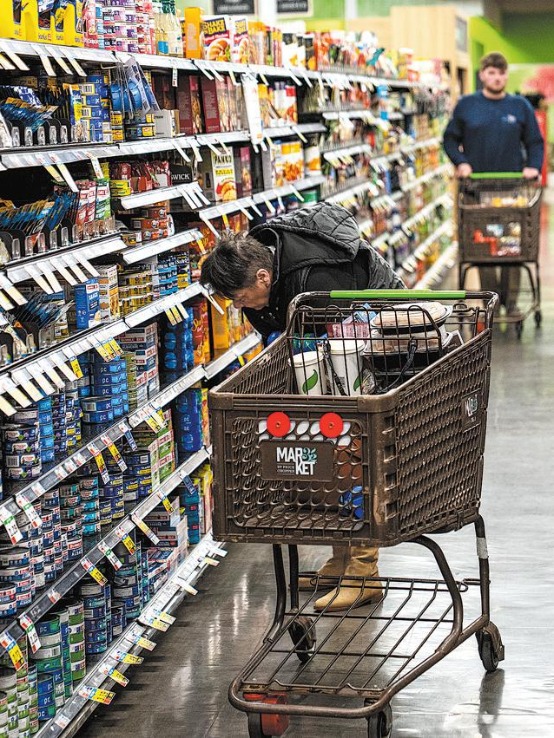
As the holiday season approaches, Americans are grappling with the economic fallout of escalating tariffs, which are driving up the cost of essential goods. The ongoing trade disputes between the United States and key partners, including China, have created a ripple effect that is now hitting consumers hard. With Thanksgiving and Christmas on the horizon, many are calling for swift resolution to these trade tensions to alleviate the financial strain. Kegan Bordeaux, a concessions worker in New York City, voiced concerns over the rising prices, stating, ‘New York is already expensive, but even basic items like rice are becoming unaffordable.’ According to Gary C. Hufbauer, a senior fellow at the Peterson Institute for International Economics, US businesses have absorbed 75% of the tariff costs so far, but consumers are bearing the remaining 25%. However, this balance is unsustainable, and by 2026, most of the burden is expected to shift to consumers. A Goldman Sachs report corroborates this, estimating that US consumers are already paying 55% of the tariff costs, a figure projected to rise to 70% by the end of 2026. The tariff landscape remains volatile, with rates varying widely across countries. For instance, India and Brazil face a 50% tariff, while the European Union is subject to a 15% levy. In a recent meeting between President Xi Jinping and US President Donald Trump, agreements were made to reduce tariffs on Chinese imports from 57% to 47%, offering a glimmer of hope for resolution. Nevertheless, the immediate impact on American households remains a pressing concern as the holiday season looms.