标签: South America

南美洲

  • Colombian warlord sentenced to 40 years in prison after serving time for drug trafficking in the US

    Colombian warlord sentenced to 40 years in prison after serving time for drug trafficking in the US

    In a landmark ruling from Bogotá, Colombia’s special transitional justice tribunal has imposed a 40-year prison sentence on former paramilitary commander Salvatore Mancuso for atrocities committed against Indigenous populations in La Guajira province. The court found the 61-year-old responsible for 117 separate crimes—including homicides, enforced disappearances, and mass displacements—perpetrated by his forces between 2002 and 2006 during Colombia’s prolonged internal conflict.

    The judicial panel noted that Mancuso’s sentence could potentially be reduced to eight years contingent upon his full cooperation with truth-telling initiatives and reparations programs benefiting victims of his former paramilitary organization. This sentencing represents a significant development in Colombia’s ongoing transitional justice process following the 2016 peace accord with FARC rebels.

    Mancuso, who holds dual Colombian-Italian citizenship, was recently repatriated from the United States where he had served extensive prison time on drug trafficking charges since his 2008 extradition. Despite multiple requests for transfer to Italy after completing his U.S. sentence, Colombian authorities maintained jurisdiction over his case.

    As a senior commander of the United Self-Defense Forces of Colombia (AUC), Mancuso helped establish right-wing paramilitary units initially created to counter Marxist guerrilla groups. While the AUC successfully displaced rebels from certain rural territories, they were subsequently accused of systematically targeting innocent civilians.

    The court’s decision emerges against the backdrop of Colombia’s complex peace architecture. President Gustavo Petro recently designated Mancuso as an official ‘peace facilitator’ to mediate ongoing negotiations with active armed groups, including the Gulf Clan—a successor organization to the AUC boasting approximately 10,000 fighters. This paradoxical position highlights the challenging balance between justice and reconciliation in post-conflict societies.

    Historical context reveals the staggering human cost of Colombia’s conflict, with truth commission data documenting at least 450,000 fatalities between 1985 and 2018 among combatants and civilians alike. The recent Qatar-brokered agreement between the government and Gulf Clan establishes protected zones where fighters can gather without prosecution during peace talks, signaling continued efforts to resolve decades of violence through diplomatic channels.

  • Chile fights wildfires that killed 19 and left 1,500 homeless

    Chile fights wildfires that killed 19 and left 1,500 homeless

    Chilean authorities are confronting a severe wildfire crisis as multiple blazes rage across the country’s central and southern regions, resulting in significant casualties and widespread displacement. The fires, which ignited on Sunday, have already claimed at least 19 lives and rendered approximately 1,500 residents homeless, according to official reports.

    The National Service for the Prevention of Disasters confirmed that five major wildfires remained active as of Monday, with unusually high temperatures from a persistent summer heat wave exacerbating firefighting efforts. In response to the escalating emergency, President Gabriel Boric has declared a state of catastrophe in the heavily affected Biobío and Ñuble regions.

    This emergency designation enables enhanced military coordination to combat the spreading flames. President Boric warned via his official X account on Monday that adverse weather conditions continue to pose serious challenges, including the potential for reignition in previously contained areas.

    While Chile regularly experiences seasonal wildfires during summer months due to characteristic high temperatures and arid conditions, the current outbreak ranks among the most devastating in recent years. This tragedy follows the catastrophic 2024 wildfire event that claimed 130 lives along Chile’s central coastline, which stood as the nation’s deadliest natural disaster since the 2010 earthquake.

  • Five face trial in Peru in rare prosecution over the killing of an Amazon defender

    Five face trial in Peru in rare prosecution over the killing of an Amazon defender

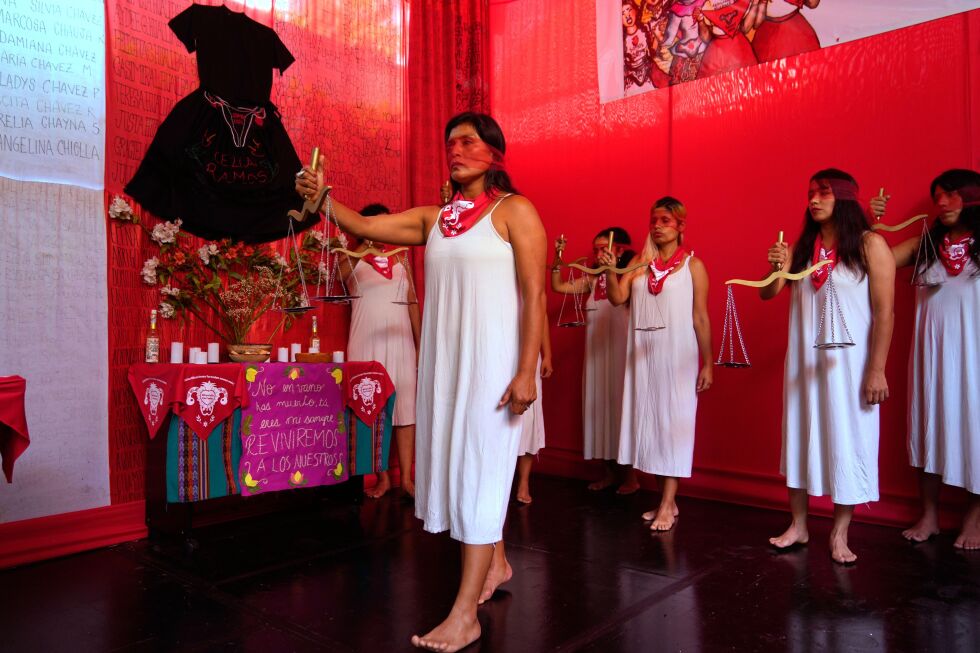
    In a groundbreaking legal proceeding, Peru has commenced the trial of five individuals charged with the contract killing of Indigenous Kichwa leader Quinto Inuma Alvarado, marking a pivotal moment for environmental justice in one of the world’s most dangerous regions for land defenders.

    The 50-year-old tribal leader from Peru’s northern Amazon region of San Martin was ambushed and fatally shot on November 29, 2023, while traveling by boat along a river route to his community of Santa Rosillo de Yanayacu. The attack occurred shortly after Inuma had participated in an event for Indigenous defenders, culminating years of threats he had received for opposing illegal logging and drug trafficking operations within his community’s territory.

    Prosecutors are seeking life sentences—an unprecedented penalty in cases involving the murder of Indigenous environmental defenders in Peru. The case represents the first time contract killing charges have been applied in such a context, with investigators linking the suspects to individuals Inuma had repeatedly reported to authorities for illegal activities.

    The judicial process has drawn intense scrutiny from Indigenous organizations, environmental advocates, and international observers who view it as a critical test of Peru’s ability to combat violence associated with illegal deforestation and narcotics trafficking in the Amazon basin. According to human rights groups, at least 35 Indigenous defenders have been killed in Peru over the past decade, with most cases never reaching the courtroom.

    Cristina Gavancho, a lawyer with the Lima-based Instituto de Defensa Legal, noted that the killing was ‘a result that was already foreseeable,’ given the persistent threats against Inuma. The prosecution’s case incorporates forensic evidence including gunshot-residue tests and witness testimony placing the accused at the scene around the time of the attack.

    The trial has also exposed critical failures in Peru’s protection mechanisms for environmental and Indigenous defenders. Despite being granted official security measures under a state protection mechanism created in 2021, these safeguards were never implemented due to budget constraints, according to legal representatives.

    International bodies including the Inter-American Commission on Human Rights and United Nations rapporteurs are monitoring the proceedings closely. Mary Lawlor, the UN Special Rapporteur on human rights defenders, described the investigation as ‘ground breaking’ given that crimes against environmental activists often go uninvestigated in the region.

    For Inuma’s family, the trial represents bittersweet justice. His son Kevin, 30, recounted how his father had prepared them for this possibility, stating: ‘He used to tell us that one day they might kill him and that we should be prepared.’ The family has since been forced to abandon their community and traditional way of life, struggling to adapt to urban existence.

    Legal experts suggest that convictions in this case could establish a powerful precedent not only for Peru but throughout Latin America, demonstrating that thorough investigations are possible and that lack of resources should no longer justify impunity in killings linked to environmental defense.

  • US Catholic cardinals urge Trump administration to embrace a moral compass in foreign policy

    US Catholic cardinals urge Trump administration to embrace a moral compass in foreign policy

    In an unprecedented move, three influential American Catholic cardinals have publicly called upon the Trump administration to realign its foreign policy with ethical principles, warning that current approaches risk causing extensive human suffering rather than fostering global peace. Cardinals Blase Cupich of Chicago, Joseph Tobin of Newark, and Robert McElroy of Washington jointly expressed deep concerns regarding recent U.S. military operations in Venezuela, considerations about acquiring Greenland, and substantial reductions in foreign assistance programs.

    The religious leaders characterized the contemporary foreign policy discourse as dangerously mired in “polarization, partisanship, and narrow economic and social interests,” emphasizing the absence of a coherent moral vision. Cardinal McElroy notably observed that “Most of the United States and the world are adrift morally in terms of foreign policy,” while acknowledging America’s continuing significant global influence.

    This declaration represents the second instance in recent months where high-ranking U.S. Catholic figures have openly challenged administration policies perceived as conflicting with fundamental human dignity principles. The cardinals’ statement draws intellectual inspiration from Pope Leo XIV’s substantial January address to Vatican diplomats, in which the pontiff delivered a comprehensive critique of nations employing force to assert global dominance, thereby undermining international peace and the post-World War II legal framework.

    The church leaders specifically questioned the ethical foundations of military intervention in Venezuela, potential Greenland acquisition attempts, ongoing conflict in Ukraine, and drastic cuts to international development aid. They articulated a vision for American foreign policy that prioritizes human dignity, religious liberty, and economic assistance, stating: “We renounce war as an instrument for narrow national interests and proclaim that military action must be seen only as a last resort.”

    Cardinal Cupich revealed that the statement originated from concerns raised by multiple cardinals during early January Vatican meetings, finding resonance with Pope Leo’s diplomatic address. While acknowledging potential justification for opposing Venezuelan leadership, Cupich criticized the methodology: “When we go ahead and do it in such a way that is portrayed as saying, ‘Because we can do it, we’re going to do it, that might makes right’—that’s a troublesome development.”

    The cardinals emphasized their intervention transcends partisan politics, seeking instead to advocate for ethical governance focused on the common good. Cardinal Tobin summarized this perspective: “It can’t be that my prosperity is predicated on inhuman treatment of others. The real argument isn’t just my right or individual rights, but what is the common good.”

  • Wildfires race across Chile, leaving 15 dead and forcing thousands to flee

    Wildfires race across Chile, leaving 15 dead and forcing thousands to flee

    Central and southern Chile are confronting a devastating wildfire crisis that has resulted in at least 15 fatalities and prompted mass evacuations, compelling President Gabriel Boric to declare a state of catastrophe in multiple regions. The infernos, fueled by an intense heat wave with temperatures exceeding 38°C (100°F) and fanned by strong winds, have ravaged approximately 8,500 hectares (21,000 acres) of forestland and destroyed hundreds of residential structures.

    President Boric’s emergency declaration covers the central Biobio region and neighboring Ñuble region, situated roughly 500 kilometers south of the capital Santiago. This measure enables enhanced military coordination to combat two dozen active blazes that have forced 50,000 residents to flee their homes. Despite presidential assurances that “all resources are available,” local officials reported significant delays in federal response during critical early hours of the disaster.

    Rodrigo Vera, mayor of the coastal town Penco, expressed desperate frustration: “Dear President Boric, from the bottom of my heart, I have been here for four hours, a community is burning and there is no government presence.” His sentiment echoed across affected communities where firefighters battled relentlessly against rapidly spreading flames.

    Survivors described terrifying midnight escapes as fires encircled residential areas without warning. “We fled running, with the kids, in the dark,” recounted Juan Lagos, 52, from Penco where the fire consumed cars, a school, and a church. The human toll became increasingly evident as charred remains were discovered in fields, homes, and vehicles throughout the impacted zones, with local residents mourning neighbors lost to the flames.

    The municipality of Concepcion alone reported 253 homes destroyed, though national damage assessments remain ongoing as emergency teams work to contain the spreading wildfires under challenging meteorological conditions.

  • Chile declares ‘state of catastrophe’ as deadly wildfires menace cities

    Chile declares ‘state of catastrophe’ as deadly wildfires menace cities

    Chilean President Gabriel Boric has declared a state of catastrophe in two southern regions as devastating wildfires continue to rage across the country, resulting in significant casualties and widespread destruction. The death toll has reached at least 16 people in the Ñuble and Biobío regions, located approximately 500 kilometers south of the capital Santiago, with more than 20,000 residents forced to evacuate their homes.

    The most severe fire has engulfed dry forest areas surrounding the coastal city of Concepción, where disaster management officials confirm that at least 250 residential structures have been completely destroyed. Local media outlets have circulated disturbing images showing charred vehicles abandoned on streets as flames advanced through populated areas.

    Chile’s National Forestry Corporation (Conaf) reported that firefighting teams are currently battling 24 separate blazes nationwide, with the most critical situations concentrated in the Ñuble and Biobío regions. President Boric announced the emergency declaration via social media platform X, stating, “In light of the serious ongoing wildfires, I have decided to declare a state of catastrophe. All resources are available” to combat the crisis.

    The infernos have already consumed approximately 20,000 hectares (50,000 acres) across the two affected regions. The cities of Penco and Lirquen, located north of Concepción with a combined population of 60,000, have seen the majority of evacuation efforts, including the relocation of patients from Penco hospital.

    Meteorological conditions have significantly exacerbated the crisis, with strong winds propelling the flames amid summer temperatures that are expected to reach 38°C between Santiago and Biobío within the next 48 hours. Much of central Chile remains under heat alerts as the combination of high temperatures and dry vegetation creates ideal conditions for fire spread.

    This disaster echoes Chile’s previous wildfire tragedy two years ago, when blazes in the Valparaíso region near Santiago claimed at least 120 lives. The country has experienced increasingly severe fire seasons in recent years, a trend experts attribute to prolonged drought conditions and climate change impacts.

  • How love united a Venezuelan liberator and a shoemaker’s daughter

    How love united a Venezuelan liberator and a shoemaker’s daughter

    An extraordinary cross-continental partnership between a Venezuelan revolutionary and a shoemaker’s daughter from rural England played a pivotal role in South America’s independence movements. Francisco de Miranda, celebrated as Venezuela’s ‘First Universal Citizen,’ found an unlikely ally in Sarah Andrews of Market Weighton, East Yorkshire, whose contributions are now being rediscovered through historical research.

    Miranda, born in Caracas in 1750 to wealth and privilege, received extensive education in Venezuela and Madrid before embarking on a remarkable military and diplomatic career. He served in the Spanish army during campaigns in Morocco, engaged with Catherine the Great of Russia, participated in the French Revolution, and witnessed the aftermath of the American Revolution before settling in London in 1798. His primary mission: securing British support for liberating Venezuela from Spanish colonial rule.

    It was in London that Miranda encountered Sarah Andrews, who had traveled from her modest upbringing in Market Weighton—where her family worked as shoemakers and coopers—possibly after being sent to serve in her uncle’s household following her mother’s early death. By 1800, Andrews was managing Miranda’s household and had borne him two sons: Leander (1803) and Francisco (1806).

    When Miranda returned to Latin America to lead independence efforts, Andrews maintained their Fitzrovia residence as a crucial hub for revolutionary planning. The house featured Miranda’s extensive 6,000-volume library—extraordinary for the era—and hosted key figures including Simón Bolívar, who would eventually liberate multiple South American nations.

    Surviving correspondence reveals Andrews as the household’s steadfast administrator, updating Miranda on their children’s development and the political activities within their home. Despite her limited formal education, her letters demonstrate keen observation and dedication to both family and cause.

    Miranda’s revolutionary efforts culminated in Venezuela becoming the first South American nation to declare independence from Spain in 1811, with Miranda briefly leading the new republic. However, Spanish forces ultimately captured and imprisoned him until his death in 1816.

    Andrews outlived her revolutionary partner by three decades, passing away in 1847. Her legacy is commemorated through plaques at London’s Kensal Green cemetery—where Venezuela officially recognizes her contributions—and at All Saints Church in her hometown of Market Weighton, installed by the Venezuelan ambassador to the UK.

    This historical narrative gains contemporary relevance following recent reports of damage at Venezuela’s Generalissimo Francisco de Miranda Air Base during operations targeting current President Nicolás Maduro, highlighting how Miranda’s legacy continues to resonate in modern Venezuelan politics.

  • Board of Peace for Gaza is forming with ambitions for a wider mandate of other conflicts

    Board of Peace for Gaza is forming with ambitions for a wider mandate of other conflicts

    The Trump administration is developing its proposed ‘Board of Peace’ into an institution with significantly broader ambitions than initially conceived, potentially positioning it as an alternative to the United Nations framework that has governed international relations since World War II. According to invitation letters dispatched to various world leaders on Friday and subsequently shared on official social media accounts, the board would ’embark on a bold new approach to resolving global conflict’ extending well beyond its original focus on mediating the Israel-Hamas war in Gaza.

    Argentine President Javier Milei and Paraguay’s leader Santiago Peña were among those receiving invitations to become ‘founding members’ of this new international organization. The correspondence highlighted that Trump’s 20-point Gaza ceasefire plan, which incorporates the Board of Peace concept, had already gained endorsement from the U.N. Security Council. ‘Now it is time to turn all of these dreams into reality,’ Trump wrote, describing the initiative as ‘the most impressive and consequential board ever assembled.’

    The administration’s aspirations for this body to evolve into a substantial international institution are certain to generate controversy. Both China and Russia, as permanent Security Council members with veto power, are expected to oppose any radical transformation of the existing world order. Smaller nations may also express reservations, as the UN system has historically provided them with representation in global decision-making processes.

    A senior U.S. official, speaking anonymously to discuss internal deliberations, characterized the expanded vision as ‘aspirational’ but noted that Trump and his advisers believe it achievable given widespread frustrations with the United Nations and its affiliated agencies. The administration has frequently criticized the world body for perceived inefficiencies, redundant structures, and what it describes as ‘woke’ ideology, while simultaneously reducing funding to international organizations.

    The formal announcement of board membership is anticipated during the upcoming World Economic Forum in Davos, Switzerland. Meanwhile, Israel’s government has already voiced objections to aspects of the plan, stating that certain elements were ‘not coordinated with Israel and is contrary to its policy.’ The proposed executive committee includes Secretary of State Marco Rubio, envoy Steve Witkoff, business leaders such as Apollo Global Management CEO Marc Rowan, and international figures including former British Prime Minister Tony Blair and World Bank President Ajay Banga.

  • AP obtains documents showing Venezuelan leader Delcy Rodriguez has been on DEA’s radar for years

    AP obtains documents showing Venezuelan leader Delcy Rodriguez has been on DEA’s radar for years

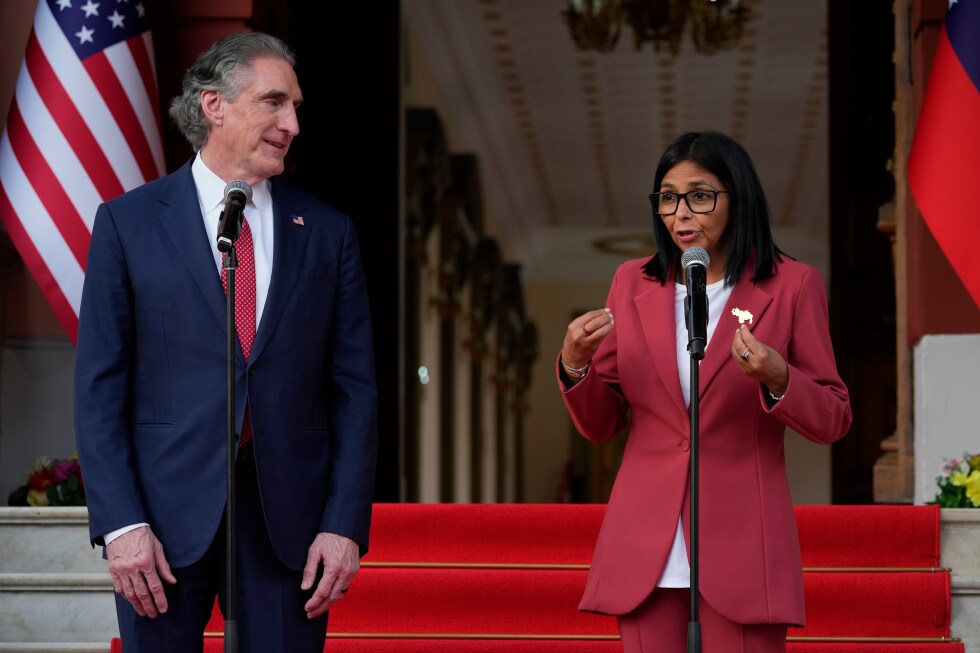
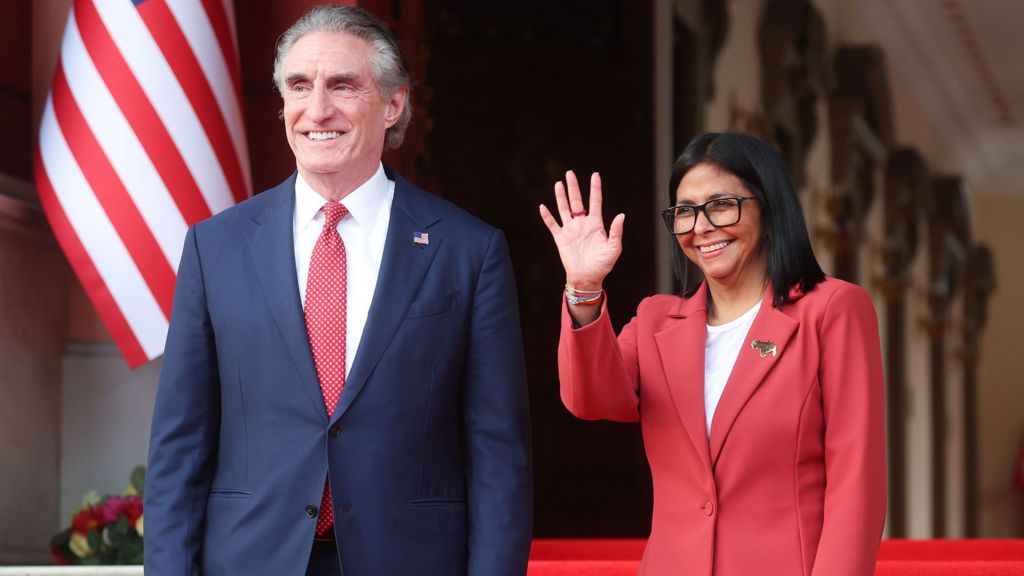
    A significant contradiction has surfaced in U.S.-Venezuela relations as President Donald Trump’s administration embraces acting Venezuelan President Delcy Rodríguez while internal Drug Enforcement Administration records reveal she was designated a ‘priority target’ for drug trafficking investigations. According to documents obtained by The Associated Press and confirmed by multiple law enforcement officials, Rodríguez attracted intense DEA scrutiny dating back to at least 2018, with the agency amassing substantial intelligence on her alleged involvement in narcotics and money laundering operations.

    The DEA’s classified files, reviewed by AP, contain numerous allegations against Rodríguez, including claims from confidential informants that she utilized Caribbean resort hotels as fronts for money laundering operations. The records further connect her to Alex Saab, Maduro’s alleged financial operative currently facing U.S. money laundering charges, and detail her associations with individuals involved in corrupt government contracting schemes worth hundreds of millions of dollars.

    Despite this extensive investigative background, the Trump administration has conspicuously avoided bringing formal charges against Rodríguez while simultaneously positioning her as America’s preferred partner for stabilizing Venezuela. President Trump has publicly praised Rodríguez as a ‘terrific person’ following Maduro’s capture, and high-level communications have occurred between Rodríguez and U.S. officials, including CIA Director John Ratcliffe.

    This paradoxical situation creates a complex geopolitical landscape where U.S. law enforcement continues ongoing investigations into Rodríguez’s activities even as diplomatic channels remain open. Current and former DEA officials note that while ‘priority target’ designation indicates significant investigative interest, it doesn’t automatically lead to criminal charges. Experts on Venezuelan affairs describe the Maduro regime as a ‘criminal-hybrid regime’ where achieving power requires at minimum abetting criminal activities, suggesting Rodríguez’s situation reflects systemic issues rather than individual corruption.

    The DEA’s investigations into Rodríguez span multiple field offices and involve numerous ongoing cases, though specific details remain classified. This development occurs against the backdrop of Venezuela being ranked as the world’s third most corrupt nation by Transparency International, with the U.S. apparently leveraging Rodríguez’s investigative status as diplomatic pressure while pursuing strategic interests in Venezuela’s vast oil reserves.

  • Benavides rides to smallest Dakar Rally win margin and Al-Attiyah confirms sixth car title

    Benavides rides to smallest Dakar Rally win margin and Al-Attiyah confirms sixth car title

    YANBU, Saudi Arabia — The 2024 Dakar Rally concluded with one of the most dramatic finishes in motorsport history as Argentine rider Luciano Benavides captured his first motorbike title by a mere two seconds following a catastrophic navigational error by American rival Ricky Brabec just kilometers from the finish. This marks the narrowest victory margin ever recorded in the event’s storied history.

    Meanwhile, Qatari driver Nasser Al-Attiyah secured his sixth car category title with a calculated performance on the 13th and final stage, a 105-kilometer sprint along Saudi Arabia’s Red Sea coast to Yanbu.

    The motorbike competition appeared destined for Brabec’s third Dakar victory as the Honda rider entered the final stage with a commanding 3-minute, 20-second advantage over Benavides’ KTM. Brabec was collecting valuable time bonuses for opening the route while maintaining a strong pace.

    The race dynamics shifted irrevocably when Brabec made a critical wrong turn approximately seven kilometers from the finish line. Benavides, maintaining his trajectory, witnessed his rival’s error in real-time. “I saw a headlight turn around and slowed to see who it was,” Benavides recounted. “When I realized it was Ricky, I knew the almost impossible was suddenly possible.”

    The Argentine rider capitalized on the opportunity, finishing second on the stage to teammate Edgar Canet while Brabec arrived 3 minutes and 22 seconds later. The stunning reversal triggered emotional celebrations from Benavides’ team, who hoisted their champion while chanting his name.

    “It’s unreal,” an elated Benavides stated. “Two seconds after two weeks and almost 8,000 kilometers is something that is hard to understand.” The previous closest margin of victory stood at 43 seconds, achieved by Benavides’ brother Kevin in 2023.

    Brabec’s Honda teammate Tosha Schareina completed the podium in a distant third position.

    Benavides’ victory appears particularly remarkable considering he began his ninth Dakar attempt without any prior podium finishes and just three months after sustaining serious knee ligament injuries during the Moroccan Rally. Even during the event’s second week, he rode in the shadow of defending champion and teammate Daniel Sanders, who dominated until crashing on Wednesday and sustaining broken collarbone and sternum injuries.

    In the car category, Al-Attiyah secured his historic sixth title with a conservative final drive, finishing nearly nine minutes behind stage winner Mattias Ekström. The Qatari driver ultimately defeated second-place finisher Nani Roma by 9 minutes and 42 seconds, marking his first victory with manufacturer Dacia. Al-Attiyah has now won Dakar with four different manufacturers across his illustrious career.

    Roma, the 2014 champion, earned his first podium finish since 2019, while Ekström’s Ford edged Sébastien Loeb’s Dacia by 37 seconds for third place overall.