标签: South America

南美洲

  • Bad Bunny positioned to consolidate his popularity in Brazil with first-ever performances

    Bad Bunny positioned to consolidate his popularity in Brazil with first-ever performances

    SAO PAULO — Global music phenomenon Bad Bunny has achieved a significant breakthrough in one of the world’s most challenging markets for international artists, marking a cultural shift during his inaugural Brazilian performances this weekend. Despite his worldwide streaming dominance, the Puerto Rican superstar had previously struggled to penetrate Brazil’s music scene, where domestic artists command an impressive 75% of streaming consumption according to Luminate’s 2025 midyear report.

    The turning point emerged with his Grammy-winning album “Debí Tirar Más Fotos,” but the catalyst proved to be his historic Super Bowl halftime performance. Subsequent data reveals a staggering 426% surge in Bad Bunny’s Spotify streams in Brazil during the post-Super Bowl week, with his track “Yo Perreo Sola” experiencing an extraordinary 2,536% increase.

    Ethnomusicologist Felipe Maia, currently pursuing doctoral research on popular music at Paris Nanterre University, observes: “This represents the optimal moment to conquer a market like Brazil, occurring precisely when he has achieved near-global domination.”

    The demand manifested visibly as both scheduled shows at Sao Paulo’s Allianz Parque stadium sold out immediately, necessitating additional dates. By Friday afternoon, extensive queues had formed featuring not only Brazilian devotees but enthusiasts from across Latin America including El Salvador, Colombia, and Venezuela. Many attendees sported traditional Puerto Rican jíbaro straw hats, symbolizing their connection to the artist’s cultural roots.

    Ticket economics underscored the frenzy: while official prices ranged from $50 to $210, resellers demanded over $830 for last-minute entries—exceeding 2.5 times Brazil’s monthly minimum wage.

    Flávia Durante, a Sao Paulo-based Latin music specialist DJ, notes a transformative shift in perception: “Some Brazilians historically associated Spanish-language music with telenovela clichés, but Bad Bunny has shattered that bubble. Nowadays, everyone knows the lyrics and engages passionately, even requesting his music at rock or 80s pop events.”

    The phenomenon extends beyond commercial success into cultural identity. Colombian-Brazilian writer Nicole Froio, who sported Bad Bunny-themed attire during Rio’s Carnival celebrations for the third consecutive year, identifies the artist as representing “Latino resistance.” She emphasizes: “While other Latin stars recorded full songs in other languages, Bad Bunny maintains artistic authenticity through Spanish—inspiring me to embrace my identity unapologetically.”

    This cultural resonance finds reinforcement in Bad Bunny’s Super Bowl acknowledgment of the Americas’ geographic scope, challenging the United States’ linguistic appropriation of “America.” For longtime fan Diogo da Luz, 22, this inclusive approach “reinforces that we belong to one united people.”

  • Galápagos park releases 158 juvenile hybrid tortoises on Floreana to restore the ecosystem

    Galápagos park releases 158 juvenile hybrid tortoises on Floreana to restore the ecosystem

    In a landmark conservation achievement, 158 juvenile hybrid giant tortoises have been reintroduced to Ecuador’s Floreana Island, marking the species’ return after a 150-year absence. The carefully selected specimens, aged 8-13 years, were released during the season’s first winter rains, creating optimal conditions for their adaptation to the volcanic island environment.

    These tortoises represent a genetic bridge to the extinct Chelonoidis niger species, carrying between 40-80% of its original genetic makeup. Sourced from Wolf Volcano on Isabela Island—a discovery that continues to intrigue scientists—the hybrids underwent rigorous selection for the strongest genetic lineage before their translocation.

    The release initiates a comprehensive restoration program targeting Floreana’s degraded ecosystem. According to Fredy Villalba, director of the Galápagos National Park breeding center, the juveniles have reached sufficient size to defend against invasive predators including rats and cats.

    Christian Sevilla, ecosystems director for Galápagos National Park, confirmed this release as the first phase of a larger initiative planning to introduce 700 tortoises gradually. The breeding program ultimately aims to restore the Floreana tortoise population to genetic purity through selective reproduction.

    The ecological significance extends beyond species revival. Washington Tapia, director of Biodiversa-Consultores, emphasized that reintroducing tortoises with substantial original genetics is crucial for reconstructing the island’s lost biological heritage.

    Floreana’s 173-square-kilometer volcanic landscape, situated 1,000 kilometers from mainland Ecuador, once hosted approximately 20,000 giant tortoises before whaling activities, human exploitation, and a devastating fire caused their extinction. The reintroduced population will coexist with nearly 200 human residents and native species including flamingos, iguanas, and penguins, while confronting challenges from invasive plants and animals introduced through human activity.

    Local resident Verónica Mora described the release as the realization of a long-standing community dream, reflecting widespread pride in the tortoises’ homecoming. The Galápagos Islands, designated a UNESCO Natural World Heritage Site in 1978, continue to demonstrate global leadership in conservation through this innovative genetic restoration project.

  • Venezuela’s new amnesty law gets a chilly response from the opposition and detainees’ families

    Venezuela’s new amnesty law gets a chilly response from the opposition and detainees’ families

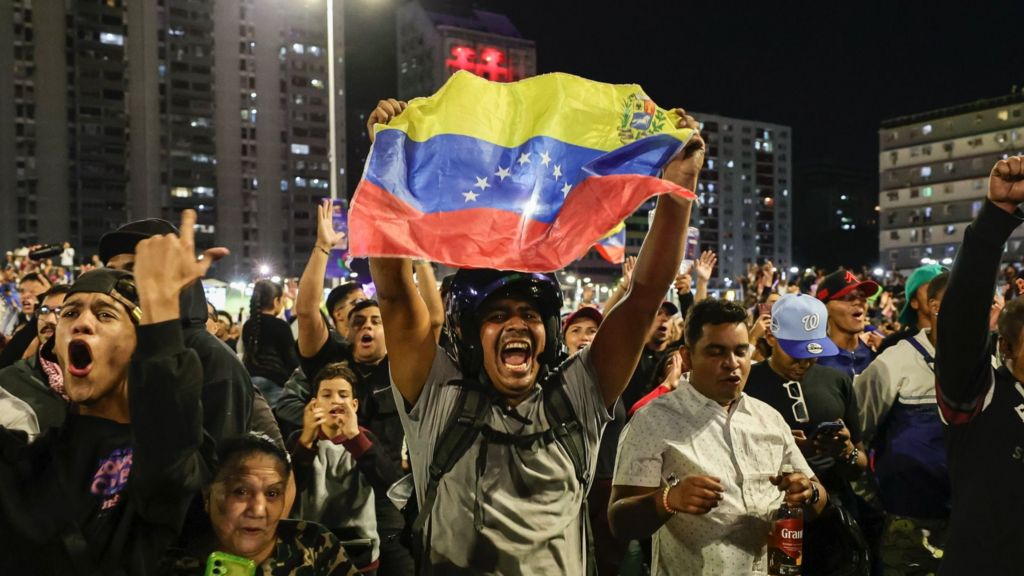
    CARACAS, Venezuela — Venezuela’s recently enacted amnesty legislation has generated divided responses from opposition figures, human rights organizations, and families of detainees, revealing deep fractures in the nation’s political landscape. The measure, signed into law by Acting President Delcy Rodríguez on Thursday, represents a notable policy shift following last month’s U.S. military operation in Caracas that resulted in the capture of former President Nicolás Maduro.

    While some view the legislation as a modest yet meaningful advancement for thousands targeted during the ruling party’s 27-year administration, others condemn it as an insult to victims of political persecution—particularly excluded military personnel. Rodríguez characterized the law during the signing ceremony as evidence of leadership ‘reducing intolerance and creating fresh pathways for political engagement in Venezuela.’

    Judicial oversight requirements mandating trial courts to approve each amnesty application within 15 days have raised substantial skepticism regarding implementation. Alfredo Romero, president of the Venezuela-based prisoners’ rights organization Foro Penal, noted that ‘the law assists a considerable number of individuals, but the fundamental issue of political persecution in Venezuela persists.’ Romero emphasized that the same judiciary responsible for unjust accusations will now interpret the amnesty provisions.

    The legislation provides comprehensive amnesty for offenses committed during specified periods since 1999, including politically motivated violence surrounding the 2024 presidential election and 2025 legislative contests. According to Foro Penal’s data, 2,742 individuals detained in connection with these elections qualify for amnesty, with 321 remaining incarcerated and 2,186 released under ongoing judicial supervision.

    Notable exclusions apply to those convicted of human rights violations, war crimes, murder, drug trafficking, or corruption. The measure also denies relief to individuals supporting ‘armed or forceful actions against Venezuela by foreign states, corporations, or individuals’—potentially excluding opposition members who endorsed former U.S. President Donald Trump’s Venezuela policies, including Nobel Peace Prize recipient María Corina Machado.

    The law enables exiled individuals to seek amnesty through legal representation without returning to Venezuela, offering protection from arrest during court appearances. However, Machado’s 2024 campaign manager Magalli Meda, currently in exile, denounced the legislation on social media as an attempt to ‘whitewash their image’ and create ‘a country of slaves and accomplices.’

    Family members of detainees continue advocating for comprehensive prisoner releases, with some appealing directly to Venezuelan officials’ humanity and others seeking intervention from U.S. diplomatic representatives. The amnesty legislation emerges as a contentious component of Venezuela’s complex political reconciliation process, facing both cautious optimism and profound skepticism from affected communities.

  • Venezuelan opposition politician released after amnesty law passed

    Venezuelan opposition politician released after amnesty law passed

    Venezuelan opposition figure Juan Pablo Guanipa has declared his liberation following what he characterized as “nearly nine months of wrongful detention,” marking a significant development in the nation’s ongoing political turmoil. The release coincides with interim President Delcy Rodríguez’s endorsement of a congressional amnesty legislation potentially affecting hundreds of detained government critics.

    The emancipation follows sustained international pressure, particularly from the United States, urging Caracas to accelerate prisoner releases after legislative delays. However, Guanipa—leader of the center-right Justice First party and former National Assembly vice-president—immediately criticized the amnesty as a “deeply flawed instrument” that systematically excludes numerous Venezuelans remaining in “unjust incarceration.”

    Guanipa’s political troubles began when he contested the controversial 2024 election results, leading to terrorism and treason charges that forced him into hiding before his capture by security forces in May 2025. His detention saga included brief release earlier this month followed by re-arrest for alleged violation of release conditions, ultimately culminating in his current freedom.

    This development occurs within the broader context of sweeping prisoner releases following the dramatic seizure of former President Nicolás Maduro by U.S. forces on January 3. While Venezuela’s socialist government has historically denied holding political prisoners, it announced on January 8—days after Maduro’s capture—that “a substantial number” of detainees would be freed as a goodwill measure.

    Human rights organizations and opposition groups have long accused Maduro’s administration of weaponizing judicial detention to suppress dissent and silence critics. Interim President Rodríguez has framed the amnesty legislation as a mechanism for “mutual forgiveness,” though activists domestically have condemned implementation delays and transparency deficits regarding release criteria.

    Guanipa maintains close ties with exiled opposition leader María Corina Machado, the 2025 Nobel Peace Prize laureate who recently presented her medal to U.S. President Donald Trump as symbolic recognition of his dedication to Venezuelan freedom. Machado has pledged to eventually lead the nation “when circumstances permit,” adding another layer to the complex political landscape.

  • President of Argentine soccer associations barred from leaving country after court ruling

    President of Argentine soccer associations barred from leaving country after court ruling

    BUENOS AIRES, Argentina — Argentine judicial authorities have imposed significant travel restrictions on Claudio ‘Chiqui’ Tapia, president of the Argentine Football Association (AFA), alongside four other high-ranking officials. The preventive measure comes as part of an ongoing investigation into alleged financial misconduct involving unpaid social security contributions.

    Federal Judge Diego Amarante issued the ruling that prohibits Tapia and his associates from leaving Argentine territory while mandating their appearance before court on March 5. The judicial documents, obtained by The Associated Press, cite ‘the seriousness of the investigated events’ as primary justification for the travel ban, intended to ensure proper legal proceedings.

    The case centers on accusations brought by Argentina’s Customs Collection and Control Agency (ARCA), alleging Tapia’s administration failed to pay approximately 19 billion pesos ($12.8 million) in mandatory social contributions during 2024 and 2025. This marks the first substantial legal action against Tapia, who faces multiple parallel investigations into his personal assets and the AFA’s financial management.

    The travel restrictions create potential complications for Argentina’s football leadership, particularly regarding the upcoming Finalissima match between Copa America champion Argentina and Euro 2024 winner Spain. Scheduled for March 27 in Qatar, the prestigious international fixture might proceed without AFA’s top official should the judicial ban remain enforced after his court appearance.

    Additional officials subject to identical restrictions include Treasurer Pablo Toviggino, Secretary General Cristian Malaspina, General Director Gustavo Lorenzo, and former Racing Club President Víctor Blanco. Neither Tapia nor his colleagues have publicly commented on Judge Amarante’s ruling as of press time.

    While legally obligated to appear in court, Tapia retains the right to remain silent during judicial questioning. The case represents a significant development in Argentina’s ongoing efforts to address financial transparency within sports governance structures.

  • Venezuela’s National Assembly set to resume tense debate on a sweeping amnesty bill

    Venezuela’s National Assembly set to resume tense debate on a sweeping amnesty bill

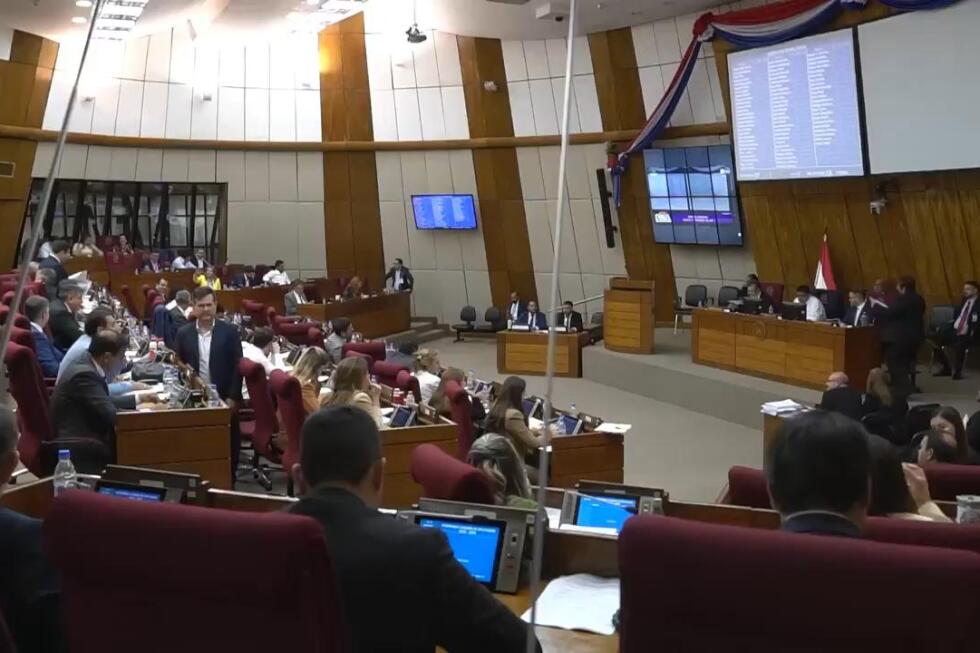
    CARACAS, Venezuela — Venezuela’s National Assembly reconvened Thursday to deliberate a landmark amnesty bill that could liberate hundreds detained for political activities, marking a significant policy shift in the wake of former President Nicolás Maduro’s dramatic capture by U.S. forces. The proposed legislation offers potential relief to opposition figures, activists, human rights defenders, and journalists targeted during the ruling party’s 27-year tenure. Last week’s debate stalled over contentious eligibility criteria, particularly regarding exiled individuals who fled to evade detention, revealing substantial resistance from government loyalists toward granting opposition members reprieve. Acting President Delcy Rodríguez introduced the measure weeks after U.S. military operatives apprehended Maduro in a January 3 raid in Caracas, extraditing him to New York to confront drug trafficking allegations. This amnesty initiative represents Venezuela’s most substantial policy reversal since commencing compliance with Trump administration directives, including last month’s comprehensive overhaul of national oil industry regulations. The bill explicitly acknowledges Venezuela’s political prisoner crisis—a reality long denied by authorities—by proposing “general and full amnesty for crimes or offenses” during politically turbulent periods since 1999, including events surrounding the 2024 presidential election that triggered widespread protests and over 2,000 arrests. While lawmakers approved the measure’s foundational purpose, they suspended proceedings over coverage disputes, including whether government-accused individuals living in exile or hiding domestically should qualify. Ruling party legislators, including Maduro’s son, argued during debates that beneficiaries must first submit to Venezuela’s justice system, citing legal prohibitions against trials in absentia. This position disregards documented judicial irregularities where defendants frequently face fabricated charges, lack legal representation, and are denied access to incriminating evidence within a system dominated by ruling-party-aligned judges. Prisoners’ rights organization Foro Penal estimates over 600 individuals remain incarcerated for political reasons. Although Rodríguez’s administration pledged significant prisoner releases following Maduro’s capture, human rights monitors and families have criticized the slow implementation pace, with only 448 documented releases. Relatives awaiting loved ones’ freedom have maintained vigils outside detention facilities, with some initiating hunger strikes last Saturday.

  • A nationwide union strike in Argentina tests its leader Milei’s flagship labor overhaul

    A nationwide union strike in Argentina tests its leader Milei’s flagship labor overhaul

    BUENOS AIRES, Argentina — Argentina’s most influential labor unions orchestrated a comprehensive nationwide strike on Thursday, creating widespread disruptions in protest against President Javier Milei’s proposed overhaul of the country’s labor legislation. This massive demonstration has escalated the confrontation between the libertarian administration and traditionally powerful worker organizations as the contentious bill approaches a pivotal legislative vote.

    The strike precipitated significant operational halts across multiple sectors: financial institutions shuttered, public education facilities closed, transportation networks suspended services, airlines canceled hundreds of flights, and medical centers deferred all non-urgent surgical procedures. This coordinated action coincides with the lower house of Argentina’s Congress preparing to deliberate on the labor reform legislation, following the Senate’s preliminary approval granted one week earlier.

    This formidable display of union solidarity—encompassing transportation, construction, food services, and other essential industries—emerges amid growing public dissatisfaction with the inconsistent economic recovery under Milei’s governance. While the administration has successfully stabilized government finances and curbed the nation’s previously rampant inflation, it continues to grapple with persistent unemployment, wage stagnation, and sluggish economic expansion.

    President Milei maintains that modernizing Argentina’s five-decade-old labor regulations constitutes a fundamental component of his strategy to attract foreign investment, enhance productivity, and stimulate employment growth in a nation where approximately 40% of workers operate in the informal economy without legal protections.

    Union representatives contend that the proposed legislation would substantially undermine longstanding worker safeguards, including reductions in traditionally generous severance packages, restrictions on strike authorization, simplified employee termination procedures, and the legalization of 12-hour workdays.

    Cristian Jerónimo, a prominent leader within the General Confederation of Labor (Argentina’s largest trade union coalition), characterized the proposal as “entirely regressive” during a press conference announcing the strike, asserting that “the only priority it establishes is the restriction of workers’ rights.”

    This robust union opposition has historically thwarted previous governmental attempts to reform Argentina’s antiquated labor code, which remains widely regarded as one of the most financially burdensome regulatory frameworks for corporations operating in Latin America.

    The labor reform’s legislative outcome represents the first significant assessment of Milei’s political influence since his libertarian party, La Libertad Avanza, secured victory in last year’s midterm elections with support from key ally former U.S. President Donald Trump. The timing of the strike proved particularly inconvenient for the Argentine leader, who was attending the inaugural meeting of Trump’s Board of Peace initiative in Washington during the protests.

    Even if the legislation passes the lower house, it must return to the Senate for final ratification due to a controversial last-minute amendment that would reduce salaries by half for workers taking leave due to non-occupational injuries or illnesses. This provision generated substantial opposition criticism and compelled the government to modify the version previously approved by the Senate.

    Approximately 40% of Argentina’s 13 million formally registered workers maintain union membership according to labor estimates, with many maintaining strong affiliations with the Peronist movement that governed the country previously and dominated national politics for decades.

  • Peru names eighth president in a decade after incumbent’s ouster

    Peru names eighth president in a decade after incumbent’s ouster

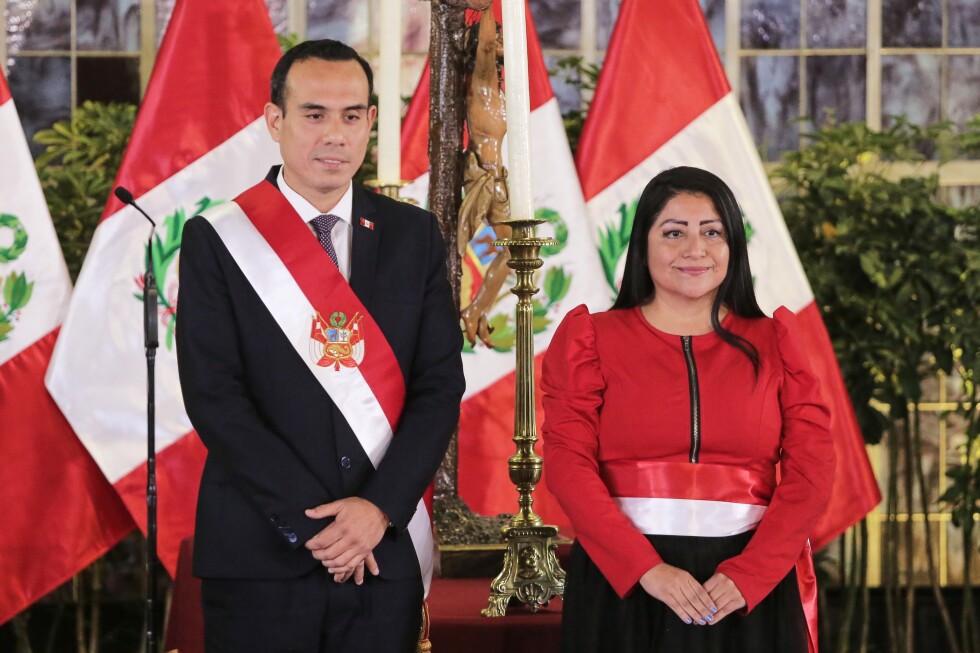
    Peru’s political landscape has undergone another seismic shift as Congress ousted President José Jerí and installed 83-year-old José María Balcázar as interim leader until July elections. The leadership change marks the eighth presidential transition since 2016, highlighting the nation’s prolonged political instability.

    Congress voted overwhelmingly to remove Jerí following allegations of influence peddling connected to undisclosed meetings with Chinese businessman Zhihua Yang, who was under government scrutiny. The scandal, dubbed ‘Chifa-gate’ after Chinese-Peruvian fusion restaurants where some meetings occurred, revealed Jerí wearing hooded attire during late-night visits to Yang’s establishments. Although Jerí maintained his innocence and denounced the allegations as a smear campaign, further controversy emerged regarding state contracts awarded to women after nocturnal presidential palace meetings.

    Balcázar, representing the left-wing Free Peru party, assumes power during profound public distrust in political institutions. The octogenarian former judge previously faced criticism for opposing legislation banning child marriage, though the bill ultimately passed despite his objection.

    In his inaugural address, Balcázar pledged to “guarantee the people of Peru a peaceful and transparent democratic and electoral transition” toward the July 28th transfer of power. The electoral process begins with April 12th primaries featuring numerous candidates, making an outright first-round victory unlikely. Polls indicate right-wing Congresswoman Keiko Fujimori (daughter of former president Alberto Fujimori) and Lima Mayor Rafael López Aliaga as frontrunners, though most Peruvian voters remain undecided.

    Notably, both Jerí and Balcázar are constitutionally barred from running in the upcoming election due to term succession rules. The political turbulence continues a pattern that has seen multiple presidents deposed by Congress, with Jerí having served merely four months after replacing impeached predecessor Dina Boluarte in October.

    Peruvian citizens expressed disillusionment to international media, with one Lima resident noting: “In 10 years, how many presidents have we had? It’s an enormous setback for the country.” Another stated they had “gotten used to this crisis, where Congress only dedicates itself to changing the president and looking out for their own well-being.”

  • Float featuring Brazil’s Lula comes last at Rio Carnival

    Float featuring Brazil’s Lula comes last at Rio Carnival

    Rio de Janeiro’s iconic Carnival parade reached its spectacular climax as samba school Unidos do Viradouro claimed the championship title with their artistic homage to legendary drum director Master Ciça. The victory came amidst unprecedented political tensions that overshadowed portions of the world’s largest carnival celebration.

    The Academicos de Niteroi samba school found itself at the center of controversy with their politically-charged parade honoring President Luiz Inácio Lula da Silva’s journey from impoverished shoeshine boy to national leadership. The performance, which designer Tiago Martins described as ‘a deeply personal story of social mobility,’ finished in last place following substantial backlash from opposition groups.

    Political tensions escalated as opposition parties filed multiple legal challenges attempting to block the presidential tribute, alleging violation of electoral campaign regulations ahead of October’s elections. Despite judicial rejections of these petitions, the performance generated intense debate across Brazilian society.

    The parade’s provocative elements included a controversial depiction of former President Jair Bolsonaro as ‘Bozo the Clown’ behind bars, alongside segments that critics argued mocked traditional Christian values through performances titled ‘preserved neoconservatives.’

    President Lula personally attended the festivities, watching from the Sambadrome stands alongside thousands of spectators who witnessed the spectacular displays of giant lions, dancing books, and rainbow-colored plumes that characterized this year’s celebrations.

    The competition, judged across ten categories by forty officials, maintained its tradition of artistic excellence while unexpectedly becoming a platform for Brazil’s ongoing political divisions. Despite the controversies, the carnival’s vibrant spirit prevailed with breathtaking displays of color, choreography, and cultural expression that define Rio’s most celebrated annual event.

  • US Southern Command chief meets Venezuela’s president weeks after Maduro’s capture

    US Southern Command chief meets Venezuela’s president weeks after Maduro’s capture

    In a significant diplomatic development, the head of U.S. military operations in Latin America conducted an extended meeting with Venezuelan leadership in Caracas on Wednesday. Marine General Francis Donovan, commander of U.S. Southern Command, engaged in hours of discussions with Venezuela’s acting President Delcy Rodríguez alongside key cabinet members including Defense Minister Vladimir Padrino López and Interior Minister Diosdado Cabello.

    The high-level engagement represents the latest in a series of diplomatic contacts between the two nations following the dramatic capture of former President Nicolás Maduro by U.S. forces weeks earlier. Maduro currently faces drug trafficking charges in the United States after being apprehended in a surprise operation within the Venezuelan capital.

    According to official statements from Rodríguez’s administration published on social media platform X, both nations agreed to establish a bilateral cooperation framework targeting regional security challenges. The proposed agenda specifically addresses combating illicit drug trafficking, terrorism prevention, and migration management throughout the region. The Venezuelan government emphasized that diplomacy remains the preferred mechanism for resolving differences and addressing mutual concerns.

    General Donovan was accompanied by Laura Dogu, the highest-ranking U.S. diplomat currently stationed in Venezuela, alongside Joseph Humire, acting assistant secretary of defense for homeland defense and the Americas. U.S. Southern Command confirmed that discussions centered on hemispheric security considerations and implementation strategies for President Donald Trump’s phased approach toward Venezuela.

    This meeting continues a pattern of elevated diplomatic engagement, following previous visits by CIA Director John Ratcliffe shortly after Maduro’s removal and U.S. Energy Secretary Chris Wright’s recent assessment of Venezuela’s oil infrastructure.