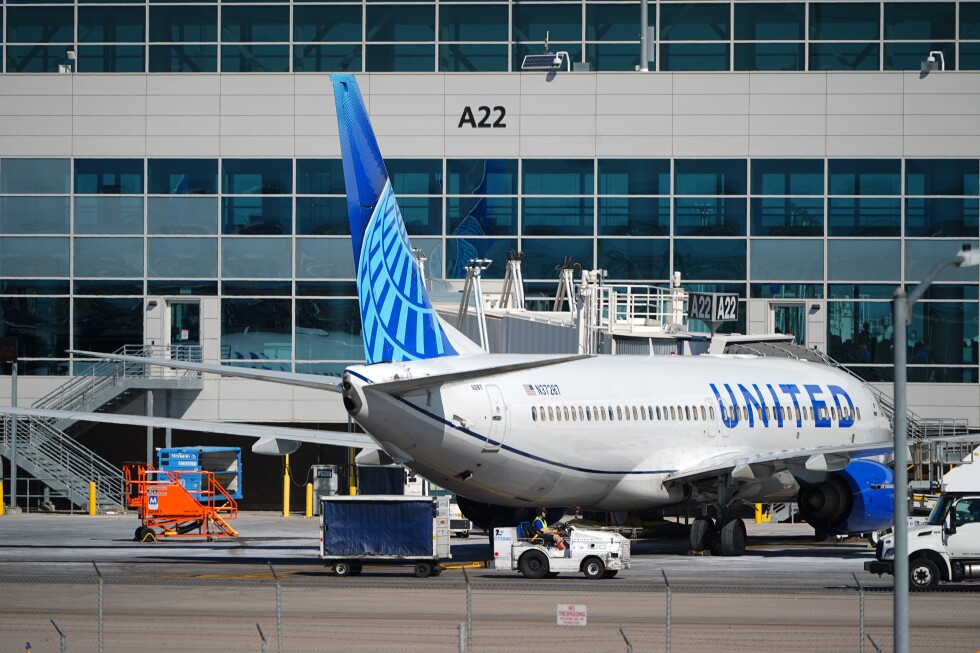
Starting this Friday, the vast majority of passengers flying with United Airlines will face a $10 increase in checked baggage fees, making the Chicago-based carrier the latest major U.S. airline to pass soaring jet fuel costs — triggered by ongoing conflict in the Middle East — onto consumers.
Under the new pricing structure, the first checked bag for travel within the U.S., Mexico, Canada and Latin America will now cost $45, while a second checked bag will carry a $55 price tag. This marks United’s first adjustment to baggage fees in two years, the airline confirmed in an official statement. Exceptions remain in place for select passenger groups, who will still retain access to a free first checked bag: these include holders of United co-branded credit cards, top-tier loyalty program members, active-duty military personnel, and passengers seated in premium cabins. Travelers who complete their baggage check-in less than 24 hours before scheduled departure will pay an extra $5 fee on top of the updated rates.
United’s fee adjustment comes just days after JetBlue implemented its own baggage fee hike, raising prices by up to $9 for peak travel periods. Like United, JetBlue maintains free first bag perks for qualifying customers, echoing a broader industry strategy of keeping base fares competitive by shifting higher costs to optional add-on services that only affect travelers who use them.
The root cause of this wave of airline fee increases traces back to the month-long Middle East conflict, which has severely disrupted global crude oil supplies. Roughly 20% of the world’s daily oil shipments pass through the Strait of Hormuz, a critical chokepoint near the conflict zone, and the instability has sent crude prices swinging dramatically. Since jet fuel is refined directly from crude oil, this volatility has pushed operating costs sharply higher for carriers around the globe.
Data from energy market intelligence firm Argus Media illustrates the scale of the increase: as of Thursday, the average price for a gallon of jet fuel across four major U.S. aviation hubs — Chicago, Houston, Los Angeles, and New York — hit $4.88. That figure is nearly double the $2.50 average recorded just before the conflict began.
For most airlines, fuel ranks as the second-largest operating expense behind only labor costs. Speaking to investors last month, United CEO Scott Kirby noted that rising jet fuel costs following the outbreak of conflict had already added an estimated $400 million to the carrier’s operating expenses. Top executives at Delta Air Lines and American Airlines reported comparable cost increases at their respective airlines.
As carriers scramble to offset mounting fuel bills, non-U.S. airlines have already responded by adding fuel surcharges or raising base ticket prices. Industry analysts note that while U.S. carriers are also expected to increase base fares over time, they traditionally rely less on explicit fuel surcharges. Instead, most U.S. carriers are opting to pass higher costs to consumers by raising existing add-on fees or introducing new ones.
Alongside the baggage fee increase, United rolled out an additional pricing restructuring Friday that extends its unbundled “pay for what you want” fare model — already standard for economy class — to its premium cabin offerings. The new structure will roll out on long-haul international routes, transcontinental U.S. flights, and select services to Hawaii, splitting premium cabin seats into three distinct fare tiers.
The new entry-level base premium fare offers the lowest upfront price, but strips out common premium perks including advance seat selection and ticket refunds, creating a cheaper access point to premium travel for passengers willing to forgo extra benefits. The mid-tier standard fare adds back the most popular perks: advance seat selection, extra checked baggage allowance, and flexible itinerary changes. At the highest end, the fully refundable flexible tier includes all available perks, catering to travelers who prioritize maximum schedule flexibility and are willing to pay a premium for it.
United plans to launch the new fare structure in select markets this month, with a full rollout across all eligible routes scheduled for later this year.