标签: South America

南美洲

  • Attorney-General’s alleged role in illegal adoptions rocks Guatemala

    Attorney-General’s alleged role in illegal adoptions rocks Guatemala

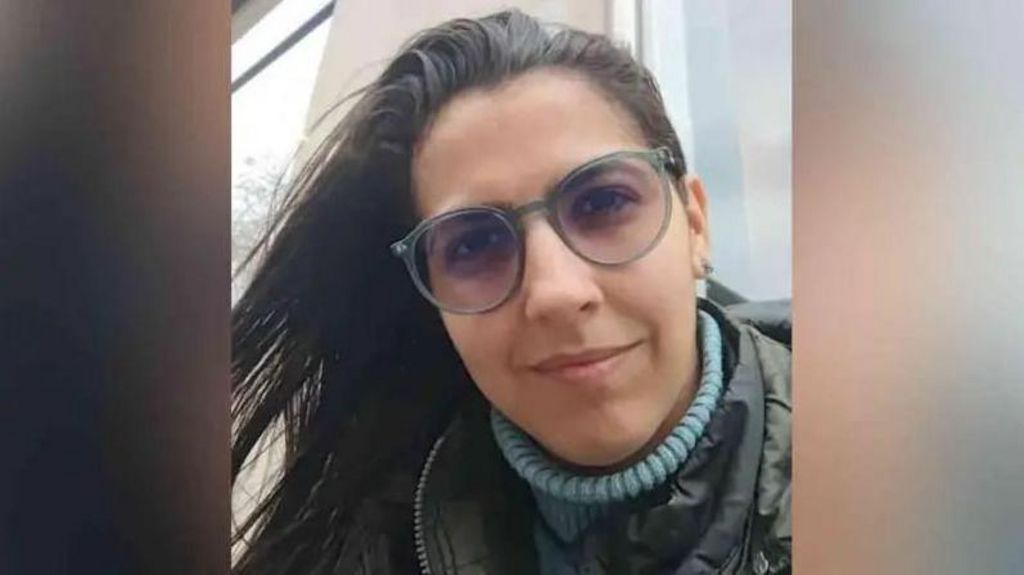
    United Nations human rights experts have issued a formal call for investigation into Guatemala’s Attorney General Consuelo Porras regarding her alleged involvement in illegal international adoptions of indigenous children during the nation’s civil war period. The independent experts, appointed by the UN to advise on human rights matters, specifically reference Porras’s seven-month tenure in 1982 as director of Hogar Temporal Elisa Martínez children’s home, where she simultaneously served as legal guardian for the minors.

    The allegations center on at least 80 indigenous children who were reportedly sent abroad for adoption through illicit means during Guatemala’s 36-year internal conflict (1960-1996). The experts characterize these adoptions as occurring ‘following their capture and enforced disappearance’ and detail how such illegal adoptions typically involved fraudulent declarations of adoptability, document falsification, coercion of biological parents, and improper financial gain for intermediaries.

    Porras has vehemently denied all accusations, labeling them ‘baseless, factually unfounded and completely malicious’ while suggesting political motivations behind the timing of these allegations. Her office released a statement through AFP news agency rejecting the claims entirely.

    The UN experts expressed particular concern that no thorough, independent investigation has examined the alleged involvement of state authorities in these processes. This development emerges during a sensitive political moment for Porras, who recently failed to secure enough support from Guatemala’s Bar Association for a seat on the Constitutional Court and is simultaneously seeking an unprecedented third term as attorney general.

    Porras’s leadership has previously drawn international criticism, including US sanctions imposed in 2022 over alleged corruption claims, which she continues to deny. Her office faced additional condemnation in 2024 for allegedly attempting to prevent anti-corruption candidate Bernardo Arévalo from assuming the presidency after his electoral victory.

  • Peru’s Congress to debate a motion to remove interim President Jerí, 4 months into his term

    Peru’s Congress to debate a motion to remove interim President Jerí, 4 months into his term

    LIMA, Peru — Peru’s political landscape faces another critical test as Congress prepares to vote Tuesday on whether to remove interim President José Jerí from office. The motion comes amid ongoing corruption investigations concerning undisclosed meetings between Jerí and Chinese business executives.

    Should legislators achieve the required majority, Jerí would become the seventh Peruvian president ousted within the past decade, ending his four-month tenure and triggering another leadership transition just two months before scheduled national elections. The congressional body would then appoint a new interim leader to govern until the July 28 transfer of power to the elected president.

    The 39-year-old interim leader remains defiant despite the allegations. “I’m not dead yet,” Jerí declared during a weekend television interview on Panamericana, vowing to continue serving Peru until his “last day” in the presidential palace.

    The corruption allegations center on a leaked report detailing a clandestine December meeting with two Chinese executives. One attendee currently holds active government contracts, while the other faces investigation for alleged involvement in illegal logging operations. Jerí maintains the meeting focused on organizing a Peruvian-Chinese cultural celebration, but opponents allege corrupt motives.

    This political crisis unfolds against a backdrop of remarkable economic stability despite Peru’s chronic political instability. The Andean nation maintains one of Latin America’s lowest external debt-to-GDP ratios at 32% for 2024 and continues to attract foreign investment in mining and infrastructure sectors.

    Jerí originally assumed office in October after his predecessor was removed by Congress over corruption allegations and concerns about rising violent crime. Ironically, he now faces removal by the same legislative body that previously supported his appointment.

  • Samba schools honor Black Brazilian female authors during their Carnival parades

    Samba schools honor Black Brazilian female authors during their Carnival parades

    RIO DE JANEIRO — In an unprecedented cultural convergence, Rio de Janeiro’s world-renowned Carnival celebrations have transformed into a platform for literary recognition, with two major samba schools dedicating their spectacular parades to celebrating the legacy of historically marginalized Black Brazilian female authors.

    This year’s Carnival witnessed a profound departure from traditional themes as Imperio Serrano and Unidos da Tijuca samba schools orchestrated elaborate tributes to literary icons Conceição Evaristo and Carolina Maria de Jesus. The 79-year-old Evaristo, renowned for her powerful narratives centering Black women’s experiences, presided majestically atop Imperio Serrano’s float during Saturday’s parade at the iconic Sambodrome. Two days later, Unidos da Tijuca mounted an equally impressive production honoring de Jesus, the favela-based diarist who documented poverty and struggle in mid-20th century Brazil.

    Evaristo, interviewed during final preparations at the samba school’s warehouse, emphasized the significance of this recognition: ‘For Black women in Brazil, everything is very difficult. This parade presents other forms of knowledge that are born in Black communities while celebrating Brazil’s diversity.’

    The Unidos da Tijuca parade transformed the Sambodrome into a moving library during the early Tuesday hours, with dancers, performers, and percussionists moving down the central alley while samba songs celebrating de Jesus’s legacy echoed throughout the venue. Floats and costumes prominently featured books of all shapes, sizes, and colors, creating a visual testament to literary achievement.

    Both honored authors emerged from humble backgrounds. De Jesus, who died in relative obscurity in 1977, maintained a diary in the 1950s that chronicled her struggles to sustain her three children in São Paulo’s favelas. Her published diary has surpassed one million copies sold since its 1960 publication, according to the prestigious Instituto Moreira Salles museum.

    Evaristo defended de Jesus’s unconventional literary style against critics who dismissed it as simplistic: ‘The Brazilian model cannot choose a single language model based, for example, on European cultures.’ Evaristo’s own acclaimed works include the 2003 novel ‘Poncia Vivencio’ and the 2014 short story collection ‘Water Eyes.’

    The Carnival tributes occur against a backdrop of persistent systemic discrimination against Black women in Brazil, who remain more likely to experience poverty, illiteracy, hunger, and gender-based violence than their white counterparts. Last year’s election of Ana Maria Gonçalves as the first Black woman to the Brazilian Academy of Letters marked a significant milestone, yet scholars argue racial and gender biases continue to influence the country’s most exclusive literary institution.

    Felipe Fanuel Xavier Rodrigues, literature professor at the Federal University of Rio de Janeiro, noted: ‘I have no doubt that if Conceição Evaristo were a white man, she would already be a part of the Brazilian Academy of Letters.’ He characterized the Carnival parades as ‘transformative political acts that suspend everyday rules, including those of a structurally racist society.’

    The celebrations represent what event organizers described as ‘an act of historical reparation,’ bringing long-overdue recognition to literary voices that have shaped Brazil’s cultural landscape while confronting the nation’s ongoing struggles with racial and gender equality.

  • Pressure grows for release of remaining Venezuelan political prisoners

    Pressure grows for release of remaining Venezuelan political prisoners

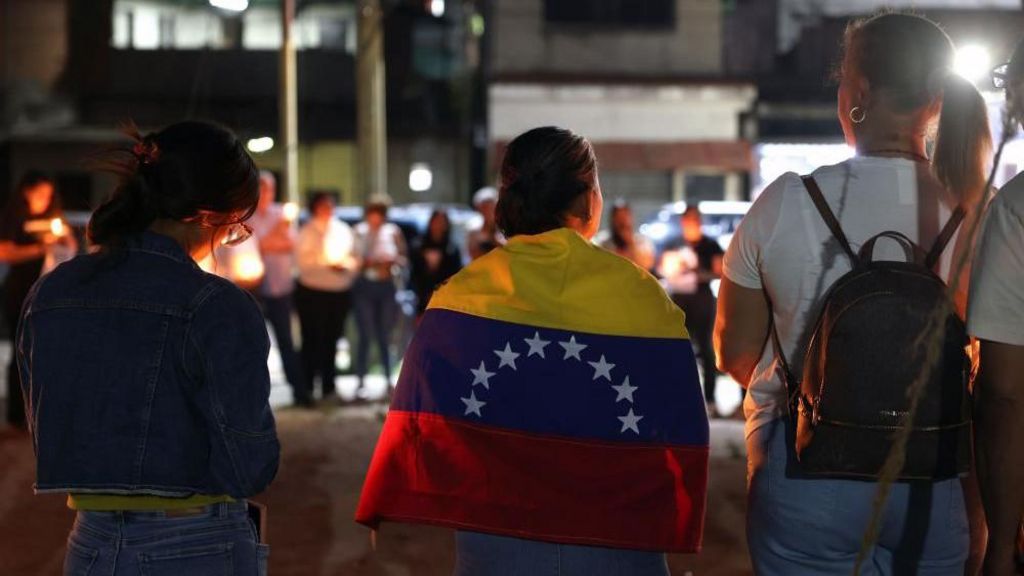
    Tensions are escalating in Venezuela as human rights advocates and families of detainees intensify demands for the immediate release of all remaining political prisoners. The interim government faces mounting international and domestic pressure following the ousting of former leader Nicolás Maduro.

    According to documentation from Foro Penal, a prominent human rights organization monitoring detainee cases, Venezuelan authorities have released 444 political prisoners since U.S. forces captured Maduro in January. However, the organization confirms that hundreds more remain incarcerated despite increasing demands for their freedom.

    The situation has grown increasingly urgent as relatives of imprisoned individuals have undertaken hunger strikes outside the Zona 7 detention facility in Caracas. Visual evidence circulated by opposition group Vente Venezuela shows at least one protester requiring medical attention after their health deteriorated significantly. Ten individuals initiated the hunger strike on Saturday, joining a vigil that has continued since January 8th.

    While the Trump administration has acknowledged the interim government’s progress, Venezuelan activists criticize the process as dangerously slow and lacking transparency. Opposition figures further allege that released prisoners face severe restrictions, citing the case of politician Juan Pablo Guanipa who was rearrested hours after his February 8th release and placed under house arrest for allegedly violating release conditions.

    The political confrontation has expanded to include student demonstrations calling for comprehensive amnesty for those imprisoned during Maduro’s crackdown on government critics. Interim leader Delcy Rodríguez has proposed amnesty legislation that passed its initial reading unanimously on February 5th. However, legislative progress stalled last week as lawmakers failed to reach consensus on implementation mechanisms, with further discussions anticipated this week.

  • Giant robot tribute to Brazil’s President Lula leads start of Rio Carnival

    Giant robot tribute to Brazil’s President Lula leads start of Rio Carnival

    Rio de Janeiro’s world-renowned Carnival celebrations commenced with a breathtaking spectacle as the iconic samba parades unveiled a monumental robotic tribute to Brazilian President Luiz Inácio Lula da Silva. The dazzling display, presented by one of Rio’s premier samba schools, creatively chronicled the president’s extraordinary journey from impoverished beginnings to the nation’s highest office through elaborate mechanized artistry and vibrant choreography.

    The colossal mechanized figure became an instant highlight of the Carnival’s opening night, seamlessly integrating political narrative with Brazil’s rich cultural traditions. This artistic interpretation represents a significant cultural moment where performing arts intersect with political symbolism, demonstrating how Carnival continues to serve as both entertainment and social commentary.

    The tribute emerges during a particularly consequential period in Brazilian politics, with the celebration occurring against the backdrop of Lula’s return to power following his contentious 2022 election victory. Carnival organizers transformed the Sambadrome into a dynamic canvas of moving parts and rhythmic storytelling, employing state-of-the-art engineering to create the massive animated effigy that captivated audiences.

    This fusion of technology and traditional Carnival artistry marks an evolution in how samba schools conceptualize their thematic presentations, blending mechanical innovation with samba rhythms to create politically-charged visual narratives that resonate with both domestic and international audiences.

  • Atle Lie McGrath of Norway leads 1st run of Olympic slalom, Brazil’s Lucas Pinheiro Braathen falls

    Atle Lie McGrath of Norway leads 1st run of Olympic slalom, Brazil’s Lucas Pinheiro Braathen falls

    BORMIO, Italy — Norwegian skier Atle Lie McGrath seized the first-run lead in a weather-challenged men’s slalom event at the Winter Olympics on Monday, while Brazilian champion Lucas Pinheiro Braathen saw his gold medal defense vanish in a dramatic crash on the foggy, snow-covered slopes.

    The competition, marked by exceptionally difficult conditions, witnessed nearly half of the 96 starters fail to complete the course. Pinheiro Braathen—who made history just days earlier as the first South American Winter Olympic gold medalist—was posting a competitive time when he lost his edge and slid down the mountain, ultimately recording a ‘Did Not Finish’ (DNF).

    McGrath, Braathen’s former Norwegian teammate and close friend, clocked 56.14 seconds to lead Switzerland’s Loic Meillard by 0.59 seconds. Austria’s Fabio Gstrein finished third in the opening run of this final Alpine event of the Milan Cortina Games.

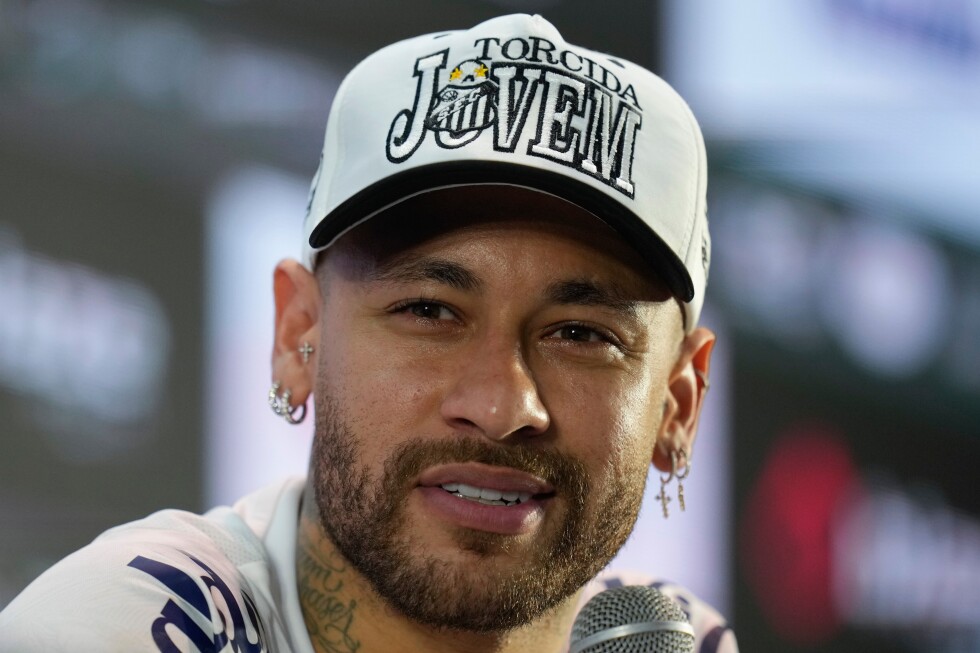
    Reflecting on the brutal nature of elite skiing, Braathen remarked: ‘Of course I’m conflicted. This sport brings you up to the sky and slams you back into reality equally as fast. That’s exactly what makes it the art it is.’

    The event served as a poignant farewell for Greece’s AJ Ginnis, who completed a ceremonial run despite improper recovery from ankle surgery. Meanwhile, McGrath competed wearing an armband in tribute to his grandfather, who passed away on opening ceremony day.

    The field showcased skiing’s global growth, featuring athletes from Jamaica, Singapore, and Mexico—including Lasse Gaxiola, whose mother, Sarah Schleper, previously competed in Cortina.

  • Brazil’s Lula gets image boost at Rio Carnival, but also faces legal risks

    Brazil’s Lula gets image boost at Rio Carnival, but also faces legal risks

    RIO DE JANEIRO — A spectacular Carnival parade honoring Brazilian President Luiz Inácio Lula da Silva at Rio’s Sambadrome has ignited political controversy and potential legal ramifications six months before the October elections. The event, organized by top samba school Academicos de Niteroi, celebrated Lula’s journey from childhood poverty to becoming one of Latin America’s most influential leaders through elaborate floats, costumes, and musical tributes.

    The president, accompanied by Vice President Geraldo Alckmin and their wives, attended the celebration despite warnings from legal analysts about potential electoral violations. The parade’s central theme focused on Brazil’s northeast region—Lula’s birthplace—with organizers insisting the tribute was cultural rather than political. Tiago Martins, the parade’s chief organizer, stated they presented their vision to Lula months in advance and denied any campaign intentions in the school’s lyrics or displays.

    Political adversaries have condemned the event as premature campaigning, filing complaints with Brazil’s electoral court. Critics argue that samba schools receiving public funding should not engage in political tributes, especially during an election year. Lawmaker Kim Kataguiri led efforts to block the parade, asserting that public money should not fund “electoral campaigns disguised as tributes.”

    While Brazil’s top electoral court rejected preemptive censorship attempts, judges reserved the right to review potential violations after the event. Political analysts note that the tribute carries significant risks for Lula, potentially alienating moderate and evangelical voters who oppose mixing Carnival with politics. The event also occurs as leadership of the electoral court prepares to transition to Supreme Court Justice Kássio Nunes, appointed by Lula’s rival Jair Bolsonaro.

    Recent polls indicate a tightly contested race between Lula and his primary opponent, Senator Flávio Bolsonaro, making any electoral violations potentially consequential through fines or loss of campaign resources.

  • Trump has big plans for Venezuela’s oil but are they feasible?

    Trump has big plans for Venezuela’s oil but are they feasible?

    Despite possessing the world’s largest proven oil reserves, Venezuela’s energy sector presents a complex investment dilemma for American petroleum corporations. The recent political shift following the seizure of President Nicolás Maduro has opened theoretical opportunities for foreign investment, yet practical barriers remain formidable.

    Venezuela’s state-owned PDVSA has suffered severe degradation after years of underinvestment and mismanagement. Production has plummeted from historical highs of 1.5 million barrels per day to current diminished levels. Industry analysts note that much of the infrastructure requires complete reconstruction rather than mere maintenance, with estimated rehabilitation costs exceeding $100 billion.

    The fundamental economic viability remains questionable despite vast reserves theoretically totaling 300 billion barrels. Venezuela’s heavy crude requires specialized refining capabilities and commands lower market prices than lighter alternatives. Current global oil prices around $65 per barrel further diminish the economic appeal compared to previous eras of triple-digit crude valuations.

    Security concerns and legal precedents compound these challenges. Major energy firms including ExxonMobil and ConocoPhillips previously experienced asset expropriation without compensation, resulting in outstanding arbitration awards totaling billions. The continued presence of former regime officials and paramilitary groups creates additional investment security risks.

    The Trump administration’s approach has emphasized pressure over incentives, refusing to provide investment guarantees while threatening corporations hesitant to enter the market. This stance has led industry leaders to privately describe Venezuela as ‘uninvestable’ in its current state, despite political pressure to engage with the resource-rich nation.

    Analysts suggest that without substantial economic incentives and security guarantees, private sector participation will remain limited regardless of political developments. The potential for Venezuela to significantly impact global oil markets exists theoretically, but practical realization requires overcoming substantial structural, economic and political hurdles.

  • Colombian president accepts rebel’s proposal to have a commission investigate its possible drug ties

    Colombian president accepts rebel’s proposal to have a commission investigate its possible drug ties

    BOGOTA, Colombia — In a significant development toward potential peace negotiations, Colombian President Gustavo Petro announced Sunday his acceptance of a proposal from the National Liberation Army (ELN) to establish an independent commission investigating the rebel group’s alleged connections to narcotics trafficking. The unprecedented move comes after ELN commander Antonio García publicly challenged the government in a January 20 video statement to verify their claims of non-involvement in drug operations. President Petro responded via social media platform X, stipulating that the verification body must maintain scientific integrity and governmental independence while reporting its findings directly to the United Nations. The Colombian leader simultaneously urged ELN forces to support crop substitution initiatives in the conflict-ridden Catatumbo region, where coca cultivation remains prevalent. This diplomatic breakthrough follows last year’s collapsed peace talks, which deteriorated after ELN offensives displaced over 50,000 civilians and resulted in numerous casualties. The 5,000-strong Marxist rebel group, established in the 1960s, has expanded its territorial control along the Venezuela-Colombia border following the 2017 disarmament of FARC rebels. Petro’s administration has consistently accused ELN leadership of being ‘drug traffickers disguised as guerrilla fighters,’ citing narcotics revenue as a primary obstacle to successful peace negotiations.

  • Police wear fancy dress in Rio Carnival phone theft sting

    Police wear fancy dress in Rio Carnival phone theft sting

    In an unconventional security operation during Rio de Janeiro’s famed Carnival celebrations, Brazilian civil police officers employed creative disguises to combat rampant phone theft. Undercover agents blended seamlessly with revelers while wearing masks depicting popular characters including Captain America, Batman, Jason Voorhees from Friday the 13th, and the distinctive red overalls from Netflix’s Money Heist series.

    The innovative operation led to the apprehension of two seasoned criminals caught in the act of stealing mobile phones. Authorities reported that a drone surveillance unit observed a female suspect snatching a phone from a Carnival participant before transferring it to her male accomplice. Both individuals were subsequently arrested while still surrounded by unsuspecting partygoers.

    Investigation revealed the detained suspects collectively possessed 30 prior criminal records. The female suspect had attempted to avoid detection by pretending to be pregnant, according to police statements. The operation resulted in the recovery of five stolen mobile devices in Santa Teresa neighborhood, all scheduled for return to their rightful owners.

    This action forms part of Operation Tracking, a state-level initiative targeting mobile phone theft and resale networks. The program has achieved significant success with over 13,000 devices located and approximately 4,400 returned to victims since its implementation.

    The tactic of using elaborate costumes for law enforcement operations isn’t unique to Brazil. Peruvian police have regularly employed similar methods during major holidays including Valentine’s Day, Halloween, and Christmas celebrations. Previous operations have seen officers dressed as Spider-Man discovering cocaine in trick-or-treat buckets, a teddy bear costume used to apprehend drug dealers, and various Marvel superhero disguises deployed in raids.