标签: South America

南美洲

  • ‘The Secret Agent’ earns 4 Oscar nominations, boosting Brazilian cinema

    ‘The Secret Agent’ earns 4 Oscar nominations, boosting Brazilian cinema

    Brazil’s cinematic landscape is experiencing a monumental resurgence, evidenced by the remarkable Oscar recognition for Kleber Mendonça Filho’s political drama ‘The Secret Agent.’ The film secured four Academy Award nominations, matching the record set by the iconic 2002 film ‘City of God.’ Its nominations span the prestigious categories of Best Picture, Best Actor for Wagner Moura, Best International Feature, and the newly introduced Achievement in Casting.

    The film’s narrative centers on a widowed father who becomes a target of Brazil’s 1970s military dictatorship after confronting a business owner with regime connections. This nomination streak follows last year’s triumph when another Brazilian production, ‘I’m Still Here,’ won the Oscar for Best International Feature, marking the country’s first Academy Award in that category.

    President Luiz Inácio Lula da Silva has hailed this moment as one of the finest in Brazilian cinematic history, noting that these achievements represent ‘recognition of our culture and of Brazil’s ability to tell stories that move the world.’ Both critically acclaimed films are set during the nation’s military dictatorship (1964-1985) and have sparked nationwide conversations about this dark historical period characterized by disappearances and torture.

    Director Mendonça Filho revealed the film has attracted over one million viewers and serves as a artistic response to Brazil’s recent political turmoil, including the far-right administration of former President Jair Bolsonaro. While deeply Brazilian in context, the director emphasized the film’s universal themes of power oppression resonate globally.

    The nominations have ignited national pride among Brazilians, with casting director Gabriel Domingues describing the industry’s current state as ‘a moment of intense emotion.’ Cinema expert Ana Paula Sousa from ESPM University noted these successes are transforming Brazilians’ relationship with domestic cinema in a country where movie attendance has historically been low, creating newfound cultural excitement around locally produced films.

  • Venezuela opens debate on an oil sector overhaul as Trump seeks role for US firms

    Venezuela opens debate on an oil sector overhaul as Trump seeks role for US firms

    Venezuela’s National Assembly has initiated legislative proceedings on a transformative bill that would significantly reduce state dominance over the country’s oil industry, marking the most substantial policy shift since the late President Hugo Chávez nationalized major portions of the sector in 2007. The proposed legislation, which advanced through initial parliamentary debate on Thursday, would establish new frameworks for private sector participation and international arbitration mechanisms.

    The comprehensive reform package emerges amid heightened pressure from the Trump administration following the recent U.S. capture of former President Nicolás Maduro. American officials have intensified demands for Venezuela’s acting President Delcy Rodríguez to facilitate increased investment from U.S. energy corporations in the nation’s struggling petroleum industry.

    According to draft legislation obtained by The Associated Press, the bill would enable private companies to independently operate oil fields, market their crude production, and retain financial revenues while maintaining nominal minority partnership status with state-owned PDVSA. The document explicitly states that operating companies would assume comprehensive management of activities “at its sole cost, expense and risk.”

    A critical component of the proposed law involves permitting international arbitration for investment disputes, moving away from the previous requirement that cases be heard exclusively in Venezuelan courts. The legislation maintains the existing 30% royalty rate but allows reductions to as low as 15% for complex or capital-intensive oil projects to incentivize development.

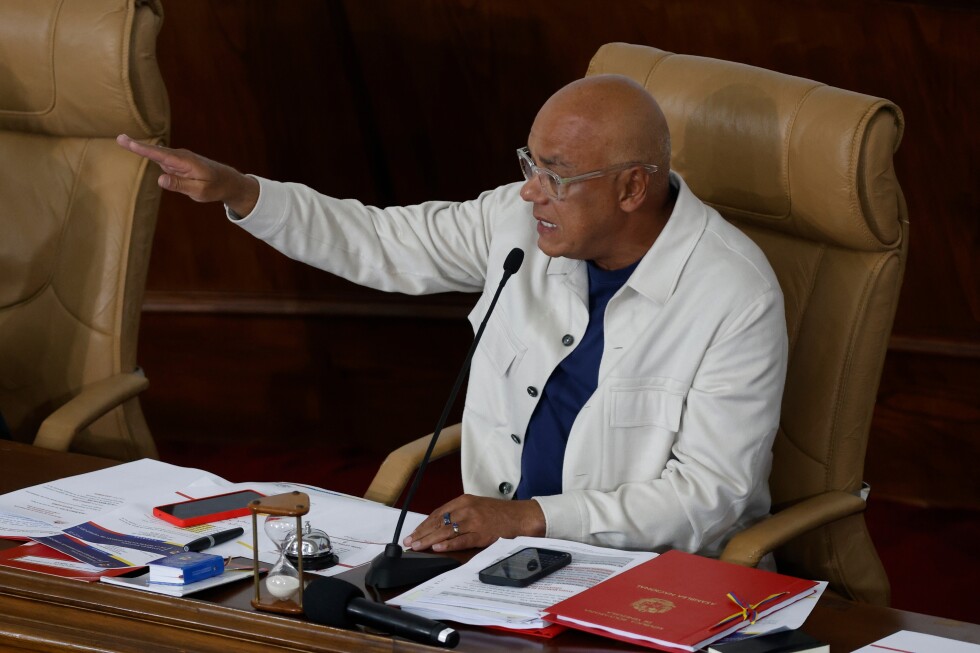
    Jorge Rodríguez, President of the National Assembly and brother of the acting president, emphasized to lawmakers that the bill aims to achieve “an accelerated increase in production,” noting that “oil under the ground is useless” without development. The proposal received backing from business representatives, including Orlando Camacho of Fedeindustria, who described the measures as essential for maintaining the oil industry as Venezuela’s economic engine.

    Despite these overtures, significant investor concerns persist regarding financial and legal risks. Many international energy companies, including Exxon, continue seeking compensation for assets seized during Chávez’s nationalization campaign. Additional uncertainties stem from Venezuela’s political transition timeline and the maintenance of U.S. sanctions that currently restrict foreign operations in the country’s oil sector.

  • House holding war powers vote to direct Trump to remove troops from Venezuela

    House holding war powers vote to direct Trump to remove troops from Venezuela

    A significant legislative confrontation unfolded in the House of Representatives on Thursday as lawmakers voted on a resolution demanding the withdrawal of U.S. military forces from Venezuela. This move represents the latest chapter in the ongoing tension between Democratic legislators and the Republican-controlled Congress regarding presidential authority in military engagements.

    The resolution emerged despite prior assurances from the Trump administration to senators that no American troops were currently deployed in Venezuela and that congressional approval would be sought before initiating substantial military operations. Democratic representatives maintained that the measure remained necessary following recent U.S. efforts to capture Venezuelan leader Nicolás Maduro and President Trump’s expressed intentions to control the nation’s oil resources.

    The vote served as a critical examination of Republican willingness to constrain a president who originally campaigned on reducing foreign military involvement but has increasingly employed military options to advance policy objectives in the Western Hemisphere. Thus far, most Republican lawmakers have resisted imposing checks on presidential war powers through legislative measures.

    Representative Brian Mast (R), chair of the House Armed Services Committee, characterized the Democratic initiative as motivated by ‘spite’ toward President Trump rather than substantive policy concerns. He defended the administration’s actions, describing the operation against Maduro as ‘possibly the most successful law enforcement operation in history.’

    Democratic representatives countered that Congress must reassert its constitutional role in determining appropriate use of military force. Representative Gregory Meeks (D), ranking member of the House Foreign Affairs Committee, criticized the administration’s approach, stating that Trump’s policies were reducing the United States to ‘a regional bully with fewer allies and more enemies.’

    The debate occurs alongside emerging questions about the administration’s handling of Venezuelan oil resources. Senate Democrats have raised concerns about potential connections between oil licensing agreements and political contributions, specifically referencing Vitol, a major oil broker that received significant licensing rights while its executives contributed substantially to Trump-aligned political action committees.

    Thirteen Democratic senators have demanded full transparency regarding any financial arrangements connected to Venezuela that might benefit presidential donors. The White House maintains that it is safeguarding Venezuela’s oil resources for the benefit of both the Venezuelan people and American interests.

  • Colombia imposes tariffs and halts energy sales to Ecuador as trade feud escalates

    Colombia imposes tariffs and halts energy sales to Ecuador as trade feud escalates

    In a significant escalation of cross-border tensions, Colombia has declared immediate economic countermeasures against Ecuador, implementing a 30% tariff on select Ecuadorian imports and suspending all electricity exports to its neighbor. This decisive action comes as a direct response to Ecuador’s previous imposition of similar trade barriers, marking a rapid deterioration in bilateral relations between the two Andean nations.

    The trade dispute originated from Ecuadorian President Daniel Noboa’s public statements highlighting an $852 million trade deficit with Colombia and expressing concerns about inadequate security cooperation along their shared border—a region notorious for criminal organizations and international drug trafficking operations.

    Colombian authorities expressed astonishment at Ecuador’s unilateral trade measures, emphasizing that bilateral cooperation continues through established joint mechanisms including military and anti-narcotics operations. Official trade data reveals a substantial imbalance: from January to November 2024, Ecuador exported $760 million worth of goods to Colombia while importing $1.8 billion in Colombian products.

    Colombia’s new tariff structure affects 20 specific Ecuadorian products representing approximately $250 million in annual trade. Commerce Minister Diana Marcela Morales characterized the measures as temporary while reaffirming Colombia’s commitment to seeking diplomatic resolution through negotiation.

    Simultaneously, Colombia’s Ministry of Mines and Energy announced an indefinite suspension of electricity exports to Ecuador, framing the decision as a necessary precaution to protect national energy security. Energy Minister Edwin Palma condemned Ecuador’s initial tariffs as “economic aggression” while highlighting Colombia’s previous energy assistance—during Ecuador’s severe power crisis in late 2024, Colombia supplied roughly 90% of its exportable capacity (approximately 450 megawatts) to stabilize Ecuador’s grid.

    Business communities in both nations have expressed grave concerns about immediate economic consequences. Oliva Diazgranados, executive director of the Colombian-Ecuadorian Chamber of Commerce, reported widespread alarm among member companies regarding potential impacts on corporate development, sales projections, and employment stability. Diazgranados noted that while businesses bear the immediate brunt, the underlying tensions stem primarily from security rather than trade issues.

  • Son-in-law of Venezuelan opposition candidate released after 380 days in detention

    Son-in-law of Venezuelan opposition candidate released after 380 days in detention

    CARACAS, Venezuela — In a significant development within Venezuela’s political landscape, Rafael Tudares Bracho, son-in-law of prominent opposition leader Edmundo González, has been released from detention after enduring over 380 days incommunicado imprisonment. His liberation represents part of a broader pattern of prisoner releases initiated by Venezuela’s interim government following the apprehension of former President Nicolás Maduro by U.S. authorities on narcotics trafficking allegations.

    The emotional reunion occurred Thursday morning, ending what family members described as an “unjust and arbitrary detention” characterized by enforced disappearance conditions. Mariana González, Tudares Bracho’s wife and daughter of the opposition leader, announced the development via social media platform X, emphasizing the “stoic and profoundly difficult struggle” the family endured throughout the ordeal.

    Tudares Bracho’s legal proceedings drew international scrutiny after his November 28 trial concluded within a single 12-hour session, resulting in convictions for conspiracy, terrorism, and criminal association charges that carried a 30-year sentence. The remarkably expedited judicial process and subsequent lengthy incommunicado detention raised serious concerns about due process violations.

    The release coincides with growing domestic pressure as families of detained Venezuelans maintain vigils outside prisons demanding freedom for approximately 800 imprisoned critics, journalists, and opposition members. Edmundo González, widely recognized as the legitimate victor of Venezuela’s 2024 presidential election despite his current exile status, celebrated the development while cautioning against viewing it as an isolated incident.

    In a social media statement, González emphasized the broader implications: “It would be a mistake to reduce this event to a personal story. There remain men and women deprived of liberty for political reasons, without guarantees, without due process, and in many cases, without truth.”

    According to Venezuela’s leading prisoner rights organization Foro Penal, this release brings the verified number of freed political prisoners to 145, while at least 775 individuals remain in detention. The Trump administration has characterized these releases as goodwill gestures toward the United States, though concerns persist regarding Venezuela’s judicial independence and human rights record.

  • Why Chile’s wildfires are spreading faster and burning hotter

    Why Chile’s wildfires are spreading faster and burning hotter

    Chile faces one of its most devastating wildfire emergencies in recent history, with central and southern regions experiencing unprecedented destruction. The blazes, which ignited in mid-January in Biobio and Nuble regions approximately 500 kilometers south of Santiago, have claimed at least 20 lives and displaced over 50,000 residents. The government has declared a state of catastrophe, enabling military coordination in firefighting operations.

    Fire scientists identify a dangerous convergence of factors driving the catastrophe: extreme heat, prolonged drought exceeding a decade, erratic winds, and human-shaped landscapes. Miguel Castillo, Director of the Forest Fire Engineering Laboratory at the University of Chile, notes that while fire numbers remain within normal ranges, the burned area has nearly tripled—indicating fewer ignitions are causing exponentially greater damage.

    The crisis exhibits characteristics increasingly common in global extreme wildfire seasons. Virginia Iglesias, Director of Earth Lab at University of Colorado Boulder, describes the emergency as involving multiple simultaneous fires advancing toward communities. Mark Cochrane, fire ecologist at University of Maryland’s Center for Environmental Science, explains how drought transforms vegetation into abundant fuel, while winds oxygenate fires and accelerate combustion.

    Industrial plantations covering vast areas of central and southern Chile significantly exacerbate fire behavior. Pine and eucalyptus plantations feature high fuel loads, continuous tree coverage, and vertical “ladder” structures that enable flames to reach crown levels. These non-native species are highly flammable and generate wind-blown embers that ignite new fires behind containment lines, creating insurmountable challenges for firefighters in steep terrain.

    Nearly all Chilean wildfires originate from human activity—whether intentional or negligent—with ignitions occurring through power lines, recreation, and infrastructure. The environmental impacts extend beyond immediate destruction: smoke degrades air quality across regions, post-fire soils become water-repellent increasing flood risks, and intense burns facilitate invasive species regeneration that perpetuates fire cycles.

    Researchers emphasize that climate projections indicate these conditions will intensify. Alejandro Miranda of Chile’s Center for Climate and Resilience Research notes that recent extreme fire seasons coincide with record temperatures and rainfall deficits exceeding 30% below historical averages.

    Looking forward, experts stress that while firefighting remains crucial, prevention strategies must prioritize reducing ignitions, managing fuels, addressing climate change, and implementing community redesign with defensible spaces around homes.

  • Interpol-backed police make nearly 200 arrests in Amazon region gold mining sweep

    Interpol-backed police make nearly 200 arrests in Amazon region gold mining sweep

    In a landmark cross-border operation, law enforcement agencies from Brazil, French Guiana, Guyana, and Suriname have apprehended nearly 200 individuals in a coordinated assault on illegal gold mining operations devastating the Amazon rainforest. The December initiative, backed by Interpol, European Union authorities, and Dutch environmental crime specialists, represents the first joint multinational effort targeting the environmentally destructive trade.

    Operation Guyana Shield involved extensive surveillance across remote border regions, with authorities conducting over 24,500 inspections of vehicles and individuals. The operation yielded significant seizures including substantial amounts of unprocessed gold, mercury containers valued at over $60,000, firearms, narcotics, mining apparatus, and considerable cash reserves. Notably, three suspects were detained in Guyana on charges of gold smuggling and money laundering after investigators confiscated approximately $590,000 in cash and raw gold materials, believed to be connected to a major gold exporting enterprise.

    The environmental consequences of illegal gold mining have reached critical levels, driving extensive deforestation and polluting vital waterways with toxic mercury. This destructive practice has expanded rapidly alongside soaring global gold prices, transforming gold into one of the most lucrative commodities for transnational organized crime networks. The operation revealed sophisticated smuggling methods, including mercury concealed within solar panels transported via commercial buses.

    Beyond environmental damage, authorities uncovered disturbing human rights violations, including undocumented migrants and minors potentially subjected to forced labor and sexual exploitation within mining networks. Additional seizures included counterfeit medications, alcohol, cigarettes valued at over $40,000, along with specialized mining equipment.

    Interpol Secretary General Valdecy Urquiza emphasized the growing threat posed by illegal mining operations, particularly in vulnerable remote regions. The operation marks a significant advancement in regional cooperation, addressing challenges posed by dense rainforest terrain and porous borders that have historically hampered enforcement efforts against environmentally destructive criminal enterprises.

  • Son-in-law of Venezuelan opposition candidate freed from jail, wife says

    Son-in-law of Venezuelan opposition candidate freed from jail, wife says

    In a significant development within Venezuela’s ongoing political turmoil, Rafael Tudares—the son-in-law of prominent opposition figure Edmundo González—has been released following over a year of detention. His wife, Mariana González, publicly confirmed his return after what she described as “380 days of unjust and arbitrary detention.”

    Tudares’s release occurs against the backdrop of drastic political shifts, including the U.S. military’s capture of former President Nicolás Maduro, who now faces trial in New York on drug-trafficking allegations. Since Maduro’s removal, an estimated 150 detainees have been freed, though human rights organizations emphasize that hundreds remain imprisoned under questionable legal circumstances.

    Delcy Rodríguez, Maduro’s former vice-president, now serves as acting president and has received endorsement from U.S. President Donald Trump. This support followed her commitment to transfer up to 50 million barrels of Venezuelan oil to the United States. Among the Trump administration’s early demands was the release of political prisoners—a gesture Rodríguez’s administration has slowly begun implementing.

    However, watchdog groups like Foro Penal report that only 151 releases have been verified since the government’s promise to free “an important number” of detainees. Many freed individuals still face unresolved legal charges and are prohibited from public commentary, leaving them in a state of judicial uncertainty.

    Tudares’s initial arrest was emblematic of the crackdown that followed the contentious 2024 presidential election. After opposition frontrunner María Corina Machado was disqualified, Edmundo González emerged as the primary challenger. When official results—unsupported by detailed tallies—declared Maduro the winner, González sought asylum and later exile, fearing government retaliation.

    Just days before Maduro’s January 2025 inauguration, Tudares—a lawyer with no political involvement—was abducted by masked operatives while taking his children to visit their grandmother. For months, his family had no knowledge of his location or the charges against him. He was later sentenced to 30 years for “terrorism and conspiracy” in a proceeding his family decried as unjust.

    Mariana González revealed that intermediaries had repeatedly suggested her husband’s release was contingent on her father renouncing his political cause. She condemned the ordeal, stating, “Being the son-in-law of Edmundo González is not a crime.”

    While celebrating Tudares’s return, González reminded the public that hundreds of families continue to await news of loved ones who remain detained. Vigils are ongoing outside Venezuelan prisons as families hope more releases will follow.

  • Mexico sends 37 accused drug gang members to the US

    Mexico sends 37 accused drug gang members to the US

    In a significant bilateral security operation, Mexican authorities have transferred 37 inmates with alleged connections to powerful drug cartels to face judicial proceedings in the United States. This development follows recent remarks by former President Donald Trump suggesting potential U.S. military strikes against organized criminal networks operating within Mexican territory.

    This transfer represents the third such extradition initiative between the two nations within the past year, occurring during President Claudia Sheinbaum’s administration which has faced scrutiny regarding its approach to U.S. relations. Mexico’s Secretary of Security, Omar García Harfuch, communicated via social media platform X that the extradited individuals constituted a ‘threat to the country’s security.’

    The U.S. Justice Department publicly endorsed the extraditions, characterizing them as instrumental to a comprehensive strategy aimed at dismantling cartel operations. U.S. Attorney General Pam Bondi stated formally that ‘these 37 cartel members will now answer for their crimes against the American people within American judicial institutions.’

    Mexican officials secured assurances from U.S. prosecutors that capital punishment would not be sought against the transferred individuals. The operation was conducted pursuant to National Security Law provisions and established bilateral cooperation frameworks, with explicit acknowledgment of national sovereignty considerations.

    The detainees were transported aboard seven armed Mexican aircraft to multiple U.S. jurisdictions including Washington, New York, Houston, Pennsylvania, San Diego, and San Antonio. This latest operation brings the total number of extradited prisoners to 92 since the beginning of Trump’s second administration, following previous transfers of 26 ‘key operatives’ last August and a similar operation in February.

    President Sheinbaum’s government has intensified anti-narcotics efforts, citing a 50% reduction in fentanyl seizures at the southern U.S. border as evidence of effective policy. These developments occur alongside diplomatic discussions concerning U.S. military deployment along the border, which Mexican officials have explicitly stated remains ‘not on the table’ for consideration.

    The extradition program unfolds against a broader geopolitical backdrop that includes U.S. actions against other regional governments, following the precedent of military operations in Venezuela targeting former President Nicolás Maduro.

  • In the ashes of Lirquén: How a small town is rising from Chile’s devastating wildfires

    In the ashes of Lirquén: How a small town is rising from Chile’s devastating wildfires

    Central and southern Chile continue to grapple with one of the most devastating wildfire outbreaks in recent history, with infernos consuming approximately 450 square kilometers of terrain and claiming at least 20 lives. The coastal fishing village of Lirquén has emerged as the epicenter of destruction, where 80% of the territory has been engulfed and 17 of the total fatalities occurred.

    Despite containment efforts, approximately twenty major fires remain active across the region, fueled by a dangerous convergence of strong winds, prolonged drought, and extreme temperatures. The catastrophe has left approximately 300 injured, tens of thousands evacuated, and over 750 homes completely destroyed.

    Survivors like Pamela Crisostomo, who escaped with only the clothes on her back, describe the experience as ‘hell,’ witnessing lifetimes of work obliterated within seconds. The reconstruction phase has now begun, driven primarily by community solidarity and international aid organizations rather than government response.

    Humanitarian organizations including World Central Kitchen and ADRA are delivering over 6,000 daily meals to affected communities. Hundreds of volunteers from Santiago and beyond have mobilized to establish temporary clinics, distribute food, and clear debris under sweltering conditions. Mobile veterinary units are providing care for injured animals, while police continue search operations for potential victims beneath the rubble.

    Local residents have expressed frustration with the slow official response, noting minimal municipal support despite the scale of destruction. As weather conditions continue to challenge firefighting efforts, with new evacuations ordered in towns like Florida, the nation faces a long recovery process from what officials are calling one of Chile’s worst natural disasters.