标签: South America

南美洲

  • A Brazilian skier at the Winter Olympics? Lucas Pinheiro Braathen could make history

    A Brazilian skier at the Winter Olympics? Lucas Pinheiro Braathen could make history

    MILAN — Alpine skiing sensation Lucas Pinheiro Braathen faces an unusual challenge when introducing himself to fellow Brazilians: convincing them he genuinely represents their nation in winter sports. The 25-year-old athlete, who recently switched allegiance from Norway to Brazil, could make history at the upcoming Winter Olympics by winning South America’s first-ever medal in the competition.

    In an exclusive interview with The Associated Press, Pinheiro Braathen described the fascinating reactions he receives in Brazil. “When I meet someone new, it’s always this mindblowing moment that sparks very interesting conversations,” he shared with amusement. “These interactions demonstrate how foreign skiing is to Brazilians, which makes representing them even more fulfilling.”

    The 2023 World Cup slalom champion has already achieved multiple milestones under his new flag. Last year, he became the first Brazilian skier to finish on a World Cup podium, followed by securing the country’s inaugural World Cup victory this season—adding to his five previous wins for Norway.

    Pinheiro Braathen’s unique background stems from his Brazilian mother and Norwegian father. After unexpectedly retiring on the eve of the 2023 season, he made a surprising comeback one year later representing Brazil. This cultural duality shapes his approach to competition: “I’m a person of cultural duality with two perspectives presented from birth. I’ve never been limited to one reality or culture.”

    The athlete has developed a philosophical approach to pressure, viewing it as motivational currency rather than burden. “Pressure is privilege—it’s my most important currency,” he explained. “The greater the challenge, the greater the difference I can make. I channel that pressure into performance, enabling me to become the version of myself that can beat every other athlete.”

    Known for his vibrant personality, fashion sense, and painted fingernails, Pinheiro Braathen brings Brazilian energy and Norwegian discipline to the slopes. His celebratory style includes samba dancing after podium finishes, as demonstrated following his first victory for Brazil.

    The skier maintains a close relationship with his father, Björn Braathen, who introduced him to skiing at age four despite initial resistance. Interestingly, his father fully supports his son’s decision to compete for Brazil, stating: “As a Norwegian, people expect me to feel very bad about that, but I don’t. It’s my son and I just want him to be happy.”

    As the Winter Olympics approach, Pinheiro Braathen embraces the possibility of creating history not just for Brazil, but for the entire South American continent.

  • Caribbean cannabis growers eye budding domestic sales and exports

    Caribbean cannabis growers eye budding domestic sales and exports

    In the fertile countryside of Antigua, master cultivator Michaelus Tracey demonstrates the intricate art of cannabis strain identification through leaf texture and aromatic profiling. At Pineapple Road Farm, nine distinct cannabis varieties flourish under optimal Caribbean conditions—warm temperatures, abundant sunshine, and high humidity creating ideal cultivation terrain.

    This agricultural precision represents a broader regional transformation. Since Jamaica’s groundbreaking decriminalization of recreational cannabis and medical legalization a decade ago, multiple Caribbean nations including Antigua and Barbuda (2018) have embraced regulatory reform. The region, long associated with cannabis culture, is now emerging as an unexpected leader in medicinal cannabis production and research.

    Professor Rose-Marie Belle Antoine, University of the West Indies campus principal and Caribbean cannabis expert, argues current decriminalization measures remain insufficient. ‘Legalization with regulation is essential,’ she states, noting that historical drug policies previously stifled both industry development and scientific research.

    The Caribbean’s cannabis landscape received significant international impetus from recent U.S. policy shifts. President Trump’s executive order reclassifying cannabis as a lower-risk drug has been hailed as a ‘significant milestone’ by industry leaders like Alexandra Chong, CEO of Jamaica-based Jacana. This federal recalibration may eventually enable Caribbean exports to U.S. markets, though current U.S. import restrictions remain under federal law.

    Despite regulatory advances, challenges persist. High operational costs and medical-only sales restrictions have maintained illegal market dominance. Jacana estimates 90% of Jamaica’s annual 87-ton cannabis consumption flows through illicit channels, with many licensed operators ceasing operations due to regulatory constraints.

    Antigua has implemented innovative solutions including amnesty programs converting illegal growers into legal operators through free educational courses. The island’s Medicinal Cannabis Authority is actively developing export frameworks leveraging the nation’s geographic advantages and existing legal infrastructure.

    The regulatory evolution carries profound social justice implications. In 2018, Antigua’s government formally apologized to Rastafarian communities for historical persecution related to cannabis use, later granting sacramental cultivation rights and initiating criminal record expungement for minor possession offenses.

    As Caribbean nations navigate this complex landscape, industry advocates emphasize the region’s unique competitive advantages—natural growing conditions, traditional knowledge, and evolving regulatory frameworks—positioning the Caribbean as an emerging force in the global medicinal cannabis market.

  • Trump says US used secret weapon to disable Venezuelan equipment in Maduro raid

    Trump says US used secret weapon to disable Venezuelan equipment in Maduro raid

    In a revealing interview with the New York Post, former President Donald Trump disclosed previously classified details about U.S. military operations against Venezuela, including the use of an advanced pulsed energy weapon he referred to as “The Discombobulator.” Trump described how this secret technology effectively neutralized Venezuelan defense systems during the capture of Nicolás Maduro, preventing the launch of Russian and Chinese rockets despite their preparedness.

    The former president elaborated on the weapon’s capabilities, stating it rendered Venezuelan equipment inoperable. “They pressed buttons and nothing worked,” Trump recounted, explaining how the technology disabled critical infrastructure including power systems in Caracas during the operation.

    Trump simultaneously escalated his rhetoric against international drug cartels, promising expanded military strikes targeting their operations across the Americas. “We know their routes. We know everything about them,” he declared, indicating potential operations in Mexico and Central America. This warning followed a confirmed U.S. strike on a drug-trafficking vessel in the eastern Pacific Ocean, continuing a campaign that has seen at least 36 maritime strikes resulting in 117 casualties since September.

    The interview also covered Venezuela’s oil resources, with Trump confirming the seizure of seven oil tankers connected to Venezuela. “They don’t have any oil. We take the oil,” he stated, while declining to disclose the current location of the confiscated vessels.

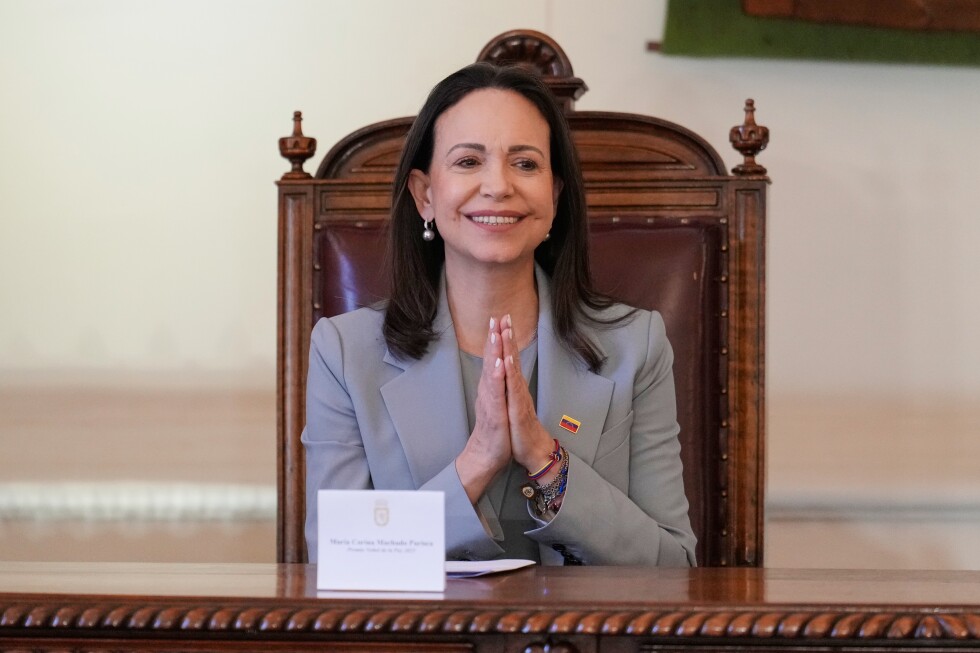
    In unrelated remarks, Trump discussed receiving Venezuelan opposition leader María Corina Machado’s Nobel Peace Prize, which remains displayed in the Oval Office, and criticized musical choices for the upcoming Super Bowl. He also referenced ongoing Arctic security negotiations with NATO, though European leaders have contradicted his claims regarding sovereignty compromises.

  • Venezuela frees dozens of political prisoners, human rights group says

    Venezuela frees dozens of political prisoners, human rights group says

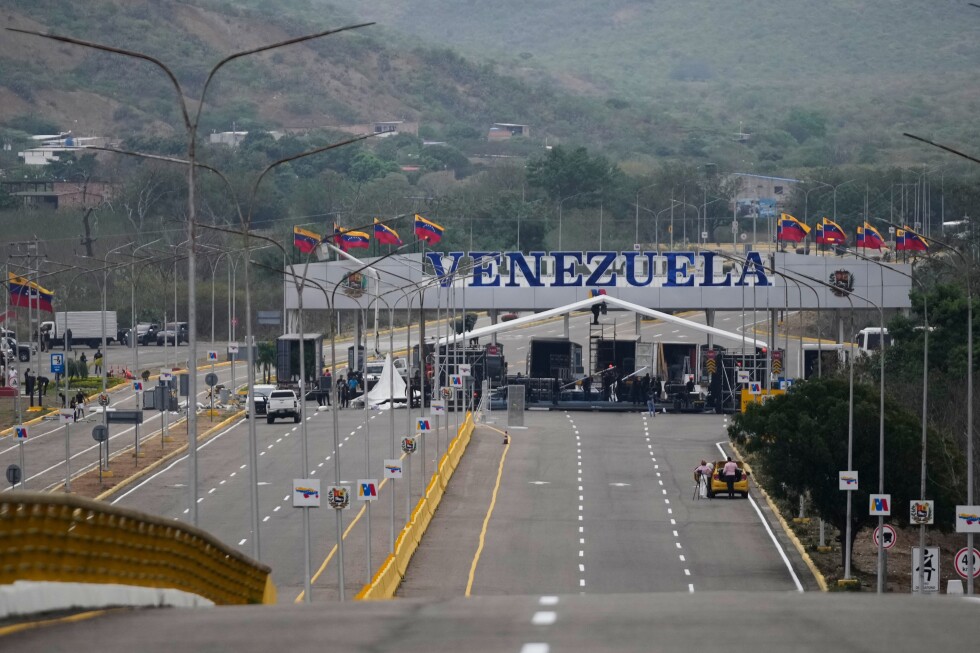
    In a significant development within Venezuela’s political landscape, at least 80 individuals identified as political prisoners have been granted release following intensified pressure from the United States. The prominent human rights organization Foro Penal confirmed these releases, which occurred across multiple detention facilities on Saturday, with indications that additional discharges may follow.

    This prisoner release initiative represents the most recent action taken since US forces apprehended Venezuelan President Nicolás Maduro earlier this month. Maduro currently faces trial in New York on serious drug-trafficking allegations following what has been described as a raid operation.

    Alfredo Romero, director of Foro Penal, announced through social media platforms that his organization is actively verifying the identities of those freed. Among those confirmed released is Kennedy Tejeda, a colleague from Foro Penal who had been detained at Tocorón prison since August 2024. Gonzalo Himiob, another attorney with the organization, indicated on social media platform X that the number of releases might exceed 80 as verification processes continue.

    The interim Venezuelan government, led by President Delcy Rodriguez, claimed on Friday that over 600 prisoners had been freed. However, Foro Penal has contested this figure, asserting it appears significantly inflated. Before this weekend’s developments, the human rights group had documented only 156 political prisoner releases since January 8th.

    Notably, many previously released detainees continue to exist in a state of legal uncertainty, with charges remaining active against them and restrictions preventing public commentary. Those freed include domestic opposition figures and at least five Spanish citizens.

    Interim President Rodriguez announced plans to engage with United Nations High Commissioner for Human Rights Volker Turk on Monday, seeking UN verification of the release lists. This development occurs against a backdrop of longstanding accusations from human rights organizations claiming the Venezuelan government systematically uses detention to silence critics—allegations which authorities consistently deny, maintaining that all arrests stem from criminal activities rather than political motives.

    Many of those detained were taken into custody following the controversial 2024 presidential election, where Maduro’s victory claim was disputed by opposition groups and numerous international governments.

  • US carries out first known strike on alleged drug boat since Maduro’s capture

    US carries out first known strike on alleged drug boat since Maduro’s capture

    In a significant escalation of its counter-narcotics operations, the United States military has confirmed conducting a lethal strike against a suspected drug trafficking vessel in the eastern Pacific Ocean. This operation, executed on Friday, represents the first such action since the high-profile raid that captured Venezuelan President Nicolás Maduro earlier this month.

    According to U.S. Southern Command’s official statement released through social media channels, the targeted boat was actively engaged in narco-trafficking operations. The military operation resulted in two fatalities with one individual surviving the attack. Search and rescue procedures were immediately initiated for the survivor through coordination with the U.S. Coast Guard.

    Accompanying visual evidence depicts a maritime vessel navigating through open waters before being engulfed in explosive flames. This development occurs amid intensified U.S. military focus on intercepting sanctioned oil tankers with connections to Venezuela, following the Trump administration’s audacious operation to apprehend President Maduro and transfer him to New York to face federal drug trafficking charges.

    The previous maritime strikes occurred in late December when military forces targeted five alleged drug-smuggling boats over a 48-hour period, resulting in eight casualties with numerous individuals abandoning vessels. The Coast Guard subsequently suspended its search operations days after these engagements.

    President Donald Trump has consistently defended these military operations, asserting their critical effectiveness in disrupting narcotics transportation routes through Caribbean and eastern Pacific corridors. During recent remarks at the World Economic Forum in Davos, Trump claimed unprecedented success, stating: “We’ve stopped — virtually stopped almost 100% of all drugs coming in by water.”

    Meanwhile, Maduro had previously characterized U.S. military actions as politically motivated attempts to remove him from power, allegations that gained renewed attention following the January 3rd large-scale strike in Caracas that resulted in his capture and extradition to the United States.

  • Austin signs Uruguay international winger Facundo Torres with designated player contract

    Austin signs Uruguay international winger Facundo Torres with designated player contract

    AUSTIN, Texas — In a significant move for the franchise, Austin FC has finalized the acquisition of Uruguayan international Facundo Torres on a designated player contract that will extend through the 2030 Major League Soccer season. The club officially announced the high-profile signing on Friday, securing the services of the dynamic winger from Brazilian powerhouse Palmeiras.

    The 25-year-old attacker brings an impressive offensive pedigree to Austin, having amassed a remarkable 47 goals and 25 assists across three productive seasons (2022-2024) with Orlando City SC. His most recent campaign with Palmeiras in 2025 yielded 10 goals and 6 assists, demonstrating consistent scoring prowess at the highest levels of South American football.

    While the financial specifics of the multi-year agreement remain undisclosed, club officials confirmed the contract includes an additional option for the 2031 season, potentially extending Torres’ tenure in the Texas capital for seven years. This long-term commitment represents a substantial investment in the player’s prime competitive years.

    Torres’ international credentials further enhance his value, with 22 senior appearances for Uruguay’s national team, including participation in World Cup qualifiers and Copa América tournaments. His experience in high-pressure matches will be invaluable to Austin’s ambitions.

    Austin FC Sporting Director Rodolfo Borrell expressed strong confidence in the acquisition, stating: ‘Facundo possesses proven attacking quality as evidenced by his exceptional goal contributions throughout his career. He arrives at an ideal age to immediately elevate our offensive capabilities as we push for success this season and beyond.’

    The signing represents a major statement of intent from Austin FC as they seek to strengthen their attacking options with a player entering his athletic prime, combining MLS experience with international pedigree.

  • Chilean court extends detention of suspect accused of starting wildfire that killed 20

    Chilean court extends detention of suspect accused of starting wildfire that killed 20

    A Chilean court has ordered pretrial detention for a 39-year-old man allegedly responsible for igniting one of the catastrophic wildfires currently devastating central and southern Chile. The Guarantee Court of Concepción in Bio Bio region approved the prosecution’s request to detain the suspect until January 26th while investigations continue into the deadly blazes that have claimed at least 21 lives.

    The suspect, arrested Thursday night, stands accused of sparking the Trinitarias fire—the initial and largest among approximately fifteen uncontrolled wildfires that have raged since Sunday. Prosecution evidence indicates the disaster began when the man operated a malfunctioning wood-burning stove, sending embers into the surrounding forests of Bio Bio region, approximately 500 kilometers south of Santiago.

    Prosecutor Jorge Lorca presented compelling evidence including aerial reconnaissance footage and video documentation from a forestry company that allegedly connects the suspect to the fire’s origin. The Trinitarias fire subsequently merged with two additional blazes, creating a massive wall of flames that has consumed over 45,000 hectares (176 square miles) of land.

    The human toll continues to mount with 305 reported injuries, nearly 700 residents displaced to shelters, and over 2,300 homes destroyed. The towns of Penco and Lirquen have suffered particularly devastating losses, with search operations ongoing for additional victims in the Lirquen area.

    This wildfire event now surpasses the scale of Chile’s recent Valparaiso and Viña del Mar tragedy in total burned area, though the earlier fire resulted in higher fatalities. The current megafires continue to actively burn across multiple regions including Ñuble and La Araucania alongside the devastated Bio Bio zone.

  • Ryan Wedding, a former Olympic snowboarder on the FBI’s ‘Most Wanted’ list, has been arrested

    Ryan Wedding, a former Olympic snowboarder on the FBI’s ‘Most Wanted’ list, has been arrested

    In a significant law enforcement breakthrough, Ryan Wedding—a former Canadian Olympic snowboarder who ascended to the FBI’s Ten Most Wanted list—was apprehended Friday in Mexico following an extensive multinational manhunt. The 44-year-old athlete-turned-alleged-crime-boss faces severe charges including multinational drug trafficking and orchestrating the murder of a federal witness.

    Wedding is accused of masterminding a sophisticated narcotics network that utilized semitrucks to transport cocaine across international borders between Colombia, Mexico, Southern California, and Canada. Operating under aliases including “El Jefe,” “Public Enemy,” and “James Conrad Kin,” his criminal enterprise allegedly employed extreme violence to maintain operations, including multiple homicides tied to drug activities.

    The arrest, confirmed by anonymous sources familiar with the investigation, culminates years of pursuit by international authorities. The U.S. Department of Justice had offered a $15 million reward for information leading to his capture and conviction.

    According to federal indictments, Wedding orchestrated the January assassination of a witness in Medellín, Colombia, to prevent extradition to the United States. Prosecutors allege he and accomplices used Canadian website “The Dirty News” to publish the victim’s photograph before the fatal restaurant shooting.

    The former Olympian, who represented Canada at the 2002 Winter Games in Salt Lake City, previously served a prison sentence for cocaine distribution conspiracy in 2010. He additionally faces separate drug trafficking charges in Canada dating to 2015.

    FBI Director Kash Patel is scheduled to formally announce the arrest at a California press conference Friday morning, marking the conclusion of one of the bureau’s highest-profile fugitive investigations.

  • An ancient forest in Ecuador is the last stand for a tiny hummingbird facing extinction

    An ancient forest in Ecuador is the last stand for a tiny hummingbird facing extinction

    Nestled high in the Ecuadorian Andes, the Yanacocha Reserve represents a critical bastion of biodiversity conservation where scientists are fighting to prevent the extinction of one of Earth’s most imperiled avian species. This protected cloud forest serves as the exclusive habitat for the Black-breasted puffleg (Eriocnemis nigrivestis), a miniature hummingbird whose global population has plummeted to an alarming 150-200 individuals according to International Union for Conservation of Nature assessments.

    The Jocotoco Foundation established this sanctuary twenty-five years ago, initially focusing on the puffleg’s protection but soon recognizing they were preserving an entire ecosystem. Conservationist Paola Villalba explained to Associated Press reporters that their mission expanded beyond single-species preservation to comprehensive habitat conservation.

    This remarkable bird, measuring merely 9 centimeters and distinguished by distinctive white leg plumage contrasting with its metallic black chest and bronze-green wings, faces existential threats from agricultural expansion. The species occupies an exceptionally narrow ecological niche at elevations between 3,000-3,500 meters—precisely the altitude range most vulnerable to conversion into farmland and grazing pastures.

    Shirley Farinango of the Birds and Conservation Foundation emphasized the intensifying pressure on this specialized habitat, noting that the puffleg’s survival hinges entirely on preserving these high-altitude forests. Conservation teams are now engaged in urgent reforestation efforts on the slopes of the Pichincha volcano, approximately 45 kilometers northwest of Quito, where these ‘smallest fairies of the Andes’ make their final stand against human encroachment.

  • Firefighters face attacks, drones and arsonists while battling deadly blazes in Chile

    Firefighters face attacks, drones and arsonists while battling deadly blazes in Chile

    FLORIDA, Chile — Chilean emergency crews combating the nation’s most devastating wildfires in recent history are confronting unprecedented challenges beyond the flames themselves—including armed attacks and unauthorized drone operations that threaten aerial firefighting operations.

    The catastrophic blazes have claimed at least 21 lives and scorched approximately 45,700 hectares (176 square miles) of forestland and residential areas, according to Thursday’s report from Chile’s National Forestry Corporation (CONAF). The scale of destruction has already surpassed April’s Valparaíso and Viña del Mar inferno that consumed 8,500 hectares and killed 131 people.

    The human toll continues to mount with 305 injured and 2,359 homes destroyed, leaving hundreds displaced in makeshift shelters. Charred landscapes reveal haunting scenes of burned vehicles and wildlife while search teams recover skeletal remains for forensic identification. Authorities acknowledge the casualty count will likely rise as assessment teams document the full extent of the tragedy.

    President Gabriel Boric declared two days of national mourning while visiting the devastated Biobío region, stating on social media platform X: ‘Amid the profound sorrow caused by the forest fires in the south-central region of our country, I have decided to decree two days of national mourning.’

    Firefighters facing dual threats

    The nearly 8,500 firefighters battling the blazes since Sunday have encountered deliberate hostility alongside natural dangers. Official reports confirm at least two attacks on fire crews, including one incident involving gunfire. President Boric condemned these aggressions as ‘absolutely unacceptable’ and promised full legal consequences for perpetrators.

    Simultaneously, unauthorized drone operations by journalists and hobbyists seeking aerial footage have forced temporary suspensions of critical airborne firefighting missions around the town of Florida, where wildfires remain uncontrolled. These civilian drones risk catastrophic mid-air collisions with water-dropping aircraft and distract ground crews.

    CONAF emphasized that drone use during firefighting operations is strictly prohibited, noting: ‘The use of unmanned aircraft can endanger the lives of helicopter and airplane pilots working to control these fires.’

    Authorities have arrested approximately 70 individuals this fire season for arson-related activities, including one suspect detained Thursday for allegedly starting a blaze in Punta de Parra near the epicenter of destruction.

    International solidarity emerges

    Global support has mobilized to assist Chile’s crisis response. Mexico deployed 145 firefighters who arrived Thursday at Concepción airport to work alongside local crews. Uruguay is providing approximately 30 professionals and air force aircraft, while the United States has delivered specialized firefighting equipment directly to Chilean authorities.

    Foreign Minister Alberto van Klaveren confirmed ongoing discussions with United Nations agencies and the European Union’s humanitarian aid office for additional support, noting that government planning already extends beyond fire containment to future reconstruction efforts.