标签: South America

南美洲

  • World Cup what to know: Canada earns a hard-fought draw in opener, U.S. is up next vs. Paraguay

    World Cup what to know: Canada earns a hard-fought draw in opener, U.S. is up next vs. Paraguay

    The 2026 FIFA World Cup hosted across North America is now underway, with live match updates available to global audiences in both English and Spanish. The tournament’s first full match day on Friday delivered a historic result for Canada, which secured a 1-1 draw against Bosnia-Herzegovina at a packed, energized Toronto stadium. This outcome marks a significant milestone for the Canadian men’s national team, which had lost all six of its previous World Cup matches in tournament history. The result also felt like a positive breakthrough after a tough start for Canada, which fell behind early in the fixture.

    Bosnia’s Jovo Lukic broke the deadlock in the 21st minute, connecting with a skillful header off a corner kick to silence the raucous home crowd. Canada spent the majority of the match chasing an equalizer, and it finally came in the 78th minute from recent substitute Cyle Larin, who slotted home to level the score and earn Canada its first ever World Cup point. The day’s action will close with a primetime match between the United States and Paraguay in Inglewood, California, and the tournament will shift to its full schedule starting Saturday, with a minimum of four matches scheduled per day through June 27.

    The tournament kicked off one day earlier at Mexico City’s iconic Azteca Stadium, where host nation Mexico opened with an impressive 2-0 victory over South Africa in front of a capacity, boisterous crowd.

    ### What to Watch on June 13: Broadcast Information and Full Match Previews
    Fox holds exclusive English-language broadcast rights for the entire tournament in the United States, with all 104 matches airing on either the main Fox broadcast network or cable channel FS1. All fixtures are also available to stream via the Fox One app. For Spanish-language audiences, Telemundo and Universo will carry every match, with streaming access available through Peacock and the official Telemundo app.

    Four matches are scheduled for Saturday, June 13, across four North American host cities:
    1. Qatar vs. Switzerland, 3 p.m. EDT at Levi’s Stadium in Santa Clara, California (FOX/Telemundo/Peacock)
    2. Brazil vs. Morocco, 6 p.m. EDT at MetLife Stadium in East Rutherford, New Jersey (FOX/Telemundo/Peacock)
    3. Haiti vs. Scotland, 9 p.m. EDT at Gillette Stadium in Foxborough, Massachusetts (FOX/Telemundo/Peacock)
    4. Australia vs. Turkey, midnight EDT at BC Place in Vancouver, British Columbia (FS1/Telemundo/Peacock)

    #### Qatar vs. Switzerland
    While Qatar qualified automatically for the 2022 World Cup as tournament host, the nation earned its spot in the 2026 field through competitive qualification, marking a new milestone for the program. The side is led by all-time career scoring leader Almoez Ali, who has notched 60 goals across 126 international appearances for Qatar.

    Switzerland is appearing in its sixth consecutive World Cup, entering the tournament ranked 19th in the official FIFA men’s rankings. Despite advancing past the group stage on three separate occasions in tournament history, the Swiss men’s national team has never won a knockout round fixture. Veteran midfielder Granit Xhaka, who earned 145 international caps, leads the side as it chases a historic deep run.

    #### Brazil vs. Morocco: Top-10 Group Stage Clash
    Brazil enters this tournament as one of the most historically successful men’s World Cup programs, claiming five tournament titles in 1958, 1962, 1970, 1994 and 2002. However, the side has struggled to replicate its historic success in recent decades, falling at the quarterfinal stage in four of the last five tournaments. Even so, Brazil remains a formidable contender, ranked 6th in the world entering Saturday’s fixture, and head coach faces intense pressure to deliver the nation’s sixth World Cup title.

    Morocco, ranked 7th globally, is one of Africa’s top men’s programs and made history at the 2022 World Cup by becoming the first African nation to reach the tournament semifinals, where it fell to eventual champion France. The match marks a high-stakes early group stage showdown between two of the top-ranked sides in the tournament.

    #### Haiti and Scotland: Long-Absent Underdogs Make Their Return
    Both Haiti and Scotland are making their return to the World Cup after decades-long absences, earning their spots against pre-tournament expectations. Haiti is appearing in the World Cup for just the second time in history, with its last appearance coming all the way back in 1974. Ranked 83rd in the world—one of the lowest-ranked sides in the 2026 field—Haiti secured its place in the tournament by outperforming more established Central American powers including Costa Rica and Honduras.

    Scotland is also back on the world’s biggest football stage for the first time since 1998. Premier League midfielder Scott McTominay leads the Scottish side, having scored 14 goals in his last 33 international appearances.

    #### Australia vs. Turkey: Two Sides Marking Return Trips
    Australia is making its sixth consecutive World Cup appearance, and seventh overall, entering the tournament ranked 27th. The side reached the round of 16 at the 2022 tournament, falling to eventual champion Argentina, and has embraced a diverse squad built around immigrant talent ahead of 2026, with a public message that “soccer is for everyone.”

    Turkey is competing in its first World Cup since 2002, when the nation pulled off a surprise third-place finish. The Turkish program has climbed steadily up the rankings in recent years, entering the 2026 tournament ranked 22nd globally.

    ### U.S. Men’s National Team Chases Historic Breakthrough In Home Opener
    The host United States men’s national team enters the tournament ranked 17th in the FIFA rankings, with high hopes that home-field advantage can help the side make its first deep run in decades. The U.S. has advanced to the knockout round in four of the last six World Cups it has competed in, but has not advanced past the quarterfinal stage in any modern tournament.

    Former top European club manager Mauricio Pochettino was hired as head coach in 2024, tasked with unlocking the team’s potential. Star forward Christian Pulisic enters the tournament in the peak of his career, carrying high expectations from American fans.

    Paraguay, the U.S.’s opening opponent, is ranked 47th in the world—lowest in Group D—and is competing in its first World Cup in 16 years. Star attackers Ramon Sosa and Julio Enciso lead the underdog side.

    ### Breaking: Palestinian Football Head Denied U.S. Visa For Tournament
    In off-the-field breaking news, Jibril Rajoub, president of the Palestinian Football Association, remains stranded in Mexico City after being denied a U.S. visa to attend the 2026 World Cup. Rajoub was able to attend the tournament’s opening match between Mexico and South Africa on Thursday, but is one of multiple accredited attendees who have been either denied entry or are still waiting for visa approval from U.S. authorities.

    While the Palestinian national team did not qualify for the 2026 tournament, FIFA routinely invites football association presidents from every member nation to attend the quadrennial event as part of its mission to celebrate global unity through the sport.

    Other recent tournament news includes the viral rise of a Bosnian song about disillusionment with the American Dream becoming an unexpected World Cup fan anthem, Arsenal star Thomas Partey being sidelined for Ghana’s opening match against Panama in Toronto after he was also denied a U.S. visa, and Mexico manager Javier Aguirre earning opening match praise for a youth-focused tactical gamble that delivered the opening win against South Africa.


  • Watch: Skier tackles Peruvian mountain ridge

    Watch: Skier tackles Peruvian mountain ridge

    A skilled alpine skier from Bedford in the United Kingdom has pulled off a remarkable feat of endurance and skill, tackling one of the most challenging terrain stretches in the Peruvian Andes: the icy southwest ridge of 6,162-meter Mount Ranrapalca. Fay Manners, an experienced climber and backcountry skier known for pushing her limits in high-altitude environments, recently reflected on the journey that tested every ounce of her training and nerve.

    The southwest ridge of Ranrapalca has long been regarded as a formidable objective for even the most seasoned mountaineers, with consistently unstable ice conditions, sharp vertical drops, and rapidly shifting high-altitude weather that can turn a routine descent into a life-threatening situation in minutes. Manners spent weeks acclimatizing to the thin Andean air, scouting the route from lower vantage points and adjusting her equipment to account for the unique challenges of the glaciated terrain.

    In her post-expedition reflection, Manners described the mix of focus and exhilaration that defined the descent, recalling how every turn required deliberate, careful judgment to avoid hidden crevasses and ice sheets that could give way without warning. She also highlighted the quiet awe of being on one of the Andes’ most striking peaks, with panoramic views of surrounding glacial summits stretching out across the horizon as she made her way down the ridge.

    The successful descent cements Manners’ reputation as one of the UK’s most ambitious backcountry alpine athletes, and adds a notable new entry to the list of challenging high-altitude ski descents completed in the Peruvian Andes in recent years. For the alpine community, Manners’ achievement highlights both the growing interest in exploring under-documented big mountain routes in South America, and the level of preparation and respect for the mountains required to pull off such a challenge safely.

  • Paraguay fans are eager for their long-awaited World Cup return, in the country they now call home

    Paraguay fans are eager for their long-awaited World Cup return, in the country they now call home

    As the 2026 FIFA World Cup gets underway on U.S. soil, global soccer fans have turned their collective attention to the host nation’s squad. But for the tight-knit community of Paraguayans living across the United States, this tournament marks a far more personal milestone: the return of their beloved national team to the world’s biggest soccer stage after a 16-year drought.

    Paraguay last qualified for the World Cup in 2010, when the squad recorded its best-ever finish, advancing all the way to the quarterfinals. This year’s appearance marks the ninth time the nation, currently ranked 40th globally by FIFA, has competed in the tournament. Drawn into Group D alongside the U.S., Turkey and Australia, Paraguay will face off against Australia on June 19 and Turkey on June 25, both matches hosted in Santa Clara, California.

    For the estimated 37,000 Paraguayans calling the U.S. home, the moment has been decades in the making, and fans have been organizing watch parties, community gatherings and match-day celebrations across the country. While steep ticket prices for the opening Group D match against the U.S. — with some seats reselling for more than $1,000 apiece — have put the fixture out of reach for most local fans, many have scraped together funds to secure tickets for the team’s later matches in California.

    Thirty-two-year-old Santiago Araujo is one of the lucky fans who scored tickets to Paraguay’s match against Australia, set to take place just 80 miles from his family’s Paraguayan restaurant, Cafe Guarani, in the coastal California town of Pacific Grove. Araujo, who moved to California with his family when he was 11 years old, says soccer is woven into the cultural identity of every Paraguayan. “Every Paraguayan I know wants to go,” he explained. “It’s not like there’s seasons of any other sports in Paraguay. I used to sleep with a soccer ball as my toy.”

    His family’s restaurant is leaning into the excitement, hosting pre- and post-match celebrations that bring the local Paraguayan community together over traditional dishes including manioc empanadas and iced yerba mate. Similar gatherings are planned at I Love Paraguay Restaurant in Queens, New York, where a large concentration of Paraguayan Americans resides. Other major Paraguayan American communities are based in Bernardsville, New Jersey — an affluent town that Paraguayan President Santiago Peña visited in 2024.

    For many fans, even the dream of attending a match comes with steep barriers. Ana Di Sessa, a Paraguayan American based in New Jersey, says she would love to travel to the California matches, but the combined cost of flights, accommodation and overpriced tickets puts the trip out of budget for most working-class fans. Zoraida Pereira, a 43-year-old travel agent based in Bernardsville who moved to the U.S. from Paraguay more than 30 years ago, says she has only sold travel packages for the later Santa Clara matches, as opening game prices are prohibitive for nearly all her clients. Even when forced to choose between her host and home nations on the pitch, Pereira’s loyalty is clear: “I am rooting for Paraguay this time around. They’ve been out for so long.”

    For the team itself, the moment carries just as much emotional weight. Midfielder Miguel Almirón, a 32-year-old veteran who plies his club trade with Major League Soccer’s Atlanta United, grew up watching the 2010 World Cup squad and dreamed of one day getting the chance to compete on soccer’s global stage. “It’s going to be something beautiful in that moment, not just for me, but also for my family and for all the Paraguayan fans, and for anyone who’s been with us through all the tough moments,” Almirón said. “There are going to be a lot of emotions at that moment. We take it on with responsibility, because we know so many people are depending on us.”

    That excitement extends 5,000 miles back to Paraguay, a small landlocked South American nation of roughly 7 million people bordered by Argentina, Bolivia and Brazil, best known for its vast grasslands, rich biodiversity and indigenous Guarani cultural heritage. A new documentary titled *El Renacer Albirrojo* (The Red-and-White Rebirth) chronicles the national team’s 16-year journey to qualify for the tournament, and the squad was sent off to the U.S. with a massive public celebration capped by fireworks. Many Paraguayan Americans report that friends and family are traveling from Paraguay to the U.S. to attend the matches, joining local fans to cheer on the team.

    For 34-year-old Rodrigo Valdez, a computer engineer based in San Diego who was born in the U.S. but raised in Paraguay, the tournament is a once-in-a-generation opportunity. Even with a 4-month-old newborn at home, his wife encouraged him to buy a ticket to the Australia match as a first Father’s Day gift. Valdez will drive more than 450 miles to Santa Clara to see the match, after gathering with local family and friends to watch the opening game against the U.S. in San Diego. “It was a unique opportunity for us that we are living in California,” he said. “It will be very meaningful.”

  • Author honoured with Caribbean literature prize

    Author honoured with Caribbean literature prize

    One of the most prestigious honors in Caribbean literary circles has found its 2025 recipient: Guyanese-born author and University of East Anglia creative writing professor Tessa McWatt, who has won the OCM Bocas Prize for Caribbean Literature for her deeply personal memoir *The Snag: A Mother, A Forest and Wild Grief*. The award was presented during a formal ceremony held in Port of Spain, Trinidad and Tobago, the Caribbean nation that held special meaning for McWatt’s late mother.

    Widely recognized as the leading international award for writing rooted in Caribbean experience, the OCM Bocas Prize carries exceptional prestige for authors working in the region and across the global Caribbean diaspora. For McWatt, the honor is far more than a personal career milestone — it is a tribute to the woman at the heart of her memoir.

    In an interview with BBC Look East, McWatt shared that winning the prize felt like “a real joy, as it feels like a win for my mother, who is the central figure in the book and my heart’s inspiration.” The memoir traces the two-month-long journey of losing McWatt’s mother to dementia, from the difficult transition of moving her out of her long-time home to the quiet, profound lessons McWatt learned while caring for her.

    What sets the work apart is how it weaves personal grief into a broader meditation on collective loss. While navigating her mother’s decline, McWatt also grieved the death of a close friend, supported another friend facing a stage four cancer diagnosis, and confronted the growing “climate grief” tied to widespread environmental destruction, exacerbated by cascading global crises including the COVID-19 pandemic and ongoing armed conflict. Rather than turning away from this overlapping pain, McWatt set out to explore how to embrace grief as a natural, meaningful part of life.

    The book’s evocative title draws from a forestry term: a “snag” refers to a dead or dying tree left standing in a woodland. While many might see such a tree as useless and ready for removal, ecologists recognize snags as critical to forest ecosystems — they provide habitat for wildlife, cycle nutrients back into the soil, and sustain the forest’s long-term health. For McWatt, this concept became a powerful metaphor for her mother’s journey with dementia, and for the inherent value of aging and lives nearing their end.

    “It became a metaphor for my mum and richness of the elderly and the richness of watching someone go through dementia. I was learning some amazing things from her,” McWatt explained.

    Receiving the award in Port of Spain held extra emotional weight for the author, who noted her mother traveled to Trinidad every year. “It felt like going home and to give that honour to her there, it was really lovely. It was an award for her,” she said.

    For emerging writers hoping to share their own vulnerable stories, McWatt offered simple, direct advice: “write your truth, don’t stop.”

  • Messi scores on a penalty as Argentina beats Iceland 3-0 in its final World Cup tune-up

    Messi scores on a penalty as Argentina beats Iceland 3-0 in its final World Cup tune-up

    AUBURN, Alabama (AP) — The soccer world breathed a collective sigh of relief Tuesday as Lionel Messi confirmed he is fully prepared to compete in his sixth FIFA World Cup, shaking off a recent muscle injury to mark his return with a penalty goal in Argentina’s final pre-tournament friendly. The reigning world champion’s captain entered the match off the bench, playing the final 20 minutes of Argentina’s 3-0 rout of Iceland, just days out from the global tournament kicking off and his 39th birthday.

    Messi’s injury scare came in late May, during his last club appearance for Inter Miami, where he picked up muscle fatigue and a minor strain in his left hamstring that kept him out of action in the weeks leading up to Argentina’s pre-World Cup warm-up slate. The injury had sparked widespread concern among soccer fans worldwide about whether the Argentine legend would be at full fitness for what is widely expected to be his final World Cup campaign.

    Coming on in the 70th minute of the tune-up match, Messi needed just two minutes to find the back of the net. After Argentine forward Lautaro Martínez was fouled inside the Icelandic 18-yard box, Messi stepped up to take the penalty and rifled a left-footed shot high into the net to seal the three-nothing win. The goal pushes Messi’s all-time record for Argentina to 117 international strikes, keeping his status as the nation’s leading goal scorer intact.

    Argentina, which enters the tournament chasing its fourth World Cup title following victories in 1978, 1986, and 2022, will kick off its 2026 campaign against Algeria on June 16 in Kansas City. The South American giants are drawn in Group J alongside Austria and Jordan. Tuesday’s clash marked just the second meeting between Argentina and Iceland. The two sides first faced off at the 2018 World Cup, where the European underdogs earned a 1-1 draw – a match remembered for Messi missing a late penalty that would have given Argentina the win.

    For up-to-date coverage of the 2026 FIFA World Cup, follow AP’s full coverage hub at: https://apnews.com/hub/fifa-world-cup

  • Colombia passes law to track cattle and keep deforestation-linked beef out of supply chains

    Colombia passes law to track cattle and keep deforestation-linked beef out of supply chains

    BOGOTÁ, COLOMBIA – In a groundbreaking move for global forest conservation, Colombia has signed into law a first-of-its-kind mandatory framework requiring the entire domestic cattle industry to implement full livestock traceability, guaranteeing that national beef supply chains are completely free of deforestation-linked production. Environmental advocates across the globe are hailing the legislation as a historic precedent, marking the first time any tropical forest country has rolled out such a sweeping nationwide rule to curb forest loss driven by cattle ranching.

    Under the new law, government regulatory bodies and private sector actors across the cattle supply chain are mandated to integrate three core systems: individual cattle tracking, official land ownership verification, and real-time deforestation monitoring. This cross-system integration is designed to flag any livestock raised on land cleared of forest, blocking these animals from entering legal commercial supply chains entirely.

    For decades, unregulated expansion of cattle ranching has stood as the single largest driver of deforestation in Colombia’s portion of the Amazon basin, with large swathes of protected forest cleared illegally through land grabbing to create new pasture. Proponents of the legislation argue it will close longstanding regulatory gaps that have allowed cattle reared on illegally deforested land – including grazing areas inside protected national parks and conservation reserves – to launder into legitimate domestic retail and international export markets.

    Susanne Breitkopf, U.S. forest campaigns director for the Environmental Investigation Agency (EIA), an international watchdog that has spent years documenting deforestation tied to Colombia’s cattle sector, emphasized that the law sets a replicable blueprint for other tropical forest nations grappling with the same issue. “This is a win for forests, for Indigenous and local communities that have acted as the world’s most effective forest stewards, and for consumers around the world who are increasingly demanding that the food they buy does not contribute to forest destruction or illicit land activities,” Breitkopf noted.

    The legislation comes at a moment of mounting global pressure, as both governments and agribusiness face growing requirements from international import markets to prove major commodities including beef are not linked to deforestation. Environmental advocates point out that robust traceability systems are quickly becoming a non-negotiable prerequisite for accessing key overseas markets, while also giving law enforcement clearer tools to identify and crack down on illegal land grabbing and forest clearing.

    Data from organizations backing the law shows Colombia has lost roughly 3.3 million hectares (8.2 million acres) of forest in recent decades – an area nearly identical in size to the entire country of Belgium – with the Amazon region seeing the most severe rates of loss. While Brazil’s Amazonian state of Pará has previously implemented cattle traceability rules for producers, environmental groups stress that Colombia’s new law goes further by codifying a uniform, nationwide legal mandate rather than a subnational policy.

    A 2025 EIA analysis underscored the urgency of the reform, finding that hundreds of thousands of cattle were moved between 2020 and 2024 from production areas overlapping protected national parks into legal supply chains. The new law is the culmination of more than five years of coordinated advocacy from environmental organizations, policy researchers, and progressive lawmakers, who have long warned that fragmented oversight and weak regulation allowed illegally deforestation-linked cattle to flow through Colombia’s disjointed cattle supply chain.

    Natalia Katixa Escobar, a researcher with Colombian legal and policy think tank Dejusticia, which has documented the links between cattle expansion and deforestation, explained that the law addresses a long-standing institutional disconnect between Colombia’s agricultural and environmental regulators. “One of its most immediate achievements is that it builds a formal bridge between environmental policy and agricultural oversight,” Escobar said. “For years, the control mechanisms for cattle ranching and traceability had absolutely no integration with environmental monitoring – that gap is what allowed illegal activity to thrive.”

    Colombian Environment Minister Irene Vélez Torres told reporters the new framework will help the government clearly separate responsible, law-abiding cattle producers from actors linked to forest destruction. “This means it will become increasingly hard for forest destruction and illicit economic activity to hide behind the facade of legitimate supply chains,” Vélez said.

    The law sets a phased two-year implementation timeline to give stakeholders time to adapt. Within the first six months, the national government must roll out compliance support programs for small and medium producers, launch an official certification system for deforestation-free beef products, and allocate dedicated funding to strengthen monitoring systems in active deforestation hotspots. After one year, regulators must finalize formal rules for national cattle identification and traceability protocols, and formalize mandatory due diligence requirements for deforestation-free cattle ranching.

    By the end of the second year, all major supply chain actors including slaughterhouses, meat processors, cattle auction houses, traders, and live cattle exporters will be required to have full due diligence policies in place to guarantee their supply chains are deforestation-free. A core component of the reform is the mandatory gradual integration of separate government databases, which for the first time will allow officials to cross-reference data on land tenure, cattle ownership, and recent forest loss to flag illegal operations.

    While supporters say these structural changes will dramatically improve regulators’ ability to intercept deforestation-linked cattle before they reach legal markets, observers warn that the law’s ultimate success hinges on consistent, well-funded enforcement – particularly in remote Amazon regions where illegal deforestation remains rampant and state presence is often limited.

    If implemented fully, the policy could become a global model for other tropical forest countries working to protect their forest ecosystems while retaining access to increasingly sustainability-focused international commodity markets. “The real test will be what happens on the ground,” Escobar emphasized. “While the law fixes critical gaps in oversight and information sharing, reducing deforestation will also depend on improved governance and consistent enforcement in the most remote parts of the Colombian Amazon. Whether it will deliver significant reductions in Amazon deforestation remains to be seen.”

    This coverage from The Associated Press, which received funding from private philanthropic foundations for its climate and environmental reporting, maintains full editorial independence over all content.

  • Brazilian police rescue 108 Cuban migrants at the northern border and arrest 5 alleged smugglers

    Brazilian police rescue 108 Cuban migrants at the northern border and arrest 5 alleged smugglers

    SAO PAULO — Brazilian federal law enforcement has announced one of the largest migrant rescue operations in the country’s northern border region, saving more than 100 Cuban migrants who had fallen into the hands of brutal human smuggling networks.

    The 108 intercepted migrants are currently being held in the northern state of Roraima, which shares a border with Guyana, as authorities work to process and regularize their immigration status before connecting them to dedicated social service support, police confirmed in an official statement released Tuesday.

    Alongside the rescue, five suspected smuggling ring members — commonly referred to as “coyotes” in cross-border migration contexts — have been taken into custody and charged with human trafficking-related offenses. According to police investigations, these smugglers lured migrants with promises of a secure, uneventful crossing into Brazil, charging exorbitant, exploitative fees that already vulnerable migrants often struggle to pay.

    Police investigations exposed the dangerous, dehumanizing conditions the smugglers force migrants to endure. “In reality, the route they force migrants to take meets no standards for human dignity or basic road safety. Migrants are forced to complete grueling, days-long journeys in poorly maintained, overcrowded vehicles that put every passenger’s life at risk,” the official police statement read.

    Monday’s rescue operation marks the largest humanitarian intervention of its kind ever recorded in Roraima state. Since June 2024 alone, Brazilian authorities have pulled 297 Cuban migrants from smuggling rings as they attempted to cross into the country illegally through Roraima’s remote border corridors.

    The rescue comes amid a sustained surge in Cuban migration to Brazil, driven by a catastrophic ongoing economic collapse in Cuba compounded by decades of escalating United States sanctions. Official migration data shows that flows of Cuban migrants heading to Brazil have climbed steadily since 2022, with the trend accelerating sharply in recent years.

    According to Brazil’s Ministry of Justice annual migration report, published in May 2025, Cubans have overtaken Venezuelans as the largest nationality applying for refugee status in Brazil this year, with more than 40,000 applications already filed.

    Brazilian migration officials have warned that the surge could grow even larger in coming months if geopolitical tensions between Cuba and the U.S. continue to escalate. The ministry noted that formal immigration regularization through refugee status recognition remains the most viable policy alternative to manage the influx humanely.

    Migrating Cubans tend to take two distinct routes into Brazil based on their financial means, officials confirmed. Wealthier migrants typically book commercial flights directly to Sao Paulo, Brazil’s most populous urban hub. By contrast, migrants facing severe economic hardship overwhelmingly choose overland routes, crossing into Brazil through the remote northern Amazonian states of Amapa and Roraima. Combined, these two states host nearly 60 percent of all newly arrived Cuban migrants in the country.

  • Colombian presidential candidate urges prosecutors to investigate alleged voter coercion

    Colombian presidential candidate urges prosecutors to investigate alleged voter coercion

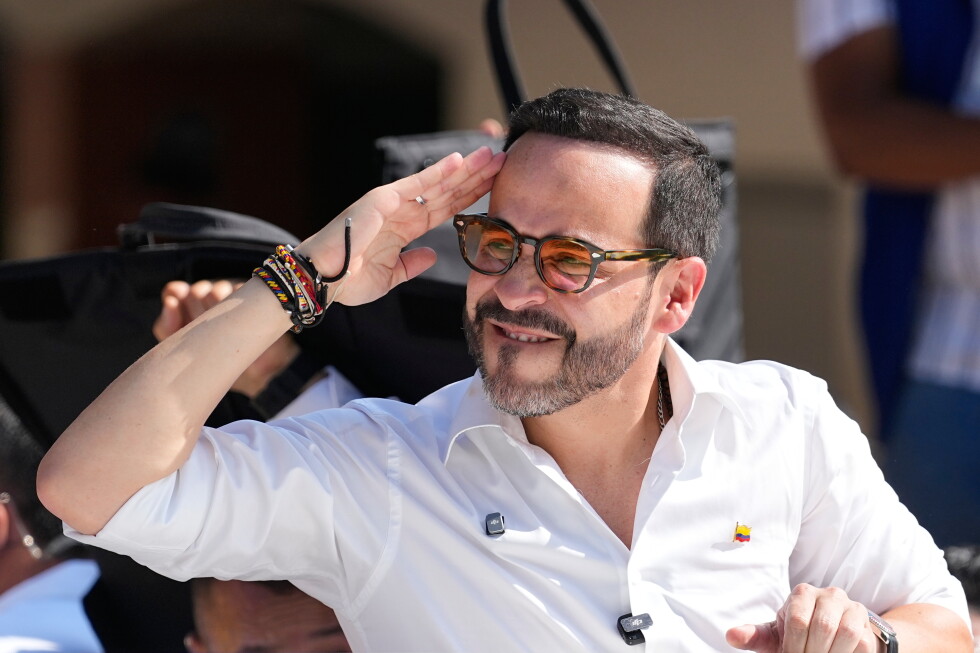
    As Colombia prepares for its June 21 presidential runoff election, a tense dispute over electoral integrity has erupted after conservative candidate Abelardo de la Espriella called on national prosecutors to open a formal investigation into claims that illegal rebel groups pressured voters in remote rural municipalities to back his rival, ruling-party contender Iván Cepeda, during the May 31 first round of voting.

    De la Espriella’s campaign confirmed in an official statement this week that the candidate has formally filed a complaint with prosecutorial authorities, pointing to anomalous first-round results that saw Cepeda capture more than 70% of the vote across 109 municipalities where active illegal armed groups operate, with vote shares reaching as high as 97% in some isolated locations. While the campaign acknowledged that these lopsided results do not on their own serve as conclusive evidence of electoral fraud, they argue the numbers demand a full review to determine if threats, intimidation, or coercive tactics were used to strip voters of their free will and skew the outcome. As of Tuesday, Cepeda’s campaign has not issued any public response to the allegations.

    The contentious first round ended with a razor-thin lead for de la Espriella, a conservative pro-Trump lawyer who goes by the political nickname “The Tiger,” who captured 43.7% of the national vote. Cepeda, a sitting senator and close ally of current leftist President Gustavo Petro who previously served as a member of Colombia’s Communist Party, finished just 2.8 points behind with 40.9% of the vote. The close finish forced the two candidates into a head-to-head runoff, where the winner will secure a four-year term leading the South American nation.

    Cepeda, who has long served as a mediator between the Colombian government and the country’s remaining Marxist rebel groups, has positioned himself as the heir to Petro’s signature “total peace” policy, which has prioritized negotiated peace talks with active illegal armed groups that emerged following the 2016 peace deal with the FARC rebel movement. While Cepeda has stated he would support continuing negotiations with minor adjustments to strategy, de la Espriella has run on a hardline platform that promises to scrap the peace talks entirely and resume aggressive aerial fumigation of coca crops, the raw material for the country’s massive illegal cocaine trade.

    The allegations of voter coercion have gained partial credence from a preliminary statement released by the European Union’s electoral observation mission, which confirmed it has received multiple complaints from voters across the country reporting pressure from both government officials and illegal armed groups during the May 31 vote. The mission did not, however, specify which candidate the pressure was aimed at supporting.

    The high-stakes race drew international attention last week after former U.S. President Donald Trump officially endorsed de la Espriella on his Truth Social platform, praising the 47-year-old conservative as a “Smart, Strong and Tough Leader” who would deliver on restoring “LAW AND ORDER!” to Colombia. President Petro hit back at the endorsement in a post on X, arguing that foreign interference in domestic electoral affairs spells the death of national sovereignty, writing that “freedom dies” when one country meddles in the internal politics of another.

    Security policy has emerged as the defining issue of the 2025 Colombian presidential race, alongside longstanding voter concerns over systemic corruption and a struggling public healthcare system. The lopsided vote shares that sparked the current controversy are concentrated along Colombia’s Pacific coast, a longstanding leftist stronghold that has consistently supported Petro’s administration. Independent political analysts have noted that while the region is reliably pro-government, the unusually high vote shares for Cepeda align with broader warnings that armed groups have used government-granted ceasefires under the “total peace” strategy to consolidate control over remote rural communities. These groups, which run illicit operations including cocaine production laboratories and enforce unofficial “taxation” on legal businesses in their territories, have a well-documented history of intimidating civilians who oppose their influence, analysts added.

  • Peru’s presidential runoff shows a razor-thin gap between candidates

    Peru’s presidential runoff shows a razor-thin gap between candidates

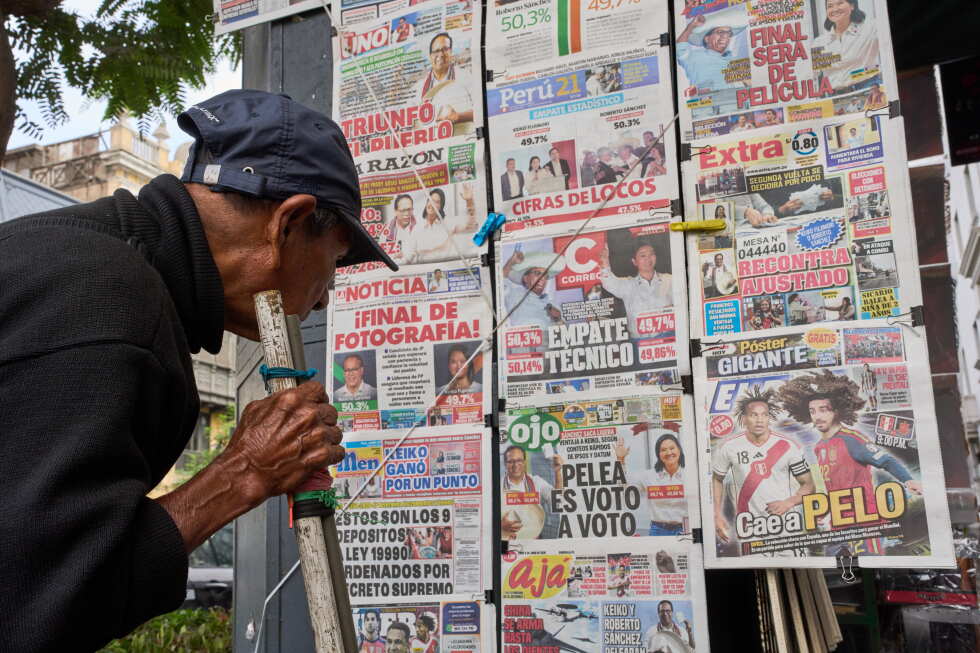
    LIMA, Peru — Nearly three days after Peru held its tightly contested presidential runoff election on Sunday, the race between the two remaining candidates has shrunk to a margin of fewer than 20,000 votes, with 96% of all ballots now processed by national electoral authorities. As it stands, the South American nation is set to swear in its ninth head of state in just a decade when the winner takes office.

    Official electoral data released Tuesday puts nationalist congressman Roberto Sánchez at 50.055% of the total valid vote, while his conservative challenger Keiko Fujimori trails narrowly at 49.945%. To date, electoral workers have counted more than 17.8 million ballots across the country and from overseas polling locations.

    The runoff marks the final stage of a months-long electoral process that began with an initial 35-candidate field in April’s general election. Both Sánchez and Fujimori advanced to the second round, but neither candidate managed to break the 20% support threshold in the first round of voting. It took electoral officials more than four weeks to officially confirm the two candidates’ advancement to the runoff, amid delays in processing results.

    Peru’s top electoral official Roberto Burneo has confirmed that the final official result of Sunday’s runoff will not be announced for up to 30 days. Burneo has issued a public call for both voters and affiliated political groups to uphold democratic responsibility amid the ongoing counting process.

    The extended timeline for finalizing results stems from two key structural factors laid out in Peruvian electoral law. First, national rules require every individual ballot and polling station vote tally sheet to be transported to one of more than 100 regional processing offices for manual verification. Second, all ballots and tallies from citizens voting abroad must be shipped back to the capital Lima for counting, with overseas polling locations spread across 63 different countries.

    Voting is a legal requirement for all Peruvian citizens between the ages of 18 and 70, with non-participation carrying a maximum fine of $32. In total, more than 27 million Peruvians are registered to vote in the election, with roughly 1.2 million of those registered voters residing outside the country, the majority based in the United States and Argentina.

    For most voters heading to the polls on Sunday, the top issue driving their decision was the country’s rapidly surging violent crime, particularly a sharp rise in extortion cases across the nation. Political analysts and security experts broadly link the growing influence of organized criminal groups in Peru to expanding profits from unregulated illegal gold mining operations across the Andes mountain range and Amazon basin.

    Once the final result is confirmed, the winning candidate will be inaugurated for a full five-year presidential term on July 28. Notably, neither candidate entered the runoff with broad popular support, as both are closely tied to controversial former Peruvian presidents whose legacies remain divisive among the electorate.

    Fujimori is the daughter of late former president Alberto Fujimori, whose 1990s administration was marked by authoritarian rule and widespread proven corruption. After her parents separated in 1994, she served as Peru’s official first lady during the remainder of her father’s term. On the other side of the race, Sánchez is one of the closest political allies of imprisoned former president Pedro Castillo, who was removed from office over corruption allegations and widespread perceptions of mismanagement. Castillo’s 16-month tenure saw unprecedented political instability, with more than 70 changes to his presidential cabinet.

  • Ecuadorian artisans working to preserve the traditional craft of weaving horsehair strainers

    Ecuadorian artisans working to preserve the traditional craft of weaving horsehair strainers

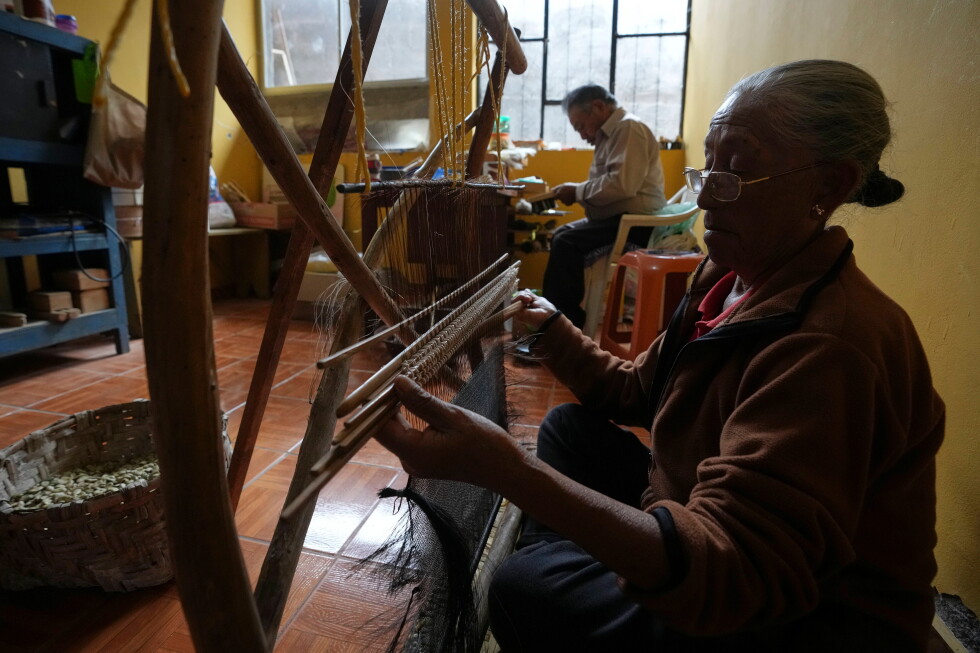
    Nestled in the highlands east of Ecuador’s capital Quito, the small village of Guangopolo holds a 200-year-old Indigenous craft tradition that is quietly slipping into history: the hand-weaving of cedazos, traditional horsehair sieves that once defined the community’s identity and economic life.

    Inside 76-year-old artisan Ligia Ipiales’ modest family home, she moves with deliberate care, separating individual strands from raw horse tails to weave an intricate mesh as fine as medical gauze — the signature texture that made Guangopolo’s cedazos prized across Ecuador for generations. Today, only nine practicing cedacero artisans remain in the entire village, a dramatic collapse from the thriving trade that supported hundreds of households just half a century ago.

    Among the remaining craftspeople is 51-year-old Guido Paucar, the youngest and only man in the group. He remembers a very different Guangopolo from his childhood: 50 years ago, roughly 500 Indigenous families in the village made their full or partial living crafting and selling cedazos, shipping up to 600 finished sieves to markets across the country every month, priced between $6 and $30 depending on size. “This is our village’s identity. If it disappears, Guangopolo loses a part of who we are,” Paucar said. “We are the last generation making these sieves.”

    What doomed the centuries-old trade? The mass production of cheap plastic kitchen sieves and synthetic alternatives pushed handcrafted horsehair cedazos out of everyday Ecuadorian households, reducing them to decorative display pieces for tourists rather than functional kitchen tools. “Now we only sell up to 10 each week,” Paucar added. Compounding the decline is a growing scarcity of the traditional raw materials required for authentic cedazos. The craft relies on two key local resources: horsehair from working farm horses, and wood from the native Pumamaqui tree used to craft the 15-centimeter drum-shaped wooden rims that hold the mesh in place.

    Where working horses once populated every Andean farm in the region, modern agricultural mechanization has replaced equine labor with motorcycles and tractors, eliminating the local supply of horsehair. Artisans are now forced to import horsehair from distant regions of southern Colombia and central Ecuador, paying a steep premium: 45 kilograms of raw horsehair costs roughly $1,000, a major expense for small-batch producers.

    The process of crafting a single sieve remains labor-intensive, unchanged for two centuries. After harvesting, horsehair is washed, sun-dried, and sorted by length before being stretched onto a simple handcrafted wooden frame called a guanga. Seated cross-legged on the floor, artisans sort, stretch, and knot individual strands at a speed that makes their fingers blur, resulting in a fine, durable mesh that was once indispensable for sifting flour in Ecuadorian homes.

    For decades, the craft also played a critical social role: it provided rural women with independent extra income, often enough to cover school fees and other expenses for their children. Today, efforts to pass the tradition to younger generations at Guangopolo’s El Cedacero craft center — through free workshops and targeted training programs — have repeatedly failed.

    Leaving the village for higher-paying professional careers has become the norm for young people, turning traditional craft work into an unappealing option. “From the age of 6 or 7 our mothers taught us how to weave sieves,” explained 57-year-old artisan Leonor Cuje, gesturing to a table lined with finished sieves and smaller horsehair goods like bracelets and brushes. “Now they are professionals and they don’t want to do this anymore.”