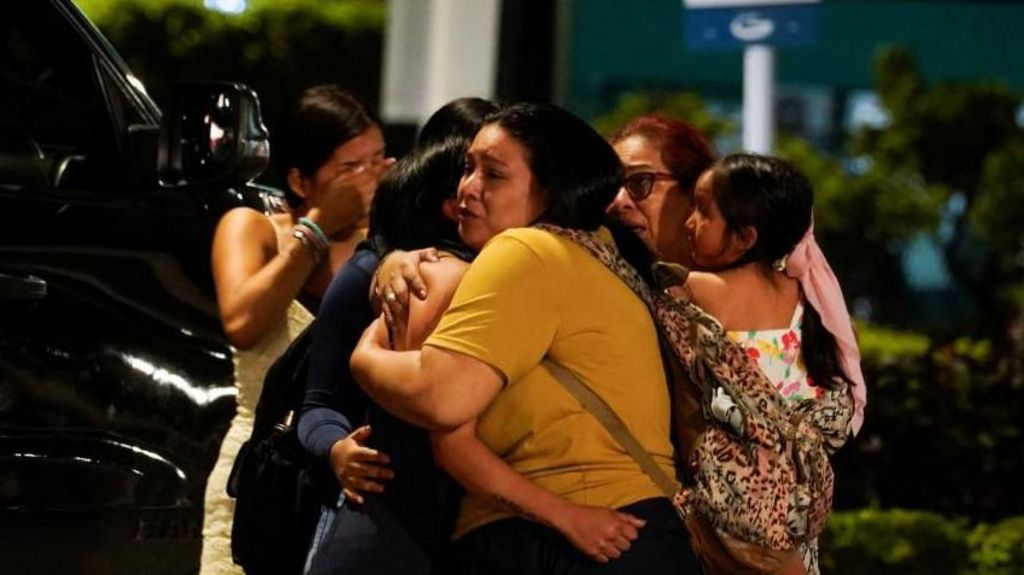
On a recent Wednesday in Ecuador’s largest coastal metropolis Guayaquil, a brutal midday assassination outside José Joaquín de Olmedo International Airport’s arrivals terminal has sent new shockwaves through a country already grappling with an unrelenting crisis of gang-fueled violence. The victim, identified by Ecuadorian Interior Minister John Reimberg as 39-year-old Carlos Alberto Suástegui Villanueva, was the leader of the El Triunfo faction of Los Águilas — one of the most violent criminal organizations operating in the South American nation. Security camera footage from the airport captured the chilling premeditation of the attack: two young assailants waited patiently for their target outside the terminal, concealing their weapon beneath a stuffed teddy bear alongside a bouquet of flowers to avoid raising suspicion. As Suástegui exited the arrivals area, one attacker stepped forward, drew the hidden firearm, and fired multiple shots at point-blank range, before both suspects fled the scene, with the second gunman firing a final shot at the fallen victim as they ran. The chaotic immediate aftermath of the shooting left passengers and bystanders scrambling for safety. Local newspaper El Universo reported that crowds scattered in panic when gunfire rang out; one innocent bystander suffered a non-fatal injury, and viral footage from the scene shows a traveler pulling a suitcase collapsing to the ground amid the chaos. In the wake of the attack, law enforcement authorities closed the arrivals terminal for more than two hours to allow forensic investigators and police officers to process the crime scene, and have since taken two teenagers into custody in connection with the assassination. This brazen public killing is the latest high-profile incident in a years-long surge of organized criminal violence that has remade Ecuador’s security landscape. The attack comes just 24 hours after Ecuadorian President Daniel Noboa announced a new state of emergency covering 10 of the country’s provinces, including Guayas — the administrative region where Guayaquil is located. Los Águilas, the gang Suástegui led, was formally classified as a terrorist organization by the Noboa administration in 2024, and the group has long been linked to large-scale drug trafficking and systematic extortion operations across the country. Geographic location has made Ecuador a critical transshipment hub for cocaine: the country sits between Colombia and Peru, the world’s top two producers of coca leaf, the raw material for cocaine, and criminal groups have exploited weak governance and under-resourced law enforcement to turn Ecuador into the primary corridor for smuggling cocaine to consumer markets in the United States, Europe, and other global destinations. What was once considered one of the safest countries in South America has over the past decade transformed into a regional crime hotspot, boasting one of the highest homicide rates in the entire Western Hemisphere. Guayaquil, the country’s economic and population center, has been disproportionately impacted by drug and gang-related bloodshed, but even by local standards, the assassination of a high-profile gang leader in broad daylight outside one of the country’s busiest international airports has deeply rattled local communities. President Noboa took office on a promise to crack down on rampant organized crime, and his administration has relied heavily on declarations of states of emergency to grant expanded powers to security forces, including the authority to search private residences without a warrant when officers have reasonable suspicion of illegal activity. Despite these aggressive policy measures, Ecuador’s national murder rate climbed to an all-time record high in 2025, demonstrating the stubborn persistence of the country’s security crisis.