标签: South America

南美洲

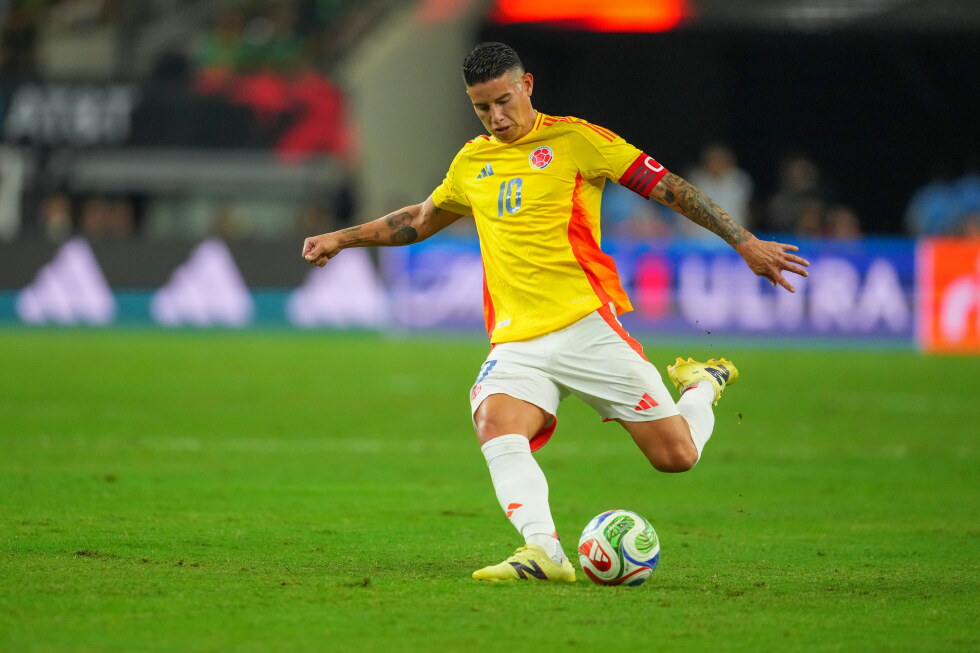
  • Colombia starts its World Cup preparations in Guadalajara ahead its 2 matches in Mexico

    Colombia starts its World Cup preparations in Guadalajara ahead its 2 matches in Mexico

    In the lead-up to their highly anticipated Group K World Cup fixtures, Colombia’s national men’s football team has officially launched the final phase of their competitive preparations on Mexican soil, following a multi-phase training schedule spanning two countries.

    The squad touched down in the western Mexican city of Guadalajara on Wednesday, and wasted no time getting to work: their first on-site training session took place Thursday, with the session opened to allow members of the local press and Guadalajara football fans to observe the team’s first workout in their new base camp.

    Currently ranked 14th in the official FIFA global rankings, Colombia built up their fitness and tactical coordination in stages ahead of this final camp. The team began preliminary preparations at training facilities within their home nation, before moving to a second training block in California, United States, to acclimate to different playing conditions before traveling south to Mexico.

    Colombia’s three Group K matches will take place across three different North American venues. Their opening group stage fixture is scheduled for next Wednesday in Mexico’s capital, Mexico City, where they will face off against Uzbekistan. They will return to Guadalajara for their second group match against Congo on June 23, before wrapping up group play against Portugal on June 27 in Miami, Florida.

    Organizers and the Colombian coaching staff have already flagged a key environmental challenge the team will face in their first two matches: the high altitude of both Guadalajara and Mexico City, which can impact player endurance and breathing over the course of 90 minutes of competitive play.

    For Colombia, this World Cup marks a chance to return to the global football stage after a disappointing cycle four years ago. The South American nation posted its best-ever World Cup result in 2014, hosted by neighboring Brazil, when the squad advanced all the way to the tournament quarterfinals before being eliminated. Four years later in Russia, the team exited the competition in the round of 16, and failed to qualify for the 2022 World Cup held in Qatar, leaving them hungry to prove their skill on the global stage once again.

  • Watch: Fans celebrate Mexico’s win in World Cup opening match

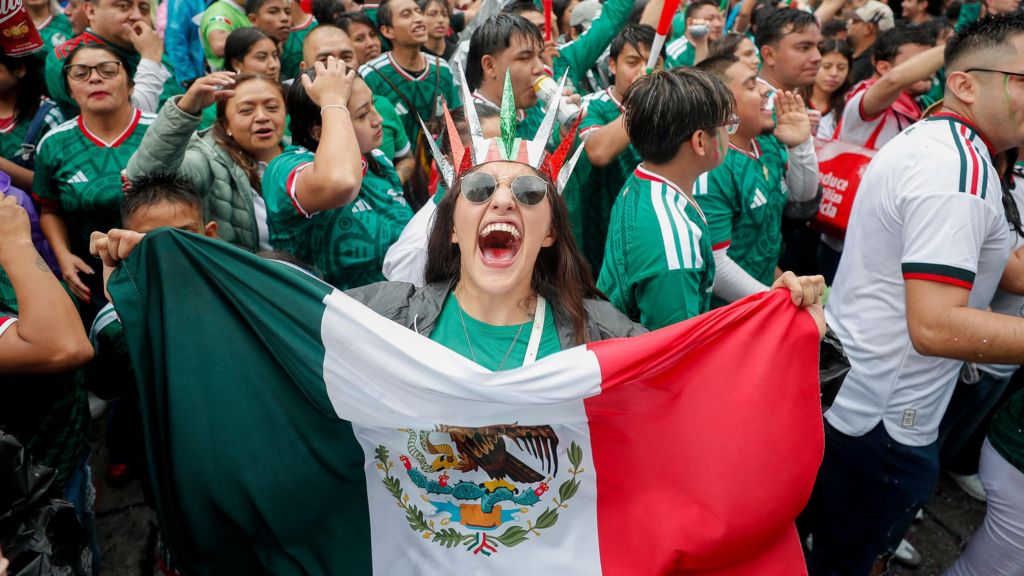
    Watch: Fans celebrate Mexico’s win in World Cup opening match

    The 2010 FIFA World Cup kicked off on a high note for host nation Mexico, as El Tri secured a convincing 2-0 victory against South Africa in their opening group-stage match, sparking chaotic, joyous celebrations across the country. Moments after the final whistle blew, thousands of passionate Mexican supporters poured out of bars, living rooms and public viewing venues onto city streets across the nation, waving the iconic green, white and red national flag, blowing horns, singing traditional chants and embracing one another in shared excitement. The opening win marks a strong starting point for Mexico’s World Cup campaign, giving the team and its fanbase a massive boost of momentum heading into their next group-stage matchup. For host nation supporters, the opening victory turned a already historic tournament moment into an unforgettable nationwide celebration, with social media and public spaces flooded with messages of excitement and pride in the team’s performance.

  • Christian Pulisic is ready to shoulder the burden of US hopes in home World Cup opener vs Paraguay

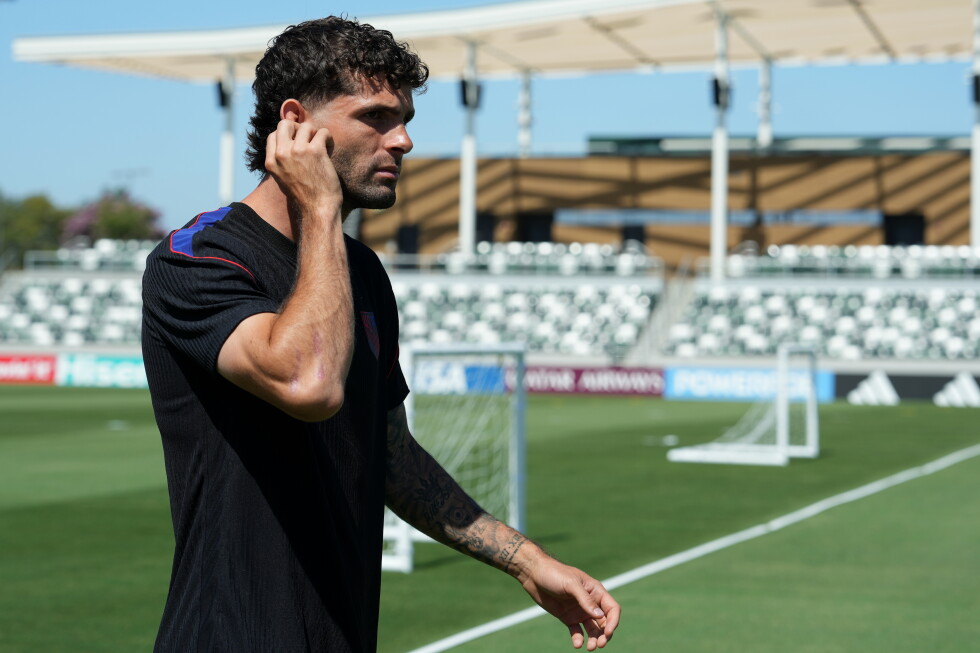
    Christian Pulisic is ready to shoulder the burden of US hopes in home World Cup opener vs Paraguay

    IRVINE, Calif. — As the United States prepares to host the 2026 FIFA World Cup and kicks off its tournament campaign against Paraguay this Friday, Christian Pulisic finds himself in a rare, pressure-filled position: he is the undisputed generational star of the host nation’s men’s national team, carrying the expectations of an entire soccer-crazed country on his shoulders.

    Pulisic joins an exclusive, shortlist of elite global talents who have landed this exact confluence of skill, stardom, and timing when their home country hosts soccer’s biggest tournament. Past names on that list read like a who’s who of modern soccer royalty: Zinedine Zidane, who led France to a 1998 World Cup title on home soil; Michael Ballack, who anchored host Germany’s 2006 squad; and Neymar, who carried Brazil’s hopes as the home nation in 2014.

    Pulisic’s teammates and coaching staff are acutely aware of the massive burden he carries. For nearly a decade, he has been framed as the face of American men’s soccer, the groundbreaking talent that turned a historically middling soccer nation into a growing competitor on the global stage. Teammates across the roster openly acknowledge that all eyes — from the pitch to the sold-out stands — will remain fixed on Pulisic, with fans and peers alike hoping his decade of proven success at top European clubs will lift the U.S. to unprecedented heights on home soil.

    “I can’t even imagine the weight that’s on his shoulders,” said 27-year-old Bournemouth midfielder Tyler Adams, Pulisic’s long-time midfield partner. “From such a young age, he was the hope of American soccer.”

    Now 27, Pulisic refuses to shrink from the bright spotlight that will burn brighter than ever across the tournament’s coming weeks. In comments Thursday at the U.S. national team’s Orange County training base, he reaffirmed that this high-stakes moment is exactly what he has spent his entire career working toward.

    Unlike his early years in the national program, when he was the lone elite talent carrying the team’s aspirations, Pulisic says he feels no extra pressure heading into the World Cup. In fact, he argues the weight on his shoulders may even be lighter than it has been in years past, thanks to the depth of talent that has emerged around him in recent seasons.

    “I don’t feel a difference in weight. I’m not sure. Maybe less,” Pulisic said. “I just feel like there’s so many good players around me. I genuinely don’t feel like I have to do anything on my own. I’m going to give it the best I can. I want to help the team, and they expect a lot out of me, but with the guys I have around me, it makes it a lot easier for me.”

    Pulisic’s status as the center of U.S. World Cup hopes dates back longer than this tournament cycle. When the World Cup was first awarded to the North American bloc of the U.S., Canada, and Mexico eight years ago, Pulisic was already the rising star of American soccer. A native of Hershey, Pennsylvania, he broke into the senior national team as a 17-year-old prodigy, becoming the first homegrown U.S. talent to earn consistent playing time and stardom at Europe’s top clubs.

    Over the past 10 years, he has built a resume unrivaled by any active American player: after cutting his teeth at Borussia Dortmund, he transferred to Chelsea in 2019, where he became just the second American to win the UEFA Champions League in 2021. He moved to Serie A’s AC Milan in 2023, where he remains a key contributor for one of Europe’s top clubs. While the U.S. national program has struggled for consistent progress through his career, and Pulisic even endured an 18-month goal drought with the national team that only ended in late May, he still stands as the Americans’ most consistently dynamic playmaker.

    Adams, who has shared the pitch with Pulisic since the winger’s 2016 senior debut, recalled watching the teenage prospect immediately become the team’s most irreplaceable player. Even after that 2016 campaign ended in devastating failure — the U.S. failed to qualify for the 2018 World Cup — Pulisic quickly emerged as the foundation of the program’s rebuild.

    “(Pulisic was) the best player on the field at 17 years old, and the person that they rely on, (and) it’s been since then that they’ve relied on him,” Adams said. “Now, we have weapons around him to kind of relieve that, but he’s a star. Not just for the U.S. national team, but in world football. He’s that good. We rely on him in big moments, but that being said, I hope he doesn’t feel the pressure to carry it all. Just to be himself and grow into each game.”

    Pulisic made his first World Cup appearance in Qatar four years ago, where he notched one goal and one assist as the U.S. exited in the knockout round after scoring just three total goals across four matches. This time around, he says the home-field advantage brings a unique sense of comfort, with family and fans able to cheer the team on close to home.

    “It feels similar, but with a bit of that comfort of being in America,” Pulisic said. “It feels great having the people you love around you. It makes it that much more special.”

    New U.S. head coach Mauricio Pochettino, who took over the program in late 2024, has worked to build an aggressive, attack-minded squad centered around Pulisic’s creative strengths, while intentionally spreading responsibility across the roster to reduce reliance on the star. Two prolific Europe-based strikers, Folarin Balogun and Ricardo Pepi, will make their World Cup debuts this tournament, with the expectation that they will share the scoring load that once fell entirely to Pulisic.

    Pochettino emphasized that while Pulisic will play a critical role for the U.S., the team’s collective culture and identity matters more than any individual star.

    “Of course he needs to be an important player for us in the competition,” Pochettino said. “(But) I think what we’ve learned after a year and a half is that the badge of the national team and the culture with this country is more important than any name, any player or any coach. That is a principal thing that we (believe), and from there, if you have talent and quality, you can perform on that platform.”

    Still, with his first World Cup knockout round exit behind him, Pulisic understands the U.S. needs to hit the ground running on home soil, starting with Friday’s opener against a tough Paraguay side. For the veteran star, past tournament experience has helped calm his nerves, even as the spotlight grows larger than ever.

    “It has that big-game feel, for sure,” Pulisic said. “But in some ways, I feel a little bit more relaxed because I’ve been there before. We’ve played in a match like this. I think the experience has calmed me down a little bit.”

  • ‘Once in a lifetime’ – Mexico fans share excitement as World Cup kicks off

    ‘Once in a lifetime’ – Mexico fans share excitement as World Cup kicks off

    As the 2026 FIFA World Cup kicked off its opening match for the Mexican national team at the iconic Azteca Stadium, thousands of elated supporters filled the streets surrounding the venue, describing the electric atmosphere as a ‘once in a lifetime’ experience they would never forget. The BBC caught up with dozens of ticket-holding fans moments after the final whistle, where Mexico secured a dominant 2-0 victory over South Africa to launch their tournament campaign on a high note.

    Supporters clad in the team’s signature green, white, and red jerseys packed the plazas and sidewalks outside the stadium, waving flags, singing traditional chants, and embracing one another in celebration. Many fans traveled hundreds of miles from across Mexico to attend the opening match, with some telling reporters they had saved for years to secure their spot at the legendary venue, which has hosted two World Cup finals in its history.

    Azteca Stadium, one of the most recognizable soccer stadiums in the world, provided a dramatic backdrop for the opening clash. From the opening kickoff, the crowd roared nonstop, creating a wall of noise that pushed Mexico’s players to secure the two-goal advantage. Even after the match ended, fans lingered outside the stadium to share their joy with friends, family, and reporters, emphasizing that the combination of hosting a World Cup match at Azteca and opening with a win made the moment unforgettable.

    For Mexican soccer, this opening victory marks a promising start to what fans hope will be a deep tournament run. The energy outside the stadium reflected the widespread optimism across the country, as supporters turn their attention to the nation’s next group stage match, with hopes of continuing their winning momentum.

  • Argentina’s inflation slows to 8-month low in a boost for President Milei

    Argentina’s inflation slows to 8-month low in a boost for President Milei

    BUENOS AIRES, Argentina — Fresh economic data released Thursday has delivered a rare glimmer of good news for Argentine President Javier Milei, as the country’s inflation rate cooled for the second straight month in May, following nearly a year of unrelenting price hikes that threatened to erode the libertarian leader’s core policy progress.

    Government statistics agency INDEC reported that consumer prices climbed 2.1% in May compared to April, a figure that Economy Minister Luis Caputo celebrated as the lowest monthly inflation rate recorded in eight months. However, the annual inflation rate ticked upward slightly to 33.2% this May, a statistical shift driven by an unusually low 1.5% monthly inflation reading in May 2025, which marked a seven-year low at the time.

    Since that 2025 low, prices have remained persistently high, squeezing household budgets across the country and stoking widespread public discontent with Milei’s administration. The government is already grappling with overlapping crises: a string of high-profile corruption scandals, and a deep economic downturn hitting labor-heavy sectors including retail and manufacturing.

    Breaking down May’s price movements, communications services saw the steepest increase at 3.4%, driven by rising phone and internet bills. Education costs followed close behind, while food prices accelerated 2.5% year-over-year, continuing to put pressure on low- and middle-income households.

    Beyond the inflation data, the Milei administration secured another vote of confidence from global markets this week: major credit ratings agency S&P Global announced late Wednesday it had upgraded Argentina’s sovereign credit rating to stable B-, up from the CCC tier widely considered to signal high risk of sovereign default. The upgrade cited the government’s consistent track record of meeting debt repayment obligations.

    Milei publicly celebrated the dual wins on social media, sharing the INDEC inflation report and praising Caputo — who goes by the nickname “Toto” — with the enthusiastic comment, “Let’s goooooo Toto!”

    While the credit upgrade still leaves Argentina well below investment grade status, it marks a key step forward for Milei’s long-term policy goal of restoring the crisis-prone Argentine economy’s access to global capital markets. It has been six years since Argentina defaulted on its foreign debt for the ninth time in the country’s modern history.

    Milei took office in late 2023 on a promise to crush Argentina’s long-running sky-high inflation and reverse decades of chronic fiscal deficits. More than two years into his term, his sweeping austerity and deregulation agenda has delivered tangible progress: the country has posted a rare budget surplus, won over skeptical international investors, and brought annual inflation down from the 200% peak it hit when he first took office to the current 33% reading.

    Yet significant headwinds remain that threaten to undermine Milei’s agenda. Even with slowing inflation, the cost of living in the capital Buenos Aires is now comparable to major European capitals, and price growth continues to outpace real wage gains for most workers. Unemployment has crept upward as thousands of workers have been laid off from domestic industries that cannot compete with a flood of cheap imported goods.

    Compounding economic pressures, corruption scandals — which Milei vowed to eliminate when he campaigned for office — have eroded public support even as the administration cuts funding for core public services including education, health care and social assistance.

    The most recent controversy involves Milei’s top aide and cabinet chief Manuel Adorni, who is currently under investigation for alleged illicit enrichment. Investigators are probing Adorni’s lavish travel, including an all-cash luxury trip to Aruba, and high-value real estate purchases that appear out of line with his modest public salary. On Wednesday, Adorni admitted to hiding $500,000 in undeclared savings and unreported cryptocurrency investments, deepening the political scandal.

  • World Cup kicks off in Mexico with Shakira, local performers and vibrant fans

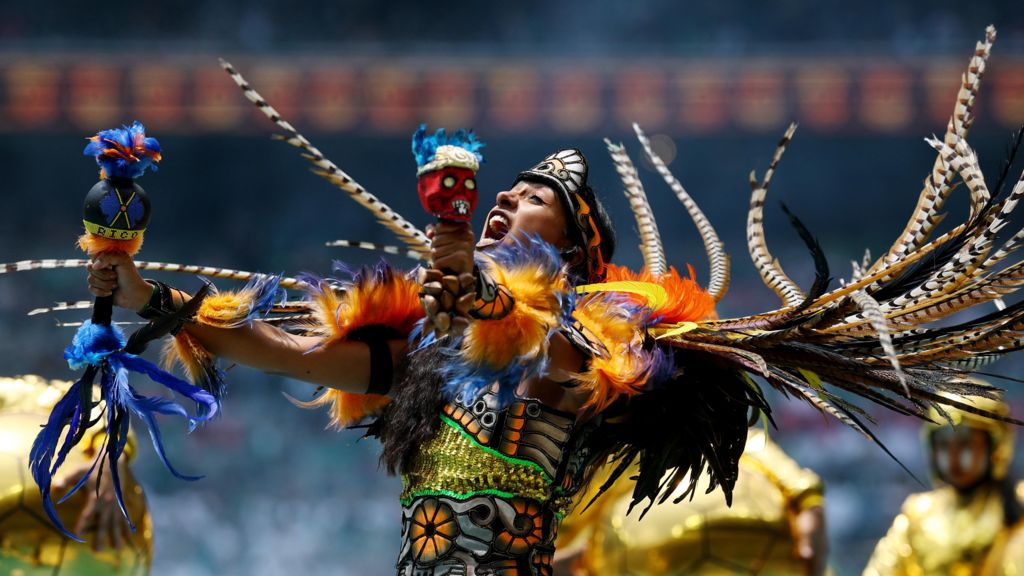
    World Cup kicks off in Mexico with Shakira, local performers and vibrant fans

    The 2026 FIFA World Cup, the first 48-team edition of global football’s flagship tournament, officially launched on Thursday at Mexico City’s iconic Azteca Stadium, marking four decades since the nation last hosted the competition’s opening match. Against a backdrop of months of preparation challenges—from large-scale infrastructure renovations at the city’s airport and the historic Azteca venue, to widespread public protests and ongoing concerns about regional cartel violence—football fans and organizers set aside pre-tournament tensions to celebrate the start of the month-long competition.

    Thousands of cheering supporters packed into the 100-year-old stadium, many decked head-to-toe in Mexico’s signature green, white and red team colors, brimming with anticipation for the first match of the tournament between co-host Mexico and South Africa. For first-time World Cup attendee Javier Pérez, who traveled to the capital with his entire family to secure coveted hospitality tickets, the energy inside the stadium overshadowed every logistical headache and pre-event worry that marked the months leading up to kickoff.

    “It’s a unique experience. I have never been to a World Cup before so to bring my family is wonderful,” Pérez told reporters ahead of the ceremony. “I just want Mexico to get off on the right foot, win today and score a load of goals! And then we’ll see how far we can go!”

    The opening celebration drew a lineup of global music superstars that blended Latin culture with global hitmakers, headlined by Colombian global icon Shakira. She was joined on the Azteca stage by fellow Colombian star J Balvin, Nigerian Afrobeats pioneer Burna Boy, Venezuelan Latin hitmaker Danny Ocean, and iconic Mexican rock frontman Fher Olvera. In a nod to the opening match’s teams, Mexican singer Alejandro Fernández—son of legendary Mexican crooner Vicente Fernández—delivered a stirring performance of Mexico’s national anthem, while Grammy-winning South African breakout star Tyla performed her country’s anthem before taking the field.

    Tyla, who already holds a World Cup credit for her 2026 official tournament track “Game Time,” will reprise her performance role on Friday for the U.S. opening ceremony in Los Angeles, where she will share the stage with pop star Katy Perry, rapper Future, Blackpink’s Lisa, and Brazilian pop icon Anitta. Canada will also hold its own opening celebration Friday for matches hosted on its territory, as the 2026 tournament is split across the three North American co-hosts.

    The Azteca ceremony leaned heavily into Mexico’s rich indigenous heritage, with dozens of performers wearing traditional handcrafted indigenous garments, while other dance troupes wore all-gold regalia and carried oversized golden footballs across the pitch. When the 90-minute celebration drew to a close and the opening match kicked off, thousands of elated fans tossed their traditional Mexican sombreros into the air, embracing the once-in-a-generation moment of hosting world football’s biggest event on home soil after 40 years of waiting.

  • Brazil reports drop in Amazon deforestation rates, pushing back on US tariff accusations

    Brazil reports drop in Amazon deforestation rates, pushing back on US tariff accusations

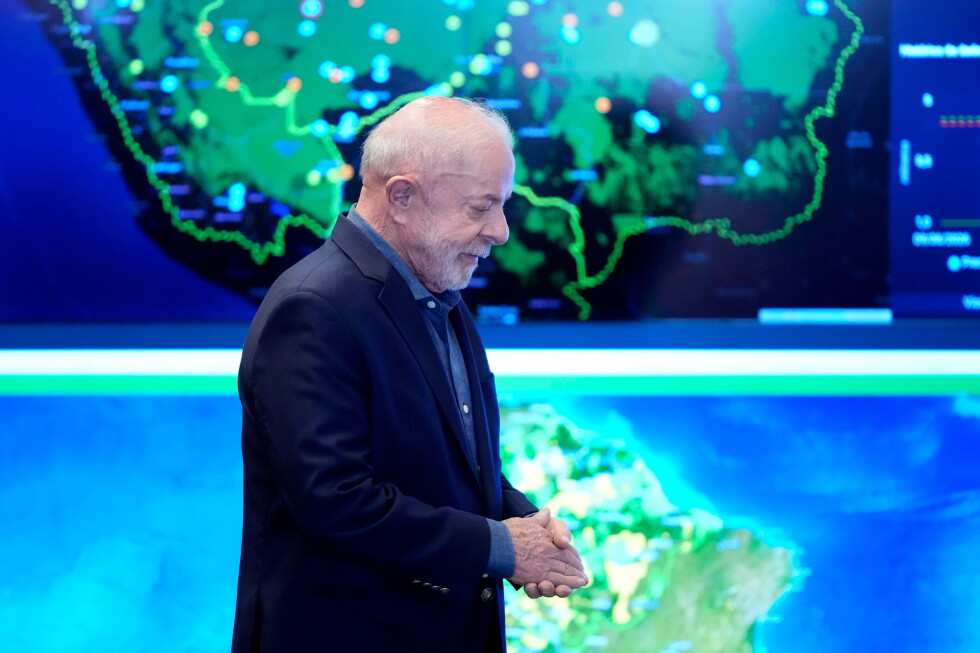
    SAO PAULO — In a direct challenge to one of the core justifications the Trump administration cited for imposing new trade barriers on Brazil, Brazilian environmental and space officials unveiled dramatic new data Thursday showing a steep decline in Amazon rainforest deforestation rates.

    According to joint figures released by Brazil’s National Institute for Space Research (INPE) and the Ministry of Environment, deforestation across the Brazilian Amazon fell 61.4% in May 2026 compared to the same month in 2025, marking the lowest May deforestation total ever recorded. Even with the sharp decline, 370 square kilometers (nearly 143 square miles) of forest were still cleared last month. In the Cerrado, a threatened central Brazilian savanna that has been heavily targeted by large-scale agribusiness operations, deforestation also dropped by 12% over the same period.

    Environment Minister João Paulo Capobianco told reporters that May typically sees elevated deforestation activity, as it marks the beginning of the Amazon’s dry season, when land clearing operations become easier. Cumulatively, over the 10-month monitoring period from August 2025 through May 2026, Amazon deforestation is already down 37.5% compared to the same period a year earlier. Capobianco said the trend puts Brazil on track to hit its lowest annual deforestation rate on record once full-year data is finalized in the second half of 2026.

    The new data comes less than a week after the Trump administration formally proposed 25% additional tariffs on all Brazilian imports, claiming the South American nation engages in unreasonable trade practices that harm U.S. commerce. A U.S. Trade Representative investigation leading up to the tariff announcement specifically cited illegal deforestation in Brazil as a core complaint, alongside claims of unfair Brazilian trade policies.

    Capobianco argued that the updated deforestation numbers completely debunk the U.S. claims, saying “the unfair and unfounded accusation by the United States, which cited deforestation to justify imposing tariffs” has no basis in fact. Brazilian President Luiz Inácio Lula da Silva, who was present for the announcement, echoed the criticism, doubling down on his rejection of the U.S. framing.

    Lula noted that the Trump administration previously lied about a U.S. trade deficit to justify earlier tariffs on Brazilian goods last year, and has now shifted to false claims about deforestation. “They don’t understand the work we are doing to bring deforestation down to zero by 2030. This is not a decision by any COP or by the United Nations. It is a decision of our government,” Lula said. “It’s a matter of justice, of Brazil’s contribution to the planet, fulfilling our obligation to avoid deforestation as much as possible. Preventing deforestation benefits Brazil, benefits the Amazon and benefits the world.”

    Deforestation is the single largest contributor to Brazil’s greenhouse gas emissions, which drive global climate change. As the world’s largest tropical rainforest, the Amazon plays an outsized role in regulating global climate patterns; scientific research has linked widespread Amazon forest loss to disrupted agricultural output as far away as the U.S. Midwest and Western Europe, alongside accelerating planetary warming.

    After declining for decades following record highs in the 1990s and early 2000s, deforestation surged again during the 2019–2022 presidency of Jair Bolsonaro, whose administration rolled back nearly all major environmental protections and enforcement for the Amazon. Since Lula returned to office in 2023, however, deforestation has fallen steadily, hitting its lowest annual level in a decade last year.

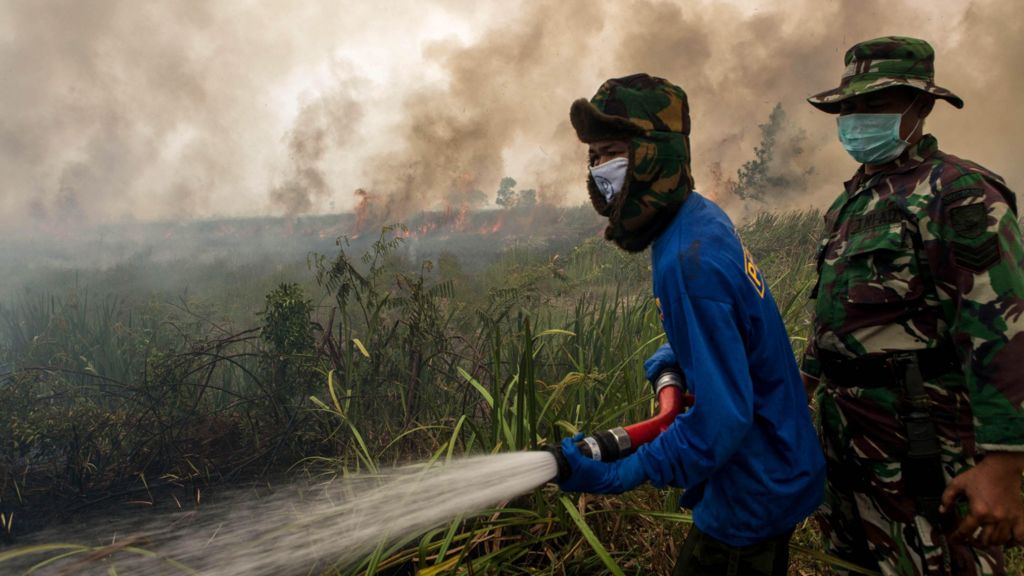
    Even with the recent progress, the Amazon still faces a range of ongoing and emerging threats. Forest degradation driven by wildfires, illegal logging, and drought now impacts roughly 40% of the rainforest, and in recent years has outpaced full clear-cutting as the leading source of forest damage. A strong El Niño event this year is expected to worsen these risks, bringing higher temperatures and drier conditions that increase the likelihood of large-scale wildfires across the basin.

    This climate and environmental reporting from The Associated Press receives funding from multiple private foundations, with AP retaining full editorial control over all content.

  • What is El Niño and why could it mean record temperatures?

    What is El Niño and why could it mean record temperatures?

    U.S. climate scientists have officially confirmed the formation of a new El Niño event, a naturally occurring climate pattern capable of triggering extreme weather disruptions across every inhabited continent, with forecasts indicating it could rank among the most intense events recorded since 1950.

    The National Oceanic and Atmospheric Administration (NOAA) announced the onset of the new El Niño phase after detecting consistent sea surface temperature anomalies of more than 0.5°C above long-term averages across the central tropical Pacific, paired with a measurable shift in atmospheric pressure: lower pressure over the central Pacific and higher pressure in the western Pacific. The Japanese Meteorological Agency has independently verified the presence of El Niño conditions, matching NOAA’s findings.

    What makes this event particularly concerning to researchers is the unusually high temperature of sub-surface Pacific waters, which have measured up to 6°C above average in some regions, per data from the United Nations’ World Meteorological Organization (WMO). Historical climate patterns show that deep ocean heat typically rises to the surface over the course of an El Niño event, driving further warming. NOAA’s latest probability calculations put the chance of this El Niño reaching “very strong” or “super” status—defined as a sustained surface warming of 2°C or more across the central tropical Pacific—at 63%, meaning it will almost certainly rank among the most significant events in the modern observational record. The event is projected to persist at least through the early months of 2027.

    First documented by Peruvian fishermen in the 1600s, who named the warm December current El Niño de Navidad (the Christ Child) for its seasonal timing, the climate pattern forms when trade winds that normally blow east to west across the tropical Pacific weaken or reverse direction, allowing warm surface water that usually accumulates near Australia and Southeast Asia to spread eastward toward the coasts of North and South America.

    When combined with decades of anthropogenic global warming, this new El Niño is expected to push 2027 to become the hottest year ever recorded on a global scale. “El Niño conditions will pour fuel on the fire of a warming world. Impacts will hit even harder, travel even farther, and cross borders with devastating speed,” U.N. Secretary-General António Guterres warned, urging nations to begin preparation for widespread disruptions immediately.

    WMO Secretary-General Celeste Saulo added that a strong El Niño will exacerbate already dangerous climate extremes, worsening droughts, extreme rainfall events, and heatwaves on both land and ocean as the Pacific transfers accumulated heat into the atmosphere.

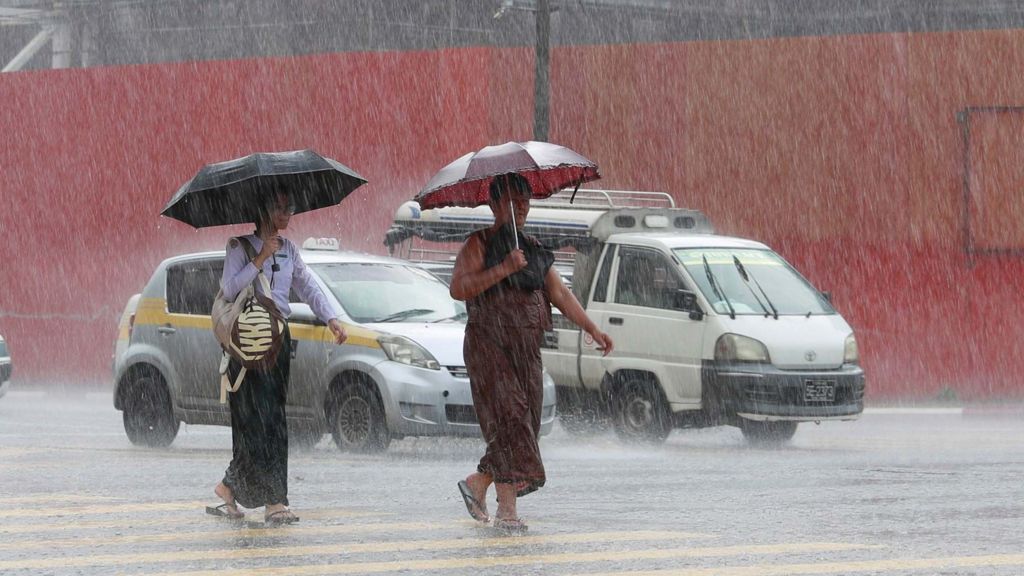
    While no two El Niño events produce identical impacts, consistent historical trends outline broad regional effects. A strong event typically brings prolonged hot, dry conditions to parts of South America, Southeast Asia, and Australia, dramatically increasing the risk of severe droughts and destructive wildfires—conditions that mirror the devastating blazes that swept across Indonesia during the record 2015-16 El Niño event. It also tends to weaken the critical Indian monsoon, reducing rainfall across South Asia. In the southern United States, El Niño amplifies rainfall, raising the probability of life-threatening flooding. For tropical storm activity, the pattern increases cyclone formation in the eastern and central Pacific while suppressing activity in the tropical Atlantic, including off the southeastern U.S. coast. The impact on U.K. weather is less consistent, but the U.K. Met Office notes El Niño often increases the chance of a mild early winter followed by a cold late winter.

    Beyond immediate weather disruptions, the event poses serious risks to global food security. Droughts in major agricultural regions of South America and Southeast Asia could reduce crop yields at a time when global fertilizer distribution is already disrupted by the effective closure of the Strait of Hormuz. A smaller harvest would tighten already strained global food supplies and push prices higher, worsening food insecurity for vulnerable populations. For South American fishing communities, the event reduces the upwelling of cold, nutrient-rich water that sustains popular commercial species such as anchovies, leading to smaller catches and economic hardship.

    Many researchers are drawing parallels to the 2015-16 El Niño, one of the strongest events on record. That event caused widespread water shortages in the Caribbean, a record-breaking tropical storm season in the central Pacific, and prolonged drought in the Horn of Africa. The U.N. Food and Agriculture Organization estimates that the combined climate shocks linked to that event left millions of people across the globe facing food insecurity.

    The Intergovernmental Panel on Climate Change (IPCC) has noted that El Niño events recorded since 1950 have been stronger on average than events between 1850 and 1950, though historical data from tree rings confirms that frequency and intensity have varied naturally since the 1400s. There is currently no clear scientific consensus that anthropogenic climate change has altered the frequency or intensity of El Niño events, though some climate models project that El Niños may become more frequent and more intense as global warming continues. Regardless of its link to climate change, this El Niño’s impacts will be amplified by the long-term warming driven by greenhouse gas emissions, making extreme weather more dangerous than it would have been in a pre-warming world.

    El Niño is the warm phase of the Pacific’s natural ENSO (El Niño-Southern Oscillation) cycle, paired with its cooler counterpart La Niña. During La Niña events, central-eastern Pacific surface temperatures fall below average and atmospheric pressure patterns reverse, bringing wetter conditions to Australia, Indonesia, and equatorial South America and drier conditions to the southern U.S. El Niño and La Niña typically alternate, though repeated back-to-back events of the same phase are not uncommon. On average, the full ENSO cycle produces an El Niño or La Niña every two to seven years.

  • El Niño under way and threatens weather extremes, scientists say

    El Niño under way and threatens weather extremes, scientists say

    After three years of the cooling La Niña pattern that wrapped up earlier in 2026, United States climate scientists have made a formal announcement: El Niño, the naturally occurring Pacific climate cycle that drives global temperature increases, is now officially active.

    The US National Oceanic and Atmospheric Administration (NOAA) confirmed that tropical Pacific sea surface temperatures have surged sharply in recent months, crossing the 0.5 degrees Celsius above-average threshold that the agency uses to mark an official El Niño event. In a statement, NOAA noted that above-average sea surface temperatures spanning the central to eastern equatorial Pacific confirm the pattern’s development over the past month. Beyond ocean warming, the agency has also recorded a shift in equatorial Pacific trade winds, a key indicator that the atmosphere is responding to warmer ocean conditions — confirming the event is not just an isolated ocean warming trend.

    What has caught climate researchers off guard is the high confidence climate models have already shown in forecasting El Niño’s intensity. While a strong El Niño is defined by sea surface temperatures 1.5°C above average and a very strong event crosses the 2°C threshold, NOAA’s June outlook estimates there is a 63% probability this event will reach very strong strength between November 2026 and January 2027. If it hits that mark, it will rank among the most powerful El Niño events recorded since systematic tracking began in 1950. The three most intense events in that historical record are 1982/83, 1997/98, and 2015/16. Some cutting-edge models from both US research teams and Europe’s ECMWF go even further, projecting that tropical Pacific sea surface temperatures could rise more than 3°C above average by the end of 2026. Even so, NOAA has urged caution around extreme projections, noting that even very strong events do not produce uniform expected impacts across the globe, though more intense events do significantly increase the likelihood of classic El Niño-related disruptions.

    The greatest source of concern for climate experts is that this El Niño is developing on a planet that has already warmed dramatically from decades of human-caused climate change. Adam Scaife, head of monthly to decadal prediction at the UK Met Office, explained that this new El Niño is developing on top of existing long-term global warming. This combination means regional temperatures in areas affected by El Niño could reach unprecedented levels, as the natural warming from the climate pattern adds to the warming already driven by greenhouse gas emissions. A strong El Niño typically raises global average air temperatures by roughly 0.2°C, as it releases stored ocean heat into the atmosphere. This extra warming comes at a time when global temperatures are already hitting consecutive record highs: 2024, already boosted by a relatively weak El Niño, remains the warmest year on record, and even with the cooling influence of the recent La Niña, 2025 ranked as the third-warmest year ever recorded — hotter than the 2015/16 super El Niño year. Scaife projects that by late 2026 and through 2027, global temperatures will reach extraordinary levels, with 2027 very likely pushing global average warming above 1.5°C compared to pre-industrial late-19th-century levels for another full year.

    While every El Niño event has unique characteristics, the most severe impacts are concentrated in tropical regions. Classic El Niño patterns bring increased flooding risk to northern Peru, southern Ecuador, parts of East Africa, Central Asia, and the southern United States. Conversely, Australia, Indonesia, and much of northern South America face elevated risk of severe drought and wildfire, threats that directly damage agricultural production and put global food supplies at risk. El Niño also typically suppresses Atlantic hurricane activity, which might sound beneficial, but Liz Stephens, a professor of climate risk and resilience at the University of Reading, points out that this reduction in storm activity comes with a downside: it also brings reduced rainfall and heightened drought risk to Central America. Even regions as far north as the UK see subtle shifts, with El Niño slightly increasing the probability of a mild early winter followed by a cold late winter, though the connection is weak.

    For vulnerable communities around the world, this forecast is not an abstract climate update. Mohamed Adow, director of climate advocacy group Power Shift Africa, emphasized that an official El Niño declaration acts as a dangerous warning for millions of people. It portends failed rainy seasons, crop failures, spiking global food prices, and increased economic hardship for communities already reeling from repeated climate disasters in recent years, particularly in East Africa.

    Japan’s Meteorological Agency has aligned with NOAA’s assessment, confirming El Niño conditions are already present and are nearly certain to persist through the Northern Hemisphere autumn. Not all national climate agencies have formally declared the event underway, however. Australia’s Bureau of Meteorology uses a stricter threshold of 0.8°C above average sea surface temperatures. This week, the bureau noted that the tropical Pacific is approaching El Niño conditions, with central Pacific temperatures already meeting its threshold, but it has declined to make a formal declaration yet, while still projecting that a strong El Niño will develop later in 2026.

    El Niño occurs naturally every two to seven years and typically persists for roughly 12 months. While there is still no definitive scientific consensus that climate change is making El Niño events more frequent or more intense, researchers agree that a long-warmed planet amplifies the harmful impacts of every El Niño that develops.

  • Messi, Maradona or Pele? Ranking the top 10 World Cup legends

    Messi, Maradona or Pele? Ranking the top 10 World Cup legends

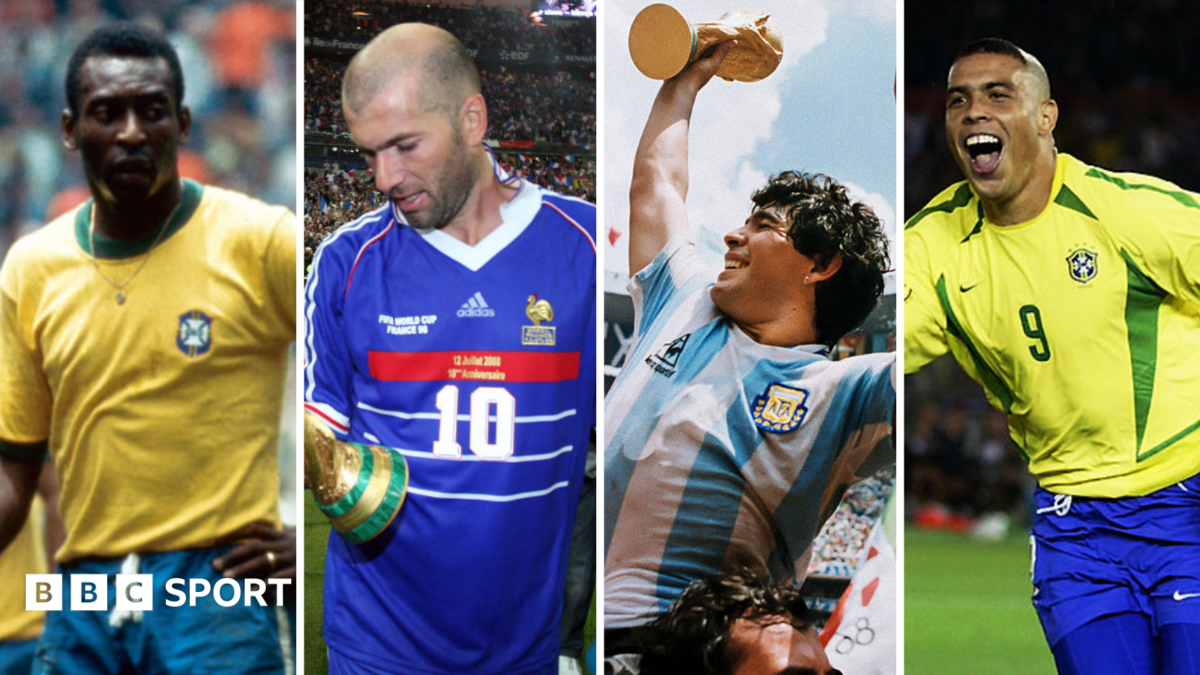
    Narrowing down thousands of elite players across 22 men’s FIFA World Cup tournaments spanning nearly 120 years to a final list of just 10 all-time greats is no small feat, according to senior BBC Sport journalist Alex Bysouth. While Bysouth notes the top six or seven selections are largely undisputed, debate will inevitably rage over the final spots on the ranking, with many iconic players forced to miss out.

    Among the standout omissions is Miroslav Klose, the men’s World Cup’s all-time leading goalscorer, who lands just outside the top 10 at 11th. Also left off the final list are Brazilian dribbling legend Garrincha, Italian icon Roberto Baggio, 1958 single-tournament 13-goal record holder Just Fontaine, Dutch revolutionary Johan Cruyff, Portuguese powerhouse Eusébio, German clinical finisher Gerd Müller, and no individual from Spain’s universally celebrated 2010 World Cup-winning squad, whose collective strength left no single player standing out enough to claim a spot. With that context, here is Bysouth’s ranking of the 10 greatest World Cup legends in history:

    10. Sir Geoff Hurst, England (1966 Winner)
    England’s 1966 home World Cup final was meant to see star striker Jimmy Greaves return from a group stage injury to start, but manager Alf Ramsey opted to retain Hurst — a player who had made his international debut just months earlier. That decision went down in football folklore: the West Ham forward scored the only hat-trick in a men’s World Cup final for 56 years, leading England to their first and to date only World Cup title. Hurst was not the most naturally gifted player in that England squad, but his historic final feat — only matched 56 years later by Kylian Mbappé in Qatar, who finished on the losing side — cements his place in World Cup history. Without Hurst, there would be no iconic “they think it’s all over” commentary, nor the decades of national longing that have followed England’s 1966 triumph.

    9. Cafu, Brazil (1994 & 2002 Winner)
    The only player in history to feature in three consecutive World Cup finals, Cafu’s legacy stretches from the favelas of São Paulo to the world’s biggest football stages. He came off the bench to claim his first winners’ medal when Brazil beat Italy on penalties in the 1994 Rose Bowl final, finished as a runner-up in 1998 on home soil for France, and lifted the trophy as captain in the 2002 co-hosted tournament in Japan and South Korea. Across four tournaments, Cafu notched 16 World Cup wins — a total only topped by the omitted Miroslav Klose. Before lifting the 2002 trophy, he wrote “100% Jardim Irene” on his Brazil shirt, a tribute to the working-class favela where he grew up, cementing his status as both a World Cup great and a grounded icon of the game.

    8. Paolo Rossi, Italy (1982 Winner)
    Rossi’s 1982 World Cup run remains one of the greatest fairytale redemption stories in tournament history. Returning to international football just months after a two-year ban over match-fixing allegations he always denied, Rossi rose to the occasion in one of the most iconic World Cup matches of all time: Italy’s second-round clash with tournament favorites Brazil at Barcelona. Expected to rely on their solid defense to grind out a result, Italy found their match-winning hero in Rossi, who scored a hat-trick — including the game-winner — to knock out the Seleção. He went one step further, bagging a brace against Poland in the semi-final, and scoring the opening goal of Italy’s 3-1 final victory over West Germany at the Santiago Bernabéu, securing Italy’s first World Cup title since 1938. His six tournament goals earned him the Golden Boot, Golden Ball, and FIFA World Player of the Year honors.

    7. Zinedine Zidane, France (1998 Winner)
    A second-generation Algerian immigrant raised in the public housing towers of northern Marseille, Zidane became the face of France’s multicultural 1998 World Cup-winning squad, a team that united the nation behind the tournament hosted on home soil. After a red card against Saudi Arabia in the group stage sidelined him for two matches, Zidane returned in the knockout stage to lead France past Italy and Croatia, before delivering a masterclass in the final against favorites Brazil. He scored two trademark header goals from corner kicks, sparking mass celebrations across Paris that saw a million fans pack the Champs-Élysées, with chants of “Zidane for president” ringing out around the Arc de Triomphe. Zidane’s World Cup legacy is equal parts brilliance and controversy: he is also remembered for a red card after headbutting Marco Materazzi in the 2006 final, which France lost to Italy, but that moment does not overshadow his status as one of the tournament’s greatest ever players.

    6. Kylian Mbappé, France (2018 Winner)
    Mbappé’s World Cup legend is still being written at just 27 years old, with potentially two or three more tournaments left in his career before he retires. As a 19-year-old at the 2018 Russia World Cup, he became France’s youngest ever World Cup goalscorer, the first teenager to score twice in a knockout round match since Pele in 1958 (in a last-16 win over Argentina), and the first teen to score in a World Cup final since Pele, as France lifted the trophy against Croatia. Despite his prolific club success at Paris Saint-Germain and now Real Madrid, Mbappé has yet to win a UEFA Champions League title — his greatest performances have consistently come on the World Cup’s biggest stage. His sensational hat-trick in the 2022 Qatar final against Argentina, including a stunning volley, was a performance worthy of a second title, even if he ultimately ended on the losing side against Lionel Messi.

    5. Franz Beckenbauer, West Germany (1974 Winner as Captain, 1990 Winner as Manager)
    Nicknamed Der Kaiser, Beckenbauer is one of only a handful of people to win the World Cup both as a player and as a manager. After finishing runner-up in 1966 and third in 1970, he captained host West Germany to the 1974 title against the heavily favored Dutch side led by Johan Cruyff. Despite falling behind to a second-minute penalty before the German side had even touched the ball, the elegant ball-playing defender led his team to a comeback victory over Cruyff’s revolutionary Total Football side, a style that had influenced Beckenbauer’s own approach to the game. After retiring as a player, he moved to the dugout, leading West Germany to the 1986 final (a loss to Argentina) before securing revenge and the 1990 title in Italy, cementing his unique multi-decade World Cup legacy.

    4. Lionel Messi, Argentina (2022 Winner)
    For years, it looked like World Cup glory would elude Messi, one of the greatest players of his generation and of all time. As he entered his mid-30s, Messi had never lifted the trophy, even after leading Argentina to the 2014 final. His fifth tournament in Qatar got off to a disastrous start, with a shocking opening defeat to Saudi Arabia that left Argentina facing early elimination. But Messi turned the tournament around single-handedly: he notched a goal and an assist in a critical win over Mexico, scored against Australia in the last 16, converted a penalty against the Netherlands in the quarter-final, and scored another spot kick against Croatia in the semi-final to send Argentina to the final. In a classic final against France, Messi scored twice to bring his tournament total to seven goals, and converted his penalty in the shootout to secure Argentina’s first World Cup title since Diego Maradona’s 1986 triumph, finally completing his legacy.

    3. Ronaldo (Brazil, 1994 & 2002 Winner)
    Ronaldo’s 2002 World Cup triumph remains the sport’s most iconic redemption arc. Like Cafu, the teenage Ronaldo was part of Brazil’s 1994 World Cup squad but did not make an appearance. By 1998, he was the best player on the planet, a dynamic combination of blistering pace, technical skill and ruthless finishing, and carried Brazil to the final, scoring four goals en route. But a pre-match seizure left him disoriented for the final, and Brazil fell to France, leaving the star with a painful legacy he carried for four years. Years of serious knee injury kept him out of club and international football for long stretches ahead of 2002, leaving his place in the squad in doubt. But in Japan and South Korea, the Brazilian legend reclaimed his status, scoring eight goals — including two in the final win over Germany — to erase the memory of 1998, and brought his total World Cup goal tally to 15, a record that stood for years.

    2. Diego Maradona, Argentina (1986 Winner)
    No player in World Cup history brought more drama, star power and iconic moments than Maradona, who claims the second spot on this list. Left out of Argentina’s 1978 home World Cup win at 17, he made his tournament debut in 1982, where he was sent off for retaliation in a fiery knockout clash with Brazil. His defining tournament came in 1986 in Mexico, where he delivered what many still consider the greatest individual performance in World Cup history. His quarter-final clash with England produced two of the most famous goals in history: the controversial “Hand of God” opening goal, followed by a moment of pure genius, where he dribbled from inside his own half past six England players to score one of the greatest goals the tournament has ever seen. He scored twice more against Belgium in the semi-final, and captained Argentina to a final win over West Germany, finishing the tournament with five goals and five assists. Maradona’s World Cup career ended as dramatically as it played out: he led Argentina to the 1990 final, where they lost, and was sent home from the 1994 tournament after failing a doping test.

    1. Pele, Brazil (1958, 1962 & 1970 Winner)
    There was never any question who would top this list: Pele remains the only player in men’s World Cup history to win three titles, across three different decades, and for generations, he was the most iconic name in global football. As a 17-year-old in 1958, he fulfilled a promise he made to his father after Brazil’s devastating 1950 Maracana final defeat to Uruguay, scoring a semi-final hat-trick against France and two more in the final win over Sweden to claim his first title. He was part of the 1962 Brazilian squad that retained the trophy, though he missed most of the tournament through injury after scoring in the opening match. A series of brutal tackles in the 1966 tournament led him to vow he would never play in the World Cup again, but he returned in 1970, leading what many consider the greatest World Cup squad of all time to victory in Mexico, scoring in the 4-1 final thumping of Italy and setting up two more goals. Across four World Cups, Pele scored 12 goals in 14 matches and left an unmatched legacy as the greatest World Cup star of all time.

    Bysouth has invited football fans to share their own takes on the ranking in public comments, opening the debate up to the global football community.