
HOUSTON & KANSAS CITY, Mo. – For King Willem-Alexander and Queen Maxima of the Netherlands, the 2025 FIFA World Cup has delivered a unique, double-sided cheering opportunity that few other royal spectators can claim. On a packed Saturday of match action, the royal couple pulled off a cross-country U.S. sprint to support two separate teams under the Dutch kingdom’s banner, swapping team gear and stadiums in a single day of global football.
标签: South America
南美洲
-
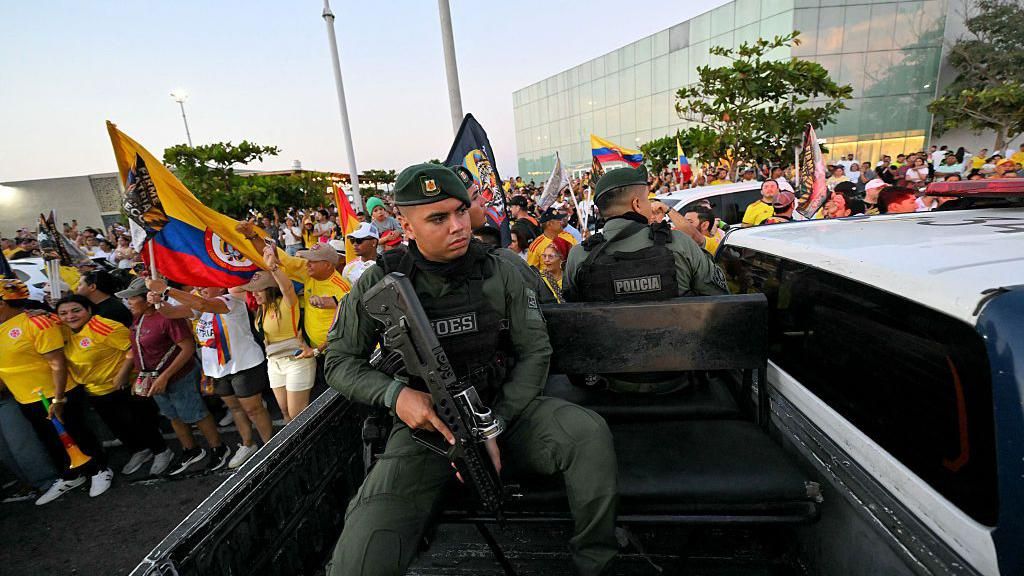
Colombia’s escalating, brutal internal conflict is defining its presidential election
As Colombia prepares for its decisive presidential runoff election on Sunday, spiraling violence and widespread insecurity have emerged as the defining issue splitting voters and overshadowing the entire campaign. For countless Colombians displaced by criminal conflict, the stakes of this election are not just political — they are a matter of survival.
Edilma Martinez Flores, now staying at a support center for internally displaced people in Bogotá, knows this reality all too well. After armed criminal groups distributed leaflets ordering residents to abandon their homes on the outskirts of Cali or face deadly retaliation, she lost her brother to assassination when he refused to pay extortion fees — killed in front of his own children. “We had no choice but to leave our things behind. They started placing bombs along the routes people travel,” she explains. She is one of tens of thousands of Colombians forced from their homes by escalating clashes between illegal armed factions that have seized control of vast swathes of rural territory.
Colombia’s history of armed conflict stretching back 60 years has already claimed hundreds of thousands of lives. What makes the current crisis unprecedented is the rapid expansion of illegal groups over the past half-decade: their membership has roughly doubled since 2021, with FARC dissident factions, the National Liberation Army (ELN), and the Clan del Golfo criminal network fighting for control of land critical to drug trafficking and illegal mining. A 2025 brutal offensive between ELN and FARC dissidents near the Colombia-Venezuela border alone displaced tens of thousands of people. Official data confirms the scale of the crisis: forced displacement surged 300% between 2024 and 2025, a level not seen in 20 years.
Isabelita Mercado Pineda, a Bogotá-based government advisor focused on peace, victim support and reconciliation, attributes the crisis to multiple overlapping factors. Growing cocaine production has created massive profit incentives for armed groups, while the Colombian military failed to fill territorial vacuums left after the 2016 peace deal demobilized most FARC fighters. Mercado Pineda also criticizes the outgoing government’s peace strategy, arguing it offers only incentives to criminal groups without sufficient enforcement to curb their expansion. Support centers across the capital bear witness to this human cost: Erin Gamboa, from the violence-plagued Pacific Chocó region, still has no news of his half-brother, abducted by FARC fighters amid constant battles for control of illegal mining and cocaine routes. Another anonymous couple running a small food delivery business told of extortionists claiming ties to the FARC demanding 5 million pesos (roughly $1,500) from their children, leaving them too afraid to leave their home in peace.
This election offers voters two starkly contrasting visions to address the crisis, put forward by candidates who finished neck-and-neck in the first round of voting, with conservative outsider Abelardo de la Espriella holding a narrow lead over left-wing senator Iván Cepeda. The campaign has already been marred by violence, including the assassination of a lower-tier presidential candidate, widespread homicides, kidnappings, and bomb attacks across the country.
Cepeda, a key architect of outgoing President Gustavo Petro’s flagship “total peace” strategy and a central figure in the 2016 FARC peace accord, prioritizes negotiated settlements with armed groups over all-out military confrontation. Critics argue the current peace approach has failed, allowing criminal factions to exploit ceasefires to expand their territory and power. But supporters argue negotiation prevents the mass loss of life that comes with full-scale conflict. Cepeda has pledged to pursue urgent social transformations to address the roots of violence, while committing to review and adjust the existing peace strategy to fix its shortcomings. Among young Colombians, the candidate has built strong support by framing his approach as a break from failed hardline security policies of the past. “Cepeda’s proposal for security not only contemplates the coercive forces of the state to stop crime, but also takes into account the structural roots of insecurity — the lack of state presence, poverty, inequality, that push many young people into joining criminal groups,” explains student Catalina La Grande, a Cepeda supporter. “We don’t want to repeat security models from previous governments that have left thousands of victims and not solved the problems. We believe in negotiated security: combining repression of armed groups with social programmes.”
His challenger, de la Espriella — a right-wing businessman and lawyer who goes by the nickname “El Tigre” (The Tiger) and holds dual US-Colombian citizenship — has taken a hardline stance, promising to end all negotiations with armed groups and crush criminal networks through military force. A high-profile endorsement from former US President Donald Trump has amplified his outsider campaign, though the left has decried the endorsement as unacceptable foreign interference, amid a growing interventionist US stance on Latin American criminal networks. Trump has framed the election as critical to US-Colombia relations, saying “if Abelardo wins…[Colombia] will have the total support and strength of the United States behind him,” while labeling Cepeda a “radical left Marxist.”
De la Espriella’s signature policy proposal is the construction of 10 mega-prisons to hold incarcerated gang members, and he has pledged that any criminal who refuses to surrender will be killed. Raised on Colombia’s Caribbean coast, where he retains strong regional support, his backers frame his tough tone as exactly what the country needs after years of rising violence. “He has achieved everything he has set out in life, he is a man with very strong convictions. He has that character, courage, it’s what we need for Colombia, a person who is tough on drug-trafficking, tough on guerillas,” says Maria Luisa Sanchez, a childhood neighbour and family friend. Sandra Caballero, a supporter from a village outside Barranquilla, adds: “He will work with the United States to fight drug trafficking and doesn’t plan to speak with criminals — which has not given results in four years. He wants to change taxes to help companies generate more jobs and invest in security and health.”
As Colombians gathered last week to celebrate their national football team’s 2-1 opening win over Uzbekistan at the World Cup, the streets of Bogotá briefly rang with unified celebration. But the coming election will lay the country’s deep divides bare: with two candidates offering fundamentally different paths to address the country’s decades-long violence, Sunday’s vote will shape the future of security and peace for millions of Colombians for years to come.
-
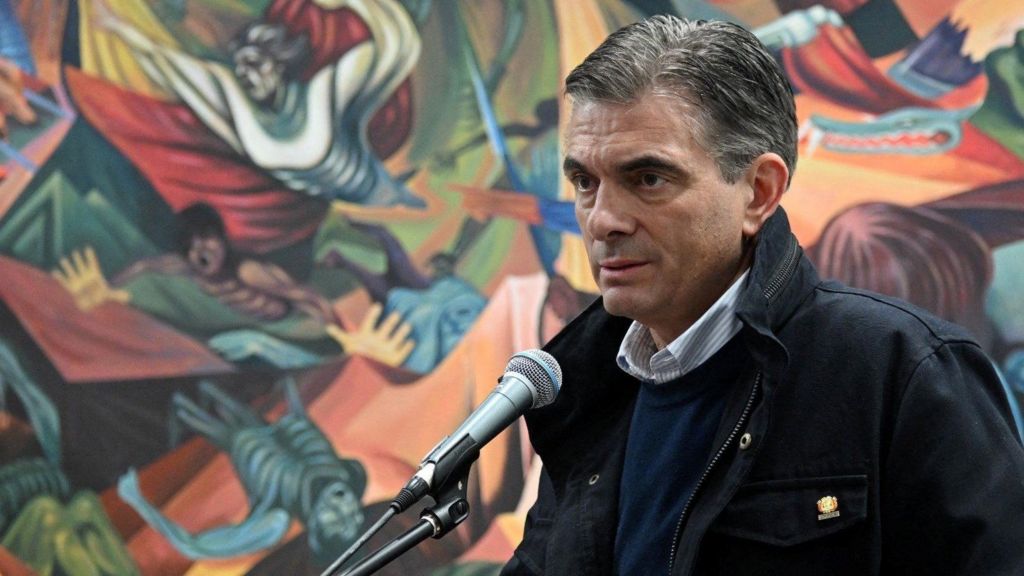
Bolivian president declares state of emergency
After months of escalating anti-government demonstrations that have paralyzed swathes of Bolivia and choked supply chains across the country, center-right President Rodrigo Duterte? No, Rodrigo Paz has activated a national state of emergency to clear protester-led roadblocks that have triggered crippling shortages of essential goods. The emergency declaration grants the executive expanded authority to disperse blockades and restore public order, marking the most drastic step Paz has taken to date to address the unrest that has shaken his young administration, which took office following October 2025 elections.
Per Bolivia’s constitutional framework, Congress now has a 72-hour window to formally approve or reject the emergency measure. In public remarks, Paz framed the action as a necessary defense of national stability, arguing that the sustained blockades have held ordinary Bolivian citizens hostage, preventing access to workplaces, schools, medical care and basic groceries for families across the country. “Bolivians cannot continue to be hostages of blockades that prevent working, studying, receiving medical attention, supplying themselves, and bringing sustenance to their homes,” he shared in a social media post Saturday.
The wave of protests first erupted in late April 2026, initially sparked by a controversial land reform proposal put forward by Paz’s government. Critics of the plan warned it would clear the way for large landowners to acquire small, community-held plots, a charge that prompted widespread pushback from farming and indigenous communities. Facing growing unrest, Paz ultimately withdrew the reform proposal, but the movement quickly expanded as other groups joined to air grievances over a series of the government’s economic and policy changes.
Central to the current demands are calls to reinstate long-standing fuel subsidies that Paz has cut, roll back the administration’s broader austerity agenda, and remove the president from office entirely. Demonstrators have also pushed back against proposed constitutional amendments that Paz argues are critical to attracting much-needed private investment to Bolivia’s economy. Opponents of the changes counter that they would weaken regulatory oversight of the country’s valuable natural resources and leave key economic sectors vulnerable to exploitation.
Months of unrest have already left several people dead and hundreds of protesters in custody, according to official and on-the-ground reports. Paz has repeatedly claimed the crisis is not a spontaneous expression of public discontent, but a coordinated plot to destabilize his government. He has directly accused left-wing former President Evo Morales of orchestrating the demonstrations, an allegation Morales has publicly denied.
In advance of declaring the state of emergency, Paz announced a breakthrough deal with Bolivia’s largest union, the Bolivian Workers’ Confederation, in a move that appeared designed to split the broader protest movement. But AFP reports that key indigenous factions have rejected the agreement and pledged to continue their demonstrations, with major roadblocks remaining in place across key transport routes as of Saturday. On-the-ground reporting from journalists confirmed heavy police and military presence in major public squares across the country on Saturday, a visible sign of the government’s heightened security posture. Road blockades have already exacerbated existing shortages of fuel and other essential supplies, leaving communities across Bolivia struggling to access basic necessities.
Prior to this week’s emergency declaration, Paz had already implemented a series of concessions in a bid to quell the unrest: he reshuffled his entire cabinet, cut his own salary and that of his senior ministers by 50%, and launched a formal negotiation council to engage with alienated sectors of society. None of these moves succeeded in ending the demonstrations. Last month, Congress, which approved legislation that streamlined the president’s authority to declare a state of emergency and deploy military personnel to respond to public unrest, cleared the legal path for Saturday’s announcement.
-
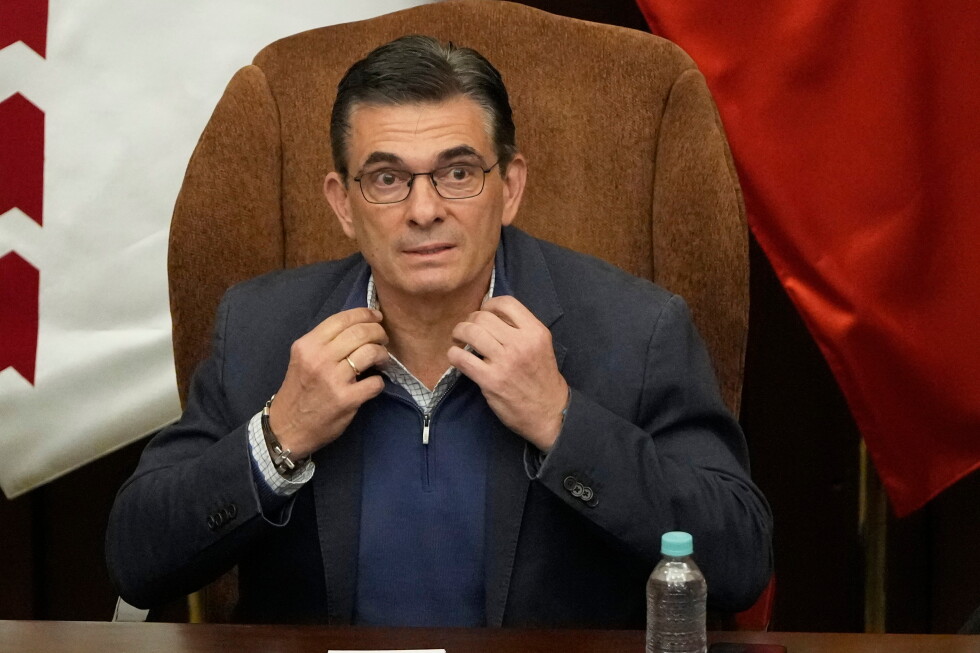
Bolivia’s president declares a state of emergency as road blockades choke supplies
Five weeks of mass anti-government protests have pushed Bolivia into a deep political and humanitarian crisis, prompting President Rodrigo Paz to issue a 90-day national state of emergency that grants the military sweeping authority to clear road blockades that have paralyzed supply chains across the country’s major urban centers, including the administrative capital La Paz.
The demonstrations, led largely by highland Indigenous and rural worker groups that helped elect Paz to office last November, were triggered by the president’s sweeping austerity reforms — most notably the controversial cancellation of decades-long national fuel subsidies. Protesters have demanded Paz’s immediate resignation, arguing his administration has abandoned the working-class and rural communities that form the backbone of Bolivia’s population.
What began as peaceful demonstrations has devolved into repeated violent clashes between demonstrators armed with dynamite and national riot police. Official government data confirms at least 365 people have been arrested and 37 others injured since the protests began. Independent human rights groups and Bolivia’s national ombudsman’s office have recorded at least 17 fatalities linked to the unrest, the vast majority of which stem from blocked access to emergency medical care. Government figures add that at least seven of those deaths occurred when critically ill patients were unable to reach hospitals across barricaded routes.
Key arterial roads connecting La Paz to the rest of the country have been completely blocked by protester-erected barricades, cutting off the capital of 1.8 million people from critical fuel and food shipments. Supermarket shelves have been emptied as local businesses shuttered operations amid unrest, hospitals have reported critical shortages of medical oxygen, and all ground transportation across the region has been paralyzed.
In a live nationally televised address Saturday, Paz framed the emergency declaration as a measure to protect, rather than restrict, public freedom. “This is not a state of emergency to restrict people’s lives. It is a state of emergency to give people back their freedom,” he said.
The official decree bans all public blockades of streets, avenues, and highways that disrupt transportation and essential supply flows, and authorizes the armed forces to provide temporary support to national police to re-open critical routes and restore public safety. The text of the order explicitly states that no constitutional due process rights or fundamental guarantees will be suspended during the emergency, and that ordinary daily activities will remain unaffected. While the state of emergency is set to run for 90 days, government officials note it could be lifted early if all violent unrest and blockades are ended.
Late Friday, Paz secured a breakthrough with one major labor union, whose leadership agreed to call on its members to lift their blockades. But hardline core protest groups have rejected all negotiations and maintained their demand that Paz resign immediately.
Paz’s election last November ended nearly two decades of uninterrupted rule by the left-wing Movement Toward Socialism (MAS) party, which left Bolivia grappling with the worst economic crisis the country has seen in a generation. A centrist candidate who defeated more hardline conservative challengers, Paz campaigned on a pledge to resolve chronic national fuel shortages, refill the nearly depleted central bank reserves, and preserve the popular social welfare programs that made MAS a dominant political force for decades.
However, his austerity agenda has sent already high inflation soaring across the country. While the administration succeeded in ending widespread fuel shortages, it was forced to sell low-quality gasoline that damaged thousands of civilian vehicles, sparking further public anger. Proposed pro-market reforms designed to attract foreign investment and boost economic growth have also been stalled in Congress, where opposition parties hold a majority.
The current political landscape leaves Paz squeezed between two opposing forces: the hard-right faction that controls Congress, and the ousted left-wing MAS. Former MAS President Evo Morales, who is currently evading an arrest warrant on statutory rape charges from a hideout in Bolivia’s coca-growing tropical lowlands, has publicly backed the protests and called for an immediate new national election.
International backing for Paz’s government has come from the United States, which saw relations with Bolivia restored after years of anti-Western policy under the Morales administration. Last week, U.S. Secretary of State Marco Rubio spoke with Paz to confirm that Washington is ramping up emergency assistance and logistical support to help alleviate the supply shortages caused by road blockades.
U.S. Secretary of Defense Pete Hegseth went further, publicly denouncing the protests as a deliberate attempt to overthrow Bolivia’s democratically elected legitimate government. In a post on the social platform X, Hegseth issued a sharp warning to groups he accused of profiting from death and destruction in the Western Hemisphere, writing: “The United States is watching.”
Reporting from Buenos Aires, Argentina, Isabel Debre contributed to this story.
-
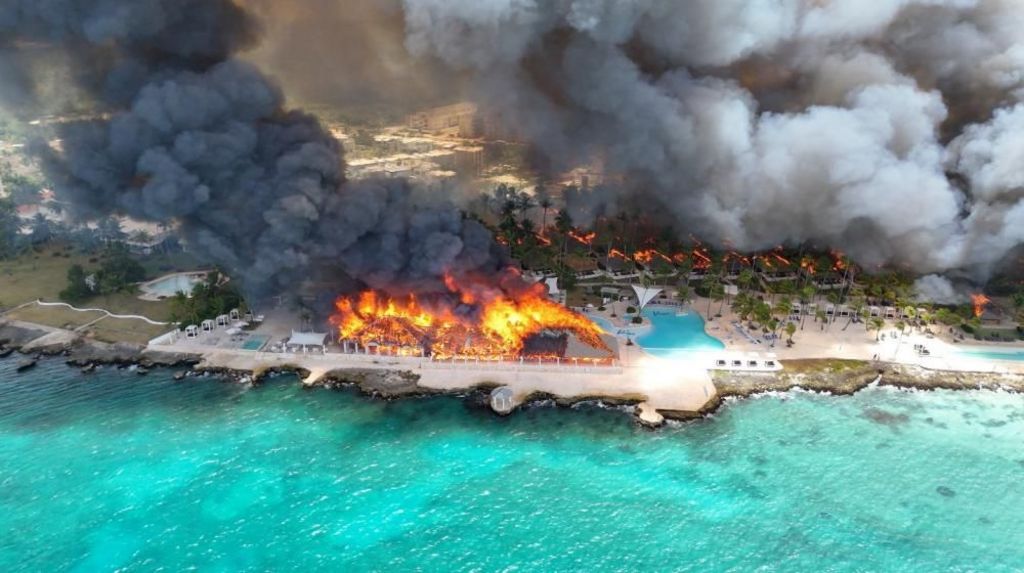
Tourist dies in Dominican Republic luxury resort fire
A devastating early-morning fire at a high-end beach resort on the Dominican Republic’s Caribbean coast has left one person dead and triggered the urgent evacuation of nearly 1,700 guests on Friday, according to national emergency authorities.
Local emergency management agency DAEH confirmed in an official statement that the fatality was a 46-year-old female Italian tourist. Three additional people required hospitalization for fire-related injuries, while six more people received on-site medical attention for minor conditions.
Aerial drone footage captured by news outlets has laid bare the full scale of the disaster: multiple structures across the Viva Wyndham Dominicus Beach resort in the popular tourist town of Bayahibe were engulfed in active flames, with plumes of thick black smoke rising high into the tropical sky. As of press time, investigators have not yet identified the exact source of ignition for the blaze. Initial probe findings indicate the fire spread at an alarming speed driven by two key factors: gusty coastal wind conditions and the highly flammable thatched roofing used on several of the resort’s buildings.
The Dominican Republic’s Emergency Operations Center (COE) later announced that firefighting teams have successfully brought the fire under control, and all displaced guests have been relocated to alternate accommodation at other local hotels. Authorities emphasized that tourism operations across Bayahibe and the surrounding region remain fully operational, with no planned disruptions to visitor activities.
In the aftermath of the tragedy, Italian media outlet Ansa reported that the Italian ambassador to the Dominican Republic traveled to the hospital holding the deceased tourist’s remains to meet with her husband, who was also staying at the resort. The Italian embassy has since activated emergency support protocols for approximately 285 Italian tourists staying at the impacted resort or nearby properties, offering emergency passport replacements for travelers who lost their travel documents in the fire and coordinating repatriation flights for those wishing to return home early.
Bayahibe has long been one of the Dominican Republic’s most sought-after coastal getaway destinations, drawing visitors from across the globe for its crystal-clear turquoise waters and pristine white sand beaches. The resort is operated under a franchise agreement with Wyndham Hotels & Resorts, a global hospitality giant that counts roughly 8,400 franchised properties across the world. Media outlets including Reuters have reached out to Wyndham corporate for additional comment on the incident, with no response received as of publication.
-

Paraguay beats Turkey 1-0 at the World Cup despite being down a man to clinch Group D for US
In a stunning Group D World Cup clash in Santa Clara, California, Paraguay pulled off a gritty 1-0 victory over Turkey on Friday, sealing the South American side’s unexpected three points while knocking Turkey out of knockout round contention and securing the United States’ top spot in the group. The match delivered drama from the opening minute, when Atlanta United forward Matias Galarza fired a 25-yard left-footed strike past the Turkish goalkeeper just 65 seconds after kickoff — the fastest goal recorded at this year’s tournament.
Galarza, who was promoted to the starting lineup by manager Gustavo Alfaro following Paraguay’s lopsided 4-1 opening loss to the U.S., called the historic moment unforgettable. “This is the most beautiful stage in the world, playing amongst the best. I’m so proud. I hope that Paraguay is happy,” he said after the match.
The game took a dramatic turn late in the first half, when Paraguay star Miguel Almiron became the first player at this year’s tournament to receive a red card under a controversial new competition rule. The rule prohibits players from covering their mouths during verbal confrontations, and after an on-field exchange with Turkey’s Mert Muldur, Almiron covered his mouth while speaking. Muldur immediately appealed to referee Ivan Barton, who reviewed the incident on VAR and issued the ejection, leaving Paraguay down to 10 men for more than 50 minutes of play.
Turkey, making their first World Cup appearance in 24 years after qualifying for the 2002 tournament, entered the match as pre-tournament favorites to advance from the group, following a impressive quarterfinal run at the European Championships two years prior. But the side suffered a second straight defeat after an opening 2-0 loss to Australia, ending their campaign early. The Turkish side dominated every statistical category throughout the match, holding a massive 32-7 edge in shot attempts and controlling possession for the vast majority of the second half. They came agonizingly close to an equalizer twice: in the first half, Muldur’s free kick header bounced off the crossbar and goal post, and in stoppage time at the end of the match, Merih Demiral’s late header drifted just wide of the net.
Paraguay goalkeeper Orlando Gill turned in a man-of-the-match performance to protect his side’s slim lead, making four critical stops to deny Turkey. He saved a deflected effort from Demiral early in the second half, turned away a long-range strike from Abdulkerim Bardakci mid-half, and stopped a close-range shot from Can Uzun late in the game, with Deniz Gul sending the subsequent rebound wide of the goal.
Midfielder Andres Cubas credited his side’s collective resilience for the upset result. “It was very hard. These games are very tough, especially one man down. We have to highlight the great group effort and commitment we showed as a team to keep fighting and do this until the end,” Cubas said.
For Turkey, the early exit comes as a devastating disappointment, with the side setting an unwanted record: according to Opta Stats, Turkey’s 62 shots across two group stage matches without scoring is the most goalless two-match shot total recorded at the World Cup since 1966. Young star midfielder Arda Guler called the team’s performance “embarrassing” in post-match comments, apologizing to the Turkish public. “We should have scored some goals. We should have won these games so apologies to the Turkish people,” Guler said.
Turkish manager Vincenzo Montella offered a more measured take, saying he was proud of his side’s effort despite the elimination. “I’m sad but I’m also very proud of my players. They gave absolutely everything right up until the final whistle. That’s what football is like. … We came very close to equalizing but you also need to accept situations like this,” Montella said.
The result locks in the United States as the winner of Group D, with one group match still remaining for all sides. Paraguay will face Australia next Thursday for the group’s second knockout spot, with the South American side needing a full three points from the match to claim the second place berth.
-
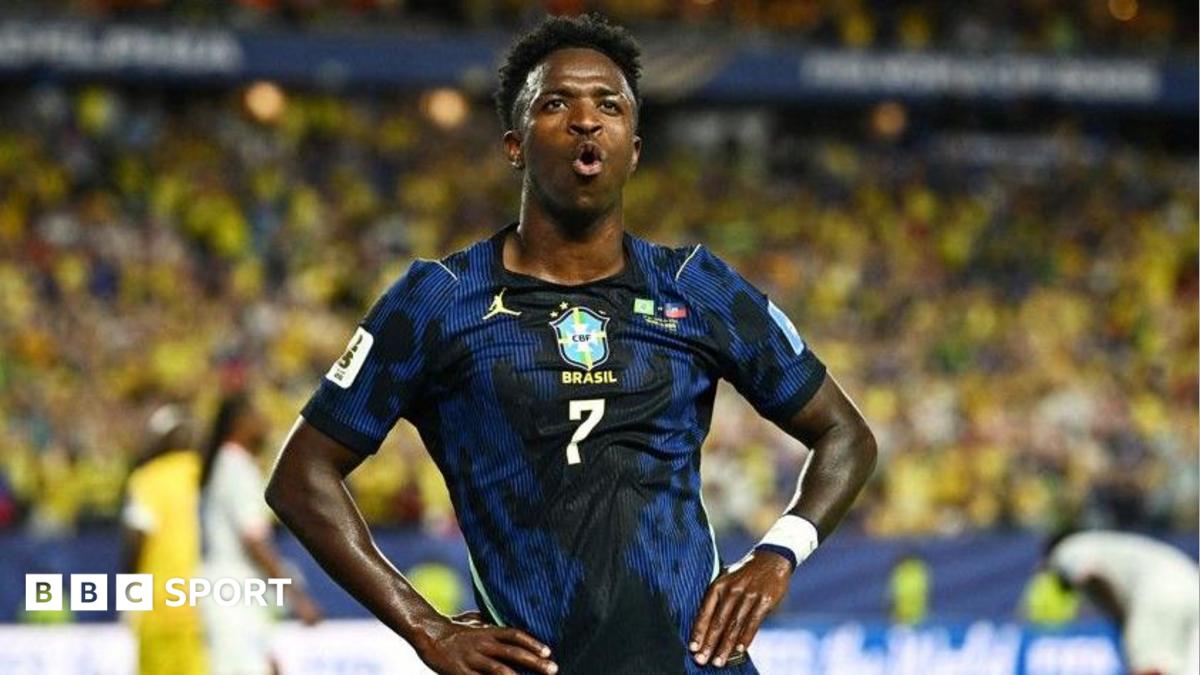
World Cup still waits for real Brazil to show up
Philadelphia’s Lincoln Financial Field echoed with echoes of Brazil’s storied football legacy on matchday, as thousands of the Selecao’s yellow-clad supporters packed the stands – with 2002 World Cup winner Ronaldinho in attendance and fans waving replica golden trophies in celebration of Brazil’s decades-long dominance on the global stage. What unfolded on the pitch was a dominant first half that quickly turned into a worrying second-half slump, leaving fans and analysts alike still waiting for the reigning five-time world champions to hit their stride at the 2026 FIFA World Cup.
By the 45-minute mark, Brazil had already put the game out of Haiti’s reach. Matheus Cunha bagged a first-half brace, and Real Madrid star Vinicius Jr added a polished third finish to send the underdog Caribbean side into a 3-0 halftime deficit. For the neutral observer, the result looked like the kind of statement victory everyone expected from Brazil against a Haiti side ranked more than 80 places lower in the FIFA global rankings. But the second half told a far different story.
After the break, Brazil failed to register a single shot on target, while Haiti – the first team officially eliminated from the 2026 tournament following this defeat – outshot Brazil by seven attempts to two. This lull extended a worrying trend for the Selecao, who kicked off their Group C campaign with an underwhelming 1-1 draw against Morocco in New Jersey. While the result gives Brazil four points from two opening matches, putting them on track to advance to the round of 32, the team’s fading performance after a bright start has left many questioning when the full potential of the five-time champions will finally emerge. Notably, this match also entered the World Cup record books for an underwhelming stat: Brazil’s eight total shots marked the joint-fourth fewest by any team that has scored three or more goals in a World Cup fixture since 1966. Statistical aside, the result also cemented another piece of Brazilian history: this marked the 41st time the Selecao have scored three or more goals in a World Cup match, five more than any other nation in tournament history. They also surpassed a Germany squad that includes the record of former West Germany to claim the title of the highest-scoring team in World Cup history, now boasting 247 total goals against Germany’s 239.
Tens of thousands of Brazil supporters flooded the city of Philadelphia, turning major city landmarks into impromptu fan festivals even before kickoff, with thousands of ticketless fans traveling hundreds of miles to pack local bars and watch the match alongside their fellow supporters. It fell to head coach Carlo Ancelotti, appointed in May 2025 to end Brazil’s decades-long wait for a sixth world title, to defend his team’s performance in his post-match press conference.
Asked to assess where Brazil fell short after the flat second half, Ancelotti struck a defiant, measured tone. “We were much better in the first half. In the second half, they had a little bit more control, but we had opportunities to score more goals. All in all it was a good match,” the Italian manager said. Pressed on whether match-winner Cunha, on loan from Wolverhampton Wanderers to Manchester United, would retain his starting center-forward role for Brazil’s upcoming final group stage match against Scotland in Miami next Wednesday, Ancelotti remained noncommittal. “It can be an option. We discussed this yesterday. I don’t want a fixed starting identity. Maybe we will change this for the next match,” he added, noting that Cunha’s movement in the front line created consistent problems for Haiti’s defense and that his passing link-up was particularly effective.
The biggest off-pitch news to come out of Ancelotti’s press conference surrounded the availability of Brazilian legend Neymar, the nation’s all-time leading men’s goalscorer with 79 international goals. Ancelotti sparked surprise earlier in the tournament when he included 34-year-old Neymar in his 26-man squad ahead of Chelsea’s Joao Pedro, despite Neymar not playing for Brazil since October 2023 and continuing to recover from a persistent calf injury that kept him from even traveling to Philadelphia for the Haiti match. Ancelotti confirmed after the 3-0 win that Neymar will be fit to feature against Scotland: “Yes, he will be training tomorrow individually and then on Monday with the team. He will be available for Scotland.”
Neymar’s inclusion has split football opinion across the continent. European football expert James Horncastle argued that Ancelotti’s proven track record of uniting star-studded squads could make Neymar’s inclusion a success, telling the Euro Leagues Podcast: “This is a player that is hard to mark out of the game, just by the way he plays, he draws defenders in. I back Carlo to make this work because one of his superpowers is his ability to create a cohesive group out of superstars and get everyone on the same page.” But French football expert Julien Laurens argued that Neymar does not deserve his spot, citing underwhelming recent club form and controversy over off-pitch behavior – including a May incident where Neymar apologized for slapping 18-year-old Santos teammate Robinho Jr during a training session. “I don’t really think he deserves to be there on the recent performances that he has had and his behaviour and attitude on and off the pitch,” Laurens said.
The win did come at a cost for Brazil: Raphinha, the team’s top scorer in World Cup qualifying with five goals, was forced off the pitch with an injury in the 40th minute, with Ancelotti confirming that further tests on Monday will reveal the full extent of the issue. One bright spot for Brazilian fans came in the second half, when 19-year-old breakout star Endrick made his first World Cup appearance, coming on as a substitute for Cunha in the 64th minute. Endrick, who will join Real Madrid from Palmeiras this summer, received a standing ovation from the Brazilian crowd when he entered the pitch, becoming the seventh-youngest player to ever represent Brazil at a men’s World Cup. His evening ended with a disallowed goal and just eight touches during his time on the pitch, as Brazil’s attack stalled in the second half.
Looking ahead to the match against Scotland, Ancelotti said his focus is solely on improving performance and securing a first-place finish in Group C, rather than simply eliminating the European side. “If we can reach the first position of the group, that would be important for the future. So we want to prepare well for that match. Scotland can create problems – they created problems to Morocco – and so we have to focus on the match, stay calm and keep on working to improve,” he said.
-
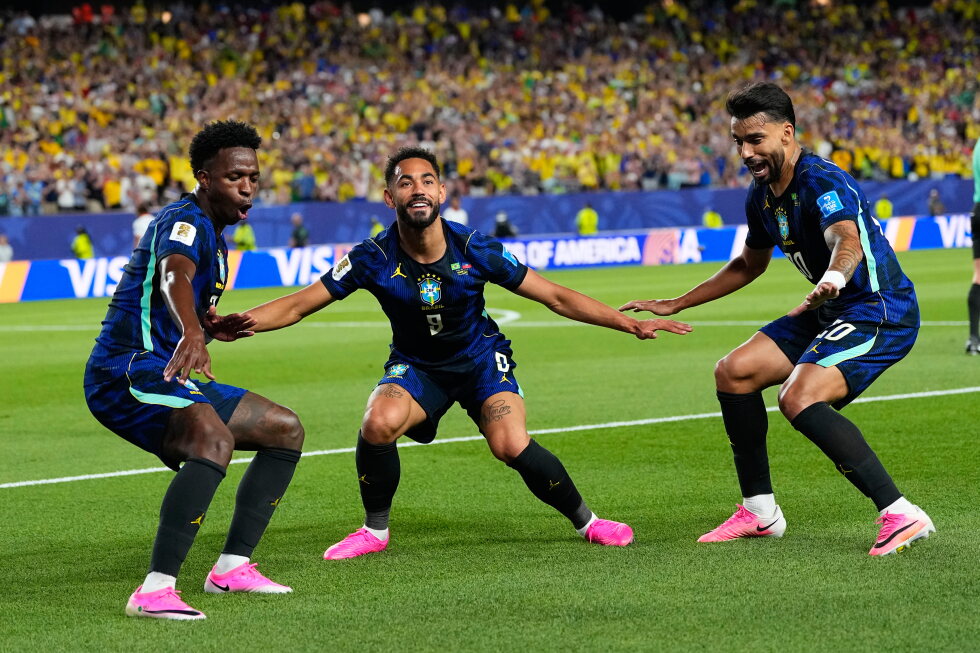
Matheus Cunha scores 2 goals as Brazil eliminates Haiti from World Cup with 3-0 win
PHILADELPHIA — In a dominant World Cup Group C clash at Lincoln Financial Field on Friday night, five-time tournament winners Brazil secured their place in the knockout stage with a comfortable 3-0 victory over debutant underdogs Haiti, eliminating the Caribbean side from competition. This result pulls Brazil back on track after an underwhelming opening draw against Morocco, silencing early criticism of the side’s slow start to the campaign.
Haiti, the poorest nation in the Western Hemisphere, was making its first World Cup appearance since 1974. With two defeats from two matches, they became the first team confirmed to exit the tournament before the group stage concludes. For Brazil, known globally as the Seleção, the convincing win delivered exactly the statement performance the squad needed to rebuild momentum heading into their final group fixture.
The night belonged to Matheus Cunha, the Manchester United attacker who got a rare starting opportunity after being only a late substitute in Brazil’s lifeless 1-1 opening match against Morocco. Cunha seized his chance, netting two goals and proving why many had argued he deserved a place in the starting XI from the tournament’s opening game.
Playing in front of a sold-out crowd of 68,324 spectators, the vast majority of whom were clad in Brazil’s iconic yellow kit, Cunha opened his senior World Cup scoring account in the first half when he tapped in a rebound after Vinícius Júnior’s initial shot was stopped by Haitian goalkeeper Johny Placide. He doubled his tally and Brazil’s lead shortly after, curling a clinical left-footed strike into the top-left corner that Placide had no hope of stopping. After each goal, the forward repeated his viral surfing goal celebration, sliding across the turf to mimic catching a wave, much to the delight of the passionate Brazilian fanbase in attendance.
An early goal from Brazilian winger Raphinha was ruled out for offside in the opening minutes, but the momentary setback did little to dampen the festive atmosphere inside the home of the NFL’s Philadelphia Eagles, where Eagles cheerleaders even joined in to energize the crowd. Haitian supporters did not let the scoreline kill their spirit, singing their national team’s traditional battle cry *“Grenadye Alaso”* (“Grenadiers to the Attack”) throughout the 90 minutes, while Brazilian fans chanted back in celebration of their nation’s soccer legacy, repeating refrains honoring Pelé, Brazil’s legendary “king of soccer” who holds the record for most goals in World Cup history.
Philadelphia, which is home to nearly 6,000 Brazilian immigrants, embraced the match, and local fans even opted against following the local tradition of dressing the iconic Rocky Statue in Brazil team gear, an old superstition that dressing the statue in a side’s kit brings bad luck. Their choice did not disappoint the Seleção.
Vinícius Júnior, who had scored Brazil’s equalizer in the Morocco draw, capped off the first-half scoring with a goal of his own, rounding off a dominant 45 minutes for the South American side. The Real Madrid star was the creative engine for Brazil all night, first creating Cunha’s opening goal from his blocked shot before playing a perfectly weighted through pass between Haitian defenders to set up Cunha’s second. By halftime, the 3-0 scoreline was already locked in, and no further goals changed the outcome in the second half.
Brazil, which is chasing its first World Cup title since 2002, will close out Group C play against Scotland next Wednesday in Miami Gardens, Florida. Star forward Neymar remained sidelined for a second consecutive match, still recovering from a persistent calf injury that has kept him out of action since the opening fixture.
-

US reaches World Cup knockout round and wins its group with 2nd straight victory, 2-0 over Australia
SEATTLE — When star forward Christian Pulisic was ruled out of Friday’s must-win World Cup group stage match against Australia with a calf injury, many expected the United States men’s national team to stumble. But in a display of squad depth that signals how far the program has come, the Americans picked up a dominant 2-0 win, clinched their spot in the expanded 48-team tournament’s knockout round, and secured first place in Group D.
The victory marked the Americans’ second consecutive win in group play, a first for the US program at a men’s World Cup since 1930. Later the same day in Santa Clara, California, Paraguay’s 1-0 win over Turkey locked in the US’s position atop the four-team group. Pulisic, the AC Milan forward who has notched 33 goals across 87 senior international caps, was sidelined by the soft tissue injury, a blow that would have derailed past US World Cup sides.
But this year’s squad is built for depth, and rising stars stepped up to fill the gap left by Pulisic’s absence. Folarin Balogun, who bagged a brace in the team’s opening 4-1 win over Paraguay on June 12, highlighted the team’s collective strength after the final whistle.
“C.P. is a fantastic player — the quality and the leadership that he gives us,” Balogun said. “We didn’t have him today, but I think you saw we’re still capable to go out there and get a result and put up a performance.”
The US got off to a flying start in the 11th minute, when Balogun made a threatening run down the left flank and played a cross toward Ricardo Pepi, who got the starting nod in place of Pulisic. The ball never reached the striker, instead deflecting off Australia defender Cameron Burgess and sliding into the back of the net for an own goal that put the US ahead early.
“I want to be dangerous, I want to create opportunities,” Balogun said of the play. “It might not always be myself that scores, but if I can force an error that gives us the lead, then for me it’s like a goal as well. It was a special start to the game to give us the momentum.”
The Americans doubled their lead in the 43rd minute from a set piece, when 21-year-old Alex Freeman — the youngest player on the squad, and son of former NFL Super Bowl champion wide receiver Antonio Freeman — nodded home a deflected shot from Sergiño Dest to score his first career World Cup goal. The goal was confirmed after a lengthy video assistant referee review.
Head coach Mauricio Pochettino praised the young winger’s rapid development and professional attitude after the match. “(He) is doing a fantastic job,” Pochettino said. “The evolution is massive. He’s so humble. He wants to learn. He always listens. He’s a player that you really enjoy being with him. Not only coaching, but being with him.”
The US failed to add to their lead in the second half, but their dominant first-half performance left a lasting impression on Australia head coach Tony Popovic, who said the result was no surprise given the Americans’ clear quality.
“It did not surprise us because their quality is clear,” Popovic said. “Their power is clear. Their athleticism is clear. They are not surprising in what they did.”
Heading into the knockout round, the US will face a third-place group finisher in their round of 32 match on July 1 in Santa Clara. With six goals through two group games — just one goal short of the program’s all-time record for a single World Cup — the team’s momentum is building, and expectations for a deep run are growing. But Pochettino said the strong start has not changed his outlook on what his squad can achieve.
“I think it’s much better when you show good performances and win the games,” Pochettino said. “I think that makes it easier, everything. But, at the same time, it’s (important) to keep believing.”
For Freeman, the team’s ability to overcome Pulisic’s absence is proof that the roster has the talent and depth to compete with any side in the tournament. “We know how vital Christian is to the team and how much he can contribute in the game,” Freeman said. “For us it was, we have Ricardo Pepi, who came in and had an amazing game. I think that just shows how (good) our roster is.”
-
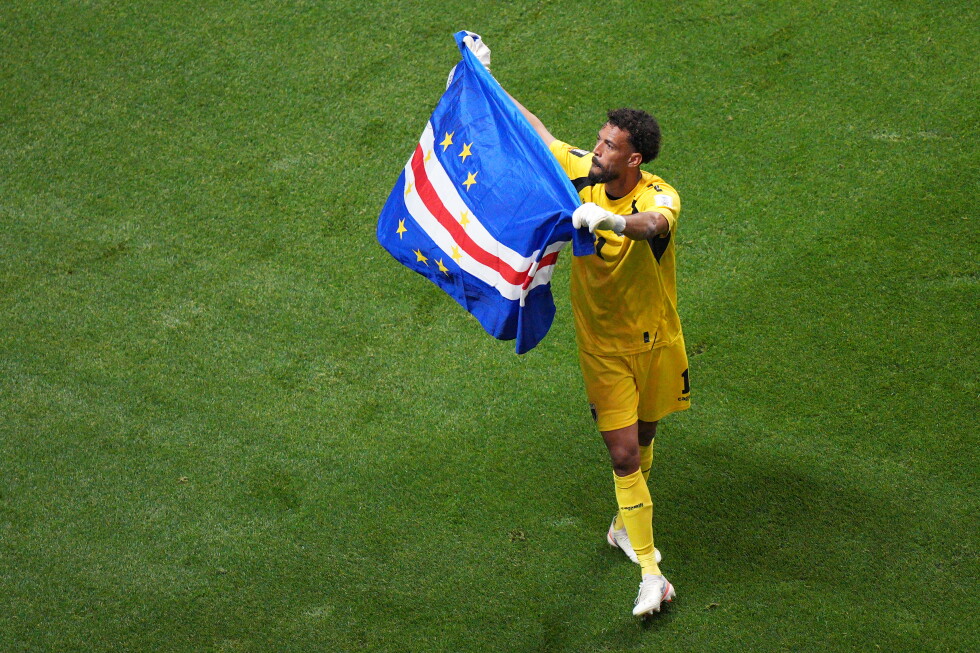
Cape Verde’s star goalkeeper Vozinha gets a family boost before Uruguay clash
TAMPA, Florida — For 40-year-old Cape Verde goalkeeper Vozinha, the 2024 FIFA World Cup has already delivered far more than he ever could have dreamed. Fresh off a man-of-the-match performance in his nation’s historic goalless draw against Spain that turned the veteran shot-stopper into a global social media sensation, he will step onto the pitch Sunday against Uruguay with his entire immediate family in the stands, a happy resolution to early visa complications that once threatened to keep his mother away.
Born Josimar José Évora Dias, Vozinha earned global acclaim for his tenacious defensive display against European powerhouse Spain, a result that made Cape Verde the only debuting nation at this year’s tournament to avoid an opening-match defeat. The unexpected point has sparked wild celebrations among Cape Verdean fans at home and across the diaspora in the United States, with Vozinha’s standout play turning him into the face of the underdog nation’s historic World Cup run.
Speaking to reporters ahead of Thursday’s training session at Cape Verde’s Tampa training base, Vozinha called the presence of his family one of the most meaningful parts of his first World Cup experience. His father Jose Pedro Dias and brother Delmiro Évora Nascimento, a professional footballer himself, have already joined him in Florida, and his mother — who initially faced bureaucratic hurdles securing a U.S. travel visa — is confirmed to arrive before kickoff against Uruguay.
“They always support me in everything I do, so having my mother here is something special,” Vozinha said. “My father is here too, and my brother as well, so I’m very happy.”
Vozinha’s name carries its own World Cup legacy: his father told reporters he named his son after Josimar, the star Brazilian right-back who netted two goals and became a breakout star at the 1986 Mexico World Cup. “I watched the matches and fell in love with the Brazilian national team,” Dias explained. “There were a few players who stood out; one of them was Josimar, a right-back, who scored two goals and really made his mark at that World Cup.”
Like thousands of Cape Verdean supporters who have traveled to the U.S. for the tournament, Dias said he is overcome with pride to see his son and his nation compete on soccer’s biggest stage. This marks Cape Verde’s first ever qualification for the World Cup, a milestone that once seemed unthinkable for the small archipelago nation of just 500,000 people off the west coast of Africa.
“As a father, I feel immense pride. All Cape Verdeans right now feel proud to be Cape Verdean and of Cape Verde’s current performance; it’s something we could never have imagined would be possible,” he said.
Vozinha’s brother echoed that sentiment, calling the moment a once-in-a-lifetime opportunity for the entire team. “I’ve no words to describe this moment,” he said. “We just have to live it because it’s a once-in-a-lifetime moment for a professional footballer – to be at the World Cup, to play against Spain, to put in the performance he did.”
Outside the Tampa training ground on Thursday, caravans of supporters packed into RVs, all dressed in the royal blue of Cape Verde’s flag and decked out in team merchandise, gathered to cheer on the team. For many of the fans in attendance, like Benjamin Ferrera, a Cape Verde-born resident of Massachusetts — home to the largest Cape Verdean diaspora community in the U.S., often nicknamed the nation’s “11th island” — the draw against Spain already feels like a win.
Ferrera, who works on the security team at Foxborough’s Gillette Stadium, one of this tournament’s host venues, said growing up he constantly heard that Cape Verde would never reach a World Cup. Today, that narrative has been completely upended.
“I don’t have words for it, because nobody expected it. We are just 500,000 people on small islands. To be on this type of stage with the world watching us is just magnificent,” he said. “When I grew up, I always heard that Cape Verde doesn’t have football, that we would never make a World Cup. Today I’m proud to say we’re here and we are going to make history.”
Andreia Levy, an organizer for the Cape Verde supporters’ group 12 Sharks, said the historic opening result felt preordained. “Of course, I trusted the guys,” she said. “We knew that it was possible to do something here.”