标签: South America

南美洲

  • Argentina fires ravage pristine Patagonia forests, fueling criticism of Milei’s austerity

    Argentina fires ravage pristine Patagonia forests, fueling criticism of Milei’s austerity

    LOS ALERCES NATIONAL PARK, Argentina — Argentina’s iconic Patagonian wilderness, a landscape immortalized by generations of writers and adventurers, now resembles a conflict zone. Towering plumes of smoke rise like artillery fire while nocturnal flames cast an apocalyptic orange glow across mountainsides, transforming this UNESCO World Heritage site into a haunting spectacle.

    The devastating wildfires ravaging drought-stricken Patagonia represent the region’s most severe blazes in decades, having consumed over 45,000 hectares of native forest in recent weeks. The inferno has forced thousands of residents and tourists to evacuate as flames continue spreading through Los Alerces National Park, home to ancient trees dating back 2,600 years.

    This ecological catastrophe has ignited fierce criticism against President Javier Milei’s administration, whose radical austerity measures have dramatically reduced funding for fire prevention and response agencies. Since taking office promising economic rescue from decades of debt, Milei has implemented an 80% budget reduction to the National Fire Management Service compared to the previous year, severely hampering brigades, aircraft maintenance, and equipment procurement.

    According to analysis by the Environment and Natural Resources Foundation (FARN), the agency faces an additional 71% funding cut in the upcoming budget cycle. These reductions coincide with increasingly frequent extreme weather events linked to climate change, creating perfect conditions for catastrophic wildfires.

    Firefighter Hernán Mondino, his face streaked with sweat and soot after grueling shifts, stated: “Climate change is undeniable. This is us living it. But we see no sign that the government is concerned about our situation.”

    The crisis has exposed structural weaknesses in Argentina’s environmental protection framework. The Ministry of Security, which assumed firefighting oversight after Milei downgraded the Environment Ministry, declined to comment on the situation.

    Milei’s economic policies have achieved some success, reducing annual inflation from 117% to 31%—the lowest rate in eight years. However, his alignment with former U.S. President Donald Trump’s approach to governance has extended to environmental policy. After Trump announced U.S. withdrawal from the Paris climate agreement, Milei threatened to follow suit, dismissing human-caused climate change as a “socialist lie”—a position that enrages many Argentinians experiencing record-breaking heat and dryness firsthand.

    Local resident Lucas Panak expressed growing public frustration: “There’s a lot of anger building up. People here are very uncomfortable with our country’s politics.”

    Experts argue the fundamental issue isn’t fire response but prevention. Andrés Nápoli, director of FARN, explained: “Fires are not something you only fight once they exist. They must be addressed beforehand through planning, infrastructure and forecasting. Prevention has essentially been abandoned.”

    The National Park Administration has suffered similar cuts, resulting in hundreds of rangers, firefighters, and administrative staff departing. Current staffing stands at 391 firefighters against a recommended minimum of 700, with many remaining personnel relying on secondhand equipment and donations.

    The human toll on responders is severe. Patagonian firefighters earn approximately $600 monthly, forcing many to seek additional work as gardeners and farmhands. “From the outside it looks like everything still functions,” said Mondino, “but our bodies bear the cost.”

    Political tensions escalated when Milei delayed addressing the crisis publicly while participating in public dancing events. After mounting pressure, he eventually declared a state of emergency, releasing $70 million for volunteer firefighters and announcing “a historic fight against fire” via social media.

    At base camps where exhausted firefighters recuperate, volunteer Mariana Rivas summarized the collective sentiment: “It hurts because it’s not just a beautiful landscape, it’s our home. There’s anger about what could have been avoided, and anger because every year it gets worse.”

  • Candidate tough on crime wins Costa Rica presidential election

    Candidate tough on crime wins Costa Rica presidential election

    Costa Rica has ushered in a new political era with the decisive first-round victory of Laura Fernández, the conservative Sovereign People’s Party candidate, in Sunday’s presidential election. With over 88% of ballots tallied, Fernández secured a commanding 48% of the vote, eliminating any requirement for a runoff election as she surpassed the 40% threshold for outright victory. Her nearest competitor, centrist contender Álvaro Ramos, publicly conceded defeat following the results announcement.

    The 39-year-old president-elect ran as the chosen successor to outgoing President Rodrigo Chaves, pledging to intensify his administration’s aggressive anti-crime measures. This platform resonated strongly with voters increasingly alarmed by escalating drug-related violence that has challenged Costa Rica’s historical reputation as one of Central America’s most stable democracies.

    In her victory address, Fernández committed to continuing Chaves’ policies while striking a balance between firm governance and institutional respect. ‘My government will be one of dialogue and national harmony, respectful and firmly based in the rule of law,’ she declared, while simultaneously criticizing opposition parties for what she termed ‘obstruction and sabotage’ during her predecessor’s term.

    Fernández’s approach appears influenced by Salvadoran President Nayib Bukele’s controversial security model, which has dramatically reduced homicide rates through stringent measures. The president-elect has outlined plans to declare states of emergency in gang-dominated territories and complete construction of a maximum-security prison modeled after El Salvador’s Cecot facility.

    Significantly, Fernández’s party captured 30 of 57 parliamentary seats, providing stronger legislative support than enjoyed by Chaves. Constitutional term limits prevented Chaves from seeking reelection, though Fernández has indicated she may appoint him to a cabinet position in her administration, which will be inaugurated on May 8.

    International relations are expected to maintain continuity, particularly regarding migration agreements with the United States. The Trump administration’s designation of Costa Rica as a ‘key global cocaine transshipment point’ underscores the complex security challenges facing the incoming administration as transnational criminal networks expand their regional operations.

  • Takeaways from AP’s report on Latin American markets flooded by cheap Chinese goods

    Takeaways from AP’s report on Latin American markets flooded by cheap Chinese goods

    Latin American nations are implementing protective economic measures as competitively priced Chinese manufactured goods, particularly electric vehicles, rapidly capture market share across the region. This development comes amid China’s strategic expansion into emerging markets while facing domestic economic headwinds.

    Brazil has witnessed remarkable penetration of Chinese electric vehicles, with industry data revealing that over 80% of the 61,000 EVs sold during 2024 originated from Chinese manufacturers, primarily BYD and GWM. Meanwhile, Mexico reported approximately 15% market saturation by Chinese automotive brands last year, signaling a significant shift in regional automotive dynamics.

    The competitive pricing of Chinese exports, enabled by substantial government subsidies and cost-efficient production capabilities, has prompted defensive responses from several Latin American governments. Mexico has imposed tariffs reaching 50% on various Chinese imports including automobiles, appliances, and clothing. Brazil has moved to eliminate tax exemptions for low-value international parcels and increased levies on electric vehicle imports. Chile similarly implemented tariff adjustments and introduced a 19% value-added tax on low-value parcels beginning October.

    This economic tension exists within a complex bilateral relationship framework. China provided approximately $153 billion in loans and grants to Latin American and Caribbean nations between 2014-2023, substantially exceeding United States’ contributions of roughly $50.7 billion during the same period. This financial influence, coupled with China’s extensive investments in regional infrastructure projects including dams and mining operations, creates a multifaceted economic interdependence.

    Trade imbalances have become increasingly pronounced, with Mexico recording a $101 billion trade deficit with China in the first ten months of 2025 alone. Argentina’s trade deficit with China reached $8.2 billion last year, reflecting broader regional trends as China’s global trade surplus hit a record $1.2 trillion in 2024.

    Experts note that China’s export profile has evolved significantly beyond basic manufactured goods. José Manuel Salazar-Xirinachs of the Economic Commission for Latin America and the Caribbean observed that China now demonstrates advanced technological capabilities, particularly in innovative sectors like electric vehicle production. This technological advancement, combined with competitive pricing, presents both opportunities and challenges for Latin American economies seeking to balance economic cooperation with domestic industrial protection.

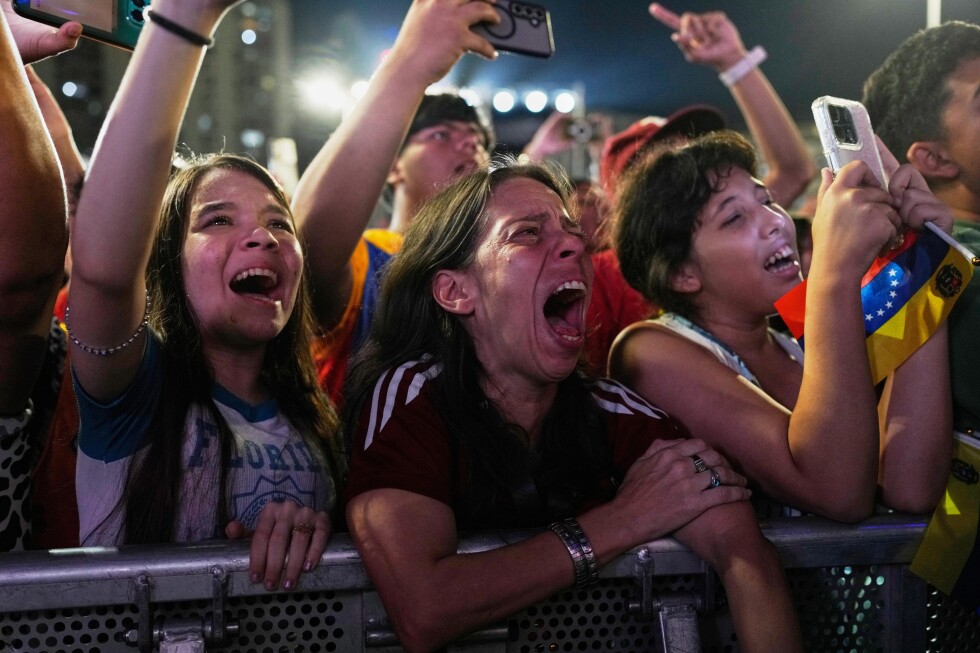
  • A mix of hope and fear settles over Venezuela after US-imposed government change

    A mix of hope and fear settles over Venezuela after US-imposed government change

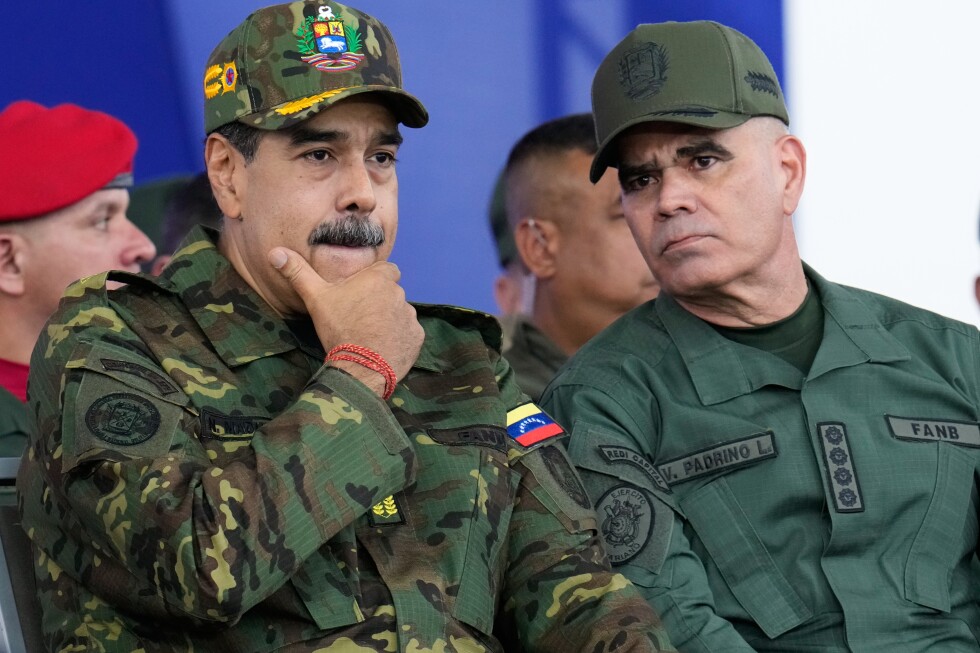
    Venezuela remains suspended in a state of paradoxical temporality following the dramatic capture of former President Nicolás Maduro by U.S. forces thirty days ago. The nation experiences both accelerated political transformation and agonizing stagnation as citizens grapple with profound uncertainty under the acting presidency of Delcy Rodríguez.

    In Caracas, government propaganda demands Maduro’s release while residents question whether Rodríguez exercises genuine autonomy or capitulates to White House directives. The acting president attempts to project authority, insisting Venezuela ‘does not accept orders from any external factor,’ yet her administration has swiftly enacted sweeping reforms previously unthinkable under Chavismo.

    The most significant policy shift came Thursday with the legislative approval of Rodríguez’s energy sector overhaul, effectively abandoning a core tenet of Chavismo by opening state-owned oil resources to privatization. This strategic pivot follows President Trump’s assertion that his administration would control Venezuelan oil exports to revitalize the industry through foreign investment.

    Meanwhile, the political landscape shows tentative signs of transformation. Long-silent opposition figures have begun reemerging, with privately-owned media airing segments featuring opposition leader María Corina Machado for the first time in years. Dozens of citizens maintain vigils outside prisons demanding release of political detainees.

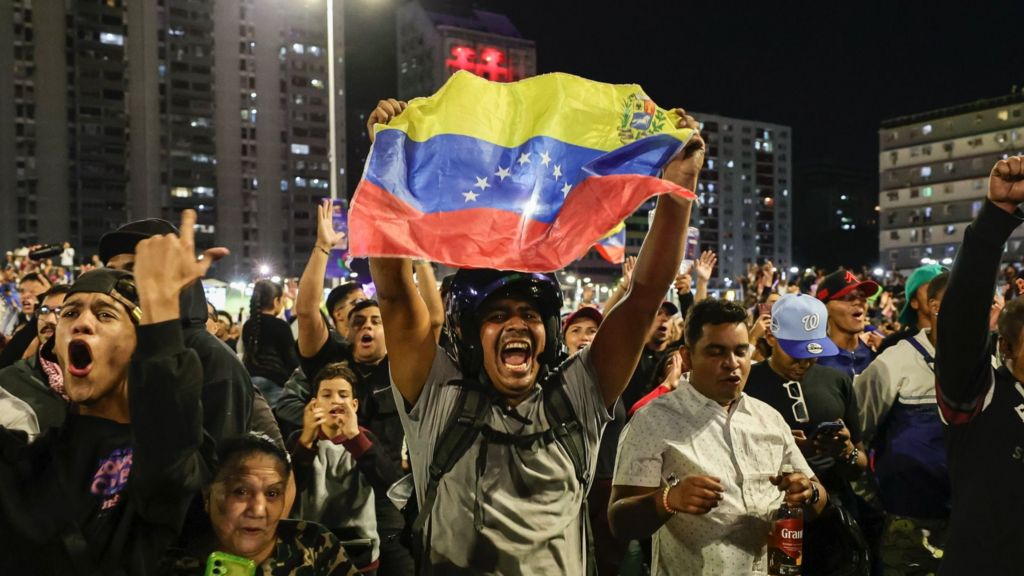
    Despite these developments, pervasive fear persists among the population. Many Venezuelans practice rigorous self-censorship, avoiding political discourse on social media and even during video calls. No large demonstrations demanding governmental change have materialized, and wanted posters of opposition figures remain displayed at official facilities.

    The human dimension of this crisis manifests in personal stories like that of Margaret García, a teacher whose son experienced severe trauma following the January 3rd operation that killed dozens. While condemning the violence, García acknowledges potential economic improvements under Rodríguez’s administration, capturing the complex dichotomy of hope and apprehension defining Venezuela’s current reality.

    As the nation balances between potential economic relief and ongoing political repression, the fundamental question remains whether Rodríguez’s leadership represents genuine change or merely Maduro’s legacy under a different name.

  • Venezuela releases rights activist Javier Tarazona

    Venezuela releases rights activist Javier Tarazona

    In a significant development within Venezuela’s political landscape, prominent human rights defender Javier Tarazona has been released from detention following increased international pressure for governmental reforms. Tarazona, who leads the non-governmental organization Fundaredes, had been incarcerated since July 2021 in the notorious El Helicoide prison facility located in Caracas.

    The liberation was formally confirmed by Fundaredes on Sunday, marking another instance in a series of prisoner releases initiated by the Venezuelan government. This action aligns with recent announcements from acting President Delcy Rodríguez regarding proposed amnesty legislation intended to benefit hundreds of individuals currently detained for political reasons. The proposed bill additionally mandates the closure of the El Helicoide prison complex.

    According to documentation by Foro Penal, a separate Venezuelan rights monitoring organization, over 300 political prisoners have secured their freedom since early January. Tarazona’s initial arrest stemmed from his allegations regarding connections between Venezuelan officials and Colombian guerrilla factions operating along the shared border. Government authorities had charged him with treason, terrorism, and incitement to hatred in response to these claims.

    While welcoming Tarazona’s release, Fundaredes emphasized that this development does not negate the injustice endured during his detention, characterizing it as merely a preliminary step in addressing systematic issues of criminalization, persecution, and judicial irregularities.

    The timing of these releases follows the dramatic capture of President Nicolás Maduro by United States special forces on January 3rd, which subsequently intensified demands for comprehensive political and economic restructuring within Venezuela. This event has galvanized families of detained opposition figures and human rights advocates to amplify their campaigns for prisoner releases and charge dismissals.

    Although Venezuelan officials have historically denied maintaining political prisoners, the proposed amnesty law represents an acknowledgment of these longstanding concerns. Rodríguez described the legislation as instrumental in ‘healing the wounds of political confrontation, violence, and extremism.’ The National Assembly is anticipated to ratify the bill in the coming days.

    However, Foro Penal notes that many recently freed individuals continue to face unresolved legal charges, creating a state of judicial uncertainty and restricting their ability to participate publicly in political discourse.

  • Venezuelan activist Javier Tarazona released from prison as US diplomat assumes post

    Venezuelan activist Javier Tarazona released from prison as US diplomat assumes post

    In a significant development signaling potential political reconciliation, Venezuelan human rights defender Javier Tarazona has been released from imprisonment following the government’s commitment to an amnesty initiative for detained opposition figures. The director of FundaRedes, a nonprofit monitoring human rights violations, regained freedom after 1,675 days in custody.

    Tarazona’s 2021 arrest occurred shortly after he reported intimidation by state intelligence operatives, with two additional activists from his organization facing simultaneous detention. His release coincides with the arrival of US Charge d’Affaires Laura Dogu, who is reestablishing American diplomatic presence in Caracas after a seven-year hiatus in bilateral relations.

    The liberation aligns with Venezuela’s recently announced amnesty legislation, a cornerstone demand from opposition factions. According to monitoring by Foro Penal, an organization tracking politically motivated detentions, approximately 310 individuals have been released while 700 remain incarcerated under similar circumstances.

    Tarazona had faced terrorism allegations—a frequent charge against government critics—particularly regarding his investigations into illegal armed groups along the Colombian border and their alleged connections to high-ranking officials. During his confinement, Amnesty International documented concerning deterioration in his health due to inadequate medical care.

    Opposition leader María Corina Machado hailed Tarazona’s perseverance, declaring on social media: ‘All of Venezuela admires your bravery and commitment. You understand better than anyone that justice will prevail in Venezuela.’ The government maintains its position denying systematic political persecution, asserting instead that accused individuals faced legitimate charges of conspiring against state institutions.

  • 5-year-old Liam Conejo Ramos and father return to Minnesota from ICE facility in Texas

    5-year-old Liam Conejo Ramos and father return to Minnesota from ICE facility in Texas

    A federal judge has mandated the release of five-year-old Liam Conejo Ramos and his father, Adrian Conejo Arias, from Immigration and Customs Enforcement (ICE) custody, concluding a contentious detention case that has ignited national debate. The pair, originally apprehended in a Minneapolis suburb on January 20, were held at a facility in Dilley, Texas, before their return to Minnesota on Sunday, confirmed by Representative Joaquin Castro’s office.

    The case’s origins trace back to the father’s unauthorized entry from Ecuador in December 2024, though his legal representative confirms a pending asylum claim currently permits his stay in the U.S. The detention gained notoriety after images circulated of the young boy, distinguished by his blue bunny hat and Spider-Man backpack, surrounded by federal officers, provoking public outcry against the administration’s enforcement tactics.

    In a scathing judicial order, U.S. District Judge Fred Biery condemned the government’s approach, attributing the case to an “ill-conceived and incompetently-implemented government pursuit of daily deportation quotas, apparently even if it requires traumatizing children.” This sentiment was echoed by local community members and school officials who alleged officers used the preschooler as “bait” to coax his mother to the door—an accusation the Department of Homeland Security (DHS) vehemently denies, labeling it an “abject lie.” DHS maintains the father attempted to flee on foot, leaving the child alone in a running vehicle.

    The government’s stance was articulated by DHS Assistant Secretary Tricia McLaughlin, who stated ICE did not target the child and that his mother refused custody following the father’s apprehension. McLaughlin reaffirmed the administration’s commitment to “restoring the rule of law and common sense to our immigration system,” vowing to continue efforts toward the “arrest, detention, and removal of aliens who have no right to be in this country.”

    The release was met with celebratory responses from Democratic lawmakers. Rep. Castro, who personally escorted the family home, penned an inspirational letter to Liam during their flight, asserting, “America became the most powerful, prosperous nation on earth because of immigrants not in spite of them.” Minnesota Senator Amy Klobuchar and Representative Ilhan Omar also welcomed the pair’s return, with Omar posting a symbolic photo holding Liam’s backpack on social media.

  • Trump says US is ‘starting to talk to Cuba’ as he moves to cut its oil supplies

    Trump says US is ‘starting to talk to Cuba’ as he moves to cut its oil supplies

    ABOARD AIR FORCE ONE — President Donald Trump revealed Saturday evening that the United States has initiated preliminary communications with Cuban leadership, marking a significant development in his administration’s escalating pressure campaign against the communist government. The announcement came during the President’s flight to Florida, where he elaborated on his strategic approach to forcing diplomatic engagement through economic constraints.

    The Trump administration has systematically disrupted Cuba’s primary oil supply channels in recent weeks, implementing measures to halt shipments from both Venezuela and Mexico. This calculated energy blockade represents a cornerstone of Trump’s strategy to compel Cuban officials to negotiate from a position of vulnerability.

    While specific details regarding the level and timing of these diplomatic contacts remain undisclosed, Trump confirmed the preliminary nature of discussions, stating simply, “We’re starting to talk to Cuba.” This diplomatic overture follows the administration’s January actions against Venezuelan President Nicolás Maduro, which signaled a more aggressive posture toward nations perceived as adversarial to U.S. interests.

    The President’s objectives toward Cuba, though not fully articulated, appear aligned with his prediction of the government’s impending collapse. In a notable executive action last week, Trump authorized tariffs against any nation providing petroleum products to Cuba, directly targeting Mexico’s energy exports to the island nation.

    Mexican President Claudia Sheinbaum has warned that these sanctions could precipitate a humanitarian crisis, pledging to explore alternative methods of supporting Cuba. Trump countered these concerns during his remarks, expressing confidence that economic pressure would ultimately lead to a favorable agreement and Cuba’s liberation without humanitarian consequences, adding that the U.S. would approach negotiations with a measured demeanor.

  • A chatbot entirely powered by humans, not artificial intelligence? This Chilean community shows why

    A chatbot entirely powered by humans, not artificial intelligence? This Chilean community shows why

    In a novel protest against the environmental impact of artificial intelligence, approximately 50 residents of Quilicura, a municipality on the outskirts of Santiago, Chile, spent Saturday operating a fully human-powered chatbot system. The 12-hour demonstration project, dubbed Quili.AI, processed over 20,000 global requests while deliberately avoiding the instant responses characteristic of conventional AI systems like ChatGPT or Google’s Gemini.

    Instead of algorithmic processing, volunteers working from a community center manually responded to queries, with image generation requests taking approximately 10 minutes to complete. When an Associated Press reporter requested an image of a ‘sloth playing in the snow,’ the system returned a hand-drawn pencil sketch of a cartoonish sloth clutching snowballs after a noticeable delay.

    The initiative, organized by environmental group Corporación NGEN, aimed to spotlight the hidden environmental costs associated with AI data centers concentrated in the Quilicura region. Lorena Antiman, the project coordinator, stated: ‘The goal is to highlight the hidden water footprint behind AI prompting and encourage more responsible use.’

    The human-operated system excelled at responding to culturally specific queries, such as recipes for Chilean sopaipillas (fried pastries), by leveraging local knowledge. When volunteers lacked immediate answers, they collaboratively sought information within their community rather than generating fabricated responses.

    This demonstration occurs against the backdrop of Chile’s severe decade-long drought, which experts link to recent devastating wildfires. The campaign highlights ongoing debates about the substantial resource consumption of AI infrastructure, particularly the massive water requirements for cooling data center computer chips. Major tech corporations including Amazon, Google, and Microsoft have established or planned data centers in the Santiago region, with Google facing legal challenges over water usage concerns despite claiming its Quilicura facility is ‘the most energy efficient in Latin America.’

  • US ambassador arrives in Venezuela to reopen diplomatic mission after 7 years

    US ambassador arrives in Venezuela to reopen diplomatic mission after 7 years

    In a significant diplomatic development, U.S. Ambassador Laura Dogu arrived in Caracas on Saturday to reestablish American diplomatic presence in Venezuela following a seven-year rupture in bilateral relations. The reopening marks a pivotal moment in U.S.-Venezuela relations, coming approximately one month after a U.S.-backed military intervention resulted in the ousting of former Venezuelan leader Nicolás Maduro.

    Ambassador Dogu announced her readiness to commence operations through an official message posted on the U.S. Embassy in Venezuela’s X account, which simultaneously released photographs documenting her arrival at Maiquetia International Airport. “My team and I are ready to work,” Dogu declared, signaling Washington’s commitment to reengaging with the South American nation.

    The diplomatic breakdown originated in February 2019 when Maduro severed relations with the United States after then-President Donald Trump publicly endorsed opposition lawmaker Juan Guaidó’s claim to interim presidential authority. This political crisis led to the mutual closure of embassy facilities in both countries.

    Venezuelan Interior Minister Diosdado Cabello, a prominent political figure and Maduro loyalist, previously indicated that the embassy reopening would enable Venezuelan authorities to monitor the treatment of the deposed leader, who remains detained in U.S. custody.

    Foreign Minister Yván Gil characterized the diplomatic reengagement as part of a structured bilateral agenda aimed at resolving outstanding differences through diplomatic dialogue. In a Telegram message, Gil emphasized the process would be conducted “on a foundation of mutual respect and international law.”

    The ambassador’s arrival coincided with interim President Delcy Rodríguez’s announcement of an amnesty bill designed to release political prisoners—a key concession to opposition demands. Dogu brings extensive regional experience to her new post, having previously served as U.S. ambassador to both Nicaragua and Honduras.