标签: South America

南美洲

  • Tottenham midfielder Bentancur has hamstring surgery in worry for Uruguay ahead of World Cup

    Tottenham midfielder Bentancur has hamstring surgery in worry for Uruguay ahead of World Cup

    Tottenham Hotspur has confirmed a significant setback for midfielder Rodrigo Bentancur, who has undergone surgical intervention for a right hamstring injury. The procedure follows the player’s exit during the club’s recent 3-2 Premier League defeat to Bournemouth last week.

    The North London club issued a statement indicating that the Uruguayan international will immediately commence a rehabilitation program under the supervision of the club’s medical team. No specific timeline for his return to competitive play was provided, leaving his availability for both club and country in question.

    This development poses a considerable concern for the Uruguayan national team management with the FIFA World Cup 2026 rapidly approaching. The global tournament, co-hosted by the United States, Canada, and Mexico, is scheduled to commence on June 11, exactly five months from now. Uruguay finds itself in Group B alongside Spain, Cape Verde, and Saudi Arabia.

    Bentancur’s absence exacerbates Tottenham’s existing midfield crisis, with key players James Maddison and Dejan Kulusevski already sidelined with long-term injuries. Additionally, winger Mohammed Kudus continues recovery from a thigh problem and isn’t anticipated to return until after the international break in March.

    In response to this mounting injury crisis, British media outlets have linked Tottenham with a potential move for Atletico Madrid midfielder Conor Gallagher as the club seeks to bolster its depleted midfield options.

  • Colombian rebels call for a ‘national accord’ after the US intervention in Venezuela

    Colombian rebels call for a ‘national accord’ after the US intervention in Venezuela

    BOGOTA, Colombia — Colombia’s National Liberation Army (ELN), the nation’s largest remaining rebel organization, has issued an unprecedented call for a “national accord” to address political divisions, even as it confronts escalating military threats from both Colombian and United States governments.

    The Marxist guerrilla group utilized its official X account on Monday to declare its willingness to collaborate with Colombia’s incoming administration following this year’s elections. The proposed collaboration would focus on developing comprehensive strategies to eradicate poverty, safeguard environmental ecosystems, and dismantle narcotics operations in rural territories.

    This conciliatory gesture emerges alongside reports that Bogotá and Washington are exploring coordinated military operations against the insurgency. Colombian President Gustavo Petro has previously characterized the ELN as “drug traffickers disguised as revolutionary combatants.

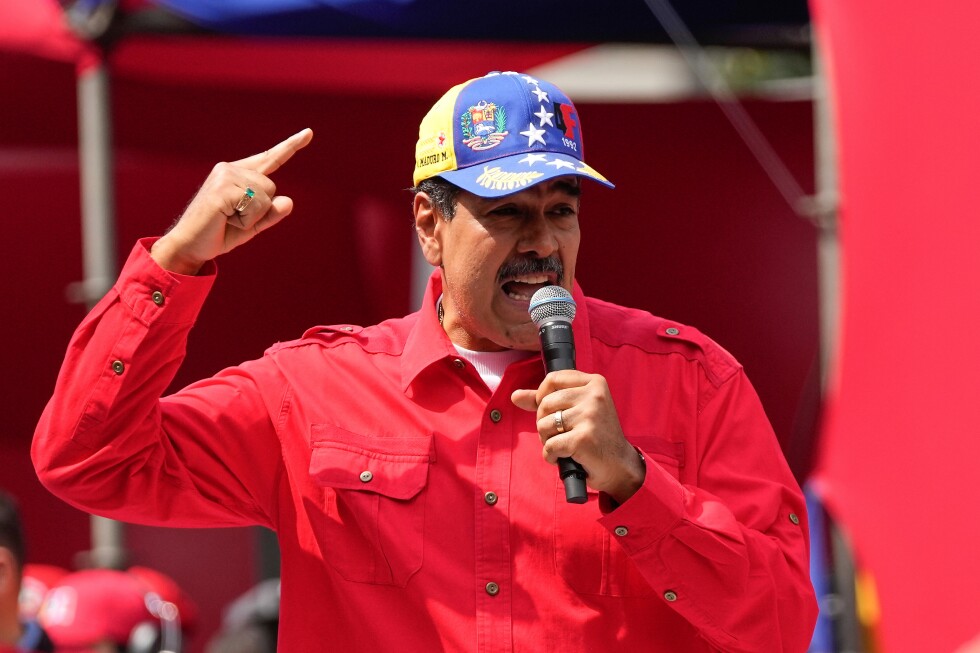
    International pressure intensified dramatically following the early April capture of former Venezuelan President Nicolás Maduro by U.S. authorities. The pre-dawn operation resulted in Maduro’s extradition to face narcotics charges in New York, where federal indictments allege he provided territorial protection to ELN operations within Venezuela and facilitated cocaine trafficking partnerships.

    In response to these developments, Colombian officials have initiated measures to undermine the rebel group’s strategic foothold in neighboring Venezuela. The geopolitical shift follows a tension-reducing telephone discussion between Presidents Petro and Donald Trump, during which they addressed ELN’s involvement in drug trafficking and potential joint military responses.

    Colombian Interior Minister Armando Benedetti revealed that both leaders examined operational scenarios targeting ELN encampments within Venezuelan territory. He emphasized the tactical necessity to “engage the rebels during their retreat phases” into cross-border sanctuaries.

    President Petro subsequently established clear preconditions for resuming peace negotiations, demanding the ELN cease narcotics operations, discontinue minor recruitment, and abandon Venezuelan base camps. Failure to comply would trigger “coordinated actions” involving Caracas’ participation.

    The Colombian government suspended formal peace talks with the ELN in 2023 following the group’s military offensive in Catatumbo, which displaced over 50,000 civilians. Founded during the 1960s by Cuban revolution-inspired students and labor organizers, the ELN maintains approximately 5,000 combatants operating across both Colombian and Venezuelan border regions.

  • Families of prisoners in Venezuela wait in anguish as promised releases trickle

    Families of prisoners in Venezuela wait in anguish as promised releases trickle

    CARACAS, Venezuela — Despite government assurances of a significant prisoner release initiative, Venezuelan families continue enduring agonizing waits outside detention facilities. The promised liberation of opposition figures, civil society leaders, and journalists—announced as a goodwill gesture following recent political tensions—has materialized in mere trickles rather than the anticipated flow.

    Yaxzodara Lozada represents countless relatives who have maintained vigil outside prisons since Thursday, when acting President Delcy Rodríguez’s administration pledged releases to ‘seek peace.’ Lozada described waking freezing on sidewalks after overnight waits, hoping for her police officer husband’s freedom after his unexplained November 17 detention.

    While Venezuelan commerce and daily life show signs of normalization with reopened malls, schools, and gyms—a week after the stunning U.S.-linked operation against President Nicolás Maduro—the prisoner release program remains shrouded in opacity. Officials have neither identified candidates nor specified numbers for potential releases, forcing human rights organizations to scour for fragmentary information.

    As of Monday afternoon, the Venezuelan advocacy group Foro Penal had verified only 49 releases, including several foreign nationals holding Italian, Spanish, Argentine, Israeli and Colombian citizenship. This limited number has drawn sharp criticism from international observers and desperate families alike.

    The UN-backed fact-finding mission on Venezuela acknowledged the releases while emphasizing they ‘fall far short’ of demands for ‘immediate and unconditional release of all political prisoners.’ Meanwhile, the White House confirmed Venezuelan opposition leader María Corina Machado will meet with U.S. President Donald Trump on Thursday, following Trump’s Saturday claim that releases occurred at Washington’s request.

    At prison gates, relatives like Jenny Quiroz voice desperate skepticism. Her husband was detained November 26 at his Caracas pharmacy for allegedly criticizing the government in a WhatsApp group. ‘These are two realities,’ Quiroz observed, noting normal school activities continuing adjacent to anguished family vigils. ‘They want the world to see that everything is normal… but it’s a mixture of anguish, despair.’

    As security forces deployed to public schools for post-holiday reopening, teachers prepared for student questions about January’s attack—though preschool teacher Ángela Ramírez reported her students displayed more excitement about returning to classrooms than interest in political developments.

  • Five decapitated heads displayed on Ecuador beach

    Five decapitated heads displayed on Ecuador beach

    In a brutal display of criminal intimidation, five decapitated heads were discovered by bathers on a beach in Puerto López, Ecuador, this Sunday. The grim finding underscores the escalating gang violence plaguing the nation’s coastal regions. Authorities confirmed the victims were men, aged 20 to 34, who had been reported missing recently. One was known to police for previous firearm offenses, though their bodies remain missing.

    Accompanying the remains was a menacing message, explicitly warning individuals engaged in the extortion and robbery of local fishermen of a similar fate. This act is perceived as a violent directive from criminal factions controlling the area.

    This incident is the latest in a series of violent outbreaks in Puerto López, a key transit point for cocaine smuggled from Colombia and Peru to the U.S. and Europe. Just days prior on December 28th, a separate attack on the same beachfront claimed six lives, including a two-year-old child, and injured three others. Police attribute these shootings to a vicious turf war between rival factions of the notorious Los Choneros gang for control of the town.

    The situation in Ecuador has reached a critical point. Official data from the interior ministry marks 2025 as the most violent year on record, with homicides soaring to an unprecedented 9,176. The country’s strategic location has made it a hub for narcotics trafficking, with local gangs forming alliances with powerful international cartels like those from Mexico and Colombia. Beyond drug smuggling, these criminal enterprises systematically extort ‘protection money’ from local businesses, resorting to lethal force against those who resist.

    The Los Choneros gang, identified by the U.S. State Department as a Foreign Terrorist Organisation since September, is a primary instigator of this crisis. Its leader, known as Fito, was extradited to the United States in July last year, yet the gang’s violent influence continues to destabilize the region.

  • Jailed Venezuelan politician’s son says Trump shouldn’t be ‘fooled’ by pledge of prisoner releases

    Jailed Venezuelan politician’s son says Trump shouldn’t be ‘fooled’ by pledge of prisoner releases

    A significant diplomatic rift has emerged between Washington and Caracas regarding Venezuela’s political prisoner releases, with opposition families accusing the Maduro government of reneging on its commitments. Ramón Guanipa, son of imprisoned opposition leader Juan Pablo Guanipa, has directly appealed to former President Donald Trump to maintain pressure on Venezuelan authorities, claiming the current administration has misrepresented the scale of prisoner releases.

    The controversy stems from last Thursday’s announcement by Jorge Rodríguez, leader of Venezuela’s National Assembly, that an “important number” of detainees would be immediately freed as a “goodwill gesture.” This development followed the dramatic January 3rd capture of former President Nicolás Maduro by U.S. forces in Caracas and his subsequent extradition to New York on drug trafficking charges.

    While Trump enthusiastically praised Venezuelan authorities on social media, stating they had “started the process, in a BIG WAY,” reality appears markedly different. According to human rights organizations, fewer than 40 of Venezuela’s estimated 800 political prisoners have actually been released. Among those confirmed freed are several prominent opposition figures and five Spanish citizens, including human rights lawyer Rocío San Miguel.

    The situation has created tense vigils outside El Helicoide prison, Venezuela’s most notorious detention facility. Originally conceived as a shopping center symbolizing oil prosperity, the structure became synonymous with political repression under Maduro. Families like Carmen Farfán’s maintain desperate watches, seeking information about missing relatives detained since November 2025.

    Juan Pablo Guanipa’s case exemplifies the ongoing crisis. The opposition leader went into hiding after challenging the 2024 presidential election—denounced as rigged by UN observers and the U.S. government—before being arrested on terrorism and treason charges in May 2025. His son Ramón expressed profound disappointment after flying urgently to Caracas expecting his father’s release, stating: “When they tell you they’re going to release your family, everything else becomes small. But when his father was not among those freed, he felt defeated.”

    The prisoner release program represents the first major test of Trump’s influence in post-Maduro Venezuela. While interim President Delcy Rodríguez has indicated willingness to cooperate with the Trump administration, her government continues condemning U.S. interventionism. This delicate balancing act has left opposition figures questioning whether genuine political reform will materialize or if current gestures merely constitute superficial concessions.

  • Golden Globe highlights: Brazil on a streak, Amy Poehler’s pod wins and Seth Rogen comes full-circle

    Golden Globe highlights: Brazil on a streak, Amy Poehler’s pod wins and Seth Rogen comes full-circle

    The 83rd Golden Globe Awards ceremony, held at the Beverly Hilton on January 11, 2026, delivered a captivating blend of predictable outcomes, heartfelt acknowledgments, and surreal occurrences that collectively defined this year’s event. While major productions like ‘One Battle After Another’ and ‘Adolescence’ secured expected victories, the evening truly distinguished itself through its international recognition and deeply personal acceptance speeches.

    Brazilian cinema emerged as a dominant force, with Wagner Moura claiming the Best Actor in a Motion Picture Drama award for his powerful performance in ‘The Secret Agent.’ The film, which explores themes of memory and generational trauma during Brazil’s 1970s military dictatorship, also earned the distinction of Best Non-English Language Film. Moura, previously renowned for his portrayal of Pablo Escobar in ‘Narcos,’ dedicated his award to those ‘sticking with their values in difficult moments,’ marking Brazil’s continued ascendancy in global cinema following last year’s historic Oscar win.

    The ceremony produced several unforgettable interactions, including George Clooney’s chivalrous assistance to Jean Smart at the podium and a nostalgic reunion with former ‘ER’ co-star Noah Wyle. Erin Doherty, winner for Best Supporting Actress in a Television Series for ‘Adolescence,’ delivered a moving tribute to mental health professionals, while Rose Byrne provided one of the evening’s most unconventional explanations for her partner’s absence—attending a reptile expo in New Jersey.

    Seth Rogen experienced a meta-cinematic moment when he won Best Lead Actor in a TV Musical/Comedy for ‘The Studio,’ months after his show satirized the very same awards ceremony. ‘This is so weird! We just pretended to do this and now it is happening!’ Rogen exclaimed, acknowledging the surreal nature of his victory.

    Amy Poehler secured the inaugural Golden Globe for Best Podcast with ‘Good Hang with Amy Poehler,’ using her acceptance speech to humorously critique NPR’s programming. Meanwhile, the K-pop phenomenon ‘Demon Hunters’ achieved dual recognition, winning both Best Animated Film and Best Original Song for ‘Golden,’ with co-writer Ejae delivering an inspirational message about perseverance and self-acceptance.

    Jack Thorne’s ‘Adolescence,’ which collected four awards including Best Limited Series, concluded the evening with a powerful call to action against hatred, emphasizing the transformative potential of hope and representation in contemporary storytelling.

  • Venezuelans in the US are torn between joy and worry after ousting of Maduro

    Venezuelans in the US are torn between joy and worry after ousting of Maduro

    NEW YORK — Venezuelan migrants across the United States are experiencing complex emotional reactions to the recent military-led ousting of President Nicolás Maduro, expressing both hope and apprehension about their future. While celebrating the removal of the leader who presided over their country’s economic collapse, many remain deeply concerned about returning to a nation where Maduro’s political infrastructure remains intact.

    The Trump administration’s forceful intervention has created a paradoxical situation for approximately 770,000 Venezuelans residing in the U.S. Many who fled political persecution and hyperinflation exceeding 1 million percent acknowledge the significance of Maduro’s removal while expressing reservations about the stability and safety of their homeland. This cautious optimism is tempered by the administration’s simultaneous efforts to revoke Temporary Protected Status (TPS) designations that had allowed many Venezuelans to remain in the country legally.

    Interviews with Venezuelan communities from New York to Utah reveal little indication of an immediate rush to return. José Luis Rojas, a 31-year-old asylum recipient in New York City, described how economic conditions in Venezuela had made basic necessities like diapers unattainable before his 2018 departure. While welcoming Maduro’s ouster, Rojas noted the contradictory nature of Trump’s policies: “He’s done good things and he’s done bad things. It all depends on your point of view.

    The complexity of these circumstances is further illustrated by Jesus Martinez, a 50-year-old asylum seeker in Utah, who described the situation as “obviously contradictory.” Despite relief at Maduro’s removal, Martinez emphasized that significant time would be required before Venezuela could transition to stable democracy, making potential deportation particularly troubling for those who faced persecution.

    Advocates like Alejandra Salima, who works with the National TPS Alliance in Miami, describe a community suspended between optimism and uncertainty. Salima, who fled Venezuela three years ago with her young son, noted that while Maduro’s removal represents a “first step,” the persistent presence of his regime’s infrastructure means “returning would put me and my son at risk.”

    The emotional seesaw continues for many Venezuelans who have built new lives in American suburbs from Florida to Utah, with their future prospects now hinging on both Venezuela’s political transformation and U.S. immigration policy developments.

  • Trump ‘inclined’ to keep ExxonMobil out of Venezuela after CEO response at White House meeting

    Trump ‘inclined’ to keep ExxonMobil out of Venezuela after CEO response at White House meeting

    ABOARD AIR FORCE ONE — President Donald Trump expressed strong reservations about allowing ExxonMobil to participate in Venezuela’s oil sector following critical comments from the company’s leadership. Speaking to journalists aboard Air Force One en route from West Palm Beach, Florida, Trump revealed his dissatisfaction with the oil giant’s stance, characterizing their position as “playing too cute” with investment opportunities.

    The administration’s push for energy sector engagement follows the political transition from former President Nicolás Maduro. During a high-level meeting with petroleum executives on Friday, Trump attempted to alleviate corporate concerns by assuring direct negotiation channels with the United States government rather than Venezuelan authorities.

    ExxonMobil CEO Darren Woods presented a contrasting view, stating current commercial frameworks in Venezuela render the country “uninvestable” under existing conditions. The corporation’s representatives declined immediate commentary when contacted Sunday regarding Trump’s remarks.

    In parallel developments, the President signed an executive order Friday designed to shield Venezuelan oil revenues from potential judicial seizure. The order, publicly disclosed Saturday, argues that asset protection is essential for maintaining U.S. stabilization efforts amid Venezuela’s history of resource nationalization, ongoing sanctions, and prolonged political volatility.

    The White House has prioritized energy infrastructure rehabilitation as a cornerstone of its Venezuela policy, implementing measures including tanker interdictions and assuming control over global sales of 30-50 million barrels of previously sanctioned crude oil indefinitely.

  • With Cuban ally Maduro ousted, Trump warns Havana to make a ‘deal’ before it’s too late

    With Cuban ally Maduro ousted, Trump warns Havana to make a ‘deal’ before it’s too late

    WEST PALM BEACH, Fla. — President Donald Trump escalated tensions with Cuba through a series of social media declarations on Sunday, warning the communist nation of severe economic consequences following the deposition of Venezuelan leader Nicolás Maduro. The U.S. President asserted that Cuba’s longstanding reliance on Venezuelan oil subsidies has reached its definitive endpoint.

    From his Florida residence, Trump proclaimed that Cuba would no longer receive petroleum resources or financial support from Venezuela, emphasizing his message with the declaration: “THERE WILL BE NO MORE OIL OR MONEY GOING TO CUBA – ZERO!” The President urged Cuban leadership to “make a deal, BEFORE IT IS TOO LATE,” though he provided no specific details regarding potential negotiation terms.

    The geopolitical confrontation intensified when Cuban President Miguel Díaz-Canel responded via social media platform X, challenging U.S. moral authority in international affairs. Díaz-Canel asserted that “those who turn everything into a business, even human lives, have no moral authority to point the finger at Cuba.”

    This diplomatic exchange occurs against the backdrop of significant regional upheaval. Cuban authorities reported that 32 military personnel from their nation’s security agencies were killed during the American operation that captured Maduro. These personnel were stationed in Caracas under a bilateral security agreement between Cuba and Venezuela.

    Trump reinforced his position by stating that Venezuela no longer requires protection from “thugs and extortionists,” instead promising that “the most powerful military in the World” would now provide protection to the Venezuelan people.

    The U.S. administration has intensified its pressure campaign against Cuba, which faces its most severe economic crisis in decades. The island nation has suffered from extensive blackouts and critical shortages of essential goods. Cuban officials attribute these challenges primarily to U.S. sanctions, which they claim have cost the economy over $7.5 billion between March 2024 and February 2025.

    Díaz-Canel defended Cuba’s political sovereignty and criticized U.S. economic measures, stating that those blaming the Cuban Revolution for economic hardships “should be ashamed” while condemning American-imposed “draconian measures.”

    Trump previously predicted Cuba’s economic deterioration would accelerate following Maduro’s removal from power, bluntly stating: “It’s going down for the count.”

  • Millions of Venezuelans scattered across Latin America cautiously watch what comes next

    Millions of Venezuelans scattered across Latin America cautiously watch what comes next

    Across Latin America, the Venezuelan diaspora responded to news of Nicolás Maduro’s deposition with measured optimism rather than immediate plans to return home, despite calls from U.S. and regional leaders for repatriation. From textile markets in Lima to migrant shelters in Monterrey, Venezuelan expatriates expressed cautious hope while acknowledging the profound challenges preventing their return.

    In Peru’s capital, 22-year-old graphic designer Yanelis Torres capitalized on the political shift by selling T-shirts emblazoned with Maduro’s image and captions like “Game Over.” Despite the enthusiastic response from Peruvian customers, Torres reflected the prevailing sentiment among migrants: “I have a lot of things here. You’ve got to keep an eye on it, know what’s going on, but not lose hope.”

    The scale of displacement remains staggering, with nearly 7 million Venezuelan migrants and refugees scattered throughout Latin America. Colombia hosts the largest population at 2.8 million, followed by Peru with 1.5 million, according to United Nations-coordinated data. These numbers represent one of the largest displacement crises globally, driven by complex political and economic collapse that has pushed 80% of Venezuela’s population into poverty despite the nation’s vast oil reserves.

    Eduardo Constante’s journey exemplifies the diaspora’s struggles. Having left Venezuela during the 2017 “hunger crisis,” he spent years navigating South America’s precarious migrant trail—from Colombia to Peru, then Chile, and finally to Mexico’s northern border. His optimism about Maduro’s ouster was tempered by concerns about family members still facing food scarcity and government surveillance back home.

    The political landscape in host countries presents additional complications. Chile’s ultra-conservative President-elect José Antonio Kast has made deporting undocumented immigrants a central policy, giving thousands “63 days left to leave our country.” Similar immigration-focused elections loom in Peru and Colombia, potentially jeopardizing the protected status of Venezuelan refugees.

    Human rights experts warn of a “perfect storm” brewing for vulnerable migrants. Maureen Meyer of the Washington Office on Latin America (WOLA) noted that returning refugees would face exploitation risks from organized crime groups, particularly as smuggling networks have diminished. The organization emphasizes that Venezuela remains far from providing conditions that would ensure safe and sustainable returns.

    Despite these challenges, glimpses of hope persist. In Santiago’s “little Caracas” district, initial celebrations have settled into determined resilience. Sixty-six-year-old Alexander Leal, who sells homemade ice cream while dreaming of eventual repatriation, captured the collective aspiration: “It won’t be this year, but maybe it will be next year. That is everyone’s aspiration, that the country is fixed.”