标签: South America

南美洲

  • Venezuela’s acting president vows to continue releasing prisoners detained under Maduro

    Venezuela’s acting president vows to continue releasing prisoners detained under Maduro

    CARACAS, Venezuela — In her inaugural press briefing since assuming power, Venezuela’s Acting President Delcy Rodríguez committed to continuing the liberation of detainees imprisoned during Nicolás Maduro’s administration. The political transition occurred following Maduro’s dramatic ousting by United States forces earlier this month.

    Rodríguez, who previously served as Maduro’s vice president since 2018 overseeing both the nation’s formidable intelligence apparatus and critical petroleum sector, ascended to interim leadership just 48 hours after U.S. operatives extracted Maduro from his heavily fortified residence. The 56-year-old legal professional and seasoned politician now governs under explicit American supervision, with the Trump administration asserting direct influence over Venezuelan affairs.

    From the presidential palace podium, Rodríguez addressed international correspondents, confirming that the prisoner release initiative commenced under her predecessor remains an ongoing process. ‘That process remains open,’ she declared, characterizing the emancipations as symbolic gestures signaling Venezuela’s entrance into ‘a new political moment.’

    The geopolitical dynamics reveal extraordinary complexities: despite previously sanctioning Rodríguez for human rights violations during Maduro’s initial term, the Trump administration has now strategically co-opted her to consolidate U.S. control over Venezuela’s lucrative oil exports. President Trump reportedly issued stark warnings to ensure Rodríguez’s compliance, threatening her with consequences ‘probably worse than Maduro’—a reference to the deposed leader’s current incarceration in a Brooklyn detention facility facing federal narcotics trafficking charges.

  • What Americans think about Trump’s intervention in Venezuela, according to a new AP-NORC poll

    What Americans think about Trump’s intervention in Venezuela, according to a new AP-NORC poll

    A comprehensive survey conducted by The Associated Press-NORC Center for Public Affairs Research indicates growing public concern over President Trump’s foreign policy direction. The study, conducted among 1,203 American adults, reveals that 56% believe the administration has “gone too far” in deploying military force internationally.

    The research, conducted following recent geopolitical developments including the Venezuelan intervention, demonstrates significant disapproval of Trump’s handling of foreign affairs. While 61% disapprove of his overall foreign policy approach, 57% specifically criticize his Venezuela strategy despite acknowledging potential benefits in drug interdiction.

    The poll highlights a striking partisan divide: approximately 90% of Democrats and 60% of independents view Trump’s military interventions as excessive, contrasted with only 20% of Republicans sharing this concern. Notably, 71% of Republicans consider the President’s actions “about right,” with merely 10% advocating for more aggressive international engagement.

    Public opinion appears increasingly isolationist, with nearly half of Americans preferring a “less active” global role for the United States. This sentiment represents a significant shift from previous months, particularly among Democratic and independent voters. Meanwhile, Republican support for the current engagement level has increased from 55% to 64% since September.

    The research methodology utilized NORC’s probability-based AmeriSpeak Panel, maintaining a margin of error of ±3.9 percentage points, ensuring statistically representative findings of the broader U.S. population.

  • Venezuela has freed some American citizens from prison, US official says

    Venezuela has freed some American citizens from prison, US official says

    In a significant diplomatic development, Venezuela has commenced the release of several American detainees held within its borders, marking the first such action since the dramatic capture of former President Nicolás Maduro earlier this month. A U.S. State Department official confirmed the releases without specifying identities or numbers, characterizing the move as “an important step in the right direction” by interim authorities.

    The releases follow last week’s announcement by Interim President Delcy Rodríguez’s government that it would free “a significant number” of individuals classified as political prisoners in what it termed a “goodwill gesture.” While the administration claims over 100 prisoners have been liberated, United Nations observers and human rights organizations confirm only approximately 50 releases from an estimated total exceeding 800 political detainees.

    This selective liberation strategy appears strategically timed ahead of opposition leader María Corina Machado’s scheduled White House meeting on Thursday. The Nobel Peace Prize laureate has actively sought to engage U.S. President Donald Trump regarding Venezuela’s political crisis.

    The prisoner releases occur against the backdrop of ongoing international scrutiny. The UN has persistently condemned Venezuela’s “widespread and systematic use of arbitrary detention as a tool of repression.” Meanwhile, relatives of those still imprisoned maintain vigils outside Caracas’ notorious El Helicoide prison, expressing mounting frustration with the slow pace of releases.

    President Trump acknowledged the developments on his Truth Social platform, asserting that prisoner releases had begun “in a BIG WAY” and revealing he canceled secondary airstrikes upon learning of Venezuela’s cooperation. Republican Senator Rick Scott thanked Trump for securing the releases while demanding faster progress, emphasizing that “every single prisoner still held under Delcy Rodríguez should be released ASAP.”

    The situation remains complex as many detainees, including 28-year-old James Luckey-Lange according to family statements, appear to be ordinary travelers caught in Venezuela’s political crosscurrents. The U.S. government continues advising against travel to the South American nation due to wrongful detention risks, even as diplomatic channels show tentative signs of yielding results.

  • Senate readies vote on Venezuela war powers as Trump pressures GOP defectors

    Senate readies vote on Venezuela war powers as Trump pressures GOP defectors

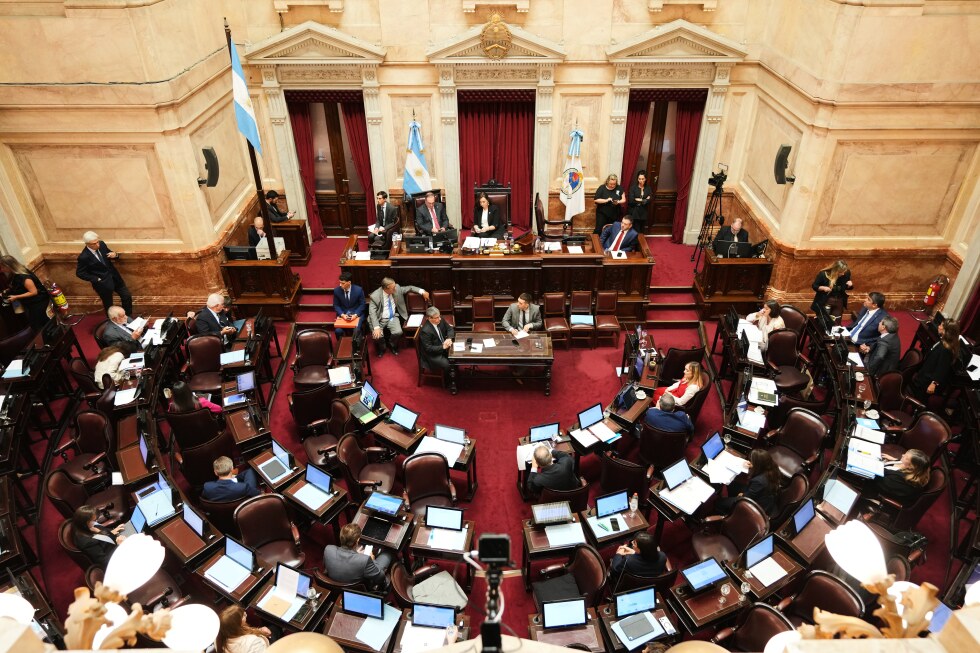
    WASHINGTON — A significant political confrontation is unfolding in the Senate as Republican lawmakers face mounting pressure from President Donald Trump regarding a war powers resolution that would restrict presidential authority to initiate military action against Venezuela. The resolution advanced last week with support from five Republican senators joining Democrats, prompting vehement criticism from the president.

    During a Tuesday speech in Michigan, Trump expressed frustration with the dissenting Republicans, stating, “Here we have one of the most successful attacks ever and they find a way to be against it. It’s pretty amazing. And it’s a shame.” The president specifically targeted Senators Rand Paul (R-KY), Lisa Murkowski (R-AK), and Susan Collins (R-ME), describing them with derogatory terms that underscore the deepening rift within the party.

    The legislative measure gained momentum following U.S. military operations that resulted in the capture of Venezuelan leader Nicolás Maduro earlier this month. Despite its advancement, the resolution faces insurmountable obstacles as it would ultimately require Trump’s signature to become law, creating a constitutional paradox that highlights the measure’s symbolic importance in testing Republican loyalty to the president.

    Senator Josh Hawley (R-MO), one of the Republicans who initially supported advancing the resolution, has indicated he may reconsider his position after discussions with administration officials. Hawley reported receiving assurances from Secretary of State Marco Rubio that no ground troops would be deployed to Venezuela and that the administration would adhere to constitutional requirements for any future military actions.

    The Trump administration has employed multiple legal justifications for its Venezuela operations, including designating drug cartels as terrorist organizations under global war on terror authorities and characterizing Maduro’s capture as a law enforcement operation rather than military action. Senators received a classified briefing on the administration’s legal rationale, though some lawmakers criticized the secrecy surrounding these arguments.

    This political confrontation occurs against the backdrop of Trump’s expanded foreign policy ambitions, including recent statements about U.S. involvement in Venezuela, interest in Greenland, and comments regarding Iran. Democratic Senator Tim Kaine, who has introduced multiple war powers resolutions, observed that the administration appears “furious at the notion that Congress wants to be Congress.”

  • From Minneapolis to Venezuela, Trump piles up the risks as he faces midterm verdict

    From Minneapolis to Venezuela, Trump piles up the risks as he faces midterm verdict

    NEW YORK — Within the initial fortnight of the new year, President Donald Trump has dramatically intensified his governance approach, asserting authority over Venezuela’s political landscape, renewing threats to acquire Greenland, and deploying masked immigration agents across American urban centers. These developments occur alongside an extraordinary criminal investigation targeting the Federal Reserve—a fundamental pillar of the national economy that Trump seeks to influence.

    Even for a presidency characterized by constant disruption, Trump is generating exceptional levels of political turbulence as the nation approaches midterm elections that will determine congressional control. Each presidential decision carries substantial risks, ranging from potential foreign entanglements to destabilizing the financial system, yet Trump continues his aggressive approach with an intensity that has unsettled even some Republican allies.

    Yale University historian Joanne B. Freeman characterized the situation as a “rogue presidency,” noting this represents an unprecedented development in American political history. Despite potential repercussions, Trump appears undeterred, frequently escalating his positions rather than retreating.

    The Federal Reserve investigation has proven particularly contentious. Following Chair Jerome Powell’s disclosure that the central bank faces criminal scrutiny regarding testimony about building renovations, some conservative voices expressed unusual criticism. Fox Business host Maria Bartiromo, typically a Trump supporter, noted that Wall Street largely opposes such confrontations with the monetary policy institution.

    Concurrently, Trump has expanded U.S. involvement in complex international matters, seemingly contradicting his promised “America First” foreign policy. The military operation to remove Venezuelan leadership has been reframed from targeting drug trade figures to presenting economic opportunities for the United States, with Trump even declaring himself “acting president of Venezuela” in social media posts.

    Domestically, immigration enforcement operations have sparked violent confrontations, including a fatal shooting in Minneapolis involving federal agents. Administration officials claim self-defense, while local authorities dispute these accounts based on circulating video evidence.

    As November’s midterm elections approach, Democratic campaigns focus primarily on economic concerns, with recent AP-NORC polls showing only 31% approval of Trump’s economic management—his lowest rating yet. Some progressive activists argue their party should emphasize Trump’s unprecedented power consolidation more prominently, with Indivisible co-founder Ezra Levin warning that authoritarians typically escalate when cornered rather than conceding power.

    Republican leadership remains largely unified, with RNC spokesperson Kiersten Pels asserting that voters will reward the party for Trump’s America-first policies in the upcoming elections.

  • Multiple Americans detained in Venezuela have been released, Trump administration says

    Multiple Americans detained in Venezuela have been released, Trump administration says

    In a significant diplomatic development, multiple American detainees have been released from Venezuelan custody following recent political upheaval in the South American nation. The Trump administration confirmed the releases Tuesday, with the State Department characterizing the action as “an important step in the right direction” by Venezuela’s interim authorities.

    According to sources familiar with the matter, four Americans were released as a group on Tuesday, with an additional detainee quietly freed the previous day. The releases occurred against the backdrop of dramatic political changes in Venezuela, where U.S. forces captured President Nicolás Maduro in a nighttime raid earlier this month.

    The prisoner releases appear to be part of broader conciliatory gestures by Venezuela’s new leadership. Jorge Rodríguez, head of Venezuela’s national assembly, announced last week that a “significant number” of both Venezuelan and foreign prisoners would be freed as a peace-seeking measure following Maduro’s deposition.

    Independent verification of the releases remains challenging due to limited transparency from Venezuelan authorities. The human rights organization Foro Penal confirmed 56 political prisoners had been freed as of Tuesday evening, while the Venezuelan government claimed approximately 400 releases without providing substantiating evidence or identifying those freed.

    This episode continues a pattern of prisoner exchanges between the two nations despite their historically strained relations. In July, Venezuela released 10 jailed U.S. citizens and permanent residents in exchange for the repatriation of migrants deported by the United States to El Salvador.

  • Rio de Janeiro zoo animals are treated to popsicles as the city faces scorching summer weather

    Rio de Janeiro zoo animals are treated to popsicles as the city faces scorching summer weather

    As Rio de Janeiro grapples with an intense summer heatwave, the city’s BioParque zoo has implemented innovative cooling measures for its animal residents. Zoo keepers distributed specially formulated frozen treats to various species on Tuesday, tailoring the iced delicacies to each animal’s dietary requirements and preferences.

    Primates received refreshing watermelon popsicles, while jaguars were presented with frozen ground chicken treats floating in their water tanks. The zoo’s biological team designed these frozen offerings not merely as temporary refreshments but as strategic hydration tools. According to zoo biologist Letizia Feitoza, the floating chicken popsicles serve a dual purpose: “When she attempts to retrieve the frozen food, she inevitably consumes water simultaneously, significantly aiding her hydration levels.”

    This initiative represents part of the zoo’s comprehensive animal welfare protocol during extreme weather conditions. Similar measures were activated during previous summer seasons when southeastern Brazil experienced comparable temperature spikes. Despite temperatures exceeding 40°C (104°F) over the weekend—prompting city officials to issue a Level 3 heat alert—visitors continued to flock to the zoo, expressing appreciation for the innovative animal care approaches.

    Lorena Carvalho, an educator visiting the facility, observed: “The implementation of these cooling methods appears significantly beneficial. It undoubtedly enhances their comfort during such challenging weather conditions.” The zoo maintains that these thermal comfort strategies are integrated within standard animal care practices, ensuring species-specific needs are met during climate extremes.

  • Plane used in boat strike off Venezuela was painted to look like a civilian aircraft, AP sources say

    Plane used in boat strike off Venezuela was painted to look like a civilian aircraft, AP sources say

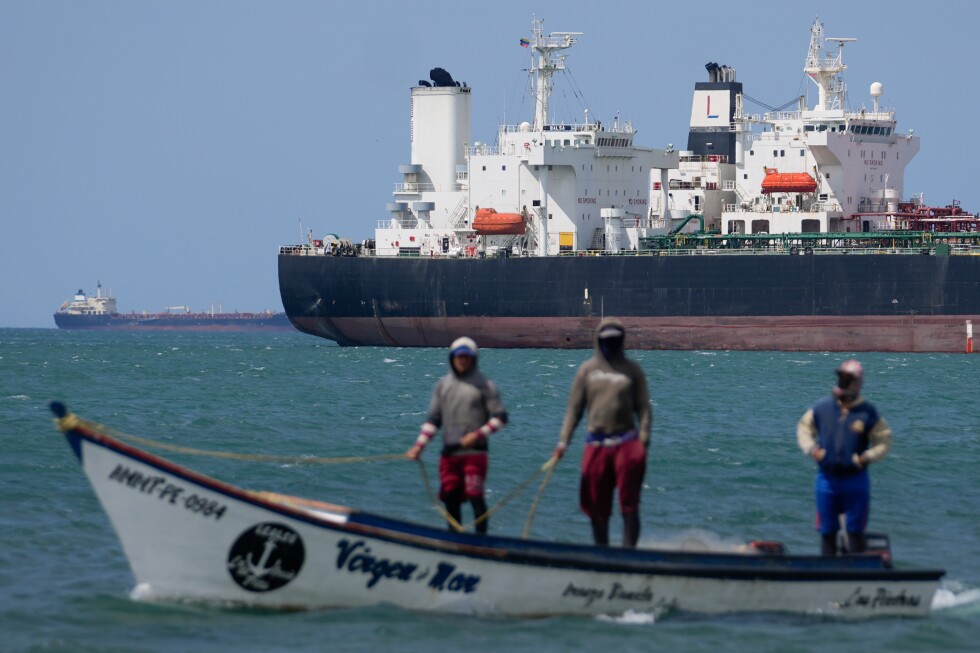
    A controversial U.S. military operation targeting drug smuggling vessels off Venezuela’s coast has triggered significant legal and political scrutiny after revelations that aircraft involved were disguised as civilian planes. The operation, which occurred last September, employed surveillance planes repainted to mimic non-military aircraft while carrying munitions within their fuselages rather than standard external mounts—a practice that appears to contradict Pentagon guidelines governing the laws of armed conflict.

    The disclosure, initially reported by The New York Times and confirmed by anonymous sources familiar with the operation, emerges amid escalating tensions between the Trump administration and Congress over military authority. The Senate is preparing to vote on a war powers resolution that would prohibit further unauthorized military action in Venezuela, following a series of strikes that resulted in numerous casualties and culminated in the capture of Venezuelan President Nicolás Maduro.

    President Trump has aggressively lobbied Republican senators to oppose the resolution, expressing particular frustration over challenges to his war powers authority. The administration has justified its actions by characterizing the campaign against drug cartels as an ‘armed conflict’ and labeling boat operators as unlawful combatants.

    Legal experts and military manuals, however, raise serious concerns about the tactics employed. The Defense Department’s extensive guidelines explicitly prohibit ‘perfidy’—the act of feigning civilian status during combat operations—warning that such practices endanger civilian populations and violate military honor codes. Pentagon press secretary Kingsley Wilson maintained that all aircraft undergo ‘rigorous procurement processes’ to ensure compliance with domestic and international laws.

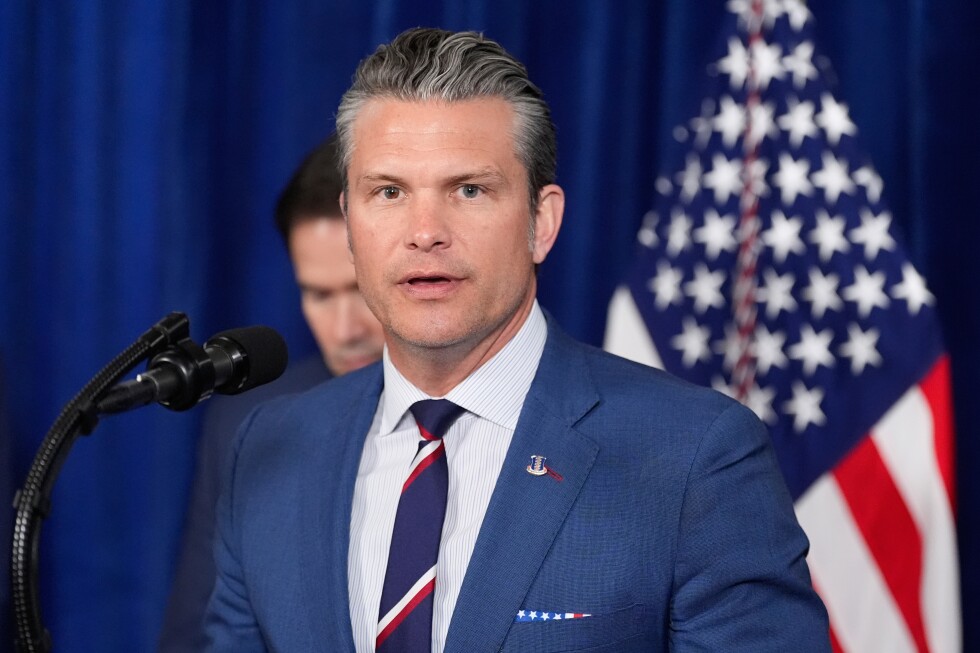
    The initial September strike, which involved the disguised aircraft, was followed by a secondary attack that killed two survivors clinging to wreckage—an action that legal experts suggest may have violated international laws of war. Defense Secretary Pete Hegseth acknowledged observing the first strike live but denied witnessing the follow-up attack.

    Congressional scrutiny intensifies as lawmakers review classified legal justifications for Maduro’s ouster. Senators from both parties have expressed skepticism about the operation’s legality and the administration’s long-term plans for Venezuela, with some arguing that legal rationales should be publicly disclosed rather than kept secret.

    The unfolding controversy highlights broader tensions between executive military authority and congressional oversight, with significant implications for future U.S. military operations and adherence to international legal standards.

  • NYC Council employee’s arrest sparks protests and a dispute over his immigration status

    NYC Council employee’s arrest sparks protests and a dispute over his immigration status

    A significant immigration controversy has erupted in New York City following the detention of Rafael Andres Rubio Bohorquez, a City Council data analyst and Venezuelan asylum-seeker, during what was described as a routine immigration check-in. The arrest occurred Monday at a U.S. Citizenship and Immigration Services office in Bethpage, Long Island, triggering widespread condemnation from city officials and protests outside Manhattan’s federal building.

    U.S. Immigration and Customs Enforcement maintains that Bohorquez had overstayed his 2017 B2 tourist visa and cited a prior assault arrest as justification for detention, stating he had ‘no legal right to be in the United States.’ However, City Council Speaker Julie Menin vehemently disputes these claims, asserting that the employee had proper work authorization until October and had cleared standard background checks that revealed no criminal record.

    The case has drawn responses from the highest levels of New York government, with Governor Kathy Hochul questioning the detention’s proportionality during her state of the state address: ‘Is this person really one of the baddest of the bad? Is this person really a threat?’

    Legal representatives from the New York Legal Assistance Group have filed a habeas corpus petition arguing unlawful detention, with a hearing scheduled for Friday. The organization’s CEO Lisa Rivera emphasized that Bohorquez ‘did everything right by appearing at a scheduled interview’ yet was detained regardless.

    The incident occurs against the backdrop of Venezuela’s ongoing political and economic crisis, which has prompted nearly 8 million citizens to flee since 2014. The case also highlights ongoing tensions between federal immigration enforcement and local governments, particularly regarding work authorization verification systems that don’t automatically update employers about status changes.

  • Hundreds more Venezuelans come forward to register relatives as ‘political prisoners’

    Hundreds more Venezuelans come forward to register relatives as ‘political prisoners’

    In a tragic turn of events, former Venezuelan police officer Edilson Torres passed away from a heart attack just days before his anticipated release from prison. The 51-year-old was buried Tuesday in his rural hometown of Guanare, surrounded by family, friends, and fellow officers who gathered to honor his memory.

    Torres had been held incommunicado since his November detention on charges his family maintains were politically motivated. His death occurred on Saturday, coinciding with the Venezuelan government’s promised prisoner releases following the U.S. capture of then-President Nicolás Maduro.

    This development has triggered a remarkable shift in Venezuela’s human rights landscape. Alfredo Romero, director of the non-governmental organization Foro Penal, reported receiving a “flood of messages” from families previously hesitant to come forward. These families are now actively registering their loved ones as political prisoners, seeing the current situation as a window of hope for freedom.

    According to Romero, approximately 300 families have contacted Foro Penal in recent days, with about 100 cases confirmed as politically motivated. Most newly reported cases involve individuals who previously worked for Venezuela’s military.

    The release process has shown mixed results. While Foro Penal confirmed 55 prisoner releases by Tuesday morning, the Venezuelan government claimed 116 releases without providing identification, making verification impossible.

    Among those successfully released are human rights attorney Rocío San Miguel (who immediately relocated to Spain), opposition leader Biagio Pilieri (part of Nobel Peace Prize winner María Corina Machado’s 2024 presidential campaign), and former electoral authority Enrique Márquez.

    Italian businessman Marco Burlò, released Monday, described his detention as a “pure and real kidnapping” during a press conference in Rome. He reported being kept completely isolated without access to legal defense or family communication throughout his imprisonment.

    The head of Venezuela’s national assembly previously stated that a “significant number” of prisoners would be released as a gesture to “seek peace,” though the tragic death of Edilson Torres underscores the human cost of delayed justice.