标签: South America

南美洲

  • Venezuela’s military buries soldiers slain in US operation to capture Maduro

    Venezuela’s military buries soldiers slain in US operation to capture Maduro

    CARACAS, Venezuela — Venezuela’s armed forces conducted a solemn state funeral ceremony on Wednesday for military personnel killed during a U.S. military operation that resulted in the capture of former President Nicolás Maduro. The emotionally charged proceedings unfolded at a public cemetery in southern Caracas, where uniformed personnel carried flag-draped caskets past formations of grieving comrades and family members.

    The atmospheric scene featured traditional military honors, with orchestral music accompanying the procession and ceremonial gunfire echoing across the burial grounds. Earlier wakes had seen distraught relatives embracing coffins containing their loved ones, their mourning observed by armed National Guard members providing security throughout the proceedings.

    According to Venezuelan military officials, at least 24 security force members perished during the nighttime U.S. operation that extracted Maduro to face narcotics charges in the United States. In a significant regional development, Cuba separately acknowledged the loss of 32 military and police advisors stationed in Venezuela, declaring two days of national mourning.

    Venezuelan Attorney General Tarek William Saab characterized the incident as a ‘war crime’ involving dozens of military and civilian casualties, promising full investigations into the circumstances surrounding the deaths. The Venezuelan military issued an official statement vowing to ‘rescue our legitimate President’ and prevent future violations of national sovereignty, emphasizing that the fallen soldiers’ sacrifice ‘reaffirms our unwavering oath’ to protect the nation.

    The geopolitical implications continue to develop as regional powers assess the extraordinary intervention and its consequences for international relations in the Western Hemisphere.

  • US to face Colombia, Argentina and Canada in 11th SheBelieves Cup

    US to face Colombia, Argentina and Canada in 11th SheBelieves Cup

    The United States Women’s National Team (USWNT) is set to compete against Canada, Argentina, and Colombia in the upcoming SheBelieves Cup tournament this March. The prestigious international friendly competition will feature a round-robin format with double-header matches across three major American cities: Nashville, Tennessee; Columbus, Ohio; and Harrison, New Jersey.

    The tournament schedule commences on March 1st at GEODIS Park in Nashville, where Canada will first confront Colombia followed by the USWNT facing Argentina. The action continues on March 4th at Columbus’s Miracle-Gro Field with Argentina versus Colombia and the highlight match between the United States and Canada. The final matches on March 7th at New Jersey’s Sports Illustrated Stadium will feature Canada against Argentina and the USWNT versus Colombia, culminating in a special ceremony honoring retired soccer star Tobin Heath, a two-time Women’s World Cup champion and New Jersey native.

    Currently ranked second globally, the USWNT will face opponents positioned at 10th (Canada), 20th (Colombia), and 30th (Argentina) in FIFA’s world rankings. US head coach Emma Hayes emphasized the tournament’s strategic importance, noting that these matches provide crucial preparation for upcoming World Cup qualifying matches and the anticipated 2027 World Cup. Canadian coach Casey Stoney similarly praised the competition as an excellent measuring stick against quality opponents, highlighting the diverse playing styles that will challenge both teams’ development.

    The United States has dominated the SheBelieves Cup historically, claiming victory in seven of the eleven tournaments held since its inception, though Japan captured last year’s title.

  • Why the US has designs on Venezuela’s oil

    Why the US has designs on Venezuela’s oil

    In a dramatic geopolitical maneuver, the United States has initiated a comprehensive strategy to reshape Venezuela’s oil industry following recent military actions. The Trump administration has outlined ambitious plans to revitalize the nation’s crippled energy sector while securing substantial oil shipments for American markets.

    Venezuela possesses the world’s largest proven oil reserves, estimated at 303 billion barrels—approximately 17% of global supply. However, decades of mismanagement, infrastructure decay, and political turmoil have reduced production to merely 1% of worldwide output. Energy experts warn that this situation represents both a critical challenge and unprecedented opportunity as global demand projections indicate potential supply shortages in the coming decades.

    The administration has selectively lifted sanctions to facilitate Venezuelan oil shipments, with proceeds directed to U.S.-controlled accounts for distribution to both American and Venezuelan populations. Initial agreements call for 30-50 million barrels of Venezuelan crude to supply U.S. refineries, particularly those on the Gulf Coast configured to process Venezuela’s heavy, sour crude variety.

    Energy analysts highlight dual objectives: reducing global energy prices through increased supply and addressing specific refinery needs for heavy crude. Kevin Book of ClearView Energy Partners notes that increased Venezuelan production could lower transportation and energy costs for consumers worldwide while improving availability of diesel and jet fuel.

    However, significant hurdles remain. Venezuela’s oil infrastructure has suffered catastrophic damage, with leaking pipelines, looted equipment, and chronic electricity shortages. The country has experienced massive brain drain as skilled workers fled economic collapse. Rystad Energy estimates require $54 billion in investment over 15 years just to maintain current production levels.

    Major oil companies approach Venezuela with caution despite potential opportunities. Exxon Mobil and ConocoPhillips remain owed billions from previous nationalizations, and industry experts question whether Venezuela can offer sufficient stability and returns compared to other global investment opportunities. Historical precedents from Iraq, Iran, and Libya suggest regime changes typically lead to prolonged production declines before recovery.

    The administration believes U.S. support could rebuild Venezuela’s oil industry within 18 months, but energy experts remain skeptical given the scale of physical, technical, and political challenges facing any potential recovery.

  • President Petro’s clash with Trump over Venezuela backs Colombia into a corner

    President Petro’s clash with Trump over Venezuela backs Colombia into a corner

    BOGOTÁ, Colombia — Colombian President Gustavo Petro has launched an unprecedented diplomatic offensive against the United States following its military operation to capture Venezuelan leader Nicolás Maduro, creating the most severe bilateral crisis in decades between the traditional allies.

    The left-wing leader condemned Washington’s actions as an “abhorrent violation of Latin American sovereignty” and drew historical parallels to Nazi Germany’s 1937 bombing of Guernica, Spain. In a dramatic escalation, Petro called for street protests to defend national sovereignty and convened emergency meetings with both the United Nations and Organization of American States.

    The confrontation places Colombia in an increasingly precarious position. As America’s staunchest regional partner for thirty years, Colombia now balances maintaining crucial security cooperation against Petro’s political imperative to challenge Washington. The country remains central to U.S. counternarcotics strategy as the world’s primary cocaine producer, with experts noting Colombia provides vital intelligence for Caribbean drug interdiction efforts.

    Michael Shifter of the Inter-American Dialogue think tank observed: “People are trying to tell Trump: ‘Look, you can punish Petro to the extent possible, but you don’t want to punish the country. That undermines the fight against drugs and is going to be harmful for the United States.’ But Trump is completely unpredictable.”

    The animosity between leaders has been brewing for months. Petro has turned back U.S. military deportation flights, criticized drug interdiction methods as “murder,” and clashed with Trump over Gaza and immigration policies. Trump has responded by revoking Petro’s visa, imposing sanctions on his administration, threatening punitive tariffs, and labeling him a “lunatic” and “international drug leader.”

    Despite the rhetoric, analysts consider actual military action against Colombia—a democratic nation unlike Venezuela—highly improbable. However, Trump’s increasing militaristic language about Latin America has caused growing alarm in Bogotá. Defense Minister Pedro Sánchez sought to reassure citizens that security cooperation continues uninterrupted, noting Washington has provided approximately $14 billion in assistance over two decades.

    Foreign Minister Rosa Villavicencio confirmed Colombia is pursuing diplomatic solutions while preparing for “the possibility of aggression against our country by the United States,” highlighting the nation’s “highly trained, very well prepared army” that has long received U.S. training.

  • Venezuela’s interim leader sacks general in charge of Maduro’s guard

    Venezuela’s interim leader sacks general in charge of Maduro’s guard

    In a significant reshuffle of Venezuela’s security apparatus, Interim President Delcy Rodríguez has dismissed General Javier Marcano Tábata from his command of the presidential honor guard. This move comes just days after U.S. forces conducted a dramatic raid in Caracas, capturing former President Nicolás Maduro and transporting him to New York to face narco-terrorism charges.

    The presidential honor guard, responsible for the head of state’s personal security, suffered substantial casualties during the operation. While official numbers remain undisclosed, Venezuelan military sources confirm 23 fatalities, including five generals. Notably, Cuba reported 32 of its nationals killed, many believed to be embedded within Maduro’s protection detail.

    Rodríguez, sworn in by the government-loyal National Assembly, faces immense pressure from Washington. President Donald Trump has demanded compliance with U.S. interests, including access to Venezuela’s vast oil reserves—the world’s largest proven stockpile. Trump explicitly threatened Rodríguez with a ‘fate worse than Maduro’s’ for non-compliance, while simultaneously claiming Venezuela would ‘turn over’ up to 50 million barrels of oil to the United States.

    The interim government’s response has oscillated between defiance and conciliation. Rodríguez condemned Maduro’s capture as an ‘illegal kidnapping’ yet extended an invitation for bilateral cooperation. Analysts suggest General Marcano Tábata’s removal relates primarily to his unit’s failure to prevent Maduro’s seizure rather than his concurrent leadership of the military counterintelligence unit (DGCIM)—an organization documented by UN investigators for systematic human rights abuses including torture and sexual violence.

    His replacement, Gustavo González López, formerly headed Venezuela’s national intelligence service (Sebin), which faces similar accusations of suppressing dissent through its control of Caracas’ notorious Helicoide prison. This suggests the dismissal represents a consolidation of trusted allies rather than a policy shift away from repression.

    With Trump acknowledging prepared secondary strikes against remaining hardliners—including Interior Minister Diosdado Cabello, who faces a $25 million U.S. bounty for alleged narco-trafficking—Rodríguez’s leadership balances domestic credibility against existential external threats. The security apparatus reorganization signals her attempt to stabilize control amid heightened vulnerability.

  • Golden Globes host Nikki Glaser struggles with Julia Roberts and Venezuela while building monologue

    Golden Globes host Nikki Glaser struggles with Julia Roberts and Venezuela while building monologue

    LOS ANGELES — As the Golden Globes ceremony approaches, comedian Nikki Glaser confronts an unexpected comedic hurdle: crafting the perfect joke about Hollywood icon Julia Roberts. The host, who earned widespread acclaim for her celebrity-roasting monologue at last year’s event, finds Roberts particularly challenging material despite her proven track record of handling A-list targets.

    “She’s been the toughest nut to crack,” Glaser acknowledged during a recent interview, expressing determination to solve the comedic puzzle before Sunday’s CBS broadcast from the Beverly Hilton. Roberts, nominated for Best Actress in a Drama for “After the Hunt,” will be seated prominently in the audience, presenting both opportunity and pressure for the host.

    The comedian revealed that test audiences have reacted unexpectedly defensively toward even mild jokes about Roberts. “People do not have a sense of humor about Julia Roberts,” Glaser observed. “She’ll be fine—other people are not fine on her behalf. The most innocent joke about her that I tried out prompted booing and jeering.”

    Glaser’s preparation involves extensive testing at Southern California comedy clubs, where she refines material through audience feedback. “I live and die by those crowds,” she explained. “They tell me what to keep and what not to. Things that I think will kill sometimes get nothing, while throwaway lines become the best jokes.”

    Among other anticipated targets are Timothée Chalamet (nominated for “Marty Supreme”), George Clooney (“Jay Kelly”), Michael B. Jordan (“Sinners”), and Leonardo DiCaprio (“One Battle After Another”). Regarding DiCaprio, Glaser teased: “Leo? We’re going to hit Leo. The icebergs are coming. Watch out.”

    The host remains adaptable to current events, recently monitoring the Venezuela situation as potential monologue material, though she notes award show audiences may not share news awareness with writers. Glaser’s approach balances affectionate teasing with sharp wit, reminiscent of last year’s successful “Wicked” joke that celebrated the film’s LGBTQ+ appeal without crossing into meanness.

  • US seeks to assert its control over Venezuelan oil with tanker seizures and sales worldwide

    US seeks to assert its control over Venezuelan oil with tanker seizures and sales worldwide

    The Trump administration has dramatically escalated its economic campaign against Venezuela by simultaneously seizing sanctioned oil tankers and announcing plans to relax certain sanctions, effectively establishing U.S. control over the distribution of Venezuelan petroleum worldwide.

    On Wednesday, U.S. authorities confirmed the seizure of two additional vessels—the Bella 1 (later renamed Marinera) in the North Atlantic and the M Sophia in the Caribbean Sea—bringing the total to at least four tankers intercepted this month. Both vessels were allegedly violating U.S. sanctions by transporting Venezuelan oil. The Bella 1 notably attempted evasion by repainting its hull with Russian flags and altering its course after the U.S. Coast Guard initiated pursuit.

    Concurrently, the Energy Department unveiled plans to selectively ease sanctions, enabling the global sale of Venezuelan oil through U.S.-approved channels. The initiative will commence immediately with 30-50 million barrels, with proceeds directed to U.S.-controlled accounts at internationally recognized banks. The administration indicated these funds would be distributed to American and Venezuelan populations at its discretion.

    Senior officials framed these actions as strategic measures to pressure the Maduro regime without military engagement. Vice President JD Vance stated, ‘We control the energy resources, and we tell the regime, you’re allowed to sell the oil so long as you serve America’s national interest.’ Secretary of State Marco Rubio suggested intercepted oil would be incorporated into bilateral agreements with Venezuela’s interim authorities.

    The moves have drawn international criticism, with Russian officials denouncing the seizures as ‘blatant piracy’ and demanding protection for Russian crew members. Maritime intelligence firms identified both vessels as part of a ‘shadow fleet’ facilitating oil smuggling for sanctioned nations including Venezuela, Russia, and Iran.

    Beyond energy controls, the administration plans to authorize equipment imports to boost Venezuela’s oil production—currently languishing at approximately 1 million barrels daily—and invest in the country’s deteriorated electricity grid to improve living conditions amid economic collapse.

  • Fear and uncertainty: Venezuelans face up to future without Maduro

    Fear and uncertainty: Venezuelans face up to future without Maduro

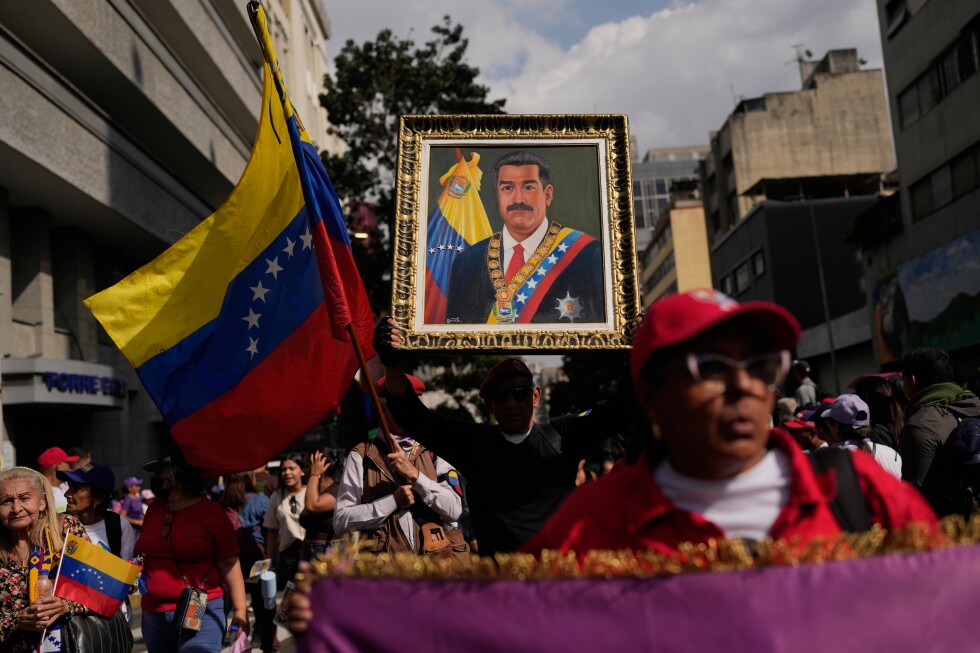
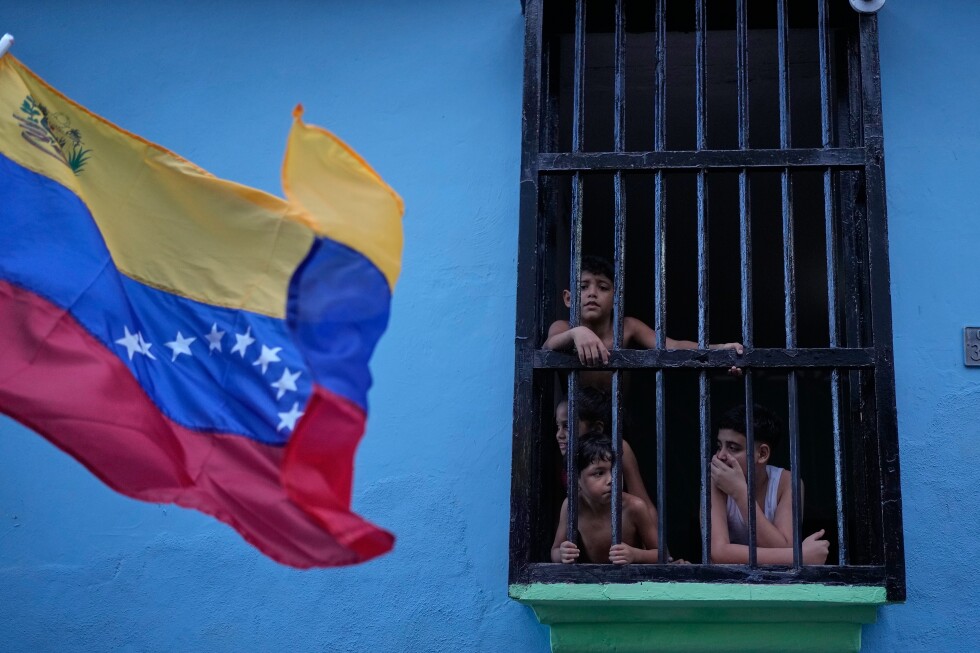
    Venezuela remains gripped by profound uncertainty following the dramatic seizure of President Nicolás Maduro by United States forces. The operation, which resulted in dozens of casualties including 32 members of Cuban security forces according to Cuban officials, has created a complex and divided national response.

    In Caracas, student Marcelo represents many Venezuelans who cautiously welcome Maduro’s capture but refrain from public celebration due to safety concerns. ‘The majority of Venezuelans are very happy for what happened,’ Marcelo told BBC, noting that Maduro’s allies remain in power despite his capture. This sentiment is echoed by an opposition activist from Maracaibo who acknowledged the tragic loss of life but expressed relief that ‘the man they took away has done a lot of harm.’

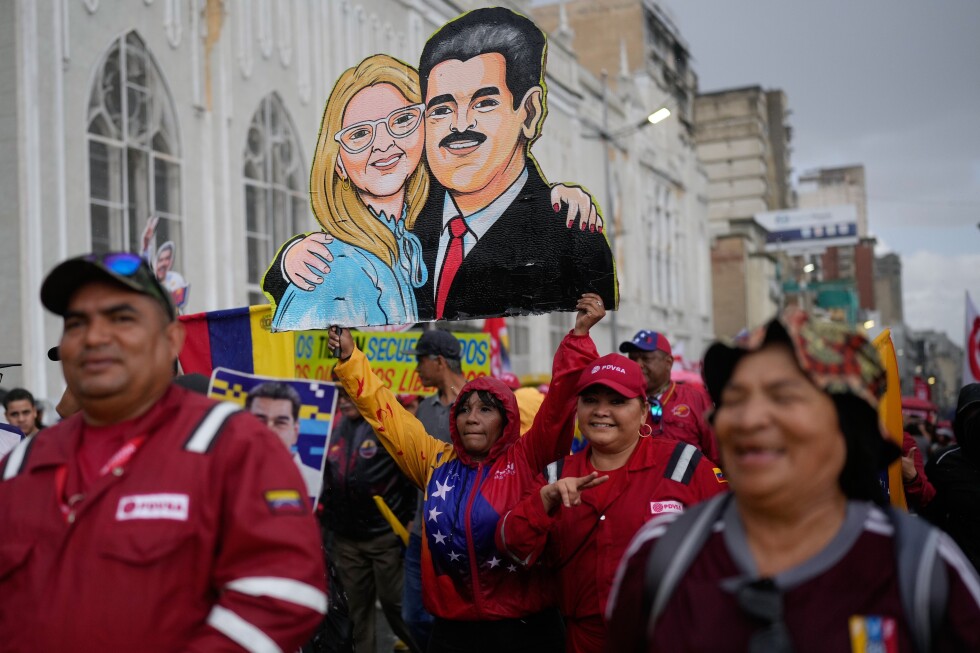
    However, substantial support for Maduro persists among segments of the population. Rosa Contreras, 57, described feeling ‘humiliated’ by the ease with which US forces captured Venezuela’s leader. She found inspiration in images of Maduro waving upon arrival in the US, interpreting it as a message to ‘stand tall and keep going.’

    The political transition has seen Vice President Delcy Rodríguez, Maduro’s closest lieutenant, assume interim power. Under her leadership, security forces have intensified street patrols and detained journalists, creating an atmosphere of apprehension. A 34-year-old entrepreneur reported military presence on every corner and armed civilian groups supporting the government, generating widespread fear among citizens.

    Economic concerns continue to plague ordinary Venezuelans, with reports of staple food prices skyrocketing—cornflour tripling in cost and bread increasing by approximately 30%. Many supermarkets now feature military guards as owners fear theft and robbery amid the instability.

    The future remains particularly uncertain as President Trump has not ruled out additional military action. Gelén Correa, a government social program worker, defiantly stated that Venezuelans would be ‘armed to the teeth’ against any further US incursions.

    Despite the dramatic change in leadership, some Venezuelans like 60-year-old José doubt meaningful change will occur, noting that ‘they took the leader out but the regime is the same.’ Millions who fled Venezuela during Maduro’s rule await signs of genuine political transformation before considering return, hoping for an end to Chavismo—the socialist movement established by Hugo Chávez.

  • US Christian leaders minister to an anxious diaspora with Venezuela’s future in flux

    US Christian leaders minister to an anxious diaspora with Venezuela’s future in flux

    Religious leaders across Venezuela and its diaspora communities are calling for prayerful reflection and reconciliation following the dramatic capture of former leader Nicolás Maduro by U.S. forces. The development has triggered complex reactions among Venezuelan communities worldwide, particularly within the United States where approximately 8 million citizens have fled since 2014.

    In South Florida, home to the nation’s largest Venezuelan expatriate community, spontaneous celebrations erupted with flag-waving demonstrations following Saturday’s military operation. However, beneath the surface celebrations lies profound uncertainty about the country’s future trajectory.

    Miami Archbishop Thomas Wenski, ministering to the significant Venezuelan population in his diocese, acknowledged the mixed emotions prevailing within communities. “People are happy because Maduro is out, but there’s still a lot of uncertainty,” Wenski stated in an interview with The Associated Press. He particularly highlighted concerns for those whose temporary protective status in the U.S. has recently been revoked, noting their anxiety about returning without genuine political transformation in Venezuela.

    The Catholic Church, which maintained tense relations with both Maduro and his predecessor Hugo Chávez, now sees an opportunity for renewed influence. Wenski emphasized the Church’s unique position as “perhaps the only institution that is independent of the government” capable of courageously addressing national issues. He referenced recent tensions exemplified by Cardinal Baltazar Porras, an outspoken government critic who had his passport confiscated by Venezuelan authorities.

    In Doral, Florida—nicknamed “Doralzuela” for its substantial Venezuelan population—Sunday services focused on prayers for peaceful transition. Reverend Israel Mago of Our Lady of Guadalupe urged congregants to pray for “a fair and peaceful transition in Venezuela, so peace and justice can reign.” Simultaneously, evangelical pastor Frank López of Jesus Worship Center expressed gratitude toward U.S. leadership while envisioning freedom spreading throughout the region.

    Similar gatherings occurred in Philadelphia, where Venezuelan communities organized special services at the Cathedral Basilica of Saints Peter and Paul. Arianne Bracho, vice president of Casa de Venezuela Philadelphia, described the emotional gathering as essential for “reaffirming our hope, our faith, to call on tranquility and calm.” Like many diaspora Venezuelans with family scattered worldwide due to prolonged crisis, Bracho acknowledged conflicted emotions about the necessary but painful transition.

    The religious response highlights how faith institutions are providing crucial emotional and spiritual anchoring during this period of geopolitical upheaval, while cautiously advocating for democratic processes and national reconciliation.

  • Trump leaves Venezuela’s opposition sidelined and Maduro’s party in power

    Trump leaves Venezuela’s opposition sidelined and Maduro’s party in power

    In an unprecedented military operation, U.S. forces have extracted Venezuelan authoritarian leader Nicolás Maduro from his Caracas residence, transporting him to New York to face drug trafficking charges. However, the anticipated democratic transition has stalled as President Donald Trump unexpectedly endorsed Maduro’s vice president, Delcy Rodríguez, to assume control rather than supporting the internationally recognized opposition.

    The development represents a devastating setback for Venezuela’s opposition movement, which had spent years preparing for Maduro’s removal with bipartisan U.S. support. Instead of installing opposition leadership, the Trump administration has chosen to work with Rodríguez, a key figure from Maduro’s repressive regime.

    Most prominent opposition leaders, including Nobel Peace Prize laureate María Corina Machado, remain either imprisoned or in exile. Machado, despite being the legitimate winner of the 2024 presidential election according to detailed tally sheets and international recognition, was barred from running by Maduro’s government and ultimately represented by proxy candidate Edmundo González Urrutia.

    Trump publicly expressed skepticism about Machado’s leadership capabilities, stating she lacks sufficient domestic support and respect. Ironically, Machado’s consistent praise for Trump—including dedicating her Nobel Prize to him and supporting aggressive U.S. policies toward Venezuelan migrants—has diminished her popularity at home.

    Constitutional uncertainties cloud Venezuela’s political future. While the constitution mandates elections within 30 days when a president becomes permanently unavailable, Maduro loyalists in the Supreme Court have declared his absence temporary, allowing Rodríguez to assume power for up to 90 days, extendable to six months with legislative approval.

    Secretary of State Marco Rubio attempted to clarify Trump’s controversial statement about the U.S. “running” Venezuela, emphasizing instead that Washington would leverage control over Venezuela’s oil industry—home to the world’s largest proven crude reserves—to force policy changes.

    The opposition now faces monumental challenges: both Machado and González remain in exile, while Rodríguez consolidates power among ruling party factions. Experts warn that bypassing the legitimate opposition movement risks damaging Venezuela’s democratic spirit and humiliating citizens who voted overwhelmingly for change.