标签: South America

南美洲

  • Venezuela says it’s releasing a ‘significant number’ of prisoners as gesture to ‘seek peace’

    Venezuela says it’s releasing a ‘significant number’ of prisoners as gesture to ‘seek peace’

    Venezuela has commenced a substantial prisoner release initiative, described by National Assembly leader Jorge Rodríguez as a governmental gesture “to seek peace.” This development occurs less than one week after former President Nicolás Maduro was apprehended by U.S. forces to confront federal drug-trafficking charges in New York.

    While Rodríguez confirmed the releases were actively underway, he provided no specific details regarding the number of detainees or their identities. The Spanish government separately confirmed the liberation of five Spanish citizens in Caracas, with embassy officials coordinating their repatriation.

    Human rights organization Penal Forum documented 863 individuals detained for “political reasons” in Venezuela as of late December 2025. Alfredo Romero, the organization’s director, characterized the releases as “good news” while emphasizing ongoing verification efforts. “We already know of some people on their way to freedom, including foreigners,” Romero stated via social media.

    The Venezuelan government maintains its longstanding position denying the existence of “political prisoners,” instead accusing detainees of conspiring to destabilize Maduro’s administration. This pattern of strategic prisoner releases has been noted by political analysts including Ronal Rodríguez of the University of Rosario in Bogotá, who observed that “the regime uses them like a bargaining chip” at politically opportune moments.

    This development coincides with heightened U.S. engagement in Venezuelan affairs. The Trump administration recently seized sanctioned oil tankers and announced plans to relax certain sanctions, enabling American oversight of Venezuela’s global petroleum sales. These actions implement President Trump’s pledge that the U.S. would “run” the country following Maduro’s capture, demonstrating Washington’s determination to leverage Venezuela’s substantial oil resources to influence the nation’s political trajectory.

  • Senate considers limiting Trump’s war powers after Venezuela raid

    Senate considers limiting Trump’s war powers after Venezuela raid

    The U.S. Senate is poised for a crucial vote on Thursday regarding a war powers resolution that would restrict President Donald Trump’s ability to initiate further military actions against Venezuela without congressional approval. This legislative move follows the controversial capture of Venezuelan President Nicolás Maduro and his wife during a surprise nighttime raid conducted by U.S. forces over the weekend.

    The resolution, championed by Senator Tim Kaine (D-Va.), represents the latest congressional effort to reassert legislative authority over military deployments after multiple previous attempts failed during Trump’s escalating campaign against the South American nation. The administration has employed evolving legal justifications for its operations across Central and South America, ranging from counter-terrorism authorizations to law enforcement operations aimed at extraditing Maduro to face trial in the United States.

    Republican leadership has largely expressed support for Trump’s actions, with Senate Majority Leader John Thune (R-S.D.) praising the president’s ‘peace through strength’ approach in the hemisphere. However, some Republican senators including Susan Collins of Maine and Thom Tillis of North Carolina indicated they were carefully considering their positions on the resolution, with Tillis emphasizing the need for congressional authorization before committing troops to Venezuela.

    The debate occurs against the backdrop of the rarely enforced War Powers Act, passed over President Nixon’s veto following the Vietnam War. This legislation requires presidents to notify Congress within 48 hours of military deployments and obtain authorization for sustained operations—provisions that multiple administrations have routinely stretched.

    Democratic leaders have characterized Trump’s foreign interventions as distractions from domestic issues, with Senate Democratic leader Chuck Schumer questioning why a president who campaigned on ‘America First’ was dedicating substantial energy to overseas escapades. The discussion has expanded beyond Venezuela to include potential actions against Greenland, with Senator Lindsey Graham (R-S.C.) asserting the commander-in-chief’s unilateral authority while other Republicans criticized such proposals as ‘amateurish’ and ‘absurd.’

    Progressive Democrats are preparing additional resolutions to prevent military action against multiple countries, signaling an ongoing constitutional confrontation between the legislative and executive branches regarding war powers.

  • US involvement in Venezuela could last years, Trump says

    US involvement in Venezuela could last years, Trump says

    President Donald Trump has indicated that American involvement in Venezuela may extend for an indefinite period following the dramatic capture of Venezuelan leader Nicolás Maduro. In an exclusive interview with The New York Times, Trump stated that “only time will tell” how long his administration would oversee the South American nation’s governance.

    The development comes after US forces conducted a raid on Saturday that resulted in Maduro’s seizure. Trump declined to specify whether or when elections would be conducted to replace the interim government currently led by Maduro loyalist Delcy Rodríguez.

    Meanwhile, Venezuelan opposition leader María Corina Machado characterized Maduro’s ouster as triggering an “irreversible process” toward Venezuelan freedom. This contrast highlights the complex political landscape unfolding in the oil-rich nation.

    The White House announced earlier Wednesday that the United States would control sales of sanctioned Venezuelan oil “indefinitely.” Energy Secretary Chris Wright justified this measure as necessary leverage over Caracas’ interim government. Trump acknowledged that while his administration would be “taking oil” from Venezuela—home to the world’s largest proven reserves—restoring the country’s crippled oil industry would “take a while.”

    Venezuela’s oil production has dramatically declined due to years of mismanagement under Maduro and his predecessor, compounded by extensive US sanctions.

    Trump revealed that Secretary of State Marco Rubio maintains “constant communication” with Rodríguez, who was designated as Venezuela’s interim leader by the Supreme Court—still dominated by Maduro loyalists. According to Trump, Rodríguez is “giving us everything that we feel is necessary.” The US president previously stated that the interim government had agreed to use oil proceeds exclusively for purchasing American-made goods.

    Notably, Trump dismissed opposition leader Machado’s potential leadership, claiming she lacked necessary “respect” and support. This contradicts expectations among Venezuela analysts who anticipated the rapid return of opposition leaders Edmundo González and Machado following Maduro’s removal.

    Machado, who united opposition groups before being barred from the 2024 presidential election, subsequently supported former diplomat González as her proxy. Independently verified voting tallies suggest González won by a landslide, though the government-loyal electoral council declared Maduro re-elected. Both opposition leaders faced government repression, with González going into exile and Machado hiding within Venezuela before her perilous journey to Oslo to accept the Nobel Peace Prize.

    In an interview with Venezuelan opposition news site La Patilla, Machado insisted that González remains the legitimate president-elect and demanded release of over 800 political prisoners—a demand echoed by Republican lawmaker María Elvira Salazar.

    According to NYT journalists, Trump appeared more focused on the rescue mission than navigating Venezuela’s complex political future. When pressed on US plans, he stated: “We will rebuild it in a very profitable way… We’re going to be using oil, and we’re going to be taking oil. We’re getting oil prices down, and we’re going to be giving money to Venezuela, which they desperately need.”

    The president is scheduled to meet with representatives from three major US oil companies at the White House on Friday to further discuss these plans.

  • French farmers force their way through Paris with tractors to protest free trade deal

    French farmers force their way through Paris with tractors to protest free trade deal

    PARIS — In a dramatic display of agricultural dissent, approximately one hundred tractors converged upon the French capital on Thursday as farmers launched a major protest against the European Union’s proposed free trade agreement with Mercosur nations. The demonstration, organized by the Rural Coordination union, saw farmers defy government bans by positioning agricultural vehicles at iconic locations including the Arc de Triomphe and Eiffel Tower neighborhoods.

    The protest targets the EU’s renewed negotiations with five South American countries—Brazil, Argentina, Uruguay, Paraguay, and Bolivia—amid speculation that a deal could be finalized during a January 12 meeting in Paraguay. French agricultural representatives argue the agreement would devastate local farming sectors by exposing them to unfair competition from countries with less stringent production standards.

    José Perez, president of the Rural Coordination in southwestern France’s Lot-et-Garonne region, stated the mobilization aimed to bring farmers’ concerns directly to policymakers. ‘The goal today is to come to Paris to express our demands closer to those who have the power,’ Perez told The Associated Press, describing the tractor procession as ‘a strong symbol’ of agricultural discontent.

    Despite government efforts to restrict tractor access to central Paris, protestors managed to bypass security barriers, though most vehicles were ultimately contained at major traffic arteries marking the city’s perimeter. The French Interior Ministry confirmed approximately 20 tractors reached central Paris despite an official prohibition.

    The demonstration combines longstanding opposition to the Mercosur agreement with recent frustrations over government sanitary measures addressing bovine disease outbreaks. French Agriculture Minister Annie Genevard reiterated the nation’s firm opposition to the trade deal on Wednesday, warning it threatens numerous agricultural sectors including beef, chicken, sugar, ethanol, and honey production.

    While Germany leads supporter nations pushing for the agreement’s adoption, France and Poland remain its most vocal opponents within the EU. Previous French opposition successfully stalled the agreement last month, though renewed negotiations have intensified concerns among farming communities about the deal’s potential implementation.

  • Asian shares are mixed after Wall Street’s strong start to the year cools

    Asian shares are mixed after Wall Street’s strong start to the year cools

    Asian financial markets presented a fragmented performance on Thursday, reflecting a cooling momentum from Wall Street’s robust year-opening rally. Investor sentiment across the region displayed notable divergence as markets digested multiple economic and political developments.

    Japan’s Nikkei 225 index declined 1% to 51,660.50 during early trading sessions, with technology equities leading the downward trend. Conversely, South Korea’s Kospi gained 0.6% to reach 4,576.95, maintaining proximity to its recent record highs. Hong Kong’s Hang Seng benchmark dropped 1.2% to 26,136.49, despite Chinese AI firm Zhipu—a recognized competitor to OpenAI—commencing trading with an encouraging 3.3% surge during its market debut.

    Mainland China’s Shanghai Composite index edged upward by nearly 0.1% to 4,089.45, while Australia’s S&P/ASX 200 advanced 0.2% to 8,712.90. Taiwan’s Taiex similarly recorded a 0.2% gain, demonstrating regional variability in market responses.

    The cooling pattern originated from Wall Street, where Wednesday’s trading saw the S&P 500 retreat 0.3% from its historic peak to 6,920.93. The Dow Jones Industrial Average experienced a more pronounced decline of 0.9% to 48,996.08, though the Nasdaq Composite managed a modest 0.2% gain to 23,584.27.

    Market analysts identified multiple contributing factors to the shift, including former President Donald Trump’s social media statement regarding potential restrictions on institutional investors purchasing single-family homes. This announcement triggered significant declines in homebuilder stocks, with D.R. Horton dropping 3.6% and PulteGroup falling 3.2%.

    Concurrently, energy markets witnessed upward movement as U.S. crude benchmark prices increased 0.2% to $56.22 per barrel, while Brent crude rose 0.3% to $60.22. This movement followed geopolitical developments involving Venezuela’s oil exports and administrative changes within the country’s leadership.

    Bond markets exhibited volatility as U.S. Treasury yields fluctuated amid contradictory economic indicators. The 10-year Treasury yield decreased to 4.14% from 4.18%, while the two-year yield remained stable at 3.46%. Economic reports revealed stronger-than-anticipated service sector growth in December alongside mixed employment data, with businesses reporting fewer November job openings but adding 41,000 positions in December.

    Currency markets saw minimal changes, with the dollar slightly declining against the yen to 156.66 from 156.77, while the euro strengthened modestly against the dollar to $1.1683 from $1.1677. Market participants now await the U.S. Labor Department’s comprehensive December employment report, scheduled for release on Friday, for further directional signals.

  • Analysis: Why Trump chose Delcy, not Machado

    Analysis: Why Trump chose Delcy, not Machado

    In a strategic pivot that has stunned regional analysts, the United States has endorsed Delcy Rodríguez as Venezuela’s interim president following the dramatic ouster of Nicolás Maduro. The decision represents a calculated departure from supporting opposition leader María Corina Machado, whose movement secured an electoral mandate in 2024 but was deemed potentially destabilizing by U.S. intelligence assessments.

    Rodríguez, a former vice president and daughter of a Marxist guerrilla, embodies continuity from the Chavista regime rather than its dissolution. Her appointment preserves key power structures including military leadership under Defense Minister Vladimir Padrino Lopez and hardline interior minister Diosdado Cabello—both Maduro loyalists who retain control over security apparatuses.

    The Trump administration’s rationale, explained by former U.S. Ambassador Charles Shapiro, prioritizes ‘stability over democracy.’ Classified intelligence reports warned that installing Machado risked triggering violent chaos, including potential guerrilla warfare from disaffected regime elements. Instead, Washington bets Rodríguez can deliver economic liberalization while maintaining order.

    Critical challenges await: revitalizing Venezuela’s crippled oil industry requires tens of billions in foreign investment unlikely without legitimate governance. While Rodríguez may cooperate on narcotics control and scale back ties with Russia and China, genuine democratic transition remains distant. Secretary of State Marco Rubio outlined a three-phase plan emphasizing stabilization and oil sales before reconciliation—with elections conspicuously absent from immediate priorities.

    President Trump’s dismissal of Nobel laureate Machado as ‘not respected’ and embrace of Rodríguez’s ‘gracious’ leadership signals a pragmatic, if morally ambiguous, realpolitik approach. As analyst Phil Gunson notes, ‘Trump may be getting something out of this, but ordinary Venezuelans are getting screwed as usual.’

  • Trump to meet Colombian president at White House in ‘near future’

    Trump to meet Colombian president at White House in ‘near future’

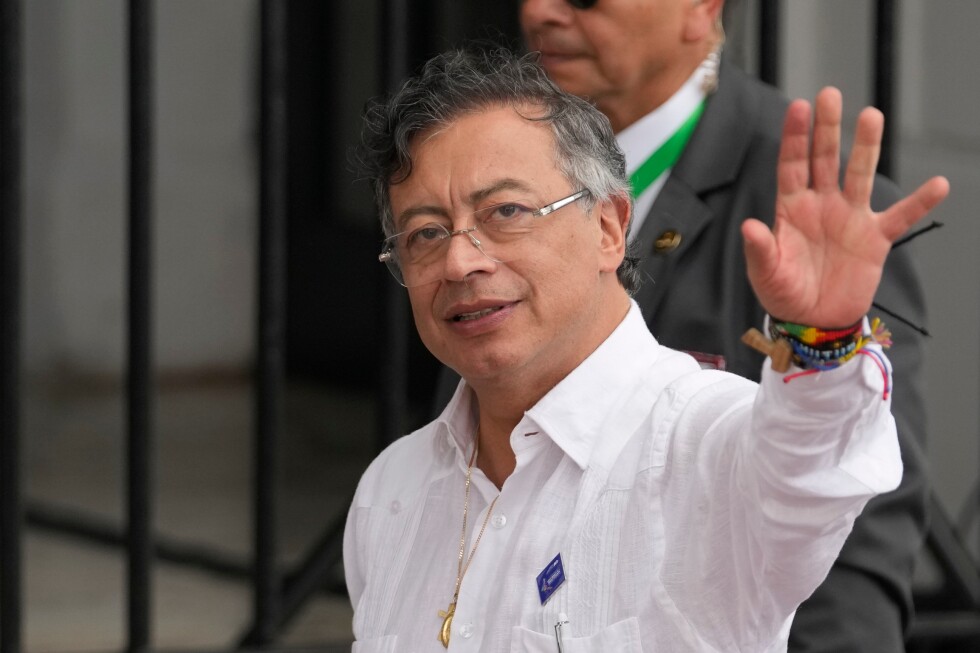
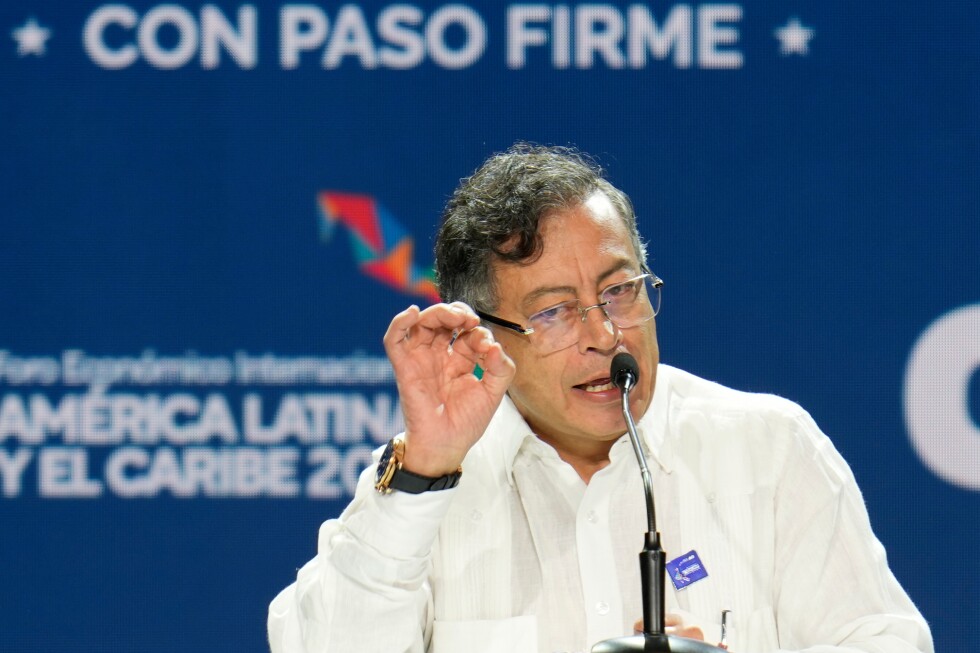
    In a dramatic escalation of diplomatic tensions, U.S. President Donald Trump has announced plans to host Colombian President Gustavo Petro at the White House following a contentious phone conversation marked by mutual threats and accusations. The development comes amid heightened regional instability following a U.S. military operation in Venezuela that resulted in the capture of President Nicolás Maduro and significant casualties.

    Trump’s characterization of the Colombian leader as ‘a sick man who likes making cocaine and selling it to the United States’ during remarks aboard Air Force One stands in stark contrast to his subsequent description of their conversation as a ‘Great Honor’ on his Truth Social platform. This diplomatic whiplash underscores the volatile nature of U.S.-Colombian relations under both administrations.

    The backdrop to this diplomatic confrontation includes Saturday night’s raid on Caracas, which Venezuelan officials claim resulted in over 100 fatalities—substantially higher than initial reports of 55 casualties among Venezuelan and Cuban soldiers. Venezuelan Interior Minister Diosdado Cabello confirmed the revised death toll on Wednesday, while interim president Delcy Rodríguez condemned the operation as an unprecedented ‘stain on our relations.’

    Central to the dispute is the ongoing drug trade conflict. The U.S. Treasury Department imposed sanctions on Petro’s administration in October 2026, alleging catastrophic failures in curbing cocaine production that has ‘exploded to the highest rate in decades.’ Treasury Secretary Scott Bessent asserted that Colombian cartels are ‘flourishing’ under Petro’s leadership, flooding American markets with narcotics.

    Petro vehemently countered these allegations, emphasizing his decades-long anti-trafficking efforts and claiming successful containment of coca crop expansion. The Colombian leader issued a stark warning via social media platform X, threatening that his nation would ‘take up arms’ against any U.S. military action, metaphorically invoking the ‘people’s jaguar’ being unleashed if Maduro remains detained.

    Beyond narcotics, energy resources loom large in the geopolitical standoff. Both Colombia and Venezuela possess substantial oil reserves, with the U.S. announcing indefinite control over Venezuelan oil sales while preparing to roll back global market restrictions. Rodríguez notably left the door open for beneficial energy relations despite condemning Maduro’s capture.

    The scheduled White House meeting, to be arranged by Secretary of State Marco Rubio and Colombian counterparts, represents a potential diplomatic off-ramp amid escalating threats and accusations. However, Trump’s earlier warning for Petro to ‘watch his ass’ suggests the relationship remains precariously balanced between confrontation and negotiation.

  • Trump invites Colombian president to White House days after threatening it with military strike

    Trump invites Colombian president to White House days after threatening it with military strike

    In a striking diplomatic reversal, former President Donald Trump has publicly lauded Colombian leader Gustavo Petro following a previously contentious relationship. The abrupt shift occurred Wednesday evening when Trump announced via his social media platform that the two heads of state had engaged in a productive telephone conversation regarding bilateral concerns.

    Trump characterized the exchange as ‘a Great Honor,’ revealing that President Petro initiated the call to address ongoing disputes, particularly surrounding narcotics trafficking and other contentious issues between the nations. The former president notably commended his counterpart’s diplomatic approach, stating he ‘appreciated his call and tone’ during their discussion.

    This conciliatory gesture marks a dramatic departure from Trump’s rhetoric earlier this week, when he asserted Colombia was ‘very sick’ under Petro’s leadership and made unsubstantiated allegations regarding the president’s personal involvement in cocaine distribution to American markets. Those remarks came in response to U.S. military operations in neighboring Venezuela, with Trump suggesting potential intervention in Colombia might be warranted.

    The newly announced White House invitation signals potential normalization of relations between the conservative former president and Colombia’s first leftist leader. Both parties have expressed anticipation for the forthcoming meeting, though specific dates remain unconfirmed at this time.

  • US seizes two ‘shadow fleet’ tankers linked to Venezuelan oil

    US seizes two ‘shadow fleet’ tankers linked to Venezuelan oil

    In a significant escalation of sanctions enforcement, United States military forces have executed dual maritime interdictions targeting tankers associated with Venezuelan oil exports. The operations, conducted in both the North Atlantic and Caribbean Sea, represent the latest development in Washington’s campaign to restrict Caracas’s petroleum revenue streams.

    The Russian-flagged vessel Marinera was apprehended following an extensive two-week pursuit through waters between Iceland and Scotland. US personnel boarded the tanker with logistical support provided by the UK Royal Navy through aerial and naval assets. Concurrently, American forces seized the M/T Sophia in Caribbean international waters, alleging the vessel was engaged in ‘illicit activities.’

    These seizures occur amidst heightened tensions following the recent detention of Venezuelan President Nicolás Maduro by US special forces. Defense Secretary Pete Hegseth publicly affirmed that the ‘blockade of sanctioned Venezuelan oil remains in FULL EFFECT’ globally via social media.

    Moscow has formally protested the seizure of the Marinera, despite the vessel having received only ‘temporary permission’ to fly the Russian flag according to transport ministry officials. The Russian government demanded proper treatment of crew members and their prompt repatriation. Initial reports suggesting Russian submarine deployment to safeguard the tanker proved unsubstantiated as US forces encountered no resistance during boarding.

    The White House designated the intercepted vessel as ‘stateless’ due to alleged false flag representation, operating as part of Venezuela’s ‘shadow fleet’ with an existing judicial order against it.

    Secretary of State Marco Rubio revealed Venezuela’s cooperation regarding the Caribbean seizure, stating Venezuelan authorities recognize that ‘the only way they can move oil and generate revenue’ without economic collapse is through cooperation with the United States. This development follows President Donald Trump’s announcement that Venezuela would transfer up to 50 million barrels of oil valued at approximately $2.8 billion to US control.

    Rubio elaborated that confiscated petroleum would be sold at market rates, with proceeds managed to ‘benefit the Venezuelan people.’ The administration outlined a three-phase plan for Venezuela involving stabilization, recovery, and transition.

    Congressional response remains divided, with Senate Majority Leader Chuck Schumer demanding clarification regarding troop commitments and operational costs. The Senate prepares to vote on a bipartisan war powers resolution seeking to constrain military engagement in Venezuela without legislative approval.

    China, Venezuela’s primary oil customer in recent years, condemned US actions as threatening global energy security.

    US European Command confirmed the Marinera (previously named Bella 1) was boarded for ‘violations of US sanctions’ pursuant to a federal warrant. Britain’s Ministry of Defence characterized their participation as ‘in full compliance with international law’ supporting global sanctions enforcement.

    Maritime experts clarified that the vessel’s identity confusion stemmed from regulations prohibiting flag changes during voyages without legitimate ownership transfer. Under UN maritime law, stateless vessels remain subject to interdiction.

    US Southern Command separately announced the apprehension of the ‘stateless, sanctioned dark fleet’ tanker M/T Sophia, now being escorted to the United States for disposition. Homeland Security Secretary Kristi Noem described the coordinated pre-dawn operations targeting ‘ghost fleet’ vessels with recent Venezuelan port connections.

  • Trump proposes massive increase in 2027 defense spending to $1.5T, citing ‘dangerous times’

    Trump proposes massive increase in 2027 defense spending to $1.5T, citing ‘dangerous times’

    WASHINGTON — In a significant policy announcement, President Donald Trump has unveiled an ambitious proposal to escalate United States military expenditure to an unprecedented $1.5 trillion by 2027. The declaration, made via his Truth Social platform on Wednesday, frames this monumental budget surge as an essential response to contemporary global threats that characterize what he termed “troubled and dangerous times.”

    The proposal arrives amidst a series of assertive geopolitical maneuvers by the Trump administration. These include a recent military operation aimed at apprehending Venezuelan leader Nicolás Maduro to face drug trafficking charges in the U.S., which has resulted in a continued massing of American forces in the Caribbean Sea. Furthermore, the President has expressed strategic interest in acquiring Greenland from Denmark for national security purposes and has hinted at potential military engagements in Colombia. Echoing this hardened stance, Secretary of State Marco Rubio issued a stark warning concerning Cuba, indicating a period of intensified foreign policy pressure.

    President Trump justified the colossal funding increase, a significant jump from the 2026 budget of $901 billion, by stating it would enable the construction of a ‘Dream Military’ to ensure national safety and security. He attributed the financial feasibility of this plan to heightened revenue streams generated by his administration’s widespread tariff policies imposed on both allied and adversarial nations since his return to office.

    Concurrently, the administration has adopted a confrontational posture toward the defense industry. President Trump explicitly threatened to sever Pentagon contracts with major defense contractor Raytheon unless it ceases its stock buyback programs and redirects profits toward expanding its weapons manufacturing infrastructure. This ultimatum, delivered on social media, criticized defense firms for perceived delays in critical weapons deliveries while simultaneously rewarding investors and executives with substantial dividends and salaries.

    The financial markets reacted promptly to this aggressive rhetoric, with shares of leading defense contractors like Northrop Grumman, Lockheed Martin, and RTX Corp. (Raytheon’s parent company) experiencing notable declines. This series of announcements signals a profound shift in U.S. defense strategy, prioritizing massive budgetary expansion and demanding greater industrial capacity from private sector partners.