标签: South America

南美洲

  • Trump accused of distorting history of Mexican-American War to justify heavy hand in Latin America

    Trump accused of distorting history of Mexican-American War to justify heavy hand in Latin America

    The Trump administration has ignited a firestorm of criticism from historians and political observers for its controversial commemoration of the Mexican-American War, which experts characterize as a deliberate attempt to reshape historical narrative to justify current foreign policy approaches toward Latin America.

    In an unsigned statement released Monday, the White House portrayed the 1846-1848 conflict as a “legendary victory that secured the American Southwest, reasserted American sovereignty, and expanded the promise of American independence.” The administration drew direct parallels between this historical period and its contemporary policies, asserting that its aggressive stance toward Latin America would “ensure the Hemisphere remains safe.”

    Historical scholars quickly identified multiple inaccuracies and omissions in the statement. Notably absent was any acknowledgment of slavery’s central role in provoking the conflict, nor mention of the devastating consequences for Native American populations displaced during the Manifest Destiny era. The statement instead glorified the territorial expansion while framing current border policies as continuations of this historical legacy.

    Alexander Aviña, a Latin American history professor at Arizona State University, condemned the revisionism: “U.S. political leaders have traditionally viewed this as an ugly aspect of U.S. history—a clear instance of imperialism against its southern neighbor. The Trump administration is embracing it as positive and framing it inaccurately as defensive measures.”

    The controversy gained diplomatic dimensions when Mexican President Claudia Sheinbaum responded with sarcastic disbelief during her news briefing, emphasizing the need to “defend sovereignty.” This response reflects the ongoing tension between the two nations as the Trump administration has increasingly intervened in Latin American affairs, including attempts to depose Venezuela’s president, alleged election meddling, and threatened military action in Mexico.

    The original conflict itself emerged from border disputes following the U.S. annexation of Texas in 1845, resulting in Mexico ceding over 525,000 square miles of territory. Former President Ulysses S. Grant later described the war as “one of the most unjust ever waged by a stronger against a weaker nation.”

    Stanford University history professor Albert Camarillo characterized the White House statement as part of a broader pattern of historical revisionism, noting similar efforts to alter Smithsonian exhibits and scrub government websites of uncomfortable historical facts, including references to slavery, Native American cultural destruction, and climate change.

    This incident represents the latest confrontation in the ongoing cultural battle over historical interpretation, with critics accusing the administration of attempting to “whitewash and reframe U.S. history while erasing generations of historical scholarship.”

  • Colombian and Ecuadorian merchants and truckers protest escalating trade war between both nations

    Colombian and Ecuadorian merchants and truckers protest escalating trade war between both nations

    Truckers and merchants from Colombia and Ecuador converged at their shared border on Tuesday, voicing strong opposition to the escalating trade conflict between the two South American nations. The demonstrators demanded the immediate removal of recently imposed 30% tariffs on numerous goods, warning these measures would severely damage border economies and impact energy sectors on both sides.

    Carlos Bastidas, president of an Ecuadorian transportation workers association, articulated the protesters’ concerns, stating that tariffs ‘generate crises, they don’t help the economy.’ He emphasized their hope that both governments would eliminate these measures and establish effective dialogue mechanisms.

    The trade dispute originated when Ecuadorian President Daniel Noboa, a conservative leader who has sought closer ties with the Trump administration, implemented tariffs last month on Colombian products. Noboa characterized these levies as a ‘security tax,’ claiming Colombia had failed to adequately combat cocaine trafficking across their border. He announced via social media platform X that the tariffs would remain until Colombia took ‘firm actions’ against drug cartels.

    Colombia responded with reciprocal 30% tariffs on Ecuadorian goods including rice and automotive parts, and additionally threatened to cease electricity exports to its neighbor. This energy threat carries significant weight as Ecuador depends heavily on hydroelectric power and experienced serious power shortages in 2024. These reciprocal trade measures took effect on February 1.

    Despite sharing a border, neither nation ranks as the other’s primary trading partner, with both producing similar export commodities including coffee, flowers, bananas, and oil. According to Colombia’s statistics agency, bilateral trade reached approximately $2.3 billion last year, with Colombia exporting about $1.7 billion worth of goods to its smaller neighbor.

    The economic impact is particularly acute in border regions. Edison Mena, president of a Colombian truckers association in the border city of Ipiales, revealed that 38% of his city’s economy depends on commerce with Ecuador.

    Critics of President Noboa suggest the trade war serves as a diversion from his government’s domestic challenges. The tariff announcement coincided with the publication of crime statistics showing Ecuador’s homicide rate reached 50 murders per 100,000 residents in 2025—the highest in the nation’s recent history. Since 2020, Ecuador’s homicide rate has quintupled as international drug gangs battle for control of the country’s ports, transforming the once peaceful nation into a major cocaine transit point.

  • BBC joins Colombian commandos fighting ‘never-ending battle’ against drug gangs

    BBC joins Colombian commandos fighting ‘never-ending battle’ against drug gangs

    Deep within the sweltering Colombian Amazon, Black Hawk helicopters slice through the oppressive humidity carrying elite Jungle Commandos on their daily mission. This specially trained police unit, originally established with British SAS expertise in 1989 and equipped with American weaponry, represents Colombia’s frontline defense against an ever-evolving narcotics industry that supplies approximately 70% of the world’s cocaine.

    The operational tempo remains relentless. Multiple times daily, weather permitting, these commandos descend into jungle clearings to discover and destroy makeshift cocaine laboratories. Recent United Nations data reveals coca cultivation now covers an area nearly double the size of Greater London and quadruple that of New York City, indicating the staggering scale of the challenge.

    During one recent mission documented by the BBC, commandos discovered a rudimentary processing facility partially concealed by banana trees. The site contained essential production components: chemical drums and fresh coca leaves awaiting transformation into paste. While workers fled into the jungle, no arrests were made—reflecting Colombia’s current strategy of targeting narcotics kingpins rather than impoverished farmers.

    The political context adds complexity to these operations. U.S. President Donald Trump has publicly criticized Colombian President Gustavo Petro’s administration, suggesting insufficient action against drug trafficking and even hinting at military intervention. President Petro counters that his government has achieved historic drug seizures while questioning UN methodology that shows cocaine production reaching record highs under his leadership.

    Major Cristhian Cedano Díaz, a 16-year veteran of this struggle, acknowledges the frustrating reality that destroyed labs can be rebuilt within days, sometimes mere meters from original locations. Yet he maintains that persistent operations impact criminal profitability by continuously eliminating crops and chemical precursors.

    The human dimension emerges most poignantly through farmers like ‘Javier’ (a pseudonym), who cultivates coca in the mountainous Catatumbo region bordering Venezuela. For Javier, growing the controversial plant represents survival rather than choice—the only means to support his five daughters in an area dominated by guerrilla groups including the ELN and FARC dissidents.

    ‘If you want to survive, you have to,’ Javier explains, acknowledging the moral dilemma while emphasizing the absence of alternatives. His makeshift laboratory processes paste when materials are available, though recent turf wars among armed groups have disrupted local markets.

    Both Major Díaz and farmer Javier, separated by only two years in age but worlds apart in circumstance, share hope that their children might inherit a Colombia transformed—where economic opportunity replaces the desperate calculus that fuels the global cocaine trade.

  • BBC on the front line with Colombia’s war on drugs

    BBC on the front line with Colombia’s war on drugs

    A BBC news team has been granted unprecedented access to Colombia’s intensified campaign against narcotics production, venturing into the country’s remote jungle regions where cocaine manufacturing thrives. Senior international correspondent Orla Guerin embedded with an elite counter-narcotics unit during a hazardous aerial mission over the cocaine production heartland.

    The operation focused on locating and demolishing clandestine cocaine laboratories strategically concealed within dense tropical forests. These rudimentary facilities represent the critical first stage in the global cocaine supply chain, where raw coca leaves undergo chemical processing into export-grade narcotics.

    Colombian authorities deployed specialized aircraft and tactical teams to identify these hidden installations despite sophisticated camouflage techniques employed by drug cartels. The mission involved precise aerial surveillance followed by targeted strikes to dismantle production infrastructure, significantly disrupting manufacturing capabilities.

    This frontline reporting reveals the ongoing challenges in combating drug trafficking organizations that continuously adapt their methods and relocate operations to evade detection. The Colombian government’s renewed offensive demonstrates the complex interplay between law enforcement strategies, geographical constraints, and the evolving tactics of narcotics producers seeking to maintain supply routes to international markets.

  • Bus carrying pilgrims overturns in Brazil killing 15 on board

    Bus carrying pilgrims overturns in Brazil killing 15 on board

    A tragic bus accident in northeastern Brazil has resulted in the deaths of at least fifteen individuals, including three children, following the overturning of a pilgrimage vehicle on Tuesday morning. The incident occurred on a curved highway segment in São José da Tapera, within Alagoas state’s rural interior.

    Official reports indicate the bus was transporting approximately 60 passengers returning from the Our Lady of Candeiras religious festival in Ceará state. The vehicle was part of a larger convoy traveling from Coité do Noia to Juazeiro do Norte—a 563-kilometer (350-mile) journey typically lasting eight hours. The accident happened during the final leg of the return trip.

    Eyewitness footage circulating on social media depicts the overturned bus lying on its side amidst scattered debris, with emergency response teams actively working at the scene. Preliminary investigations suggest the driver lost control before the vehicle departed the roadway and rolled multiple times.

    Surviving passengers were evacuated via airlift to medical facilities, with a nine-year-old child suffering head injuries reported as the most critically injured patient. Local authorities have confirmed the demographic breakdown of fatalities: three children, seven women, and five men.

    Coité do Noia Mayor Bueno Higino Filho expressed profound grief, stating: ‘The loss is immense. They were all my friends… I woke today to this devastating news and am en route to the accident site to coordinate assistance.’

    In response to the tragedy, Alagoas State Governor Paulo Dantas declared three official days of mourning, posting on social media: ‘I stand in solidarity with family members and friends during this moment of profound sorrow.’ A formal investigation into the accident’s circumstances remains ongoing.

  • Trump to host Colombia’s Petro just weeks after insulting him as a ‘sick man’ fueling drug trade

    Trump to host Colombia’s Petro just weeks after insulting him as a ‘sick man’ fueling drug trade

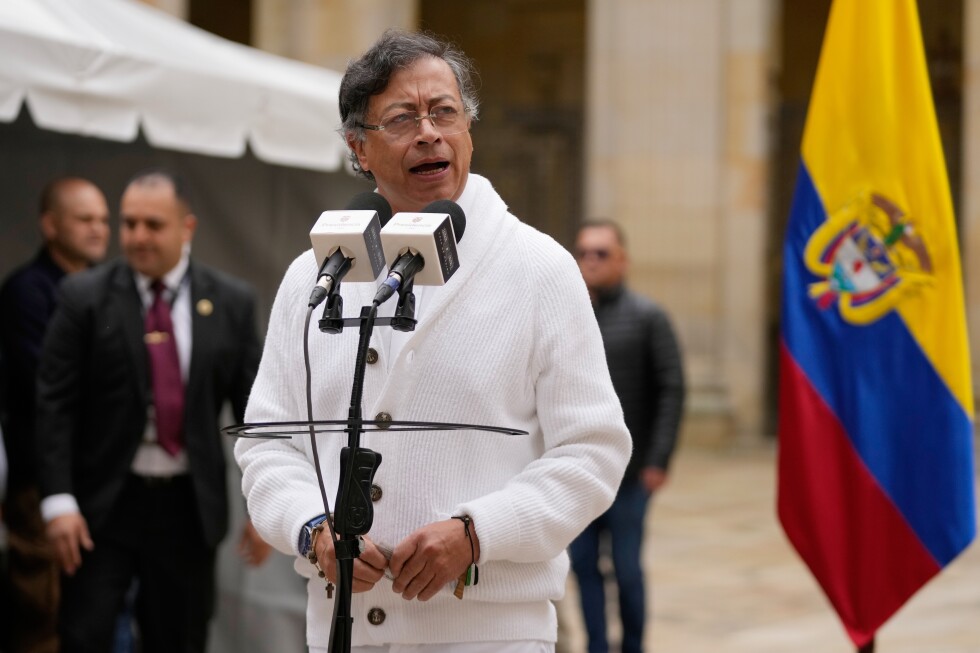
    In a remarkable diplomatic pivot, President Donald Trump is preparing to welcome Colombian President Gustavo Petro to the White House on Tuesday, mere weeks after threatening military action against the South American nation and personally accusing its leader of facilitating cocaine trafficking into the United States.

    Administration officials indicate the agenda will center on enhanced regional security collaboration and joint counternarcotics initiatives. Trump himself noted a significant shift in Petro’s demeanor following last month’s controversial operation targeting Venezuela’s Nicolás Maduro, suggesting the Colombian leader has adopted a more cooperative stance regarding drug interdiction efforts.

    The upcoming meeting represents a study in ideological contrasts between the conservative U.S. president and his leftist Colombian counterpart. Despite their political divergence, both leaders share a propensity for rhetorical volatility and unpredictable governance, creating an atmosphere of considerable uncertainty surrounding the diplomatic engagement.

    This encounter occurs against a backdrop of recently intensified friction. Just days ago, Petro characterized Trump as an “accomplice to genocide” in Gaza and condemned the Maduro operation as an unlawful kidnapping. Simultaneously, he encouraged public demonstrations in Bogotá during his Washington visit.

    The relationship between these nations has undergone substantial transformation. Historically a steadfast U.S. ally, Colombia found itself subjected to unprecedented sanctions under the Trump administration, with penalties targeting Petro, his family, and cabinet members over alleged narcotics connections. The administration further downgraded Colombia’s counternarcotics cooperation status for the first time in thirty years.

    Military tensions escalated through Trump’s deployment of naval forces conducting lethal strikes against suspected drug trafficking vessels, resulting in numerous casualties. The situation nearly culminated in direct threats against Petro himself, whom Trump previously described as “a sick man who likes making cocaine and selling it to the United States.

    The current diplomatic thaw originated from a lengthy phone conversation where Petro reportedly explained “the drug situation and other disagreements,” leading to Trump’s invitation. Observers note the meeting’s potential volatility given Trump’s demonstrated tendency to publicly rebate foreign leaders during staged diplomatic events, as previously witnessed with Ukrainian and South African counterparts.

    The extent of media access remains uncertain, leaving open the possibility of another unscripted diplomatic confrontation between these two unpredictable leaders.

  • US judge temporarily blocks lifting of deportation protections for Haiti migrants

    US judge temporarily blocks lifting of deportation protections for Haiti migrants

    In a significant judicial development, a federal court has issued a temporary injunction against the Trump administration’s initiative to terminate deportation safeguards for over 350,000 Haitian immigrants residing legally in the United States under Temporary Protected Status (TPS). The ruling emerged just one day before these protections were scheduled to expire.

    U.S. District Judge Ana Reyes delivered a sharply worded 83-page decision that denied the administration’s motion to dismiss the lawsuit, while simultaneously granting plaintiffs’ request to maintain TPS protections throughout ongoing litigation. The judge characterized the Department of Homeland Security’s position as lacking both factual and legal foundation.

    The court document revealed striking language, with Judge Reyes noting that plaintiffs had effectively demonstrated that Secretary Kristi Noem appeared to have “preordained her termination decision” potentially motivated by “hostility to nonwhite immigrants.” The ruling specifically referenced and rejected Noem’s characterization of immigrants as “killers, leeches, or entitlement junkies.”

    This legal challenge was initiated by five Haitian TPS holders who faced potential deportation. The TPS program, established by Congress, prevents removal of immigrants to countries experiencing natural disasters, armed conflicts, or other extraordinary crises. Haiti originally received TPS designation following the catastrophic 2010 earthquake that devastated the Caribbean nation.

    The Trump administration had contended that TPS programs inadvertently encourage illegal immigration and have been subject to prolonged extensions that contradict congressional intent, effectively transforming temporary status into permanent residency. The administration has pursued similar termination efforts against TPS protections for approximately 2,500 Somalis, scheduled to lose work authorizations and legal status beginning March 17, alongside broader efforts affecting migrants from Afghanistan, Ethiopia, Honduras, Myanmar, Nepal, South Sudan, Syria, and Venezuela.

    The Biden administration had most recently extended Haiti’s TPS designation in 2021, highlighting the ongoing policy divergence between administrations regarding immigration enforcement and humanitarian protections.

  • Where is Evo Morales? Bolivia’s ex-leader vanishes from public view for nearly a month

    Where is Evo Morales? Bolivia’s ex-leader vanishes from public view for nearly a month

    Bolivia’s political sphere has been thrown into turmoil following the unexplained absence of former socialist president Evo Morales, whose sudden withdrawal from public life has generated intense speculation across the South American nation. The iconic leader, who has maintained an active political presence despite facing an arrest warrant for human trafficking charges, has unexpectedly vanished from his usual public engagements since early January.

    Morales’ unprecedented disappearance marks a dramatic shift for the firebrand politician who consistently maintained visibility through his weekly radio broadcasts, social media activity, and regular appearances with his coca-growing union in the Chapare region. His absence has become particularly conspicuous given his previous pattern of political engagement, even while evading judicial authorities.

    Close associates have offered dengue fever as explanation for his absence, with Dieter Mendoza, vice president of the Six Federations coca growers’ union, stating Morales has been advised to rest completely. However, the extended nature of his disappearance has fueled skepticism and alternative theories among both supporters and political opponents.

    The mystery has reignited historical tensions dating back to Morales’ 2019 resignation under military pressure following his controversial bid for a third term. Right-wing lawmaker Edgar Zegarra has boldly claimed, without evidence, that Morales has fled to Mexico, echoing the former president’s previous exile pattern. Meanwhile, police officials have cryptically confirmed only that Morales hasn’t left Bolivia through official channels.

    This political drama unfolds against Bolivia’s significant ideological shift following the October election of centrist President Rodrigo Paz, who has moved to reverse Morales’ anti-American policies by reestablishing relations with the United States, including potential DEA involvement—a particularly sensitive issue in coca-growing regions still traumatized by 1990s drug wars.

    The uncertainty surrounding Morales’ whereabouts has provided ammunition for conservative critics who accuse the government of failing to execute an outstanding arrest warrant. Former presidential candidate Jorge Quiroga has intensified pressure on the Paz administration, declaring that Morales is “making a mockery of the state” by evading justice.

    Despite the speculation, Morales retains substantial grassroots support, with loyalists vowing to resist any security operations in the Chapare region. His inner circle maintains an enigmatic stance, with former senator Leonardo Loza offering only that Morales is “doing very well” in “a corner of our greater homeland,” leaving Bolivia’s political future hanging in the balance.

  • What to expect as Trump and Petro meet at White House after months of tension and insults

    What to expect as Trump and Petro meet at White House after months of tension and insults

    WASHINGTON — In a remarkable diplomatic pivot, U.S. President Donald Trump is preparing to welcome Colombian President Gustavo Petro to the White House, marking a dramatic de-escalation following months of heightened tensions between the two nations. This high-stakes encounter comes after a period of extraordinary public friction that included personal insults, economic threats, and fundamental policy disagreements.

    The relationship between these two leaders reached a breaking point when Petro characterized Trump as an ‘accomplice to genocide’ in Gaza, while the U.S. president retaliated by labeling Petro a ‘drug lord.’ This verbal warfare escalated into concrete actions: the imposition of U.S. sanctions against Colombia, withdrawal of financial assistance, threats of reciprocal tariffs, and even implied military action.

    A critical turning point emerged in early January when Trump accepted a diplomatic overture from Petro, subsequently describing their conversation as a ‘great honor.’ This phone discussion, focused on addressing drug trafficking concerns and other bilateral disagreements, established the foundation for Tuesday’s anticipated summit.

    At the core of the discussions will be contrasting approaches to narcotics enforcement. The United States maintains its traditional emphasis on aggressive eradication and supply-side control strategies. Conversely, the Petro administration advocates for interdiction efforts, demand reduction initiatives, and creating economic alternatives for small-scale coca farmers.

    This philosophical divergence culminated in 2025 with the U.S. formally designating Colombia as non-cooperative in anti-drug efforts—the first such classification in three decades. Despite Petro’s emphasis on record drug seizures and claims of stabilized coca cultivation, United Nations data reveals a 65% surge in potential cocaine production during his administration, exceeding 3,000 metric tons annually.

    The Venezuela situation further complicated bilateral relations. Petro vehemently condemned the January 3rd U.S. operation in Caracas that captured President Nicolás Maduro and his wife, denouncing it as an ‘act of aggression’ and comparing it to Nazi Germany’s bombing of Guernica. However, his subsequent hour-long discussion with Trump significantly softened his tone, creating diplomatic space for reconciliation.

    According to Gimena Sánchez-Garzoli of the Washington Office on Latin America, Trump’s engagement with Petro served to address growing regional concerns about U.S. operations in Venezuela. Both leaders are expected to explore collaborative actions against drug trafficking networks and coordinated efforts against the National Liberation Army (ELN) guerrilla group operating along the Venezuela-Colombia border.

    Signaling improved relations ahead of the summit, Colombia’s Foreign Ministry announced the resumption of deportation repatriation flights from the United States—a stark reversal from last year’s near trade war triggered by Colombia’s refusal of U.S. military deportation flights. This conflict was only resolved after Trump threatened substantial tariffs and visa cancellations.

    Elizabeth Dickinson of the International Crisis Group noted, ‘There’s significant potential for mutual cooperation and shared success.’ She added that the optimal outcome would be ‘a cordial, pragmatic relationship where both countries return to their historical pattern of quiet, effective cooperation on shared security threats. The less noise surrounding this relationship, the better.’

  • Argentina fires ravage pristine Patagonia forests, fueling criticism of Milei’s austerity

    Argentina fires ravage pristine Patagonia forests, fueling criticism of Milei’s austerity

    LOS ALERCES NATIONAL PARK, Argentina — Argentina’s iconic Patagonian wilderness, a landscape immortalized by generations of writers and adventurers, now resembles a conflict zone. Towering plumes of smoke rise like artillery fire while nocturnal flames cast an apocalyptic orange glow across mountainsides, transforming this UNESCO World Heritage site into a haunting spectacle.

    The devastating wildfires ravaging drought-stricken Patagonia represent the region’s most severe blazes in decades, having consumed over 45,000 hectares of native forest in recent weeks. The inferno has forced thousands of residents and tourists to evacuate as flames continue spreading through Los Alerces National Park, home to ancient trees dating back 2,600 years.

    This ecological catastrophe has ignited fierce criticism against President Javier Milei’s administration, whose radical austerity measures have dramatically reduced funding for fire prevention and response agencies. Since taking office promising economic rescue from decades of debt, Milei has implemented an 80% budget reduction to the National Fire Management Service compared to the previous year, severely hampering brigades, aircraft maintenance, and equipment procurement.

    According to analysis by the Environment and Natural Resources Foundation (FARN), the agency faces an additional 71% funding cut in the upcoming budget cycle. These reductions coincide with increasingly frequent extreme weather events linked to climate change, creating perfect conditions for catastrophic wildfires.

    Firefighter Hernán Mondino, his face streaked with sweat and soot after grueling shifts, stated: “Climate change is undeniable. This is us living it. But we see no sign that the government is concerned about our situation.”

    The crisis has exposed structural weaknesses in Argentina’s environmental protection framework. The Ministry of Security, which assumed firefighting oversight after Milei downgraded the Environment Ministry, declined to comment on the situation.

    Milei’s economic policies have achieved some success, reducing annual inflation from 117% to 31%—the lowest rate in eight years. However, his alignment with former U.S. President Donald Trump’s approach to governance has extended to environmental policy. After Trump announced U.S. withdrawal from the Paris climate agreement, Milei threatened to follow suit, dismissing human-caused climate change as a “socialist lie”—a position that enrages many Argentinians experiencing record-breaking heat and dryness firsthand.

    Local resident Lucas Panak expressed growing public frustration: “There’s a lot of anger building up. People here are very uncomfortable with our country’s politics.”

    Experts argue the fundamental issue isn’t fire response but prevention. Andrés Nápoli, director of FARN, explained: “Fires are not something you only fight once they exist. They must be addressed beforehand through planning, infrastructure and forecasting. Prevention has essentially been abandoned.”

    The National Park Administration has suffered similar cuts, resulting in hundreds of rangers, firefighters, and administrative staff departing. Current staffing stands at 391 firefighters against a recommended minimum of 700, with many remaining personnel relying on secondhand equipment and donations.

    The human toll on responders is severe. Patagonian firefighters earn approximately $600 monthly, forcing many to seek additional work as gardeners and farmhands. “From the outside it looks like everything still functions,” said Mondino, “but our bodies bear the cost.”

    Political tensions escalated when Milei delayed addressing the crisis publicly while participating in public dancing events. After mounting pressure, he eventually declared a state of emergency, releasing $70 million for volunteer firefighters and announcing “a historic fight against fire” via social media.

    At base camps where exhausted firefighters recuperate, volunteer Mariana Rivas summarized the collective sentiment: “It hurts because it’s not just a beautiful landscape, it’s our home. There’s anger about what could have been avoided, and anger because every year it gets worse.”