标签: Oceania

大洋洲

  • Australia dock workers call for 28-hour week in AI talks

    Australia dock workers call for 28-hour week in AI talks

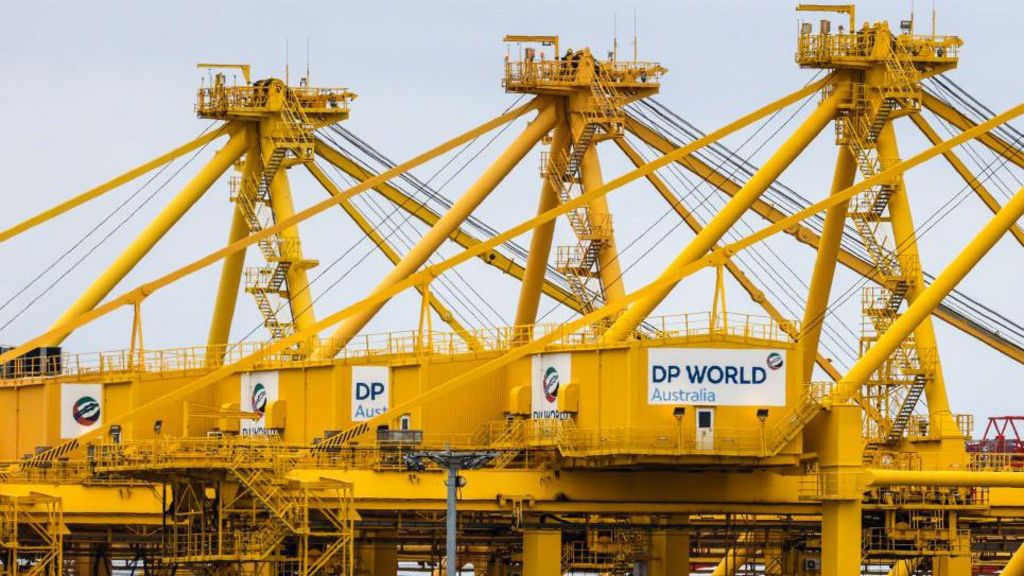
    As global port logistics giant DP World rolls out artificial intelligence and automated systems across its Australian operations, dockworkers represented by the Maritime Union of Australia (MUA) have sparked a tense industrial debate by calling for a reduced 28-hour workweek with no corresponding cut to pay.

    Headquartered in Dubai, DP World ranks among the world’s biggest port operators, employing more than 126,000 people globally and managing over 10 percent of the world’s total container shipping volume. In Australia alone, the firm controls port infrastructure in Sydney, Melbourne and other major coastal hubs, moving millions of containers annually and accounting for approximately 40 percent of all container shipments entering the country. That outsized market share means any changes to its operations carry major implications for Australia’s entire supply chain and logistics sector.

    According to an MUA-commissioned study from the Centre For International Corporate Tax Accountability and Research, DP World has been ramping up testing of AI tools for workforce management and scheduling, with broader plans to introduce AI-assisted remote-controlled cranes and autonomous driverless vehicles across its Australian terminals. The research warns that this automation push is being rolled out without meaningful consultation with workers, and could threaten as many as 1,000 roles – more than 60 percent of DP World’s current Australian dock and maintenance workforce.

    The MUA argues that the adoption of new AI technology should benefit workers rather than only boost corporate profits, framing the 28-hour workweek demand as a way to share the productivity gains from automation. Currently, DP World dockworkers average between 32 and 35 hours of work per week, with minor variations based on terminal location, according to the *Australian Financial Review*, which first broke news of the ongoing negotiations.

    “If DP World wants AI and automation, then they must pay the social dividend. The new technology doesn’t have to cost our members their jobs or put their livelihoods at risk just so a terminal operator can boost profits,” the union stated. In a 3 July announcement formalizing the demand, the MUA added: “The technology should be used to improve workers’ lives, not destroy them.”

    As of this reporting, the BBC has reached out to DP World for official comment on the union’s claims and the automation program, and has also requested additional details from the MUA. No responses have been released publicly, leaving the future of the negotiations and DP World’s Australian automation rollout unclear.

  • Trump, NATO allies to begin key talks at Turkey summit

    Trump, NATO allies to begin key talks at Turkey summit

    A high-stakes NATO summit kicked off in Ankara, Turkey on Wednesday, with U.S. President Donald Trump taking center stage for tense negotiations with the alliance’s 31 other member leaders following a ceremonial welcome from Turkish President Recep Tayyip Erdogan.

    Upon arriving in the Turkish capital, Trump struck a divided tone: he lavished praise on Erdogan, noting the strong personal “chemistry” between the two leaders, while repeating longstanding criticism of the alliance as a whole. “I was very disappointed with NATO,” Trump told reporters, setting a combative backdrop for the main summit opening at 08:15 GMT. His criticism comes amid years of pressure from the Trump administration for NATO members to meet their long-unfulfilled defense spending pledges, as Washington shifts its strategic focus away from European security.

    The 77-year-old transatlantic alliance has moved pre-emptively to defuse confrontation with Trump. On the eve of the summit, NATO released new figures showing core European defense spending rose 11% in 2026 to hit $634 billion, up from $571 billion the previous year. Alliance members also unveiled tens of billions of dollars in new arms procurement contracts on Tuesday to demonstrate progress on spending commitments. NATO Secretary General Mark Rutte stressed that European allies are already delivering on their promises, boosting military budgets and taking greater ownership of continental defense in the face of Russian aggression.

    Beyond defense spending, the war in Ukraine is a top agenda item for the gathering. Trump has publicly stated he believes both Moscow and Kyiv are eager to reach a negotiated end to the conflict. Ahead of a scheduled sideline meeting with Ukrainian President Volodymyr Zelenskyy, a U.S. official confirmed Trump spoke with Russian President Vladimir Putin before traveling to Turkey, and plans to hold follow-up talks with the Russian leader after meeting with Zelenskyy. Currently, peace negotiations remain deadlocked, but Europe and Canada have committed to maintaining 70 billion euros ($80 billion) in annual military aid to Ukraine for both 2026 and 2027. Despite the pledged support, Zelenskyy urged a NATO defense forum on Tuesday to accelerate deliveries of air defense interceptors—where Kyiv is facing critical shortages—and reiterated his call for Ukraine to move forward with its NATO accession process.

    The summit will also see a historic meeting between Trump and Syrian President Ahmed al-Sharaa, who is working to rebuild Syria’s international standing after decades of civil war. The meeting comes one day after al-Sharaa hosted French President Emmanuel Macron for a landmark visit, which was marred by twin bombings in central Damascus that left 18 people wounded.

    In a bilateral breakthrough with Turkey, Trump offered major concessions to Erdogan during talks at the leader’s opulent marble presidential palace. Trump confirmed he would consider lifting existing U.S. sanctions on Turkey and readmitting Ankara to the U.S.-led F-35 stealth fighter jet program. Turkey was expelled from the F-35 project in 2019 after purchasing a Russian air defense system, and U.S. sanctions have since hampered Ankara’s national defense projects and strained bilateral ties. “We’re going to be taking the sanctions off,” Trump said. “We don’t want to sanction friends.” Erdogan, seated beside Trump, expressed confidence that the long-running F-35 and sanctions dispute would finally be resolved.

  • AFL 2026: St Kilda coach Ross Lyon’s positive update on Max King

    AFL 2026: St Kilda coach Ross Lyon’s positive update on Max King

    After more than two years on the sidelines with repeated injury setbacks, St Kilda forward Max King is finally closing in on a return to competitive Australian Rules Football, with an official comeback timeline expected to be finalized by club leadership later this week. St Kilda head coach Ross Lyon announced Wednesday that he will meet with the club’s high-performance team ahead of the Saints’ upcoming match to map out a clear path for King’s return, a milestone that has eluded the talented young key forward since his last AFL appearance.

  • Beleaguered Prince Harry loses lawsuit against UK tabloid

    Beleaguered Prince Harry loses lawsuit against UK tabloid

    Britain’s Prince Harry has suffered a major legal setback, after London’s High Court dismissed his joint privacy lawsuit against Associated Newspapers, the publisher of the Daily Mail, over allegations of unlawful information gathering. The ruling lands just as the estranged working royal kicked off a tense five-day visit to the UK, deepening the long-running rift between Harry and the rest of the royal family.

    The judgment, released this week following an 11-week court hearing held earlier this year, concluded that the group of claimants — which included Harry, music icon Elton John, actor Elizabeth Hurley, and anti-racism campaigner Doreen Lawrence — had failed to prove their 97 pleaded claims against the publisher. All allegations were therefore thrown out by the court.

    Associated Newspapers has hailed the ruling as an overwhelming victory and a complete vindication of the Daily Mail’s journalistic practices. In a post-ruling statement, the publisher emphasized that Judge Matthew Nicklin had fully accepted the testimony of its journalists regarding how they sourced their stories. It described the allegations against the outlet — which included claims of bugging devices placed in claimants’ vehicles and private homes, illegal phone call eavesdropping, and unauthorized access to personal bank accounts — as lurid, preposterous claims that were never backed by any credible evidence. “The reputations of our decent and hard-working journalists were terribly impugned, and today they have been exonerated,” the statement added.

    Harry pushed back hard against the ruling, however, releasing a scathing joint statement with Lawrence that called the outcome a “complete and obvious whitewash” that was “not altogether unexpected”. As the youngest son of King Charles III, Harry argued that the court’s steps to fully exonerate the Daily Mail were as shocking as they were totally unwarranted. Lawrence joined the case after the paper was accused of unlawful information gathering targeting her family following the 1993 racist murder of her son Stephen.

    The judgment was handed down as Harry attended a London event for the Invictus Games, the wounded veteran sporting event he founded in 2014. The appearance comes one day after he arrived in the UK for what was supposed to be his first family visit back to the country in four years, marking the one-year countdown to the 2026 Invictus Games. In a striking parallel, Harry’s older brother William, the heir to the British throne, was also in London the same day, carrying out an official royal engagement at the London Welsh School to promote next month’s Commonwealth Games in Glasgow.

    The legal defeat leaves Harry facing further consequences: on July 29 and 30, a separate hearing will determine whether he and the six other co-claimants must pay the substantial legal fees Associated Newspapers incurred defending the case. The publisher said it spent £50 million (equivalent to roughly $66 million) defending itself against what it called “this egregious litigation”, and confirmed it would seek to recover all incurred costs.

    This case marked the third and final lawsuit Harry has brought against British tabloid publishers in his years-long, acrimonious battle against the UK press. The ongoing legal conflict has only further strained his already frayed relationship with the royal family, which has been fractured since Harry and his wife Meghan Markle stepped down from frontline royal duties and relocated to California in 2020.

    The rift deepened dramatically following the 2023 release of Harry’s explosive tell-all memoir *Spare*, which contained a series of damaging revelations about the royal family. Now, 41-year-old Harry is also entangled in a separate long-running legal dispute over his police security detail when visiting the UK, a fight he first launched after losing his automatic right to public police protection when he stepped down as a working royal six years ago.

    In a major disappointment for Harry, what was planned as a family trip back to the UK fell apart before he even arrived, after authorities refused to grant his family a police security detail. A source close to the Duke of Sussex confirmed to AFP that Meghan, the couple’s 5-year-old son Archie, and 3-year-old daughter Lilibet will not join Harry for the London leg of his visit, and arrangements for the remainder of the five-day trip are still under consideration. It remains unclear whether the family will join Harry outside of London, and there has been no confirmation of whether Harry will meet with his father King Charles during the visit.

    The last confirmed meeting between Harry and Charles, who is currently undergoing treatment for an undisclosed form of cancer, was at Clarence House in September 2025. Harry has repeatedly stated he hopes to reconcile with his father and the rest of the royal family, but has also said he is unable to bring his family to the UK safely after previous court rulings went against him in his fight to restore his personal security. For decades, Harry has held the British tabloid press responsible for the 1997 death of his mother, Princess Diana, who was killed in a Paris car crash while her driver was trying to escape pursuing paparazzi.

  • US strikes Iran after Hormuz tanker attacks: military

    US strikes Iran after Hormuz tanker attacks: military

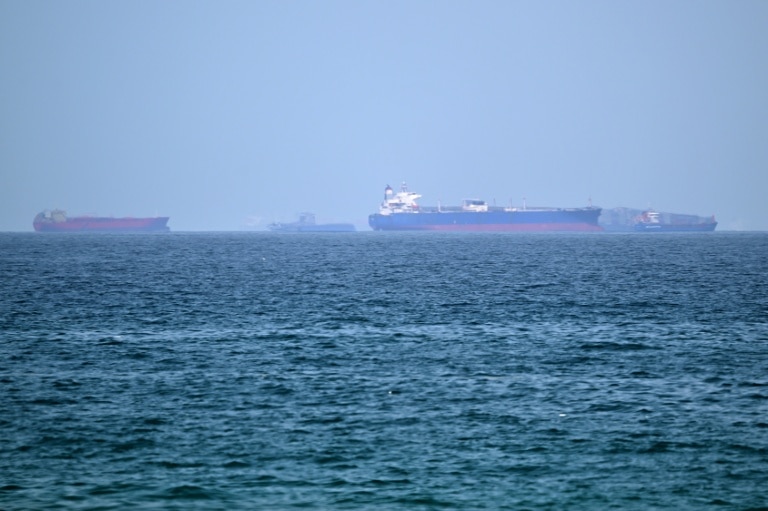
    Fresh tensions have erupted across the Middle East after the United States launched military strikes against Iran on Tuesday, a retaliatory move that came hours after three commercial vessels were attacked in the strategically critical Strait of Hormuz. The escalation threatens to upend fragile diplomatic efforts to de-escalate the ongoing regional conflict and has sparked global alarm over energy security.

    According to the U.S. Central Command, the strikes are intended to be “powerful” and designed to force Tehran to face serious consequences for its repeated targeting of commercial shipping transiting the vital waterway. “These strikes will impose heavy costs for targeting and attacking commercial shipping,” the command said in an official statement.

    The military action followed a quick policy shift from Washington, which revoked a temporary sanctions waiver for Iranian crude oil just hours before the strikes. The waiver, first announced in June, had permitted Iran to produce, sell and deliver crude oil and related petroleum products through August 21. The cancellation of the waiver piles additional economic pressure on Tehran, which is currently engaged in delicate indirect negotiations with the U.S. over a long-term settlement to end the regional confrontation.

    An anonymous senior U.S. official confirmed to Agence France-Presse that Iran’s actions in the Strait of Hormuz were “wholly unacceptable” and would not go unanswered. The official emphasized that the existing U.S.-Iran memorandum of understanding is “entirely performance-based”, noting that Tehran would only be allowed to access the benefits laid out in the tentative agreement if it demonstrates consistent “good behavior”. Despite the escalation, the official added that U.S. negotiators remain committed to working “in good faith towards a final deal”.

    Maritime security authorities documented the sequence of the tanker attacks: the UK Maritime Trade Operations (UKMTO), Britain’s leading maritime security agency, reported that an “unknown projectile” struck the first vessel overnight, sparking a large fire. Two additional commercial tankers were hit shortly after, with at least one confirmed to have been targeted by an unmanned drone. All three attacks took place in waters close to Oman, which recently proposed a temporary alternative transit corridor that would follow Oman’s coastline to avoid Iranian demands for shipping fees. Iran has openly opposed the Omani initiative, as it continues to push for the right to collect tolls from all vessels passing through the narrow waterway.

    Qatar later confirmed that one of the damaged vessels is its Qatari LNG tanker *Al-Rekayyat*, and Doha directly blamed Iran for the attack. In a strong statement, Qatar condemned the strike as an “unacceptable” violation of international norms governing maritime navigation. The Qatari government subsequently summoned Iran’s deputy ambassador to formally lodge a diplomatic complaint, demanding an immediate explanation and calling on Tehran to “immediately cease any practices undermining regional security”. Qatari Foreign Ministry spokesman Majed Al Ansari wrote in a post on X that “We hold Iran fully legally responsible for this attack and for any resulting damages or repercussions.”

    Iran rejected the accusations in an official statement carried by its state-run news agency IRNA, saying it voiced “dismay” over Qatar’s claims and called the allegations “unacceptable”.

    The attacks broke more than a week of relative calm across the strait, and have revived widespread concerns over freedom of navigation in the world’s most important energy chokepoint. The unrest comes just weeks after Iran lifted a full blockade of the waterway following a fragile ceasefire agreement with the United States.

    Global oil markets reacted immediately to the news, with benchmark crude prices rising by more than two percent as investors renewed fears over disruptions to global energy supplies and questioned the long-term durability of the tentative U.S.-Iran ceasefire deal.

    Andreas Krieg, a senior security expert at King’s College London, told AFP that the attacks carry a clear political message from Tehran. “We are now in a sensitive period where potential alternatives to an Iranian toll or fee system are being explored,” Krieg explained. “Iran is sending a clear signal that no alternative will be accepted.”

    Krieg added that the strikes are intended to punish any commercial vessels that attempt to use the proposed Omani alternative corridor without registering with Iranian authorities, and described the attacks as a “clear violation” of both the recent ceasefire agreement and international maritime law.

    While limited maritime traffic tentatively resumed after Washington and Tehran signed the preliminary memorandum last month, Iran has repeatedly ruled out returning to the pre-war status quo that allowed unrestricted free passage for all vessels through the strait. Under the terms of the 14-point U.S.-Iran memorandum, Iran and Oman, both of which share borders with the Strait of Hormuz, are required to hold multilateral talks with other Gulf states to “define the future administration and maritime services” for the waterway.

    Qatar had previously declined to participate in mediation efforts amid open Iranian hostilities, after Tehran launched an unprecedented large-scale aerial bombardment against Gulf states in retaliation for joint U.S.-Israeli strikes. But in recent weeks, Doha has shifted to a more active diplomatic role, hosting indirect talks between Iranian and U.S. negotiators just last week.

  • Australians paying $10m a day in interest on soaring credit card debt

    Australians paying $10m a day in interest on soaring credit card debt

    Australian households are facing growing financial pressure amid a soaring national credit card debt crisis, with fresh data from the Reserve Bank of Australia (RBA) laying bare the scale of the burden now weighing on family budgets. The central bank’s latest figures show that consumers added an additional $1.1 billion in credit card charges during May, pushing the month’s total national credit card spending to $29.9 billion.

    In a striking shift that signals growing cost-of-living stress, debit card transactions – where consumers draw on their own savings rather than borrowed money – dipped by $11 million to $59.6 billion over the same period. Most alarmingly, RBA data confirms that the total stock of interest-accruing credit card debt held by Australians now sits at $19.4 billion, a sum so large that the collective daily interest bill already outpaces the annual earnings of many full-time workers across the country.

    Sally Tindall, director of data insights at financial comparison platform Canstar, explained that more and more households are turning to credit cards as a temporary buffer to cover ongoing essential expenses, as wage growth fails to keep pace with rising inflation and living costs. At the current trajectory, Tindall calculated that Australian borrowers collectively pay an estimated $10 million in credit card interest every single day.

    “That’s money that could otherwise be going towards savings, paying down a mortgage or simply helping with everyday living costs,” Tindall noted. The financial analyst warned that the situation could rapidly worsen if borrowers continue to build up balances: if consumers maxed out their current credit limits and carried those balances forward, the collective daily interest cost would surge from $10 million to roughly $55 million at the current national average interest rate of 18.61%.

    Tindall stressed that credit cards are not inherently problematic – they can serve as a helpful financial management tool for households that pay off their full balance before the due date each billing cycle. The risk emerges when routine monthly spending rolls over into long-term debt, which accumulates interest at the steep average rate that eats away at household disposable income.

    To avoid long-term financial strain, Tindall encouraged Australian borrowers to target a zero credit card balance each month. She added that while most consumers have not yet reached their credit limits, that fact should not be interpreted as permission to keep increasing spending. “Just because your bank has approved you for up to a certain amount, doesn’t make it a good idea to hit that number,” she said, warning that persistent high-interest credit card debt can push already vulnerable households deeper into financial instability.

  • IOC eases restrictions on Russians before 2028 LA Games as anthem, flag ban remains

    IOC eases restrictions on Russians before 2028 LA Games as anthem, flag ban remains

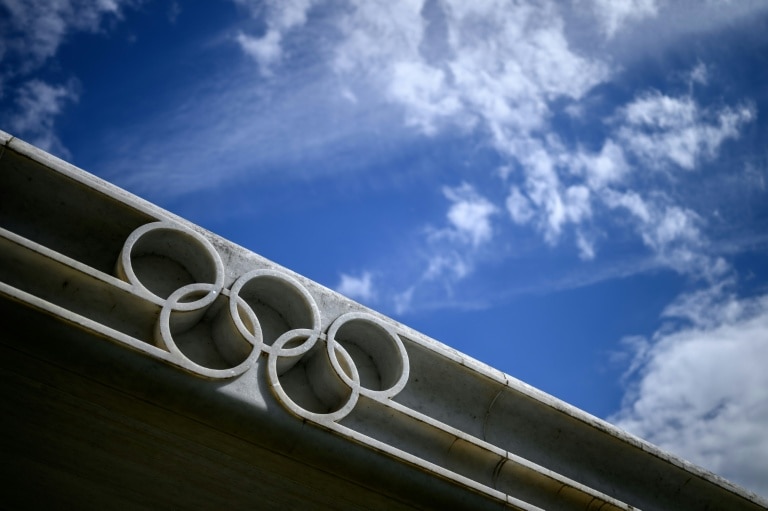
    More than four years after Russia launched its full-scale invasion of Ukraine, the International Olympic Committee (IOC) announced a landmark policy shift on Tuesday, rolling back some of the longstanding restrictions on Russian athletes to clear their path to compete in team events and qualifying tournaments for the 2028 Los Angeles Olympic Games.

    In remarks delivered during an IOC meeting in Lausanne, committee president Kirsty Coventry underscored the guiding principle behind the decision, noting that the governing body has long prioritized ensuring no athlete is penalized for the actions of their home government.

    While the IOC opened the door to expanded participation, it opted to retain the existing ban on the Russian national anthem and national flag for the time being. The committee also added a strict new stipulation: any Russian athlete seeking to return to international competition must pass multiple anti-doping screenings before being cleared to take part, a measure designed to address lingering distrust stemming from Russia’s decades-long history of state-sponsored doping programs.

    The announcement drew immediate pushback from Ukraine, whose own Olympic committee condemned the IOC’s move as premature and unfounded amid the ongoing war that has now stretched into its fifth year. In an official statement, Ukraine’s NOC emphasized that Russia’s full-scale armed aggression against Ukraine remains ongoing, with Russia continuing to violate core principles of international law, peace and global security, making the IOC’s decision out of step with current realities.

    Under the framework of new rules laid out by the IOC, individual international sports federations retain the autonomy to decide whether to allow the display of the Russian flag and performance of the anthem at their own standalone events, as well as whether to host competitions on Russian territory. For the 2028 LA Games themselves, which are still two years away, the IOC said it will revisit the question of flags, anthems and national identifiers at a later, more appropriate date.

    Russia, for its part, welcomed the IOC’s adjusted policy. In a post on the messaging platform Telegram, Russian Sports Minister Mikhail Degtyarev framed the decision as a clear signal that the global Olympic movement should remain free from political interference, adding that Russia is fully prepared to send athletes to compete in the Los Angeles qualifying process. Notably, Russia’s reintegration remains more restricted than that of Belarus, which the IOC readmitted fully in early May without any curbs on its national anthem or national symbols.

    The original restrictions on the Russian Olympic Committee (ROC) were first imposed in October 2023, 18 months after the invasion of Ukraine, after the ROC moved to absorb sports governing bodies from Ukrainian territories annexed by Russia. In its latest statement, the IOC confirmed that the ROC has now committed that it will not conduct any activities in those disputed territories now or in the future, and the committee will maintain close ongoing monitoring of the situation to ensure compliance.

    Despite the IOC’s policy shift, the global sports community remains deeply divided on the question of Russian athlete participation. IOC Sports Director Pierre Ducrey acknowledged this split, noting that reintegration will unfold across a “fractured landscape” with different rules applying to different sports.

    For example, World Athletics, the global governing body for track and field, reaffirmed its hardline stance just days before the IOC announcement, maintaining a total ban on all Russian and Belarusian athletes, citing the absence of any tangible progress toward peace negotiations between the two countries. By contrast, the international governing bodies for judo and swimming already moved to fully reinstate Russian and Belarusian athletes last November and April respectively, following the lead of the International Paralympic Committee, which approved full participation for the 2026 Milan-Cortina Winter Games.

    Russia’s suspension from full Olympic participation actually predates the 2022 invasion. The country has been barred from competing under its own national colors and symbols since 2016, when the first revelations of a widespread state-run doping program emerged. Just weeks after the conclusion of the 2022 Beijing Winter Olympics, Russia’s invasion of Ukraine, backed by Belarus, triggered a new wave of sweeping sports sanctions that expanded existing restrictions.

    After a period of full exclusion following the invasion, the IOC began a gradual process of reintegration starting in March 2023, allowing Russian athletes to compete as neutral individuals under strict conditions, but barring them from all team events for the 2024 Paris Olympics and 2026 Milan-Cortina Games. For months leading up to Tuesday’s announcement, Coventry had publicly signaled support for broader reintegration, repeatedly emphasizing that sport should remain a neutral space where all athletes can compete freely regardless of the political divisions of their governments.

    This principle was formally codified into the Olympic Charter during the IOC’s 142nd session in Lausanne in late June, which explicitly enshrined the organization’s mandate to maintain neutrality at all times, free from pressure from national governments, cultural divides, societal differences or economic interests. As a further step toward reintegration, the IOC Executive Board already recommended last December that Russian and Belarusian junior athletes be allowed to return to junior competition, including team events, competing under their own national flags and anthems.
  • Colombia president-elect accuses outgoing leader of ‘coup’ plotting

    Colombia president-elect accuses outgoing leader of ‘coup’ plotting

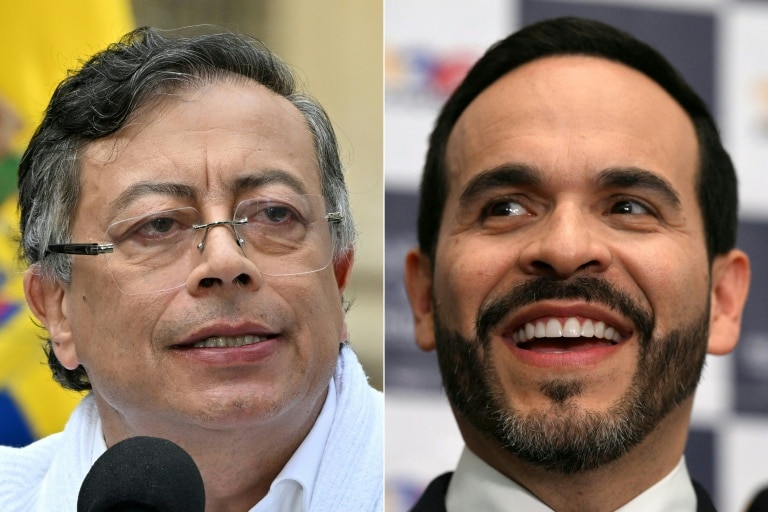
    Colombia is facing a rapidly escalating political crisis just weeks before the scheduled August 7 presidential inauguration, after hard-right president-elect Abelardo de la Espriella made explosive unsubstantiated claims that outgoing left-wing president Gustavo Petro is plotting a coup to seize power. The accusation has prompted De la Espriella to immediately halt all transition cooperation with Petro’s administration, throwing the upcoming transfer of power into chaos.

    De la Espriella, a millionaire libertarian lawyer who secured a narrow victory in last month’s presidential runoff, has positioned himself as a staunch opponent of Colombia’s first-ever left-wing government. His campaign, which drew open vocal support from former U.S. President Donald Trump, centered on rolling back Petro’s progressive policies: he has pledged to abandon ongoing peace talks with left-wing guerrilla groups and drug cartels in favor of full-scale military confrontation, and to cut the size of Colombia’s state bureaucracy by 40% to attract increased private sector investment, echoing the radical libertarian agenda of Argentine President Javier Milei.

    In a public statement Tuesday, De la Espriella claimed that Petro and his ally, defeated presidential candidate Ivan Cepeda, had activated a so-called “Plan B” to hold onto power through unconstitutional means. “Petro and Cepeda have initiated their Plan B to remain in power at all costs. And they want to do it through a coup d’etat,” the president-elect declared. He also repeated longstanding unproven claims that Petro’s administration is riddled with corruption, alleging that a preliminary audit uncovered irregularities in the government’s anti-drug trafficking efforts, public contracting processes, and national healthcare system. Despite the serious nature of both the coup allegation and corruption claims, De la Espriella has not released any tangible evidence to support either accusation.

    Cepeda, who lost the runoff to De la Espriella by a slim margin, publicly accepted the election results despite the close outcome. Petro, however, has refused to acknowledge the legitimacy of the June vote, even though independent international election observers and Colombia’s national electoral authorities have formally certified the election as free, fair, and free of widespread fraud.

    Political tensions have been building steadily since the runoff, and the latest escalation has stoked fears of widespread unrest. Petro has already called for mass anti-De la Espriella protests to coincide with his scheduled national farewell address on July 20. De la Espriella’s supporters warn that the demonstrations could spiral into the kind of large-scale violent unrest that followed Petro’s protests against right-wing former president Ivan Duque between 2019 and 2021, a period of unrest that left dozens of people dead across the country.

    De la Espriella has framed the ongoing conflict as a legal standoff, claiming that Petro’s accusation of a coup stems from fear of facing legal accountability for alleged misconduct during his tenure. “He knows I will make him pay for all his crimes within the framework of the law, and that’s why he’s panicked and terrified,” he said Tuesday. The president-elect, who has long aligned himself with U.S. political interests and repeatedly clashed with Petro over his critical stance toward Trump during his presidency, has already vowed to bring Petro and his left-wing allies before U.S. courts to face charges, though he has not detailed what specific offenses the legal action would address.

  • Turkish delight: Trump revels in Erdogan’s lavish welcome

    Turkish delight: Trump revels in Erdogan’s lavish welcome

    When US President Donald Trump touched down in Turkey’s capital Ankara for a critical NATO summit this week, Turkish President Recep Tayyip Erdogan rolled out the most extravagant red carpet possible — a welcome tailored specifically to the 80-year-old American leader’s well-documented love of grandeur and pageantry.

    Diplomatic observers have long noted that world leaders hoping to win favor with the notoriously unpredictable Trump have found few tools more effective than hosting him with ceremonies and settings fit for a monarch. Erdogan, it turns out, executed this strategy perfectly, leaning into shared tendencies that have connected the two leaders for years: a mutual affinity for opulent presidential architecture and a top-down, authoritative governing style.

    Erdogan went so far as to greet Trump personally on the tarmac after he exited his newly retrofitted Air Force One. On multiple occasions, the 72-year-old Turkish leader guided Trump by the arm as the pair walked off the plane. That aircraft itself offers a subtle backdrop to how world leaders have already shaped Trump’s views: the retrofitted jet was a controversial gift to the US from Qatar’s royal family in 2024, gifted after Trump publicly complained that the older presidential transport plane was unacceptably outdated and embarrassing.

    After the airport greeting, Trump’s motorcade processed through central Ankara to the sprawling Bestepe Presidential Compound, popularly known as the “White Palace.” Mounted Turkish riders flanked the presidential limousine along nearly empty city streets, where a full honor guard in crisp red and blue uniforms waited to receive him. As the US national anthem *The Star-Spangled Banner* played, Trump stood at attention, and even attempted to deliver a short greeting in Turkish — a small gesture that fit the festive tone of the day. The ceremony concluded with a dramatic flyover by Turkish fighter jets, which left trails of red, white, and blue smoke trailing across the Ankara sky. Adding a theatrical historical flourish, two dozen soldiers clad in replica Ottoman-era armor, pointed helmets, and stylized false facial hair stood at attention outside the palace entrance.

    Completed in 2014 at a total cost of roughly $615 million, the massive White Palace complex draws architectural inspiration from Turkey’s ancient Seljuk and Ottoman imperial histories. Critics have long slammed the project as a symbol of Erdogan’s alleged authoritarian excess, pointing to its huge price tag as evidence of his increasingly autocratic leanings. But for Trump, the opulent complex was the perfect setting to leave an impression: the palace features soaring atriums lined with rare onyx and polished green marble, a level of grandeur that aligns perfectly with Trump’s long-admired fascination with the lavish residences of foreign leaders.

    As he pursues his second term in office, the former real estate billionaire has made no secret of his goal to reshape Washington D.C. into an imperial capital matching his personal vision. He has already demolished an entire wing of the White House to construct a $400 million grand ballroom, drawn up plans for a massive triumphal arch he has named the “Arc de Trump,” and launched a sweeping, multi-million dollar initiative to renovate the nation’s capital’s iconic monuments.

    This strategically opulent welcome from Erdogan fits into a clear pattern that has emerged across Trump’s second term: foreign leaders have learned to leverage the US president’s well-known obsession with palatial splendor to win goodwill. Just last month, French President Emmanuel Macron hosted Trump for a private state dinner at the Palace of Versailles following a G7 summit, where Trump praised the former residence of King Louis XIV as “the real deal.” Earlier in 2025, Chinese President Xi Jinping welcomed Trump with a full ceremonial welcome at Beijing’s Great Hall of the People, followed by a visit to the Temple of Heaven and private tea at the exclusive Zhongnanhai leadership compound. In September 2025, Britain’s King Charles III hosted Trump for a full state visit at Windsor Castle, complete with a ceremonial flyover and extensive pageantry — and Trump was still talking about the castle earlier this week, incorrectly describing it as “the longest building I’ve ever seen.” During a May 2025 visit to the Middle East, Trump openly expressed envy for his Arab hosts’ accommodations, praising the marble in Qatar’s royal palace as “perfecto” and marveling at the scale of Saudi Arabia’s modern architectural projects.

    In Turkey, one small personal gesture seemed to leave a particularly strong impression on Trump: he told reporters that Ankara’s airport had named a building after him, a tribute that left him “very happy.” The good mood came even as a US court recently blocked Trump’s own plan to add his name to Washington D.C.’s John F. Kennedy Performing Arts Center. After the arrival ceremony, Trump praised Erdogan to reporters, calling him “a great leader” and emphasizing that the relationship between the two leaders and their nations has been “very special.”

  • Sinner eyes Djokovic showdown after moving into Wimbledon semis

    Sinner eyes Djokovic showdown after moving into Wimbledon semis

    Wimbledon’s 2025 quarterfinal round delivered two dramatic victories on Tuesday, as defending men’s champion Jannik Sinner and rising American star Coco Gauff booked their spots in the tournament’s final four, setting the stage for potentially historic showdowns in the coming days.

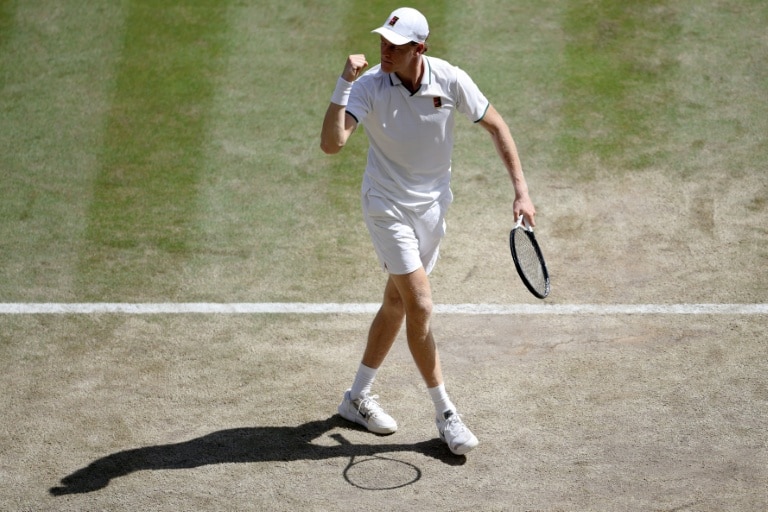
    World number one Sinner navigated both a tricky opponent and a punishing London heatwave to end 36-year-old German Jan-Lennard Struff’s Cinderella run, clinching a 7-5, 7-6(7/4), 6-3 victory on Court One. Struff’s run to the quarterfinals already made history: he is the oldest first-time major quarterfinalist in the Open Era. But Sinner, a four-time Grand Slam champion, relied on his powerful serve to keep the world number 74 under control, securing his 10th Grand Slam semifinal appearance and third trip to the Wimbledon last four.

    The result puts Sinner one step away from a highly anticipated semifinal clash with seven-time Wimbledon champion Novak Djokovic, who faces Canada’s Felix Auger-Aliassime in a later Tuesday quarterfinal. For Sinner, the win also silenced pre-match questions about his heat endurance, a weakness that derailed his French Open campaign earlier this year. At Roland Garros, he collapsed from physical fatigue after holding a two-set and 5-1 lead over Argentina’s Juan Manuel Cerundolo, suffering a stunning second-round exit. Speaking after his win over Struff, Sinner confirmed his team had reworked his preparation to address that shortcoming. “It was a huge test today. I felt comfortable on the physical side, a good step forwards,” he said. “We worked a lot after Paris trying to understand what went wrong and prepared in the best possible way.”

    For Djokovic, a win over Auger-Aliassime would mark a series of historic milestones. The 39-year-old Serb is chasing a record-tying eighth Wimbledon singles title that would also give him a record 25th Grand Slam crown, making him the oldest men’s Grand Slam champion of the Open Era. A victory would also push him into a record-extending 15th Wimbledon semifinal and 55th major semifinal overall, as well as an eighth consecutive trip to the All England Club’s last four — a new record for the longest streak of men’s singles semifinal appearances in Wimbledon history.

    In the women’s draw, Gauff fought back from an opening set loss to defeat fellow American Jessica Pegula 4-6, 6-3, 6-3, booking her first ever Wimbledon semifinal spot in an all-American clash on Centre Court. The seventh-seeded 20-year-old, a two-time Grand Slam champion, was competing in her first Wimbledon quarterfinal, and got off to a sluggish start, allowing 32-year-old fourth seed Pegula to take the first set. But Gauff shifted gears quickly, seizing momentum in the second set and closing out the win in the third to advance.

    The milestone caps a remarkable career arc for Gauff, who made history seven years ago as the youngest player to qualify for the Wimbledon main draw at 15, famously beating Venus Williams in her debut. Now, she is just two wins away from claiming the most prestigious title in tennis, and already has made history as the youngest player to reach the semifinals of all four Grand Slams since Maria Sharapova achieved the feat in 2007. It is also Gauff’s first Grand Slam semifinal appearance since she won the 2024 French Open. “Considering I hadn’t won a match in two years on grass before this tournament, I’m really happy with how I played today,” Gauff said. She will next face either Japanese four-time Grand Slam champion Naomi Osaka or Czech 10th seed Karolina Muchova, whose quarterfinal is scheduled for later Tuesday.

    Osaka, 28, is enjoying a career resurgence at this year’s Wimbledon, five years after her last Grand Slam title. While she has claimed two Australian Open and two US Open crowns, she had never found success at the All England Club until this tournament, where she pulled off a stunning fourth-round upset over world number one Aryna Sabalenka to reach her first Wimbledon quarterfinal. A fan favorite throughout the event for her bold, eye-catching entrance outfits, Osaka is now aiming to back up the off-court attention with a deep run in the draw. Muchova, a 29-year-old former French Open finalist, is also vying for her first Wimbledon semifinal spot.

    In other delayed action on Tuesday, 2024 French Open champion Alexander Zverev returned to finish his suspended third-round match against Czech player Jiri Lehecka. The match was called off at the 2200 GMT curfew on Monday evening, with Zverev holding a two-set lead.