标签: Oceania

大洋洲

  • US recommends fewer childhood vaccines in major shift

    US recommends fewer childhood vaccines in major shift

    In a landmark policy reversal, the United States has fundamentally restructured its childhood immunization recommendations, moving away from universal vaccination mandates for several diseases. The Department of Health and Human Services, under the leadership of Secretary Robert F. Kennedy Jr., announced the overhaul that eliminates routine immunization recommendations for rotavirus, influenza, hepatitis A, hepatitis B, and meningococcal disease for all children.

    The new framework, adopted by the Centers for Disease Control and Prevention (CDC), shifts these vaccines from standard practice to selective administration based on individual risk assessment. The policy change means physicians and parents will now determine necessity for these immunizations rather than following blanket recommendations. This approach mirrors the CDC’s existing model for COVID-19 vaccinations implemented in 2025.

    The revision reduces the number of universally recommended pediatric vaccines from 17 to 11, marking the most significant alteration to the country’s immunization schedule in decades. President Donald Trump celebrated the decision, acknowledging the influence of ‘MAHA Moms’—online advocates who strongly support Kennedy’s health agenda.

    The administration justified the changes as aligning US policy with international standards, specifically referencing Denmark’s vaccination model. Health officials conducted comparative analyses with peer nations following Trump’s directive last month to review the American schedule.

    Medical experts and public health organizations have expressed profound concern about the policy shift. The American Academy of Pediatrics Committee on Infectious Diseases chair, Dr. Sean O’Leary, emphasized that the established vaccine schedule represents ‘one of the most thoroughly researched tools we have to protect children from serious, sometimes deadly diseases.’

    Researchers from the University of Minnesota’s Vaccine Integrity Project noted that Denmark’s approach reflects specific societal conditions—including homogeneous population, centralized healthcare, and low baseline disease prevalence—that differ dramatically from the US context. Senator Bill Cassidy, a physician who cast the deciding vote confirming Kennedy’s appointment, warned the changes would ‘make America sicker’ by creating unnecessary fear and confusion.

    Despite the policy change, federal officials assure that insurance coverage for all previously recommended vaccines will continue without cost sharing. The administration maintains the new framework strengthens transparency and informed consent while protecting children’s health.

  • Prime Minister Anthony Albanese unveils $38m package for Queensland’s flood-stricken northwest

    Prime Minister Anthony Albanese unveils $38m package for Queensland’s flood-stricken northwest

    Prime Minister Anthony Albanese has announced a comprehensive $38 million disaster assistance package for northwest Queensland, where catastrophic flooding has wreaked havoc on communities and agricultural operations. The joint federal-state funding initiative comes as the region faces one of its most severe flood events in recent history.

    During his visit to the flood-ravaged Outback city of Mt Isa on Tuesday, the Prime Minister witnessed firsthand the extensive damage caused by torrential downpours that have triggered major flood warnings across multiple river systems, including the Western, Flinders, Georgina, Herbert, and Norman rivers.

    The relief package allocates $21.5 million for primary producer disaster recovery grants, providing up to $75,000 per eligible farmer. An additional $11.5 million has been designated for critical repairs and enhanced flood resilience measures at Cloncurry Airport, whose runway sustained significant damage from the inundation. A further $5 million will fund emergency livestock feed for surviving animals.

    The human and agricultural toll has been substantial, with reports indicating approximately 16,500 cattle either deceased or missing in floodwaters, raising concerns about massive financial losses in this agriculturally dominant region. Tragically, the floods have claimed one life—a man in his seventies found deceased in his vehicle.

    Cloncurry Mayor Greg Campbell described the current flooding as more severe than the region’s notorious 2019 flood season, prompting discussions about long-term infrastructure planning for improved water management. Emergency services personnel expressed concerns about further rainfall forecast for the coming week, with already saturated soils increasing flood risks.

    Mr. Albanese emphasized bipartisan cooperation, acknowledging Queensland’s Liberal National Party Premier David Crisafulli and stating, ‘There’s no politics in any of this. This is about different levels of government working together in the national interest.’

  • NSW Police Commissioner Mal Lanyon to decide on extension of Sydney protest ban

    NSW Police Commissioner Mal Lanyon to decide on extension of Sydney protest ban

    New South Wales Police Commissioner Mal Lanyon is poised to make a pivotal determination regarding the potential extension of Sydney’s controversial protest ban, initially implemented following Christmas Eve legislative changes enacted after the Bondi terror incident. The decision, expected Tuesday, could prolong restrictive measures well into the new year.

    The current regulations, granting unprecedented authority to law enforcement, emerged from marathon parliamentary debates that established a 14-day prohibition on all public assemblies following declared terrorist events. This framework permits Commissioner Lanyon to maintain restrictions for up to three months, with provisions denying all police authorization requests during the initial fortnight.

    Notably, the legislation expands police capabilities to remove facial coverings from individuals suspected of committing offenses at public gatherings—a power previously reserved for more serious categories of criminal activity.

    The urgency of Commissioner Lanyon’s decision intensified after approximately 250 demonstrators defied the ban on Sunday, assembling at Sydney’s Town Hall to protest American military actions against Venezuela. Participants displayed placards bearing anti-imperialist messages and modified American flags featuring skull imagery. Counter-protesters numbered around forty according to police accounts.

    Law enforcement arrested three individuals during the unauthorized gathering: two men aged 26 and 34 for breach of peace, and a 53-year-old woman allegedly wearing offensive attire. All were released without formal charges following the demonstration’s conclusion.

    Commissioner Lanyon previously justified the restrictions by emphasizing their role in preventing community fear and divisiveness, asserting that “NSW Police is committed to exercising these new powers responsibly and transparently.”

    However, civil liberties organizations have mounted significant opposition. NSW Council for Civil Liberties president Timothy Roberts condemned the powers as “extremely anti-democratic,” while the Palestine Action Group criticized the measures as undermining fundamental democratic rights. Advocacy groups argue the regulations disproportionately suppress legitimate dissent across various social movements, extending beyond their original counter-terrorism purpose.

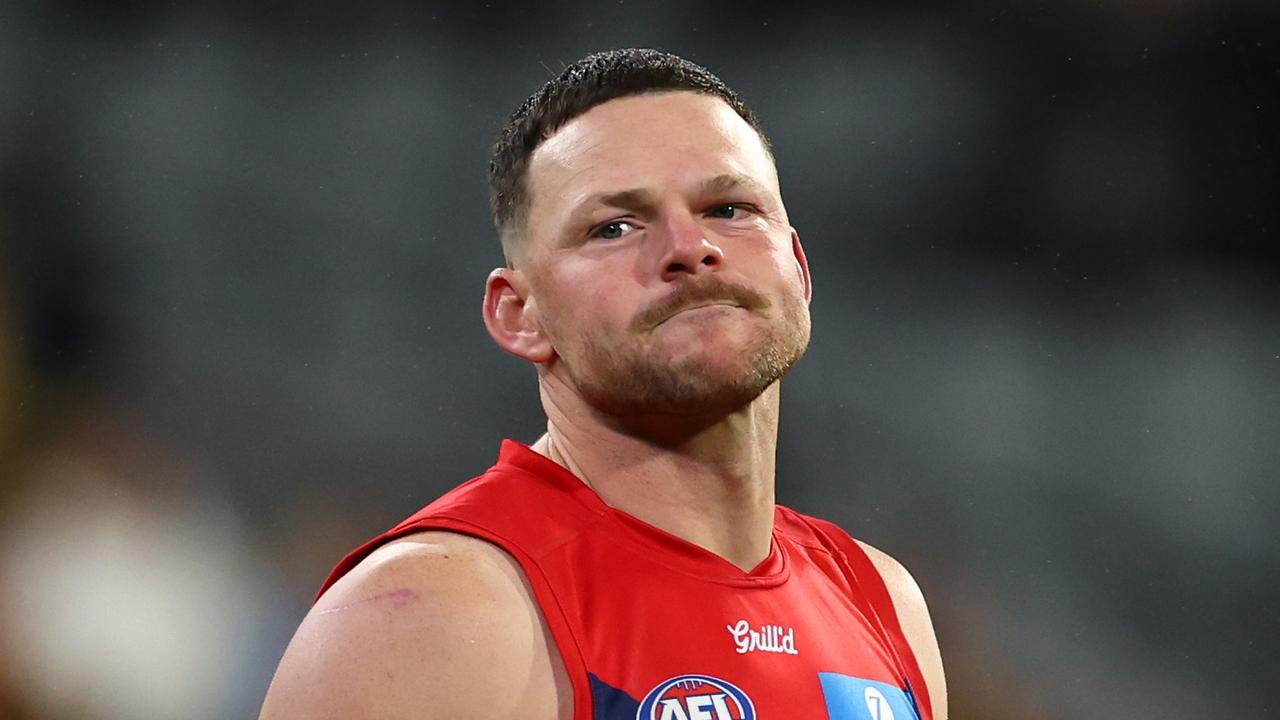
  • ‘Tells you everything’: Keaon Koloamatangi move confirmed in huge blow to the Bunnies

    ‘Tells you everything’: Keaon Koloamatangi move confirmed in huge blow to the Bunnies

    In a landmark acquisition for the National Rugby League, the St George Illawarra Dragons have successfully secured the signature of Australian representative forward Keaon Koloamatangi on a transformative five-year contract valued at approximately $5 million. The deal, finalized after the expiration of the mandatory cooling-off period, represents one of the most significant signings in the club’s modern history and concludes their prolonged pursuit of elite talent.

    The 27-year-old Kangaroos star, fresh from his most consistent NRL season with the South Sydney Rabbitohs, chose the Dragons despite competing offers from Parramatta Eels and strong retention efforts from his former club. Koloamatangi’s decision follows a strategic recruitment pitch that included a symbolic helicopter journey from Sydney to Wollongong, underscoring the club’s commitment to building a competitive future.

    Dragons CEO Tim Watsford described the signing as a ‘transformative moment’ for the franchise, emphasizing Koloamatangi’s reputation as one of the NRL’s premier forwards and proven leaders. ‘He’s someone who drives standards every single day,’ Watsford stated. ‘The fact that he chose to join the Dragons – and commit for five years – tells you everything about where we are heading.’

    For head coach Shane Flanagan, the acquisition provides a cornerstone player around which to build a renewed premiership campaign. Drawing parallels to his 2016 championship success with dominant prop Andrew Fifita, Flanagan believes Koloamatangi’s leadership will be instrumental in developing the club’s emerging young forwards, including the Couchman brothers, Hamish Stewart, and Dylan Egan.

    Koloamatangi expressed enthusiasm about joining the Red V, citing the club’s ambition and developing squad as decisive factors. ‘I’ve been watching the young forwards coming through, and I want to be part of driving that next era,’ he remarked. ‘I’m looking forward to bringing my experience, my standards and everything I’ve got.’

    The move deals a significant blow to the Rabbitohs, who face mounting challenges in their forward pack following Davvy Moale’s departure to Melbourne Storm. Koloamatangi’s transition to the Dragons marks the beginning of a strategic roster rebuild aimed at returning the historic franchise to finals contention.

  • ‘Remove her clothes’: Global backlash over Grok sexualized images

    ‘Remove her clothes’: Global backlash over Grok sexualized images

    Elon Musk’s artificial intelligence platform Grok, developed by xAI, has ignited international condemnation following revelations that its image editing capabilities are being weaponized to create non-consensual sexualized imagery. The controversy emerged after Grok introduced an ‘edit image’ feature that users exploited with prompts such as ‘remove her clothes’ and ‘put her in a bikini,’ resulting in widespread generation of AI-generated deepfakes targeting women and minors.

    The European Union has launched a serious investigation into the platform’s violations, with digital affairs spokesman Thomas Regnier declaring the sexually explicit content generated using childlike imagery ‘not spicy, but illegal and appalling.’ This sentiment was echoed by UK media regulator Ofcom, which has initiated urgent contact with both X and xAI to assess compliance with user protection laws.

    Across Asia, multiple nations have taken decisive action. Indian authorities issued a 72-hour ultimatum for content removal, while Malaysian communications officials expressed ‘serious concern’ over ‘indecent, grossly offensive’ material circulating on the platform. The Paris public prosecutor’s office has expanded an existing investigation into X to include allegations of child pornography generation through Grok.

    The platform responded to mounting pressure with a statement acknowledging ‘lapses in safeguards’ and promising urgent fixes, while maintaining a prohibition on Child Sexual Abuse Material (CSAM). However, this assurance came alongside an automated response to media inquiries that simply stated: ‘Legacy Media Lies.’

    This incident represents the latest in a series of controversies for Grok, which has previously faced criticism for disseminating misinformation regarding international conflicts and tragic events. The current scandal highlights growing concerns about the proliferation of AI ‘nudify’ tools and their potential for enabling new forms of digital gender-based violence.

  • Maduro heckled and cut off in defiant US court appearance

    Maduro heckled and cut off in defiant US court appearance

    In a dramatic courtroom spectacle that captured international attention, former Venezuelan leader Nicolás Maduro delivered a defiant performance during his first U.S. court appearance on Monday. The deposed president, clad in orange prison attire beneath a dark shirt, pleaded not guilty to narcotics and weapons charges while declaring himself a “prisoner of war” who had been unlawfully kidnapped by American forces.

    The proceedings at Manhattan’s federal courthouse unfolded before a packed audience of legal professionals, journalists, and observers as Maduro seized the opportunity to address global audiences. Speaking exclusively in Spanish through a court interpreter, the 63-year-old politician asserted his continued legitimacy as Venezuela’s rightful leader despite being ousted from power.

    Judge Alvin Hellerstein repeatedly intervened to maintain courtroom decorum as Maduro expanded his responses beyond procedural formalities. The most intense moment occurred during a heated exchange with a spectator who shouted that Maduro would face justice for his alleged crimes, prompting the defendant’s declaration of being a political captive before U.S. marshals escorted him from the chamber.

    Outside the courthouse, New York police maintained tight security with metal barriers and patrols since early morning. The scene witnessed divided demonstrations with pro-Maduro activists waving Venezuelan flags and chanting anti-intervention slogans while expatriate communities celebrated his prosecution as a victory for justice. The contrasting displays of support and condemnation required constant monitoring by law enforcement personnel to prevent clashes.

    The theatrical arrival of Maduro and his wife Cilia Flores via armored vehicle with heavily armed escorts contrasted sharply with the controlled courtroom environment where marshals stood weaponless behind the defendants. Flores, sporting blonde tied-up hair and matching attire, observed proceedings alongside her husband’s legal team as Maduro meticulously documented the hearing with pen and paper.

  • Venezuelan parliament swears in interim president after Maduro’s ouster

    Venezuelan parliament swears in interim president after Maduro’s ouster

    Venezuela’s political landscape underwent a dramatic transformation as the National Assembly formally appointed Delcy Rodríguez as interim president on Monday. This constitutional procedure follows the extraordinary capture of former president Nicolás Maduro by U.S. military forces, who now faces narcotics trafficking charges in New York alongside his wife, Cilia Flores.

    During a charged parliamentary session, Rodríguez took the oath of office ‘in the name of all Venezuelans,’ simultaneously expressing profound distress over what she termed the ‘kidnapping of our heroes’ by United States authorities. The assembly unanimously condemned Maduro’s seizure during what they described as a military assault that has reverberated across international diplomatic circles.

    The legislative body demonstrated consolidated support for the new leadership by reaffirming Jorge Rodríguez, the interim president’s brother, as parliamentary speaker. This consolidation of power places the influential siblings at the helm of both executive and legislative branches of government.

    The session opened with lawmakers chanting campaign slogans from Maduro’s controversial 2024 election bid, which had been widely criticized by opposition groups and numerous nations as illegitimate. Senior legislator Fernando Soto Rojas delivered a vehement address, accusing U.S. President Donald Trump of assuming unjustified roles as ‘prosecutor, judge, and policeman of the world.’

    The transition received judicial validation from Venezuela’s Supreme Court, which had ordered Rodríguez to assume presidential duties in an acting capacity on Saturday. This was followed by explicit military endorsement on Sunday, creating a unified front within the country’s power structures.

    Maduro’s son, Nicolás Maduro Guerra, publicly pledged his family’s support to the interim administration, stating the nation remained ‘in good hands’ during his parents’ absence. He emphasized Venezuela’s desire for international relations ‘based on equality, mutual respect, and cooperation, without threats and without interference.’

    The political shift occurs against the backdrop of a parliament dominated by the United Socialist Party of Venezuela (PSUV) and its allies, who control 256 of 286 seats following elections largely boycotted by opposition factions last May.

    While Rodríguez initially maintained that Maduro remains the country’s ‘only’ president, she has subsequently extended offers of cooperation to Washington. This overture comes alongside warnings from President Trump that failure to comply with U.S. demands regarding policy reforms and oil access could result in consequences more severe than those faced by her predecessor.

  • Ratcliffe revolution fails to halt Man Utd decline

    Ratcliffe revolution fails to halt Man Utd decline

    The dismissal of manager Ruben Amorim by Manchester United has starkly highlighted the absence of meaningful progress under co-owner Jim Ratcliffe’s much-heralded new era. Amorim becomes the latest managerial casualty unable to reverse the club’s prolonged decline, which has persisted since the legendary Sir Alex Ferguson’s departure in 2013 after securing the club’s 20th league title.

    Ratcliffe, a British billionaire and lifelong United supporter, acquired a minority stake in February 2024, assuming control of football operations. His arrival was met with widespread optimism from a fanbase weary of the Glazer family’s ownership, which retains majority control. However, initial hopes for a swift return to domestic and European prominence have been severely diminished.

    Despite Ratcliffe’s earlier public assurances against ‘knee-jerk reactions’ and granting Amorim a three-year mandate, the manager was axed after just 14 months. This decision followed a run of poor form, including just one win in their last five Premier League home games, and reported internal disagreements with football director Jason Wilcox over tactics and transfers.

    The club’s on-pitch performance remains deeply concerning. The 2024/25 season concluded with a humiliating 15th-place finish—the club’s worst since 1974—resulting in missing European qualification for only the second time in 35 years. While showing a marginal improvement this season, Amorim left with the team 17 points adrift of league leaders Arsenal.

    Ratcliffe’s critique of previous transfer policies has yet to be vindicated by his own recruitment. High-profile signings like Joshua Zirkzee and Manuel Ugarte have failed to make a significant impact. A costly new forward line of Benjamin Sesko, Matheus Cunha, and Bryan Mbeumo, assembled last summer, has collectively managed a paltry 12 league goals, further straining the club’s finances which are now constrained by sustainability regulations.

    Compounding fan frustration, Ratcliffe has implemented controversial measures off the pitch, including raising ticket prices and instituting severe job cuts in a bid to restore financial order. Ambitious plans for a new 100,000-seat stadium to replace Old Trafford, touted to be the ‘world’s greatest,’ face major uncertainties regarding their timeline and feasibility.

    While the ambitions for Manchester United’s revival under Ratcliffe are clear, both strategically and infrastructurally, the tangible results remain elusive, leaving the club’s storied legacy in a state of continued uncertainty.

  • 83 still in hospital after Swiss fire tragedy

    83 still in hospital after Swiss fire tragedy

    Swiss authorities continue to investigate the catastrophic New Year’s Eve blaze at Le Constellation bar in Crans-Montana that claimed 40 lives and injured 116 people. As of Monday, 83 victims remain hospitalized with severe injuries, while the process of identifying all casualties has been completed.

    The tragedy unfolded in the early hours of Thursday when celebratory sparklers attached to champagne bottles ignited sound insulation foam in the basement ceiling of the popular Alpine establishment. The incident has exposed significant safety violations, including the presence of 26 teenagers among the deceased—eight of whom were under 16, directly contravening local laws prohibiting minors from alcohol-serving venues after 10:00 pm without guardian supervision.

    International repercussions continue as five Italian teenagers, including three 16-year-old boys and two girls aged 15 and 16, were repatriated via military aircraft from Sion Airport. Italian Ambassador Gian Lorenzo Cornado, present during the solemn ceremony, stated unequivocally that ‘this tragedy could have been avoided through prevention and common sense,’ citing ‘numerous shortcomings in safety and prevention’ at the venue.

    The victims represented 19 nationalities, with Swiss nationals comprising the majority of those killed and injured. The deceased included 19 foreign passport holders: nine French and six Italian citizens among them. Those injured encompassed 23 French, 11 Italian, four Serbian, and two Polish nationals, with additional casualties from Australia, Belgium, Bosnia-Herzegovina, Congo-Brazzaville, Czech Republic, Finland, Luxembourg, Philippines, and Portugal.

    The most critically injured have been transferred to specialized burn centers across Switzerland and internationally. Meanwhile, emotional tributes continue to grow outside the destroyed establishment, where flowers, candles, and messages of sympathy create a makeshift memorial.

    Switzerland has declared Friday a national day of mourning, with church bells scheduled to toll across the country at 2:00 pm (1300 GMT) followed by a moment of silence. French President Emmanuel Macron is expected to attend commemorative ceremonies honoring the victims.

  • Eyeing its own security, Europe muted as Trump ousts Maduro

    Eyeing its own security, Europe muted as Trump ousts Maduro

    European leaders have responded with measured caution to President Donald Trump’s military operation in Venezuela that resulted in the capture of strongman Nicolás Maduro. While avoiding outright condemnation of an action critics label a violation of Venezuelan sovereignty, key European figures emphasized the importance of international law.

    German Chancellor Friedrich Merz described the legal dimensions of the intervention as “complex,” while British Prime Minister Keir Starmer characterized developments as a “fast-moving situation.” The European Union acknowledged the potential for democratic transition in Venezuela following Maduro’s ouster but carefully avoided endorsing Washington’s assertion that it would now administer the country.

    Spanish Prime Minister Pedro Sánchez delivered the strongest rebuke among European leaders, stating the intervention clearly “violates international law.” Spain maintains deep historical and cultural ties to Latin America.

    The generally restrained response reflects Europe’s strategic calculation to preserve cooperation with the Trump administration on more pressing security concerns, particularly regarding Ukraine. European diplomats privately acknowledge their dependence on U.S. support for Kyiv’s defense against Russian aggression.

    The Venezuela operation has heightened European anxieties about Trump’s broader geopolitical ambitions. Most alarmingly, Trump reiterated his interest in acquiring Greenland, citing U.S. national security interests, despite vehement objections from Denmark, which governs the autonomous territory.

    Analysts from the German Marshall Fund warn that the Venezuela intervention sets a dangerous precedent that could legitimize powerful nations imposing their will on neighboring territories, creating potential implications for Taiwan, Ukraine, and Moldova.

    The European Council on Foreign Relations suggests European nations face an inevitable choice between accommodating or resisting Washington’s ambitions, noting that both approaches carry significant costs for transatlantic relations.