标签: Oceania

大洋洲

  • ‘I’ve looked up to him since I was in school’: Taniela Paseka to clash with his idol before attention turns to Tongan redemption

    ‘I’ve looked up to him since I was in school’: Taniela Paseka to clash with his idol before attention turns to Tongan redemption

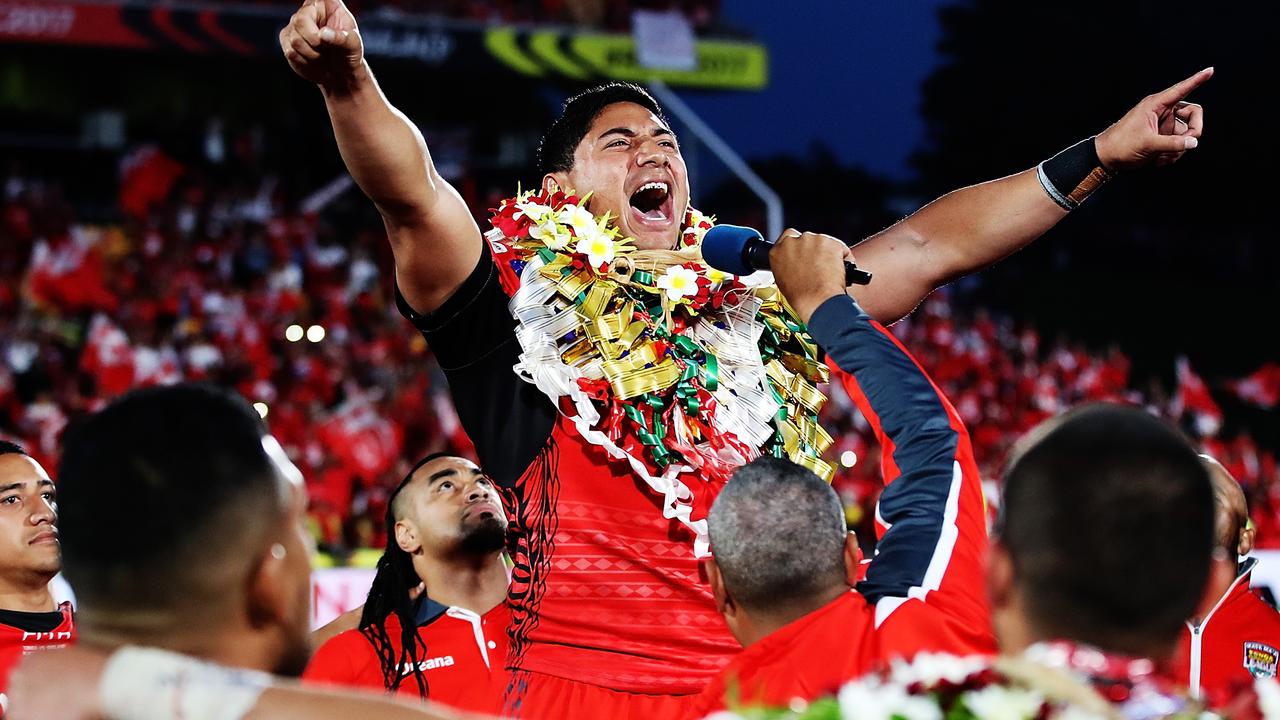
    For Manly Sea Eagles prop Taniela Paseka, Jason Taumalolo has been a hero since his schoolyard days. But this Thursday night, the 6-foot-something forward will set his long-standing admiration aside to lock horns with his Tongan national teammate in one of the most anticipated heavyweight matchups of the rugby league round.

    Taumalolo’s legacy stretches far beyond individual club matches. Nearly 10 years ago, the hard-running forward reshaped international rugby league alongside fellow star Andrew Fifita, when the pair made the groundbreaking decision to represent their ancestral home of Tonga, rather than higher-profile tier-one nations at the 2017 Rugby League World Cup. That call sparked what became known as the Tongan revolution, drawing a wave of top Polynesian-born talent to commit to the tiny Pacific nation, and injecting new life and energy into the international rugby league ecosystem.

    Decades later, that revolution has carried Paseka onto the national squad, where he earned three Test caps alongside his childhood idol at the 2024 Pacific Championships. This week’s club clash is far from the only Tongan connection on the card: Paseka is one of four standout Tongan-born players in the current Manly line-up, joining Haumole Olakau’atu, Tolu Koula and Lehi Hopoate, all set to take the field against one of the most influential figures in modern Tongan rugby.

    Taumalolo has shown no signs of slowing down as he enters the latter stages of his career. To open the 2026 club season, the veteran forward has turned in some of the best performances of his entire career, posting his highest average yardage totals since the 2020 campaign. Most recently, he racked up a mammoth 219 running metres against Brisbane in a match that underlined his enduring dominance in the middle of the field.

    For Paseka, the 2026 season marks a welcome return to form after a career-derailing injury. A devastating Achilles rupture forced him to miss nearly all of the 2025 campaign, leaving the big prop working for months to regain his match fitness and power. Now healthy, he is gearing up to go head-to-head with the man he once dreamed of sharing a field with.

    In an interview with NewsWire, Paseka opened up about the full-circle moment of facing his idol. “Playing against Jason, I’ve literally looked up to him since I was in school,” he said. “I remember the first time playing against him, I went home and told my family, ‘I’m playing against Jason Taumalolo!’

    So it’s always good to play against your fellow Tongans, but also it’s a good challenge for us to try and put it on top of them and try and win the game. I’m not thinking too much about individuals; I’m just thinking about me doing my job for my team and that’s it. It used to be weird playing against him. But now I’ve been in the game for a fair bit, it’s just another game to me. I don’t look at individuals too much, but he is a pretty cool player to play against and with.”

    While the pair will go to battle for their clubs this week, they are widely expected to reunite as Tongan teammates for the 2026 Rugby League World Cup later this year. Tonga is gearing up to bounce back after a disappointing 2025 Pacific Championships campaign, and still carries lingering disappointment from its 2022 World Cup run, where a breakout performance from Samoa prevented the side from advancing as far as many predicted it would.

    Paseka, however, says discussions about national team selection have not yet entered the conversation. “No, we’ve had no chat. Nothing’s been mentioned yet (about the World Cup),” he said. “It’s all club footy at the moment. Maybe when it gets closer to the end of the year, there might be a bit of chat, but I think this is very early. First of all, you’ve got to make the team. I don’t want to say I’ve made the team, but first play good footy and then hopefully make the team.”

  • Woman in court after puppies dumped by river

    Woman in court after puppies dumped by river

    A high-profile animal cruelty case in South Australia has drawn public criticism after a 53-year-old woman escaped a permanent criminal conviction for abandoning seven vulnerable puppies along the banks of Port Adelaide’s Port River.

    Barbara Anderson, a resident of Athol Park, entered a guilty plea to a single charge of animal ill-treatment during a hearing this week at Port Adelaide Magistrates Court, following a months-long investigation led by the Royal Society for the Prevention of Cruelty to Animals (RSPCA) South Australia. The disturbing incident dates back to March 30, 2024, when a local fisherman made a startling discovery: seven young red heeler puppies left stranded near the water’s edge.

    By the time authorities arrived, several of the defenseless pups had wandered into the shallow Port River waters, forcing police officers to wade into the current to retrieve all seven animals. Investigators later used local CCTV footage to trace the abandonment back to a Great Wall ute registered to Anderson. Following a public appeal to identify the puppies’ owner, Anderson presented herself at the Port Adelaide Police Station on May 7 to claim responsibility.

    Anderson gave conflicting accounts of the events to investigators: in court, she claimed she had brought her adult dog Missy and the seven puppies to the river for an outing, only to realize Missy was missing after she unloaded the puppies from her vehicle. She told the court she left the puppies unattended while she searched for Missy, and forgot to return them to her car before they went missing. She never filed a missing animal report with either police or the RSPCA, contradicting an earlier statement she gave to 7News claiming the dogs had escaped from her vehicle and were taken by an unknown third party.

    In a decision that has disappointed animal welfare advocates, Magistrate Briony Kennewell ruled against recording a permanent criminal conviction against Anderson. Instead, the 53-year-old was handed a 12-month good behaviour bond. She is permitted to keep her three current dogs, on the strict condition that the animals are desexed and properly registered with local authorities, but she is permanently banned from acquiring any new pets for her household. The court also ordered Anderson to pay $3000 in legal costs to the RSPCA, which rescued and successfully rehomed all seven abandoned puppies.

    Andrea Lewis, head of animal welfare at RSPCA South Australia, shared the organization’s reaction to the court’s ruling in a statement following the hearing. “Although we are disappointed with the outcome of this case, we are thankful that the puppies were safely rescued and unharmed as they could have easily drowned in the river,” Lewis said. The case has reignited public debate over animal cruelty sentencing standards in South Australia, with many community members questioning the leniency of the penalty for the abandonment of vulnerable animals.

  • Australia to join 40 countries in talks to potentially deploy defensive naval coalition to Strait of Hormuz

    Australia to join 40 countries in talks to potentially deploy defensive naval coalition to Strait of Hormuz

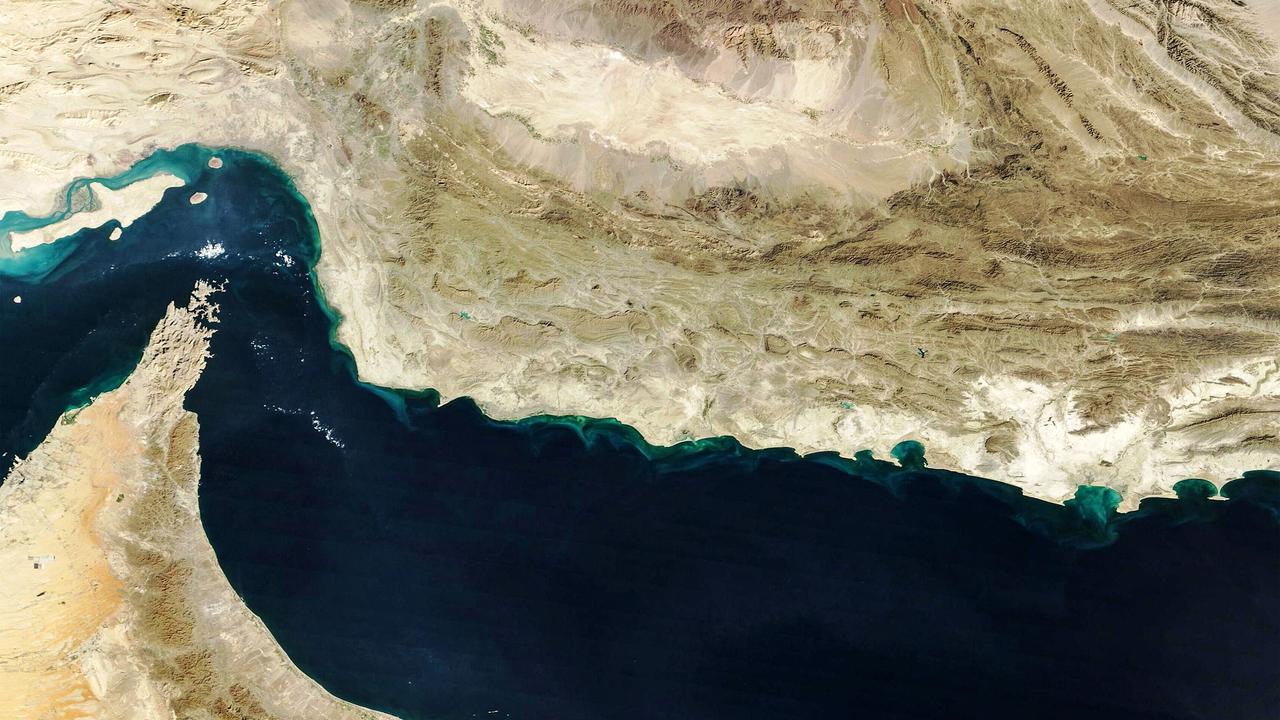
    A multilateral diplomatic push to reopen the strategically critical Strait of Hormuz, closed following cross-border attacks against Iran, is set to move forward this week with 41 nations including Australia participating in high-stakes international negotiations hosted by the United Kingdom and France.

    The waterway, one of the world’s most vital chokepoints for global energy trade, was effectively shut down by Tehran in late February after the U.S. and Israel carried out strikes on Iranian targets. The closure has sent shockwaves through global energy markets, disrupting crude oil exports from the Middle East — the planet’s largest oil-producing region — and driving widespread supply uncertainty that impacts economies worldwide.

    French President Emmanuel Macron has framed the potential multinational response to the crisis as a strictly defensive, neutral initiative focused on reestablishing unimpeded navigation through the strait. In a social media statement released overnight, Macron emphasized that the proposed defensive naval mission would remain independent of the ongoing conflict between warring parties, with deployment possible as soon as conditions on the water allow. He described the effort as a “peaceful multinational” undertaking aligned with international rules governing free maritime passage.

    Australia’s formal participation in this week’s summit was confirmed Tuesday by Federal Defence Industry Minister Pat Conroy, who reaffirmed Canberra’s commitment to a diplomatic resolution to the standoff. Speaking to the Australian Broadcasting Corporation, Conroy noted that Australia has already been involved in ongoing diplomatic efforts to reopen the strait, and said the federal government welcomes the UK and France’s convening of the new multilateral talks.

    “Australia will most definitely participate in that summit, we are very keen to see an opening by diplomatic means, on the Strait of Hormuz,” Conroy said.

    The minister also reiterated Australia’s longstanding call for de-escalation in the region, stating that the Australian government supports extending the current two-week ceasefire and pushing for permanent peace talks between the U.S. and Iran. “We’d like to see Iran and United States return to the negotiating table, and a permanent peace achieved, with the Strait of Hormuz open, so that traffic flows through,” Conroy added. “We think the US has achieved its war aims, and we should continue to encourage a diplomatic opening of the Strait of Hormuz.”

    The latest diplomatic push comes after weekend peace talks mediated by Pakistan failed to produce a breakthrough. Overnight, former U.S. President Donald Trump confirmed that a U.S. military blockade of the waterways is now in effect, raising new concerns about further escalation of tensions in the Persian Gulf region. This is a developing story, with more details expected to emerge from this week’s multilateral talks.

  • Brazil’s fugitive ex-spy chief detained by US immigration

    Brazil’s fugitive ex-spy chief detained by US immigration

    In a high-profile development that advances a major anti-coup investigation in Brazil, US Immigration and Customs Enforcement (ICE) officers took Alexandre Ramagem, the fugitive former head of Brazilian intelligence and close ally of ex-president Jair Bolsonaro, into custody on Monday. Ramagem had evaded Brazilian authorities for months after being convicted on charges tied to a failed 2022 coup plot aimed at preventing leftist leader Luiz Inacio Lula da Silva from taking office following his electoral victory.

    The 53-year-old former police officer led Brazil’s primary intelligence agency, ABIN, during Bolsonaro’s far-right presidency, and later won a seat as a federal legislator — a position he was forced to relinquish after his September conviction. A Brazilian court sentenced him to 16 years in prison for three grave offenses: armed criminal association, attempted coup d’état, and the attempted violent abolition of the rule of law. Rather than surrender to serve his sentence, Ramagem slipped across Brazil’s northern border into Guyana, skipping official immigration checks, before traveling to the United States using a diplomatic passport.

    Brazilian federal police confirmed the detention in an official statement Tuesday, framing the arrest as a successful outcome of cross-border law enforcement collaboration between Brazilian federal authorities and their US counterparts. An anonymous police source confirmed to Agence France-Presse that the detainee held in ICE custody, as listed on the agency’s public website, is indeed Ramagem. Brazil formally submitted an extradition request for Ramagem to US authorities back in December.

    The case has sparked immediate comment from Bolsonaro-aligned figures in the US. Paulo Renato Figueiredo, a pro-Bolsonaro influencer and grandson of the last military dictator to rule Brazil during the 1964–1985 authoritarian period, wrote on social media platform X that Ramagem was initially pulled over for a minor traffic violation before immigration officials took him into custody. Figueiredo claimed Ramagem held legal immigration status in the US at the time of detention and had a pending asylum application, adding that supporters expected a quick release and did not anticipate immediate deportation.

    Ramagem’s legal troubles extend far beyond the 2022 coup plot. He is currently the target of a separate federal investigation into allegations that he led a criminal ring that carried out illegal surveillance of political opponents and members of the Brazilian judiciary, on behalf of Bolsonaro and his inner circle. The operation reportedly used sophisticated Israeli surveillance software to target critics. Brazilian federal investigators have already recommended that prosecutors file formal criminal charges against Ramagem and more than 30 other co-conspirators, including Carlos Bolsonaro, one of the former president’s sons.

    The broader conspiracy case has already ended in a conviction for Jair Bolsonaro himself, who received a 27-year prison sentence for his role as the alleged mastermind of the coup attempt. Prosecutors have noted the plot failed only because top military commanders refused to back the putsch. The former president is currently serving his sentence under house arrest, after being moved from prison to a hospital last month for treatment of bronchopneumonia, with officials granting the home confinement arrangement on health grounds.

    The conviction of the former president has not ended the Bolsonaro family’s political ambitions: Bolsonaro has tapped his eldest son, sitting Senator Flavio Bolsonaro, to challenge incumbent Lula in Brazil’s October general election. New polling from the Datafolha Institute, published just one day before Ramagem’s detention, shows a razor-thin lead for Flavio Bolsonaro in a hypothetical head-to-head runoff, with 46% of intended voter support versus 45% for Lula.

  • US stocks finish higher amid hopes for US-Iran deal as oil price gains moderate

    US stocks finish higher amid hopes for US-Iran deal as oil price gains moderate

    Global financial markets saw mixed trading on Monday, with U.S. equities reversing early losses to close higher as hopes of a diplomatic breakthrough between Washington and Tehran cooled runaway crude oil prices. The upward momentum on Wall Street followed comments from former U.S. President Donald Trump claiming that Iranian officials had reached out to express an urgent desire for a negotiated settlement, just days after weekend discussions in Pakistan ended without any tangible agreement.

    Crude oil prices, which had spiked back above the $100 per barrel threshold after the U.S. tightened its blockade on Iranian energy imports, pulled back from their intraday highs by the end of the trading session. Both benchmark Brent North Sea crude and West Texas Intermediate finished the day higher but below the psychologically important $100 mark, settling at $99.36 and $99.08 per barrel respectively.

    “The market is betting that Trump will get some sort of a deal,” noted Peter Cardillo, chief market analyst at Spartan Capital Securities. Even as Trump issued a stark warning that any Iranian patrol boats approaching U.S. naval forces enforcing the blockade would be destroyed — defying growing international calls for a ceasefire — investors latched onto his signal that Tehran is seeking to de-escalate.

    Shortly after Trump’s midday comments from outside the Oval Office, major U.S. indices picked up clear upward momentum. The broad S&P 500 closed 1.0 percent higher at 6,886.24, the Dow Jones Industrial Average added 0.6 percent to finish at 48,218.25, and the tech-heavy Nasdaq Composite gained 1.2 percent to close at 23,183.74.

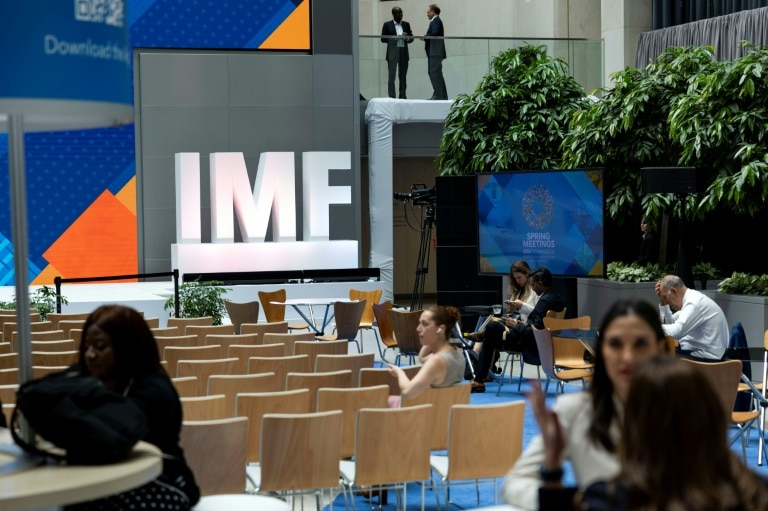
    Analysts at Briefing.com said the rally reflects growing market confidence that an end to the US-Iran conflict could be imminent, which would remove a major headwind for global equities. However, lingering risks of sustained inflation and a sharp global economic slowdown are expected to take center stage this week as top finance officials and central bankers gather in Washington for the annual spring meetings of the International Monetary Fund and the World Bank.

    Last Friday, official U.S. data showed annual consumer inflation accelerated to 3.3 percent in March, the highest reading since May of last year, putting additional pressure on the Federal Reserve to balance price stability and growth. Russ Mould, investment director at UK-based wealth manager AJ Bell, pointed out that talk of stagflation has reemerged as geopolitical turmoil threatens to suppress global output while pushing up energy and food prices.

    Unlike the uptick on Wall Street, most major Asian and European markets ended the session in negative territory. London’s FTSE 100 slipped 0.2 percent, Paris’ CAC 40 fell 0.3 percent, Frankfurt’s DAX dropped 1.3 percent, Tokyo’s Nikkei 225 declined 0.7 percent, and Hong Kong’s Hang Seng Index lost 0.9 percent. Only Shanghai’s Composite index posted a marginal 0.1 percent gain.

    David Morrison, senior market analyst at Trade Nation, observed that reopening the Strait of Hormuz — a critical global energy chokepoint — remains the key prerequisite for a sustained rally in risk assets. Even so, many traders hold the conviction that the conflict will conclude sooner rather than later: futures contracts for crude oil deliveries in the second half of the year are currently priced well below spot market rates, indicating expectations that reduced geopolitical risk will bring down energy costs.

    “As far as oil traders are concerned, this war may be in its seventh week, but it should be resolved by summer,” Morrison said.

    Still, European leaders are bracing for long-term economic fallout from the energy shock. Friedrich Merz, Chancellor of Germany — Europe’s largest economy — warned on Monday that the impacts of the conflict will be felt “for a long time to come, even after it is over”, as his administration unveiled new relief measures including a temporary cut to fuel taxes.

    In central European political news that moved local markets, Hungarian stocks jumped 5 percent on Monday after conservative opposition leader Peter Magyar’s Tisza party secured a landslide majority in Sunday’s parliamentary elections, ending 16 years of rule by Viktor Orban. The election result paves the way for improved relations between Budapest and the European Union, and economists at ING predict the new pro-EU government could soon set a target date to adopt the euro.

    “If timed perfectly, this could boost market confidence and give the Tisza party more time to work on the Hungarian economy with some tailwinds,” ING analysts wrote in a recent research note.

  • Norwegian effectively cured of HIV after transplant from brother

    Norwegian effectively cured of HIV after transplant from brother

    In a groundbreaking medical announcement made Monday, a 63-year-old Norwegian man has been pronounced functionally cured of HIV, marking one of the raiest and most hopeful breakthroughs in global HIV research in recent years. Dubbed the “Oslo patient,” he becomes the first person worldwide to achieve long-term HIV remission following a stem cell transplant from a related family member, joining a small group of fewer than 10 people globally who have reached this milestone after receiving transplants to treat concurrent blood cancer.

    The patient had lived with an HIV diagnosis since 2006, before receiving a devastating secondary diagnosis of myelodysplastic syndrome, a life-threatening blood cancer, in 2017. His care team at Oslo University Hospital launched a search for a suitable donor that could address both conditions, ultimately turning to the patient’s older brother when no matching unrelated donor with the required genetic trait was found. In a stunning twist of fate revealed on the day of the 2020 transplant, doctors discovered the brother unknowingly carried the rare CCR5Δ32 genetic mutation—an alteration that blocks HIV from entering and infecting human immune cells. Only 1% of northern European populations carry this rare protective mutation.

    “It was like winning the lottery twice,” lead study author Dr. Anders Eivind Myhre, of Oslo University Hospital, told Agence France-Presse. The case study detailing the achievement was published in the journal *Nature Microbiology*. Two years post-transplant, when the patient discontinued his daily antiretroviral therapy that had long kept his viral load suppressed, researchers found no trace of replicating HIV in samples of his blood, bone marrow, or intestinal tissue. “For all practical purposes, we are quite certain that he is cured,” Myhre confirmed. The patient, who has chosen to remain anonymous, is now thriving with abundant energy and reports enjoying a full, unrestricted life, according to his care team.

    Unlike the handful of prior cured HIV cases that relied on unrelated donor transplants, the Oslo case marks the first time a successful cure has been achieved with a family member donor. Study co-author Dr. Marius Troseid of the University of Oslo explained that the patient’s entire immune system has been fully replaced by the donor’s genetically resistant cells—a complete reconstitution that has been clearly documented in both his bone marrow and gut tissue for the first time in any cured HIV patient. Given his current excellent health, Troseid noted that the “Oslo patient” label may no longer fit: “The Oslo patient is perhaps no longer a patient. At least he doesn’t feel like it.”

    This achievement builds on a decades-long line of incremental breakthroughs, starting with the first ever declared HIV cure, that of Timothy Ray Brown, the “Berlin patient,” in 2008. Subsequent cases have since been reported in London, New York, Geneva, Düsseldorf, and other cities around the world, with one 2024 case even achieving long-term remission without a donor carrying two copies of the mutated CCR5 gene, expanding researchers’ understanding of what makes a cure possible.

    Crucially, experts stress that the high-risk, invasive stem cell transplant procedure remains only an option for the small subset of people living with HIV who also have a life-threatening blood cancer, making it completely unfeasible for the more than 38 million people globally living with HIV. Still, researchers remain optimistic that the insights gained from studying these rare, successful cases will deepen scientific understanding of how HIV persists in the body and pave the way for a widely accessible cure that can help all people living with the virus end their lifelong reliance on antiretroviral treatment.

  • French court jails Lafarge ex-CEO for funding IS in Syria

    French court jails Lafarge ex-CEO for funding IS in Syria

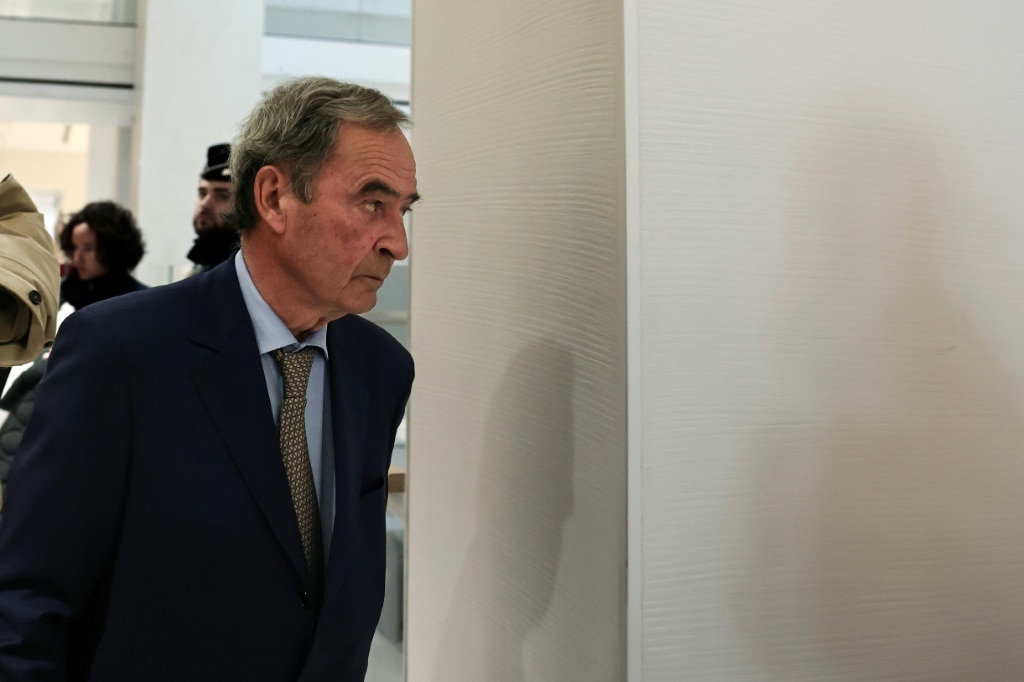
    In a landmark ruling delivered on Monday, a French court has found cement giant Lafarge, currently part of Swiss conglomerate Holcim, and its former top executive guilty of financing terrorist groups including the Islamic State (IS) to keep its northern Syria cement plant operational during the early years of the country’s civil war. The court ordered the firm to pay a 1.125 million euro ($1.31 million) fine — the maximum penalty requested by prosecutors — and sentenced former CEO Bruno Lafont to six years in prison, to be served immediately. Lafont has already confirmed he will appeal the conviction.

    The case centers on payments totaling nearly 5.6 million euros ($6.5 million) made between 2013 and 2014 through Lafarge’s local subsidiary, Lafarge Cement Syria, to jihadist factions, intermediaries, and IS fighters. Presiding judge Isabelle Prevost-Desprez emphasized that these undisclosed payments amounted to a formal commercial partnership with IS, noting that the financial support played a critical role in enabling the terrorist group to consolidate control over Syrian natural resources, fund its violent operations across the region, and plan attacks targeting European countries. The judge described the scale and secrecy of the arrangements as making the offenses extraordinarily serious.

    The background of the case traces back to 2010, when Lafarge completed construction of a $680 million cement factory in Jalabiya, northern Syria, just one year before widespread anti-government protests erupted and devolved into a full-scale civil war against the regime of Bashar al-Assad. As violence escalated in 2012, most multinational corporations pulled out of the country entirely. Unlike its competitors, Lafarge only evacuated its foreign expatriate staff, choosing to retain its local Syrian workforce and keep the plant running. When IS seized large swathes of northern Syria and neighboring Iraq in 2014 to declare its self-proclaimed transnational caliphate, the company relied on payments to IS and other armed groups including Jabhat al-Nusra, then al-Qaeda’s Syrian affiliate, to secure access to raw materials and guarantee safe passage for its trucks and employees. The factory ultimately fell under IS control in September 2014.

    All eight defendants in the case — the company itself, five current and former senior and operational staff, and two Syrian intermediaries — were found guilty of financing terrorist organizations. Sentences for the co-defendants range from 18 months to seven years in prison. Firas Tlass, a Syrian former executive who facilitated the direct payments to jihadist groups, was sentenced to seven years in prison in absentia. Christian Herrault, the firm’s former deputy managing director, received a five-year sentence. Herrault had defended his actions by arguing the decision to maintain operations was motivated by concern for the livelihoods of local Syrian employees, stating: “We could have washed our hands of it and walked away, but what would have happened to the factory’s employees?”

    Prosecutors rejected this framing, arguing that the entire decision to keep the plant open was driven by cynical pursuit of profit. Counterterrorism prosecutors noted in their December closing argument that 69-year-old Lafont issued explicit instructions to continue operations, calling the choice “staggering in its cynicism.” Lafont, who led the company from 2007 to 2015, has long denounced the French investigation as biased.

    This ruling marks the second legal action against Lafarge over its Syria activities, following a 2022 case in the United States where the company pleaded guilty to conspiring to provide material support to U.S.-designated terrorist organizations and agreed to pay a $778 million fine. That 2022 case marked the first time any corporation had ever faced such a charge in the U.S. legal system, with U.S. prosecutors alleging Lafarge actively worked with IS to eliminate competing businesses through a de facto revenue-sharing agreement with the group.

    Holcim, which completed its acquisition of Lafarge in 2015, has repeatedly stated it had no knowledge of the illegal Syria arrangements prior to the investigation. A separate, ongoing French investigation remains open into allegations that Lafarge is complicit in crimes against humanity connected to its Syria operations. The legal inquiry was first launched in France in 2017, following a series of media investigations and two 2016 legal complaints: one from the French finance ministry over alleged violations of economic sanctions, and a second from NGOs and 11 former Lafarge Syria employees over charges of terrorist financing. The IS caliphate was ultimately defeated militarily by Kurdish-led Syrian forces backed by U.S. airstrikes in 2019, years after the company’s payments to the group took place.

  • Randwick City Council slammed by locals over ‘cash grab’ paid parking plan for popular beaches

    Randwick City Council slammed by locals over ‘cash grab’ paid parking plan for popular beaches

    A controversial plan to install paid metered parking at some of Sydney’s most frequented coastal destinations has triggered intense public pushback, with local residents and business owners branding the initiative a blatant “cash grab” that will harm local livelihoods and disrupt community access to public shorelines.

    The proposal, put forward by Randwick City Council, would apply paid parking regulations to a string of popular beaches across the local government area, including Coogee, Maroubra, La Perouse, Little Bay and Clovelly. While official hourly rates have not been finalized, council consultation documents use existing pricing at nearby Sydney beaches as a reference point: Manly Beach charges $10 per hour, Bondi Beach sets rates at $11.60 per hour, and a temporary summer offset parking program at Coogee currently costs $5.50 per hour.

    Council officials have grounded their plan in 2023 parking surveys conducted during peak summer season, which found that all beachside parking zones in the area operate at or near full capacity during peak periods. Per the council’s consultation materials, Coogee Beach’s 1,781 public parking spots reach an average 88% occupancy rate on summer weekends, with roughly 4,700 vehicles visiting the area daily for an average stay of just over three hours. Officials argue this high occupancy leaves thousands of additional vehicles circling neighborhoods searching for available spots, creating traffic congestion and reducing access for new visitors.

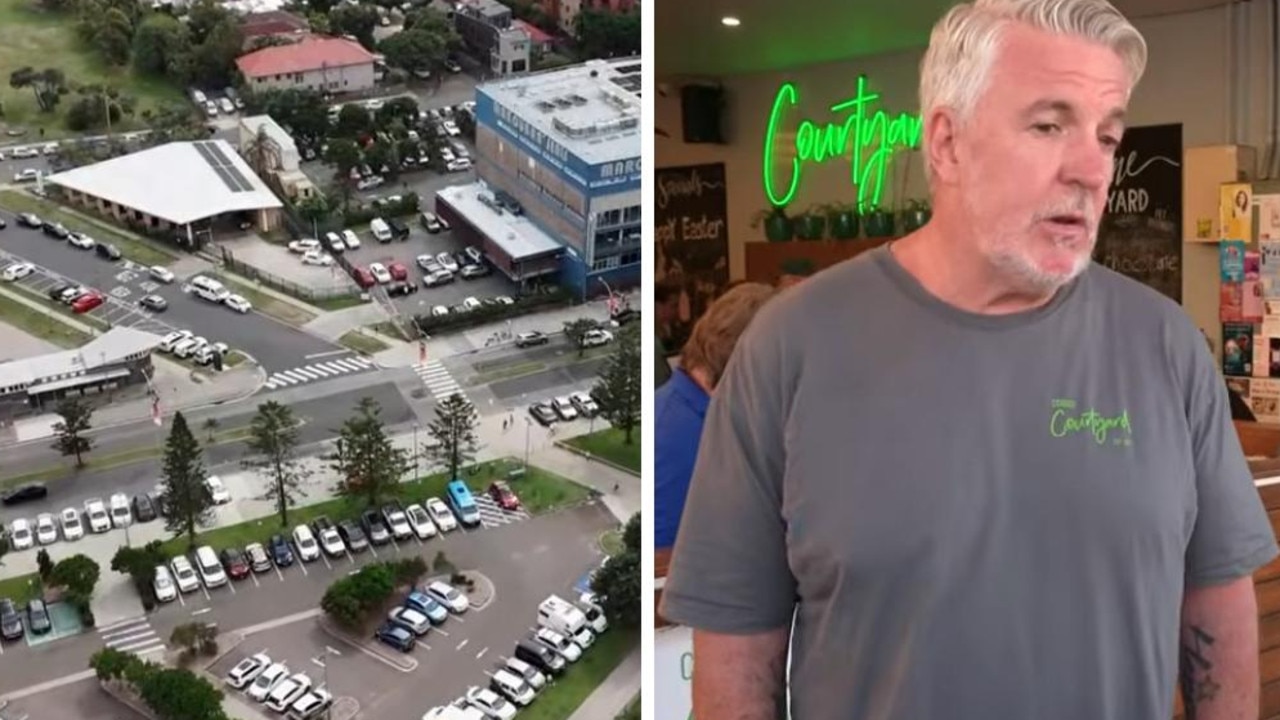
    The public consultation period for the proposal is scheduled to close this week, but anger among local stakeholders has already boiled over. Dave Martin, owner of the Coogee Courtyard hospitality business, warned that mandatory paid parking would deter casual visitors from stopping in the beachside area, delivering a major blow to small local operators. “It’s just another kick in the guts, really,” Martin told Australian current affairs program *A Current Affair* on Monday. “It’s pay to park just to grab a coffee. This is going to stop people from coming down here. It’s going to hurt us.”

    Local Maroubra resident Jay Merten also criticized the plan, taking issue with the council’s offer of only one free annual parking permit per household. Merten, who has two teenage children that will soon be driving, noted that the rule would force additional household vehicles to compete for an already limited supply of public spots. “We could have a couple of cars in a few years time,” he said. “It will be more cars looking for fewer spaces.”

    But Randwick City Mayor Dylan Parker has defended the proposal, pushing back against claims it is a revenue grab. Parker explained in an initial video announcement of the plan back in March, and repeated in comments to *A Current Affair*, that paid parking would increase spot turnover, opening up beach access to more visitors rather than allowing spaces to be occupied by vehicles for full days. He added that 100% of all revenue generated from paid visitor parking would be reinvested back into coastal management and community amenities, covering the $23.5 million the council spends annually on beachside maintenance, upgrading coastal infrastructure, and expanding sustainable public transport options for beachgoers. “Currently locals pay 100 per cent of the costs of managing our coastline,” Parker said.

  • War in the Middle East: latest developments

    War in the Middle East: latest developments

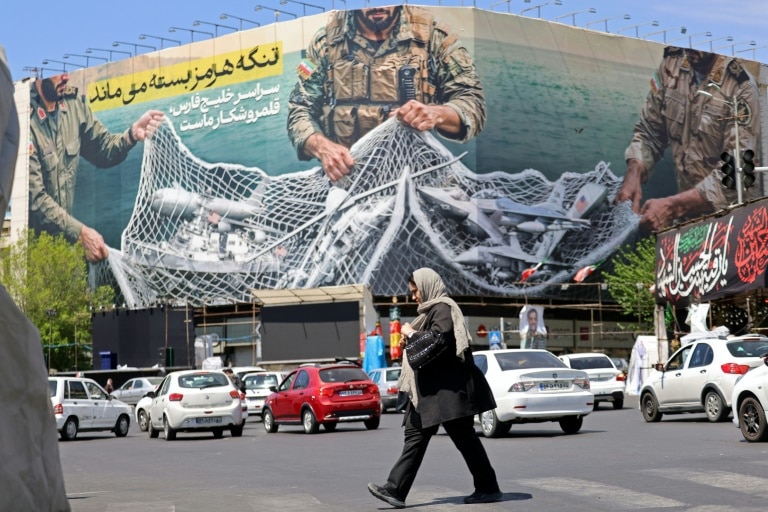
    As the clock ticks down to a planned U.S. naval blockade of Iranian ports scheduled to take effect Monday at 1400 GMT, the Middle East is facing one of its most volatile moments in recent years, with multiple global powers rushing to navigate a crisis that threatens global energy supplies and regional stability. At the heart of the standoff is the Strait of Hormuz, the critical chokepoint through which roughly one-fifth of the world’s daily oil supply passes. In Tehran’s Revolution Square, a towering billboard sums up the Islamic Republic’s defiant posture: “The Strait of Hormuz remains closed” to any hostile incursion.

    Iran’s top military command has issued a scathing rebuke of the planned U.S. action, labeling the proposed restriction on maritime navigation through international waters as an illegal act of outright piracy. If Washington follows through on its threat to blockade Iranian ports, the Iranian military warned in a statement broadcast on state television, no ports across the Persian Gulf will be safe from retaliation. Parliament Speaker Mohammad Bagher Ghalibaf, who led Iranian delegations in failed weekend peace talks hosted in Pakistan, doubled down on Tehran’s refusal to concede to external pressure. “We will not bow to any threats,” Ghalibaf stated, adding “If they fight, we will fight, and if they come forward with logic, we will deal with logic.” Iran’s Revolutionary Guards reinforced this stance, confirming that Iranian security forces maintain full control over the strait and warning that any “wrong move” by adversarial powers will leave them trapped in a “deadly vortex.”

    U.S. Central Command clarified the parameters of the coming blockade in a post on X, noting that the measure will be enforced evenly against all vessels entering or exiting Iranian ports along both the Arabian Gulf and Gulf of Oman, but will not block transit through the strait for ships traveling to and from non-Iranian ports. For his part, U.S. President Donald Trump has adopted a cavalier attitude toward the prospect of renewed diplomatic talks with Tehran, telling reporters “I don’t care if they come back or not. If they don’t come back, I’m fine.” Trump also issued a sharp new threat to China over unsubstantiated claims that Beijing plans to supply weapons to Iran, threatening to impose a staggering 50% tariff on Chinese imports if the allegations prove true. China’s foreign ministry spokesperson Guo Jiakun rejected those claims as “baseless smears” during a recent press briefing, and joined the global call for unimpeded commercial navigation through the strait. Guo also urged both Washington and Tehran to return to diplomatic dialogue and honor existing ceasefire agreements, following the collapse of last weekend’s peace negotiations in Pakistan.

    Russia has put forward a potential confidence-building measure to support future diplomacy: Kremlin spokesperson Dmitry Peskov confirmed that President Vladimir Putin’s long-standing offer to take in Iran’s enriched uranium as part of a broader U.S.-Iran peace deal remains on the table, though no progress has been made to implement the proposal. Across Europe, leaders are grappling with the looming economic fallout of the crisis. German Chancellor Friedrich Merz warned that Europe’s largest economy will feel the impact of the war-driven energy shock “for a long time to come, even after it is over.” In response, his government has rolled out new relief measures including a cut to fuel taxes. Spanish Defense Minister Margarita Robles called Trump’s planned blockade “makes no sense.” Meanwhile, French President Emmanuel Macron announced that Paris and London will collaborate to organize a conference in the coming days to launch a “peaceful multinational mission” separate from the warring parties, aimed at restoring unobstructed navigation through the strait. The Vatican also found itself drawn into the crossfire: after Pope Leo XIV issued a public plea for peace, Trump said he was “not a big fan” of the pontiff and called him “very liberal.” The Pope responded simply, saying he had “no intention to debate” with the U.S. president.

    On the ground in Lebanon, the Israeli military reported a significant advance in its ongoing invasion of the country’s southern region, confirming that troops have surrounded the key strategic town of Bint Jbeil and launched a ground assault on the area. Over the past week, Israeli forces say they have killed more than 100 fighters from the Iran-backed militant group Hezbollah in the surrounding area.

    The escalating crisis has already sent shockwaves through global energy markets. After the collapse of peace talks and the announcement of the U.S. blockade, oil prices rebounded sharply above the $100 per barrel threshold in Monday trading. West Texas Intermediate, the U.S. oil benchmark for May delivery, climbed roughly 7% to settle at $103.55 per barrel, while Brent crude, the international benchmark for June delivery, also gained 7% to reach $101.83 per barrel.

  • Teenager, 14, rescued following multi-hour operation after being swept from rocks at Warriewood, in Sydney

    Teenager, 14, rescued following multi-hour operation after being swept from rocks at Warriewood, in Sydney

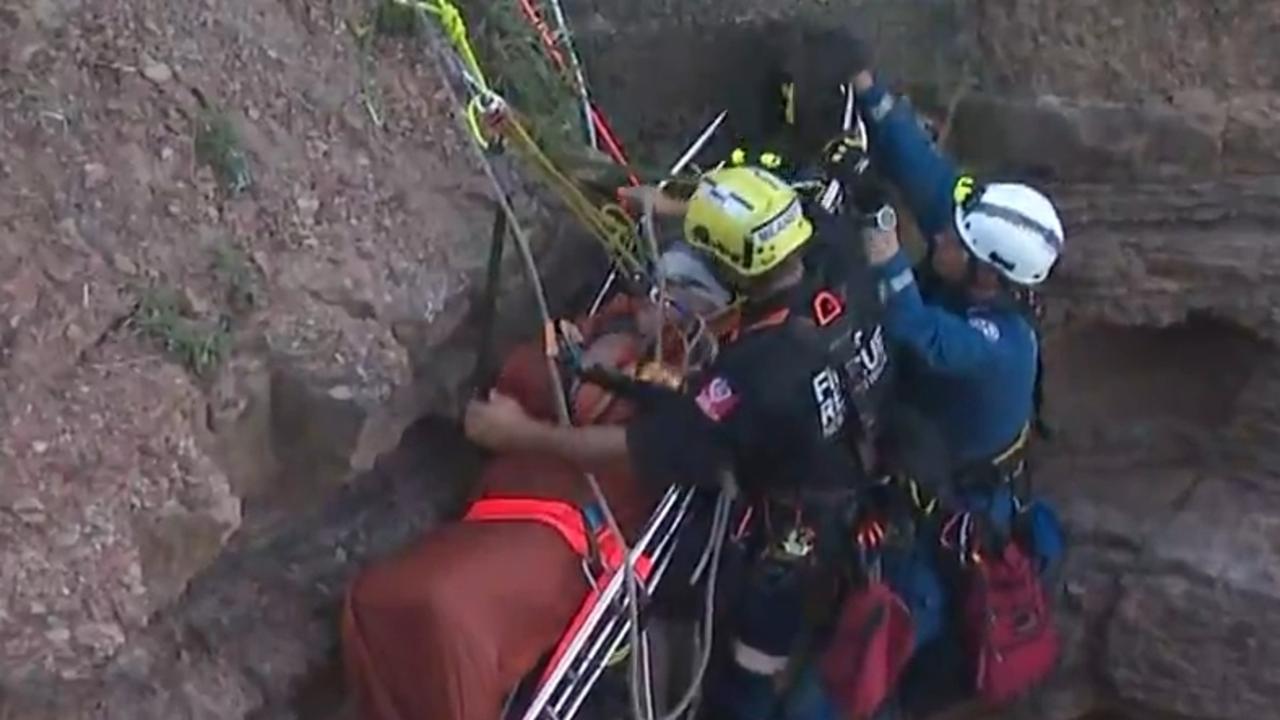
    A daring, hours-long emergency operation has saved the life of a 14-year-old boy who was swept off a rocky coastline into the Tasman Sea on Sydney’s Northern Beaches earlier this week. The incident unfolded on Monday afternoon at the Warriewood blowhole, a popular coastal landmark positioned near Turimetta Beach Headland, when an unexpectedly large ocean swell knocked the teen from the cliffside and into rough waters below.

    Local emergency dispatch received the first distress call about the accident at approximately 1:20 pm, prompting an immediate multi-agency response that included water police, helicopter patrols, and Fire and Rescue NSW crews. Due to the remote and dangerous cliffside location where the injured teenager was stranded, rescue teams had to carry out a complex technical extraction rather than a standard water retrieval.

    Dramatic on-scene footage captured by local media outlet Nine News shows Fire and Rescue NSW personnel abseiling down the sheer rock face to reach the boy, before securing him to a winch system to pull him back up to the cliff top. Acting Superintendent Andrew Bickle of Fire and Rescue NSW explained that the teen’s fall-related injuries made a rope extraction the only safe option for moving him out of the hazard zone.

    “After extricating him from that area on rope by our crews, he was then transferred to ambulance paramedics for immediate on-scene care,” Bickle said. The full rescue operation stretched over nearly three hours, with the boy finally brought to safety just before 4 pm.

    Following the extraction, emergency medics confirmed the teen had sustained multiple cuts, scrapes and abrasions across his body, as well as a moderate head injury from the fall. He was transported to Sydney Children’s Hospital in a stable condition, with no reports of life-threatening damage as of the latest updates. The successful rescue comes as coastal authorities regularly warn visitors to Sydney’s rocky shorelines to stay alert for unexpected large swells, which can catch beachgoers off guard even on calm weather days.