标签: Oceania

大洋洲

  • Man charged for suspicious bushland death on NSW south coast

    Man charged for suspicious bushland death on NSW south coast

    In a significant development to a year-long investigation, New South Wales police have formally charged a 29-year-old man with the murder of a 60-year-old victim discovered in North Nowra bushland. The case dates back to December 2024 when emergency services responded to reports of an unconscious male on a rural property adjacent to a gas pipeline clearing. Despite paramedic intervention, the victim succumbed to severe head injuries at the scene, prompting authorities to classify the death as suspicious.

    Detective Inspector Catherine Flood revealed that the alleged assault resulted from a random altercation between two strangers, with no weapons involved in the confrontation. The breakthrough came on Monday evening when South Coast Police District detectives arrested the suspect at a North Nowra residence. While the primary charge relates to the homicide, the accused also faces multiple unrelated offenses and has been denied bail ahead of his court appearance.

    Authorities emphasize that their investigation remains active, with investigators not ruling out additional participants. Police have renewed their appeal for community assistance, urging anyone with information to contact Crime Stoppers. The case highlights ongoing concerns about random violence in regional communities, with law enforcement continuing to pursue all leads in this complex investigation.

  • Australia’s largest coal power station Eraring to remain open for two more years

    Australia’s largest coal power station Eraring to remain open for two more years

    In a significant energy policy shift, Australia’s largest coal-fired power station will continue operations for an additional two years beyond its scheduled retirement date. Origin Energy announced Tuesday that its Eraring facility in New South Wales’ Hunter Valley will remain operational until August 2029 rather than closing in 2027 as previously planned.

    The decision follows extensive market analysis revealing insufficient renewable energy infrastructure development to compensate for the plant’s retirement. Origin CEO Frank Calabria emphasized that while substantial progress continues on renewable energy projects and transmission infrastructure, extending Eraring’s operational timeline remains essential for maintaining grid reliability and stable power supply during the transition period.

    This extension addresses repeated warnings from the Australian Energy Market Operator regarding potential electricity shortfalls and system instability in New South Wales if the 2,880-megawatt facility were decommissioned prematurely. The plant originally faced closure in 2025 before receiving its first extension to 2027.

    NSW Climate Change and Energy Minister Penny Sharpe endorsed the decision, noting it would help stabilize energy prices while the state continues its renewable energy expansion. Since the last election, NSW has increased operational renewable capacity by nearly 70% – equivalent to Eraring’s total output.

    Origin maintains this temporary extension won’t affect its emissions reduction targets, including net-zero by 2050. The company plans to replace the retired plant with a major battery storage project, with construction anticipated to commence in 2031.

  • Colombian paramilitary-turned-peace-envoy sentenced over atrocities

    Colombian paramilitary-turned-peace-envoy sentenced over atrocities

    In a landmark judicial decision, former Colombian paramilitary commander Salvatore Mancuso has received a 40-year prison sentence for atrocities committed during the nation’s prolonged armed conflict. The ruling from a Barranquilla court convicted Mancuso of 117 distinct crimes against the Wayuu Indigenous community, including murders, forced disappearances, and systematic displacements occurring between 2002 and 2006 in the northern La Guajira region bordering Venezuela.

    The sentencing presents a complex dilemma for President Gustavo Petro’s administration, which had previously appointed Mancuso as a peace negotiator following his repatriation from the United States. The ex-paramilitary leader had recently been facilitating government negotiations with the Gulf Clan cartel—Colombia’s dominant narcotics organization that evolved from paramilitary factions.

    Mancuso’s legal situation remains particularly intricate due to his dual roles as both convicted war criminal and government-sanctioned peace envoy. His sentence includes a substantial $14 million fine payable to victims, though Colombian restorative justice provisions could potentially reduce his incarceration to eight years should he fully disclose his crimes and participate in reparations programs.

    This case underscores the ongoing challenges in Colombia’s peace process, where former combatants often navigate dual roles between justice and reconciliation. Mancuso previously served 16 years in U.S. imprisonment on drug trafficking charges before his extradition ended in 2023. His appointment as peace envoy had been controversial from its inception, drawing criticism from human rights organizations and victims’ groups.

    The paramilitary groups Mancuso helped lead—particularly the United Self-Defense Forces of Colombia (AUC)—emerged in the 1990s as counter-insurgency forces against Marxist guerrillas but rapidly became embroiled in narcotics trafficking and widespread human rights violations. Their campaign targeted union organizers, indigenous leaders, human rights advocates, and political figures allegedly connected to rebel groups.

    Colombia’s six-decade internal conflict has claimed over 250,000 lives, with violence significantly diminishing following the 2016 peace accord with the Revolutionary Armed Forces of Colombia (FARC). However, dissident factions continuing to oppose the agreement still contest control over cocaine production territories and periodically attack security forces, maintaining Colombia’s position as the world’s primary cocaine producer.

  • ‘I’m coming after you’ Hanson’s warning to the PM

    ‘I’m coming after you’ Hanson’s warning to the PM

    Australian political discourse has intensified dramatically as One Nation leader Pauline Hanson launched a fierce counterattack against Prime Minister Anthony Albanese, responding to his characterization of her party’s growing influence as concerning. The exchange marks a significant escalation in political rhetoric amid unprecedented polling numbers for the minority party.

    Prime Minister Albanese initially expressed apprehension about One Nation’s surge during a radio interview on KIIS FM’s Kyle and Jackie O show, describing the party as a divisive force capitalizing on public grievances. He specifically highlighted concerns about right-wing populism gaining traction and creating societal divisions.

    The political climate shifted considerably when recent Newspoll data revealed extraordinary developments in voter preferences. One Nation achieved a historic breakthrough, securing 22% of the primary vote according to The Australian’s survey. This remarkable 8-point increase since the May 3 election represents the first instance in Australian political history where a minor party has surpassed a major party in polling, with the Coalition trailing at 21% while Labor maintained 32%.

    Hanson delivered her rebuttal during a Sky News appearance, employing strong language to condemn the Prime Minister. She labeled Albanese the worst prime minister in Australia’s history and accused him of hypocrisy regarding divisive leadership. The One Nation leader specifically referenced the failed Voice to parliament initiative and alleged insufficient action against antisemitism as evidence of Albanese’s own divisive governance.

    The political confrontation concluded with Hanson issuing dual warnings—first directly challenging Albanese’s position by vowing to campaign vigorously for his removal in the next election, and second cautioning Opposition Leader Sussan Ley against collaborating with Labor on proposed hate speech legislation currently before parliament, which Hanson characterized as fundamentally flawed.

  • Canadian woman found dead surrounded by dingoes on Australian beach

    Canadian woman found dead surrounded by dingoes on Australian beach

    Authorities in Queensland, Australia, are investigating the tragic death of a 19-year-old Canadian tourist whose body was discovered surrounded by dingoes on K’Gari Island. The incident occurred near the historic Maheno shipwreck site, a popular tourist attraction, early Monday morning.

    According to Queensland Police Inspector Paul Algie, two witnesses driving along the beach at approximately 06:30 local time observed approximately ten dingoes congregating around an object they subsequently identified as a human body. The victim, whose identity remains undisclosed, had been employed at a local backpacker’s hostel for the previous six weeks and had informed friends of her intention to take a morning swim around 05:00.

    Inspector Algie described the scene as “traumatic and horrific,” noting visible markings on the body consistent with dingo interference. However, investigators have not yet determined whether the cause of death was drowning or animal attack. A post-mortem examination scheduled for Wednesday is expected to provide conclusive evidence.

    K’Gari Island, formerly known as Fraser Island, is recognized for its significant dingo population, which holds cultural importance to local Indigenous communities and enjoys protected status as a native species. Authorities emphasized that despite their cultural significance, dingoes remain wild animals requiring cautious distance. The area where the incident occurred is characterized as wilderness terrain with known dingo activity.

    The tragic event has highlighted the inherent risks of human-wildlife interaction in Australia’s natural landscapes, particularly in regions where protected species coexist with tourist activities.

  • Ninth policeman dies in Guatemala gang riots, attacks

    Ninth policeman dies in Guatemala gang riots, attacks

    Guatemala has plunged into a state of emergency following a devastating surge in gang-related violence that has resulted in the deaths of nine police officers. President Bernardo Arevalo enacted the 30-day emergency measure on Sunday in response to coordinated riots across three prisons and a subsequent wave of targeted attacks on law enforcement personnel.

    The crisis ignited when gang-affiliated inmates seized 45 guards and a psychiatrist as hostages on Saturday. Their demands centered on the transfer of gang leaders from maximum-security facilities to institutions with more lenient conditions. Guatemalan security forces, with military support, executed a successful operation on Sunday to reclaim control of the prisons and liberate all captives.

    In retaliation for the government’s crackdown, criminal networks launched aggressive assaults on police stations and patrol units. These attacks claimed the lives of eight officers immediately and left another critically wounded. The ninth fatality, Officer Frayan Medrano, succumbed to his injuries on Monday after being shot during a motorcycle patrol south of Guatemala City. The violence also left a dozen additional officers wounded and resulted in the death of one suspected gang member.

    Authorities have attributed much of the violence to the Barrio 18 gang, alongside their rivals MS-13. Both organizations are recognized by the United States as terrorist entities and are held responsible for significant drug trafficking and criminal operations throughout Central America. In a significant development, security forces captured Aldo Dupie, known by the alias ‘El Lobo’ (The Wolf), the alleged leader of Barrio 18 in Guatemala. Official footage showed him being taken into custody with bloodstained clothing.

    The declared state of emergency grants expanded powers to security forces, including the authority to suspend assembly rights and conduct arrests without immediate judicial oversight. This crisis continues a pattern of prison unrest in Guatemala dating back to mid-2025, with gang members repeatedly demanding improved conditions for their incarcerated leaders.

    Guatemala faces profound security challenges, with homicide rates reaching 17.65 per 100,000 inhabitants last year—more than double the global average. The nation’s struggle with organized crime reflects broader regional patterns where criminal enterprises continue to operate from within prison systems, often with alleged collusion from corrupt officials.

  • Chile wildfires rage for third day, entire towns wiped out

    Chile wildfires rage for third day, entire towns wiped out

    Southern Chile is grappling with a devastating wildfire catastrophe that has claimed at least 19 lives and obliterated entire communities, with infernos continuing their destructive path for a third consecutive day. The disaster zones in Nuble and Biobio regions, approximately 500 kilometers south of Santiago, have been declared emergency areas, triggering military deployment and nighttime curfews in the most severely affected localities.

    Residents described harrowing escapes as walls of flame engulfed neighborhoods. Yagora Vasquez, a Lirquen port town inhabitant, recounted her frantic evacuation: “The situation turned horrific. I desperately tried to saturate my home with water, but witnessing the advancing flames forced us to flee immediately with my seven-year-old son and our dog.” The aftermath reveals landscapes of devastation—charred vehicles line streets where homes once stood, with survivors sifting through ashes to recover fragments of their lives.

    The meteorological conditions have significantly complicated firefighting efforts, with winds exceeding 70 kilometers per hour and temperatures approaching 30°C (86°F). Despite brief nocturnal respites, authorities confirm that the most critical blazes remain uncontained. President Gabriel Boric warned citizens via social media platform X about anticipated unfavorable weather patterns that could reactivate smoldering hotspots throughout the day.

    This environmental disaster echoes previous tragedies in the region. Many residents had relocated to these areas following the devastating 2010 tsunami that claimed over 500 lives, only to confront a different elemental threat. Mareli Torres, whose two-story home was reduced to blackened walls, contrasted the experiences: “This firewave proved far more destructive than the ocean surge. The earthquake brought devastation, but these fires have created unimaginable destruction.

    Scientific research from Santiago’s Center for Climate and Resilience Research demonstrates that climate change has fundamentally altered fire dynamics in south-central Chile. The 2024 study establishes that long-term warming and drying trends have created conditions conducive to extreme wildfire seasons. This pattern has manifested repeatedly in recent years, with February 2024 fires near Viña del Mar causing 138 fatalities and unprecedented land area destruction during the 2016/17 and 2022/23 fire seasons.

    The regional dimension of this crisis extends beyond Chilean borders, with Argentine Patagonia reporting over 15,000 hectares consumed by wildfires in recent days, highlighting the broader environmental challenges facing southern South America.

  • Aussie renters need to find extra $1560 per year as prices hit new high, ‘supply and demand’ imbalance blamed

    Aussie renters need to find extra $1560 per year as prices hit new high, ‘supply and demand’ imbalance blamed

    Australia’s housing sector is confronting a severe rental affordability crisis, with median weekly rents reaching an unprecedented high of $650 nationally. This represents a 1.6% increase in the final quarter of 2025, compelling the average renter to allocate an additional $1,560 annually—a financial burden that shows no signs of abating.

    According to REA Group senior economist Anne Flaherty, the fundamental driver behind this trend is a critical supply-demand imbalance exacerbated by robust population growth, predominantly fueled by overseas migration. “New arrivals to Australia typically enter the rental market first, intensifying demand without corresponding increases in housing supply,” Flaherty explained.

    The situation varies significantly across capital cities. Sydney maintains its position as the most expensive rental market, with combined houses and units averaging $760 per week. Hobart experienced the most dramatic surge, with rents climbing 4.2% in the quarter and 9.1% annually to reach $573 weekly. Perth and Darwin followed with annual increases of 7.7% and 8.3% respectively, though both markets showed signs of cooling in the final quarter.

    Canberra emerged as a rare exception, with modest 1.6% annual growth—the slowest among capitals—due to better alignment between housing supply and population demands. Melbourne presented a mixed picture: while house rents declined by 0.9% annually, unit prices rose 4.5%, maintaining a combined median of $575 weekly.

    Flaherty warned that current affordability pressures will likely persist for years, with rental increases continuing to outpace wage growth. “Housing is a fundamental need, so renters are forced to make difficult compromises—extending family cohabitation, accepting longer commutes, or increasing shared living arrangements,” she noted.

    The political dimension of the crisis has drawn sharp criticism from Greens senator Barbara Pocock, who characterized the situation as “a system stacked against younger generations” and called for government intervention to prioritize housing as a human right rather than investment vehicle.

    With population growth forecasts indicating continued pressure, particularly in Melbourne and Perth, experts agree that without substantial increases in housing construction and policy reforms, Australia’s rental affordability challenge will remain a defining social issue for the foreseeable future.

  • Trump to charge $1bn for permanent ‘peace board’ membership: reports

    Trump to charge $1bn for permanent ‘peace board’ membership: reports

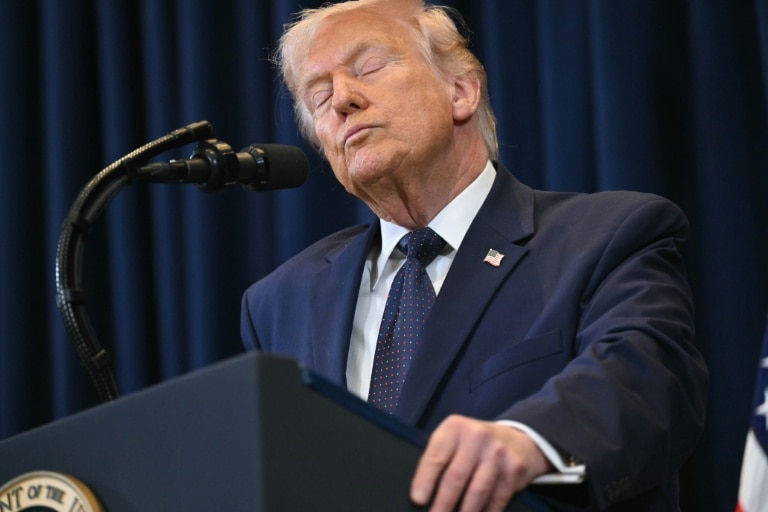
    Former President Donald Trump’s administration has reportedly approached multiple nations with a unprecedented proposition: contribute $1 billion to secure permanent membership on a newly conceived ‘Board of Peace.’ According to documents obtained by Bloomberg and other media outlets, the initiative would be chaired by Trump himself and include invited heads of state such as Russia’s Vladimir Putin, Hungary’s Viktor Orban, and Canada’s Mark Carney.

    The board’s draft charter reveals a tiered membership structure where standard three-year terms could be extended indefinitely for nations contributing over $1 billion within the first year of operation. While initially presented as overseeing Gaza’s reconstruction, the charter broadly defines the board’s mission as promoting ‘stability, restore dependable and lawful governance, and secure enduring peace in areas affected or threatened by conflict’ without specific geographical limitations.

    The proposal notably criticizes existing international institutions, suggesting the board would possess ‘the courage to depart from approaches and institutions that have too often failed’—a clear reference to Trump’s longstanding skepticism toward organizations like the United Nations. The White House framework outlines a main board, a Palestinian technocratic committee, and an executive board with advisory functions.

    Membership would be exclusively by invitation from the chairman (Trump), who would retain authority to remove member states subject to a two-thirds veto. The emerging board composition has already drawn criticism from Israel regarding proposed Gaza committee representatives from Turkey and Qatar.

  • Trump says world ‘not secure’ until US has Greenland

    Trump says world ‘not secure’ until US has Greenland

    A severe diplomatic crisis is unfolding across the Atlantic as former U.S. President Donald Trump intensifies his campaign to acquire Greenland, declaring that global security is contingent on Washington exercising ‘Complete and Total Control’ over the vast Arctic territory. The escalating situation has prompted European leaders to close ranks and prepare economic countermeasures against what they condemn as outright ‘blackmail.’

    In a message to Norwegian Prime Minister Jonas Gahr Store, published Monday and authenticated by his office, Trump asserted that the world ‘is not secure unless we have Complete and Total Control of Greenland.’ He further revealed a shift in his geopolitical philosophy, stating, ‘I no longer feel an obligation to think purely of Peace,’ a sentiment he attributed to his failure to win the Nobel Peace Prize. While peace would remain ‘predominant,’ he declared his priority is now ‘what is good and proper for the United States of America.’

    The confrontation deepened over the weekend when Trump threatened to impose a 10 percent tariff—with potential for escalation—on all goods from Denmark, Norway, Sweden, France, Germany, the UK, the Netherlands, and Finland starting February 1, targeting nations opposing his Arctic designs. German Vice Chancellor Lars Klingbeil and French Finance Minister Roland Lescure jointly denounced the tactic as ‘unacceptable blackmail between allies of 250 years.’

    In response, the European Union has called an emergency summit for Thursday to coordinate its strategy. Although the bloc’s stated priority is to ‘engage not escalate,’ it is preparing a three-pronged retaliatory strategy: pausing the current U.S.-EU tariff deal, reinstating suspended EU tariffs on American imports, and deploying legal instruments against ‘economic blackmail.’ The announcement rattled European stock markets as British Prime Minister Keir Starmer warned a ‘trade war is in no one’s interest.’

    On the ground, Greenland’s population of 57,000 is asserting its sovereignty. Prime Minister Jens-Frederik Nielsen stated on Facebook, ‘We will not be pressured… Greenland is a democratic society with the right to make its own decisions.’ In a symbolic rebuke, the island’s dogsled federation disinvited the new U.S. Arctic envoy, Jeff Landry, from its annual race.

    Meanwhile, the strategic justification for the acquisition continues. Trump claims the mineral-rich island is vital for ‘national security,’ arguing that Denmark cannot protect it from rivals like Russia or China—a claim Denmark disputes, noting ongoing efforts with NATO allies to ‘increase military presence and training activity in the Arctic and the North Atlantic.’