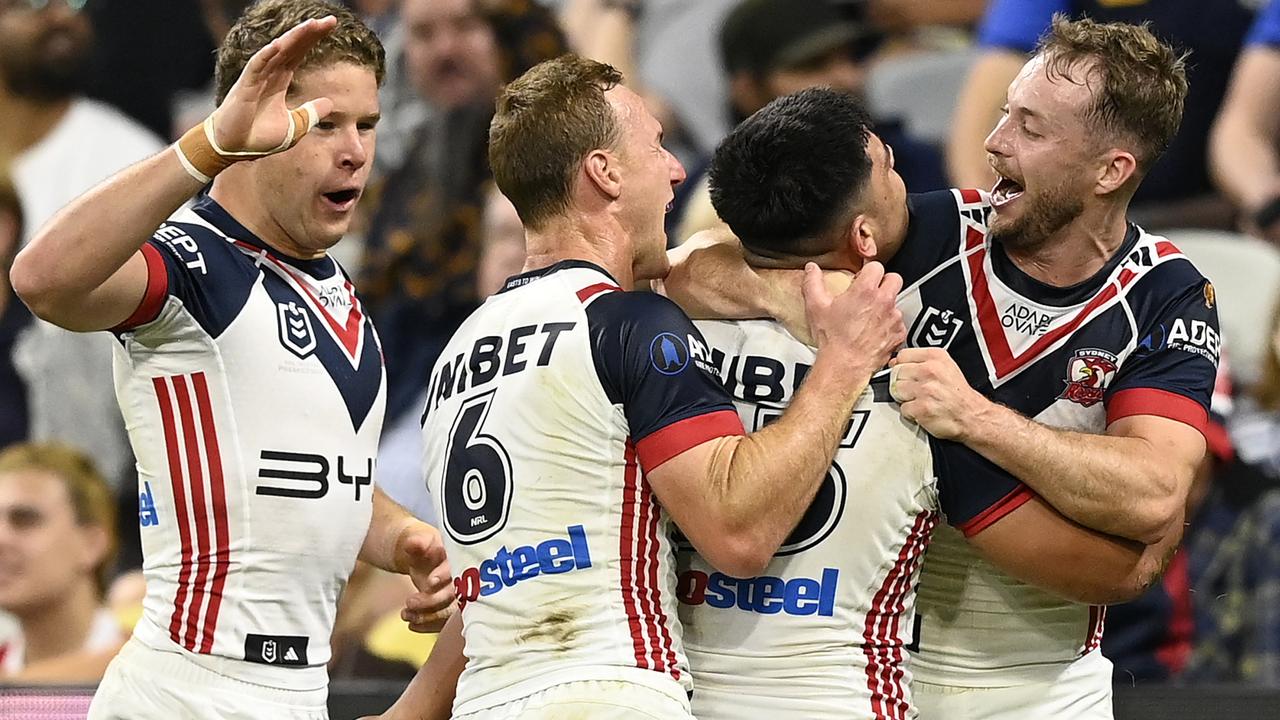
The Sydney Roosters have delivered one of the most devastating displays in modern National Rugby League (NRL) history, and the powerhouse side is already making it clear that their best football is still ahead of them. Fresh off a record-breaking 82-12 rout of the North Queensland Cowboys in Townsville, the reigning contenders have issued a stark four-word-adjacent warning to every other team in the competition: they have not hit their peak yet.
This lopsided victory marked the Roosters’ sixth consecutive win, and it etched the club’s name into NRL record books: the 82-point haul stands as the highest score posted by any top-flight side since 1935, and the third-highest total in the 110-plus year history of Australian rugby league premiership. Stand-off Sam Walker delivered a career-best masterclass, racking up a personal total of 36 points to guide his side to the dominant win.
The performance was so strong that analysts have already suggested even reigning premiers Penrith Panthers would face a massive test against the Roosters if the side repeats this form on grand final day. But despite the glowing praise and jaw-dropping result, Roosters utility Connor Watson says the squad still has room to grow as they prepare for this Friday’s high-stakes clash against the in-form Canterbury Bulldogs. Speaking to reporters from the team’s pre-match mini-camp in Gosford, Watson outlined the side’s quiet confidence heading into the second half of the season.
“We feel like we’ve got more levels to our footy that we can still ascend to,” Watson said. “The weekend was a good start. Up to this game, we haven’t clicked into our best attacking rhythm yet. Our success so far this year has come from our defence, from the way we pressure opponents and grind out wins by scoring just enough to get across the line. That’s been a huge shift for us — in previous seasons, we dropped a lot of those tight matches, but this year we’ve taken the majority of them. To be in title contention come September, we need to keep winning those close games. But we know we can play better as a group, especially with ball in hand, and the Cowboys game was a really great first step toward that.”
Young fullback Cody Ramsey, who turned in an electrifying second-half performance after coming on as a substitute for captain James Tedesco, echoed Watson’s sentiment. Ramsey said that even a blowout win like the 70-point victory leaves plenty of room for improvement across all areas of the pitch.
“We can still definitely refine our craft in attack, and we also had a few defensive lapses that let the Cowboys through for line breaks,” Ramsey explained. “No matter how good a game looks on the surface, you can always pick out areas to work on. That could be our kicking game, our defensive line speed, our contact work. There’s still so much we can learn, and if we keep refining those small details, we’ll be able to execute even better by the end of the season.”
One key talking point from the weekend was Tedesco’s early exit from the match, with the star fullback coming off the pitch as a precaution after sustaining a minor ankle issue. But the club has moved quickly to ease concerns about his availability for Friday’s game, confirming Tedesco is on track to start against the Bulldogs. Watson said the captain’s resilience has long been a defining feature of his career, and he expects the skipper to be fully fit for the upcoming clash.
“You’d probably have to check with the medical staff for the full update, but he bounced back pretty well from the issue,” Watson said. “He played almost the entire first half with the niggle, and he still played like a beast, just like he always does. That’s one thing that’s been a testament to his career, especially after the early injury scares he’s had — his ability to just be resilient and bounce back quickly from these small injuries is incredible. I think he’ll be sweet to go on Friday.”