标签: Oceania

大洋洲

  • Ukraine and Russia declare separate truces

    Ukraine and Russia declare separate truces

    In a striking escalation of rhetorical and tactical posturing amid the ongoing full-scale war, Russia and Ukraine have announced competing unilateral ceasefires, even as deadly cross-border attacks left multiple civilians dead on both sides Monday. This exchange comes as U.S.-led diplomatic efforts to resolve the conflict have stalled, with Washington redirecting its foreign policy focus to the worsening crisis in the Middle East.

    Russian authorities first announced their planned ceasefire last week via the country’s state-backed messaging platform MAX, made official Monday by the Russian Defence Ministry. The ceasefire is scheduled to run May 8 through 9, aligning with Moscow’s annual national commemoration of Victory Day, the holiday marking the Soviet Union’s defeat of Nazi Germany in World War II. The announcement carried an explicit threat of retaliation: if Ukraine violates the truce to disrupt the 81st anniversary celebrations, Russia will carry out a massive missile strike targeting central Kyiv. The ministry also urged Kyiv civilians and foreign diplomatic staff to evacuate the capital immediately to avoid harm. Each year, Russia marks the holiday with a high-profile military parade through Moscow’s iconic Red Square.

    Ukrainian President Volodymyr Zelenskyy rejected Moscow’s proposal as disingenuous, countering with a separate unilateral truce scheduled to take effect May 5 through 6, three days ahead of Russia’s planned pause. Zelenskyy argued that expecting Ukraine to adhere to a ceasefire to accommodate a Russian national military holiday was unreasonable, suggesting Moscow’s proposal stemmed from fear that Ukrainian drones would disrupt the Red Square celebrations. He added that as of Monday, Ukraine had not received any formal official communication from Russia outlining the terms of the proposed ceasefire that had been circulated on Russian social media.

    Alongside the ceasefire exchange, Zelenskyy made an unannounced trip to Bahrain on Monday for bilateral talks focused on expanding security cooperation, a source within the Ukrainian delegation confirmed to Agence France-Presse.

    Even as the two sides traded truce announcements, deadly violence continued across the front lines and deep inside both countries. Ukrainian officials reported that Russian strikes across Ukrainian territory killed nine civilians on Monday. A Russian ballistic missile attack on Merefa, a town located just outside Kharkiv, Ukraine’s second-largest city, left seven civilians dead and dozens more injured. AFP reporters on the scene saw multiple bodies covered by blankets and sheets strewn across the town’s street, with extensive damage to local homes, shops, and civilian vehicles. A second strike in the southern Zaporizhzhia region’s village of Vilnyansk killed a married couple, a 51-year-old man and his 62-year-old wife, and wounded their 31-year-old son along with three other bystanders, regional governor Ivan Fedorov confirmed.

    Cross-border attacks also targeted Russian territory overnight. A Ukrainian drone strike killed one civilian in Russia’s Belgorod region, a border area that has faced regular attacks throughout the war, regional governor Vyacheslav Gladkov said. In addition, a Ukrainian drone crashed into a residential high-rise building in an upscale neighborhood of Moscow, Russian capital mayor Sergei Sobyanin confirmed.

    An AFP analysis of data from the U.S.-based Institute for the Study of War (ISW) shows that April marked the first time Russia lost more territory in Ukraine than it gained since Ukraine’s 2023 summer counteroffensive. ISW data indicates Moscow ceded roughly 120 square kilometers of occupied territory between late March and April. While frontline fighting has largely reached a stalemate in recent months, relentless drone attacks on both sides have continued to claim civilian lives and damage infrastructure. Russia’s territorial advances have slowed dramatically since late 2025, as systemic communication failures within the Russian military combined with consistent Ukrainian counterattacks allowed Kyiv to secure small localized breakthroughs in Ukraine’s southeast.

    Despite these small net gains for Ukraine — the first the country has recorded in more than two years — the territorial shifts remain marginal, representing just 0.02 percent of Ukraine’s total national territory. Currently, Moscow maintains control of just over 19 percent of Ukraine. Roughly seven percent of that territory, including Crimea and large swathes of the Donbas region, was already controlled by Russia or pro-Russian separatist groups prior to Russia’s full-scale invasion in February 2022, with the remainder seized in the opening weeks of the 2022 invasion.

  • India’s Modi celebrates ‘record’ win in opposition-held West Bengal

    India’s Modi celebrates ‘record’ win in opposition-held West Bengal

    In a landmark political shake-up that has reshaped India’s regional electoral map, Prime Minister Narendra Modi’s Bharatiya Janata Party (BJP) secured a historic first-ever majority win in West Bengal, a state long held as an unassailable stronghold of the regional opposition All India Trinamool Congress (TMC). The final results from India’s multi-phase April-May state and territorial elections, announced Monday, delivered a series of seismic shifts across five jurisdictions, with far-reaching implications for national politics ahead of the 2029 general election.

    With vote counting completed under heavy security deployment in West Bengal, a state home to more than 100 million people, the Election Commission of India confirmed the BJP won 206 of the 294 legislative assembly seats — a record-breaking outcome that ends TMC’s 14-year consecutive rule of the state. Beyond West Bengal, the BJP also secured its third consecutive term in power in the northeastern state of Assam, and earned a place in the ruling governing coalition in the small coastal union territory of Puducherry.

    For Prime Minister Modi, 75, the surprise breakthrough in West Bengal comes as a major political boost as he navigates pressing domestic economic challenges and complex foreign policy priorities, including persistently high national unemployment and a pending bilateral trade deal with the United States, ahead of the 2029 national general election.

    Taking to social media to address the win, Modi framed the result as a victory for popular mandate and performance-focused governance. “The 2026 West Bengal Assembly Elections will be remembered forever,” he wrote. “People’s power has prevailed and BJP’s politics of good governance has triumphed. BJP’s record win in West Bengal would not be possible without the efforts and struggles of countless Karyakartas (workers) over generations.”

    Thousands of party workers and supporters poured onto the streets of Kolkata, West Bengal’s capital, to celebrate the historic win, dancing to pro-party victory anthems amid widespread jubilation. The BJP had waged an aggressive year-long campaign to unseat TMC leader Mamata Banerjee, the 71-year-old firebrand incumbent who had held power in the state since 2011. The campaign was marred by controversy over the removal of millions of names from state voter rolls: officials framed the purge as a necessary step to remove ineligible, duplicate voters, but critics argued the process disproportionately targeted marginalized and minority communities, skewing the electorate in the BJP’s favor.

    Banerjee, who herself lost her longtime Bhabanipur constituency seat to BJP candidate Suvendu Adhikari by a margin of more than 15,000 votes, levelled serious allegations of electoral misconduct against the BJP and the national election body. A visibly emotional Banerjee told reporters in Kolkata, “BJP looted more than 100 seats. The Election Commission is the BJP’s commission,” before adding she would regroup and “bounce back” in future contests.

    Political analysts note the West Bengal win will significantly consolidate the BJP’s control across eastern India, cementing its status as India’s undisputed national dominant party. “It’s a tremendous victory,” said Sushila Ramaswamy, a veteran political analyst, in an interview with AFP. “It also shows the electoral machinery of the BJP, how effective and how much detailing goes into their election campaign. And it establishes the BJP as the dominant party in the country.”

    Addressing supporters and party members in the national capital Delhi, Modi called for calm and unity across all election regions, rejecting calls for retaliation against political opponents. “Today, when the BJP has won, the talk should not be of ‘revenge’, but of ‘change’,” he said. “Not of fear, but of the future.”

    The election cycle delivered another major upset in the southern industrial state of Tamil Nadu, where veteran chief minister MK Stalin, leader of the ruling Dravida Munnetra Kazhagam (DMK), lost his longtime Kolathur constituency seat to a little-known candidate from a newly launched political party. The debutant party, Tamilaga Vettri Kazhagam (TVK), was founded in 2024 by C. Joseph Vijay, one of Tamil cinema’s most commercially successful A-list actors, who ran on a platform prioritizing youth employment and transparent governance. TVK defeated the incumbent DMK to win a majority in the state, leaving Stalin’s party a distant second.

    Political scientist Ramu Manivanan said the Tamil Nadu result reflects growing demand for new political leadership among the state’s large youth electorate, rather than just general anti-incumbency sentiment. “This result shows that the youth want a new face. It is not just anti-incumbency,” Manivanan explained. “Vijay as an actor has a large female fan base as a cinema star. All that has influenced the outcome.”

    In the southern coastal state of Kerala, the final remaining Communist-led government in India was voted out of power after two consecutive five-year terms. A Congress party-led alliance defeated the incumbent Left Democratic Front, earning a clear governing majority. Congress leader Rahul Gandhi thanked Kerala’s voters for what he called a “truly decisive mandate” in the wake of the result.

  • US downs Iran missiles and drones, destroys six of Tehran’s boats

    US downs Iran missiles and drones, destroys six of Tehran’s boats

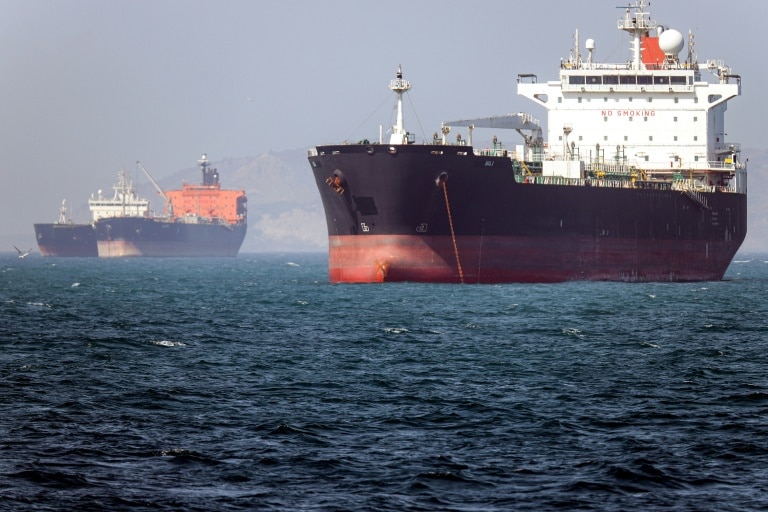
    Fresh clashes between United States and Iranian forces have sent tensions soaring in the strategically critical Strait of Hormuz, with a top American military commander confirming that US forces have shot down multiple Iranian missiles and drones and destroyed six small Iranian boats targeting commercial and military shipping. The outbreak of hostilities unfolded as Washington deployed forces to reopen the key oil and gas transit chokepoint under a newly launched initiative dubbed ‘Project Freedom’, announced by former President Donald Trump just one day prior.

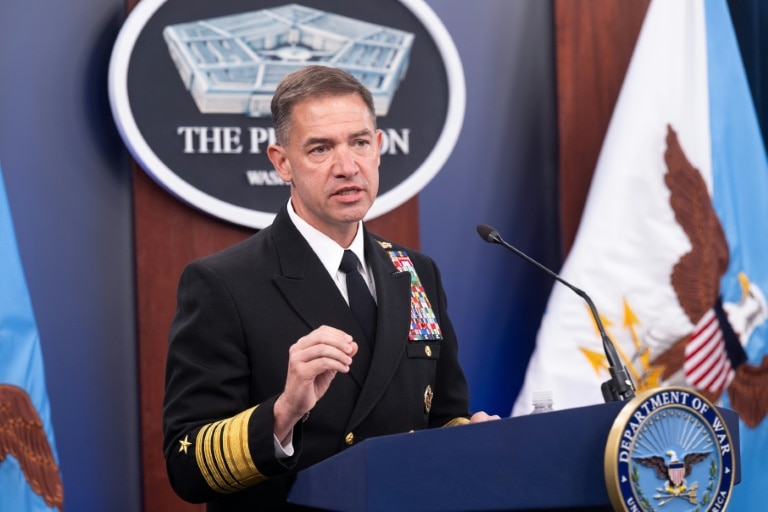
    Admiral Brad Cooper, head of U.S. Central Command (CENTCOM), outlined the details of the confrontation to reporters on Monday. He confirmed that American Apache attack helicopters and Seahawk maritime helicopters engaged and destroyed six small Iranian craft that had been posing a direct threat to commercial vessels transiting the waterway. Beyond the destruction of the boats, Cooper added that US forces successfully intercepted and eliminated every incoming missile and drone launched toward both American naval assets and civilian commercial ships passing through the strait.

    According to Cooper, most of the Iranian cruise missiles and multiple combat drones were aimed at commercial shipping, with only a smaller number targeting US Navy vessels. “We defended both ourselves and, consistent with our commitment, we defended all the commercial ships,” the CENTCOM chief told reporters. The official account from the admiral contradicts a post Trump made on his Truth Social platform, which put the number of destroyed Iranian boats at seven and noted that one South Korean-flagged ship had been hit, though no further details on that incident were provided. Trump also claimed there had been no other major damage to vessels transiting the strait as of his post.

    The current escalation comes against a backdrop of open conflict that began in late February, when US and Israeli forces launched military operations against Iran. In response, Iran closed the Strait of Hormuz, the passage through which roughly 20% of the world’s oil and natural gas exports move daily. American forces subsequently imposed a naval blockade on Iranian ports in the aftermath of the closure.

    Earlier on Monday, Iranian state television reported that the country’s navy had fired cruise missiles, rockets and combat drones near US destroyers moving through the strait, framing the action as a deliberate warning shot. For its part, CENTCOM confirmed that two US guided-missile destroyers had completed a transit of the strait into the Persian Gulf as part of Project Freedom, while two US-flagged commercial ships moved in the opposite direction and are now continuing their voyages without incident.

    Cooper clarified that the US military operation is not traditional direct escorting of commercial vessels. Instead, Washington has assembled a multi-layered defensive framework that includes surface warships, attack helicopters, fixed-wing aircraft, airborne early warning systems, and electronic warfare capabilities, creating what he described as a much more comprehensive defensive umbrella than simple escort missions would provide. Over the preceding two weeks, Cooper said, US forces used advanced, unspecified “exquisite technology” to clear a transit corridor through the strait, and the current defensive operation is meant to protect that cleared path.

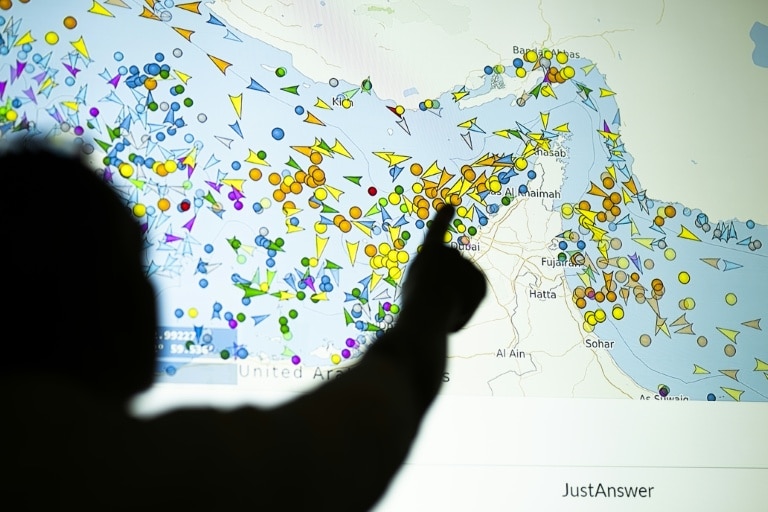
    While the long-term goal is to establish a fully open two-way transit route through the strait, Cooper noted that the immediate priority is extracting commercial vessels that have been stuck in the Persian Gulf since the closure. Maritime intelligence firm AXSMarine data as of April 29 shows more than 900 commercial vessels have been stranded in the Gulf during the closure.

  • What is hantavirus, and can it spread between humans?

    What is hantavirus, and can it spread between humans?

    A suspected hantavirus outbreak aboard an international cruise ship traveling between Argentina and Cape Verde has resulted in three fatalities, triggering global public health scrutiny over how the typically rodent-borne pathogen spreads in enclosed passenger settings. The World Health Organization (WHO) has formally confirmed one case of the potentially lethal virus so far, while moving quickly to reassure global populations that the overall public risk remains low. Even with this official assessment, the unusual cluster of illnesses on the vessel has reignited longstanding questions about whether hantaviruses can spread from person to person in closed environments. Virginie Sauvage, who leads France’s National Reference Centre for Hantaviruses, told Agence France-Presse (AFP) that genetic sequencing of the virus strain involved will be the critical next step to unpack what occurred during the voyage.

  • War in the Middle East: latest developments

    War in the Middle East: latest developments

    Tensions across the Middle East have surged dramatically in the last 24 hours, with a series of interconnected clashes, competing claims from Tehran and Washington, and spillover violence hitting regional states that has sent global energy markets into a sharp upward swing. The escalation centers on the Strait of Hormuz, the world’s most critical chokepoint for global oil supplies, where U.S. and Iranian forces have exchanged hostile actions and conflicting accounts of what unfolded.

    Admiral Brad Cooper, head of U.S. Central Command, confirmed to reporters that American military forces destroyed six small Iranian boats that posed a direct threat to commercial shipping moving through the strategic waterway. The operation, carried out by U.S. Apache and Seahawk helicopters, was paired with a successful defense against a barrage of projectiles: all missiles and drones launched by Iranian forces at both U.S. Navy vessels and nearby commercial shipping were intercepted and neutralized, Cooper said.

    Iran has quickly and categorically rejected the U.S. claims. A statement from Iran’s Revolutionary Guards dismissed the assertion that any Iranian boats were sunk as entirely false. The Guards also pushed back on a separate U.S. announcement that two U.S.-flagged merchant vessels had passed through the strait under American military escort, calling that report “baseless and completely false” in a Telegram statement and denying any commercial ships had transited the waterway following the clashes.

    Former U.S. President Donald Trump, commenting on the situation on his Truth Social platform, sought to downplay the severity of the escalation. He acknowledged that Iran had fired on vessels moving through the Strait of Hormuz after U.S. warships entered the area, but claimed that only a South Korean vessel suffered any damage, with no other harm reported as of his statement.

    Beyond the direct U.S.-Iran confrontation, spillover attacks have been reported across the Gulf region. The United Arab Emirates confirmed it was targeted by Iranian strikes, including an attack on the key Fujairah energy infrastructure hub that left three Indian nationals wounded. The UAE Foreign Ministry condemned the strikes as a dangerous escalation and an unacceptable violation of the country’s sovereignty, noting that it reserves the full right to respond to the aggression. A senior Iranian military official denied the claim, saying Iran had no plans to attack the UAE.

    Neighboring Oman also reported casualties from an attack on a coastal residential building in Bukha, a town located along the Strait of Hormuz. Oman’s state news agency confirmed two expatriate workers suffered moderate injuries in the strike, with four additional vehicles damaged in the incident.

    The sudden escalation has already roiled global energy markets, as nearly 20% of global oil supplies pass through the Strait of Hormuz annually. The Brent crude contract for July delivery jumped more than 5% within minutes of news of the clashes breaking, reflecting widespread investor concern over potential disruptions to global oil supplies.

    The United States has confirmed that it deployed destroyers to the Gulf to carry out escort missions for commercial shipping transiting the strait. Following that deployment, Iranian state television reported that the Iranian Navy launched cruise missiles, rockets, and combat drones near the U.S. vessels after firing multiple warning shots.

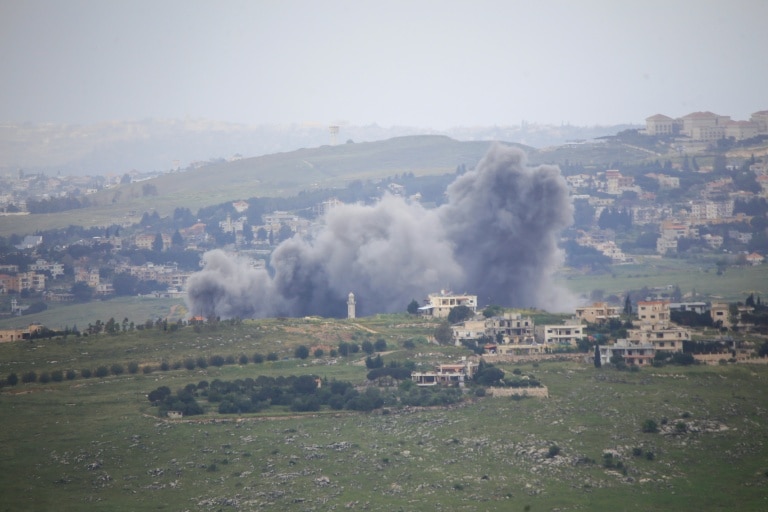
    Tensions also remain high along the Israel-Lebanon border, where a fragile ceasefire that has held since mid-April is facing new strains. Hezbollah, the Lebanese armed group, announced that its fighters had engaged in heavy clashes with Israeli troops in southern Lebanon near the border. The clash followed an attempted advance by Israeli forces near the town of Deir Seryan, located inside an Israeli-declared “yellow line” zone where Lebanese residents have been ordered not to return. Israeli military officials confirmed that the Israel Defense Forces remain on high alert and are closely monitoring all developments across the region following the U.S.-Iran confrontation.

    Lebanese President Joseph Aoun has pushed back on U.S. calls for a meeting with Israeli Prime Minister Benjamin Netanyahu, saying that any such summit can only take place after a comprehensive security deal is reached and all Israeli attacks on Lebanese territory end. Aoun’s office added that the current moment is not appropriate for any meeting between the two leaders, given the ongoing volatility.

  • Two dead as car ploughs into crowd in Germany’s Leipzig

    Two dead as car ploughs into crowd in Germany’s Leipzig

    On a bustling Monday in eastern Germany, a violent incident has left the nation reeling: a car drove into a crowd of pedestrians on a central Leipzig street, claiming at least two lives and wounding multiple other people, local law enforcement and emergency authorities confirmed.

    This attack marks the latest in a string of high-profile car-ramming attacks that have shaken German public life over the past decade, following similar incidents in Berlin, Munich, and most recently Magdeburg just months prior. In this new event, the suspect driver was taken into custody shortly after the vehicle careened off a central city square and onto Grimmaische Street, a busy pedestrian corridor in Leipzig’s historic old town. The tree-lined thoroughfare is lined with popular shops and centuries-old buildings, located steps away from some of the city’s most famous cultural and tourist landmarks.

    As of early official updates, key details surrounding the attack remain unconfirmed. Leipzig Mayor Burkhard Jung told reporters that authorities have not yet established a clear motive for the violence, and have not released public information about the background of the perpetrator. Both Jung and local police have confirmed the fatality count stands at two. Local fire chief Axel Schuh added that at least two of the wounded are in critical condition, while an additional 20 people sustained minor injuries in the incident.

    Law enforcement officials confirmed the driver was arrested without further confrontation, noting that there is no ongoing threat to the public stemming from the attack. Authorities also shared that the driver brought the vehicle to a stop on his own accord before being taken into custody.

    Television footage from the scene shows a white passenger car with severe damage to its front end and windshield, with the entire street cordoned off by law enforcement. Scores of emergency response vehicles, including police cruisers, fire trucks, and ambulances, surrounded the crash site, with two medical helicopters also deployed to airlift critically wounded victims to local hospitals.

    The attack comes against a longer backdrop of repeated vehicle ramming attacks that have reshaped German security and political discourse over the past eight years. The first major modern incident occurred in December 2016, when a Tunisian man motivated by jihadist ideology drove a hijacked truck into a Berlin Christmas market, killing 13 people and injuring dozens more.

    More recently, a string of high-profile attacks has kept the issue at the top of public concern. In 2024, a Saudi man with documented anti-Islam views drove into a crowded Magdeburg Christmas market, killing six people and wounding more than 300. Just two months ago in February 2025, an Afghan driver rammed his vehicle into a public march in central Munich, killing a mother and her young daughter and injuring roughly 30 other attendees.

    These attacks have coincided with growing tensions around immigration in German society, which first flared after a massive influx of migrants and refugees to the country in 2015. The issues of border security and immigration control have risen to the top of national political debate, a shift that has contributed to a significant surge in support for the far-right Alternative for Germany (AfD) party in recent years.

  • Stars set for Met Gala, fashion’s biggest night

    Stars set for Met Gala, fashion’s biggest night

    One of the most anticipated annual events in global fashion and culture is set to open its red carpet doors on Monday, as the Met Gala – widely hailed as the biggest night in fashion – prepares to welcome hundreds of A-list celebrities from across entertainment, sports, and design to Manhattan for its 2025 iteration. This year’s gathering centers the theme “Fashion is Art”, a conceptual framing crafted to align with the Metropolitan Museum of Art Costume Institute’s latest flagship exhibition, simply titled “Costume Art”, which will open to the public at the iconic Manhattan venue on May 10. The exhibition will trace centuries of artistic representation of the dressed human form, drawing direct connections between sartorial craft and fine art practice.

    Organized annually as a major fundraising drive for the Costume Institute, the invite-only event has evolved far beyond its origins as a small high society function since it was first launched in 1948. When Vogue’s global editorial director Anna Wintour, who has now led the event for 30 years, took over stewardship in the 1990s, she reimagined the gala as a high-profile global spectacle that blends celebrity influence, high fashion, and cultural philanthropy – turning it into a social media juggernaut where attendees compete to deliver viral, over-the-top red carpet looks that dominate headlines for days.

    This year’s co-chair lineup has already generated massive excitement among fans, headlined by Beyoncé, the global music superstar who is set to make her first Met Gala appearance in 10 years. She will share co-chair duties with tennis icon Venus Williams and Academy Award-winning actor Nicole Kidman. Organizers have also named a star-studded host committee led by Saint Laurent creative director Anthony Vaccarello and actor Zoe Kravitz, which includes pop stars Sabrina Carpenter and Doja Cat, retired legendary ballet dancer Misty Copeland, and WNBA champion A’ja Wilson. Last year’s event broke new ground by centering the subversive cultural aesthetic of Black dandyism, marking one of the first times the gala devoted its theme to elevating men’s fashion.

    However, the 2025 event has not been without public pushback. After Amazon founder Jeff Bezos and his wife Lauren Sanchez Bezos were announced as the gala’s lead sponsors and honorary co-chairs, a grassroots opposition campaign has sprung up across New York City’s streets and subway systems, with some critics calling for a boycott of what they frame as an vulgar celebration of extreme wealth inequality. The campaign is organized by “Everyone Hates Elon”, a UK-founded activist group whose spokesperson clarified that the organization targets ultra-wealthy billionaires beyond just Tesla CEO Elon Musk, the world’s richest person.

    For attendees and fashion fans worldwide, Monday’s event will still deliver the unrivaled star power and spectacle that has become its hallmark, with fashion industry observers already anticipating a night of boundary-pushing design and memorable red carpet moments that will shape fashion discourse for months to come.

  • Oil prices jump as Iran attacks UAE, US warships enter Hormuz

    Oil prices jump as Iran attacks UAE, US warships enter Hormuz

    A fresh escalation of geopolitical friction in the Persian Gulf has sent global energy markets into a sharp upward swing, with oil prices jumping more than five percent at one point on Monday after Iran launched drone and missile attacks targeting the United Arab Emirates, just hours after U.S. Navy destroyers completed a passage through the strategically critical Strait of Hormuz.

    The confrontation unfolded in sequence: over the weekend, former U.S. President Donald Trump announced a new naval escort mission for commercial shipping transiting the strait, a chokepoint that carries roughly 20 percent of the world’s daily oil and gas trade. On Monday morning, the UAE’s defense ministry confirmed that Iranian-origin drones and missiles had struck targets in the emirate of Fujairah, home to a major oil storage and export terminal. The attack sparked a visible fire at an onshore energy facility, authorities confirmed. Iran’s state media reported that the Iranian navy fired a cruise missile as a “warning shot” in response to the U.S. naval movement, while prior reports indicated Tehran had also targeted an Emirati oil tanker with unmanned aerial vehicles.

    Tehran’s forces have effectively blocked access to the strait since early March, a retaliatory move against the joint U.S.-Israeli military campaign launched on February 28. This action comes amid a sustained U.S. economic blockade on Iranian ports, and while Trump has extended an initial two-week ceasefire indefinitely, the core conflict and its far-reaching economic disruptions remain unresolved. The latest escalation immediately rippled through energy markets: by 1530 GMT, the July Brent crude contract, the global benchmark for oil, had climbed 5.5 percent to settle at $114.14 a barrel, while the U.S. domestic benchmark West Texas Intermediate for June delivery rose 3.4 percent to hit $105.44 per barrel.

    While the Middle East crisis roiled energy markets, global equity performance diverged sharply on Monday, driven by a resurgent rally in artificial intelligence stocks fueled by stronger-than-expected corporate earnings. Across Asian exchanges, the euphoria around AI pushed benchmark indices in Seoul and Taipei to all-time record closes, with Seoul’s Kospi surging more than five percent and Taipei’s weighted index jumping more than four percent. The gains were led by top semiconductor firms that power global AI infrastructure: South Korea’s SK Hynix climbed 12.5 percent, rival Samsung added more than five percent, and Taiwan’s leading contract chipmaker TSMC gained 6.6 percent.

    This rally was sparked by blowout first-quarter earnings reports last week from tech giants including Apple, Google, Microsoft and Samsung. The results rekindled investor appetite for AI stocks after a period of market volatility triggered by the February U.S.-Israeli strikes on Iran. Ipek Ozkardeskaya, a senior analyst at Swissquote, noted that investors are clinging to “optimism that AI continues to mask the pain elsewhere” across geopolitical hotspots. Data from financial analytics firm FactSet shows S&P 500 companies are on track to post overall first-quarter earnings growth of 27.1 percent, the fastest pace recorded in more than four years. More tech earnings are on tap this week, with reports expected from Palantir Technologies on Monday, followed by Advanced Micro Devices and Arm Holdings later in the week.

    However, the rally lost steam on U.S. exchanges after the oil price surge. The tech-heavy Nasdaq composite, which opened at a new record high following its Friday close, fell into negative territory to end the day down 3.4 percent at 25,041.69. The Dow Jones Industrial Average dropped 0.8 percent to 49,117.04, while the S&P 500 dipped 0.4 percent to 7,203.95. Major European benchmarks also closed in the red: Germany’s DAX 40 fell 1.2 percent and France’s CAC 40 dropped 1.7 percent. Markets in Tokyo, Shanghai and London were closed for public holidays.

    Patrick O’Hare, an analyst at Briefing.com, pointed out that despite the downward move, many investors who missed the earlier AI rally are waiting for market pullbacks to enter positions. “That is perhaps why the indices just aren’t selling off to any large degree,” he explained. Hong Kong’s Hang Seng Index bucked the global downward trend to close 1.2 percent higher. In currency markets, the Japanese yen saw volatile trading, spiking higher against the U.S. dollar early Monday amid fresh speculation that Japanese authorities had intervened again to support the battered currency. Media reports estimate Tokyo spent as much as $31 billion on a currency intervention last Friday, which also pushed the yen sharply higher. By Monday’s close, the dollar traded at 157.15 yen, up slightly from 157.06 yen on Friday.

  • Passengers isolating on cruise after Cape Verde ban over suspected virus deaths

    Passengers isolating on cruise after Cape Verde ban over suspected virus deaths

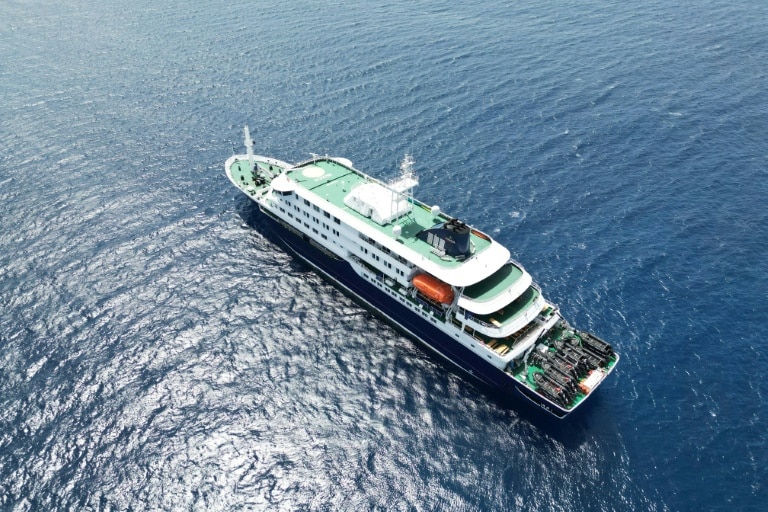
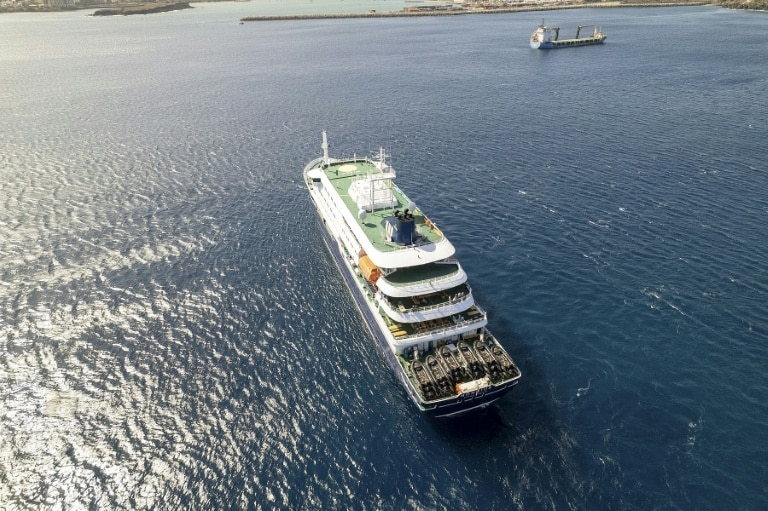
    A polar expedition cruise ship, the MV Hondius, remains anchored off the coast of Cape Verde’s capital Praia this week, after the West African island nation barred the vessel from docking over a suspected hantavirus outbreak that has already claimed three lives. All 149 passengers and crew, representing 23 nationalities including citizens of Spain, the United Kingdom and the United States, are now under strict isolation aboard the ship as public health authorities across the globe coordinate a response.

    The outbreak unfolded as the vessel completed a journey from Ushuaia, Argentina, bound for Cape Verde. Operator Oceanwide Expeditions confirmed in a statement Monday that two fatalities occurred on board the ship, while a third death was recorded after a passenger disembarked prior to the vessel reaching Cape Verde’s waters. One confirmed hantavirus case is currently receiving intensive care in Johannesburg, South Africa, and two additional people on the MV Hondius remain in need of urgent medical attention.

    Hantavirus, a rare pathogen most often transmitted to humans from exposure to rodent excrement, has been formally confirmed in the patient treated in Johannesburg. However, Oceanwide Expeditions emphasized that investigators have not yet formally linked the three deaths to the virus, and no confirmation of hantavirus has been returned for the two symptomatic people still aboard the ship. “The exact cause and any possible connection are under investigation,” the company added.

    Cape Verdean public health officials defended the decision to bar the ship from entering port, framing the move as a critical measure to protect the local population. Maria da Luz Lima, president of the country’s National Institute of Public Health, told public broadcaster RTC Sunday that the vessel would remain anchored offshore with no contact between passengers and the Cape Verdean public.

    Despite the outbreak and fatalities, the World Health Organization (WHO) has moved to reassure the global public that the broader population risk remains low. “There is no need for panic or travel restrictions,” WHO Europe director Hans Kluge said in a public statement, noting that hantavirus infections are uncommon and almost always tied to contact with infected rodents. The agency added that while rare, person-to-person transmission is possible, and infections can lead to severe respiratory illness that requires close monitoring.

    The UN health agency says it is acting with urgency to support the response effort, collaborating with all involved governments to coordinate medical care, evacuations, on-board investigations and public health risk assessments.

    International authorities are now working to identify a new port of disembarkation to allow for full medical screening and care. The Canary Islands, a Spanish territory off the coast of Northwest Africa, is currently the leading candidate for the disembarkation. Dutch authorities have agreed to lead a coordinated effort to repatriate two symptomatic passengers to the Netherlands for treatment, though the operation is still pending approval from Cape Verdean local officials.

    Dutch Foreign Ministry confirmed to AFP that it is actively exploring options for medical evacuation of the affected passengers, and will coordinate the full operation if it receives approval. Local doctors have already boarded the vessel to assess the health of the two symptomatic crew members, but Cape Verde has not granted permission to evacuate them to onshore medical facilities.

  • War in the Middle East: latest developments

    War in the Middle East: latest developments

    Tensions across the Middle East have surged once again this week, with a series of interconnected incidents in the strategic Strait of Hormuz and shifting diplomatic moves reshaping the two-month-old regional conflict. The latest wave of developments brings new risks to global energy supplies and fragile peace negotiations between the United States and Iran.

    The United Arab Emirates (UAE) officially confirmed that two drones launched from Iranian territory targeted a tanker operated by ADNOC, the country’s state-owned oil giant, in the Strait of Hormuz. In a strongly worded statement, the UAE foreign ministry labeled the assault an act of piracy carried out by Iran’s Revolutionary Guard Corps, noting the attack was an attempt to use the critical waterway — a linchpin for global fossil fuel and food fertilizer trade — as a tool for economic coercion and blackmail. No crew members were injured in the strike, the ministry added.

    Parallel to this claim, Iranian state-affiliated media outlet Fars News Agency reported that two missiles were fired at a U.S. Navy frigate that had violated navigation rules near Iran’s Jask Port, after the vessel ignored multiple verbal warnings from the Iranian navy. The report came shortly after former President Donald Trump announced U.S. forces would begin escorted transits for commercial ships through the strait, which Iran has blockaded since the outbreak of the current conflict. The U.S. military has flatly denied any of its vessels were struck, contradicting the Iranian media account.

    Diplomatic efforts to end the conflict remain deadlocked nearly a month after a ceasefire took effect on April 8. So far, only one round of direct talks between U.S. and Iranian negotiators has been held, with no visible progress toward a permanent resolution. Iranian foreign ministry spokesperson Esmaeil Baqaei emphasized in a televised briefing that Tehran’s top priority is an immediate end to hostilities, and called on Washington to roll back its maximalist positions. “The other side must commit to a reasonable approach and abandon its excessive demands regarding Iran,” Baqaei stated.

    Trump, for his part, struck a more optimistic tone in a Truth Social post Sunday, claiming “very positive discussions” are ongoing with Iranian officials to resolve the conflict. He announced the launch of what he calls “Project Freedom”, a U.S. military mission to escort trapped commercial ships out of the blockaded strait, framing the operation as a “humanitarian gesture” after reports that dozens of marooned vessels were facing critical food shortages for their crews. U.S. Central Command later outlined the scale of the mission, confirming it will deploy guided-missile destroyers, more than 100 land and sea-based aircraft, a array of multi-domain unmanned systems, and 15,000 active service members to support the escort operation.

    The escalating tensions have already taken a visible economic toll on Gulf states. Dubai’s media office confirmed Monday that passenger traffic through the emirate’s major international airport plummeted to just 2.5 million travelers in March, a 67% drop compared to the same period last year. The decline is directly tied to Iranian attacks on UAE infrastructure and shipping amid the ongoing conflict, which has deterred commercial and leisure travel to the region.

    In a separate development off the UAE coast, the United Kingdom Maritime Trade Operations (UKMTO) reported that an unidentified tanker was hit by unspecified projectiles approximately 78 nautical miles north of the UAE’s Fujairah Port Monday. The agency confirmed all crew members on board the vessel escaped unharmed, and did not assign blame for the attack.

    On the diplomatic front, Pakistan announced Monday it had facilitated the transfer of 22 Iranian crew members who had been held on a vessel seized by U.S. authorities. The Pakistani government described the handover as a “confidence-building measure” designed to support the fragile behind-the-scenes contacts between Washington and Tehran.

    Across the Atlantic, the ongoing conflict has sparked friction between the U.S. and Germany, after Trump announced that the U.S. would cut its troop deployment in Germany by more than 5,000 service members, a move widely tied to disagreements over policy toward the Iran war. Despite the public spat, German Chancellor Friedrich Merz told public broadcaster ARD Sunday that he remains committed to preserving transatlantic cooperation. “I am not giving up on working on the transatlantic relationship,” Merz said. “Nor am I giving up on working with Donald Trump.”