标签: Oceania

大洋洲

  • Australian man dies after being found unconscious on balcony at a Bali hotel

    Australian man dies after being found unconscious on balcony at a Bali hotel

    A 30-year-old Australian tourist has died in Bali, Indonesia after his girlfriend found him unconscious on their accommodation’s balcony, triggering an ongoing official investigation into the unexpected death. The incident unfolded early Wednesday morning in the popular coastal resort area of Seminyak, with the girlfriend locating the unresponsive man at approximately 4:15 a.m. immediately after discovering him, she alerted hotel management and emergency response teams.

    According to official statements from Gede ADI Saputra Jaya, a public spokesman for the Denpasar Police Department, first responders confirmed the victim was still breathing when they arrived at the hotel to render aid. “He was unconscious when taken to Siloam hospital,” Jaya confirmed to local media outlets. Despite emergency medical intervention, the Australian man passed away several hours after being admitted to the hospital.

    Investigators have outlined key timeline details from the night preceding the death: the couple had spent the evening at a local bar, returned to their hotel around 1:30 a.m., and engaged in a verbal argument. Following the disagreement, the man told his girlfriend he would sleep on the open balcony, a choice that preceded the morning’s emergency discovery.

    As of press time, law enforcement teams have not announced a confirmed cause of death, with the spokesperson noting that officers are still conducting a thorough investigation into the circumstances surrounding the incident. Australia’s Department of Foreign Affairs and Trade has been contacted by media outlets seeking comment on the case, and has not yet released an official statement.

  • Judge dismisses claim Adelaide woman tried to mow down boyfriend in alleged row over hot chip

    Judge dismisses claim Adelaide woman tried to mow down boyfriend in alleged row over hot chip

    A highly unusual criminal case out of South Australia, which gained viral attention for its alleged connection to a fight over a single hot chip, has concluded with the accused woman walking free from court after the most serious charge against her was dismissed.

    Charlotte Harrison, 36, faced one count of dangerous driving endangering life, a felony charge that carried significant potential prison time, connected to a February 2023 incident on Melbourne Street in North Adelaide. The case had been winding through the South Australian legal system for more than three years before reaching its conclusion at Adelaide’s District Court on Friday.

    According to Harrison’s former partner Matthew Finn, the confrontation began when he asked to eat Harrison’s last hot chip from a takeaway chicken order, triggering a heated argument that escalated into dangerous driving. That widely shared narrative never made it into the official court proceedings, however, with no mention of the salty snack during Harrison’s trial.

    After reviewing CCTV footage of the crash, Judge Paul Muscat rejected the claim that Harrison’s driving rose to the level of endangering life, openly scoffing at the prosecution’s framing of the incident. “I do not believe that is driving in a manner that is so dangerous it could cause fear or intimidation to others,” the judge told the court. “It is more typical of driving without due care and attention.”

    Harrison entered guilty pleas to two lesser misdemeanor charges: reckless and dangerous driving. The more serious charge of driving endangering life was formally dismissed by the court.

    In his sentencing ruling, Judge Muscat found that Harrison had already served more than enough time in punishment for her offenses. The court confirmed Harrison had already spent nine days in custody on remand and 23 days on home detention following her arrest, a period the judge said exceeded any appropriate sentence for the two minor convictions. As a result, Judge Muscat convicted Harrison on the two counts but imposed no additional fines, prison time, or other penalties.

    Speaking to reporters outside the courtroom after the ruling, Harrison pushed back hard on the viral narrative about the hot chip dispute. “There was never any chips and I never intended to harm or hurt anybody,” she said. Harrison confirmed she had driven recklessly, reversing her vehicle into another car before colliding with a power box, and accepted responsibility for that driving offense. “I drove in a manner that was reckless, reversed into a Yaris,” she told reporters.

    Harrison added that the three-year legal process had been a major burden, and she was relieved to have the case resolved to move forward with her life. “I feel really relieved to have all that behind me, it has been quite a journey,” she said. “I understand the elements of the charge, it was a driving offence, but the narrative that Mr Finn played up did not really play to it. I wanted to resolve this so I could move on with my life.”

    She also offered an apology to bystanders who witnessed the 2023 incident. “I am sorry to anyone that witnessed the event that day,” she said. In a lighthearted comment to reporters, she added, “Thank you for the soap that I got when I was on remand.”

    The case laid bare how sensational salacious details can overshadow the actual facts of a criminal incident, with the hot chip claim turning a routine reckless driving case into a viral news story. Harrison’s acquittal on the serious charge confirms that the court found no evidence to support the claim that she intended to harm her former partner by attempting to run him over.

  • Man attacks ‘close friend’ with samurai sword

    Man attacks ‘close friend’ with samurai sword

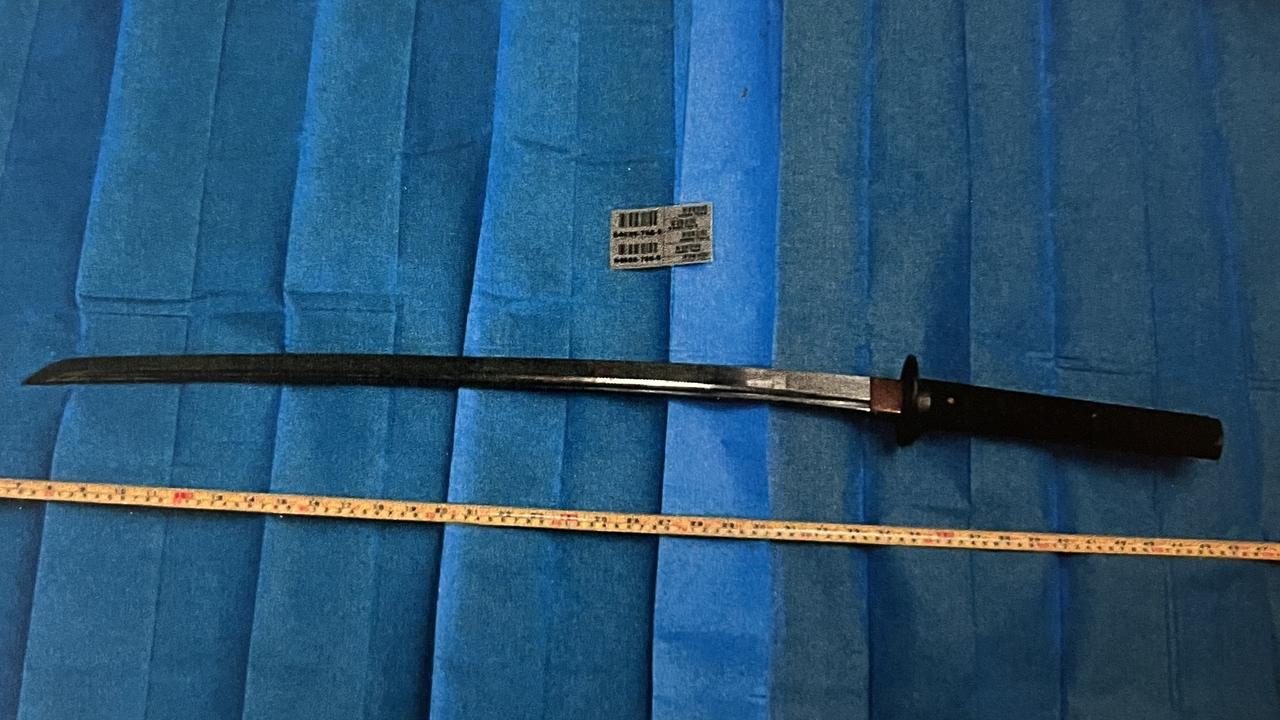
    A brutal, drug-fueled attack in suburban South Australia has left a close-knit friendship destroyed and a victim facing lifelong disability, culminating in a nearly eight-year prison sentence for the perpetrator. Phonexaysack Rawatxay, a 49-year-old father of three from Blakeview, was handed down the sentence this week in Adelaide District Court for the sustained samurai sword attack on his long-time close friend, identified only as DB, in April 2023.

    The court heard that DB had been staying overnight at Rawatxay’s home when he suffered a sudden hypoglycaemic attack on the living room sofa around midday. After moving into Rawatxay’s bedroom to rest, Rawatxay returned from a 10 to 15 minute drive out with his wife, two of his children and an additional friend. In the small enclosed space of the bedroom, Rawatxay drew his personal samurai sword and swung it multiple times at the unsuspecting DB. The blade struck DB repeatedly before a final blow slammed into the wooden bedhead, leaving significant damage to the furniture.

    While the exact trigger for the unprovoked attack remains unconfirmed, court documents outline the devastating extent of DB’s injuries. The victim suffered deep lacerations across his scalp, collarbone, neck, forearm and hand, with the sword actually striking his skull bone. DB’s left forearm bore a gaping 20cm by 10cm gash, while his neck was cut by a 15cm laceration. The damage to his hand was so severe that surgeons required eight hours of reconstructive surgery to repair the tissue at Royal Adelaide Hospital. Judge Michael Durrant noted in his sentencing remarks that DB was “extremely fortunate” to have survived the attack with his life.

    During court proceedings, Rawatxay pleaded not guilty to the charge of aggravated recklessly causing serious harm, arguing he had acted in self-defense. However, Judge Durrant rejected this claim and found Rawatxay guilty beyond reasonable doubt after a short trial, noting that the acts of swinging the sword were voluntary, deliberate, and clearly carried out with reckless disregard for DB’s safety.

    In pre-sentencing interviews, Rawatxay admitted that he was under the heavy influence of methylamphetamine at the time of the attack, stating he was unable to think clearly and could not recall any clear motive for the violence beyond the drug-induced impairment. Court records also revealed that Rawataxay was a chronic meth user, reporting that he injected the drug three to five times daily by November 2023, which Judge Durrant classified as “significant abuse.” The judge also acknowledged that Rawatxay expressed genuine remorse for the attack and regretted the end of his longstanding friendship with DB.

    Victim impact statements submitted to the court painted a picture of permanent, life-altering harm for DB. The attack left him with lasting physical scars, chronic emotional distress and ongoing psychological trauma that has upended every area of his life. He can no longer work to provide for his family, participate in recreational sports he once enjoyed, or even complete basic daily tasks independently. Most devastatingly, the hand injury has left DB unable to hold his own newborn son.

    “You have significantly altered his life. He will carry the scars and permanent impact from this offending for the rest of his life,” Judge Durrant wrote in his sentencing remarks.

    In the end, Rawatxay was sentenced to seven years, 11 months and 19 days in state prison. A separate court order also required the offending samurai sword to be forfeited and destroyed by authorities.

  • Australian shares secure biggest weekly gain since 2022 despite market dip

    Australian shares secure biggest weekly gain since 2022 despite market dip

    Australia’s benchmark stock index has pulled off a remarkable milestone this week, logging its strongest weekly performance in more than two years even as lingering geopolitical instability kept market sentiment cautious through Friday’s trading session. The S&P/ASX 200 edged down 12.60 points, or 0.14%, to close at 8,960.60 on Friday, while the broader All Ordinaries index also slipped by a matching 0.14% to settle at 9,155.80. Despite the single-day pullback, the benchmark ASX 200 notched a 4.2% weekly gain that leaves it just 250 points shy of its all-time record high of 9,202.

    Market analyst Tony Sycamore notes that the monthly gain for April currently sits at 5.55%, which has erased 70% of the steep losses the index suffered during the market downturn in March. That recovery marks a notable turnaround following the sharp contraction Australian equities saw just one month prior.

    On Friday, only three out of the Australian exchange’s 11 major sectors finished the trading day in positive territory. The real estate sector led the gains, climbing 0.88% overall, with Vicinity Centres posting a 3.2% rise to close at $2.56. Utilities and financials followed the real estate sector in positive performance. Among Australia’s big four retail banks, results were mixed: National Australia Bank (NAB) added 0.31% after announcing its second fixed-rate mortgage hike in two weeks, Commonwealth Bank of Australia rose 0.47%, Westpac Banking Corporation gained 0.28% after positioning itself as the country’s lowest-cost fixed-rate lender, and Australia and New Zealand Banking Group edged up 0.23%.

    The information technology sector was the day’s poorest performer, with multiple major stocks posting notable declines. Logistics software firm WiseTech Global fell 2.6% to $37.61, cloud accounting platform Xero dropped 2.7% to $71.46, and Life360 slipped 3.3% to $19.48 shortly after unveiling workforce cuts as part of a restructuring to align its operations with artificial intelligence integration.

    Geopolitical uncertainty tied to Middle East tensions remains the primary driver of market volatility, analysts confirm. While a two-week ceasefire between the United States and Iran was announced on April 8, ongoing reports of military strikes in Lebanon and the continued closure of the Strait of Hormuz, a critical global oil chokepoint, have kept traders on edge.

    The uncertain outlook has hit energy sector stocks, with Whitehaven Coal falling 3.2% to $8.12 and Woodside Energy dipping 0.2% to $33.29. Despite weak energy equities, concerns over the durability of the ceasefire have pushed crude oil prices higher: Brent Crude edged up 0.8% to trade at US$96.72 per barrel.

    “Oil initially fell sharply when the ceasefire was announced, as traders ruled out the most severe supply disruption scenarios,” explained market analyst Daniela Hathorn. “But prices have since rebounded as doubts about how long the agreement will hold have grown.”

    Amid the broader market volatility, safe-haven assets continued to see steady gains, with gold climbing 0.06% to hit US$4,766.17 per ounce. The Australian dollar was last trading at 70.86 U.S. cents.

  • In Pakistan’s mediation to end Mideast war, China may hold the key

    In Pakistan’s mediation to end Mideast war, China may hold the key

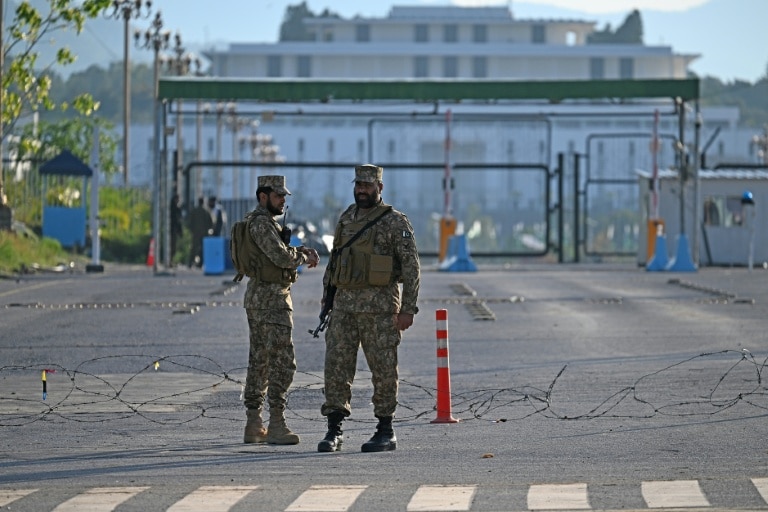
    As diplomatic envoys from the United States and Iran prepare to convene in Islamabad for high-stakes negotiations aimed at ending the ongoing Middle East conflict, official insiders and regional analysts agree: China’s behind-the-scenes influence cleared the path for the talks, and it will remain indispensable to securing a durable, long-term truce.

    Pakistan has earned international acclaim – and no small amount of surprise – for pulling off a last-minute temporary ceasefire between the warring parties, an achievement that looked all but impossible as late as Tuesday night. But senior Pakistani officials emphasize that China’s quieter, less publicized contribution was just as critical to securing the preliminary deal as Islamabad’s own frontline efforts.

    “By ceasefire night, hope was all but gone,” a senior anonymous Pakistani official with direct knowledge of the closed-door negotiations told Agence France-Presse. “It was China that stepped in and convinced Iran to sign on to the preliminary truce. Our work was central, but we were stuck without a breakthrough – that only came after Beijing’s intervention with Tehran.”

    This account echoes comments made by former U.S. President Donald Trump, who shortly after announcing the two-week ceasefire on social media confirmed to AFP that China had been the key factor in persuading Iran to join the negotiating table.

    The planned Islamabad talks have sparked fragile new optimism for ending a conflict that broke out in late February, when Israel and the U.S. launched strikes against Iran, prompting retaliatory attacks from Iran across the Persian Gulf and targeting Israeli cities. The war has already killed thousands of people and sent shockwaves through the global economy.

    Pakistan, which shares deep cultural and religious ties with Iran and has long-standing close personal relations between its leadership and former U.S. President Trump, was tapped to serve as the neutral facilitator for the talks. To reach a lasting peace deal, Islamabad will have to guide the two rival sides through a minefield of intractable issues, including the reopening of the strategically vital Strait of Hormuz and the future status of Iran’s nuclear program.

    According to a second anonymous diplomatic source, Pakistan has assembled a specialized team of technical experts to support negotiations on navigation, nuclear affairs, and other core contentious topics. As Islamabad lays the groundwork for the talks, the source and a cohort of regional experts and former officials agree that all attention remains focused on China’s upcoming role.

    “Iran has specifically requested that China act as a guarantor for any final deal – Iran needs a trusted third party to hold up its end of the agreement,” the source explained. The main alternative, Russia, remains bogged down in its ongoing war in Ukraine and was unacceptable to Western powers, particularly the European Union, leaving China as the only viable option.

    Beijing already maintains exceptionally close ties to both Islamabad and Tehran. For years amid crippling U.S.-led sanctions on Iran, China has been Tehran’s largest trading partner. In Pakistan, China has poured tens of billions of dollars into large-scale infrastructure projects under President Xi Jinping’s Belt and Road Initiative, a partnership so close the two countries refer to each other as “ironclad brothers.”

    Mushahid Hussain Sayed, a former Pakistani senator who previously chaired the upper house’s defence and foreign affairs committee, noted that Pakistan and China have coordinated closely on ceasefire efforts from the very start of the hostilities. “Given that Iran does not trust the Trump-Netanyahu duo,” Sayed said, referring to Israeli Prime Minister Benjamin Netanyahu, “China’s role as the ultimate guarantor will remain irreplaceable for reaching any final peace agreement.”

    Weeks ago, after Pakistan’s foreign minister held de-escalation talks with counterparts from Saudi Arabia, Turkey, and Egypt, he traveled directly to Beijing to coordinate strategy, after which China publicly expressed its full backing for Islamabad’s mediation efforts. More recently, Beijing has also stepped in to help ease Pakistan’s own escalating border conflict with Afghanistan, hosting peace talks between Afghan government delegates and Pakistani officials in Urumqi following weeks of cross-border fighting.

    Hours before the preliminary ceasefire was announced, China also joined Russia in vetoing a United Nations Security Council resolution that would have called for the immediate reopening of the Strait of Hormuz – a move widely viewed as a significant gesture of goodwill to Tehran, which had imposed an effective blockade on the strategic waterway since the war began.

    Unlike Pakistan’s high-profile mediation, China has intentionally avoided the public spotlight, only reiterating that it has worked behind the scenes to encourage an end to hostilities. A Chinese foreign ministry spokesperson noted that Foreign Minister Wang Yi has held 26 phone calls with counterparts from regional and world powers, while Beijing’s special Middle East envoy has shuttled repeatedly across the conflict zone to facilitate talks.

    Even so, analysts and officials remain uncertain whether China will agree to take on a formal, public guarantor role in the final peace deal. “China has its own strategic considerations,” the second diplomatic source said. “It does not want to be publicly dragged into this conflict,” even as it continues to play an outsized behind-the-scenes role.

    The negotiations themselves face steep odds to resolve the massive gaps between the two sides’ positions. One major unresolved sticking point is the inclusion of Lebanon in any permanent ceasefire: Pakistan’s prime minister and Iran have both insisted Lebanon must be covered by the truce, a demand Israel has rejected. Israel, which Pakistan does not formally recognize, has continued to carry out deadly airstrikes targeting the Iran-backed Hezbollah group in Lebanon, while the U.S. has announced it will host separate bilateral talks between Israeli and Lebanese officials in Washington next week.

    “These negotiations are incredibly complex and sensitive,” the second source added. “For all sides to reach a consensus, everyone will have to make painful compromises and difficult concessions.”


  • ‘Love triangle’: Man allegedly killed ex-lover’s husband before dumping body

    ‘Love triangle’: Man allegedly killed ex-lover’s husband before dumping body

    More than two decades after a 34-year-old man was found dead in a New South Wales river, his alleged killer has gone on trial in the NSW Supreme Court, with prosecutors laying out a dramatic case rooted in romantic jealousy, tangled forensic evidence, and a long-unresolved love triangle.

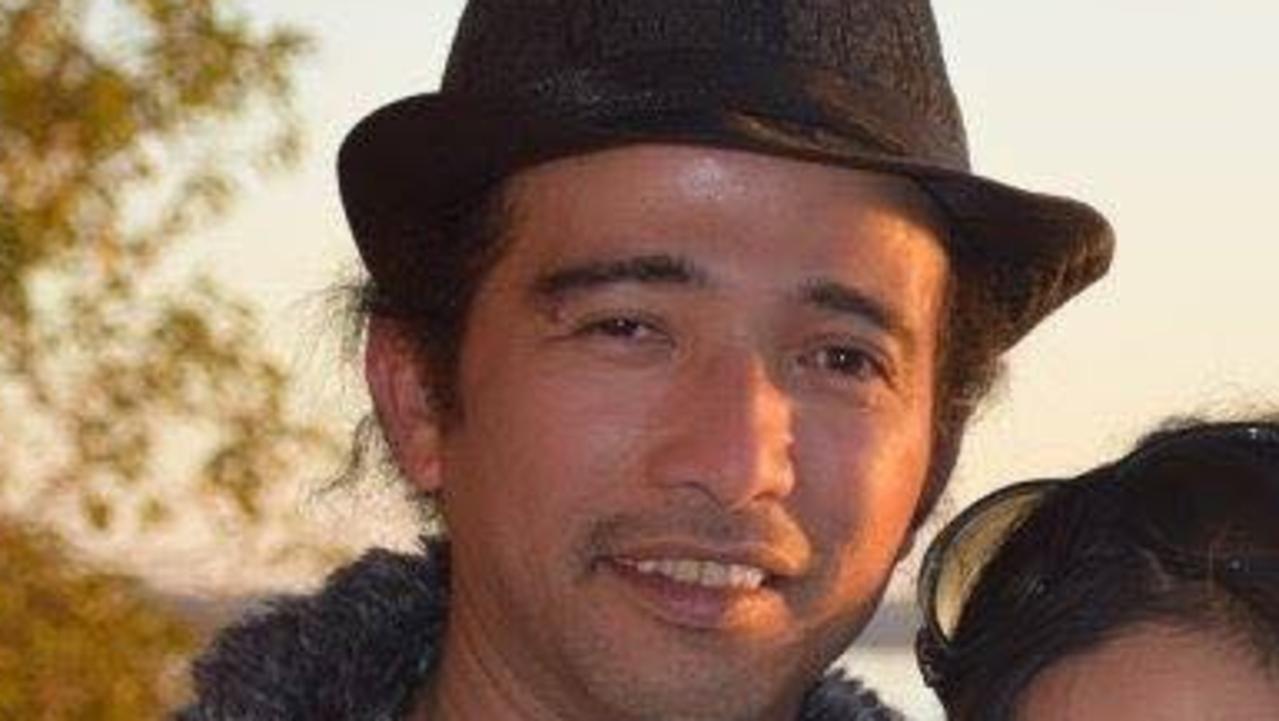
    Gofal Baziad, 54, a resident of western Sydney, has pleaded not guilty to a single charge of murder for the death of Jason Palmer, who disappeared in early February 2004 and whose body was recovered three weeks later from the Nepean River at Menangle. Opening the Crown’s case before a jury on Friday, lead prosecutor Brett Hatfield SC outlined the alleged motive: Baziad, who had been romantically involved with Palmer’s wife Renny during a separation between the couple, killed Palmer to rekindle his relationship with her after she chose to reconcile with her husband in late 2003.

    Court documents and prosecution arguments detail that at the time of Palmer’s death, he and his wife had an on-again, off-again marriage. The pair separated in 2002, during which time Renny Palmer began a relationship with Baziad, before reconciling in 2003. When Palmer asked his wife to make a final choice between the two men, she selected Palmer, a decision Baziad outwardly accepted, according to Hatfield.

    The prosecution alleges Baziad carried out the killing in the late hours of February 6, 2004, or early the next morning at Palmer’s rented unit on Barremma Road, Lakemba. According to the allegation, Baziad first struck Palmer over the head with a heavy glass object, before stabbing him multiple times in the back, hip, and chest. He then wrapped Palmer’s body in a blue-green sleeping bag, weighed it down with two large boulders secured with a thin yellow rope, and transported the corpse to the Nepean River to dump it, Hatfield told the court.

    Palmer was last seen leaving his wife’s Belfield home on February 6, and Renny Palmer reported him missing several days later after repeated failed attempts to contact him. Kayakers discovered his wrapped body in the Menangle section of the Nepean three weeks after his disappearance. Crucially, prosecutors say forensic evidence links Baziad directly to the killing. The yellow rope used to tie the boulders to Palmer’s body matches fragments of identical yellow rope recovered from a garden shed at Renny Palmer’s Belfield home – a shed that Baziad accessed the day before the killing, when he borrowed Palmer’s wife’s red Ford station wagon, claiming he needed to move items out of his own unit. The sleeping bag used to wrap the body also came from the same camping gear stored in that shed, the court heard.

    Forensic testing of the borrowed station wagon turned up another damning piece of evidence: trace blood stains on the rear passenger seat, footwell carpet, and the car’s boot. A DNA swab taken from the boot’s blood stain matched Jason Palmer’s genetic profile, Hatfield told the jury, leading the Crown to argue Baziad used the vehicle to transport Palmer’s body from his Lakemba unit to the river for disposal.

    Beyond physical evidence, the prosecution laid out a pattern of behavior it says supports the allegation against Baziad. Hatfield told the jury Baziad has a well-documented history of violent jealousy toward any man that became romantically involved with Renny Palmer. After the pair began a relationship following Palmer’s death – a relationship that lasted until 2018, during which the couple lived together in Indonesia before returning to Australia – Baziad attacked another man Renny Palmer was dating outside a Gold Coast hardware store in 2018, shortly after his own relationship with her ended. “The Crown case alleges that evidence supports that the accused had these two tendencies: firstly, to be jealous about Renny Palmer and any male that she might be romantically involved with,” Hatfield said. “And the second tendency is to act violently, when he believed Renny Palmer is romantically involved with a person other than himself.”

    Prosecutors also noted that Baziad left Australia for Singapore just six weeks after Palmer’s disappearance, on March 28, 2004, and did not return to the country until 2009. At the time of his departure, he told investigators he was leaving to close a business deal and would return to assist with the probe, but his departure still came immediately after Palmer’s killing. Notably, Renny Palmer faces no accusations of any wrongdoing in connection with Palmer’s death, and is scheduled to take the witness stand to give evidence next week, the court confirmed. Baziad himself was only arrested and charged with murder earlier this year, 20 years after the killing, closing a long-running cold case for NSW Police.

    In her opening address to the jury on Friday, Baziad’s defense barrister Madeleine Avenell SC pushed back against the Crown’s case, arguing that the evidence presented is too weak to secure a conviction beyond reasonable doubt. Avenell noted that there are substantial points of disagreement between the prosecution and the defense over both the admissibility of evidence and how it can be interpreted, and urged jurors to keep the burden of proof in mind throughout the trial. “My submission to you is going to be this – you won’t be able to be positively satisfied of the ultimate question that is put to you in this trial. Which is: has the prosecution proved beyond reasonable doubt that it was Mr Baziad who is the person responsible for Mr Palmer’s death?” Avenell told the court. “Ultimately, that is the thing you should have at the forefront of your mind.”

    The trial against Baziad is ongoing at the NSW Supreme Court.

  • High Court hears sentence appeal for teen who killed Queensland mum Emma Lovell

    High Court hears sentence appeal for teen who killed Queensland mum Emma Lovell

    A fight for justice for a murdered British woman has reached Australia’s highest court, as her grieving husband and the Queensland government push to reverse a controversial sentence reduction that has sparked public and legal debate.

    On Boxing Day 2022, Emma Lovell, a 40-something British expat, was fatally stabbed in the chest during a violent home invasion at her property in North Lakes, a suburb north of Brisbane. Her husband Lee, who was also attacked and injured in the break-in, has spent years fighting to ensure the perpetrator serves the full penalty handed down by the original sentencing judge.

    At the time of the attack, the killer was 17 years and 8 months old, too young to be tried as an adult under Queensland’s pre-existing laws. He pleaded guilty to charges of armed burglary and murder in 2024, and was handed a 14-year prison sentence. Under the state’s Youth Justice Act at the time, juvenile offenders are required to be released after serving 70% of their total sentence, a requirement that was upheld by the original sentencing judge Justice Tom Sullivan. Sullivan ruled the brutal killing qualified as a “particularly heinous” offense, rejecting arguments for special leniency despite the killer’s age, early guilty plea, difficult childhood, and claims of remorse.

    That ruling was overturned months later when the Queensland Court of Appeal accepted the defense’s argument that the original 14-year sentence was “manifestly excessive”, cutting the non-parole portion of the sentence from 70% to just 60%. That decision triggered an unprecedented push for appeal, with Queensland’s new Liberal National Party government joining Lee Lovell to challenge the ruling in an extraordinary hearing before the High Court of Australia in Canberra.

    Outside the courtroom on Friday, Lovell told reporters he aims not just to reverse the sentence cut, but to establish a lasting legal precedent for future cases. “I hope to get my wife’s killer’s sentence back to 70 per cent at least,” he said. Beyond that, he added, the case could set a precedent holding appeal judges accountable when they depart from original sentencing rulings. Lovell also criticized what he called the inherently one-sided nature of the current justice system: while the perpetrator was permitted to appeal his sentence, the victim’s family has no equivalent right to appeal a lenient ruling. He added he will continue his fight for as long as it takes to secure justice for Emma, leaving behind two young daughters who will grow up without their mother.

    Queensland Attorney-General Deb Frecklington, who appeared alongside Lovell at the High Court, noted the case is an extraordinary legal step. “This is a trip we wish we never had to do,” she said. “However, here we are today at the High Court of Australia to try to preserve some sort of justice that Lee and his family have been dished out up in Queensland.” Frecklington emphasized that the tragedy has resonated across the entire state, not just with Lovell’s grieving family. She added that it is extremely rare for the High Court to grant an Attorney-General leave to appeal a criminal sentencing decision. Pointing to policy change spurred by Lovell’s death, Frecklington noted that the newly elected Liberal National Party government introduced “adult crime, adult time” laws shortly after taking office, which would see the offender sentenced to life imprisonment if the crime were committed today.

    The High Court appeal hinges on technical legal questions about how lower courts can intervene in original sentencing rulings. Lawyers for the Queensland government argued the Court of Appeal overstepped its authority and misapplied key legal tests when it reduced the non-parole period. Gim Del Villar KC, the state’s lead counsel, told the court that the Court of Appeal’s finding that the original judge “ought” to have found special circumstances to justify a reduced sentence was inconsistent with existing legal standards that limit appellate interference in sentencing decisions. Del Villar noted that the core disagreement between the original ruling and the appeal court was just a 10% difference in the non-parole period, making the appellate court’s intervention even harder to justify.

    Counsel for the young killer rejected the state’s arguments, arguing the Court of Appeal acted well within its authorized bounds. Andrew Hoare KC acknowledged that the wording of the appellate court’s ruling was not perfect, but said the conclusion that the original sentence was unjust fell well within the powers intermediate appellate courts exercise on a regular basis. He added there was no clear legal error on the face of the appellate court’s ruling to justify the High Court overturning the decision. At the time of publication, the High Court has reserved its decision, with no timeline announced for a ruling.

  • NAB hikes fixed home loan rates for the second time in two weeks

    NAB hikes fixed home loan rates for the second time in two weeks

    In a sudden shift reshaping Australia’s competitive home lending market, National Australia Bank (NAB) — one of the country’s dominant big four banks — has rolled out its second fixed-rate home loan increase in just a fortnight, a move that has stripped it of its position as the cheapest provider of fixed home loans in the nation.

    The latest adjustment, announced this Friday, comes exactly 14 days after NAB’s previous rate hike. The new round of increases adds 0.30 percentage points to every fixed-term home loan product the bank offers. Following the repricing, NAB’s lowest available fixed rate now sits at 6.34% for a one-year term. For borrowers seeking longer-term rate security, the cost climbs even higher, with a two-year fixed rate product reaching 6.39%.

    This market shift has cleared a path for competitor Westpac to claim the title of the big four’s lowest fixed rate provider. Westpac currently offers a two-year fixed home loan with a rate of 6.14%, undercutting NAB’s new pricing by a notable margin.

    NAB’s decision to raise rates twice in such a short window is far from an isolated move, it is part of a broader market response to shifting monetary conditions in Australia. Lenders across the sector have been adjusting pricing after the Reserve Bank of Australia’s March cash rate decision, as well as widespread expectations of further rate increases on the horizon.

    All three of the other major banks — ANZ, Commonwealth Bank of Australia, and NAB itself — have already forecast an additional 0.25 percentage point rate hike when the RBA meets next month. Forecasts are not uniform across the industry, however: Bendigo Bank Chief Economist David Robertson predicts the RBA will hold rates steady in May, but expects a third rate increase for 2026 to come in August. Robertson attributes this projected trajectory to ongoing geopolitical instability in the Middle East, which he says is creating a domino effect that keeps global and domestic inflation pressures elevated.

  • Billie Jean King Cup qualifiers 2026: Great Britain teenager Mika Stojsavljevic has pulled off a huge upset

    Billie Jean King Cup qualifiers 2026: Great Britain teenager Mika Stojsavljevic has pulled off a huge upset

    The opening day of the 2024 Billie Jean King Cup qualifiers delivered one of the tournament’s earliest upsets, as 17-year-old British wildcard Mika Stojsavljevic defeated world No. 56 Australian rising star Talia Gibson in straight sets on Friday. The final scoreline of 7-6(0), 7-5 marked a career-defining victory for the teenager, who entered the matchup ranked 219 places below her opponent at world No. 275.

    Gibson, who turned heads at the 2024 Australian Open after advancing to the second round of the main draw, entered the match as the clear favorite. The 21-year-old Australian showed flashes of the dynamic talent that has pushed her up the global rankings in the last 12 months, but a consistent string of unforced errors ultimately derailed her campaign. From the opening game, Gibson struggled to find consistent control of her groundstrokes, giving away cheap points that shifted momentum to her young opponent early.

    The first set unfolded with an early exchange of breaks, as both players tested each other’s serve consistency before holding for the rest of the set to force a tiebreaker. It was here that Stojsavljevic demonstrated poise far beyond her 17 years, racing out to a 4-0 lead that Gibson never recovered from. The young Brit’s towering, powerful serve proved to be the decisive edge of the match: she landed four aces to Gibson’s single one, and closed out the opening set with a blistering ace down the T to seal the tiebreaker 7-0.

    Stojsavljevic carried that momentum into the second set, immediately putting pressure on Gibson’s first service game by jumping out to a 0-40 advantage. Though Gibson fought back to hold serve and keep the set level, she could not resolve her unforced error issue or break through Stojsavljevic’s dominant service game. A critical unforced mistake from Gibson at 2-1 allowed Stojsavljevic to claim the decisive break, putting her up 3-1 in the set.

    Speaking to broadcast commentators after the upset, former world No. 4 Jelena Dokic highlighted the mental dynamic of the match, noting that Gibson was still adjusting to the pressure of competing as a tournament favorite, while Stojsavljevic had nothing to lose and could play without restraint. Gibson mounted a late comeback push, and held five break points to take the lead in a tense marathon service game at 5-5. Even as fatigue began to show in the young Brit’s movement, she relied on her powerful serve to escape danger and hold serve, before closing out the match to claim the straight-set victory.

    The upset win gives Great Britain an early advantage in their Billie Jean King Cup qualifying tie against Australia, setting the stage for the remaining singles and doubles matches to determine which nation advances to the next stage of the team competition.

  • ‘Heart is bloody breaking’: Qld MP reveals veterans have handed in medals after Ben Roberts-Smith arrest

    ‘Heart is bloody breaking’: Qld MP reveals veterans have handed in medals after Ben Roberts-Smith arrest

    The recent high-profile arrest of Ben Roberts-Smith, Australia’s most decorated current veteran accused of multiple war crimes, has sparked an extraordinary wave of disillusionment among former Australian service members, with dozens of veterans handing back their service medals in protest against what they describe as government betrayal and systemic failure of the nation’s support for military personnel.

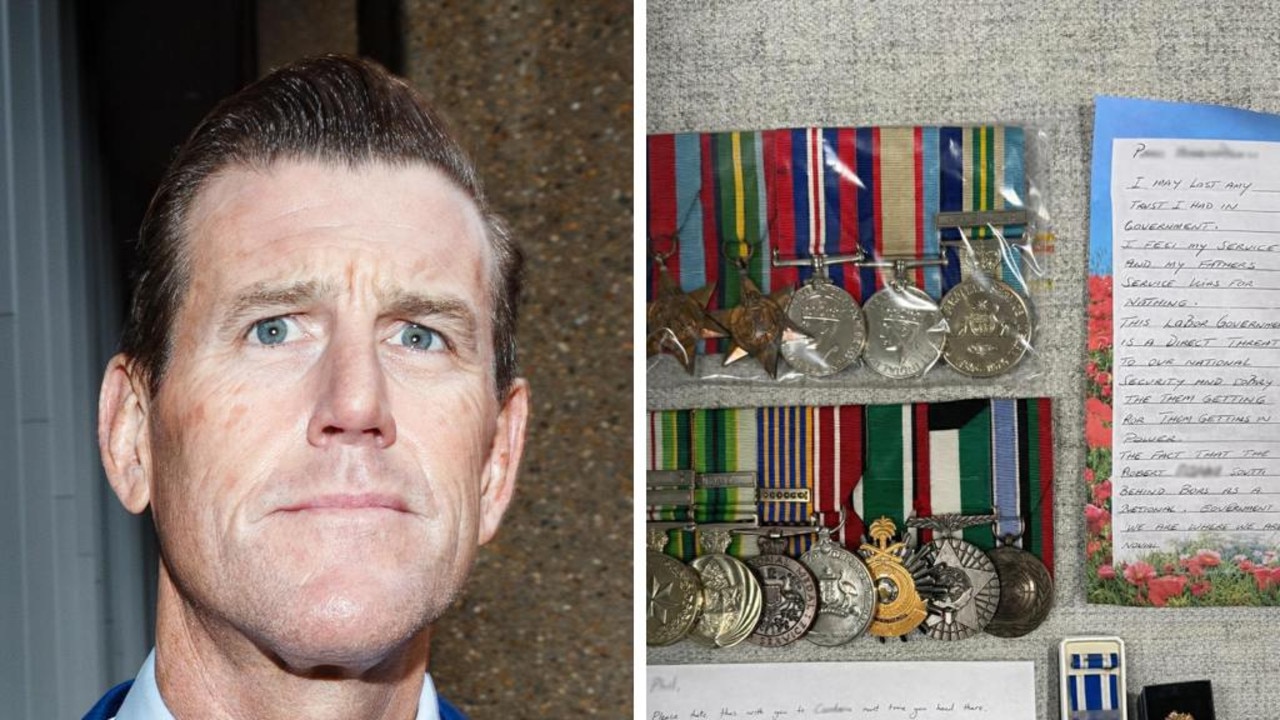
    Queensland Liberal National Party MP Phillip Thompson, a veteran who served in East Timor and Afghanistan and was injured by an improvised explosive device during his deployment, has publicly opened up about the gut-wrenching moment he received a collection of returned medals from at least two separate veterans. In a raw, emotional social media post shared with his constituents, Thompson said his “heart is bloody breaking into a thousand pieces” over the gesture, which lays bare the deep-seated anger and hurt roiling Australia’s veteran community in the wake of Roberts-Smith’s arrest.

    Last week, Australian federal police formally charged Roberts-Smith with five counts of murder for alleged war crimes committed during his deployment to Afghanistan. The charges include one count of joint commission of murder and three counts of aiding, abetting, counselling or procuring murder. The arrest comes nearly four years after major Australian outlets first published the war crime allegations, and capped off a failed 2021 defamation lawsuit Roberts-Smith brought against The Age, The Sydney Morning Herald and The Canberra Times over their reporting.

    What makes the return of medals so striking is what the gesture represents for the veteran community. Thompson stressed that the medals handed to him are far more than decorative metal and ribbon. “They are years of service, sacrifice, mateship & moments most will never fully understand,” Thompson wrote. “They represent those who answered the call, who carried the weight of this country on their shoulders & who lived with the consequences long after the uniform came off. These are not political talking points. This is human. This is real. This is the hurt being carried by people who gave everything & are now left wondering where they stand in the country they served.”

    A handwritten note accompanying one set of medals, shared publicly by Thompson on his social media channels, laid bare the depth of the veterans’ broken trust. The note author, who is a second-generation veteran, wrote that they had lost “any trust I had in my government” and added, “I feel my service and my father’s service was for nothing.” Thompson noted that the pain woven into these notes has shaken him, saying the accounts highlight a widespread collapse of confidence and a pervasive “sense of betrayal” across the veteran community.

    This wave of medal returns is not isolated to Thompson. Another Queensland MP, Bob Katter, also received a request from a serving member to return his own set of medals to Canberra, according to a separate social media post. The short, blunt letter read: “Bob, give my medals back to Canberra. I no longer want them after seeing the way they treat veterans.” The returned medals sent to Katter included five distinct honors: an Australian Active Service Medal, the Defence Force Service Medal, the International Force East Timor Medal, the National Medal and an Australian Defence Medal. It remains unclear whether the letter was signed by the sender.

    As Roberts-Smith prepares to face court over the war crime charges, the protest gesture from veterans has drawn national attention to the unresolved grievances that continue to divide the Australian public and the veteran community over how military service, wartime accountability, and veteran welfare are addressed by the federal government.