标签: Oceania

大洋洲

  • War in the Middle East: latest developments

    War in the Middle East: latest developments

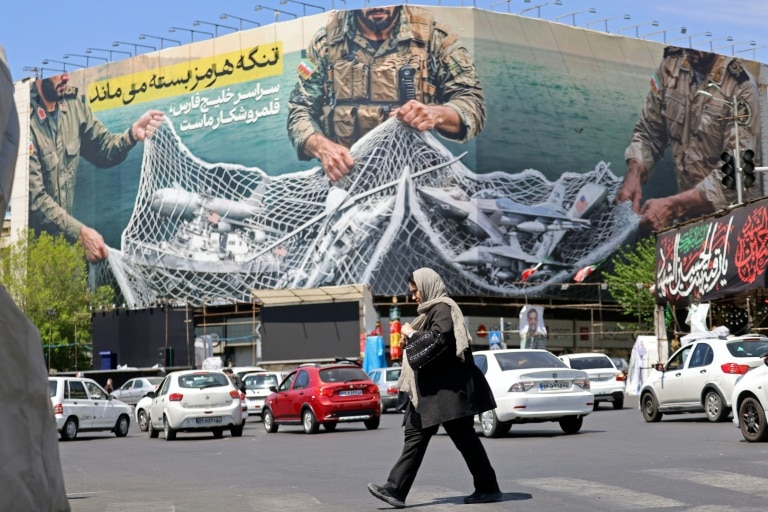
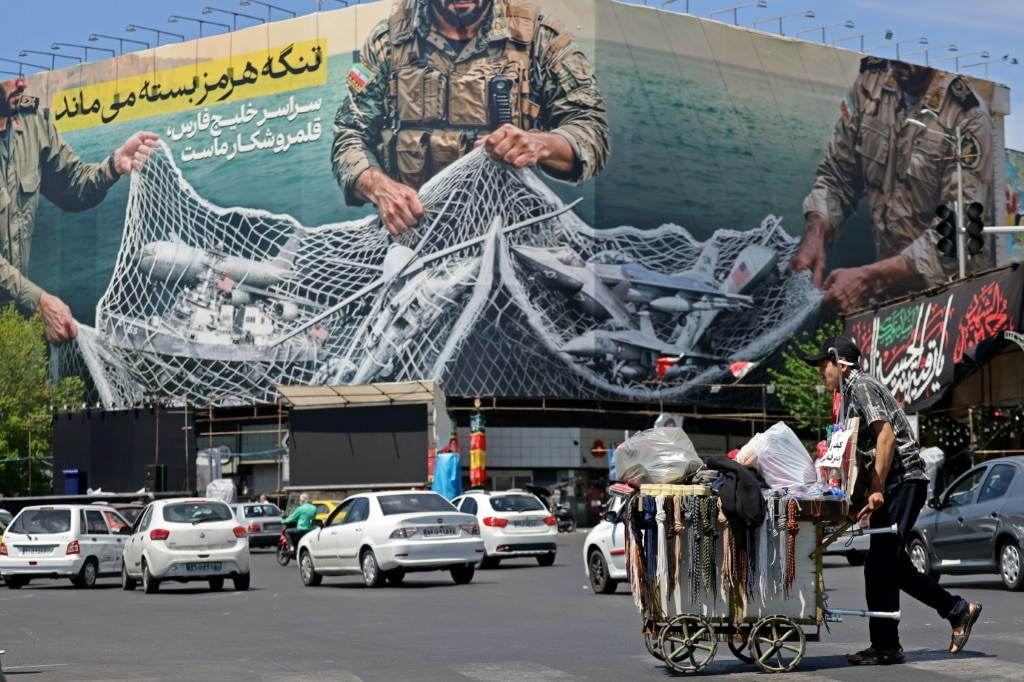
    As the clock ticks down to a planned U.S. naval blockade of Iranian ports scheduled to take effect Monday at 1400 GMT, the Middle East is facing one of its most volatile moments in recent years, with multiple global powers rushing to navigate a crisis that threatens global energy supplies and regional stability. At the heart of the standoff is the Strait of Hormuz, the critical chokepoint through which roughly one-fifth of the world’s daily oil supply passes. In Tehran’s Revolution Square, a towering billboard sums up the Islamic Republic’s defiant posture: “The Strait of Hormuz remains closed” to any hostile incursion.

    Iran’s top military command has issued a scathing rebuke of the planned U.S. action, labeling the proposed restriction on maritime navigation through international waters as an illegal act of outright piracy. If Washington follows through on its threat to blockade Iranian ports, the Iranian military warned in a statement broadcast on state television, no ports across the Persian Gulf will be safe from retaliation. Parliament Speaker Mohammad Bagher Ghalibaf, who led Iranian delegations in failed weekend peace talks hosted in Pakistan, doubled down on Tehran’s refusal to concede to external pressure. “We will not bow to any threats,” Ghalibaf stated, adding “If they fight, we will fight, and if they come forward with logic, we will deal with logic.” Iran’s Revolutionary Guards reinforced this stance, confirming that Iranian security forces maintain full control over the strait and warning that any “wrong move” by adversarial powers will leave them trapped in a “deadly vortex.”

    U.S. Central Command clarified the parameters of the coming blockade in a post on X, noting that the measure will be enforced evenly against all vessels entering or exiting Iranian ports along both the Arabian Gulf and Gulf of Oman, but will not block transit through the strait for ships traveling to and from non-Iranian ports. For his part, U.S. President Donald Trump has adopted a cavalier attitude toward the prospect of renewed diplomatic talks with Tehran, telling reporters “I don’t care if they come back or not. If they don’t come back, I’m fine.” Trump also issued a sharp new threat to China over unsubstantiated claims that Beijing plans to supply weapons to Iran, threatening to impose a staggering 50% tariff on Chinese imports if the allegations prove true. China’s foreign ministry spokesperson Guo Jiakun rejected those claims as “baseless smears” during a recent press briefing, and joined the global call for unimpeded commercial navigation through the strait. Guo also urged both Washington and Tehran to return to diplomatic dialogue and honor existing ceasefire agreements, following the collapse of last weekend’s peace negotiations in Pakistan.

    Russia has put forward a potential confidence-building measure to support future diplomacy: Kremlin spokesperson Dmitry Peskov confirmed that President Vladimir Putin’s long-standing offer to take in Iran’s enriched uranium as part of a broader U.S.-Iran peace deal remains on the table, though no progress has been made to implement the proposal. Across Europe, leaders are grappling with the looming economic fallout of the crisis. German Chancellor Friedrich Merz warned that Europe’s largest economy will feel the impact of the war-driven energy shock “for a long time to come, even after it is over.” In response, his government has rolled out new relief measures including a cut to fuel taxes. Spanish Defense Minister Margarita Robles called Trump’s planned blockade “makes no sense.” Meanwhile, French President Emmanuel Macron announced that Paris and London will collaborate to organize a conference in the coming days to launch a “peaceful multinational mission” separate from the warring parties, aimed at restoring unobstructed navigation through the strait. The Vatican also found itself drawn into the crossfire: after Pope Leo XIV issued a public plea for peace, Trump said he was “not a big fan” of the pontiff and called him “very liberal.” The Pope responded simply, saying he had “no intention to debate” with the U.S. president.

    On the ground in Lebanon, the Israeli military reported a significant advance in its ongoing invasion of the country’s southern region, confirming that troops have surrounded the key strategic town of Bint Jbeil and launched a ground assault on the area. Over the past week, Israeli forces say they have killed more than 100 fighters from the Iran-backed militant group Hezbollah in the surrounding area.

    The escalating crisis has already sent shockwaves through global energy markets. After the collapse of peace talks and the announcement of the U.S. blockade, oil prices rebounded sharply above the $100 per barrel threshold in Monday trading. West Texas Intermediate, the U.S. oil benchmark for May delivery, climbed roughly 7% to settle at $103.55 per barrel, while Brent crude, the international benchmark for June delivery, also gained 7% to reach $101.83 per barrel.
  • Teenager, 14, rescued following multi-hour operation after being swept from rocks at Warriewood, in Sydney

    Teenager, 14, rescued following multi-hour operation after being swept from rocks at Warriewood, in Sydney

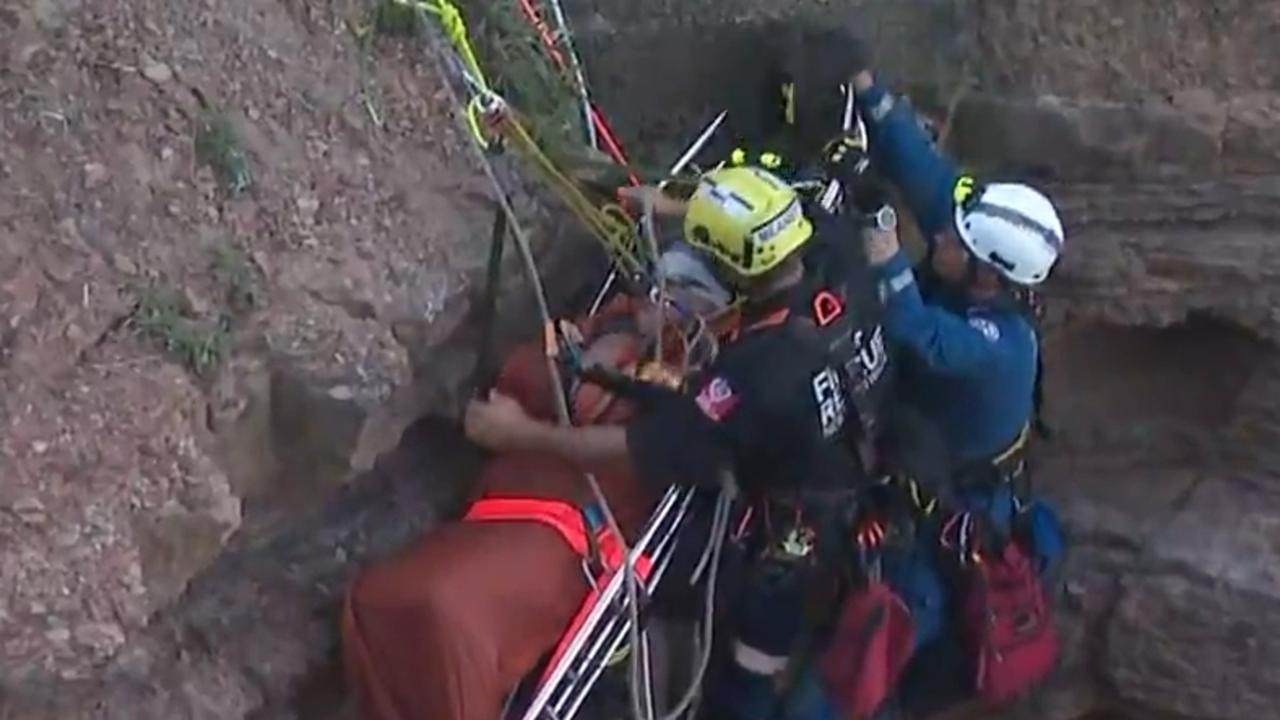
    A daring, hours-long emergency operation has saved the life of a 14-year-old boy who was swept off a rocky coastline into the Tasman Sea on Sydney’s Northern Beaches earlier this week. The incident unfolded on Monday afternoon at the Warriewood blowhole, a popular coastal landmark positioned near Turimetta Beach Headland, when an unexpectedly large ocean swell knocked the teen from the cliffside and into rough waters below.

    Local emergency dispatch received the first distress call about the accident at approximately 1:20 pm, prompting an immediate multi-agency response that included water police, helicopter patrols, and Fire and Rescue NSW crews. Due to the remote and dangerous cliffside location where the injured teenager was stranded, rescue teams had to carry out a complex technical extraction rather than a standard water retrieval.

    Dramatic on-scene footage captured by local media outlet Nine News shows Fire and Rescue NSW personnel abseiling down the sheer rock face to reach the boy, before securing him to a winch system to pull him back up to the cliff top. Acting Superintendent Andrew Bickle of Fire and Rescue NSW explained that the teen’s fall-related injuries made a rope extraction the only safe option for moving him out of the hazard zone.

    “After extricating him from that area on rope by our crews, he was then transferred to ambulance paramedics for immediate on-scene care,” Bickle said. The full rescue operation stretched over nearly three hours, with the boy finally brought to safety just before 4 pm.

    Following the extraction, emergency medics confirmed the teen had sustained multiple cuts, scrapes and abrasions across his body, as well as a moderate head injury from the fall. He was transported to Sydney Children’s Hospital in a stable condition, with no reports of life-threatening damage as of the latest updates. The successful rescue comes as coastal authorities regularly warn visitors to Sydney’s rocky shorelines to stay alert for unexpected large swells, which can catch beachgoers off guard even on calm weather days.

  • US says to begin blockade of Iranian ports

    US says to begin blockade of Iranian ports

    Less than an hour after the breakdown of US-Iran peace negotiations hosted in Islamabad, the United States military has announced it will launch a full blockade of all Iranian ports starting at 1400 GMT Monday, a move that Iran has already labeled an act of piracy and that has sent shockwaves through global energy markets and the Middle East. The collapse of the weekend talks came after US Vice President JD Vance, who led the American delegation alongside special envoy Steve Witkoff and former President Trump’s son-in-law Jared Kushner, left the negotiations with no agreement, capping weeks of hopes that a permanent ceasefire could end a regional war that broke out in late February.

    Former President Donald Trump, who first announced the blockade plan on social media, framed the action as a necessary step to fully reopen the strategically vital Strait of Hormuz, a chokepoint that carries nearly a fifth of the world’s daily oil and gas trade. Since the war began, Iran has severely restricted traffic through the strait, only permitting passage for vessels traveling to and from allied nations such as China. Trump added that his administration’s goal is to clear the waterway of mines and open it to all global shipping, while preventing Iran from gaining economic leverage from control over the route.

    US Central Command confirmed the blockade parameters in an official statement, noting that the restriction will apply equally to all vessels of any flag seeking to enter or depart Iranian ports along both the Arabian Gulf and Gulf of Oman. The command clarified that US forces will not interfere with commercial traffic transiting the Strait of Hormuz bound for or coming from non-Iranian ports. But major questions remain unanswered about how the US military will practically enforce a full port blockade along Iran’s extensive coastline, a complex operation that risks direct military confrontation.

    Iran has issued fierce pushback against the plan. The Iranian military command called the impending blockade a criminal act of piracy, issuing a stark warning that if the security of Iran’s Persian Gulf and Arabian Sea ports is threatened, no ports in those entire bodies of water will remain safe. Iran’s parliament speaker Mohammad Bagher Ghalibaf, who led the Tehran delegation in Islamabad, reaffirmed that Iran will never bow to US threats, while Iranian Navy Chief Shahram Irani dismissed Trump’s blockade announcement as simply “ridiculous”.

    The failed talks and impending blockade have upended a fragile two-week ceasefire that paused large-scale fighting last week, bringing a sharp drop in global oil prices and hopes for a long-term peace deal. As of Monday, however, there has been no immediate indication that full-scale war will resume immediately. The conflict, which began after Israel and the US launched joint strikes on Iran, with Iran retaliating against targets in Gulf states and Israel, has already killed thousands of people and thrown the global economy into chaos. The weekend’s breakdown has now wiped out hopes for a swift, permanent resolution.

    Global energy markets reacted sharply to the news: after falling steadily following the ceasefire announcement, both benchmark Brent and West Texas Intermediate crude oil prices jumped roughly 8% on Monday, pushing both contracts above the $100 per barrel threshold for the first time since the ceasefire took hold. The escalation has spread a deep sense of unease across the Middle East, where regional states are already grappling with months of volatility. “Things could change at any moment,” said Aishah, a 32-year-old economic consultant based in Doha. “It’s more about taking each day as it comes.”

    International reaction to the US plan has been deeply divided. China, a major importer of Iranian crude and a longstanding geopolitical rival of the US, criticized the blockade, noting that the Strait of Hormuz is a critical global energy and trade route, and that maintaining its security, stability and free flow is a shared interest of the entire international community. Beijing called on both sides to avoid reigniting open conflict.

    Russia, Iran’s closest major international ally, announced that Foreign Minister Sergei Lavrov will travel to Beijing this week to meet with Chinese Foreign Minister Wang Yi, a meeting widely seen as a consultation on the escalating crisis. Among US NATO allies, who have already faced criticism from Trump for refusing to back more aggressive action against Iran, reaction has been overwhelmingly negative. Spanish Defense Minister Margarita Robles called the planned blockade “makes no sense”, describing it as just another step in a dangerous downward spiral for the region. UK Prime Minister Keir Starmer confirmed in a BBC radio interview that Britain will not join the US blockade, saying the country will not be dragged back into open conflict with Iran.

    Pakistan, which stepped in to host the fragile negotiations between the two sides, reiterated after the collapse that it remains committed to continuing dialogue facilitation, and called on both Washington and Tehran to uphold the existing ceasefire. Beyond the port blockade and the Strait of Hormuz, core disagreements over Iran’s nuclear program also derailed the talks. The US delegation walked away frustrated after Iran refused to compromise on its right to operate a civilian nuclear program, which the US says conceals military ambitions. Vance told reporters after the talks that Washington had put forward its “final and best offer” to Tehran, adding only: “We’ll see if the Iranians accept it.” Trump later reaffirmed his longstanding position on social media, writing: “I have always said, right from the beginning, and many years ago, IRAN WILL NEVER HAVE A NUCLEAR WEAPON!”

    Scholars of international security say the blockade is far more than a symbolic coercive measure. Nicole Grajewski, an assistant professor at Sciences Po’s Center for International Research, called a US blockade “not a minor coercive signal”, noting that it can reasonably be interpreted as an effective resumption of open hostilities between the two nations.

  • Labor maintains two-party lead, buoyed by women: poll

    Labor maintains two-party lead, buoyed by women: poll

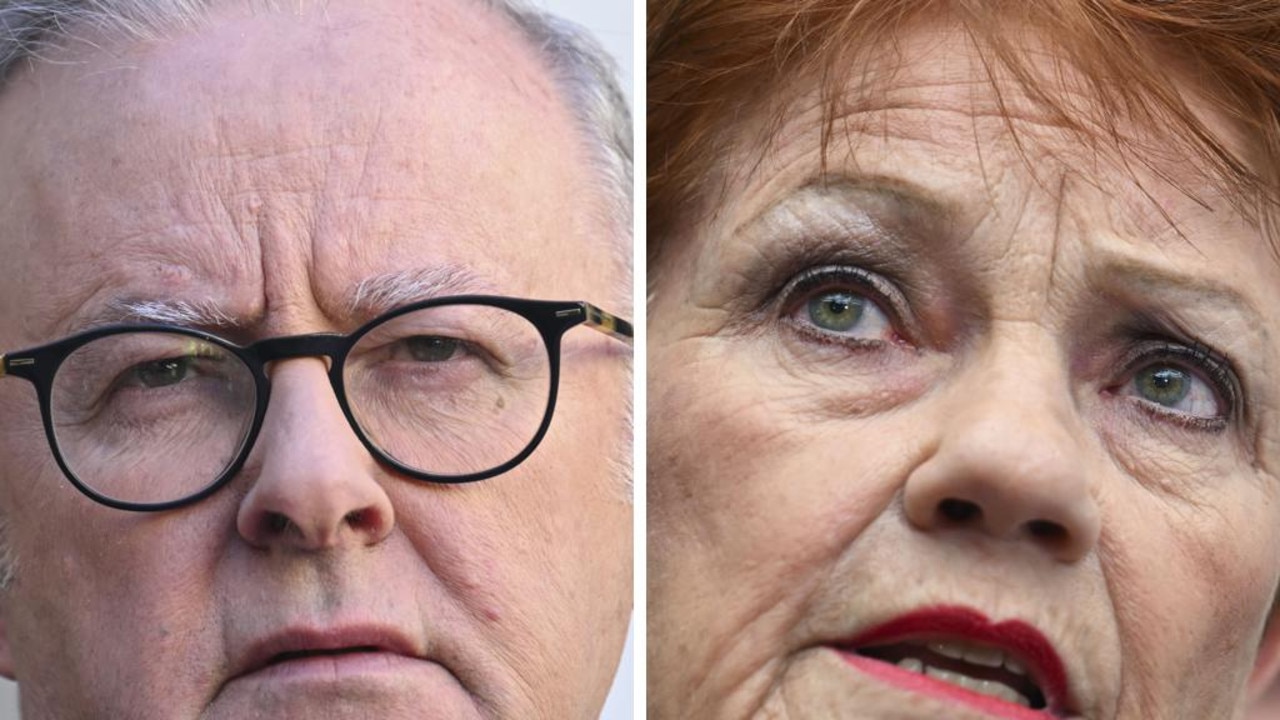
    Fresh national polling from Australia’s leading independent research firm Roy Morgan has delivered clear evidence that the center-left Albanese Labor government maintains a commanding two-party preferred advantage over the center-right Coalition opposition, with growing momentum among female voters emerging as the key pillar of its lead. Data collected between April 6 and 12, released publicly on Monday, puts Labor at 56% of the two-party preferred vote, a result that would hand the party a comfortable parliamentary majority if a federal election were held today. The entire shift in momentum toward the current government can be traced to rapidly rising support among women voters: a striking 61% of female respondents now back Labor on a two-party preferred basis, a 3.5 percentage point jump from previous polling. By contrast, less than 40% of women surveyed said they would support the Coalition, leaving the opposition trailing badly among this key demographic. The narrative shifts sharply when breaking down results by male voters, however. Among men, Labor’s two-party preferred support fell 4 percentage points to 50%, leaving the two major parties deadlocked in a tie. On the primary vote, Labor’s support among men dipped 1 point, while far-right party One Nation saw a 2.5 percentage point increase in primary support among male respondents. Across all demographic groups, One Nation’s overall primary support rose 3 percentage points to hit 24.5%, marking a notable recent surge for Pauline Hanson’s populist party. Even with this rightward shift among a subset of the electorate, poll analysts confirm that Labor’s lead among women is large enough to offset losses among men, leaving the party on track to retain power with a clear majority if an election were called in the immediate term.

  • Pope Leo kicks off African tour under shadow of Trump’s ire

    Pope Leo kicks off African tour under shadow of Trump’s ire

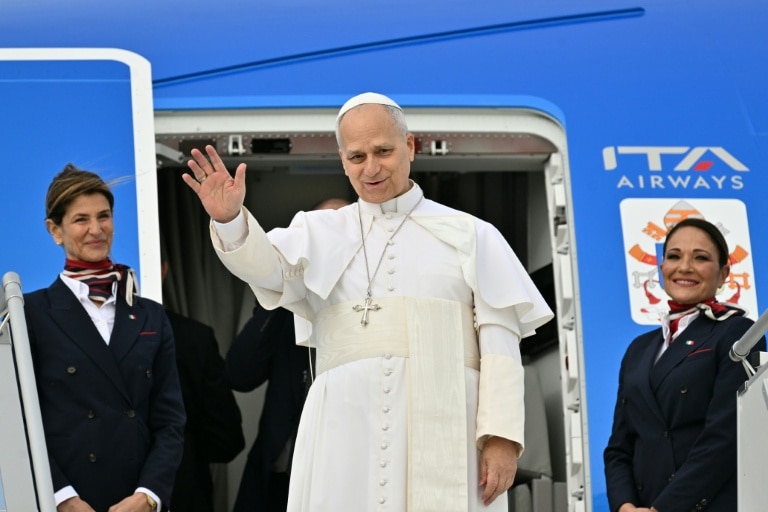
    Pope Leo XIV departed Rome’s Fiumicino Airport on Monday, kicking off a landmark 11-day tour across four African nations that stands as one of his most high-profile international outings since his election to the papacy in May 2025. But the historic journey faces an early shadow, cast by harsh public criticism from former U.S. President Donald Trump launched just hours before the pontiff’s departure.

    The first stop of the 18,000-kilometer voyage is Algeria, a majority-Muslim nation that has never before welcomed a sitting pope. According to Algiers Archbishop Jean-Paul Vesco, the core goal of the Algerian leg of the trip is to foster interfaith connection: to help “build bridges between the Christian and Muslim worlds.”

    Roughly seven hours before Pope Leo departed Rome, Trump launched an unexpected public attack against the pontiff, centered on Leo’s repeated calls for an end to ongoing violent conflict in the Iran war. Speaking to reporters, Trump stated plainly, “I’m not a big fan of Pope Leo,” and accused the pontiff of “toying with a country (Iran) that wants a nuclear weapon.”

    Trump went further, suggesting that college of cardinals only elected Leo to the papacy earlier this year because of his American citizenship, framing the selection as an attempt to curry favor with Washington. The attack concluded with Trump sharing an AI-generated image that bizarrely depicted him in the likeness of Jesus Christ.

    This public rebuke is not out of the blue. Pope Leo had already publicly decried Trump’s threats against Iranian civilians as “unacceptable” — a critique that did not name Trump but left little ambiguity about its target. The pontiff has also previously condemned the Trump administration’s “inhuman” approach to migrant policy.

    In a surprising show of solidarity even from a political ally of Trump, Italian Prime Minister Giorgia Meloni, a far-right leader with well-documented close ties to Trump, released a public statement Monday morning wishing the pope a successful trip across Algeria, Cameroon, Angola and Equatorial Guinea. “May the Holy Father’s ministry foster the resolution of conflicts and the return of peace, both internally and between nations, following the path traced by his predecessors, and provide support and comfort to the Christian communities he will encounter during his journey,” Meloni wrote.

    Beyond its global diplomatic and interfaith goals, the tour carries deep personal meaning for Pope Leo. Algeria is the birthplace of Saint Augustine, the 4th and 5th-century Christian theologian whose spiritual thinking has shaped the entire course of Leo’s ministry. Augustine founded the theological tradition that underpins the Augustinian Order, the monastic community Pope Leo has belonged to for decades; he even served as head of the order before his election to the papacy, and has visited Algeria twice previously in that role. In his inaugural address as pope, Leo introduced himself as a “son” of Augustine, and regularly cites the theologian’s writings in his public messages.

    Ahead of the pope’s arrival in Algiers, the capital has been abuzz with festive preparation: city walls have been repainted, road surfaces refreshed, and public green spaces decorated with fresh plants and flower arrangements to welcome the historic visit. After meeting with Algerian President Abdelmadjid Tebboune, addressing the diplomatic corps, and paying respects to those killed in Algeria’s 1954-1962 war of independence against France, Pope Leo will travel Tuesday to Annaba, the modern city built atop the ancient Roman town of Hippo Regius where Saint Augustine lived and worked for much of his career. There, he will celebrate mass at the Saint Augustine Basilica.

    Father Fred Wekesa, rector of the Annaba basilica, noted that the visit will be a powerful moment of encouragement for Algeria’s small Christian community, bringing “a message of encouragement and solidarity.”

    Monday’s itinerary in Algiers also includes stops at the iconic Great Mosque of Algiers, home to the world’s tallest minaret, and the Basilica of Our Lady of Africa, which overlooks the city’s bay. The pontiff will also hold a private prayer service in a chapel honoring 19 priests and nuns who were killed during Algeria’s brutal 1992-2002 civil war, an internal conflict that claimed an estimated 200,000 lives. Notably, he will not visit the Tibhirine monastery, where seven monks were kidnapped and murdered in 1996, a killing whose full context remains unresolved decades later.

    Wekesa pointed out that while many global observers still see Algeria through the lens of its “dark years” of civil conflict, Pope Leo’s visit will give the world a chance to see the nation differently. “We are capable of living together in peace,” he said, noting the visit will highlight “the hospitality and generosity of the Algerian people.”

    Even so, human rights organizations have raised ongoing concerns about religious freedom in Algeria. While the country’s constitution enshrines formal guarantees of freedom of worship, multiple groups say repression of religious minority communities remains a persistent issue. Last week, three major human rights organizations publicly called on Pope Leo to raise these concerns during his meetings with Algerian leadership.

  • Wife of alleged murder victim tells jury how she ended ‘love triangle’

    Wife of alleged murder victim tells jury how she ended ‘love triangle’

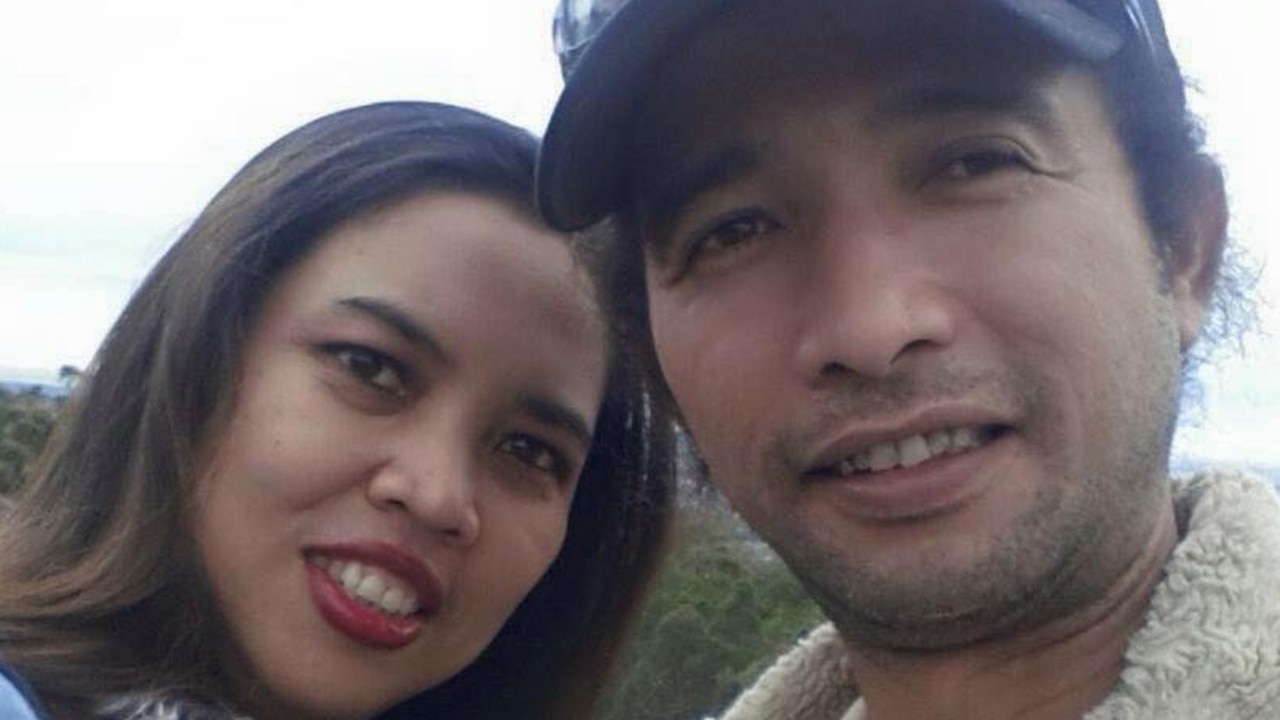
    More than two decades after Jason Palmer’s body was pulled from a New South Wales river, his accused killer’s long-awaited Supreme Court trial has begun, with the victim’s wife taking the witness stand to describe the fateful love triangle that preceded her husband’s 2004 death.

    Fifty-four-year-old Gofal Baziad has pleaded not guilty to one count of murder. Prosecutors allege Baziad stabbed Palmer to death inside Palmer’s Lakemba unit in early February 2004, then wrapped the victim’s remains in a sleeping bag, weighted the body with heavy rocks, and dumped it in the Nepean River. The core of the Crown’s case centers on the romantic entanglement that linked all three people involved: Baziad had previously been in a relationship with Renny Palmer, Jason Palmer’s wife.

    Court documents outline that Jason and Renny Palmer’s marriage had been turbulent for years, with repeated separations that led to a permanent split in 2002. Not long after the separation, Renny began dating Baziad, a relationship that continued until late 2003, when Jason Palmer reached out to repair their marriage. In an unusual confrontation that would set the stage for the alleged murder, Jason Palmer organized a three-way meeting with his wife and Baziad, and demanded Renny make a final choice between the two men.

    Speaking to the jury from the witness stand on Monday through a court-appointed interpreter, Renny Palmer confirmed that she ultimately chose to rebuild her marriage with her husband over continuing her relationship with Baziad. “Jason arranged a meeting with the three of us together. Jason asked me to choose between the two of them. I did. I chose Jason,” she told the court.

    A key detail that has emerged in pre-trial and opening testimony adds further complexity to the case: court records show that after Jason Palmer’s disappearance and death, Renny Palmer reconnected with Baziad, and the pair maintained a romantic relationship that lasted 14 years, only ending in 2018.

    Crown prosecutor Brett Hatfield SC laid out the prosecution’s version of events in his opening address, telling the court that Baziad attacked Palmer by first striking him in the head with a glass object, before stabbing him multiple times in the back, hip and chest. The attack is alleged to have happened either late on February 6, 2004 or in the early hours of the following morning at Palmer’s Barremma Road residence.

    Three weeks after Palmer was reported missing, kayakers on the Nepean River near Menangle made the grim discovery. His body was found wrapped in a blue-green sleeping bag, secured with yellow rope, and held underwater by two large rocks matched the prosecution’s account of how Baziad disposed of the remains.

    Baziad’s trial is ongoing, and the court is expected to hear weeks of further witness testimony and evidence before the case goes to the jury for deliberation.

  • Giovani Laulu, Younes Ali Younes: AFP to seek public interest immunity claim over information about Adass Israel fire

    Giovani Laulu, Younes Ali Younes: AFP to seek public interest immunity claim over information about Adass Israel fire

    A pre-trial hearing for two men charged over a devastating late 2024 arson attack on a Melbourne Jewish synagogue has progressed this week, with Australian federal law enforcement confirming it will fight to keep key case documents sealed from the defense under public interest immunity rules.

    Giovani Laulu, 21, and Younes Ali Younes, 20, were slapped with charges including arson and reckless conduct endangering life months after the December 6, 2024 blaze gutted the Adass Israel Synagogue in the inner Melbourne suburb of Ripponlea. As is standard in Australian early court proceedings, neither defendant has been required to enter a plea to the allegations against them.

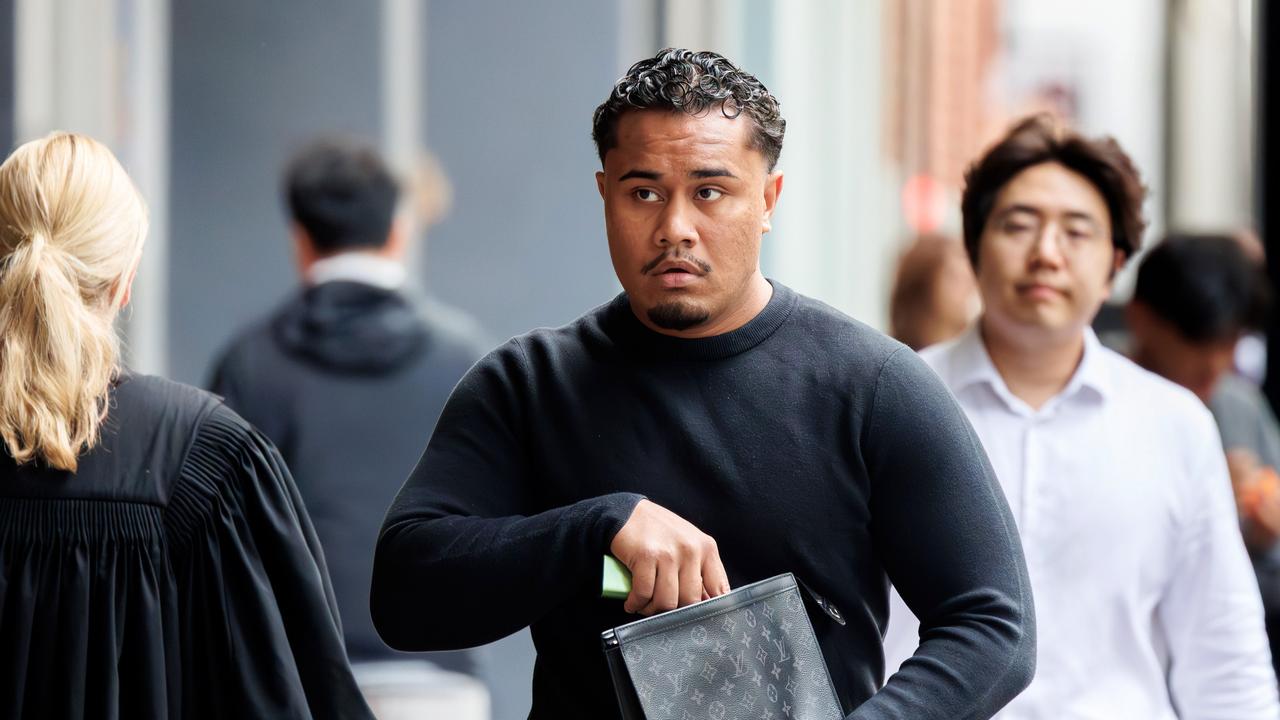
    The pair appeared before Melbourne Magistrates Court on Monday afternoon, with magistrate James Henderson receiving a procedural update on the progress of the case. Laulu, who was granted bail in December to reside at his mother’s home, drew public attention after being photographed carrying an apparent Louis Vuitton Pochette Voyage MM men’s clutch, a luxury retail item valued at roughly AU$1,600. By contrast, Younes appeared via videolink from a Victorian remand centre, dressed in a standard green prison uniform.

    Court proceedings brought to light a key point of contention in the case: the Australian Federal Police (AFP)’s plan to withhold a selection of documents from the defense. A legal representative for the AFP told the court that the agency is on track to fulfill its mandatory disclosure obligation — the requirement to turn over all relevant evidence and case information to the defendants’ legal teams — by the end of May. To date, 2,500 pages of material have already been handed over, with a further 1,100 pages still undergoing internal agency review.

    However, the AFP intends to file multiple public interest immunity claims for a subset of the unreleased documents. If the court upholds these claims, the information would be barred from disclosure to the defense, on the grounds that releasing it would cause harm to broader national or public interests. Legal teams for the two accused have indicated they may challenge the immunity claims, meaning a separate window of court time will need to be scheduled to hear arguments on the issue before the scheduled August committal hearing, which will determine if the case proceeds to a full trial.

    Per police allegations, Laulu, Younes, and a third, still-unidentified suspect broke into the synagogue around 4:10 a.m. on the day of the fire. CCTV footage released by Victoria Police months after the attack shows three hooded individuals force entry into the building, carry multiple red jerry cans of accelerant inside, and ignite the blaze. The attack caused an estimated AU$20 million in structural damage to the synagogue and destroyed irreplaceable sacred Jewish texts. Two worshippers who were inside the building at the time of the attack managed to escape, though one suffered minor burns to his hands, per police accounts.

    The case has already taken on major national security implications, after Australian Prime Minister Anthony Albanese and ASIO Director-General Mike Burgess revealed last August that Australian intelligence links this synagogue blaze, as well as an October 2024 arson attack on Sydney’s Lewis Continental Kitchen, to the Islamic Revolutionary Guard Corps (IRGC) of Iran. Burgess told the public at the time that the IRGC allegedly used an elaborate network of proxies to cover up its involvement in the attacks targeting Australian Jewish communities.

    Following Monday’s hearing, the next procedural appearance for Laulu is scheduled for August 12, while Younes is set to next appear in court on June 16.

  • Man charged with intent to maim after teen, 17, allegedly stabbed in Gold Coast suburb of Molendinar

    Man charged with intent to maim after teen, 17, allegedly stabbed in Gold Coast suburb of Molendinar

    Five months after a 17-year-old was left critically injured in a reported stabbing on Queensland’s Gold Coast, law enforcement have taken a 33-year-old suspect into custody, with newly released police bodycam footage documenting the full arrest process.

    The violent incident unfolded just after 7:30 p.m. on November 6 last year, when emergency dispatch received multiple calls about a stabbing on Batchworth Road in Molendinar, a residential suburb of the Gold Coast. Responding officers found the wounded teenager at the scene with severe, life-threatening injuries, and immediately rushed him to Gold Coast University Hospital in critical condition.

    In an official statement following the recent arrest, Queensland Police outlined that investigators believe two attackers fled the stabbing site in a white Mercedes-Benz utility vehicle before officers arrived at the property. The suspect vehicle was first spotted roughly an hour after the attack at 8:50 p.m. traveling along Cotlew Street in the nearby Gold Coast suburb of Ashmore. By 9:15 p.m., authorities located the utility abandoned at a commercial property on Marine Parade in Labrador, but the two suspects had already fled the area.

    After five months of ongoing investigative work, Queensland Police executed an arrest operation on Monday, taking the 33-year-old male suspect into custody. He has since been charged with one count of acts intended to maim, disfigure or disable, a serious offense under Queensland criminal law.

    Released police bodycam footage, which has blurred the suspect’s face for privacy reasons, shows officers restraining the man on an outdoor veranda, bringing him to the ground before securing his wrists with handcuffs. The footage continues as officers escort the suspect away from the property and load him into the back of a marked police transport van.

    The accused made a brief first appearance at Southport Magistrates Court on the same day as his arrest. Authorities confirmed that investigations into the November 6 stabbing remain active, with a second suspect still at large. Police have not yet released additional details about the motive for the attack or any updates on the 17-year-old victim’s current condition following his initial hospitalization.

  • Aussie customers caught up in Booking.com data breach as personal information compromised

    Aussie customers caught up in Booking.com data breach as personal information compromised

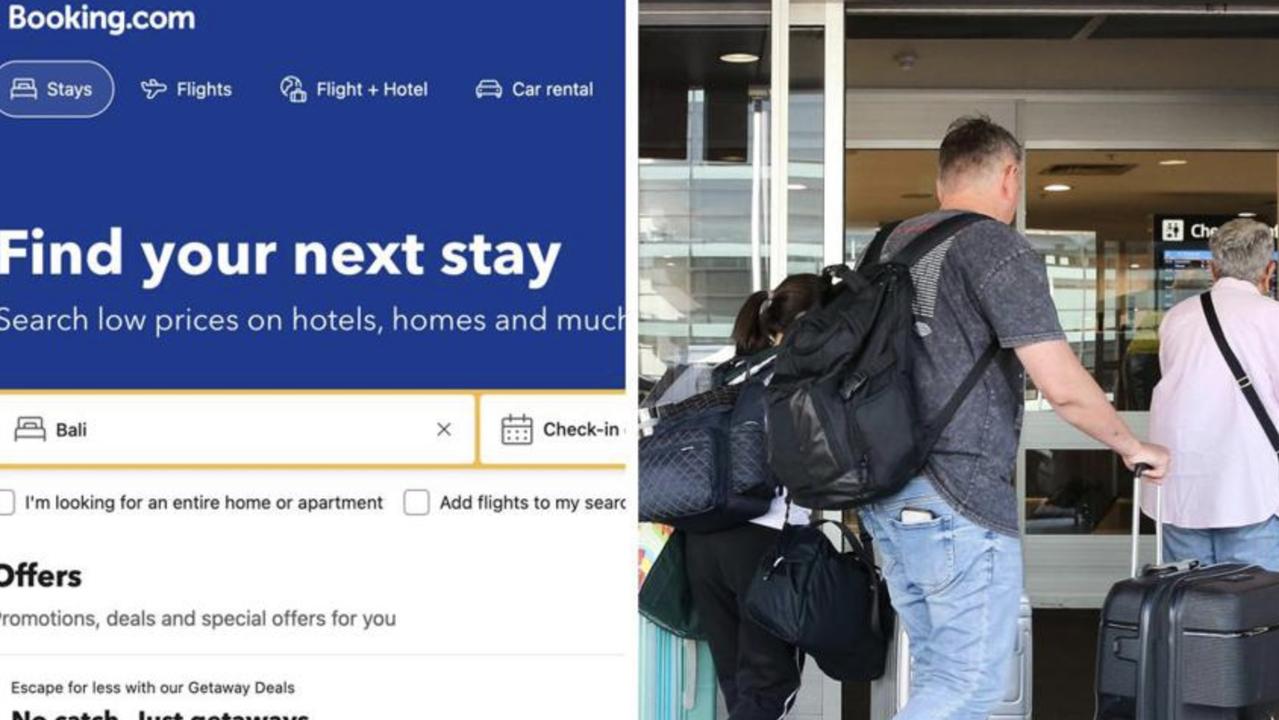
    Global online travel behemoth Booking.com, one of the world’s largest travel platforms with operations spanning 160 countries and over 28 million property listings, has issued an urgent warning to its Australian customers after confirming a large-scale data breach that allowed unauthorised third parties to access sensitive personal user data.

    In notifications sent to affected users overnight, the Dutch-headquartered company confirmed that it had detected suspicious activity linked to a subset of customer reservations. After identifying the anomaly, security teams moved quickly to seal off the breach and prevent further unauthorised access, launching a full internal investigation to map the scope of the incident.

    The probe confirmed that bad actors gained access to a range of personal user information, including customers’ full names, registered email addresses, contact phone numbers, and additional details that users had shared with accommodation providers via the platform. To mitigate ongoing risk, the company has issued new reservation confirmation numbers and PIN codes to impacted users, urging them to remain vigilant for unsolicited communications from scammers impersonating Booking.com staff or accommodation representatives.

    “Your personal data security is our highest priority,” the company stated in its customer notification. “We will continue to upgrade and expand the comprehensive security protocols we have in place to protect all user bookings made through our platform.”

    As of the latest update, Booking.com has not confirmed how many total users have been impacted by the breach, nor has it verified whether sensitive financial information such as credit card details or bank account credentials were accessed by the unauthorised parties. Outlets have reached out to company representatives for additional comment on the incident.

    This breach is not an isolated event for the travel giant: industry outlet Techzine has documented multiple prior cyberattacks and data breaches targeting Booking.com, including a 2024 phishing scam that stole employee login credentials from hotel workers in the United Arab Emirates. The report also notes that phishing attacks targeting global travelers have spiked 900% since the start of 2024, a trend that has put millions of booking platform users at increased risk.

    Australian fraud monitoring agency ScamWatch adds broader context to this risk: last year alone, more than 65,600 Australian residents lost a combined total of AU$31 million to phishing scams, making this one of the fastest growing cyber threat categories for domestic consumers.

  • Gold miners and tech stocks drag Aussie sharemarket down, but oil soars amid further Middle East tensions

    Gold miners and tech stocks drag Aussie sharemarket down, but oil soars amid further Middle East tensions

    Geopolitical tensions in the Middle East sent ripples through Australia’s domestic share market on Monday, as a surprise order from former U.S. President Donald Trump to block the Strait of Hormuz upended commodity prices and dragged the benchmark ASX 200 into negative territory. The move came on the heels of collapsed peace negotiations between the United States and Iran, triggering immediate volatility in global energy markets.

    Brent crude prices skyrocketed 7.05% in the wake of the announcement, settling at $US101.91 per barrel by market close. The energy price surge translated directly to gains for Australia’s domestic energy sector, the largest winner on a otherwise downbeat trading day. Woodside Energy climbed 2.61%, while fellow major Santos notched a 1.65% increase. Coal producers also benefited from the broader energy market upswing, with Whitehaven Coal rising 2.59% by closing bell.

    Despite the energy sector’s gains, the ASX 200 ultimately closed lower, dragged down by steep losses in gold mining and technology stocks. The benchmark index fell 34.6 points, or 0.40%, to end the session at 8926, while the broader All Ordinaries index dropped 0.5% (42.3 points) to 9113.5. Eight of the 11 tracked market sectors finished in negative territory, with only energy, communication services and utilities posting marginal gains. Among Australia’s big four retail banks, results were mixed: Commonwealth Bank of Australia (CBA) dipped 0.1%, Westpac fell 0.42%, National Australia Bank dropped 0.9%, and Australia and New Zealand Banking Group held steady to close flat.

    Technology stocks were among the hardest hit, led by a sharp 8.06% plunge in Life360 shares. The decline marked a continued sell-off following the company’s announcement last Friday that it would cut headcount to streamline operations around artificial intelligence integration. Other major tech names also posted losses: WiseTech Global fell 1.25%, while cloud accounting firm Xero dipped 1.46%.

    Gold mining stocks also underperformed, as spot gold prices fell 0.46% to $US4729.95 per ounce, pressured by mounting inflation concerns tied to rising energy costs. Top Australian gold producers recorded significant losses: Northern Star Resources slipped 1.96%, Evolution Mining fell 2.44%, and Pantoro Gold dropped 3.88%.

    Alongside market volatility, new wage data from CBA released Monday offered a steady picture of Australian wage growth amid rising inflation pressures. The bank’s quarterly Wage Insights series, drawn from de-identified data of 400,000 customer accounts, recorded a 0.8% rise in wages over the three months to March. Annual wage growth held steady at 3.1%, defying expectations of upward pressure from a persistently tight labour market.

    Belinda Allen, CBA’s head of Australian economics, noted that wage growth has stabilized at a new baseline even as conflict-driven inflation risks rise in the wake of Middle East tensions. “The labour market remains on the tight side with the unemployment rate at 4.3 per cent according to ABS data,” Allen said. “However, according to CBA data, wages growth is finding a new base at around 3.1 per cent per year, having hovered between 3.1 per cent and 3.2 per cent since mid-2025. Our data is not yet showing any response to the tightening in labour market conditions through late 2025 and into early 2026. We are expecting some loosening in the labour market as economic growth slows in 2026.”

    In corporate news, a handful of major individual stocks posted extreme moves on the back of company announcements. The a2 Milk Company plummeted 12.99% after downgrading its 2025-26 profit outlook, citing ongoing supply chain disruptions in its key Chinese market. The company cut its expected EBITDA margins and warned that net profit would be flat to lower compared to the previous financial year. Payments firm EML Payments saw an even steeper drop, falling 35.65% after downgrading its 2026 fiscal year underlying EBITDA guidance to a range of $47 million to $50 million, blaming weaker-than-forecast trading and delayed program launches. On the positive side, fertility service provider Monash IVF jumped 15.79% after confirming it had received a $351 million takeover offer at 90 cents per share from a private consortium. Supply chain firm Brambles declined 1.93% after the Federal Court partly upheld shareholder claims alleging the company made misleading public guidance disclosures.

    The Australian dollar closed trading at 0.70 U.S. cents, following the day’s market shifts.