标签: Oceania

大洋洲

  • A teacher has been jailed following a knife attack on a principal

    A teacher has been jailed following a knife attack on a principal

    A violent, unprovoked attack that shook a suburban Australian school has concluded with a fixed prison sentence for the perpetrator, as courts praise the quick-thinking bravery of staff who stepped in to stop further harm.

    On Monday, 37-year-old Kim Ramchen, a former information technology teacher at Melbourne’s Keysborough Secondary College, was handed a 15-month prison term by the Melbourne Magistrates Court for a coordinated knife attack on the school’s principal, Aaron Sykes, that occurred late last year. Ramchen had already entered a guilty plea to three criminal charges: intentionally causing bodily injury, assault with a dangerous weapon, and unlawful assault.

    The details of the December 2 incident paint a disturbing picture of violence within a space meant to be safe for students and staff alike. Shortly after 3 p.m., not long after Ramchen had finished marking attendance in his classroom, he left his teaching space and walked to the administration wing’s shared kitchen, where he grabbed a four-inch kitchen knife. He then proceeded directly to Sykes’ office, entered the space, and immediately pointed the blade at his superior. When Sykes asked Ramchen what was happening, the former teacher launched his first attack.

    Prosecutor J.J. Jassar told the court that screams for help from the office drew nearby staff to the scene, who arrived to find Ramchen standing over the injured principal, continuing to swing the knife. After colleagues pulled Ramchen away from Sykes, he left the office – only to return minutes later with a larger chef’s knife he had also retrieved from the school kitchen, launching a second assault on the downed principal.

    It was only the quick intervention and courageous action of assistant principal Matthew Sloan and a team of other staff members that allowed them to restrain Ramchen until responding law enforcement officers arrived on site. Deputy Chief Magistrate Tim Bourke, who delivered the sentence, noted that the quick, brave action from Sloan prevented what could have been a far deadlier, more devastating outcome for Sykes.

    When questioned by police after his arrest, Ramchen told investigators he had “mentally snapped” before the attack, saying “my blood just went to my head and I just became incredibly angry and emotional.” Sykes survived the attack but sustained multiple serious injuries: a two-centimeter laceration on his neck, cuts to his left cheek and right forearm, and dozens of additional abrasions and bruises across his body.

    In his ruling, Bourke emphasized that the attack was completely unwarranted, taking place in a school – a location that must remain a safe space for all students, employees and community members. “The offending has occurred in what should only ever be a safe place not just for students, but co-workers and the broader school community,” Bourke said. “You have attacked the school principal twice, and a work colleague who bravely came to his aid.”

    Bourke did note that he accounted for several mitigating circumstances when handing down the sentence, including Ramchen’s confirmed diagnoses of autism spectrum disorder, recurrent depressive disorder with anxious distress, documented substance abuse issues, and the defendant’s early guilty plea that avoided a lengthy trial.

    Along with the 15-month total prison sentence, Bourke set a non-parole period of eight months and 14 days. Factoring in the 159 days Ramchen has already spent in pre-sentence detention, he will become eligible for parole in approximately three months.


  • ISIS-linked mother and daughter Kawsar Ahmad and Zeinab Ahmad reveal new bail effort on slavery charges

    ISIS-linked mother and daughter Kawsar Ahmad and Zeinab Ahmad reveal new bail effort on slavery charges

    In a surprising development in an Australian human trafficking and slavery case, a mother-daughter pair facing multiple slavery and crimes against humanity charges have withdrawn their immediate push for bail, just days after their arrest on arrival back in Australia from a Syrian refugee camp.

    Fifty-four-year-old Kawsar Ahmad and her 31-year-old daughter Zeinab Ahmad appeared before Melbourne Magistrates Court on Monday afternoon, four days after federal officers took them into custody at Melbourne Airport last Thursday. The two Australian citizens are among 13 people – four women and nine children – repatriated to Australia from the Al Roj camp in northern Syria, where they had been held by Kurdish forces since March 2019. The camp holds relatives of people alleged to be affiliated with the ISIS terror group.

    Court documents detail that the pair traveled to Syria originally in 2014. Prosecutors allege that in June 2017, Kawsar Ahmad aided in the purchase of a 20-something-year-old Yazidi woman for $10,000 USD. Between that purchase and November 2018, both women allegedly held the victim in their home in Syria’s Deir ez-Zor province, exercising full ownership over her in conditions that meet legal definitions of slavery.

    Kawsar Ahmad, who also goes by the name Kawsar Abbas, faces four separate counts covering enslavement, holding a person as a slave, exploiting a slave, and participating in slave trading – all classified as crimes against humanity under Australian law. Zeinab Ahmad, alternatively listed as Zeinab Ahmed, faces two counts of enslavement and exploitation of a slave. Arrest warrants for the two women were first issued back on February 17 this year, after authorities confirmed they planned to return to Australia after years detained overseas.

    The charges outline that the alleged conduct was carried out knowingly as part of a systematic, widespread attack targeting the civilian population in the war-torn region. Prior to Monday’s hearing, court observers had confirmed the pair’s legal team was preparing immediate bail applications to secure their release ahead of trial. But in a sudden shift, Chief Magistrate Lisa Hannan told the court the defendants had withdrawn their immediate applications, instead requesting that bail hearings be scheduled at a later date next month.

    After a short adjournment, Hannan set Zeinab Ahmad’s bail hearing for June 5, and Kawsar Ahmad’s for June 16. The two defendants were supported in court by Kawsar Ahmad’s brother, Abraham Abbas, who attended in a show of family support. The repatriation of the group from Syria already sparked unrest last week, when supporters of the returning group clashed with journalists covering the arrival at Melbourne Airport.

    Under Australian law, the media is prohibited from publicly naming the Yazidi woman who is the alleged primary victim in the case. Hannan has also issued an interim suppression order blocking the identification of a second woman who will serve as a witness for the prosecution in the trial. Prosecutors confirmed on Monday that they would file an application to have this second witness designated a “special witness” under Australia’s criminal procedure rules, which would extend the lifetime ban on any publication that could reveal her identity. The witness is alleged to have also been a victim of slavery-related offenses separate from the charges against Ahmad and her daughter, but will give testimony covering her interactions with the two accused. A preliminary hearing on the special witness designation is scheduled to take place in the same court on Tuesday.

  • Contractor accused of attack at Adelaide Hills school

    Contractor accused of attack at Adelaide Hills school

    A contract worker employed at a South Australian school has been formally charged with aggravated indecent assault against a student following an alleged incident in late April, and is scheduled to appear before a local court early next month. The accused, a 30-year-old man from Adelaide’s eastern suburbs, was taken into custody on the same day that law enforcement responded to reports of the assault, according to official statements from South Australia Police.

    The reported attack unfolded on Monday, April 27, at a school located in the Adelaide Hills region. Authorities have not released the name or exact location of the campus involved in the case to protect the privacy of the victim and the broader school community. After completing initial investigative work, police took the suspect into custody and formally charged him with the aggravated offense. He has since been released on bail, with his first court appearance set for July 2 at the Mount Barker Magistrates Court.

    South Australia Police is now calling on members of the public who may hold additional information connected to the incident to come forward to assist with the ongoing investigation. Anyone with relevant details can reach out to Crime Stoppers South Australia through the organization’s official website at www.crimestopperssa.com.au, or by placing a free call to 1800 333 000, and should reference case number 111502 when submitting information.

  • Man accused of Bunnings dog attack in ‘irritating’ court no-show

    Man accused of Bunnings dog attack in ‘irritating’ court no-show

    A new development has unfolded in a widely shared animal cruelty case out of South Australia, where an arrest warrant is now active for a man accused of kicking a tethered dog in a suburban Bunnings Warehouse carpark, after he failed to appear for a scheduled court hearing.

    The incident first made headlines across Australia on March 1, when a security camera clip captured a man striking a four-year-old Staffordshire bull terrier twice outside the Parafield Bunnings location, north of Adelaide. The video spread rapidly across social media, sparking widespread public anger over the treatment of the defenseless animal, which was tied to a ute parked in the lot at the time.

    Authorities identified 48-year-old Nathan Bradwell of Smithfield as the suspect, and he was formally charged with ill-treatment of an animal in violation of South Australia’s Animal Welfare Act. Bradwell made his first court appearance on April 14, where he told reporters he was seeking legal counsel and planned to argue he acted in self-defense, claiming he was trying to move the dog away from his vehicle. He kept his face hidden under a jacket while speaking to the press outside the courtroom following that initial hearing.

    Bradwell was scheduled to make his second appearance in the case at the Elizabeth Magistrates Court on Monday, but he never arrived. After noting Bradwell’s absence, Magistrate David White authorized the issuance of an arrest warrant to compel the suspect to attend a future hearing. Court officials confirmed that if Bradwell is convicted on the current charge, he could face a maximum custodial sentence of two years behind bars. The entire hearing lasted just over one minute.

    Attending the hearing in Bradwell’s place were the dog’s current owners, Hayden Palkovics and Tyler Wright, along with the animal’s previous owner, who is a friend of the couple. In comments to reporters after the hearing, Wright expressed deep frustration and disappointment over Bradwell’s no-show, an action she said has left the pair unsettled.

    “It is frustrating, annoying and irritating. I find it laughable that he did not show up,” Wright said, adding that the absence left the couple “really sad” that the case has been dragged out further. On a more positive note, she confirmed the dog that was attacked has fully recovered and is back to her normal, friendly temperament.

    The case will be called back to court at a future date once Bradwell is taken into custody on the active arrest warrant.

  • Under-threat UK PM Starmer to attempt reset after disastrous polls

    Under-threat UK PM Starmer to attempt reset after disastrous polls

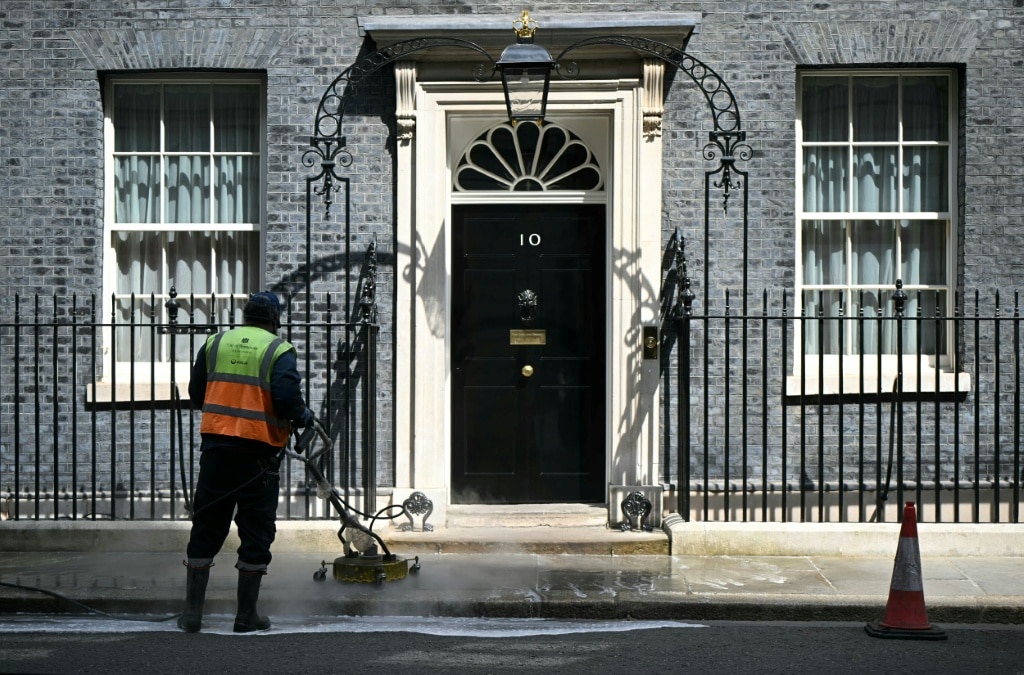
    British Prime Minister Keir Starmer is facing the most serious threat to his leadership since taking office less than two years ago, after a catastrophic showing in last week’s local and regional elections that has left his Labour Party reeling and open rebellion brewing among its ranks. On Monday, the 63-year-old prime minister is set to attempt a desperately needed political reset, addressing a public that has grown increasingly frustrated with incremental policy progress, with plans to announce a bolder policy agenda focused on three core areas: boosting sluggish national economic growth, forging closer ties with the European Union, and accelerating progress on energy policy.

    The scale of Labour’s electoral defeat last week has sent shockwaves through the party. For the first time in the 27-year history of Cardiff’s devolved parliament, Labour lost control of the Welsh government, a historic upset that signaled deep voter dissatisfaction with the party’s performance. Across England, Labour shed nearly 1,500 local council seats, while the right-wing, anti-immigration Reform UK party led by Brexit figurehead Nigel Farage exploded from fewer than 100 seats to more than 1,400, a surge that has reshaped the UK’s political landscape. In Scotland, SNP leader John Swinney seized on the results to call for a new independence referendum, framing the move as a safeguard against a potential future Reform UK national government.

    The poor performance comes just 20 months after Starmer led Labour to a landslide general election victory, ending 14 consecutive years of Conservative rule and raising widespread hopes for a new era of governance. Since taking office, however, Starmer’s tenure has been marked by a string of policy missteps and growing public discontent. Most recently, he has been engulfed in controversy over the short-lived appointment of Peter Mandelson as UK ambassador to Washington, who was quickly sacked after new revelations emerged about his past ties to convicted sex offender Jeffrey Epstein. Beyond the scandal, Starmer has failed to deliver on promises of faster economic growth, leaving British households still grappling with the ongoing fallout from a years-long cost-of-living crisis that has eroded disposable incomes and pushed up housing and energy costs. He has, however, earned cross-partisan praise for his firm stance against former U.S. President Donald Trump’s policy on Iran, a rare bright spot in an otherwise fraught term so far.

    In the aftermath of the election drubbing, multiple Labour MPs have publicly called for Starmer to step down, breaking ranks to challenge his grip on the party leadership. Former junior minister Catherine West has issued an ultimatum: if no sitting cabinet member launches a challenge by Monday, she will initiate the process to trigger a leadership contest herself, a move that would open the door for other dissident MPs to join the challenge. Former Starmer loyalist Josh Simons became one of the most high-profile defectors from the prime minister’s camp, saying that Starmer has “lost the country” and must resign. Veteran Labour MP Clive Betts added to the pressure, arguing that the party must find a “proper and constructive” path to install a new leader in the coming months.

    Under Labour Party rules, any challenger must secure the public support of 81 sitting Labour MPs – 20 percent of the party’s parliamentary caucus – to trigger a formal leadership contest. For weeks before the election, British media was rife with speculation that top party figures including former deputy prime minister Angela Rayner and Health Secretary Wes Streeting would launch challenges if the results went poorly. Neither has yet announced a bid, and both lack the unified support within the party needed to hit the nomination threshold. Rayner stopped short of calling for Starmer’s resignation on Sunday, but issued a sharp rebuke of his current approach, writing on social media platform X that “this may be our last chance… the current strategy isn’t working and it needs to change.”

    Other popular potential contenders, such as Greater Manchester Mayor Andy Burnham, are ineligible to launch a bid because they do not hold a parliamentary seat. That has sparked speculation that the party’s anti-Starmer camp could rally behind a so-called unity candidate, such as Defence Secretary John Healey or Armed Forces Minister Al Carns. The absence of a clear, consensus challenger means Starmer still has a path to hold onto power, and the prime minister himself has repeatedly rejected calls to step aside. When asked by the *Sunday Mirror* whether he intended to lead Labour into the next general election (expected by 2029 at the latest) and serve a full five-year term, Starmer answered plainly: “Yes, I will.” He reaffirmed his long-stated commitment to delivering a “decade of national renewal” and said he intended to see that project through.

    The potential of a leadership challenge carries major risks for Labour, as it would almost certainly spark a damaging period of internal infighting, with MPs from the party’s left and right wings jockeying to advance their preferred candidates or shore up support for the incumbent. Many in the party are also wary of triggering a leadership change so soon after the chaotic 2022 Conservative leadership crisis, which saw the party go through three prime ministers in just four months, a period of instability that remains fresh in the minds of voters and MPs alike. For now, the country waits to see whether Starmer’s planned reset can defuse the rebellion within his own party and win back disillusioned voters ahead of the next national election.

  • Is risk-averse Hollywood running scared of Cannes critics?

    Is risk-averse Hollywood running scared of Cannes critics?

    For more than a decade, the Cannes Film Festival’s iconic red carpet has been a launching pad for Hollywood’s biggest franchises, from *Star Wars* and *Indiana Jones* to *Top Gun*. But as the 2026 edition of the world’s most famous cinema gathering prepares to kick off this Tuesday, a striking absence has sparked widespread industry debate: not a single major Hollywood blockbuster is featured on the official lineup, leaving top studio executives unaccounted for and industry observers questioning what has driven American moviemaking’s most high-profile players to ghost the event.

    For decades, Cannes has built its programming around a delicate balance: boundary-pushing, often challenging independent art house cinema forms the core of its competitive lineup, while big-budget Hollywood blockbusters and their A-list leading stars bring global media attention, mass audience interest, and glamour to the Croisette. Megastars from Tom Cruise to Harrison Ford have turned out to walk the same red carpets as revered auteur directors and little-known indie casts, all in a collective effort to prop up the global film industry that has long navigated financial and structural uncertainty.

    When festival director Thierry Fremaux—who has centered American cinema as a priority since taking the helm 25 years ago—unveiled the 2026 lineup in April, he was forced to directly address the gap left by major studios. He noted that independent American filmmaking, not tied to the big Los Angeles studio system, still has a strong presence at this year’s event: two U.S. independent features will compete for the Palme d’Or, including James Gray’s *Paper Tiger* starring Adam Driver and Scarlett Johansson, and Ira Sachs’ *The Man I Love* featuring Rami Malek. Even so, all of Hollywood’s biggest power players—Universal, Disney, Warner Bros., Sony, Paramount, and even streaming giants Netflix and Amazon—have opted to skip the 2026 festival entirely.

    This blockbuster drought is not unique to Cannes this year. February’s Berlin International Film Festival faced the same gap, with no major American tentpole films on its schedule. Berlin director Tricia Tuttle has framed the absence not as a side effect of political estrangement between the U.S. and Europe under the Trump administration, but rather as a product of shrinking risk tolerance and mounting commercial pressures across the film industry.

    “There’s a nervousness in a very difficult marketplace: nervousness about reviews coming out long before release and about controlling the way films of that scale are launched because there’s so much at stake,” Tuttle explained in a January interview with *The Hollywood Reporter*. She pointed directly to the 2024 Venice Film Festival premiere of *Joker: Folie a Deux* as a turning point: the film received scathing critical reviews ahead of its theatrical release, and ultimately flopped at the global box office. “We’ve seen more reticence since,” Tuttle added.

    In an earlier era of more consistent box office profits and steady studio output, a single commercial flop could be absorbed without major upheaval. Today, however, with studios hyper-focused on cutting unnecessary costs and protecting multi-hundred-million-dollar investments, a bad early critical reception is seen as an unacceptable risk that can sink a film before it even reaches wide release.

    Los Angeles-based film critic and long-time Cannes attendee J. Sperling Reich echoed that analysis, noting that major studios are producing fewer films that fit the festival’s timeline, and increasingly prefer to control their own promotional rollouts rather than cede that control to a festival schedule. “They’re essentially flying in talent, trying to figure out a publicity narrative… two, three, sometimes four months early (before launch), and then they expose that film to the world’s toughest critics,” Reich told AFP. “If it doesn’t fly in Cannes, it’s going to be tough to recover from that.”

    Recent high-profile blockbusters, including the Michael Jackson biopic *Michael* and *The Devil Wears Prada 2*, have already forgone festival premieres in favor of tightly controlled, influencer-driven promotional events tailored to social media. While Reich noted that major anticipated films like Christopher Nolan’s upcoming ancient Greek action epic *Odyssey* and Steven Spielberg’s sci-fi thriller *Disclosure Day* would once have been considered shoo-ins for a Cannes premiere, those projects do not need the exposure the festival provides. “But the reality is those films don’t need Cannes,” he said.

    Not all industry analysts believe the 2026 absence signals a permanent break between Hollywood and the Cannes Film Festival. Observers point out that just six months after the *Joker: Folie a Deux* flop, the 2025 Venice Film Festival still hosted a packed slate of big-budget American films, suggesting the trend is not permanent.

    Eric Marti, head of box office analytics firm Comscore’s French division, noted that Hollywood has always taken a pragmatic, transactional approach to participating in Cannes. “It’s a tremendous showcase, as it’s one of the most watched events, but they also have a very well-oiled promotional machine. If the Cannes dates and their launches line up, the two come together,” he explained.

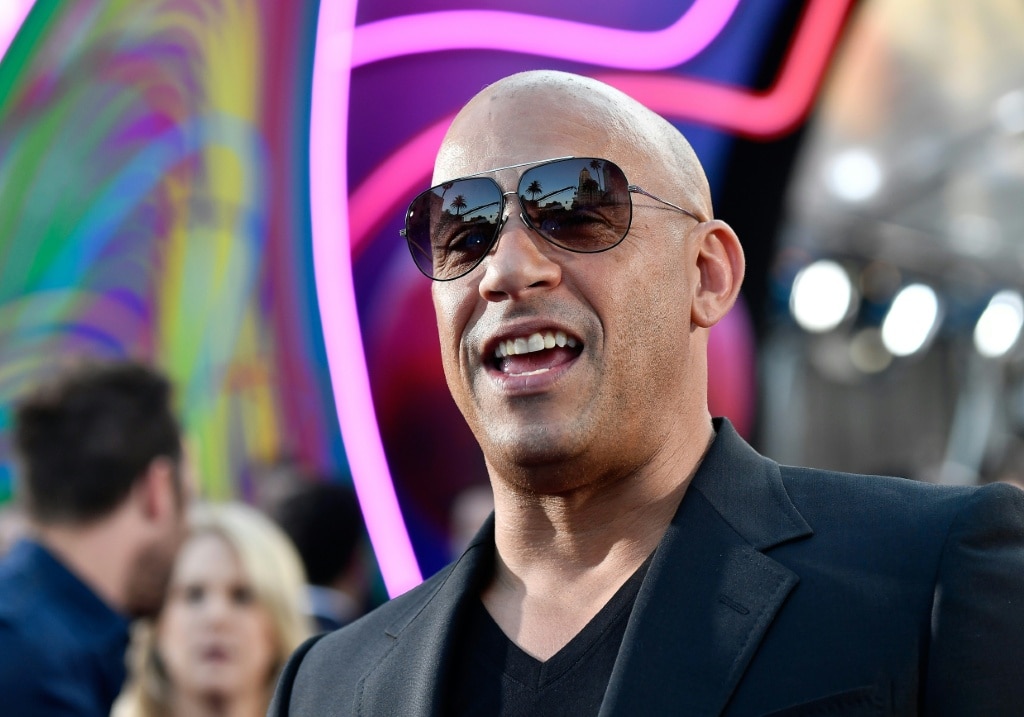
    Marti added that Hollywood is not entirely absent from this year’s festival: organizers have added a special 25th-anniversary screening of the Universal-owned *Fast and Furious* franchise, with original stars Vin Diesel, Michelle Rodriguez, and Jordana Brewster all set to attend the event. For many in the industry, the 2026 blockbuster gap is just a temporary pause, not a permanent split: Hollywood may be sitting out this year, but it is widely expected to return to the Croisette in 2027.

  • Antony Catalano: Accused media boss excused from court appearance due to ‘potentially detrimental’ impact of media reporting

    Antony Catalano: Accused media boss excused from court appearance due to ‘potentially detrimental’ impact of media reporting

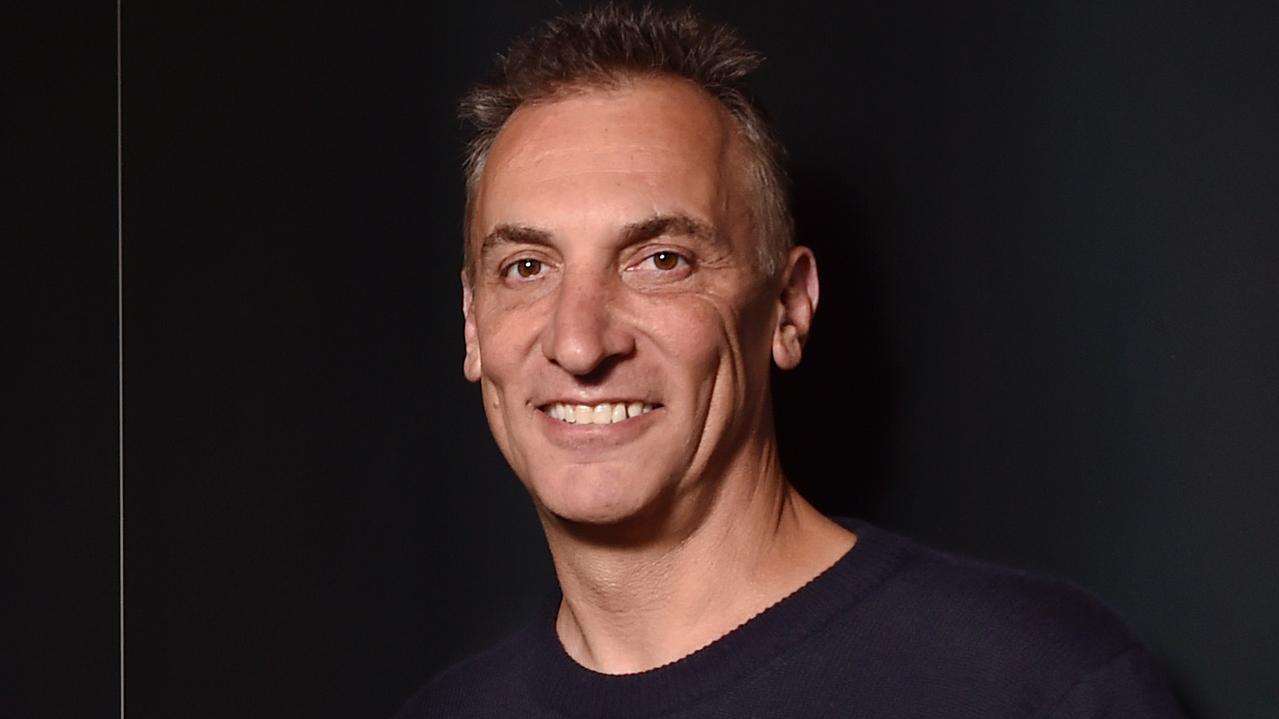
    Prominent Australian media executive Antony Catalano, the former chairman of Australian Community Media (ACM), has been permitted to skip in-person court appearances for his ongoing criminal case, after his legal team argued that intense public and media scrutiny would pose severe risks to his mental well-being. The 59-year-old industry leader faces three serious charges: common assault, threats to kill, and false imprisonment, all stemming from an alleged domestic incident involving his wife Stefanie Catalano at the couple’s St Kilda apartment on March 13.

    Authorities’ accounts of the incident allege Catalano confronted his partner in an acutely drug-impaired state during the early hours of that morning. The victim was reportedly able to escape the residential complex, and was found by a passing motorist while in a state of extreme emotional distress. Catalano was taken into police custody later the same day, with reports indicating he was wearing underwear torn during the confrontation.

    In line with his bail requirements, Catalano had initially been ordered to appear in person at the Melbourne Magistrates Court for the preliminary hearing held on Monday. However, his defense barrister Tony Hargreaves made an urgent application to allow his client to appear via video link from his legal team’s office, arguing that a crowd of waiting journalists gathered in the court building would worsen his client’s already fragile mental health.

    Hargreaves told the court that following his client’s arrest and charging, Catalano admitted himself to a rehabilitation facility to address his health, and only recently completed a 28-day inpatient treatment program. He added that the intense media interest in the case had already penetrated the facility, with photographers obtaining images of Catalano during his stay, and that his client was still in the early stages of recovery post-discharge. “Forcing him to walk through the pack of media waiting downstairs would be potentially detrimental to his mental health,” Hargreaves argued.

    The application went unopposed by Senior Constable Matthew Morris, the prosecuting officer representing police. Magistrate Nahrain Warda granted the request, excusing Catalano from in-person attendance not just for this preliminary hearing, but also for all future scheduled court appearances in the case.

    During Monday’s hearing, Catalano appeared via video link dressed in a dark formal suit, sitting with his arms crossed and was not required to make any statements to the court. Hargreaves told the court that his client has already expressed deep remorse for the events that took place, but the criminal proceedings remain in their early stages, and the defense team is awaiting two key medical reports to move forward with the case. One report is from Catalano’s treating physician, and the second from a consulting psychiatrist. Hargreaves noted that the first provider will not be able to complete their report until late June, while the second will not finish theirs until mid-July, prompting a request for an adjournment.

    Catalano’s bail conditions were extended ahead of the next hearing, scheduled for June 2. In a public statement issued the day after his arrest, Catalano publicly acknowledged his responsibility, saying he was “deeply ashamed and humiliated” by the alleged incident, and announced he would step down from all his professional leadership roles. “I know that my actions have caused hurt and concern for others, including the woman involved, my family, friends, colleagues and the many people connected to the businesses I have been privileged to lead,” he said in the statement, adding that he would not make any further public comments while the matter moves through the court system per his legal team’s advice.

  • The first 48-team World Cup — more opportunities, less jeopardy?

    The first 48-team World Cup — more opportunities, less jeopardy?

    When the 2026 FIFA World Cup kicks off across North America, it will mark the most transformative change to football’s biggest showcase in four decades: the first-ever 48-team tournament. The expansion, a flagship campaign promise delivered by FIFA president Gianni Infantino just a decade after he took the helm of global football’s governing body, has reignited a fierce debate over whether broadening access to the finals will dilute the high-stakes drama that has made the World Cup a global cultural touchstone.

    Infantino has framed the shift as far more than a simple format tweak, arguing the World Cup must evolve beyond an elite athletic competition to become a truly inclusive global social event. For decades, the World Cup fell far short of its ‘global’ branding, dominated by European and South American nations from its early 16-team format through its 1982 expansion to 24 sides. Historical data underscores this imbalance: between the first World Cup and 1982, the entire African continent sent just four teams total to the finals. Even as late as the 1990 tournament in Italy, 14 of the 24 competing nations came from Europe, while Africa, Asia and the CONCACAF region each received only two slots.

    The 1998 expansion to 32 teams moved the needle toward greater fairness in slot allocation, but gaps remained: at the 2022 Qatar World Cup, Europe still claimed 13 spots while Africa earned just five. The new 48-team format addresses this without stripping established powerhouses of their existing access, reallocating slots to create a far more balanced distribution: Europe retains 16 places, Africa earns 10, Asia claims 9, South America and CONCACAF get six each, with an additional spot reserved for Oceania’s New Zealand.

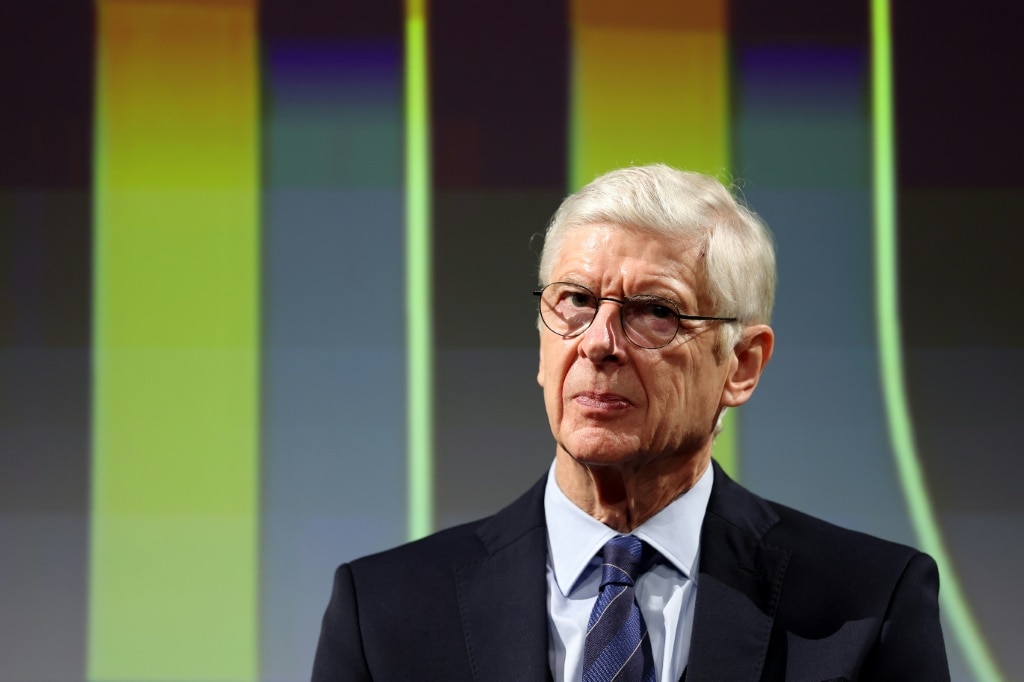
    FIFA’s chief of global football development, legendary manager Arsene Wenger, has defended the expansion as an inevitable and logical step for the sport’s growth. “It’s a natural evolution. We want to make football global all over the world,” Wenger stated last December, noting 48 teams still accounts for less than 25% of FIFA’s 211 member nations, keeping the qualifying bar appropriately high.

    For underdog and smaller nations, the format shift is a historic breakthrough. Tiny Caribbean island nation Curacao, with a total population of just 160,000, is on track to make its World Cup debut in 2026, joined by other first-time qualifiers including Cape Verde, Jordan and Uzbekistan. Curacao head coach Fred Rutten says his side is already relishing the chance to pull off upset wins against global giants. The new format also gives lower-ranked sides a far better shot at advancing past the group stage into the knockout round: the top two teams from each of 12 groups advance, plus the eight best third-place finishers, meaning just one win in the group stage can often secure progression.

    But critics warn the expanded format comes at a major cost to the tension and jeopardy that has produced some of the World Cup’s most iconic moments. Where top-tier nations once faced immediate elimination after an early bad result – think 2022 when eventual champion Argentina faced elimination after an opening defeat to Saudi Arabia, or Germany’s stunning group-stage exits in both 2018 and 2022 – elite sides now have far more room to recover from a slow start. The historic drama of watching a global powerhouse crash out early in the tournament is likely to become a thing of the past, opponents argue.

    The expanded tournament also brings logistical and physical challenges for players. Where the 32-team format featured 48 group-stage games to eliminate 16 teams, the 48-team format requires 72 group-stage matches to cut the field to the same 16 knockout-round participants. To win the tournament, teams will now need to play eight matches, one more than the previous format, all scheduled for a hot North American summer that will put extra physical strain on top players already stretched by crowded club calendar schedules.

    Noted football author Jonathan Wilson, who wrote *The Power and the Glory: A New History of the World Cup*, says the 32-team format was perfectly balanced. “I see the argument about increasing representation but I think a 32-team finals was perfect,” Wilson explained. “The biggest problem with this is not really the quality, it’s the dilution of spectacle in the first round with eight third-placed teams to go through. The group stage may end up trying peoples’ patience.” He added that the extra knockout round could incentivize more defensive, cautious play, further dulling the tournament’s early excitement.

    Even elite managers acknowledge the new strategic priority for big teams has shifted: where once they needed to avoid any early slip-up, now the focus is simply on grinding out enough results to advance. “You just focus on the group, this is what you do, and make sure you are in the right head space,” England manager Thomas Tuchel said of the new approach. As the 2026 tournament approaches, the football world remains split: while smaller nations celebrate unprecedented access, fans and analysts wait to see whether the expanded format will grow the global love of the game – or erode the high-stakes magic that made the World Cup unmissable.

  • Middle East conflicts a danger for whales off S.Africa: study

    Middle East conflicts a danger for whales off S.Africa: study

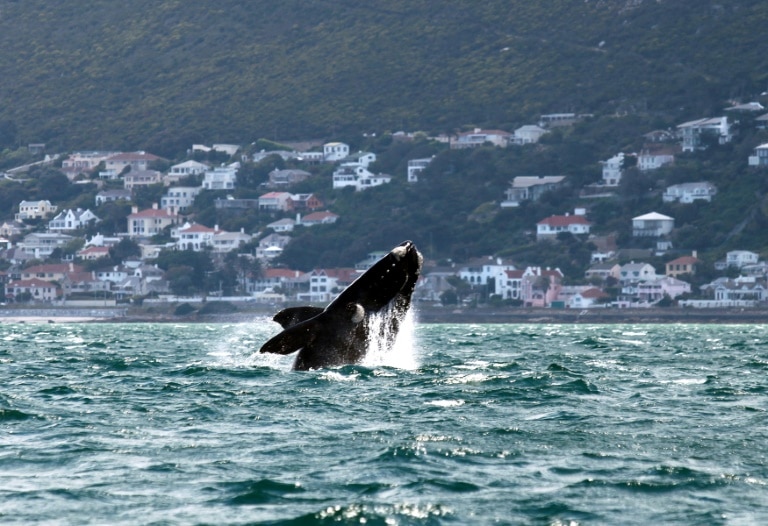
    Geopolitical tensions and ongoing conflicts across the Middle East have triggered an unexpected and growing threat to vulnerable whale populations off South Africa’s southern coast, according to new scientific research presented to the International Whaling Commission (IWC) this month. The crisis has forced global shipping companies to reroute massive volumes of vessel traffic away from the historically popular Red Sea and Suez Canal corridors, pushing more ships straight through critical whale habitats along the Cape of Good Hope and dramatically increasing the likelihood of deadly collisions between large vessels and marine mammals.

    The disruption to global shipping lanes began in November 2023, when Houthi rebels seized the British-owned cargo vessel Galaxy Leader off the coast of Yemen. Subsequent attacks on commercial shipping transiting the Red Sea, paired with escalating regional tensions between Israel, the United States and Iran that have threatened transit access through the Strait of Hormuz, have pushed an ever-growing share of global maritime trade to take the longer southern route around South Africa. Data from the International Monetary Fund’s PortWatch monitoring platform underscores the scale of this shift: between March 1 and April 24 of 2024, an average of 89 commercial vessels sailed around southern Africa daily, more than double the average of 44 recorded over the same period in 2023.

    South Africa’s southwestern coastline already supports some of the most ecologically significant whale populations on the planet, while also serving as a key transit route for international trade. This creates extensive spatial overlap between heavy maritime traffic and whale feeding, breeding, and migration grounds, a dynamic that drastically amplifies collision risk, explained lead researcher Els Vermeulen, who heads the University of Pretoria’s whale research unit.

    Vermeulen told reporters that growing awareness of this risk has been amplified by unsolicited social media content from crew members on passing cargo ships. Many posts showcase large groups of whales swimming alongside vessels, framing the sighting as a thrilling novelty, but for researchers, the content tells a far more alarming story. “My heart stopped when I saw those posts — you know that with that much traffic moving through dense whale habitats, they are striking a number of whales already,” Vermeulen said. She added that whales often do not recognize or react to approaching large vessels, as they are frequently preoccupied with feeding or other critical survival activities.

    Most concerning, researchers note, is that the volume of high-speed commercial traffic — the category of vessel that poses the greatest risk of lethal collision — has increased fourfold along the route in less than six months. This rapid, unplanned shift has left whale populations no time to adapt their behavior to the new threat, explained Chris Johnson, global lead for the World Wildlife Fund’s Whale and Dolphin Conservation initiative. Different whale species respond to ship noise in unexpected ways that do not help them avoid collisions: for example, blue whales off the coast of Los Angeles simply dive deeper below the surface when they hear approaching vessels, rather than leaving the area, putting them directly in the path of oncoming shipping traffic.

    Compounding the risk, long-term ecological shifts driven by climate change have already pushed more whales into these newly busy shipping corridors. Ken Findlay, a blue economy consultant and contributing author to the report, noted that large superpods of humpback whales have begun feeding seasonally off South Africa’s increasingly busy west coast since 2011, a behavioral shift that has already elevated baseline collision risk before the current shipping surge.

    Deadly ship strikes are already recognized as one of the leading causes of human-caused whale mortality worldwide, and collisions are drastically underreported globally, according to a 2024 study published in the journal *Science*. Despite this risk, few meaningful protection measures are currently in place for whale populations that have only been slowly recovering since the 1986 global ban on commercial whaling.

    The research presented to the IWC outlines accessible, low-impact solutions to mitigate the growing risk. Modest adjustments to shipping lanes that shift traffic further offshore, away from core whale habitats, could reduce collision exposure for vulnerable whale species by between 20 and 50 percent, the report finds. Critically, this adjustment would add only 20 nautical miles to journeys that often exceed 10,000 nautical miles in total length, making the impact on shipping timelines and costs negligible. MSC, the world’s largest shipping company headquartered in Switzerland, has already successfully implemented similar lane adjustments off the coasts of Greece and Sri Lanka to protect whale populations in those regions.

    Additional mitigation strategies are also under exploration, including real-time alert systems that notify vessel captains of the presence of whale superpods via dedicated mobile applications or radio broadcasts, and the deployment of AI-powered cameras on commercial vessels to improve early detection of whales in shipping lanes. Estelle van der Merwe, head of the South African environmental NGO Ocean Action Network, noted that all feasible measures need to be on the table to address the rapidly emerging threat.

    South Africa’s Department of Environment, Forestry and Fisheries confirmed in a statement to AFP that it is committed to evaluating all available mitigation options. “Once the scientific studies and assessments have been completed, the maritime authorities will be on the front line, alongside the DFFE, to chart the way forward,” the department said.

  • CSL shares plummet 20 per cent as new boss reveals $5bn hit to profits

    CSL shares plummet 20 per cent as new boss reveals $5bn hit to profits

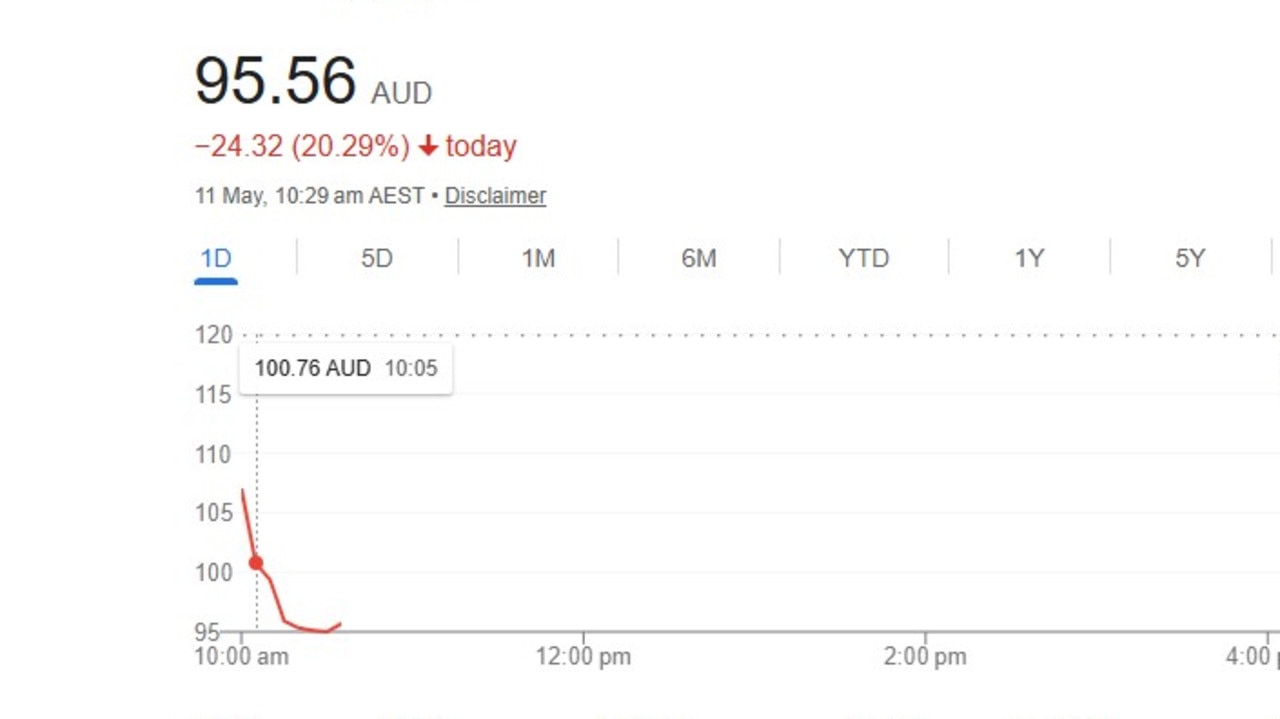
    Australian healthcare multinational CSL has endured another severe market setback, with its share price plummeting 20.29% at market open to hit a 10-year low Monday, after the biotech giant disclosed a fresh $5 billion non-cash impairment write-down as part of a 90-day strategic review. The sharp drop pushed CSL’s share price below the $100 threshold for the first time since 2014, a dramatic fall from the company’s peak valuation of roughly $340 per share recorded at the height of the COVID-19 pandemic, when CSL saw explosive revenue growth driven by global vaccine rollouts.

    Of the $5 billion total impairment, $1.5 billion was already accounted for in CSL’s first-half financial results, with the remaining charge reflecting underperformance across key international market segments. The company confirmed an additional $300 million write-down tied to its U.S.-based immunoglobulin business, while its albumin operations in China will take a $200 million hit from ongoing market headwinds. Weaker-than-projected revenue across these overseas segments weighed heavily on investor sentiment, leading to the historic single-day sell-off.

    Despite the markdown, CSL reaffirmed its full-year financial projections, forecasting total annual revenue of roughly $21 billion Australian dollars and net profit of $3.1 billion Australian dollars, a modest downward revision from earlier estimates of $3.3 billion Australian dollars. The downgrade was announced by interim chief executive Gordon Naylor, who stepped into the top role just three months ago after former CEO Paul McKenzie’s abrupt departure earlier this year.

    Naylor sought to reassure stakeholders Monday, noting that while the company’s long-term growth initiatives are progressing, their financial benefits will take longer to materialize than initial forecasts projected. As a result, CSL has revised downward its financial guidance through the 2026 fiscal year. The Monday announcement marks the second major market shock for CSL in just four months: back in August, the company lost $21 billion in market capitalization in a single trading session after unveiling a sweeping corporate restructuring plan. That restructuring includes cutting 3,000 global roles — an upfront cost of $770 million that is projected to generate annual savings of $500 million to $550 million over three years — as well as plans to spin off its influenza vaccine division Seqirus into an independent ASX-listed company by 2026. CSL will also merge the commercial and medical operations of its core blood plasma and iron deficiency treatment businesses into a single unified unit to streamline operations.

    As a major exporter of plasma-derived life-saving therapies to the United States, CSL also addressed growing concerns over new U.S. tariffs on pharmaceutical products in its announcement. The company confirmed it does not expect any material impact from the tariffs, as the life-saving therapies it produces are set to be exempt from the new trade measures.