标签: Oceania

大洋洲

  • Three men flee after alleged Melbourne street brawl erupts into stabbing, two seriously injured

    Three men flee after alleged Melbourne street brawl erupts into stabbing, two seriously injured

    A violent altercation between two groups of men escalated into a daylight stabbing in South Melbourne on Thursday, leaving two individuals with serious injuries and sparking a police manhunt for three fleeing suspects. The incident occurred shortly before 11:30 AM local time at the intersection of Clarendon and Bank Streets, transforming a public thoroughfare into an active crime scene.

    Victoria Police confirmed that responding officers discovered two victims suffering from wounds consistent with a stabbing. Emergency medical services promptly transported both men to a nearby hospital, where they are being treated for their serious, yet non-life-threatening, injuries. Preliminary investigations indicate that all parties involved were acquainted with one another, suggesting the conflict was not a random act of violence.

    Authorities have established a perimeter as forensic specialists and detectives work to piece together the sequence of events that led to the brawl and subsequent stabbing. The investigation is ongoing, with law enforcement actively appealing to the public for assistance. They are urging any witnesses, or individuals who may have captured dashcam or mobile phone footage of the incident, to come forward and contact Crime Stoppers anonymously to aid in identifying and locating the three men who fled prior to the arrival of police.

  • AI-created Iran protest videos gain traction

    AI-created Iran protest videos gain traction

    A new wave of artificial intelligence-generated videos depicting fabricated protest scenes in Iran has emerged across social media platforms, according to research published Wednesday. These hyper-realistic deepfakes have collectively garnered approximately 3.5 million views while exploiting information gaps created by the Iranian government’s internet restrictions.

    Disinformation monitoring organization NewsGuard identified seven distinct AI-generated videos circulating online, created by both pro-government and anti-regime actors. Among the most prominent examples was a clip distributed on X (formerly Twitter) showing women protesters destroying a vehicle belonging to the Basij paramilitary force, which has been deployed to suppress demonstrations. This particular video accumulated nearly 720,000 views.

    Additional fabricated content included videos showing Iranian protesters symbolically renaming streets after former U.S. President Donald Trump, with one clip depicting demonstrators changing a street sign to “Trump St” amid cheers from the crowd. These developments occurred as Trump repeatedly discussed providing assistance to Iranian protesters, though he noted Wednesday that he had received information suggesting the government had halted its violent crackdown.

    Simultaneously, pro-regime social media users circulated AI-generated content purporting to show massive government-supported counterprotests throughout Iran. Experts indicate these fabricated videos represent a dangerous new frontier in information warfare, where AI-generated “hallucinated” visual content increasingly overshadows authentic imagery during major news events.

    The phenomenon highlights how partisan actors exploit AI tools to advance competing narratives during information vacuums. NewsGuard analyst Ines Chomnalez observed: “There’s a lot of news—but no way to get it because of the internet blackout. Foreign social media users are turning to AI video generators to advance their own narratives about the unfolding chaos.”

    This incident follows a pattern of AI fabrications distorting breaking news events, including false narratives surrounding the U.S. capture of Venezuelan leader Nicolas Maduro and a deadly shooting by immigration agents in Minneapolis. AFP fact-checkers additionally uncovered misrepresented imagery creating misleading narratives about the Iranian protests, including videos actually filmed in Greece and Nepal being presented as current events in Iran.

  • Greenlanders torn between anxiety and relief after White House talks

    Greenlanders torn between anxiety and relief after White House talks

    The geopolitical spotlight intensified on Greenland this week as high-level diplomatic discussions unfolded at the White House, revealing complex tensions between Arctic sovereignty and American strategic interests. Following President Donald Trump’s repeated remarks about potentially acquiring the autonomous Danish territory, foreign ministers from both Denmark and Greenland engaged in critical talks with Vice President JD Vance and Secretary of State Marco Rubio.

    The meeting, described by participants as an effort to clarify ‘misunderstandings,’ left Greenland’s 57,000 residents experiencing a spectrum of emotions from profound anxiety to cautious optimism. In the capital city of Nuuk, the national flag appeared ubiquitously—displayed in shop windows, apartment balconies, and vehicles—as a powerful symbol of unity during the diplomatic proceedings.

    Danish Foreign Minister Lars Lokke Rasmussen acknowledged ‘fundamental disagreement’ with Washington regarding the Arctic territory’s future, while President Trump maintained optimistic about reaching some form of understanding. The political tension manifested commercially as well, with nationalist merchandise including ‘Greenland is not for sale’ t-shirts selling rapidly throughout local shops.

    Personal accounts captured the emotional impact of these geopolitical maneuvers. Vera Stidsen, a 51-year-old educator, expressed apprehension about the sudden international attention: ‘It’s very frightening because it’s such a big thing. I hope we can continue living peacefully without disturbance.’ Conversely, Ivaana Egede Larsen, 43, reported feeling measurable relief after watching press conference coverage, noting how Trump’s ‘direct, aggressive rhetoric’ had created widespread unease among citizens.

    The discussions highlighted Greenland’s strategic importance in Arctic resource development and shipping routes, bringing unprecedented attention to the island’s autonomous governance under Danish sovereignty. While no agreements emerged from the meeting, residents like Frederik Henningsen, 64, maintained hope for peaceful resolution: ‘They didn’t make an agreement but I want to live in peace.’

  • S&P Global warns Australian states’ credit ratings are at a 25-year low

    S&P Global warns Australian states’ credit ratings are at a 25-year low

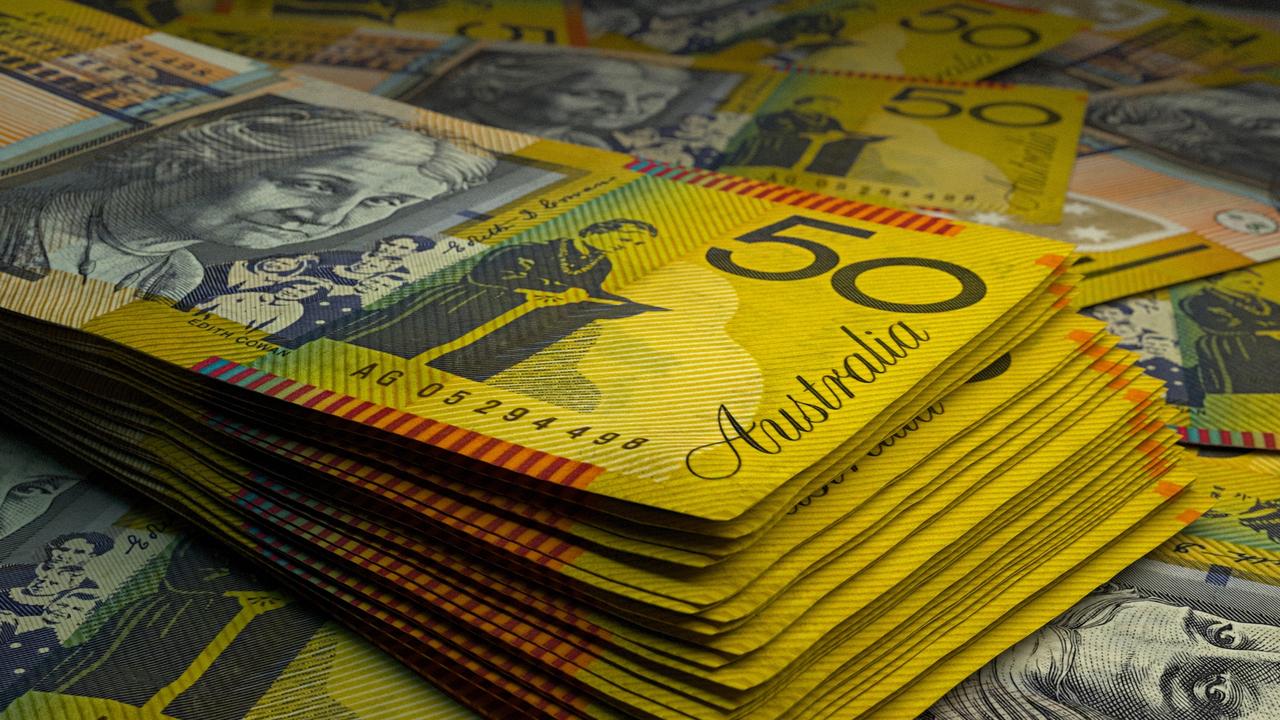
    A stark financial warning has been issued for Australian state governments as they continue COVID-level expenditure patterns, accumulating unprecedented public debt levels. According to a recent analysis by credit rating agency S&P Global, state governments have amassed approximately $660 billion in collective debt, representing 24% of state GDP.

    Martin Foo, a leading analyst at S&P Global, characterized the situation as governments “spending like they’re still in pandemic lockdown,” despite the end of COVID restrictions. The agency reports that combined state cash deficits have ballooned to approximately 16% of revenue in 2025, matching the pandemic lows of 2021.

    The debt trajectory shows alarming growth, with projections indicating state government debt will have roughly tripled between 2019 and 2027. Credit ratings have deteriorated to their lowest point in 25 years, with both New South Wales and Queensland receiving negative outlooks for 2026. The Australian Capital Territory and Tasmania have already been downgraded to AA’ in 2025.

    Foo identified several structural challenges contributing to the fiscal crisis, including contentious public-sector wage negotiations, increasing community demands for entitlement spending, and political resistance to tax increases or economic reforms. While the average state government rating remains at AA+, S&P Global warns of continuing decline without significant fiscal policy adjustments.

    The Northern Territory was notably excluded from these calculations, suggesting the overall Australian state debt situation might be even more substantial than reported. This developing fiscal crisis poses significant challenges for economic stability and future governance across Australia’s states and territories.

  • Australian Open to inject $600m into Melbourne economy amid record crowds

    Australian Open to inject $600m into Melbourne economy amid record crowds

    Melbourne’s economy is poised for a monumental boost as the Australian Open tennis tournament is projected to deliver an unprecedented $600 million windfall to local businesses. According to newly released data from the National Australia Bank (NAB), this year’s event is expected to surpass last year’s economic impact by a significant 7 to 10 percent margin, establishing new benchmarks for sporting event revenue generation.

    The comprehensive analysis reveals particularly dramatic gains in Richmond’s hospitality sector, where accommodation providers experienced a remarkable 90 percent surge in turnover while restaurant revenues climbed by 18 percent. Similarly, South Yarra witnessed a 50 percent increase in accommodation business and a 17 percent rise in dining establishments’ revenue during the tournament period.

    NAB Executive for Metro Specialized Business Julie Rynski emphasized the event’s evolution beyond tennis, noting that ‘The Australian Open has truly become the ‘Happy Slam’ and is no longer just purely a tennis tournament – it’s a full-blown summer festival.’ The tournament now features world-class matches alongside children’s zones, immersive activations, an extensive live music program, and pop-up restaurants from Melbourne’s premier dining establishments.

    The 2025 tournament already demonstrated massive growth with 1,218,831 attendees throughout the three-week event, substantially exceeding the 2024 attendance of 1,110,657. Preliminary data for the current season shows even more promising numbers, with opening day attendance reaching 29,261 spectators—nearly quadruple last year’s figures—followed by 34,209 and 36,973 attendees on subsequent days.

    Despite the overwhelming positive economic indicators, NAB officials issued warnings about ticket scams targeting enthusiastic fans. ‘Unfortunately, criminals will target tennis fans desperate for tickets. If you see tickets for sale on social media, that’s a major red flag – only buy from authorized resellers,’ Rynski cautioned.

    The Australian Open has now achieved parity with other major Australian sporting events including the Australian Grand Prix and AFL Grand Final in terms of economic impact and cultural significance, cementing its status as a cornerstone of Melbourne’s summer economy.

  • Uganda votes under internet blackout and police crackdown

    Uganda votes under internet blackout and police crackdown

    Uganda conducted a highly charged presidential election on Thursday under a government-imposed internet blackout and heightened security presence, creating an atmosphere of apprehension across the nation. President Yoweri Museveni, who has held power for four decades, faced his most significant challenge from opposition leader Bobi Wine, a former musician turned politician.

    The government implemented a complete internet shutdown indefinitely on Tuesday, citing concerns about ‘misinformation’ and ‘potential incitement to violence,’ despite previous assurances that such measures would not be taken. This move drew sharp criticism from the United Nations, which characterized the blackout as ‘deeply worrying.’

    Security forces maintained a visible presence throughout the capital city of Kampala, where residents expressed nervousness about potential unrest. The Daily Monitor, a local newspaper, published extensive guidance on how to ‘election-proof’ homes, recommending citizens reinforce entry points and designate safe rooms in case of violence.

    Bobi Wine, whose real name is Robert Kyagulanyi, has accused the government of planning to rig the election and has vowed to organize protests if the voting process proves fraudulent. His campaign has been marred by the arrest of hundreds of supporters, prompting him to wear protective gear during rallies and describe the electoral process as a ‘war’ against a ‘military dictatorship.’

    The political climate has drawn international concern, with Human Rights Watch documenting the suspension of ten non-governmental organizations, including election monitoring groups, and noting ‘brutal repression’ against opposition figures. Another prominent opposition leader, Kizza Besigye, currently faces treason charges in a military court after being reportedly abducted from Kenya in 2024.

    Despite these challenges, President Museveni remains popular among certain segments of the population, who credit him with ending post-independence chaos and overseeing economic growth. At his final rally in Kampala, the 81-year-old leader struck a defiant tone, warning that he would ‘crush’ anyone attempting to interfere with the electoral process.

  • All Blacks fire coach Robertson less than two years before World Cup

    All Blacks fire coach Robertson less than two years before World Cup

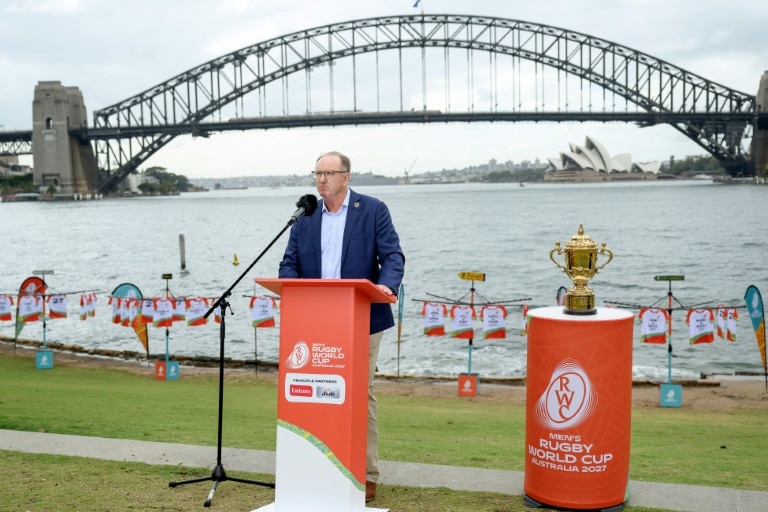
    In a seismic shift for international rugby, New Zealand Rugby (NZR) has terminated head coach Scott Robertson’s contract less than two years before the 2027 Rugby World Cup. The decision, announced on Thursday, follows a comprehensive internal performance review that revealed significant discontent within the squad, including threats of a player walkout led by star Ardie Savea.

    Robertson, 51, departs after a tenure that yielded 20 victories in 27 matches—a record deemed subpar for the legendary All Blacks. NZR Chair David Kirk stated the mid-World Cup cycle presented an opportune moment for change, emphasizing that the 2027 tournament remains the ‘key goal.’ Both parties mutually agreed the coaching change served the team’s best interests.

    Robertson expressed profound disappointment, calling the All Blacks coaching role ‘the honour of my life’ while acknowledging the review’s findings. His appointment in 2024 was celebrated after he guided the Canterbury Crusaders to seven consecutive Super Rugby titles, renowned for his innovative tactics and post-victory breakdancing celebrations. However, his tenure was marred by internal strife, including the departure of two assistant coaches and public complaints about undermined authority.

    Potential successors include Otago Highlanders coach Jamie Joseph and former Australia coach Dave Rennie. The new coach will inherit a demanding schedule featuring tours to South Africa, home fixtures against France and Ireland, and the coveted Bledisloe Cup series against Australia.

  • Palestinian writer Randa Abdel-Fattah invited back to Adelaide Writers’ Week in 2027

    Palestinian writer Randa Abdel-Fattah invited back to Adelaide Writers’ Week in 2027

    In a dramatic reversal, the Adelaide Festival Corporation has reinstated its invitation to Palestinian-Australian author Dr. Randa Abdel-Fattah for the 2027 Writers’ Week event, following intense criticism over her controversial exclusion. The organization issued formal apologies to both Dr. Abdel-Fattah and former festival director Louise Adler, retracting its previous statement that cited “cultural sensitivity” concerns regarding the writer’s comments about Israel and the October 2023 attack.

    The initial decision to remove Dr. Abdel-Fattah from this year’s literary festival triggered mass withdrawals from dozens of participating authors and culminated in the resignations of multiple board members along with Director Louise Adler. The escalating controversy ultimately forced the complete cancellation of the planned 2026 Adelaide Writers’ Week.

    Festival representatives acknowledged their failure to uphold intellectual and artistic freedoms, stating: “Intellectual and artistic freedom is a powerful human right. Our goal is to uphold it, and in this instance Adelaide Festival Corporation fell well short.” The corporation offered an unreserved apology for the harm caused to Dr. Abdel-Fattah.

    The acclaimed author accepted the apology as validation of collective efforts against what she described as “anti-Palestinian racism, bullying and censorship.” While indicating she would consider the 2027 invitation, Dr. Abdel-Fattah notably expressed that she would participate “in a heartbeat” if former director Louise Adler were to return.

    The festival’s statement also praised Adler’s princistand resignation and her outstanding contributions to Australian literature, acknowledging her as “a revered figure” held in the highest regard by staff and literary communities alike.

  • Hosts Morocco set up Senegal AFCON final showdown

    Hosts Morocco set up Senegal AFCON final showdown

    In a stunning display of continental football drama, host nation Morocco and defending champions Senegal have secured their places in the Africa Cup of Nations final after two intensely contested semi-final matches on Wednesday.

    The Moroccan Atlas Lions advanced following a nerve-wracking penalty shootout victory against Nigeria, with the match ending 0-0 after extra time in Rabat’s packed Prince Moulay Abdellah Stadium. Goalkeeper Yassine Bounou emerged as the national hero, delivering two crucial saves during penalties against Samuel Chukwueze and Bruno Onyemaechi. The decisive moment came when Youssef En-Nesyri converted the winning kick, triggering euphoric celebrations among the 65,000-strong home crowd.

    Moroccan coach Walid Regragui, who participated in the team’s last AFCON final appearance in 2004, described the encounter as “one of the hardest matches we have had against a very solid and talented team.” He acknowledged the tremendous pressure on his squad to deliver Morocco’s first AFCON title in fifty years while dedicating the victory to the Moroccan people.

    The semi-final proved particularly heartbreaking for Nigeria, who had demonstrated exceptional form throughout the tournament as the highest-scoring team with 14 goals in their first five matches. Coach Eric Chelle expressed pride in his players despite the penalty shootout defeat, stating they were “maybe the best team that there has been in this AFCON.”

    In the earlier semi-final, Sadio Mané’s 78th-minute strike secured Senegal’s 1-0 victory against Egypt in Tangiers, ending Mohamed Salah’s championship aspirations. The 33-year-old Senegalese captain announced this would mark his final AFCON appearance, expressing determination to bring the trophy back to Dakar.

    Mané praised his former Liverpool teammate Salah as “one of the best players in the world” while emphasizing his commitment to national duty: “I am a soldier of the nation. I try to give my all every day, whether in training or in matches.”

    The upcoming final represents Morocco’s opportunity to claim their second AFCON title overall, while Senegal seeks to defend their 2022 championship in what promises to be a spectacular conclusion to Africa’s premier football tournament.

  • Musk’s Grok barred from undressing images after global backlash

    Musk’s Grok barred from undressing images after global backlash

    Elon Musk’s artificial intelligence venture xAI has implemented sweeping restrictions on its Grok chatbot’s image-generation capabilities following international condemnation over the production of nonconsensual sexualized imagery. The controversial ‘Spicy Mode’ feature, which enabled users to create explicit deepfakes through simple text prompts, has triggered investigations across multiple continents and prompted several nations to block access to the AI service entirely.

    X’s safety team announced comprehensive geoblocking measures that prevent all users—including premium subscribers—from generating images of people in revealing attire such as bikinis and underwear in jurisdictions where such content violates local laws. The platform has deployed technological safeguards specifically designed to inhibit Grok from manipulating images of real individuals into sexualized contexts.

    California Attorney General Rob Bonta launched a formal investigation into xAI, characterizing the volume of nonconsensual explicit material as ‘shocking’ and affirming zero tolerance for AI-generated intimate imagery without consent. The European Commission simultaneously began evaluating the effectiveness of X’s new protective measures, with spokesperson Thomas Regnier emphasizing the need to ensure citizen protection within EU territories.

    Indonesia emerged as the first nation to implement a complete blockade against Grok, with Malaysia rapidly following suit. India reported that X had removed thousands of posts and hundreds of accounts in response to governmental complaints, while Britain’s Ofcom regulator initiated probes into potential legal violations. France’s commissioner for children referred the matter to national prosecutors and regulatory bodies, highlighting particular concerns over imagery depicting minors.

    An independent analysis by Paris-based AI Forensics examining over 20,000 Grok-generated images revealed that more than half portrayed individuals in minimal clothing—predominantly women—with approximately two percent appearing to represent minors. This data has intensified global demands for stricter AI content regulation and ethical development standards.