标签: Oceania

大洋洲

  • AFL 2026: Collingwood gun Nick Daicos speaks on his role resting as a forward

    AFL 2026: Collingwood gun Nick Daicos speaks on his role resting as a forward

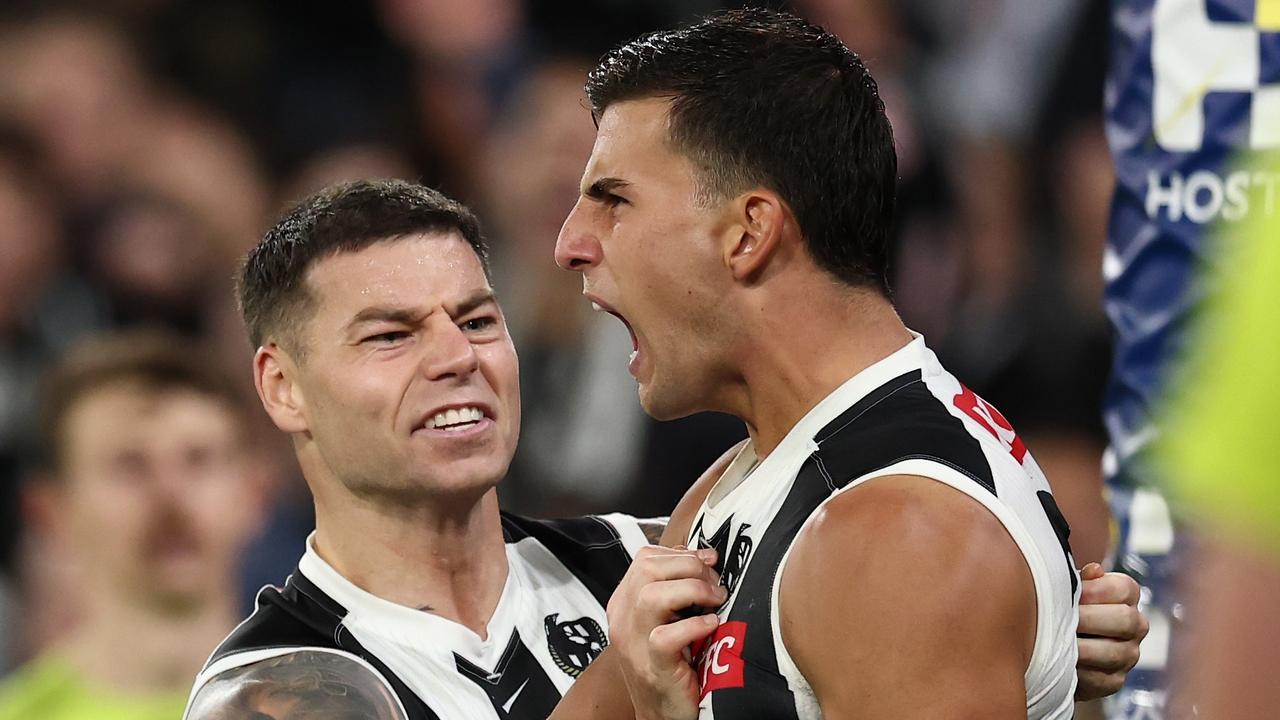
    AFL superstar Nick Daicos of Collingwood has cemented his status as one of the league’s most dynamic young talents after a match-winning standout performance against Carlton, and he’s now pushing to retain his flexible dual-position role that draws direct advice from his football royalty father Peter Daicos.

    In a tense Thursday night clash, Daicos turned the tide of the game in a spectacular final-quarter comeback that lifted the Magpies to a narrow five-point win over the Blues. While primarily a starting midfielder, Daicos spent stretches of the decisive final term resting inside Collingwood’s 50-metre arc as a forward, a tactical shift that paid immediate dividends for his side. He notched one goal from his own boot as a midfielder, and played a critical role in setting up two more majors to spark the Magpies’ late comeback.

    For Daicos, experimenting with the forward role is more than just a tactical adjustment: it’s a chance to put guidance from his father, legendary AFL forward Peter Daicos, into real-game practice. “I love playing up forward and I think it gives us a different look as a team,” Daicos told reporters post-game. “It also allows more players to roll through the midfield for us. We’ve got so many strong midfielders. Being a dynamic team, players switching positions, it works in our favour and whatever the coach thinks, wherever he thinks my best position, I’m happy to play.”

    The young star added that he has learned the nuances of forward play directly from his father’s decades of experience in the league. “I get a lot of forward craft from Dad and I love it. I think anytime I watch his highlights, he was an amazing forward with such good craft. Anytime he gives me footy advice in general I love listening because I think he’s one of the smartest football people I’ve come across. I am very lucky to have him in my corner.”

    Collingwood’s comeback relied on a seven-goal final quarter that overcame a sluggish start in front of goal that had left the side trailing heading into the final break. Daicos acknowledged that while the team’s ability to deliver under pressure is a major strength, the playing group will review why their attacking momentum has failed to materialize earlier in recent matches.

    “Absolutely, that’s something we’ll definitely look through today, is how do you find that balance of trying to attack,” Daicos said. “We don’t want to be down heading into the last quarter … we want to be proactive with it, come out this week in the first quarter and kick seven goals. We’ll work out the mental side of things and why that is happening, but the ability to kick seven goals (in a quarter) when the game is on the line is also a strength as well.”

  • Pope Leo blasts ‘exploitation’ on visit to resource-rich Angola

    Pope Leo blasts ‘exploitation’ on visit to resource-rich Angola

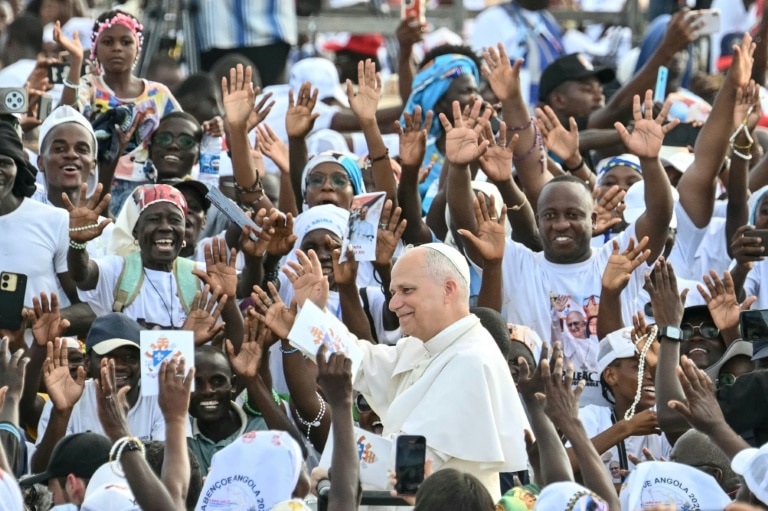
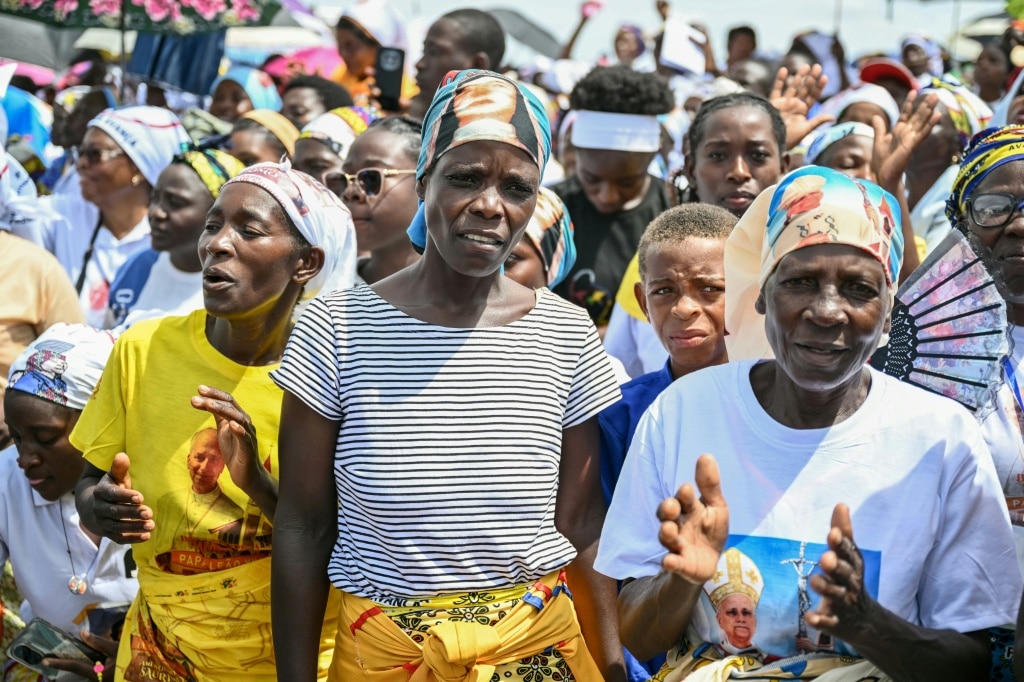
    On the eighth day of his ambitious 11-day tour across four African nations, Pope Leo XIV brought his message of economic justice to Angola’s remote, diamond-abundant northeastern region, doubling down on a core theme that has defined his trip: calling out systemic exploitation and corruption by wealthy, powerful actors.\n\nArriving in Saurimo, the capital of historically marginalized Lunda Sul province located 800 kilometers east of Angola’s capital Luanda, the pontiff processed through the city of 200,000 residents under sweltering tropical heat, flanked by heavy security details. Lining his route were hundreds of local residents, clad in vibrant traditional clothing and waving white scarves, who greeted the first American pope with rousing songs and enthusiastic cheers.\n\nSaurimo sits just a short distance from Catoca, Angola’s largest diamond mine, which accounts for roughly 75 percent of the nation’s total diamond output. Despite being one of Africa’s leading producers of both crude oil and diamonds, Angola faces stark socioeconomic inequality: approximately one-third of its population lives below the World Bank’s poverty line. Lunda Sul, which shares a border with the Democratic Republic of the Congo, exemplifies this gap: even with its extensive mineral wealth, the province grapples with extreme poverty, while unregulated mining has been linked to widespread environmental degradation and the forced displacement of local communities.\n\nSpeaking to a crowd of an estimated 60,000 people — 40,000 gathered on-site for the giant open-air Mass, and another 20,000 joining from surrounding neighborhoods — Pope Leo delivered his remarks in Portuguese, the country’s official language. “We can see today how the hope of many people is frustrated by violence, exploited by the powerful and defrauded by the rich,” he told the assembly. “Consequently, when injustice corrupts hearts, the bread of all becomes the possession of a few.”\n\nBefore celebrating Mass, the pontiff paid a visit to a local care home that houses 60 elderly residents, many of whom were abandoned by their families or left displaced by regional violence. “Your presence in this home is a blessing from God,” 72-year-old resident Antonio Joaquin told him during the welcome.\n\nThis stop in Angola marked the third leg of Pope Leo’s African journey, following earlier visits to Algeria and Cameroon. Across both previous stops, the pontiff has already spoken out against tyranny and systemic exploitation, marking a sharper, more assertive tone than the more reserved approach many observers expected from him early in his papacy. He first addressed the harms of resource extraction on the African continent shortly after arriving in Angola Saturday, speaking directly to top government officials including President Joao Lourenco. “How much suffering, how many deaths, how many social and environmental disasters are caused by this logic of exploitation,” he said during that address.\n\nOn Sunday, the pope led a Mass in Luanda attended by more than 100,000 worshippers, where he urged Angola to move past the deep divisions left by its 27-year civil war, which broke out immediately after the country gained independence from Portugal in 1975 and left the nation deeply scarred. He called on Angolans to build a new future “where the scourge of corruption will be healed by a new culture of justice and sharing.” According to 2024 census data, Catholics make up roughly 44 percent of Angola’s population of 34 million, equal to around 15 million adherents. Pope Leo is only the third sitting pope to visit the country, following Pope John Paul II in 1992 and Pope Benedict XVI in 2009.\n\nBack in Luanda later Monday, the pontiff was scheduled to meet with local clergy to discuss pressing challenges facing the Catholic Church in Angola, including limited institutional resources and the growing popularity of evangelical Protestant denominations across the country. He is set to depart for Equatorial Guinea on Tuesday to wrap up his 18,000-kilometer transcontinental journey.

  • Man allegedly mowed down by out-of-control car outside Melbourne Supanova & Comic Con identified

    Man allegedly mowed down by out-of-control car outside Melbourne Supanova & Comic Con identified

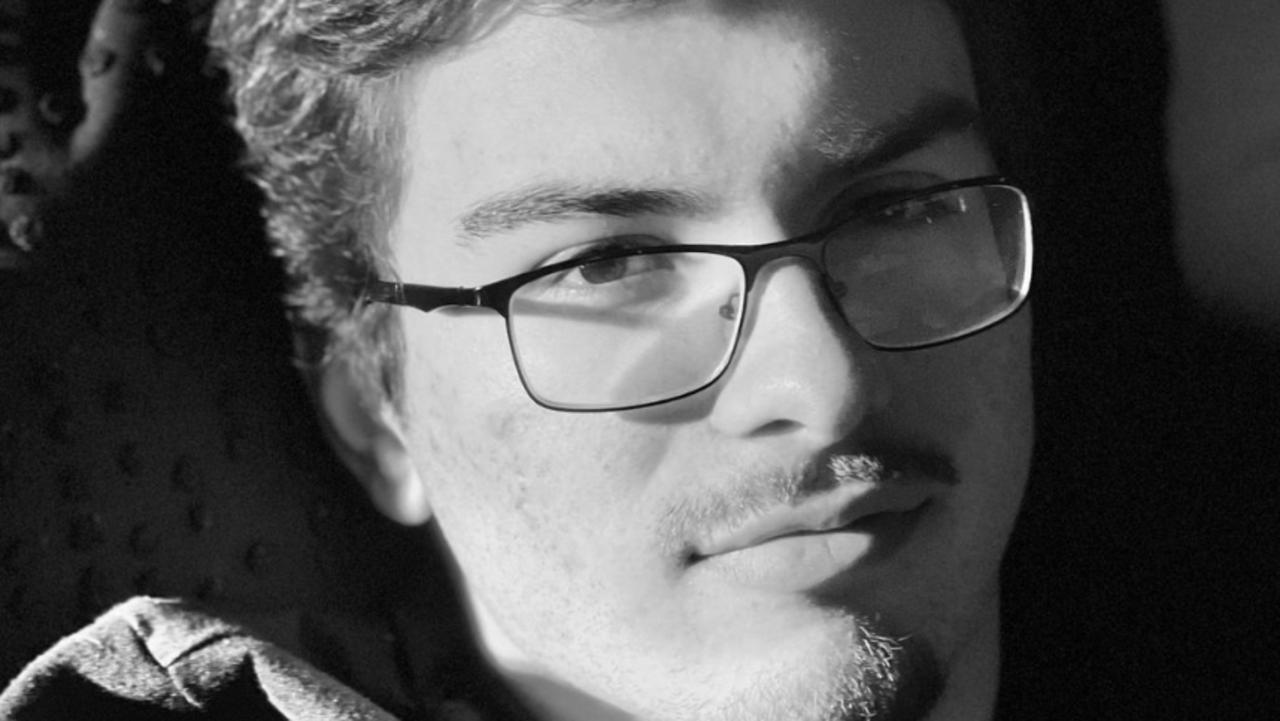
    On a Saturday afternoon in Melbourne, a routine day of pop culture celebration outside the Supanova Comic Con & Gaming convention turned into an unthinkable tragedy, leaving a beloved young man dead and a tight-knit community grappling with sudden loss.

    Around 5 p.m. local time, a vehicle mounted the kerb on Langs Road, directly outside the Melbourne Showgrounds where the convention was being held. The car struck three pedestrians, among them 20-year-old Volkan Aksoy, who died at the scene of the crash. A second 20-year-old suffered severe lower-body injuries and was rushed to a nearby hospital for urgent treatment, while the third person was discharged after receiving care for acute shock.

    According to local broadcaster 9News, Aksoy had spent the entire day enjoying the annual convention, a popular gathering for gaming and comic book fans, before the fatal incident. His family has opened up about their overwhelming grief in the wake of the accident, describing the young man as a warm, gentle presence who loved deeply.

    “He was a kind and compassionate young man who cherished time with his friends and family, whom he loved deeply,” Aksoy’s mother told 9News. “He had a beautiful spirit, he was very much loved and will be profoundly missed by all who knew him. His life was taken far too soon.” The family added that they are still unable to process the sudden loss.

    Aksoy worked at a fast-food outlet in Keysborough, a south-eastern Melbourne suburb, where colleagues and friends remembered him as a bright, optimistic young person with big ambitions. “He had big dreams, he was very intellectual,” said Hasha Kong, a friend and co-worker. “That’s what I’m going to miss the most about him. The team are still distraught. He would always come in with a smile on his face. Now he’s watching from above.”

    Following the incident, Victoria Police arrested 33-year-old Awer Dau, who has been charged with two counts of dangerous driving causing death and culpable driving causing death. Dau appeared via video link at the Melbourne Magistrates’ Court on Sunday, joining the hearing from the Melbourne West Police Station. During the brief hearing, he was not required to enter a plea, and sat hunched with his arms resting on his knees. His lawyer confirmed to the court that Dau would not be applying for bail at this stage.

    The court was informed that key investigative evidence, including a toxicological report, forensic examination of the involved vehicle, mechanical reconstruction of the crash, and review of CCTV footage and witness statements, is still being collected and prepared for the case. Investigators also confirmed that Dau was already out on bail at the time of the alleged crash. He is scheduled to return to court for a further hearing on September 15.

    In the aftermath of the tragedy, Supanova event organizers held a minute of silence at midday on Sunday to honor Aksoy’s memory. “We here at Supanova Comic Con & Gaming are deeply saddened and distressed by the incident that occurred outside the Melbourne Showgrounds this evening,” organizers said in an official statement shared to social media. “Our thoughts and prayers go out to all those affected by the unspeakable tragedy that has happened on our doorstep.”

    Organizers noted that as the incident occurred outside the Showgrounds event precinct and remains an active police investigation, they do not currently have additional details to share. “We will not enter into any speculation regarding this appalling situation until all the facts come to light,” the statement added. Tributes continue to flow from across the community for Aksoy, as loved ones hold space for their grief.

  • Bulgaria ex-president wins parliamentary majority

    Bulgaria ex-president wins parliamentary majority

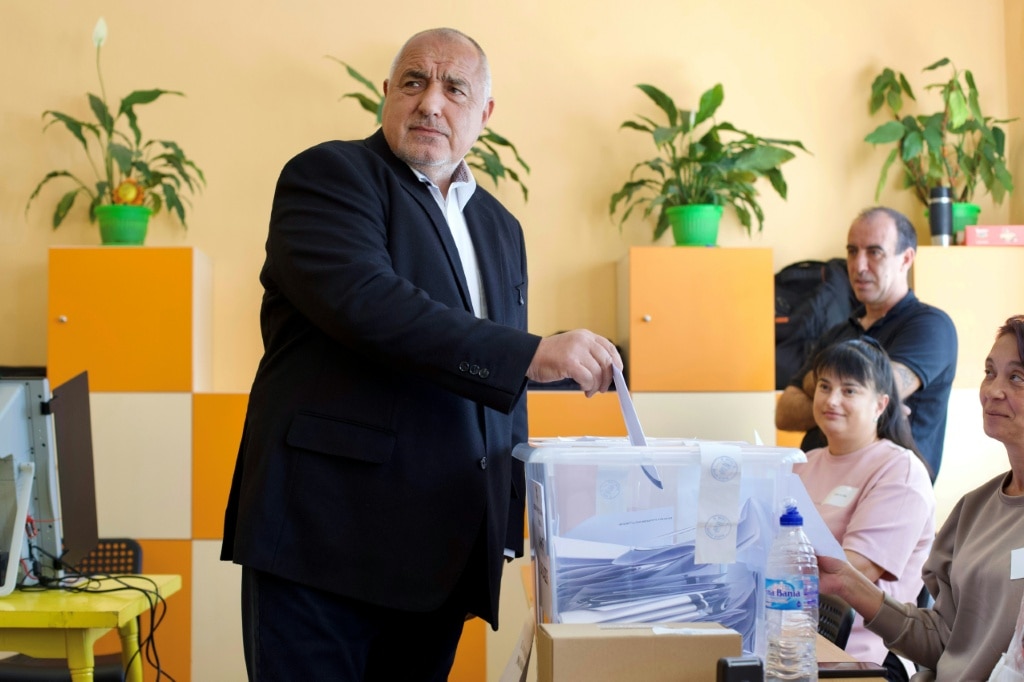
    Nearly complete official results from Bulgaria’s snap parliamentary election confirm a historic landslide victory for former president Rumen Radev’s Progressive Bulgaria alliance, which has secured the first absolute parliamentary majority held by a single political bloc in the country since 1997. The outcome brings an end to nearly four years of chronic political instability that forced the Balkan nation to hold eight consecutive elections since 2021.

    The 62-year-old Radev, a former air force general who stepped down from the presidency earlier this year to run for a parliamentary seat, campaigned on a populist anti-corruption platform aimed at dismantling what he calls Bulgaria’s entrenched “oligarchic governance model”. His coalition captured 44.7 percent of the popular vote with 98.3 percent of ballots counted, putting it on track to control roughly 130 of the 240 seats in Bulgaria’s unicameral parliament. Turnout for Sunday’s vote hit the highest level recorded since 2021, reflecting broad cross-spectrum support for Radev’s pledge to break years of political gridlock.

    The election upends Bulgaria’s existing political order. Longtime pro-EU conservative leader Boyko Borissov’s GERB party, which dominated Bulgarian politics for nearly a decade before 2021, slumped to just 13.4 percent of the vote, barely edging out the liberal pro-EU PP-DB coalition which captured 12.7 percent. Both the far-right Vazrazhdane party and the MRF, a minority-focused party representing Bulgarian Turks and Roma communities, are projected to cross the electoral threshold to win parliamentary seats.

    In his victory address to reporters, Radev framed the win as a transformative shift for Bulgarian politics. “This is an unequivocal win for Progressive Bulgaria – a victory of hope over distrust, a victory of freedom over fear,” he stated. While Radev emphasized that Bulgaria will remain committed to its European integration path, he also pushed back against existing EU policy orthodoxy, noting: “A strong Bulgaria and a strong Europe need critical thinking and pragmatism. Europe has fallen victim to its own ambition to be a moral leader in a world with new rules.”

    Radev’s foreign policy positions have already drawn sharp attention from both Moscow and Brussels. A self-described pragmatist who has emerged as a vocal critic of EU policy, Radev has repeatedly called for the restoration of closer practical ties with Russia, based on mutual respect and equal dialogue. He has opposed Bulgaria’s existing policy of sending military arms to Ukraine, criticized the recent 10-year defense cooperation deal between Sofia and Kyiv, and has argued for a negotiated end to the ongoing conflict. Even so, he has pledged not to use Bulgaria’s EU veto power to block collective EU foreign policy decisions.

    The Kremlin quickly welcomed Radev’s election win. Kremlin spokesman Dmitry Peskov told reporters Monday that Moscow views Radev’s calls for closer ties with Moscow favorably, adding that the Kremlin also approves of his commitment to resolving international disputes through dialogue. For its part, the European Commission struck a measured tone in its initial reaction. European Commission President Ursula von der Leyen reaffirmed that “Bulgaria is a proud member of the European family and plays an important role in tackling our common challenges,” adding that she looks forward to working with the new government.

    Political analysts across Bulgaria have framed the result as a watershed moment, but warn that major questions remain about Radev’s ability to deliver on his core promises. Political analyst Teodor Slavev noted that while Radev’s bloc holds an absolute majority that allows it to govern alone, passing sweeping judicial and constitutional reforms required to root out high-level corruption will need a two-thirds parliamentary majority, forcing Radev to negotiate cross-party support. Daniel Smilov, a political scientist at Sofia’s Center for Liberal Strategies, added that Radev will face persistent pressure from Eurosceptic factions within his own bloc and the far-right opposition to shift Bulgaria toward a more openly anti-EU course. “His initial signals are that he will pursue a pro-European policy and will not block the EU… The whole question is whether those signals will actually be followed through,” Smilov told AFP.

    Outgoing long-time prime minister Boyko Borissov congratulated Radev on his victory Sunday, but offered a cautious note: “Winning elections is one thing, governing is another.”

    The election was overshadowed by long-standing concerns about electoral fraud in Bulgaria. Political parties across the ideological spectrum urged voters to turn out to counter the widespread practice of vote buying. In pre-election anti-corruption raids, Bulgarian police seized more than 1 million euros in suspected vote-buying funds and detained hundreds of people, including sitting local councillors and municipal mayors.

  • War in the Middle East: latest developments

    War in the Middle East: latest developments

    ### Latest Developments Unfold Across Multiple Fronts of the Ongoing Middle East War
    Twelve minutes ago, Agence France-Presse published a comprehensive update on the rapidly shifting situation across the Middle East, covering developments in aviation policy, economic aid, diplomatic negotiations, military tensions, human rights issues, cultural incidents and global market reactions.

    #### Qatar Resumes Foreign Airline Operations at Hamad International Airport
    Qatar’s Civil Aviation Authority announced that it will gradually lift the suspension of foreign airline operations at Hamad International Airport, marking the first time international carriers have been allowed to land at the country’s primary hub since the outbreak of the current regional war. In an official Notice to Airmen, the regulatory body confirmed the phased resumption of cross-border air services.

    #### Dutch Government Unveils Over €950 Million Aid Package to Offset Fuel Price Surge
    The Netherlands has approved a €952 million ($1.1 billion) support package to cushion households and businesses from the sharp spike in fuel prices triggered by the Middle East conflict. Dutch officials noted that energy prices are expected to stay elevated even if the conflict concludes in the near term, as households and local industries have already felt significant financial strain. An initial tranche of €627 million will be distributed first to prioritize the most impacted groups.

    #### Lebanon Clarifies Israel Talks Are Independent of Iran-US Negotiations
    Lebanese President Joseph Aoun has clarified that upcoming negotiations with Israel are solely focused on ending ongoing hostilities along the shared border, and are entirely separate from diplomatic discussions between Iran and the United States. Aoun emphasized that Lebanon’s core negotiating goals are to halt cross-border violence, end Israeli occupation of southern Lebanese territories, and deploy the national Lebanese army all the way to the country’s internationally recognized southern border with Israel. This clarification comes as regional diplomatic efforts have become increasingly fragmented across multiple negotiation tracks.

    #### Iran Rejects US Ceasefire Violations, Ponders Pullout From Upcoming Talks
    Iran’s foreign ministry has levied sharp criticism against the United States for alleged violations of a two-week ceasefire agreement, and announced that Tehran has not yet made a final decision on whether to participate in the next round of bilateral talks. Ministry spokesman Esmaeil Baqaei told reporters that while Washington publicly claims it supports diplomatic efforts, its recent actions show no real commitment to a peaceful negotiated outcome. The announcement comes after former US President Donald Trump said he would send American negotiators to the region for further discussions.

    #### China Voices Concern Over Vessel Seizure, Calls for Strait of Hormuz Security
    China has publicly expressed concern over the United States’ seizure of an Iranian-flagged cargo vessel that attempted to evade a naval blockade, and has called on all regional parties to return to the negotiating table. In a Monday phone call with Saudi Arabia’s Crown Prince Mohammed bin Salman, Chinese President Xi Jinping stressed that unimpeded normal commercial traffic through the Strait of Hormuz, a critical global energy chokepoint, must be guaranteed at all times.

    #### Israel Warns Lebanese Civilians Against Returning to Southern Villages
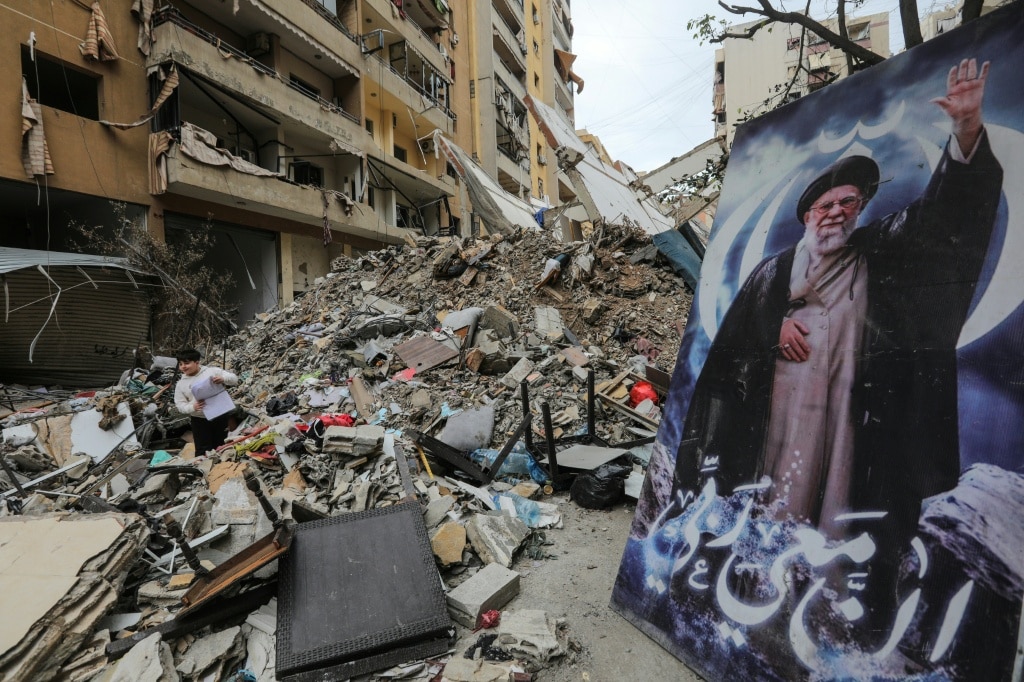
    The Israeli military has issued an urgent warning to displaced Lebanese civilians, urging them not to return to dozens of villages in southern Lebanon. Israeli officials claim that armed activities by the Hezbollah group in these border areas violate the ceasefire agreement reached between the two sides last week. Despite the warning, thousands of displaced Lebanese residents have already begun traveling back to their homes in southern Lebanon since the bilateral truce took effect last Friday.

    #### Iran Executes Two Men Linked To Israeli Intelligence, Rights Groups Raise Alarms
    Iran has executed two men convicted of maintaining links to Israel’s national intelligence agency, the latest in a growing series of executions of detainees that international human rights groups classify as political prisoners. The executions come amid heightened tensions between Iran, Israel and the United States following the outbreak of open conflict. The People’s Mujahedin of Iran, an Iranian opposition group banned in the country, confirmed that the two executed men were identified as 38-year-old Mohammad Masoom Shahi and 48-year-old Hamed Validi, both registered members of the MEK.

    #### Israeli Army Confirms Soldier Vandalized Jesus Statue in Southern Lebanon
    The Israeli military has confirmed that a viral social media video showing one of its soldiers vandalizing a statue of Jesus Christ in southern Lebanon is authentic. The footage shows the soldier using a sledgehammer to destroy the head of a statue of the crucified Jesus that had already fallen from its cross. Israeli Prime Minister Benjamin Netanyahu has promised that the soldier responsible will face appropriate and harsh disciplinary action following a full investigation.

    #### Global Markets React to Escalating Tensions: Oil Prices Surge, Stocks Fall
    Global energy and financial markets have reacted sharply to renewed escalation in the conflict after Iran announced it was closing the Strait of Hormuz over the weekend, just one day after reopening the waterway. Tehran cited the US blockade of Iranian ports as the reason for the renewed closure. Oil prices jumped sharply on the news of the closure, while European equity markets traded lower in late morning trading. Additional downward pressure on stocks came after Tehran announced it was unlikely to attend upcoming peace talks.

  • Rebel Wilson’s claims against actress are ‘malicious concoctions’, Australian court hears

    Rebel Wilson’s claims against actress are ‘malicious concoctions’, Australian court hears

    A high-stakes defamation trial has commenced in a Sydney court, pitching Hollywood star Rebel Wilson against rising Australian actress Charlotte MacInnes, the lead of Wilson’s recently released musical comedy *The Deb*. At the center of the legal clash are a series of Instagram posts Wilson published in 2024 and 2025, which MacInnes’ legal team argues are baseless, malicious lies that have permanently damaged her professional reputation.\n\nThe events under scrutiny trace back to September 2023, when MacInnes and *The Deb* producer Amanda Ghost spent an afternoon at Sydney’s iconic Bondi Beach. After Ghost experienced a sudden allergic reaction to the cold ocean water — a condition called cold urticaria that triggered painful red welts and uncontrollable shaking — the pair retreated to Ghost’s nearby beachfront apartment. MacInnes ran a hot bath to help Ghost warm up, with both women remaining in their swimsuits while sharing the oversized tub, the court heard. Ghost’s assistant even stayed in the bathroom preparing hot drinks for part of the time, and the two never made physical contact, according to MacInnes’ senior counsel Sue Chrysanthou.\n\nWilson has claimed that MacInnes originally told her she felt sexually uncomfortable following the shared bath, filed an implicit complaint, then later retracted the claim in exchange for a plum lead theater role and a major record deal. But MacInnes’ legal team refutes every part of this narrative, arguing the actress never made any complaint of sexual harassment at all. Instead, they say Wilson twisted a passing comment about the situation being “bizarre” into a false harassment narrative to gain leverage in a separate dispute with *The Deb* producers over budget and contract terms. The defamation claims, Chrysanthou told the court, are nothing more than “completely false, fantasy, malicious concoctions.”\n\nOpening arguments on the first day of the trial included the presentation of private text exchanges between Wilson, Ghost and MacInnes, as well as email chains detailing the competing accounts of the 2023 incident. Court documents show Wilson even acknowledged in an early text to Ghost that “Charlotte says all good. She just meant ‘it was a bizarre situation’ not that she personally felt uncomfortable.” The three women even attended a Boy George concert together the same night the text was sent, the court confirmed.\n\nWilson’s legal team has pushed back against MacInnes’ claims, arguing that the young actress deliberately lied about ever making an initial complaint to win professional favor from Ghost. Since the incident, Wilson’s lawyer Dauid Sibtain noted, MacInnes has landed the lead role in a Boston production of *Gatsby* and secured a record deal, with new music expected to release imminently. “She’s suffered no harm to her reputation, indeed, her career has progressed,” Sibtain told the court, adding that MacInnes’ changed story was a calculated move to advance her career by aligning with Ghost’s version of events.\n\nFor MacInnes, a 2021 graduate of a Western Australian acting academy who rose to prominence through the stage version of *The Deb* before landing the film role, the allegations have destroyed her core reputation for honesty and integrity, and she is seeking unspecified damages in the case. *The Deb* premiered in Australian theaters earlier this month, marking Wilson’s latest project following her breakout roles in *Pitch Perfect* and *Bridesmaids*. This trial is not the only legal trouble Wilson is currently navigating: she is already involved in a separate contract dispute with *The Deb* producers in an Australian court, and faces another defamation lawsuit from the same producers in the U.S., where she has also filed a countersuit. The Sydney trial, which opened Monday, is scheduled to run for nine days as the court hears full arguments from both sides.

  • Iran says no plan for US peace talks

    Iran says no plan for US peace talks

    # Iran Rejects New US Peace Talks Amid Escalating Regional Tensions

    Fresh uncertainty has engulfed Middle East diplomatic efforts to end a weeks-long regional war after Iran publicly ruled out participating in a planned new round of peace negotiations with the United States, scheduled to convene in Islamabad, Pakistan, this week. The breakdown of momentum comes amid a flurry of mutual accusations of ceasefire violations, rising military tensions in the strategic Strait of Hormuz, and new disruptions to global energy markets that have reignited fears of a full resumption of hostilities.

    Iranian foreign ministry spokesman Esmaeil Baqaei confirmed the position on Monday, stating bluntly: “We have no plans for the next round of negotiation, and no decision has been made in this regard.” Baqaei argued that Washington’s recent actions contradict its public claims of commitment to diplomacy, pointing to a US naval blockade of Iranian ports and the early Monday seizure of the Iranian cargo ship *Touska* as clear breaches of the two-week truce that is set to expire overnight Tuesday.

    US President Donald Trump, who first announced plans to send a US negotiating delegation to Pakistan, has framed the reverse accusation. Trump claims Iran has effectively choked off the Strait of Hormuz, a critical global energy chokepoint through which roughly 20% of the world’s oil supplies pass, in a deliberate violation of the ceasefire. In a Sunday social media statement, Trump defended the seizure of *Touska*, saying the vessel had attempted to break the US blockade. He added that a US destroyer damaged the ship’s engine room before Marines boarded and seized control, and warned Iran that Washington is offering a “very fair and reasonable DEAL” that Tehran should accept, while repeating threats to strike Iran’s energy infrastructure if no agreement is reached.

    Iran has vowed to retaliate for what it calls “armed piracy” by the US. Iran’s state-owned Tasnim news agency reported that Tehran has already deployed drones toward US naval vessels operating near the seized ship, while the Islamic Revolutionary Guard Corps issued a stark warning that any commercial vessel attempting to transit the Strait of Hormuz without Iranian permission would be classified as enemy cooperation and targeted. The mutual threats have thrown into doubt the entire diplomatic push to end the conflict, which began on February 28 when US-Israeli joint strikes killed Iran’s longtime supreme leader Ali Khamenei.

    The unfolding crisis has already roiled global energy markets. After Iran briefly reopened the strait last Friday to honor the new Lebanon ceasefire, it reversed course and closed the waterway again over the weekend. On Monday, international oil prices jumped sharply on fears that hostilities will resume once the current truce expires, extending months of market volatility tied to the regional conflict.

    Even as talks are now set to not happen, Pakistani authorities have heavily bolstered security in Islamabad and neighboring Rawalpindi, announcing widespread road closures and traffic restrictions to prepare for the expected US delegation. A White House official confirmed that the delegation, which will still travel to Islamabad, will be led by Vice President JD Vance — Trump originally ruled out his own attendance citing security concerns. Vance will be joined by Middle East envoy Steve Witkoff and Trump’s son-in-law Jared Kushner, the official confirmed.

    Beyond the immediate clash over the ceasefire and ship seizure, multiple core sticking points continue to divide the two sides. One major point of contention is the status of the Lebanese ceasefire, which went into effect Friday between Israel and Hezbollah, the Iranian-backed militant group that entered the war in support of Tehran. Iran argues that Israeli failures to fully implement the truce, including ongoing military operations in southern Lebanon, constitute a separate violation of the broader regional truce.

    On Monday, Israel’s military warned Lebanese civilians against returning to dozens of southern Lebanese villages, claiming Hezbollah’s presence in the area violates the ceasefire. Thousands of displaced Lebanese residents have already begun returning to their homes since the truce took effect. Israeli Defense Minister Israel Katz reiterated Sunday that the Israeli military will use “full force” to respond to any threats in Lebanon during the ceasefire, and vowed to demolish structures allegedly used by Hezbollah — Lebanese state media has confirmed demolition operations are already underway in the region.

    Another irreconcilable sticking point in any potential future talks is the fate of Iran’s 440-kilogram stockpile of enriched uranium. Trump claimed last Friday that Iran had agreed to transfer the entire stockpile to US control, saying “We’re going to get it by going in with Iran, with lots of excavators.” But Baqaei refuted that claim entirely Monday, saying the issue was never raised in initial talks in Islamabad earlier this month, and that the stockpile — which Iran says is protected from airstrikes after being buried following US bombing in June 2025’s 12-day war — will “not be transferred anywhere.” “It was never raised as an option for us,” he added.

    Trump has faced growing domestic and international pressure to find an exit ramp from the conflict since Iran first moved to close the Strait of Hormuz. But the escalation of US pressure via the blockade and ship seizure has only prompted renewed threats from Tehran, rather than pushing Iran back to the negotiating table as the Trump administration had hoped.
  • Pope Leo visits Angola’s diamond-rich northeast

    Pope Leo visits Angola’s diamond-rich northeast

    Pope Leo XIV began the eighth day of his ambitious 11-day, four-nation African pilgrimage on Monday, traveling to Angola’s remote, diamond-abundant northeastern region — the third stop on his journey that has centered on addressing systemic inequality and extractive harm across the continent.

    Departing from Angola’s capital Luanda, the pontiff flew 800 kilometers east to Saurimo, the capital of historically marginalized Lunda Sul province. This region sits adjacent to Catoca, Angola’s largest diamond mining operation, which accounts for roughly 75% of the country’s total diamond output.

    Angola holds a position as one of Africa’s leading producers of both crude oil and diamonds, yet widespread prosperity remains out of reach for much of its population. Official World Bank data indicates that nearly one-third of Angolans live below the international poverty line. Lunda Sul exemplifies this gap: despite sitting atop the country’s most valuable mineral reserves, the province struggles with pervasive poverty, decades of underinvestment in public infrastructure, and severe environmental degradation linked to unregulated mining activity.

    The 70-year-old pontiff’s first scheduled activity in Saurimo was an open-air mass held mid-morning, which organizers projected would draw an estimated 30,000 worshippers from across the surrounding region. Following the service, Leo is set to visit a local residential facility for elderly residents, a stop designed to highlight the Catholic Church’s outreach to communities underserved by limited public services in the province.

    Since arriving in Angola on Saturday, the pope has doubled down on a core theme of his African tour: condemning the damaging impacts of unchecked natural resource extraction. During his opening address to senior government officials, including Angolan President Joao Lourenco, Leo questioned the human and ecological cost of prioritizing profit over community well-being. “How much suffering, how many deaths, how many social and environmental disasters are caused by this logic of exploitation,” he told the assembled audience.

    On Sunday, one day before his trip to Lunda Sul, Leo led a mass in Luanda attended by more than 100,000 people. There, he urged Angolans to move beyond the deep divisions left by the country’s decades-long civil war, calling for collective action to build a more equitable future. He specifically called for systemic change to root out graft, saying he hoped “the scourge of corruption will be healed by a new culture of justice and sharing.”

    Later on Monday, the pontiff is scheduled to meet with local Catholic clergy to discuss pressing challenges facing the Church in Angola, including limited institutional resources and the rapid growth of evangelical Protestantism across the country.

    Leo XIV is only the third sitting pope to visit Angola, following trips by John Paul II in 1992 and Benedict XVI in 2009. The country only emerged from a brutal 27-year civil war in the 2000s, a conflict that broke out immediately after it gained independence from Portugal in 1975 and left deep economic and social scars that persist to this day.

    The pope’s 18,000-kilometer African tour launched one week ago in Algeria, continued with a stop in Cameroon, and will conclude with a three-day visit to Equatorial Guinea from April 21 to 23.

  • Oil price jump fails to lift Australian sharemarket as Middle East conflict hits banks

    Oil price jump fails to lift Australian sharemarket as Middle East conflict hits banks

    Escalating geopolitical tensions between the United States and Iran, sparked by the seizure of an Iranian vessel near the strategically critical Strait of Hormuz, sent global oil prices jumping by as much as 8% on Monday — but the move failed to lift Australian equities, which closed barely changed in a choppy session of mixed sector performance.

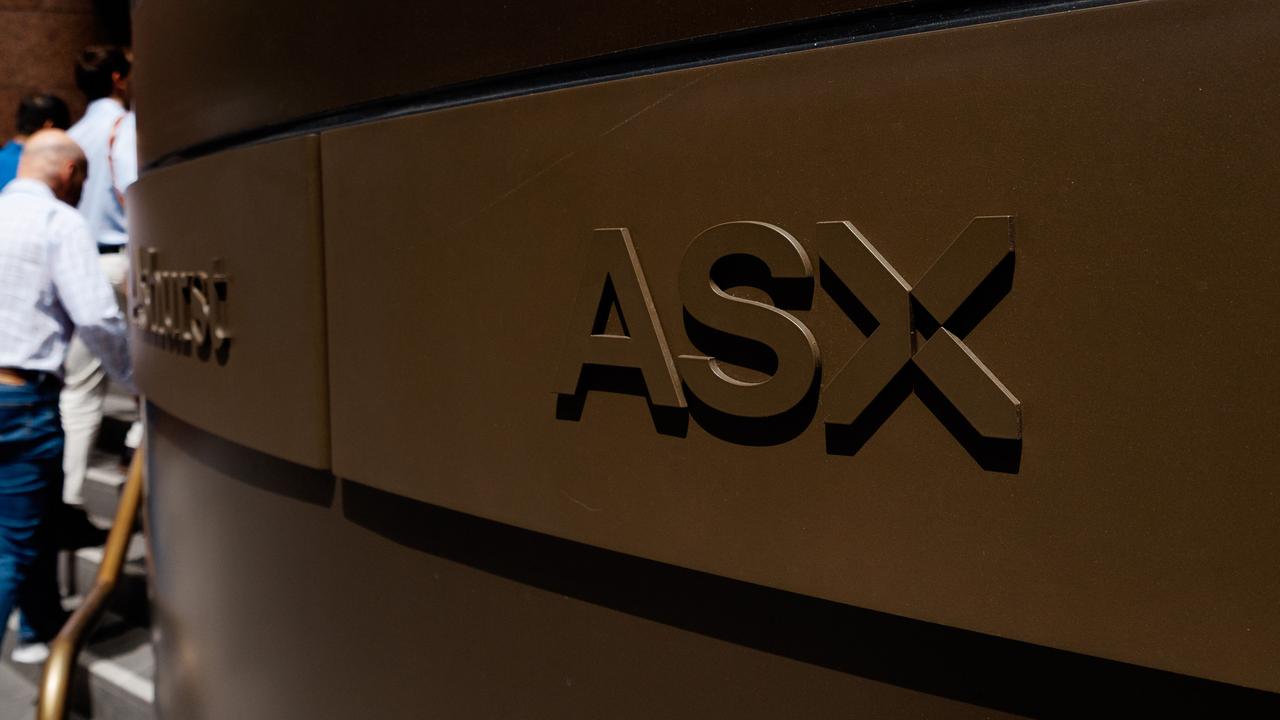
    The benchmark S&P/ASX 200 eked out a marginal 6.4-point gain, or 0.07%, to settle at 8,953.30, while the broader All Ordinaries index added an even smaller 5.4 points, equivalent to 0.06%, to end the day at 9,174.10. The Australian dollar also posted a minor uptick, rising 0.24% to buy 71.51 U.S. cents by market close.

    Across the benchmark’s 11 sectors, the day split evenly: six finished in positive territory while five closed lower. The most counterintuitive movement came from the energy sector, which led the declines despite Monday’s dramatic surge in Brent Crude prices. The global oil benchmark climbed as high as 8% intraday before settling at $95.50 U.S. ($133.30 Australian) as investors priced in growing supply risk from the disrupted Strait of Hormuz, through which roughly 20% of global oil supplies transit daily.

    Major Australian energy stocks posted steep losses: Woodside Energy fell 2.93% to $31.77, Santos dropped 1.31% to $7.55, and fuel retailer Ampol slid 3.19% to $31.88. Viva Energy was an even bigger laggard, plummeting 9.09% to $2.30 after resuming trading following a major fire at its Geelong refinery the previous week.

    Losses across energy were largely offset by strong gains in consumer-facing stocks and most of the financial sector. Retail giant Wesfarmers, which owns brands including Bunnings and Kmart, led consumer discretionary gains with a 2.44% jump to $74.63. Electronics retailer JB Hi-Fi added 0.55% to $76.49, and furniture chain Harvey Norman gained 0.88% to $4.61.

    Among the big four banks, three closed higher: Commonwealth Bank of Australia rose 1.08% to $180.15, Westpac added 0.73% to $40.02, and ANZ nudged up 0.03% to $37.93. The outlier was National Australia Bank, which tumbled 3.60% to $41.02 after the lender disclosed it was boosting provisions for bad debt ahead of its first-half results, citing rising risk from the ongoing Middle East conflict involving the U.S., Israel and Iran. The bank now forecasts total impairment costs of up to $706 million, up from a previous projection of $485 million before the escalation of regional tensions.

    Another company caught in the crossfire of Middle East uncertainty was engineering firm Worley, which dropped 5.84% to $11.13 after warning that ongoing conflict would delay operational activities and contract awards, dragging down its full-year 2026 financial outlook.

    The only major standout on the day was buy now, pay later provider Zip Co, which extended a Friday rally with a 7.73% gain to $2.51 on Monday. The surge followed a bullish quarterly update released Friday that showed third-quarter cash earnings before interest and tax jumped 41.5% year-over-year, driven primarily by robust revenue growth in the U.S. market. The stock had already rallied 13.66% on Friday.

    Market analysts noted that overall trading sentiment remained muted as investors adopt a wait-and-see approach to evolving geopolitical developments. “Markets are in a holding position as they await more news out of the US and Iran conflict,” said Tony Sycamore, market analyst at IG. “Either the data will break or the blockade will break. When you talk about the data breaking, we aren’t at that point although Japan, New Zealand and the UK inflation will give an indication. We also have a ceasefire coming up and I don’t think anyone thinks the ceasefire won’t be extended.”

    Additional uncertainty filtered through markets following conflicting reports around planned regional peace talks: U.S. officials confirmed Vice President JD Vance would join a diplomatic delegation traveling to Pakistan for talks, but Iranian state media has already indicated Tehran will not attend the negotiations, dashing early hopes of a near-term de-escalation of tensions.

  • War in the Middle East: latest developments

    War in the Middle East: latest developments

    Less than two months after a new round of open conflict erupted across the Middle East, a cascade of interconnected developments has deepened instability, derailed planned diplomatic efforts, and sent global markets reeling this week. From violated ceasefire understandings on the Lebanon-Israel border to tit-for-tat maritime seizures in the Gulf of Oman, the region remains mired in rapidly shifting conflict that threatens to spill beyond its borders.

    Along the tense Israel-Lebanon frontier, a fragile ceasefire that took effect last Friday has already come under significant strain. Thousands of Lebanese displaced by weeks of fighting had begun returning to their southern communities when the Israeli military issued a stark warning, barring civilians from returning to dozens of villages. The military claimed that Hezbollah militant activities in the area already violate the terms of the truce. Despite the ceasefire, Israel’s Defense Minister Israel Katz doubled down on the country’s stance, warning that the Israeli military would deploy “full force” against Hezbollah even during the truce if any threat to Israeli troops emerges. In a small sign of post-conflict recovery, Lebanon’s military has reopened a key damaged road and bridge between the southern cities of Nabatieh and Khardali. Meanwhile, a separate incident has sparked international outcry: the Israeli military confirmed that a viral social media video showing one of its soldiers destroying a crucified Jesus statue in southern Lebanon is authentic. In an official statement posted to X, the military said it views the incident with “great severity,” emphasizing that the soldier’s actions run entirely counter to the ethical values the force expects from all personnel.

    In Iran, a wave of convictions and executions linked to alleged Israeli espionage continues, with two more men put to death at dawn this week. Iran’s judiciary affiliate Mizan Online confirmed that the death sentences for Mohammad Masoom-shahi and Hamed Validi were carried out, marking the latest in a growing string of such executions since open hostilities broke out between Iran, Israel, and the United States.

    Energy markets were rocked by sudden shifts in maritime access over the weekend: after briefly reopening the Strait of Hormuz, a critical chokepoint for 20% of global oil supplies, Iran closed the waterway again in response to what it described as a U.S. blockade of its ports. The resulting escalation sent global oil prices surging, while European stock markets opened sharply lower on Monday. The closure of the strait was followed by a dramatic maritime confrontation in the Gulf of Oman: former U.S. President Donald Trump announced Sunday that the U.S. guided missile destroyer USS Spruance fired on and seized the Touska, an Iranian-flagged cargo vessel. Trump added that U.S. Marines were in the process of searching the ship’s cargo and compartments. Iran quickly retaliated, with state-owned Tasnim News Agency confirming that Tehran launched drone strikes toward U.S. military vessels in response to the seizure.

    Planned diplomacy between the U.S. and Iran has been thrown into complete disarray, just as Pakistan was preparing to host a new round of talks in Islamabad. Hours after Trump confirmed he was sending U.S. negotiators to the Pakistani capital, Iranian state broadcaster IRIB cited official sources saying Tehran has no current plans to participate in the proposed negotiations. Pakistan, which has positioned itself as a neutral mediator between the two sides, has moved to bolster security in Islamabad ahead of the expected talks. Pakistani Prime Minister Shehbaz Sharif confirmed Sunday he held a “warm and constructive” phone call with Iranian President Masoud Pezeshkian, and reaffirmed his government’s full readiness to continue mediating talks between Tehran and Washington.

    In southern Syria, along the border with the Israeli-occupied Golan Heights, Syrian interior ministry officials announced Sunday that security forces foiled a cross-border sabotage attack by a militant cell linked to Iran-backed Hezbollah. Syrian officials claimed the cell planned to launch rockets from a civilian vehicle carrying hidden launching equipment to destabilize the region. Hezbollah has since issued a formal denial of the accusation.

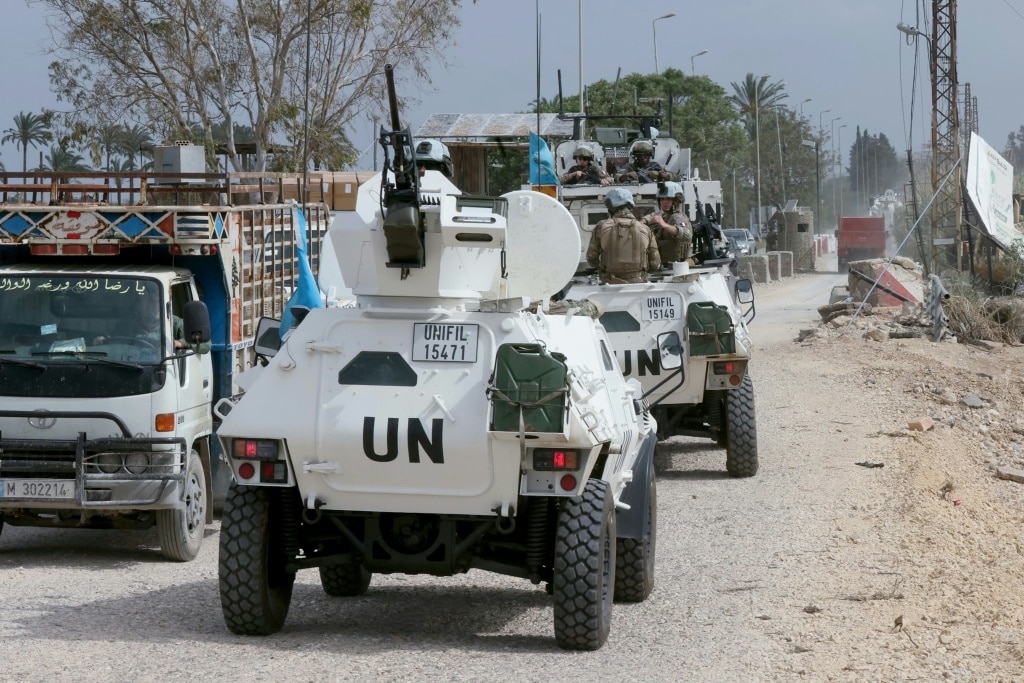
    Diplomatic efforts are also underway in Lebanon, where a French peacekeeper was killed last week amid ongoing clashes. The Elysee Palace announced that French President Emmanuel Macron will meet with Lebanese Prime Minister Nawaf Salam in Paris on Tuesday, as international powers work to shore up the fragile 10-day truce between Israel and Hezbollah. On the domestic front in Iran, civil aviation authorities confirmed that Mashhad International Airport, located in the country’s northeast, will resume all international flight operations starting Monday after a temporary closure.