标签: Oceania

大洋洲

  • UK PM says some pro-Palestinian marches could be banned

    UK PM says some pro-Palestinian marches could be banned

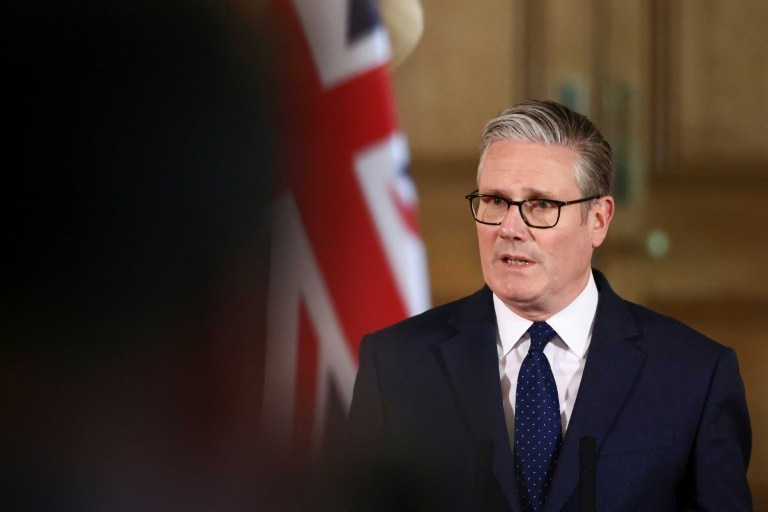
    Against a backdrop of surging antisemitic incidents across the United Kingdom and growing political pressure to respond, Prime Minister Keir Starmer has publicly backed justified bans on specific pro-Palestinian demonstrations, singling out events that incite violence with chants calling for a global intifada. Starmer, who leads the Labour Party, has found himself in a precarious position after a recent stabbing attack in a major London Jewish neighborhood left two people injured. The incident, which took place in Golders Green – an area well-known for its large, longstanding Jewish community – has amplified calls for the new prime minister to take stronger action to protect Jewish residents.

    On Friday, the 45-year-old suspect, a British national born in Somalia, made his first court appearance on attempted murder charges and was remanded into custody ahead of further proceedings. The attack came amid months of ongoing pro-Palestinian protests across UK cities that began in the wake of Hamas’ October 7, 2023, attack on Israel, which triggered the ongoing Israel-Gaza war. During a visit to the attack scene and a local Jewish volunteer ambulance service on Thursday, Starmer faced public backlash from local residents, who booed him and accused his administration of failing to take adequate steps to keep the community safe. Many of those critics also blamed ongoing pro-Palestinian marches for creating a climate of fear.

    In a broadcast interview with the BBC on Saturday, Starmer, a former human rights lawyer and ex-chief public prosecutor who is married to a woman of Jewish descent, said repeated protests had left a profound negative impact on many British Jewish people. “I’m a big defender of freedom of expression, peaceful protests,” he told the outlet. “But when there are chants like ‘globalise the intifada’, that’s completely off limits. Clearly, there should be tougher action in relation to that.”

    The term intifada refers to two historical Palestinian uprisings against Israeli occupation, the first running from 1987 to 1993 and a second occurring in the early 2000s. Starmer emphasized that the chant is viewed as deeply threatening by the UK Jewish community, and argued for much stricter enforcement of acceptable language at demonstrations. He confirmed that there are scenarios where entire protests should be prohibited, and that senior government officials have been holding ongoing discussions with policing leadership for weeks about what additional regulatory and enforcement action can be implemented.

    This stance aligns with a position police in London and Manchester first took last December, when officers announced they would arrest any person chanting “globalise the intifada” at public demonstrations. In a related development Thursday, UK security officials upgraded the national terror alert level to “severe” – the second-highest tier on the country’s threat scale. Officials cited the Golders Green attack, alongside persistent threats from both Islamist extremism and far-right extremism, as core factors driving the upgrade. UK police have confirmed that they will conduct enhanced, thorough reviews of all notifications for upcoming protests to assess potential risks to public safety.
  • ‘Looks like he’ll have an op’: Cruel blow for Blues hopeful as coaches reveal full extent of carnage out of wild clash

    ‘Looks like he’ll have an op’: Cruel blow for Blues hopeful as coaches reveal full extent of carnage out of wild clash

    An NRL round clash between the Sydney Roosters and Brisbane Broncos at Allianz Stadium ended not just with a 38-24 Roosters victory, but with a wave of high-profile injuries that has shaken up State of Origin selections and left Brisbane bracing for a challenging upcoming fixture against Manly. The most devastating blow landed on rising star Mark Nawaqanitawase, a NSW Blues State of Origin hopeful whose dream series debut is now all but off the table after he sustained a serious syndesmosis injury that requires urgent surgery.

    Roosters head coach Trent Robinson confirmed the devastating news in his post-match press conference, confirming that the dynamic winger, a former Wallaby set to return to rugby union in 2027, will miss 6-8 weeks on the sidelines. The injury occurred in the first half of Saturday night’s game when Nawaqanitawase’s foot became trapped under teammate Robert Toia during a collision. Though he initially tried to push through the pain, he was forced off the field just 15 minutes after the incident. NRL physiotherapy experts later confirmed the injury mechanism was typical for a high ankle syndesmosis sprain, occurring when the foot is caught under contact and forced to rotate outward.

    Just 24 hours before the match, Nawaqanitawase had opened up about his long-held dream of representing the Blues in the upcoming State of Origin series, which kicks off with its opening clash on May 27. NSW coach Laurie Daley had previously named the in-form winger as one of the top contenders for a starting wing spot alongside Brian To’o, in a three-way race with Campbell Graham and Josh Addo-Carr. A 6-8 week recovery period from surgery rules Nawaqanitawase out of the series opener entirely, ending his campaign before it could officially begin.

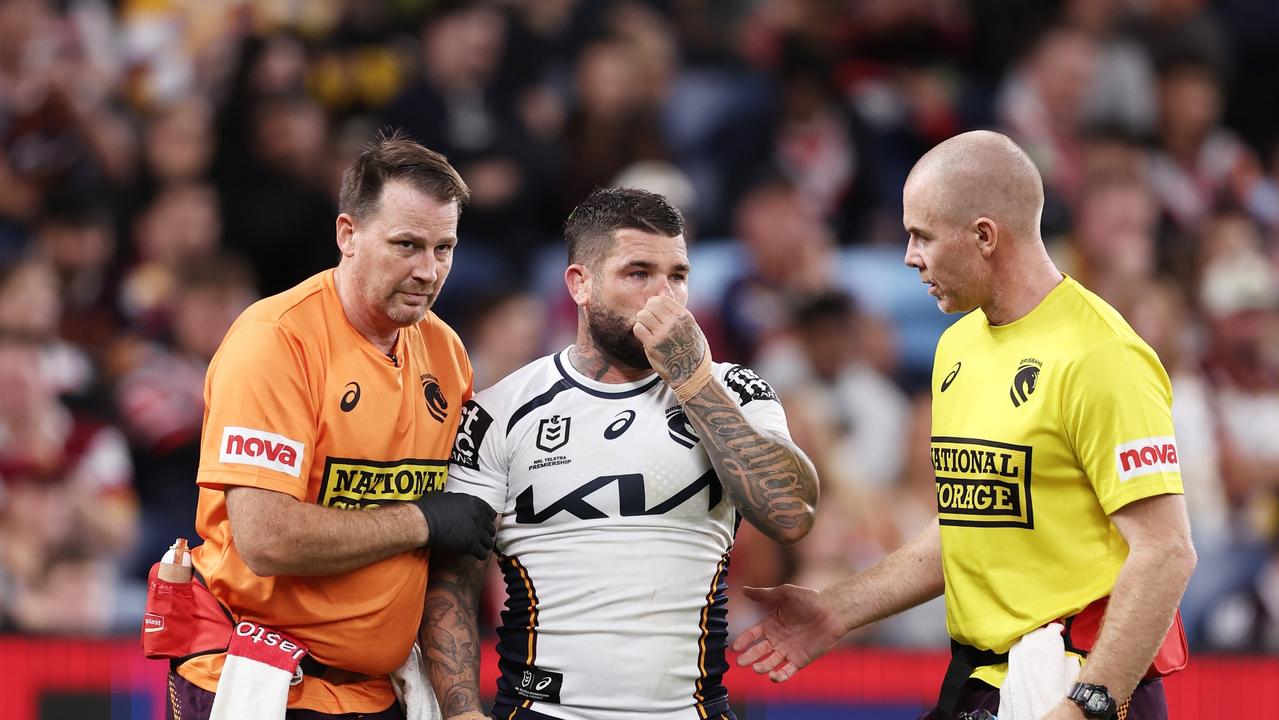
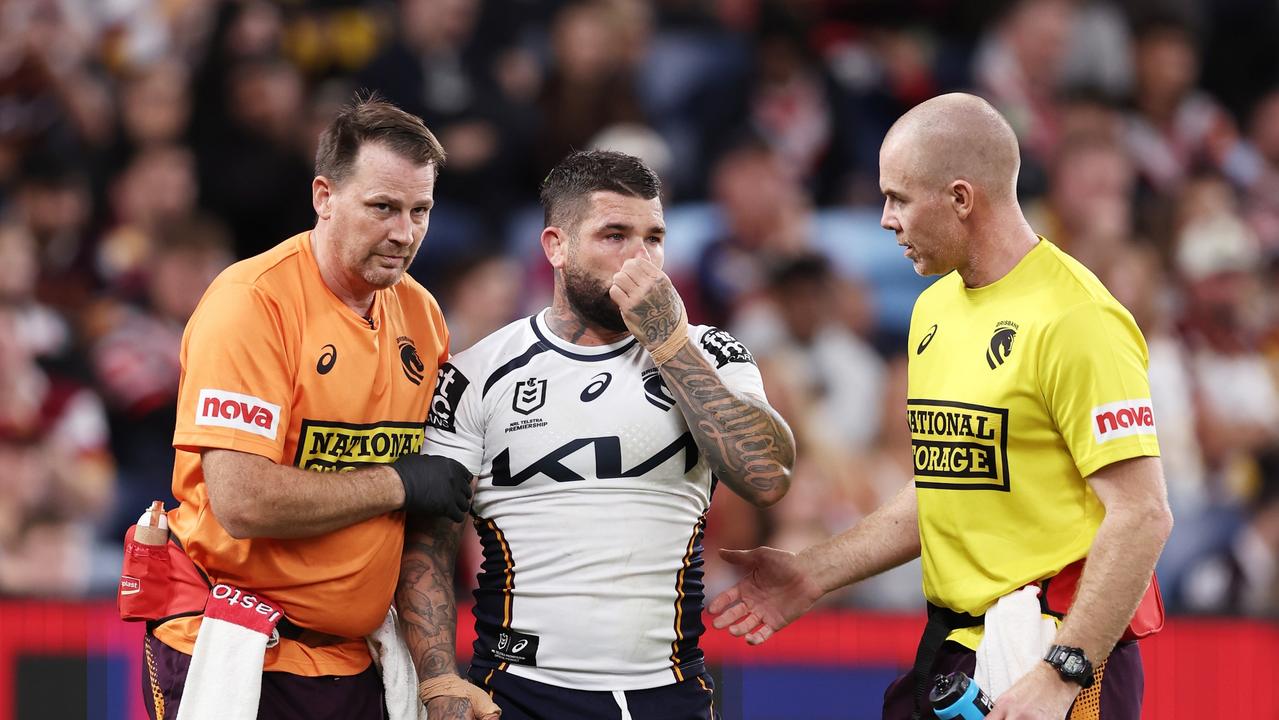
    Nawaqanitawase was far from the only star forced to exit the game early with injury. Brisbane Broncos captain Adam Reynolds was already officially ruled out of the club’s next fixture against Manly next week after a brutal head knock sustained while attempting a tackle. Queensland Origin enforcer Lindsay Collins also failed his first-half head injury assessment, ruling him out of Brisbane’s upcoming trip to Gosford next Friday. Roosters and Blues veteran Angus Crichton was also forced off midway through the second half with a suspected medial knee injury, and he is currently awaiting scan results to confirm the severity of the damage.

    Robinson noted after the match that Crichton could have stayed on the field, but the injury required repeated attention throughout the first half, prompting the coaching staff to pull him early as a precaution. On Collins’ exit, Robinson added that the Brisbane forward was lucid and alert in the sheds after the incident, but did not meet concussion protocol requirements to return to play.

    For Brisbane, young halfback Tom Duffy is set to step into Reynolds’ starting spot against Manly. Broncos coach Michael Maguire praised Duffy’s recent performances, noting he has already proven his ability to lead the team around the park when given the opportunity. The injury crisis extends far beyond Reynolds and Collins for Brisbane: star front-rower Payne Haas and halfback Ben Hunt are already ruled out of next week’s fixture, while wingers Josiah Karapani (ankle) and Deine Mariner (cork) are serious doubts to take the field. Mariner was forced off in the first half after sustaining his cork, but returned to the game shortly after when Karapani exited with his ankle injury. Maguire said Mariner should not have returned to action, but praised the young winger’s commitment to his teammates, noting that the moment reflected the tight team culture that saw Brisbane claw back from a 30-0 deficit to come within six points of a stunning upset.

    “Deine probably shouldn’t have gone back out, but that’s what they’re doing for each other,” Maguire said. “I could talk about many other players, but that’s what the competition is demanding of you at the moment. Deine, straight away he jumped up and out he went. So they’re competing really hard for each other. We just needed to be smarter.”

    Beyond the injury toll, Brisbane is also waiting anxiously on the outcome of potential match review committee charges, after star centre Kotoni Staggs was sent to the sin bin late in the game for an elbow to the back of Roosters winger Hugo Savala’s head. The sin bin timing proved critical for Brisbane’s comeback: with Staggs off the field, the Roosters scored eight unanswered points in the final eight minutes to seal the win. Brisbane lock Patrick Carrigan took responsibility for the team’s late collapse, admitting a loose carry that turned over possession had shifted momentum back to the Roosters just before Staggs’ sin bin.

    “To be honest, that was my fault,” Carrigan said. “I made an error down in the good ball set, just a loose carry and I turned over the ball and put us on the back foot and released pressure of the game. I know ‘Tones’ (Staggs) plays aggressively but I know he wouldn’t have meant to do any harm. To be honest, I didn’t even see it until after the game, so we play a hard fast game, he made a mistake and I’m sure he’ll own that. I love when he’s playing aggressive and I love running out with him.”

  • Iran military official says renewed war with US ‘likely’

    Iran military official says renewed war with US ‘likely’

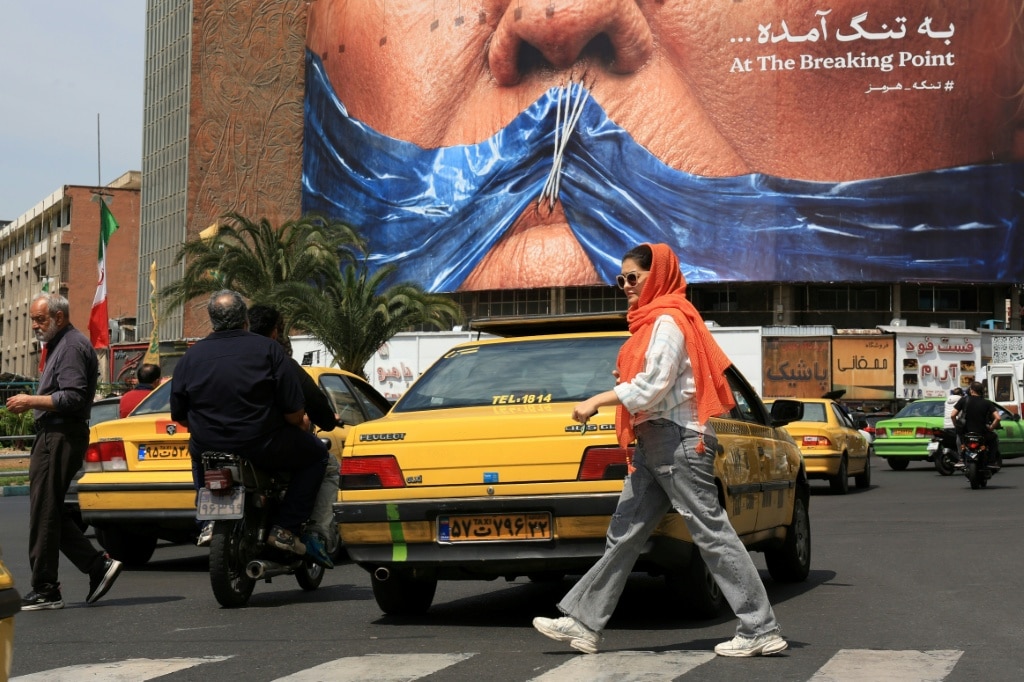
    Tensions between Iran and the United States have spiked sharply in recent days, with a senior Iranian military commander warning that a resumption of open hostilities between the two nations is increasingly likely, just hours after former President Donald Trump publicly rejected Tehran’s latest peace proposal as unsatisfactory. The current ceasefire, which has paused the full-scale war launched jointly by the U.S. and Israel in late February 2026, has held since April 8, following one unsuccessful round of negotiation mediated by Pakistan earlier this spring.

    Iran submitted its updated negotiating draft to Pakistani mediators on Thursday evening, according to Iranian state media, though no specifics about the draft’s content have been released to the public. Speaking to reporters on Saturday, Trump reiterated his disappointment with Iran’s offer, blaming the stalled talks on deep internal divisions within Iran’s top leadership. “Do we want to go and just blast the hell out of them and finish them forever — or do we want to try and make a deal?” Trump asked reporters, adding that he would “prefer not” to launch a full-scale offensive “on a human basis”.

    Early Saturday, Mohammad Jafar Asadi, a high-ranking official in Iran’s central military command, echoed the rising pessimism in comments published by Iran’s semi-official Fars News Agency. Asadi stated plainly that “a renewed conflict between Iran and the United States is likely”, adding that “evidence has shown that the United States is not committed to any promises or agreements”.

    A day earlier, Iran’s judiciary chief Gholamhossein Mohseni Ejei pushed back against U.S. framing of the stalled talks, noting that Iran had “never shied away from negotiations” but would never accept externally imposed peace terms. While the White House has refused to release details of Iran’s latest proposal, U.S. news outlet Axios has reported that U.S. envoy Steve Witkoff has submitted amendments to an earlier draft that would place Iran’s nuclear program back on the negotiating table. Key U.S. demands include restrictions barring Iran from moving enriched uranium out of bombed nuclear sites or resuming enrichment activity at those locations while negotiations continue.

    The geopolitical standoff has already sent ripples through global energy markets: news of Iran’s proposal briefly pushed international oil prices down by nearly 5 percent, though prices remain roughly 50 percent higher than pre-war levels, due to the ongoing closure of the Strait of Hormuz, one of the world’s most critical energy chokepoints. Since the war began, Iran has maintained a tight blockade on the strait, cutting off global supplies of oil, natural gas, and fertilizer, while the U.S. has implemented a reciprocal blockade on all Iranian commercial ports. Speaking at a campaign rally Friday, Trump made unorthodox comments comparing U.S. naval operations in the region to piracy, while describing a recent helicopter raid on an oil tanker operating under the blockade.

    Even with the ceasefire in place in the Gulf, violence continues to escalate in Lebanon, where Israeli forces have carried out repeated deadly airstrikes despite a separate ceasefire agreement with Iran-backed Hezbollah. Lebanon’s Ministry of Public Health confirmed Friday that 13 people were killed in Israeli strikes across southern Lebanon, including multiple fatalities in the town of Habboush, where the Israeli military had ordered civilian evacuations ahead of the attack.

    On Friday evening, the U.S. State Department announced it had approved a series of major new arms sales to regional U.S. allies, including a $4 billion Patriot missile defense deal with Qatar and a nearly $1 billion sale of advanced precision weapons systems to Israel.

    Back in Washington, the Trump administration is embroiled in a heated legal and political dispute with congressional opposition over the legality of the ongoing war. Under U.S. war powers law, the president must obtain congressional authorization for any military action lasting longer than 60 days. Administration officials argue that the current ceasefire pauses the 60-day clock, a claim that is fiercely contested by opposition Democrats. In a letter to congressional leaders released Saturday, Trump pushed back against criticism, claiming that “there has been no exchange of fire between United States Forces and Iran since April 7, 2026,” adding that hostilities “have terminated”. The president faces growing domestic pressure as inflation continues to climb, no clear military victory has been achieved, and U.S. midterm elections approach in late 2026.

    For Iran, the economic damage from the war and U.S. sanctions continues to deepen. The Trump administration recently imposed new sanctions on three major Iranian currency exchange firms, and has warned global shipping companies against paying the passage tolls demanded by Iran for transit through the Strait of Hormuz. U.S. military officials estimate their port blockade has cut off $6 billion in Iranian oil exports, while Iranian inflation, already at high levels before the war began, has now surged past 50 percent.

    “Everyone is trying to endure it, but… they are falling apart,” Amir, a 40-year-old Tehran resident, told an Agence France-Presse reporter reporting from outside Iran. “We still have not seen much of the worst economic effects because everyone had a bit of savings. They had some gold and dollars for a rainy day. When they run out, things will change.”

    On Saturday, Iran’s judiciary announced that authorities had executed two men convicted of spying for Israel, marking the latest in a string of executions of alleged spies in recent weeks. One of the two men was convicted of assisting Israeli intelligence during the 12-day border war between Iran and Israel in June 2025.

  • Stranded whale ‘Timmy’ released into North Sea in dramatic rescue

    Stranded whale ‘Timmy’ released into North Sea in dramatic rescue

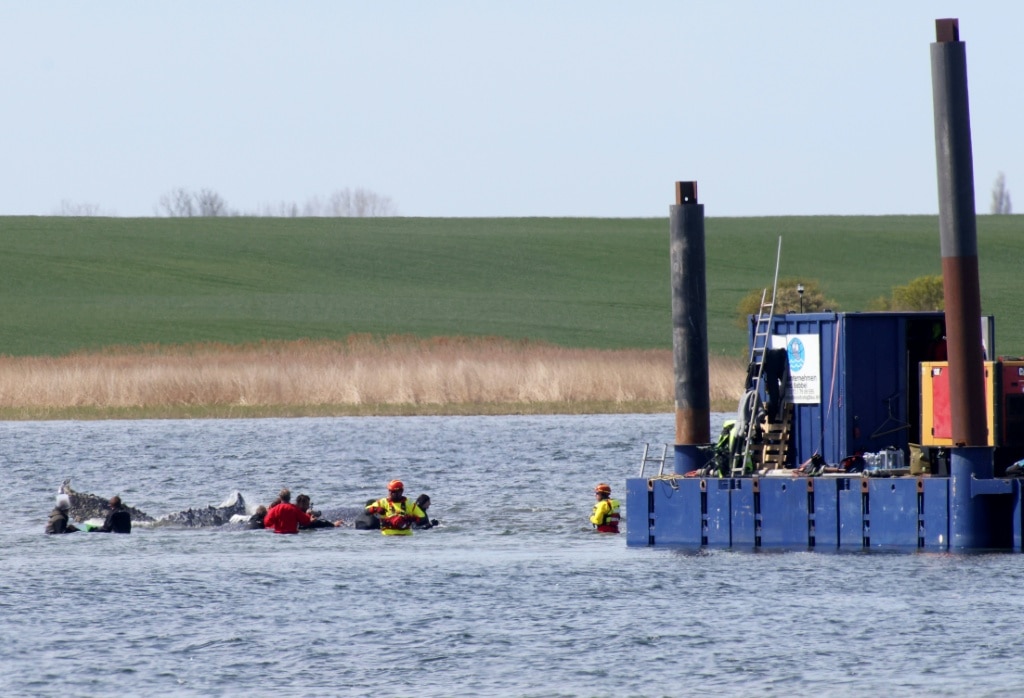
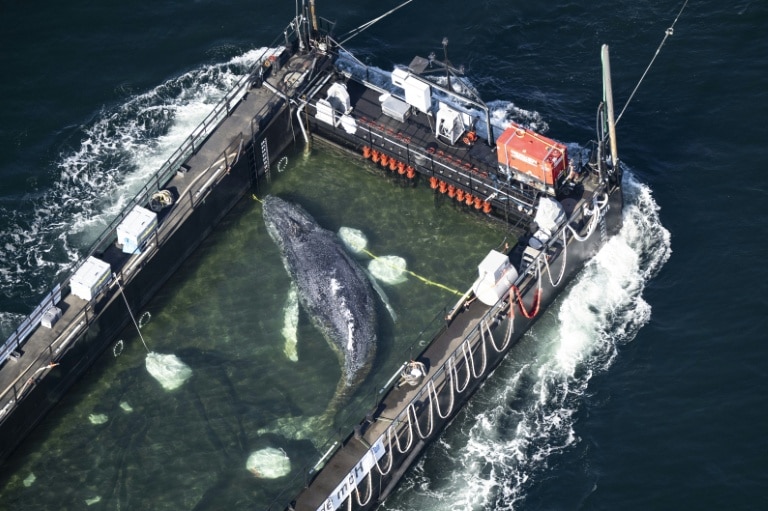
    After weeks of a high-stakes, publicly followed ordeal that captured widespread public attention across Germany, a stranded humpback whale affectionately named Timmy has been successfully released into the North Sea off Denmark’s coast, capping a dramatic privately funded rescue operation that defied early skepticism. The massive marine mammal, which first got trapped on a sandbank near Germany’s Baltic coastal city of Luebeck on March 23, was transported to its release site aboard a specially adapted barge. Once the gates of the vessel opened, Timmy pushed out a burst of air through its blowhole before slipping into open water and swimming away under its own power — and early observations confirm the whale is heading in the correct direction toward its natural migratory route. “It has some small injuries, probably from being transported in rough seas, but they are superficial,” explained Karin Walter-Mommert, the horse racing millionaire who co-funded the project alongside another wealthy entrepreneur. “It should now swim up the Norwegian coast toward the Arctic.” The rescue effort was not originally planned as a private initiative: after multiple official attempts to free the whale failed repeatedly, German authorities announced they would abandon the mission, citing low chances of success. That decision prompted Walter-Mommert and her partner to step forward with an ambitious, widely dismissed long-shot plan: guide the exhausted whale into a water-filled hold on a custom-fitted barge, then tow it to deep open waters aligned with the species’ natural migration path. The plan did not go off without controversy, however. A number of marine wildlife experts publicly criticized the privately funded operation, arguing that the stress of capture and transport would do more harm than good, potentially worsening the whale’s already fragile condition. Still, organizers obtained official approval after veterinary specialists confirmed Timmy was healthy enough to survive the journey. Getting the massive whale onto the barge required an extraordinary on-shore engineering effort: rescuers dug a custom channel through the sand to the vessel, then used heavy straps to carefully pull the animal toward the hold, with teams of swimmers guiding it alongside as it moved. The moment Timmy slid into the barge’s water-filled hold drew loud cheers from hundreds of onlookers who had gathered on the shore to follow the days-long operation. This successful release marks the second attempt by the two entrepreneurs to save Timmy — an earlier effort using inflatable cushions and pontoons failed to move the whale, forcing the team to pivot to the barge strategy. For weeks, Timmy’s struggle dominated headlines across Germany, earning non-stop coverage from national television networks, online news outlets and social media creators, turning the stranded whale into a national viral sensation. But the high-profile saga has also been marked by division: it has sparked heated public spats over rescue strategy and spawned a wave of unsubstantiated conspiracy theories about how the young humpback ended up off course in the Baltic Sea in the first place. As of Saturday afternoon, the rescue team reported Timmy was continuing to swim steadily north, in what is being widely celebrated as an unexpected success for the risky, volunteer-led effort.

  • Ex-F1 driver turned Paralympic champion Zanardi dies

    Ex-F1 driver turned Paralympic champion Zanardi dies

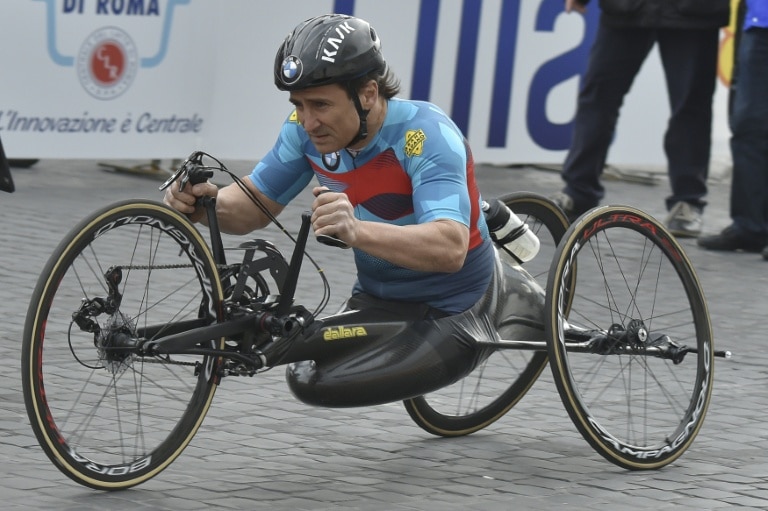
    Italian sporting icon Alex Zanardi, whose remarkable career transitioned from Formula One racing to Paralympic gold-medal success after a life-altering accident, has passed away at the age of 59, his family confirmed in an official statement Saturday.

    Widely regarded as one of Italy’s most beloved and influential athletes, Zanardi died on Friday evening. In the announcement shared via Obiettivo3, the non-profit organization he founded, his family shared that he died suddenly, yet peacefully, while surrounded by loved ones.

    Zanardi’s extraordinary life was marked by repeated battles against adversity. His first catastrophic crash came in 2001 during a CART race at Germany’s Lausitzring circuit. After a spin left his car stalled on the track, another vehicle traveling at over 300 kilometers per hour collided with him, resulting in the amputation of both of his legs. Rather than ending his athletic career, the accident paved the way for a second chapter that would inspire millions around the globe.

    Prior to that 2001 incident, Zanardi had already built an impressive motorsports resume. He competed in Formula One for teams including Jordan, Minardi and Lotus in the early 1990s before moving to the United States to race in the CART championship, where he claimed back-to-back series titles in 1997 and 1998. He returned to F1 with Williams in 1999 before going back to North America to continue his CART career.

    Following his amputation, Zanardi rebuilt his life as a Paralympic athlete, earning four Paralympic gold medals: two in cycling at the 2012 London Games, and two more at the 2016 Rio de Janeiro Games. Beyond his competitive success, he was widely credited with shifting public perception of disability across Italy, breaking down stigma and showing what disabled athletes could achieve.

    Six years before his death, in June 2020, Zanardi suffered a second devastating crash when his handbike collided with an oncoming truck during a road race in Tuscany. He sustained severe traumatic brain injuries in the accident and spent 18 months in care before returning to his home.

    Tributes have poured in from across the global sporting and political community following news of his death. Italian Prime Minister Giorgia Meloni praised Zanardi as a great champion and an extraordinary human being, noting he turned every life challenge into a lesson in courage, strength and human dignity. Cordiano Dagnoni, president of the Italian Cycling Federation, added that Zanardi transformed the country’s cultural understanding of disability, bringing joy to those who met him and hope to countless people across Italy and the world. A minute of silence will be held at all Italian cycling races this weekend to honor his legacy.

    Born in Bologna in October 1966, Zanardi is survived by his wife Daniela and his son Niccolo.

  • Humpback whale stranded in Germany released into North Sea: media

    Humpback whale stranded in Germany released into North Sea: media

    A humpback whale that captured public attention after repeated strandings near Germany’s northern coast has been successfully released into the North Sea off the Danish coastline following a last-ditch, privately funded rescue mission, a member of the operation has confirmed to AFP.

    Named ‘Timmy’ by German media outlets, the large marine mammal first drew rescuers’ eyes on March 23, when it was found trapped on a shallow sandbank close to the Baltic coastal city of Luebeck. After briefly freeing itself from the sandbar, the whale became stranded again multiple times in the following weeks, leaving rescue teams scrambling to find a viable solution.

    By early April, German government wildlife officials had formally abandoned official rescue efforts, concluding that the whale’s condition made survival impossible and that intervention would do more harm than good. That decision, however, sparked immediate public outcry across the country, putting pressure on authorities to reverse course. Ultimately, officials granted approval for an unconventional rescue plan put forward by two wealthy German entrepreneurs, who agreed to cover all costs of the operation themselves.

    The team’s first attempt to re-float Timmy, which relied on inflatable cushions and floating pontoons to lift the whale off the sandbank, failed to produce the desired result. That setback led rescuers to pivot to a new strategy: transporting the animal on a specialized covered barge from its stranding site near Wismar Bay on Germany’s Baltic coast to open waters in the North Sea.

    According to Karin Walter-Mommert, a spokesperson for the rescue initiative, Timmy exited the barge at approximately 8:45 a.m. local time (0645 GMT) on Saturday. In an update after the release, she confirmed the whale is now swimming independently in open water, and is heading in the correct direction toward deeper migratory routes, at least in the immediate aftermath of the release.

    The high-stakes rescue effort was controversial from its inception. Many marine biologists and wildlife experts criticized the plan, arguing that the long transport and intervention would only subject the already weakened animal to additional unnecessary stress, and called the effort a low-probability long shot.

    Timmy’s weeks-long ordeal has turned the stranded whale into a national media sensation in Germany and across much of Northern Europe. Major television networks have run non-stop live coverage of the stranding and rescue efforts, digital news outlets have published constant updates, and social media influencers have shared content tracking the whale’s status with millions of followers. The intense public interest has also come with conflict: it has sparked heated public arguments between supporters of the rescue and critical experts, and given rise to a wave of unfounded conspiracy theories about the incident and the motivations behind the private operation.

  • Injury crisis: Adam Reynolds headlines huge list of injuries as the Roosters survive epic Broncos comeback

    Injury crisis: Adam Reynolds headlines huge list of injuries as the Roosters survive epic Broncos comeback

    On a chaotic Saturday night in Sydney, the Sydney Roosters held off a late, breathtaking comeback attempt from the Brisbane Broncos to secure a 38-24 NRL victory, but the match will be remembered far more for its devastating injury toll, historic individual milestones, and high-stakes State of Origin audition between two of the game’s biggest stars. The fixture got off to a one-sided start, with the Roosters racing out to a dominant 30-0 lead early in the second half, leaving the Broncos on the brink of a blowout defeat. That narrative shifted completely when Broncos fullback Reece Walsh, playing his first match back after recovering from a facial fracture, pulled off a miraculous try-saving tackle that stopped Roosters winger Hugo Savala from scoring a guaranteed try. The momentum swung wildly in Brisbane’s favor after that play, with the Broncos crossing for four tries in just 15 minutes to slash the 30-point deficit to just six points, putting the club on the cusp of pulling off the greatest comeback in NRL history.

    That dream comeback was derailed with 10 minutes left to play, however, when Brisbane centre Kotoni Staggs was sent to the sin bin for 10 minutes after elbowing Savala in the back of the head while Savala was on the ground. The Roosters capitalized on the numerical advantage almost immediately, slotting a penalty goal to extend their lead, and held on for the final whistle to claim the win.

    The result will prove costly for both franchises, however, as the bruising physical contest left a trail of key sidelined players that will impact upcoming round matches. Brisbane’s injury crisis deepened dramatically, with star captain and halfback Adam Reynolds forced off the field just three minutes into the second half after his head slammed into the turf while attempting to tackle Roosters forward Naufahu Whyte. The head knock rules Reynolds out of Brisbane’s next match against Manly, with rookie Tom Duffy lined up to replace him in the starting side. Reynolds’ injury adds to an already long list of sidelined Brisbane stars: key forward Payne Haas and playmaker Ben Hunt were already out of action before Saturday’s match, winger Josiah Karapani left the game with a foot injury, and replacement Deine Mariner was forced off in the first half with a corked muscle.

    The Roosters also face significant absences for their next clash against the Titans. Prop Lindsay Collins was forced off early in the first half after a head clash, and failed the mandatory head injury assessment, ruling him out of next week’s fixture. Outside back Mark Nawaqanitawase is unlikely to feature after leaving the match with an ankle injury, while experienced forward Angus Crichton did not finish the contest, leaving the field with a knee injury wrapped in ice.

    Beyond the scoreline and injury toll, the match doubled as a high-profile State of Origin audition for two of the game’s most high-profile fullbacks, incumbent Queensland Maroons star Reece Walsh and NSW Blues hopeful James Tedesco. Tedesco, a former NSW captain who has not featured for the Blues since the opening game of the 2024 series, put in a performance that strengthened his case for a recall to the side ahead of the upcoming series. The experienced fullback ran for 153 metres and set up Daly Cherry-Evans for the game’s opening try, proving a constant threat through the middle of the field and outplaying his Queensland counterpart on the night.

    Walsh, meanwhile, had a quiet opening 40 minutes in his first game back from injury, but delivered the match’s most memorable highlight with that game-changing try-saving tackle, before crossing for a try himself and setting up another for Jordan Riki, finishing the game with six tackle busts to remind selectors of his dynamic threat with ball in hand. The match also saw standout performances from two other Roosters players: Sam Walker, a bolter for the Maroons Origin side, controlled the attack with a sharp short kicking game that punished the Broncos, while Whyte, called on to play extra minutes due to early Roosters injuries, ran 21 times for 190 metres in a dominant display up front.

    One of the most emotional moments of the night came for outside back Cody Ramsey, who made his first NRL appearance since the 2022 season after Nawaqanitawase’s injury opened up a spot in the side. Ramsey, a former St George Illawarra Dragon, was told he would never play professional rugby league again after being diagnosed with ulcerative colitis that required multiple invasive surgeries. He lost 28 kilograms in just seven weeks during his recovery, but never abandoned his dream of returning to the top tier of the sport. After working his way back through reserve grade in 2025, he waited 1337 days for his NRL return, which finally came in one of the most chaotic matches of the 2026 season.

    The night also delivered a historic milestone for Roosters veteran winger Daniel Tupou, who scored the 190th try of his 13-year NRL career to draw level with Melbourne Storm legend Billy Slater for third place on the all-time NRL try-scoring leaderboard. Tupou crossed for the milestone try 18 minutes into the match, finishing a slick backline movement in the left corner. Later this month, he is set to play his 300th NRL game, fittingly against Slater’s former club, the Melbourne Storm.

  • Doctors warn nicotine pouches could spark repeat of the vaping epidemic

    Doctors warn nicotine pouches could spark repeat of the vaping epidemic

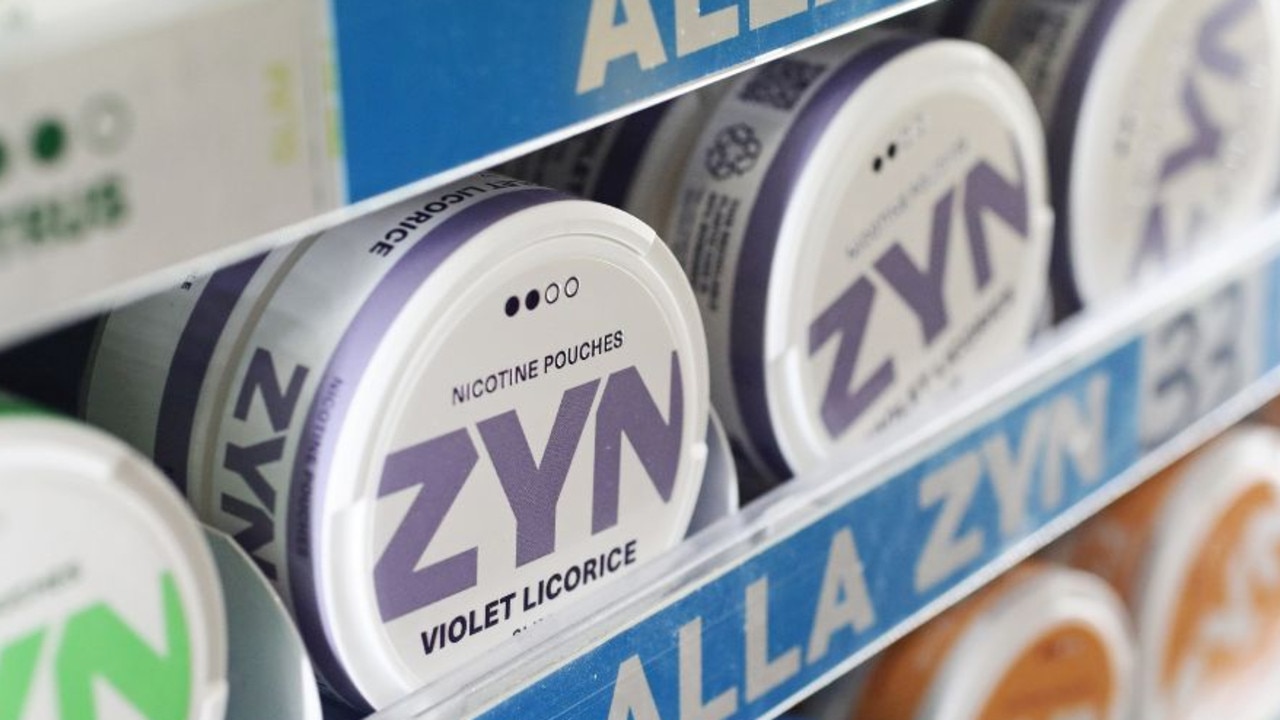
    Australia is facing the early emergence of an unregulated public health crisis linked to unapproved nicotine pouches, with top medical authorities calling on the federal government to act fast to close regulatory gaps before the problem escalates into a repeat of the nation’s devastating vaping epidemic.

    In an official submission shared with the Therapeutic Goods Administration (TGA), the Australian Medical Association (AMA) is pressing the Albanese Government to immediately close existing loopholes that are allowing unapproved nicotine-containing products to flow freely into the domestic Australian market. As federal AMA vice president Associate Professor Julian Rait emphasized, regulatory inaction right now will allow these addictive products to become deeply entrenched across the country, a mistake Australia has already made with unregulated vapes in recent years.

    Currently, not a single nicotine pouch product holds formal approval on the Australian Register of Therapeutic Goods (ARTG), yet these products are widely available to consumers, including minors, Rait says. Unlike approved therapeutic nicotine products intended to help adults quit smoking, these unregulated pouches are marketed with bright, youth-appealing branding and sold through online platforms with almost no barriers to purchase. Some products have been found to carry extremely high concentrations of the addictive substance: independent, non-industry research has recorded nicotine levels as high as 150mg per pouch – equivalent to 50 cigarettes, given a 30mg pouch matches the nicotine content of a single conventional cigarette.

    Beyond addiction, these unregulated pouches carry confirmed negative health impacts for users, Rait explained. Common adverse effects include persistent mouth and gum irritation, gastrointestinal distress, nausea, and elevated blood pressure, with long-term health risks still understudied because of the product’s unapproved status.

    The submission also highlights that the combination of fast-growing social media promotion, loose online sales rules, and the rising use of unregulated synthetic nicotine has stretched Australia’s patchwork current regulatory framework to breaking point. Rait warned that without updated, technology-neutral national regulations and consistent cross-jurisdictional enforcement, unlicensed suppliers will keep exploiting grey market gaps to reach Australian consumers.

    To address the crisis, the AMA is calling for a suite of targeted public health safeguards. These include mandatory, effective online compliance protocols to remove illicit product listings, clear and standardized health warnings on all packaging, child-resistant packaging requirements to prevent accidental child poisoning, and enhanced national monitoring of adverse health events and poisoning cases to inform ongoing regulatory adjustments.

    Right now, Australia’s response to nicotine pouches is fragmented: state and territory governments have implemented inconsistent rules, with only a handful of jurisdictions such as South Australia and Queensland acting to restrict the products under existing tobacco legislation, while others have taken no formal action. The AMA’s proposed national regulatory framework would harmonize rules across the country, simplify enforcement for local authorities, eliminate inconsistencies between regions, and create a unified, robust enforcement environment to block unapproved products from the market.

    “Without urgent federal action, we risk repeating every mistake that allowed the vaping epidemic to take hold and harm a generation of young Australians,” Rait said.

  • Interest rate hikes slash first-home buyer borrowing capacity by thousands

    Interest rate hikes slash first-home buyer borrowing capacity by thousands

    Australia’s aspiring first homeowners are facing a growing barrier to entering the property market, with consecutive interest rate increases from the Reserve Bank of Australia (RBA) severely eroding how much they can borrow from lenders, according to new industry analysis.

  • US appeals court temporarily halts mail delivery of abortion pill

    US appeals court temporarily halts mail delivery of abortion pill

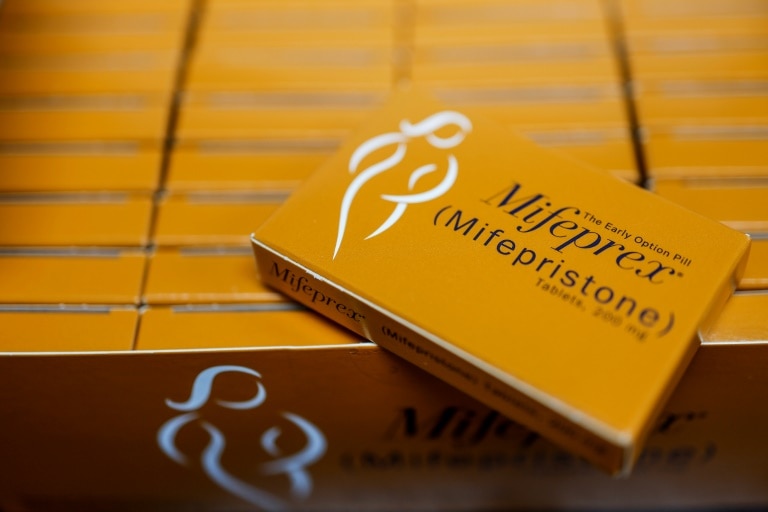
    In a move that reignites the decades-long national debate over abortion access in the United States, a federal appeals court imposed a temporary suspension on mail and pharmacy delivery of mifepristone Friday, the medication that accounts for the majority of abortion procedures across the country. The order came in a lawsuit filed against the U.S. Food and Drug Administration (FDA) by the state of Louisiana, a southern U.S. state with some of the nation’s most restrictive anti-abortion policies.

    The ruling came from a three-judge panel of the conservative-majority 5th Circuit Court of Appeals. It reverses an earlier lower court decision that permitted mail delivery of the drug to continue while the FDA undertakes a review of its existing regulatory framework for mifepristone. Under the new order, any person seeking mifepristone anywhere in the U.S. must obtain the drug in person from a licensed health clinic, eliminating all options for delivery by post or commercial pharmacy.

    Supporters of tighter restrictions on mifepristone have centered their arguments on a non-peer-reviewed study conducted by a conservative think tank, which was released via a public website rather than a peer-reviewed scientific journal. The FDA first granted formal approval to mifepristone, which is sold under the brand name Mifeprex, back in 2000. Today, it is the most widely used method of abortion care in the U.S., and it is also a standard treatment for managing early-stage pregnancy loss.

    In clinical use, mifepristone works by halting the progression of a pregnancy, and it is paired with a second medication, misoprostol, which expels the uterine lining. Together, the two drugs are approved by the FDA for terminating pregnancies up to 10 weeks (70 days) of gestation.

    Louisiana Attorney General Liz Murrill, a leading opponent of abortion access, celebrated the court’s decision, framing it as what she called a “Victory for Life!” In a statement following the ruling, Murrill claimed the Biden administration had facilitated what she labeled an “abortion cartel” that caused “the deaths of thousands of Louisiana babies (and millions in other states) through illegal mail-order abortion pills,” adding that “today, that nightmare is over.”

    But abortion rights advocates have sharply condemned the ruling, which is already on track to be appealed to the U.S. Supreme Court. Nancy Northup, president and CEO of the Center for Reproductive Rights, called the order politically motivated rather than evidence-based. “This isn’t about science — it’s about making abortion as difficult, expensive, and unreachable as possible,” Northup said in an official statement.

    Julia Kaye, an attorney with the American Civil Liberties Union (ACLU), emphasized that the decision creates unnecessary barriers to a medication that has been used safely by both abortion patients and people experiencing miscarriage for more than two and a half decades. “Anti-abortion politicians have just made it much harder for people everywhere in the country to get a medication that abortion and miscarriage patients have been safely using for more than 25 years,” Kaye noted.

    The latest legal development comes amid a sweeping shift in U.S. abortion policy that followed the Supreme Court’s 2022 decision to overturn Roe v. Wade, the landmark 1973 ruling that had enshrined a constitutional right to abortion nationwide for 50 years. Since that 2022 ruling, roughly 20 states have implemented full or partial bans on abortion care. Despite aggressive pushes from conservative groups to outlaw or severely limit abortion, consistent public opinion polling shows a majority of U.S. adults support maintaining widespread access to safe, legal abortion.

    Most recently, in 2024, the U.S. Supreme Court dismissed a separate challenge to mifepristone access, ruling that anti-abortion groups and physicians who brought the suit lacked the legal standing required to challenge the FDA’s approval of the drug.