标签: Oceania

大洋洲

  • Warning over Iran war’s impact on soft plastics supply

    Warning over Iran war’s impact on soft plastics supply

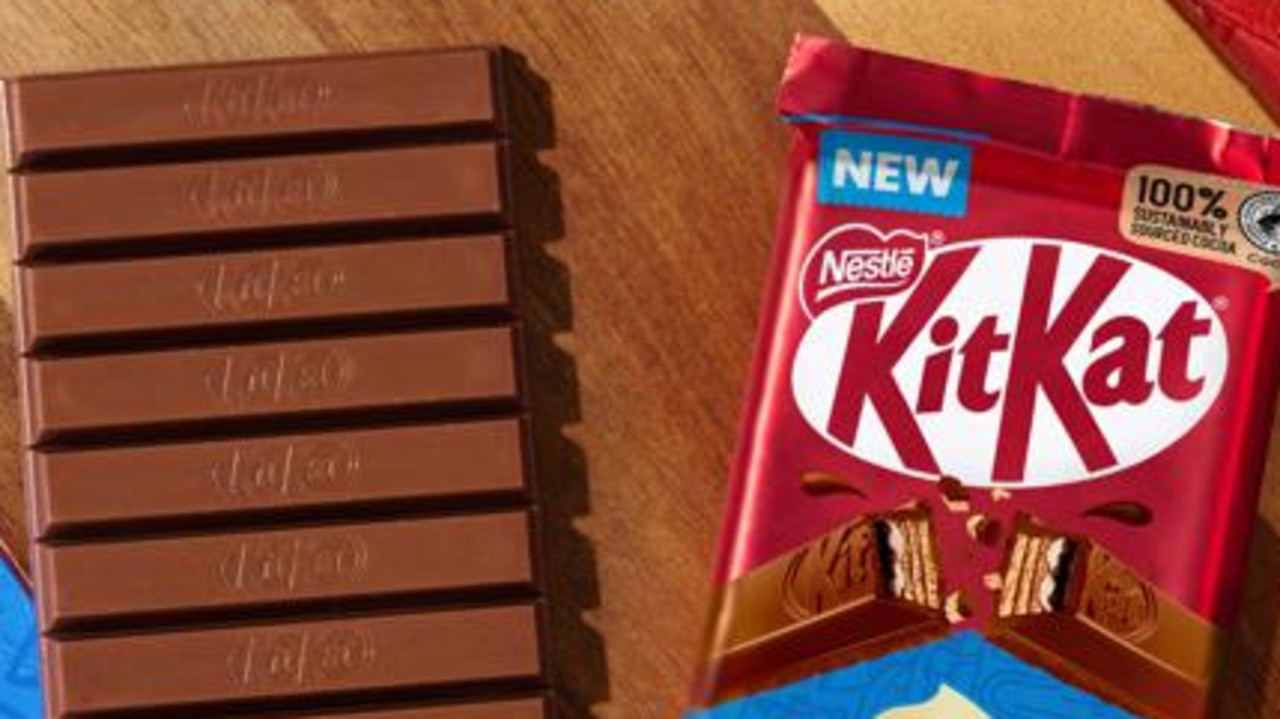
    As geopolitical tensions between the United States and Iran continue to simmer in the Middle East, one of the world’s largest food and confectionery manufacturers has issued a stark warning for Australian consumers: the ongoing conflict could soon upend supply chains for key packaging materials, driving up costs for beloved treats from KitKat to Allen’s Lollies.

    Andrew Lawrey, General Manager of Confectionery and Snacks for Nestlé Oceania, told local media that while the company’s current packaging stockpiles remain stable for now, a prolonged escalation of regional conflict would put unprecedented strain on global supply chains for food-grade soft plastic resins – the core material used to wrap the vast majority of Nestlé’s confectionery, snack and coffee products sold across Australia. The multinational food giant holds a dominant position in Australia’s sweet treats market, with household brand names including the iconic KitKat chocolate bar, Allen’s popular line of gummy and boiled lollies, and the Nescafé coffee range.

    Lawrey explained that global commodity markets, including the petrochemical sector that produces plastic resins, are already facing growing disruption from Middle East unrest. He projected that significant supply shortages and price volatility for these key packaging inputs are likely to emerge in the coming months if hostilities continue. “The Middle East is creating disruption all across all supply chains and some resins that are used to manufacture soft plastics, particularly food grade plastic, are going to be heavily impacted in the coming months,” he said in an interview with *The Australian*.

    Beyond the immediate warning of supply-side pressure, Lawrey used the moment to underscore a long-term policy push for Australia to develop a domestic circular economy for soft plastics. He noted that the country already has both the access to recycled soft plastic material and the technological infrastructure needed to build a robust domestic recycling system. Bringing industry stakeholders and federal and state governments together to scale this system, he argued, would drastically cut Australia’s reliance on imported plastic resins and insulate local food manufacturers from global geopolitical shocks. “I think the reality is we have the technology, we have the abundance of the soft plastic resource, and if we get industry and government working together, there is an opportunity for a truly circular recycling system that would absolutely and fundamentally change our reliance on our net import situation,” he added.

    As for the near-term outlook for consumers, Lawrey confirmed that any major supply squeeze or price spike for resin inputs would eventually lead to higher retail prices for confectionery products across the country. If resin costs increase by the same 15 to 20 percent margin that global fuel prices have seen in recent volatility, those higher costs would be passed on to supplier partners and eventually consumers, he explained. The Nestlé executive emphasized that product price increases are the company’s last resort, and that the firm plans to absorb extra costs in the short term. But he added that the final outcome will depend entirely on how long the geopolitical instability in the Middle East continues, leaving long-term cost projections uncertain.
  • Israel court extends detention of two Gaza flotilla activists

    Israel court extends detention of two Gaza flotilla activists

    In a development that has reignited international debate over Israel’s blockade of Gaza and the treatment of humanitarian aid activists, an Israeli court ruled Sunday to extend by two days the pre-questioning detention of two foreign activists intercepted while sailing toward the blockaded Palestinian enclave. The two men — Spanish national Saif Abu Keshek and Brazilian activist Thiago Avila — are part of a larger humanitarian flotilla organized to break Israel’s 17-year blockade of Gaza and deliver urgently needed supplies to the war-ravaged territory, which has faced catastrophic shortages of food, medicine, and other critical goods during the ongoing Gaza conflict.

    The flotilla, comprising more than 50 vessels that departed from ports in France, Spain, and Italy, was intercepted by Israeli military forces in international waters off the coast of Greece in the early hours of Thursday. Following the interception, Israel removed roughly 175 activists from the flotilla, detaining only Abu Keshek and Avila for further questioning and transferring them to Israeli territory.

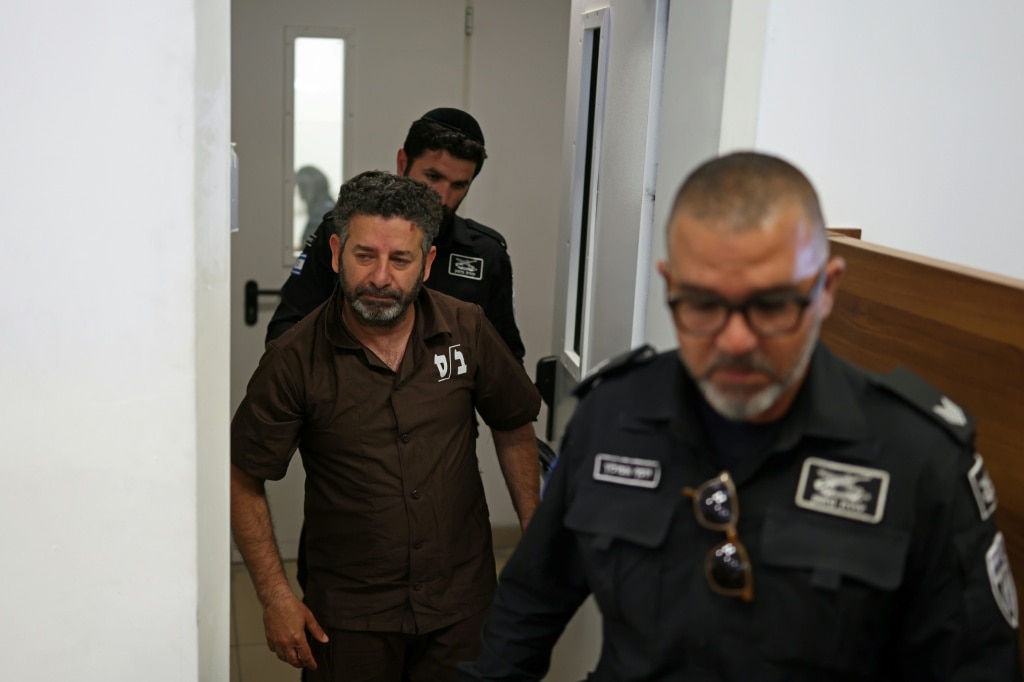
    Footage captured by Agence France-Presse (AFP) showed the pair being escorted into the courtroom in the southern Israeli city of Ashkelon: Avila was led into the building with his hands secured behind his back, while Abu Keshek’s ankles were bound in shackles. Miriam Azem, international advocacy coordinator for Adalah — the Israeli rights group representing the two activists — confirmed to AFP that the court granted the state’s request for a 48-hour detention extension.

    Israeli prosecutors presented a list of serious allegations against the two men, including charges of “assisting the enemy during wartime” and “membership in and providing services to a terrorist organization.” Israel’s foreign ministry further claims the activists are affiliated with the Popular Conference for Palestinians Abroad (PCPA), a group the United States has accused of operating clandestinely on behalf of Hamas, the Palestinian militant group governing Gaza. The ministry identified Abu Keshek as a leading PCPA member and Avila as a linked individual suspected of unspecified illegal activity.

    Adalah’s legal team has pushed back forcefully against the proceedings, first challenging the Israeli court’s jurisdiction over the pair. The lawyers argue the detention amounts to an “unlawful abduction” that took place outside Israeli territorial waters, making any legal process against the men illegitimate. Beyond the jurisdiction dispute, the defense has detailed grave allegations of abuse inflicted on the two activists following their capture. In testimony presented to the court, Avila and Abu Keshek described being subjected to what they called “severe physical abuse amounting to torture” during their transit to Israel. Adalah lawyers said Avila specifically recounted being dragged face-down across the deck of a vessel after interception, beaten so severely that he lost consciousness twice. Abu Keshek, the group added, was kept hand-tied and blindfolded, forced to lie face-down on the floor continuously from the moment of his capture until he arrived in Israel.

    Israeli officials have categorically denied all allegations of abuse. “Contrary to the false and baseless claims prepared in advance, at no point were Saif Abu Keshek and Thiago Ávila subjected to torture,” foreign ministry spokesman Oren Marmorstein told AFP. Marmorstein acknowledged that Israeli personnel used force against the pair, but framed the action as a response to resistance: “Following violent physical obstruction by Saif Abu Keshek and Thiago Ávila against Israeli staff members, staff were compelled to act in order to stop these actions. All measures taken were in accordance with the law.” As of Sunday, no formal charges have been filed against either activist, who are currently being held at Ashkelon’s Shikma Prison.

    Defense lawyers reiterated after Sunday’s hearing that the two men were part of a purely humanitarian mission, with no ties to any militant group. “We argued that … they were part of a humanitarian mission that aimed to provide humanitarian aid to the civilians in Gaza, and not to any other organisation, whether terrorist or not,” Hadeel Abu Salih, one of the Adalah lawyers representing the pair, told reporters. “We deny all the accusations that were presented… and demand these two men be released immediately.”

    The Spanish government has already joined the call for Abu Keshek’s release, issuing a formal statement to AFP demanding his “immediate release” and confirming that a Spanish consul attended Sunday’s court hearing to accompany the activist. This is not the first high-profile interception of the Global Sumud Flotilla, the organization behind the initiative: the group’s first voyage to Gaza last year also drew international headlines after it was intercepted by Israeli forces, with dozens of activists — including prominent climate campaigner Greta Thunberg — arrested and expelled. Avila was one of the lead organizers of that 2023 voyage.

    Israel has maintained strict land, air, and sea control over all entry points to Gaza since imposing its blockade on the territory in 2007. During the 11-month Gaza war, the enclave’s 2.2 million residents have faced extreme shortages of life-saving aid, with Israel repeatedly halting aid convoys entirely amid military operations, drawing widespread condemnation from international humanitarian groups.

  • Massive search continues for two missing US soldiers in Morocco

    Massive search continues for two missing US soldiers in Morocco

    A large-scale coordinated search operation involving American, Moroccan and allied military forces is entering its second day for two U.S. Army soldiers who went missing during a routine training deployment in southern Morocco, U.S. defense officials confirmed to Agence France-Presse on Sunday.

    The service members disappeared from the Cap Draa Training Area late Saturday, and were last located near rugged seaside cliffs. Initial investigations have ruled out any connection to terrorist activity, pointing instead to a tragic accidental incident. According to early assessments, the pair likely fell into the Atlantic Ocean after going off-trail in the coastal area.

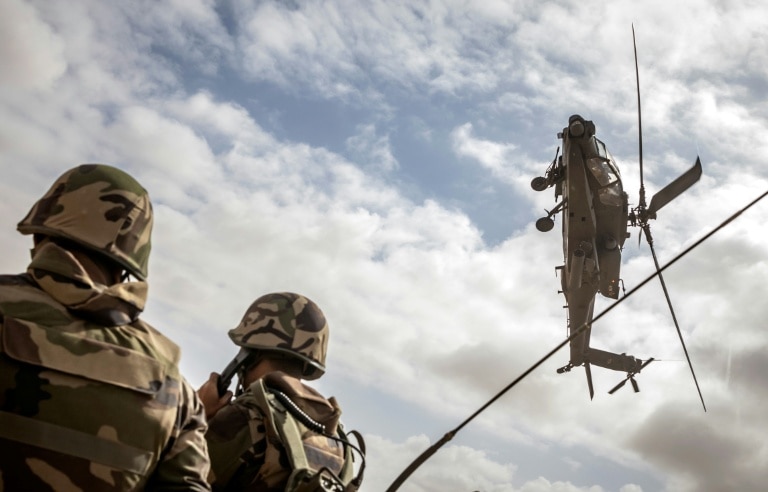
    Multiple unofficial reports have added context to the disappearance: The Wall Street Journal cites U.S. officials stating the soldiers had embarked on an unsanctioned hike following the conclusion of scheduled training activities, though AFP has not been able to independently verify this detail. A CBS News reporter embedded with the exercise noted that military helicopters conducted searches continuously through the night and into Sunday morning, after a base-wide headcount shortly after training finished revealed the two soldiers were unaccounted for.

    Morocco’s armed forces publicly confirmed their participation in the search via an official Facebook post, and U.S. defense officials detailed the extensive resources deployed to locate the missing pair. The search effort combines land, air and sea assets, including multiple military helicopters, surface vessels, uncrewed reconnaissance drones, specialized mountain rescue teams, and diving units to comb the coastal waters below the cliffs. As of 8 p.m. GMT Sunday, search operations remained actively ongoing.

    The soldiers were in Morocco to participate in African Lion, the largest annual joint military exercise organized by U.S. Africa Command. Hosted annually across Morocco, Ghana, Senegal and Tunisia, the exercise brings together more than 10,000 military personnel from over 20 nations, including NATO allies and partner forces across North and West Africa, for coordinated training drills focused on regional security and interoperability.

    The Cap Draa Training Area has been the site of past training fatalities involving U.S. personnel during African Lion. In 2012, two U.S. Marines died and two others were injured when their aircraft crashed in the same region during that year’s iteration of the exercise.

  • Man Utd beat Liverpool, Spurs climb out of relegation zone

    Man Utd beat Liverpool, Spurs climb out of relegation zone

    On a tense, history-charged Sunday of English Premier League action, two of the league’s most storied clubs delivered the high-stakes results their seasons have hinged on: Kobbie Mainoo’s clinical late strike earned Manchester United a thrilling 3-2 victory over Liverpool, securing the Red Devils a return to UEFA Champions League football after a two-year absence, while Tottenham Hotspur grabbed a vital 2-1 away win over Aston Villa to climb out of the relegation zone with just three matches remaining in the campaign. The Old Trafford clash carried extra emotion before kickoff, when news broke that legendary former United manager Alex Ferguson had been admitted to hospital as a precautionary measure after falling ill – a development that hung over the fixture as both sides took to the pitch.

    United got off to a blistering start, netting twice inside the opening 15 minutes to put Liverpool on the back foot. Matheus Cunha’s strike from the edge of the 18-yard box took a deflection that wrong-footed Liverpool’s third-choice goalkeeper Freddie Woodman, opening the scoring for the hosts. Just minutes later, Benjamin Sesko bundled the ball over the line from close range to double United’s advantage, leaving Arne Slot’s out-of-sorts Liverpool side reeling. Liverpool, already missing key attacking trio Mohamed Salah, Hugo Ekitike and Alexander Isak through injury, looked set for a heavy defeat by halftime, with United squandering multiple chances to extend their lead further.

    But costly mistakes from United handed Liverpool a route back into the contest, turning the match on its head early in the second half. Just two minutes after the restart, Dominik Szoboszlai capitalized on a wayward pass from Amad Diallo, driving the length of the pitch from inside his own half to slot home and cut United’s lead in half. Twenty minutes later, another stray pass – this time from United goalkeeper Senne Lammens – let Szoboszlai set up Cody Gakpo to level the scores, setting the stage for a grandstand finish.

    The moment of heroism belonged to 19-year-old Kobbie Mainoo, who signed a new five-year contract with United just this week. With 13 minutes left to play, the young midfielder coolly slotted a precise effort from outside the penalty area past Woodman to put United back in front, securing the full three points that guarantee Champions League football at Old Trafford next season. The result has only strengthened calls for interim manager Michael Carrick to take the role permanently ahead of the new campaign. Speaking after the match, Carrick said: “I love doing what I’m doing and it’s a great position for me to be in. It feels pretty natural if I’m totally honest.”

    The turnaround is staggering when compared to the two sides’ form last term, when Liverpool finished 14 positions and 42 points clear of United. This season, Slot’s side now sit six points behind their historic rivals, and still need positive results in their final three matches to lock in a top-five finish.

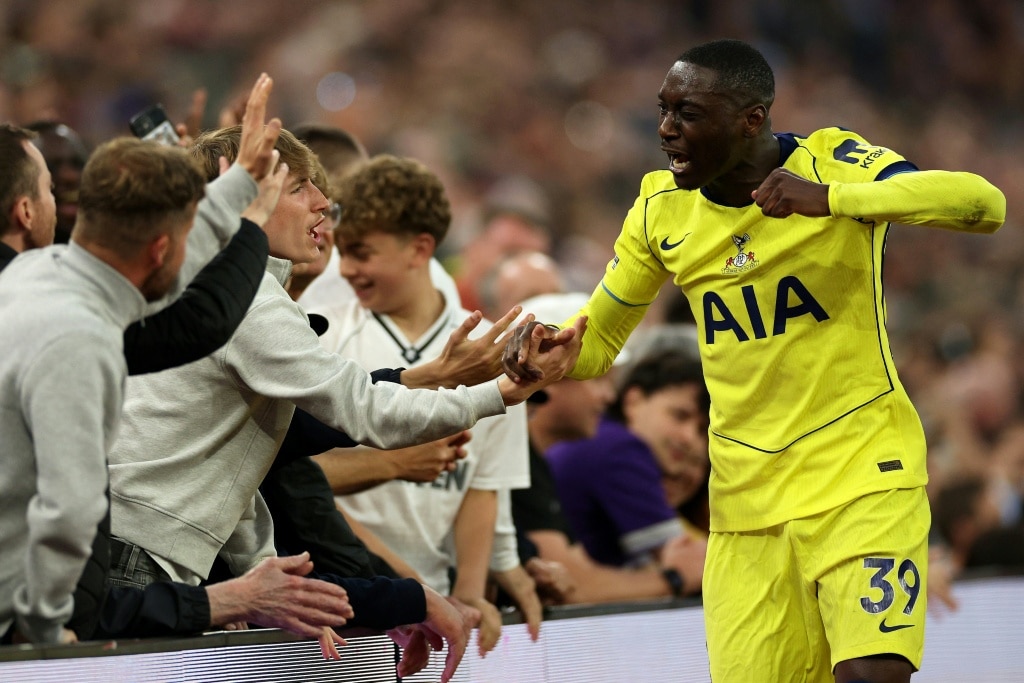
    Away from the Manchester-Liverpool blockbuster, Tottenham Hotspur pulled off a survival-defining win at Villa Park that moves them out of the relegation zone. Heading into the match, Spurs had gone 118 days without a Premier League win before their scrappy 1-0 victory over already-relegated Wolves the previous weekend. Their second consecutive win has flipped the script on the relegation battle, dropping West Ham United into the bottom three with three games left to play.

    Aston Villa manager Unai Emery made seven changes to his starting lineup, prioritizing his side’s upcoming Europa League semi-final second leg against Nottingham Forest, where Villa hold a 1-0 first-leg deficit to overturn. Tottenham took full advantage of the rotated side, with Conor Gallagher firing home his first goal for the club since joining from Atletico Madrid in the January transfer window. Richarlison doubled Spurs’ lead in the 25th minute, nodding home a teasing cross from Mathys Tel. De Zerbi’s side was rarely tested by an under-strength Villa, even after Emery brought star striker Ollie Watkins off the bench to turn the tide. Emi Buendia grabbed a late consolation goal in stoppage time, but Spurs held on to move one point clear of West Ham in the survival battle.

    Elsewhere, Bournemouth extended their remarkable unbeaten run to 15 matches with a 3-0 thrashing of Crystal Palace, closing the gap to the top of the table to just six points. The Cherries got all three goals from a Jefferson Lerma own goal, a second-half penalty from Eli Junior Kroupi and a late strike from Rayan, rounding out a dramatic day of Premier League action.

  • ‘Huge coup’: Titans pull off cross-code heist to sign sevens star Teagan Levi for 2026 NRLW season

    ‘Huge coup’: Titans pull off cross-code heist to sign sevens star Teagan Levi for 2026 NRLW season

    For years, Rugby Australia has built its program by poaching top talent from rugby league, but now the Gold Coast Titans have landed a high-profile signature of their own, pulling off a major cross-code recruiting victory by securing Teagan Levi for the 2026 NRLW season.

    The deal marks the end of a months-long pursuit that initially fell through. Earlier this year, both Teagan and her sister, star try-scorer Maddison Levi, were heavily linked with a switch to the NRLW, before the pair ultimately signed contract extensions with Rugby Australia keeping them tied to the Australian national sevens program through 2028. Despite that outcome, the Titans never abandoned their pursuit, and have now confirmed Teagan will join the club ahead of the 2026 season, while retaining her Olympic sevens commitments ahead of the 2028 Los Angeles Games.

    A six-year veteran of the Australian sevens circuit and a 2022 Commonwealth Games gold medalist, Levi brings elite-level big-game experience to a Titans side hungry to make history in the NRLW. For the playmaker, the move is a homecoming: based on the Gold Coast, she will get the chance to compete in front of family and friends for the first time in her professional career, while balancing her dual sevens and league commitments after working through logistics with Titans head coach Karyn Murphy.

    “This opportunity lets me step outside my comfort zone and keep growing as an athlete and a person, and I can’t wait to do it in front of the people who supported me from the start,” Levi said of the signing. “A switch to league has always been something I wanted to pursue, but I refused to sign unless I could give 100% to Murph and this entire group. At first, it looked like balancing my Rugby Australia duties would make that impossible, but after sitting down to work through every detail, we found a path that lets me give this team my full focus.”

    Levi added that the chance to help the Titans claim their first ever NRLW premiership – the first top-flight title for the Gold Coast region – is a huge motivation for her upcoming debut. “I’ve never gotten to represent the Gold Coast at the professional level before. To be able to do that, and help bring the first premiership to this region, that’s an honor, and I’m so hungry to get it done this year.”

    The rugby league heritage runs deep in Levi’s family: her father Jason Levi represented the Manly Sea Eagles in the 1990s, a connection that Coach Murphy says gives Levi an innate understanding of the 13-man code. The Titans will open their 2026 NRLW campaign against the Sydney Roosters on July 4, and Murphy says Levi’s elite track record will be a massive boost to the club’s title chances.

    “Bringing Teagan home to the Gold Coast for the 2026 season is a massive win for our club,” Murphy said. “She’s competed on the world stage for Australia in the biggest tournaments for years, and that big-match experience and background in high-performance environments is going to be invaluable for our whole squad. She’s already racked up incredible achievements at such a young point in her career, and we’re so excited to see what she can bring to our team. We’re committed to supporting her as she continues to develop her game across both codes. She has such a hunger to learn, and rugby league is in her DNA – we can’t wait to get to work with her in pre-season ahead of round one.”

  • Inter Milan win Italian title for third time in six seasons

    Inter Milan win Italian title for third time in six seasons

    In a jubilant celebration at the iconic San Siro stadium on Sunday, Inter Milan locked in their 21st Serie A championship, marking the club’s third top-flight Italian title across just six seasons. The milestone came via a confident 2-0 victory over Parma, putting the Scudetto out of reach for competitors with three regular-season matches still remaining on the calendar.\n\nIt was Marcus Thuram who got the title charge off to a ideal start, netting a composed side-footed finish on the stroke of halftime to break the deadlock. Second-half substitute Henrikh Mkhitaryan doubled Inter’s lead just after the break, erasing any lingering doubt about the final outcome and triggering wild celebrations among the sold-out home crowd.\n\nWith the full-time whistle blown, Inter hold an unassailable 12-point lead over 2023-24 title holders Napoli, while third-placed city rivals AC Milan sit a full 15 points adrift of the new champions. This triumph caps a remarkable redemption arc for the club, coming less than 12 months after a devastating 2023-24 campaign that saw Inter miss out on the title by a single point and suffer a crushing 5-0 defeat to Paris Saint-Germain in the UEFA Champions League final.\n\nMuch of the credit for the rapid turnaround goes to first-year head coach Cristian Chivu, a former Inter player who was a surprise appointment last June. Chivu stepped into the role after former boss Simone Inzaghi — who delivered six trophies and two Champions League final appearances across four seasons in charge — departed for a lucrative coaching role in Saudi Arabia’s domestic league. When Chivu took over, he was widely considered a novice at the top-tier head coaching level, but the 44-year-old has systematically rebuilt the squad’s confidence and tactical structure, breathing new energy into the side through steady, incremental improvements.\n\nThe Serie A crown is already a historic achievement for Inter, but the club still has a chance to add another chapter to this successful season. On May 13, Inter will face Lazio in the Coppa Italia final at Rome’s Stadio Olimpico, where a win would deliver the third league-and-cup double in the club’s long history.

  • Anti-Semitism royal commission begins hearings months after 15  killed in alleged Bondi terror attack

    Anti-Semitism royal commission begins hearings months after 15 killed in alleged Bondi terror attack

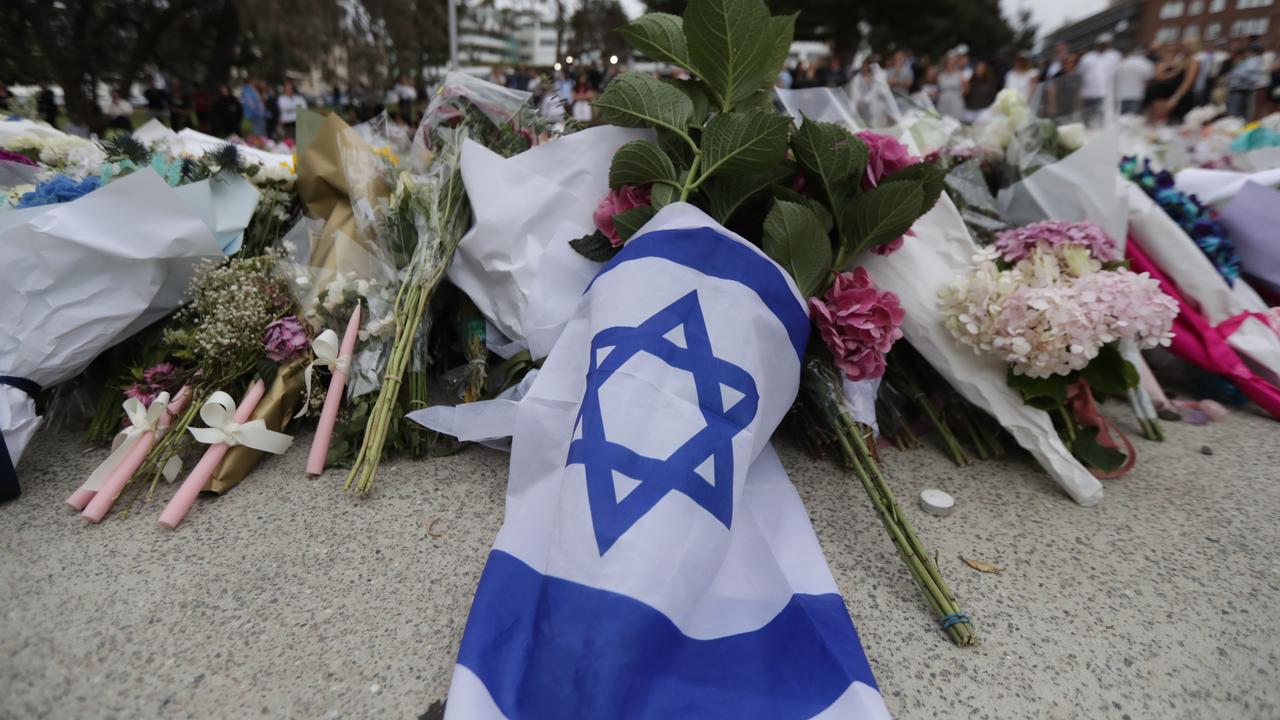
    Sydney, Australia – The first round of public hearings for Australia’s Royal Commission on Anti-Semitism and Social Cohesion is set to get underway Monday in Sydney’s central business district, launching a historic national inquiry that will center Jewish Australian voices and their firsthand accounts of rising anti-Jewish hatred across the country. The inquiry was called in the wake of a devastating December 2025 terror attack at a Bondi Beach Chanukah celebration that left 15 people dead, and a sharp nationwide uptick in anti-Semitic incidents following the October 7 2024 Hamas attacks in Israel.

    The attack, which targeted the annual Chanukah By The Sea gathering, unfolded when Naveed Akram and his father Sajid allegedly opened fire on attendees, killing 15 people and wounding dozens more. Sajid Akram was fatally shot by responding police, while Naveed Akram has not yet entered pleas to 59 criminal charges, including 40 counts of attempted murder. Australian authorities allege the pair were radicalized and inspired by the extremist group ISIS, marking one of the deadliest anti-Semitic attacks in the nation’s modern history.

    Pressure on the federal Albanese government to launch a sweeping public inquiry built steadily in the weeks following the attack, after the government initially commissioned a classified internal review of security agency performance led by former Australian Security Intelligence Organisation director Dennis Richardson. Prime Minister Anthony Albanese announced the royal commission on January 8, 25 days after the attack, reversing the government’s earlier position to meet demands from the Australian Jewish community for a transparent, public examination of systemic gaps in addressing anti-Semitism.

    “I’ve listened, and in a democracy, that’s a good thing to listen to what people are saying,” Albanese told reporters at the time of the announcement. “I’ve taken the time to reflect, to meet with leaders in the Jewish community, and most importantly, I’ve met with many of the families of victims and survivors of that horrific attack. It’s clear to me that a royal commission is essential to achieving this.”

    Presided over by royal commissioner Virginia Bell, the opening two-week block of hearings will focus on core foundational questions: how anti-Semitism is defined in the Australian context, its current prevalence across Australian society and public institutions, and how best to measure the scope of the problem. Over the course of the hearings, dozens of witnesses will testify, including community leaders and everyday Jewish Australians who will share their lived experiences of anti-Semitic harassment, discrimination, and violence.

    Peter Wertheim, co-chief executive of the Executive Council of Australian Jewry, described the inquiry as the most significant national examination of anti-Semitism in Australia’s history. “Over the next fortnight, the country will hear from the people who lead our community alongside ordinary Australians who have lived through what happens when words of hatred go unchallenged long enough that they stop being only words,” Wertheim said in a statement. “The Jewish community is approaching this as Australians asking Australian institutions to look honestly at what has happened in this country and what needs to change.”

    Due to limited capacity at the Sydney CBD hearing venue, public attendance will be restricted, and the proceedings will be streamed live for audiences around the country to access remotely.

    The opening of public hearings comes just days after Bell released an interim report containing 14 urgent recommendations to address immediate gaps in anti-Semitism protection and counter-terrorism preparedness, all of which Albanese has pledged to fully implement. Five of the recommendations remain classified for national security reasons, but public measures include boosting security resourcing for Jewish High Holy Days and major Jewish festivals, strengthening cross-agency counter-terrorism information sharing between federal and state governments, upgrading national gun control regulations, and prioritizing a national gun buyback program to update the outdated national firearms agreement. Bell also called for the commonwealth counter-terrorism coordinator role to be converted to a full-time position, and mandated that the prime minister and all National Security Committee ministers participate in counter-terrorism exercises within nine months of every federal election.

    Albanese has committed to responding swiftly to the interim recommendations. The royal commission will ultimately examine four core mandate areas over the course of its inquiry: mapping the nature, prevalence, and root drivers of anti-Semitism across Australian society and institutions, including ideologically and religiously motivated extremism; advising law enforcement, border control, and security agencies on policy and operational changes to counter anti-Semitic violence and hatred; investigating the full circumstances of the December 14 2025 Bondi Beach attack; and proposing broader reforms to strengthen national social cohesion and counter the spread of violent extremist ideology across the country.

    “A Royal Commission is not the beginning or the end of what Australia must do to eradicate anti-Semitism, protect ourselves from terrorism or strengthen our social cohesion,” Albanese said when announcing the inquiry. “That is an ongoing national effort, for all of us. Because an attack on Jewish Australians is an attack on all Australians.”

    The royal commission’s final report, including full findings and long-term policy recommendations, is scheduled to be delivered to the government on December 14 2026, marking the one-year anniversary of the Bondi Beach atrocity.

  • Rubio to visit Rome, meet Pope Leo after Trump row

    Rubio to visit Rome, meet Pope Leo after Trump row

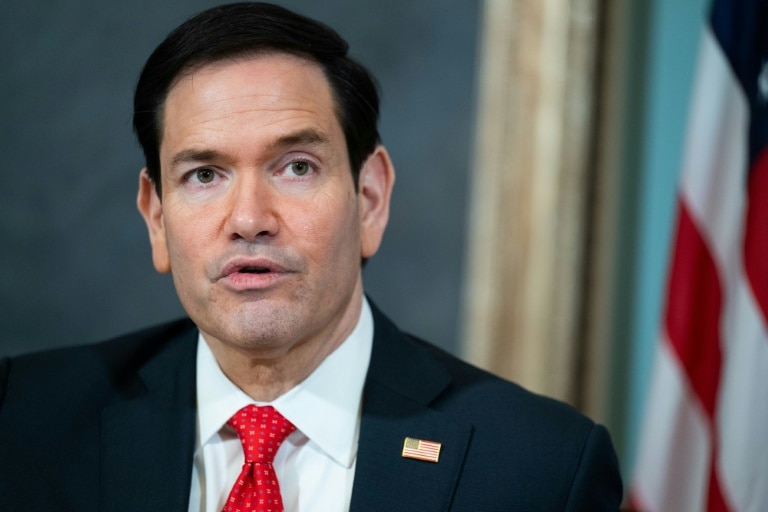
    Weeks after a high-profile public clash between U.S. President Donald Trump and Pope Leo XIV exposed deep rifts in U.S.-Vatican relations and strained transatlantic alliances, U.S. Secretary of State Marco Rubio is scheduled to travel to Rome this week for a planned meeting with the pontiff, a senior Vatican source confirmed to AFP on Sunday.

    The planned gathering, first reported by Italian media outlets, is set to take place Thursday with the explicit goal of de-escalating tensions between the White House and the Holy See, according to local newspaper coverage. The meeting comes just ahead of a key milestone for Pope Leo, who will mark one year in office as the head of the global Catholic Church this Friday. Elected by the College of Cardinals on May 8, 2025 following the passing of Pope Francis, the 70-year-old Leo made history as the first American-born pope in the Church’s 2,000-year history.

    His unique origin has positioned his statements to carry unusual weight in U.S. political discourse, a platform he has not shied away from using: he has previously criticized the Trump administration’s hardline immigration policies, but it was his sharp anti-war rhetoric in the wake of U.S.-Israeli strikes on Iran that triggered Trump’s fierce public backlash. Leo drew Trump’s wrath after calling the president’s open threat to destroy Iran “unacceptable” and urging U.S. citizens to pressure their elected representatives to prioritize diplomatic peace efforts.

    Trump responded with a blistering social media post attacking the pope as “WEAK on Crime, and terrible for Foreign Policy”, adding that he was “not a big fan of Pope Leo” and falsely claiming the pontiff supported Iran acquiring nuclear weapons. Leo countered that he held a “moral duty to speak out” against war, and later made headlines with a speech in Cameroon that condemned “tyrants” for destabilizing the global order. The pope later clarified the speech had been written months before the public row, and he had no intention of reigniting conflict with Trump.

    Global Christian communities quickly voiced solidarity with Pope Leo, and the backlash extended to Italian Prime Minister Giorgia Meloni, one of Trump’s closest European allies. When Meloni called Trump’s criticism of the pope “unacceptable”, the U.S. president turned his ire on her, attacking her in an interview with Italian daily Corriere della Sera. Trump said he was “shocked at her. I thought she had courage, but I was wrong”, and accused the far-right Italian leader, who has long positioned herself as a bridge between competing U.S. and European interests, of failing to support the U.S. within NATO.

    Trump has gone even further, threatening to withdraw all U.S. troops from Italy, claiming Rome has “not been of any help to us” in the Iran conflict. He has issued identical threats against Spain, and the Pentagon has already formally announced it will withdraw 5,000 U.S. troops from Germany. As of the end of 2025, the U.S. maintains 12,662 active-duty troops in Italy, 3,814 in Spain, and 36,436 in Germany, according to official data.

    Alongside his planned meeting with Pope Leo, Rubio is scheduled to hold talks with Vatican Secretary of State Pietro Parolin and Italian Foreign Minister Antonio Tajani. The U.S. secretary of state had previously requested a meeting with Meloni, but that gathering will not go forward following Trump’s break with the Italian prime minister, the source confirmed. Additional media reports also indicate Rubio will meet Italian Defense Minister Guido Crosetto, as divisions over the Middle East war continue to deepen long-running frictions across transatlantic ties.

  • Kyiv hits Russian oil sites as eight killed in both countries

    Kyiv hits Russian oil sites as eight killed in both countries

    Four years into Russia’s full-scale invasion of Ukraine, cross-border drone attacks have escalated sharply over the weekend, leaving at least eight people dead across both countries and marking one of the largest daily exchanges of unmanned strikes in the conflict. On Sunday, Ukrainian President Volodymyr Zelensky confirmed that Ukrainian forces had targeted key Russian maritime assets, including a Russian cruise missile carrier and three vessels belonging to Moscow’s shadow fleet of sanctioned oil tankers.

    Zelensky stated the missile-carrying vessel was hit at the Port of Primorsk, located in Russia’s northwestern Leningrad Region—an area that hosts critical Russian oil export terminals that have come under repeated Ukrainian attack in recent weeks. Past strikes on these facilities have sparked large-scale blazes that sent toxic black smoke plumes into the atmosphere, with Kyiv estimating the attacks have already cut off billions of dollars in Russia’s key oil export revenue. Of the three shadow tankers targeted, one was hit at Primorsk, while the other two were struck off Russia’s southern Black Sea port of Novorossiysk. Zelensky also released night-vision footage showing a Ukrainian naval drone approaching one of the tankers anchored off Novorossiysk to confirm the strike. Local Russian authorities in Leningrad Region confirmed a port fire following the Ukrainian attack, but have not released any details on the extent of damage to infrastructure or vessels.

    Shadow fleet tankers are aging, unregistered or under-documented vessels that Russia relies on to ship its crude oil to global markets after Western nations imposed sweeping price caps and trade sanctions on Russian energy exports following the 2022 invasion. Sunday’s strike marks a major escalation in Ukraine’s campaign to disrupt Russia’s energy revenue stream that funds its war effort.

    In a public statement on social media Sunday, Zelensky warned Moscow that Kyiv would expand retaliatory strikes on Russian energy infrastructure if Russia does not end its invasion. “Russia can end its war at any moment. Prolonging the war will only expand the scale of our defensive operations,” he said. Ukraine frames its strikes on Russian territory and energy assets as legitimate retaliation for ongoing Russian attacks on Ukrainian civilian infrastructure.

    The weekend exchange of drone fire was one of the largest single-day exchanges of unmanned attacks since the war began. Kyiv’s air force reported that Russia launched 268 drones and one ballistic missile at Ukrainian targets in the overnight barrage, while Russia’s Ministry of Defense claimed Ukraine launched 334 drones targeting Russian territory over the same period.

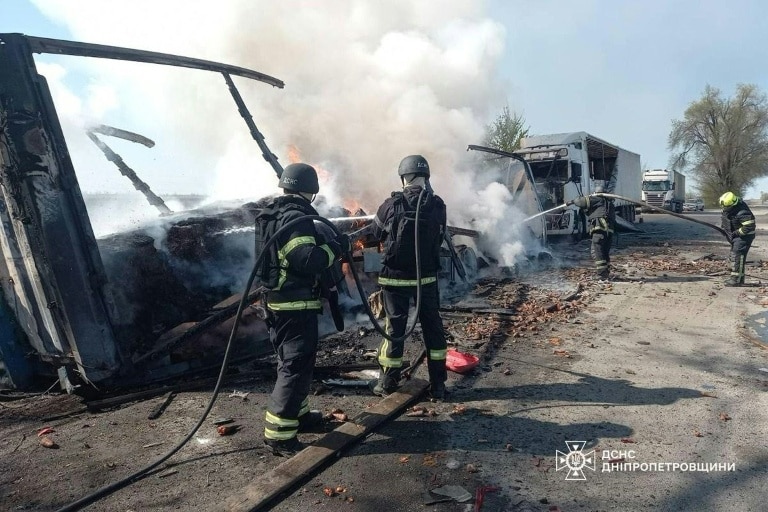
    Civilian casualties were reported on both sides. On Russian-controlled territory, two people were killed in the border region of Belgorod, one person was killed near Moscow, and a teenage civilian was killed in Russian-occupied southern Ukraine. On the Ukrainian side, two civilians died in attacks on the southern coastal Odesa Region, one was killed in the frontline Kherson Region, and another death was recorded in a strike on the major industrial city of Dnipro. Images released from Dnipro show the full roof of a five-story residential apartment building collapsed, with exposed wooden support beams and rubble scattered across the damaged top-floor units.

    Both sides have repeatedly denied intentionally targeting civilian populations. Since Russia launched its full-scale invasion in February 2022, tens of thousands of people have been killed, the vast majority of them Ukrainian civilians and soldiers. Data compiled by AFP from Ukrainian air force records shows that in April, Russia ramped up its long-range drone campaign to a record high, launching an average of more than 200 attack drones per day against Ukrainian targets. Diplomatic efforts to negotiate a ceasefire or end to the conflict have remained stalled for months, with neither side showing willingness to agree to major concessions to de-escalate the fighting.

  • Iran says US military operation ‘impossible’ as Trump mulls peace proposal

    Iran says US military operation ‘impossible’ as Trump mulls peace proposal

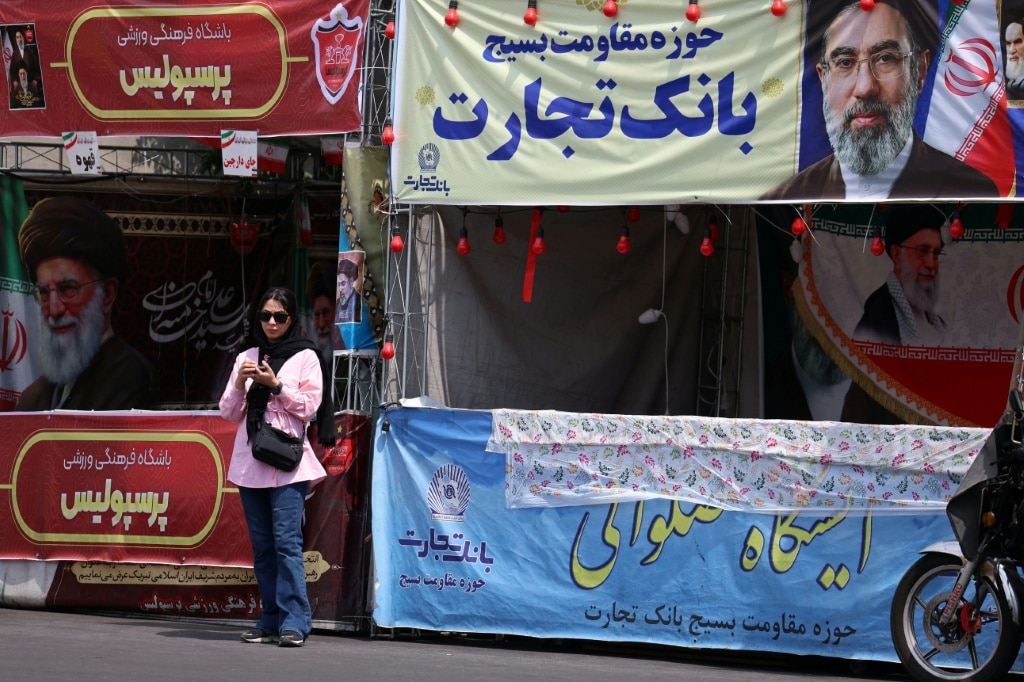
    Tensions between the United States and Iran have reached a new stalemate, with Tehran’s most powerful military force dismissing any large-scale US military operation as unfeasible, even as US President Donald Trump openly weighs military action against accepting Tehran’s new peace initiative.

    After weeks of frozen diplomatic progress following an April 8 ceasefire that has only produced one round of direct talks, Iran submitted a 14-point peace framework to mediator Pakistan earlier this month. The proposal, according to anonymous sources briefed on the text who spoke to US news outlet Axios, lays out a 30-day timeline for negotiations aimed at three core outcomes: reopening the strategically critical Strait of Hormuz, lifting the US naval blockade of Iranian ports, and bringing a permanent end to ongoing conflict across Iran and Lebanon.

    Trump, however, quickly cast doubt on the proposal in a post to his Truth Social platform, arguing the plan would almost certainly be unacceptable because he believes Iran has not paid sufficient accountability for what he framed as 47 years of harmful actions against the global community. “I will soon be reviewing the plan that Iran has just sent to us, but can’t imagine that it would be acceptable,” Trump wrote. He has publicly framed his policy options as binary: either launch devastating military strikes against Iran, or pursue a negotiated settlement.

    In a formal statement released Sunday, Iran’s Revolutionary Guards pushed back, shifting the decision-making burden back to the White House. They argued Trump now faces only two options: an impossible large-scale military campaign, or accept what they called a bad deal with the Islamic Republic. “The room for US decision-making has narrowed,” the statement read.

    Iran’s senior diplomatic leadership echoed this framing a day earlier. Deputy Foreign Minister Kazem Gharibabadi told international diplomats in Tehran that the US now holds the responsibility to choose between diplomatic dialogue or sustained confrontation, adding that Tehran is fully prepared for either outcome.

    Trump, speaking to reporters during a stop in West Palm Beach, Florida Saturday, declined to outline specific triggers for new US military action, but did not rule it out. “If they misbehave, if they do something bad, but right now, we’ll see,” he said. “But it’s a possibility that could happen, certainly.”

    Hardline Iranian military figures have responded with aggressive rhetoric of their own. Mohsen Rezaei, a top military adviser to Iranian Supreme Leader Ali Khamenei, warned in a post to X that Iranian forces are fully capable of sinking US warships if attacked. “The US is the only pirate in the world that possesses aircraft carriers,” Rezaei wrote. “Our ability to confront pirates is no less than our ability to sink warships. Prepare to face a graveyard of your carriers and forces.” No US military vessels have been sunk by Iran during the current conflict, and no evidence supports a threat of such action to date.

    Diplomatic frictions have also flared over the issue of Iran’s nuclear program. Earlier this week, Axios reported that Trump’s special envoy Steve Witkoff has pushed to reinsert discussions of Iran’s nuclear activities into any new negotiation round. Iran’s permanent mission to the United Nations hit back Saturday, accusing Washington of blatant hypocrisy, pointing to the US’s own massive nuclear arsenal to criticize its restrictions on Tehran’s atomic program.

    The conflict has already reshaped global energy markets and inflicted severe economic pain on the Iranian people. Since the outbreak of war, Iran has controlled access to the Strait of Hormuz, a chokepoint through which roughly 20% of the world’s daily oil supplies pass, cutting off key global shipments of oil, natural gas, and agricultural fertilizer. The US has responded with a naval blockade of Iranian ports, and global crude oil prices have surged roughly 50% above pre-war levels.

    Iranian lawmakers are currently drafting legislation to formalize toll collection for vessels passing through the strait. Deputy parliamentary speaker Ali Nikzad announced that 30% of all collected tolls would be allocated to expanding military infrastructure, while the remaining 70% would go toward domestic economic development. “Managing the Strait of Hormuz is more important than acquiring nuclear weapons,” Nikzad said.

    For ordinary Iranians, the economic strain is growing steadily. US sanctions and the blockade have cut Iran’s oil exports dramatically, pushing national inflation past 50%. Amir, a 40-year-old resident of Tehran, spoke to AFP from outside the country, describing a population draining emergency savings to cope with the crisis. “Everyone is trying to endure it, but… they are falling apart,” he said. “We still have not seen much of the worst economic effects because everyone had a bit of savings. They had some gold and dollars for a rainy day. When they run out, things will change.”