标签: Oceania

大洋洲

  • Sinner, Sabalenka aim to stay hot at French Open

    Sinner, Sabalenka aim to stay hot at French Open

    The 2025 French Open at Roland Garros enters its second round of matches on Thursday, with the world’s top two male and female players gunning to secure their spots in the final 32 of the clay-court Grand Slam, bringing high stakes to the packed schedule under Paris’ unseasonably scorching skies.

    Leading the men’s draw is Italian world No. 1 Jannik Sinner, who arrives in Paris with unprecedented momentum heading into his quest for a first career French Open title and a completed career Grand Slam. Fresh off becoming only the second player in tennis history — after Novak Djokovic — to claim all three clay-court Masters 1000 titles, wrapping up a full set of nine 1000-level tournament trophies, Sinner has entered the tournament as the overwhelming favorite to lift the trophy.

    Sinner is already looking to improve on a standout 2024 Roland Garros run, where he pushed eventual champion Carlos Alcaraz to an epic five-set final before falling just short. This year, the path to the title is far clearer: Alcaraz, the defending champion, is sidelined with an injury, leaving few competitors capable of challenging Sinner’s red-hot form. He kicked off his 2025 campaign with a clinical first-round win under the lights on Court Philippe Chatrier on Tuesday, and will open Thursday’s main draw action on centre court against Argentina’s Juan Manuel Cerundolo, ranked 56th in the world. The pair have only met once before, a straight-sets win for Sinner in the opening round of Wimbledon three years ago.

    Addressing the ongoing heat wave that has dominated the opening week of the tournament, Sinner downplayed concerns over his ability to cope with soaring temperatures. “I’m happy to play night. I’m happy to play day, whenever they put me,” he said. “I think I handled the heat very well in Indian Wells, was very hot this year, so I didn’t have issues there. We prepared in a good way. Of course here, different heat, but the humidity is not as tough as maybe in Australia or US.”

    On the women’s side of the draw, world No. 1 Aryna Sabalenka will also take to Court Philippe Chatrier on Thursday seeking to lock in her third-round spot, but the Belarusian arrives in Paris after a shaky start to the European clay-court season. Fresh off a dominant Sunshine Double win at Indian Wells and Miami in March, Sabalenka has looked surprisingly vulnerable on red dirt this spring: she suffered a shock quarter-final exit to Hailey Baptiste in Madrid, followed by a third-round loss to Sorana Cirstea at the Italian Open. Sabalenka blamed unfavorable wet and cold conditions in Rome for her underperformance, and has had no such complaints about the Paris heat, which suits her aggressive power game.

    After a commanding straight-sets opening win over Jessica Bouzas Maneiro on Tuesday, the 28-year-old joked about the rapid shift in conditions: “I’d say that it was a bit warm. Especially compared to the first days when I first got here, it was… freezing. Now it’s boiling hot and balls are flying, everything is much faster. But physically I feel strong, so I feel like it can benefit me.” Scheduled as the third match on centre court, with temperatures again forecast to top 30°C, Sabalenka will face French wildcard Elsa Jacquemot, ranked 67th, and is heavily favored to advance.

    Thursday’s schedule also features a host of other top contenders seeking second-round wins. Defending women’s champion Coco Gauff, the American No. 4 seed, will take on Egyptian qualifier Mayar Sherif on Court Suzanne Lenglen. The 2020 Roland Garros debut marked the only time Gauff has been eliminated before the quarter-final stage here, when the 16-year-old Gauff fell to Martina Trevisan.

    Four-time Grand Slam winner Naomi Osaka of Japan will face Croatia’s Donna Vekic on Court Simonne Mathieu, while rising Canadian teen Victoria Mboko will test her skills against Czech Katerina Siniakova. American teen sensation Iva Jovic will go head-to-head with compatriot and former world No. 8 Emma Navarro, while Canada’s Felix Auger-Aliassime will look to avoid another grueling “roller-coaster” match like his opening-round thriller when he faces Argentina’s Roman Andres Burruchaga. American fifth seed Ben Shelton and French 17-year-old wildcard Moise Kouame will bookend the day’s play on Court Suzanne Lenglen, Roland Garros’ second-biggest showcourt.

  • Australian household spending plunges by most in three years as families tighten budgets

    Australian household spending plunges by most in three years as families tighten budgets

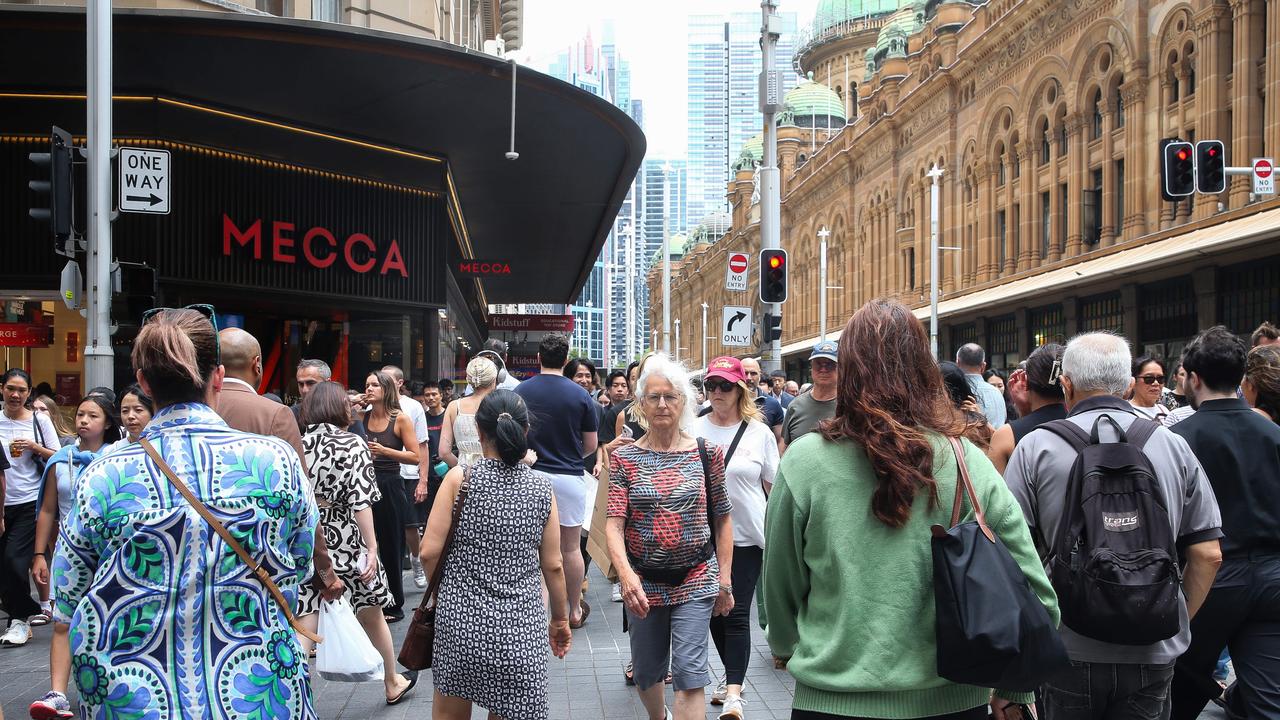
    In a surprising turn that underscores growing financial strain on Australian consumers, national household spending posted its sharpest decline in three years during April 2024, new data from the Australian Bureau of Statistics (ABS) reveals. The 1.1% month-on-month plunge follows a solid 1.6% expansion in March, with multiple overlapping factors — from temporary federal tax policy to the ongoing Middle East conflict and persistent cost-of-living challenges — combining to pull overall spending lower.

    The single largest contributor to the overall drop was a 4.7% collapse in transportation spending, a shift directly tied to the federal government’s temporary halving of the national fuel excise, alongside state and territory governments forgiving associated GST revenue. The policy change, which took effect on April 1, delivers an average saving of 26 cents per litre at the pump through the excise cut, plus an additional 5.7 cents per litre from the returned GST, pushing down total nominal spending on fuel even as consumption rose.

    “Even though Australians purchased more fuel volume in April compared to March, the tax cut offset that increase,” explained Callam Pickering, senior economist at Indeed APAC. “Ultimately, consumers drove more but spent less out-of-pocket on fuel for the month.” Beyond fuel savings, transportation spending also fell as Australians scaled back air travel, with some trip cancellations tied to market uncertainty stemming from the Middle East conflict further reducing discretionary travel expenditure.

    Beyond transportation, discretionary spending across multiple key sectors also pulled back, with declines recorded in out-of-home dining, recreation, and retail categories including clothing and footwear. Industry analysts note this pullback reflects a broader trend of Australian households tightening their budgets in response to mounting financial pressures.

    “Consumers are increasingly retreating to spending only on essentials and hunkering down against a growing list of economic headwinds, including mortgage stress, softening consumer confidence, rising unemployment, and lingering uncertainty following the release of the recent federal budget,” said Marc Jocum, senior product and investment strategist at Global X. “Discretionary spending has become the first casualty of this more cautious approach.”

    The Middle East conflict that erupted in late February has driven extreme volatility in global oil markets, pushing prices from roughly $US56 per barrel in pre-conflict January to a temporary peak of $US120 per barrel. Prices moderated to around $US110 per barrel by the end of April, but the volatility has created ongoing uncertainty for domestic fuel prices. Every $US10 increase in global crude prices translates to an extra 10 cents per litre for Australian motorists, adding consistent pressure to household budgets.

    A key wildcard for coming months is the upcoming expiration of the temporary fuel excise cut on July 1. Treasurer Jim Chalmers has all but confirmed the policy will not be extended, meaning fuel prices are set to rise sharply just as households are already pulling back on spending. Economists warn that the combination of expiring tax relief, elevated global oil prices, lingering high inflation, and recent interest rate hikes will continue to weigh on household spending in the short to medium term.

    The Reserve Bank of Australia has implemented three consecutive interest rate hikes, lifting the official cash rate to 4.35% to curb persistent inflation. Jocum notes that these higher borrowing costs are already reshaping household behavior, particularly for mortgage holders. “For the RBA, the core risk is that even while inflation remains sticky in some parts of the economy, households are already behaving as if an economic slowdown has arrived,” he added.

    Pickering echoed this cautious outlook, noting that ongoing headwinds will continue to pressure spending in coming months. “If fuel prices stay elevated, that gradually erodes the ability of many households to spend on non-essential items, likely dragging down discretionary spending growth further,” he said. “Higher interest rates are also weighing heavily on household budgets, and the overall economic outlook is far less positive than it was just a few months ago.”

  • ABC managing director Hugh Marks defends AI radio news trial

    ABC managing director Hugh Marks defends AI radio news trial

    Senior leadership at Australia’s national public broadcaster the Australian Broadcasting Corporation (ABC) has defended a new artificial intelligence trial that converts on-air radio news bulletins into text-based online content, pushing back against concerns that the project could lead to widespread job cuts and erode local journalism standards.

    ABC Managing Director Hugh Marks outlined details of the pilot program during testimony before a Senate estimates hearing on Thursday, noting the trial has already been rolled out in the Gippsland region of western Victoria. The core goal of the initiative, Marks explained, is to extend the shelf life of local radio news by making it accessible to digital audiences, rather than limiting it to a single live broadcast. He added that the public broadcaster is also developing a feature to customize digital content based on individual users’ preferences for localized local news, a key competitive advantage only the ABC can deliver for Australian communities.

    Extensive consultations with local ABC teams across multiple regional operations preceded the launch of the pilot, Marks confirmed, framing the project as a major step forward in strengthening the broadcaster’s connection with local audiences, a core mission that no other media organization in Australia can fulfill at the same scale.

    The trial faced questions from Senator Peter Whish-Wilson, who asked whether the AI project was just the first phase of a broader push to automate newsroom operations and whether the tool would be used to justify cutting journalist roles. In response, Marks clarified that while the adoption of AI may lead to shifts in job functions over time, the program was never designed to replace existing positions. “This is about making the most of the jobs that exist,” he told the committee, emphasizing that the tool is built to complement rather than replace the work of ABC journalists.

    Marks added that the ABC already uses artificial intelligence to support emergency broadcasting operations, and this news repurposing trial is just one more way the broadcaster is leveraging technology to improve its services. Once radio content is converted to written text, it can also be shared with other local media outlets, boosting the depth and quality of regional news coverage across the country, he noted.

    Crucially, Marks stressed that all AI-generated content will still undergo full human editorial review before publication, and the pilot remains staff-led, with no plans to replace the work of entry-level or junior reporters. “We’re really largely responding to things that staff are doing,” he said. “We’re early in the adoption, and it will be interesting to see how it plays out.”

    ABC Editorial Director Gavin Fang echoed Marks’ comments, noting that the public broadcaster has already begun integrating AI into specific newsroom workflows, most notably for processing and analyzing large datasets that would be impractical for human journalists to work through manually. Fang emphasized that AI remains a support tool rather than an independent creator: “Overall, what we’re seeing is that it’s still relying on the journalists to be able to know what the story is and to know where to point the AI.”

  • Australia sues US giant 3M for $2bn over ‘forever chemicals’ in firefighting foam

    Australia sues US giant 3M for $2bn over ‘forever chemicals’ in firefighting foam

    On Thursday, the Australian federal government announced one of the most significant legal actions in its history, filing a AU$2 billion (US$1.4 billion) damages lawsuit against U.S. manufacturing conglomerate 3M over widespread toxic contamination linked to per- and poly-fluoroalkyl substances (PFAS), the persistent “forever chemicals” used in the company’s firefighting foam. The legal claim targets contamination that has impacted 28 separate Australian Department of Defence bases across the nation, marking the largest civil claim ever brought by the Australian government, according to Attorney-General Michelle Rowland.

    PFAS, a family of man-made chemical compounds prized for their water and grease-resistant properties, appear in a wide range of consumer and industrial products from non-stick cookware to waterproof clothing and electronics. But their defining trait — resistance to natural environmental breakdown — has turned them into a persistent public health and environmental threat: the chemicals accumulate in soil, groundwater, and food chains, and can remain in the human body for years, with peer-reviewed research linking long-term exposure to a range of serious health conditions including multiple forms of cancer. In 2022, 3M publicly announced it would phase out all production and use of PFAS globally in response to growing public and regulatory concern over these health risks.

    The Australian government’s lawsuit alleges that 3M engaged in deliberate misconduct spanning decades: the company knowingly withheld critical information about the toxicity and environmental persistence of PFAS found in its aqueous film-forming foam (AFFF), a product widely used by Australian defence forces for firefighting training and emergency response. According to the claim, 3M deliberately misrepresented the safety of the product, repeatedly reassuring Australian authorities that the foam posed no environmental risk even when internal company data confirmed the opposite. The contamination has already imposed massive costs on Australian taxpayers, with more than AU$1 billion spent to date on investigations, site remediation, and risk mitigation across the contaminated defence estate.

    “This misconduct has contributed to substantial costs for defence and the Australian taxpayer,” Rowland said in her official announcement of the suit. “Make no mistake, this legal action against 3M is significant. The government is committed to holding 3M and 3M Australia to account for the economic and environmental harms associated with PFAS contamination.”

    In its official response to the claim, 3M pushed back against the allegations, noting that the company never manufactured PFAS within Australia’s borders and halted all sales of PFAS-containing firefighting foam in the country 20 years ago. The company also pointed out that the Australian Department of Defence continued to use its existing stockpiles of the foam for two decades after 3M stopped sales. A company spokesperson confirmed that 3M intends to vigorously contest the government’s claims through the formal legal process.

  • Australia charges IS-linked woman who returned from Syria with terrorism offences

    Australia charges IS-linked woman who returned from Syria with terrorism offences

    Australian federal law enforcement authorities have announced terrorism charges against a woman with documented connections to the Islamic State (IS) group, following her repatriation to Australia from a detention camp in northeastern Syria. The development comes just weeks after the final two groups of Australian women and children, who had been held for years in the al-Roj camp, arrived back on Australian soil earlier this month.

    Al-Roj camp, established in 2019 after the territorial collapse of the IS caliphate, has held thousands of family members of alleged IS fighters from countries across the globe. Tuesday’s arrivals in Sydney and Melbourne marked the end of repatriations for all known Australian citizens held in the facility, with other groups having returned to Australia in staggered waves over preceding months and years.

    As of Thursday morning, Australian police had not released additional details about the charged woman, including her identity or the specific parameters of the terrorism allegations, with a formal press briefing scheduled for later that day to disclose further information. This latest charge marks the fourth legal action taken against repatriated Australian women this month: three other women who returned from Syria have already been hit with a range of allegations, including crimes against humanity and unlawful presence in a declared active conflict zone.

    The repatriation and legal processing of these Australian citizens has ignited fierce political and public debate across Australia. Prime Minister Anthony Albanese has repeatedly reiterated the federal government’s stance that it provided no official assistance to facilitate the group’s return, doubling down on a long-held government position with the remark: “if you make your bed, you lie in it.”

    However, human rights advocates and legal organizations have pushed back against this hardline approach, arguing that all Australian citizens hold a fundamental right to return to their home country. They have emphasized that many of the repatriated people are children, who had no choice in being brought to the region by family members, and require targeted support and rehabilitation rather than punitive action. The unfolding legal process is now being closely watched as a test case for how Australia will handle future repatriations of citizens with links to extremist groups.

  • Fund for climate-exposed Pacific nation invests in fossil fuels

    Fund for climate-exposed Pacific nation invests in fossil fuels

    An investigation by Agence France-Presse has uncovered a deeply contradictory revelation: the $200 million trust fund established to support low-lying Pacific island nation Tuvalu, one of the countries most vulnerable to catastrophic climate change, holds investments in coal mining, natural gas exploration, and the world’s highest-emitting crude oil refinery. As Tuvalu braces to host a pre-COP31 climate summit this year to draw global attention to the existential threat rising seas pose to its territory, the disclosure has sparked urgent calls for transparency and a full review of the fund’s portfolio.

    A chain of tiny coral atolls situated halfway between Australia and Hawaii, Tuvalu faces some of the most severe climate impacts on Earth: ocean acidification is eroding its coral foundations, storm surges and chronic sea-level rise are increasingly inundating its limited land, and tropical disease risks are growing. With just 26 square kilometers of dry land across the entire archipelago, infrastructure is stretched so thin that the main international airport’s runway doubles as a community sports field. With almost no natural resources and a deeply fragile economy, Tuvalu relies almost entirely on its government-managed trust fund to cover the skyrocketing costs of climate adaptation and disaster response.

    Established in 1987 with founding financial support from Australia, New Zealand and the United Kingdom, the Tuvalu Trust Fund has long served as the nation’s largest single financial asset, providing critical ongoing revenue for a state heavily dependent on international aid. Management of the fund was handed to global advisory firm Mercer in 2022, with formal investment guidelines that explicitly require the portfolio to align with Tuvalu’s unique climate vulnerability: the fund’s official objectives state Tuvalu is “particularly susceptible to the adverse impacts of climate change” and mandate that managers minimize exposure to fossil fuel reserves and carbon emissions wherever possible.

    AFP’s review of public financial records and government reporting, however, tells a different story. Analyzing holdings data from 14 Mercer-managed funds held by the Tuvalu Trust Fund as of December 2025, investigators found that Tuvalu’s money is tied to some of the world’s largest fossil fuel companies and highest-emitting energy projects.

    Among the most high-profile investments is a stake in Indian multinational Reliance Industries, held through Mercer’s emerging markets fund. Reliance owns the Jamnagar petrochemical complex in western India, the world’s largest single-site crude oil refinery. Non-profit climate monitoring group Climate Trace recorded the facility emitted nearly 20 million tonnes of carbon dioxide in 2022, making it the planet’s top-emitting oil refinery.

    Further holdings include investments in U.S. utility giants The Southern Company and Duke Energy, ranked the second and third largest greenhouse gas emitters in the United States, according to data from the Political Economy Research Institute. A 2024 report from the U.S.-based Energy and Policy Institute documented that The Southern Company spent $60 million funding groups behind climate disinformation campaigns between 1993 and 2004.

    Tuvalu’s portfolio also includes stakes in mining giant Rio Tinto and Australian oil and gas supermajor Woodside Energy, both listed among Australia’s 10 largest greenhouse gas emitters in official government data. The Woodside investment is particularly striking: earlier in 2025, when the Australian government approved a 40-year extension of Woodside’s North West Shelf gas project, Tuvalu’s Climate Change Minister Maina Talia publicly condemned the decision, warning the project’s emissions threatened Tuvalu’s very survival and urging Australia to reject the extension.

    Roughly 12% of the entire Tuvalu Trust Fund, equal to around $25 million, is allocated to Mercer’s Australian shares fund, whose single largest holding is BHP Group, the world’s biggest mining firm and one of Australia’s most valuable companies. While BHP has divested most of its thermal coal assets in recent years, it still retains stakes in Australian thermal coal mines that produce the fossil fuel for steel manufacturing.

    For Tuvalu’s climate activists, the findings are deeply disheartening. “It was really shocking to see our nation tied up with fossil fuel companies,” Richard Gokrun, a Tuvaluan climate advocate and former weather forecaster, told AFP from the capital Funafuti. “We stand strong for the phase-out of fossil fuels, because we see the impacts to our country every day. The major changes that we are seeing are sea-level rise. We are starting to see new places are getting flooded or inundated.”

    The contradiction comes at a pivotal moment for Tuvalu’s global climate advocacy: later this year, the nation will host global leaders for a special pre-COP31 summit ahead of the United Nations’ next major climate conference, an event designed to highlight the devastating toll climate change is already taking on small island developing states. A September 2025 government report also shows Tuvalu is actively courting new donors to contribute additional capital to the trust fund through the UN climate process, with Prime Minister Feleti Teo repeatedly stating that opening new fossil fuel projects is “immoral and unacceptable” and a “death sentence” for his nation.

    Climate finance experts say the current portfolio fails utterly to meet the fund’s stated climate commitments. Sebastian Gehricke, a climate finance specialist at the University of Otago, told AFP the investments appear to show “virtually no formal consideration for climate change.” Ivan Diaz-Rainey, a finance professor at Australia’s Griffith University, said AFP’s findings “clearly warrants further investigation” and called for “full disclosure of holdings and a clear account of what actions have been taken to give effect to the fund’s commitments to climate action.”

    In response to AFP’s reporting, a spokesperson for the Tuvalu Trust Fund said the fund is currently reviewing its fossil fuel exposure in light of the new findings, reaffirming that “since Tuvalu is particularly susceptible to the adverse impacts of climate change, the TTF continues to seek to minimise the fund’s exposure to fossil fuel reserves and carbon emissions.” When contacted for comment, Mercer declined to address the holdings, stating it “does not provide commentary or analysis on our clients or their investment portfolios.”

  • ‘Shoebox’ flat reform leaves low-income Hong Kong residents in limbo

    ‘Shoebox’ flat reform leaves low-income Hong Kong residents in limbo

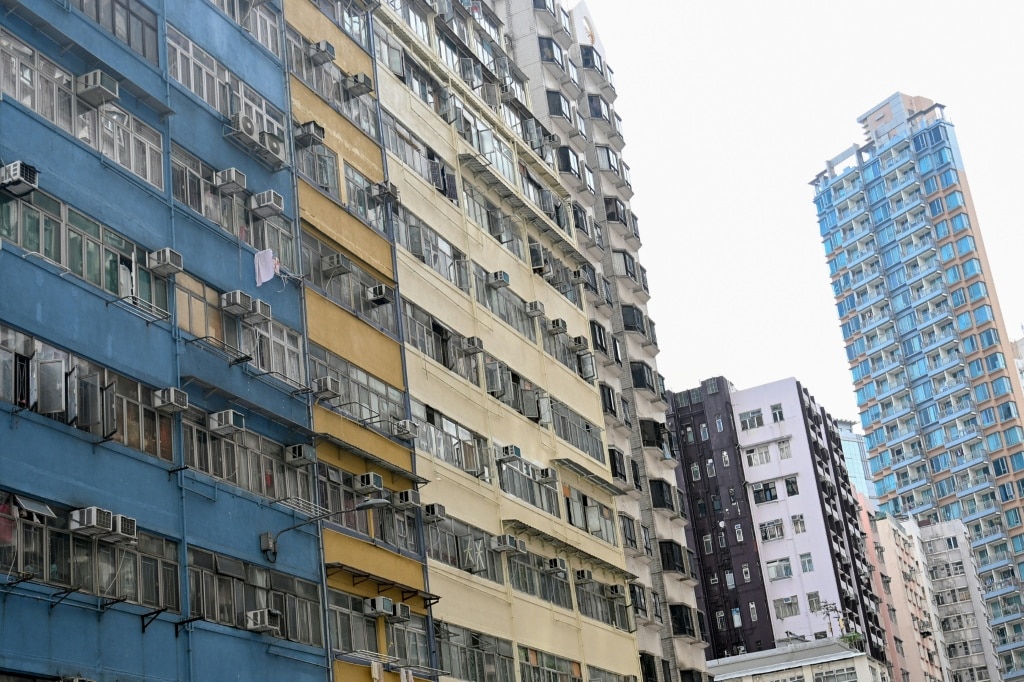
    For decades, Hong Kong has grappled with a crippling housing crisis: sky-high rents, acute supply shortages, and deep-rooted inequality have pushed hundreds of thousands of low-income residents into cramped, substandard living spaces known as “shoebox flats.” Now, a long-awaited regulatory reform aimed at phasing out these unsafe, tiny units has pushed the city’s most vulnerable households into limbo, as early evictions and a lack of affordable alternatives leave many unsure where they will go next.

    The new regulation, which came into force in March, grew out of a directive from Chinese President Xi Jinping for the global financial hub to address its long-running housing woes. Under the new rules, any subdivided unit smaller than 8 square meters (86 square feet) is banned, and mandatory safety and hygiene standards are imposed – requirements including at least one openable window, an enclosed toilet space, and permanent access to a sink. Property owners who register their subdivided units are given until 2030 to complete required renovations or restructure their properties, but many landlords have already moved ahead with eviction notices to clear out tenants ahead of the deadline.

    Forty-eight-year-old Lisa Lau, a welfare recipient who receives roughly $930 per month, $330 of which goes to rent, has been living in a 3-square-meter (32-square-foot) subdivided unit in Sham Shui Po, one of Hong Kong’s poorest neighborhoods. Her unit is one of nine separate cubicles split from a single apartment in a 60-year-old walk-up, separated only by thin wooden dividers. With no space for a kitchen, Lau cooks soup and noodles on a rice cooker placed directly on her bed, and shares a single toilet and shower with all other residents of the unit. To keep out rodents and cockroaches, she has taped a foam board across the bottom of her doorway. Months ago, she received an eviction notice, and like many other low-income tenants, she has no clear plan for what comes next.

    “I’ll stay here day by day,” Lau told Agence France-Presse. “I don’t know where to go. I’m scratching my head.” Despite the cramped, unsanitary conditions, Lau is reluctant to leave the neighborhood where she has built a small social network, and is waiting to hear if her application for nearby transitional housing will be approved. “As long as the landlord doesn’t come to evict residents, we are so at peace, we are so comfortable,” she said.

    Local authorities estimate that more than 220,000 people across Hong Kong’s 7.5 million population live in these shoebox subdivisions, with roughly one-third of all units requiring major structural upgrades to meet the new standards. The Hong Kong Housing Bureau says that more than 100 households have already moved out of Lau’s building, and officials are working to support the remaining 40 households to secure alternative accommodation. In response to inquiries, a government spokesperson noted that authorities have significantly expanded public housing supply, with a target of delivering roughly 196,000 new public units over the next five years, and have sped up application processing for residents waiting for public housing. These measures, the spokesperson said, will reduce overall demand for subdivided units and help keep private market rents stable.

    But advocacy groups working with low-income communities say the reform does not go far enough to address the underlying shortage of affordable housing in central, well-connected areas of the city. The Society for Community Organization, a non-profit that supports underprivileged groups, acknowledges that the new rules will help eliminate some of the most dangerous living conditions in the city. But deputy director Sze Lai-shan argues that without more accessible government-supported housing, many poor residents will be left without viable options.

    “Don’t expect these people who live in very small flats to move into the new basic housing units. They won’t be able to afford it,” Sze said. “A lot of the poorest people will be very dependent on the government to resettle them.” The organization has documented roughly 300 households already facing forcible eviction – a far higher number than the 35 eviction notices the government says it has received – and Sze expects hundreds more cases to emerge in coming months. While some evicted residents have moved into public or transitional housing, many others have simply relocated to other unregulated, substandard subdivided flats as a temporary stopgap.

    The crisis hits even closer to home for low-income workers like 63-year-old Liu Xiaoli, who faces eviction from her current subdivided unit. Divorced, Liu works two part-time jobs as a cook and cleaner to support her daughter and granddaughter on mainland China, and already stretches her income to cover current rent. “If the rent here or in other places goes up, I really can’t afford it,” Liu said. She has been unable to find any alternative accommodation in the area that meets the government’s new size and safety requirements, so she is only delaying the inevitable. “Right now, I’m just delaying as much as I can.”

    Notably, the new regulations do not extend to Hong Kong’s even more cramped “coffin homes” – stacked cubicles that resemble oversized bunk beds in dilapidated shared dormitories. Sixty-four-year-old Wan Hon-cheung has lived in a plywood coffin home roughly the size of a single bed for 10 years. He suffers from mobility issues that require a cane, making climbing into his elevated cubicle difficult, and is regularly bitten by bedbugs. He says he hopes the government will eventually extend reforms to improve conditions for people like him, but he has accepted his circumstances. “For us lower classes… this is reality, there’s nothing to complain about.”

  • Mateta fires Palace to Conference League glory in Glasner farewell

    Mateta fires Palace to Conference League glory in Glasner farewell

    In a historic night of European football at Leipzig’s Red Bull Arena, Crystal Palace claimed the first major European trophy in the club’s 120-year history with a tense 1-0 victory over Spain’s Rayo Vallecano in the 2025 UEFA Conference League final, powered by Jean-Philippe Mateta’s second-half match-winner.

    The opening 45 minutes delivered a tightly contested, cagey affair, with both sides trading half-chances but failing to break the deadlock. Rayo Vallecano, who entered the final on a nine-match unbeaten run and entered the tie as underdog overachievers, carved out the first clear opportunity of the game in the 25th minute, when midfielder Alemao saw his low driven effort flash just wide of the Palace goalpost. Moments before halftime, the London side squandered a golden opening: Adam Wharton, who passed a late fitness test to start just hours after battling an ankle injury, floated a pinpoint cross over the Rayo defense that found Tyrick Mitchell unmarked at the back post, only for the full-back’s header to drift inches wide of the target.

    The game sprang to life six minutes into the second half, as Crystal Palace found their rhythm and converted the breakthrough. Wharton unleashed a powerful strike from the edge of the 18-yard box that Rayo goalkeeper Augusto Batalla got both hands to, but could only parry the rebound straight into the path of Mateta. The French striker reacted instantly, tapping the loose ball into the empty net to put his side ahead, and send departing manager Oliver Glasner into his final match in charge with the lead.

    Palace came tantalizingly close to doubling their advantage shortly after, when Yeremy Pino’s curling free-kick crashed against both the crossbar and the post before ricocheting off a Rayo defender and hitting the woodwork a third time. Rayo somehow cleared the ball off the line to keep the scoreline at 1-0, and the Spanish side rarely threatened an equalizer after that, with Palace’s defense holding firm to see out the win.

    The result caps an extraordinary two-and-a-half year reign for Glasner, who departs the club having secured three trophies in two seasons — the most successful run in Crystal Palace’s history. After leading the club to a breakthrough FA Cup win last year and a Community Shield victory at the start of this campaign, the Austrian tactician adds the Conference League title to his collection, having already lifted the Europa League with Eintracht Frankfurt back in 2022, cementing his reputation as a knockout competition specialist.

    The triumph is all the more remarkable given the off-season and mid-season upheaval Palace navigated this term. The club sold star players Eberechi Eze and Marc Guehi, the latter to Manchester City in January, and was originally set to compete in the Europa League this season before being demoted to the Conference League due to UEFA multi-club ownership regulations. Even Mateta, the hero of the final, came close to leaving the club in the winter transfer window, collapsing a move to AC Milan only after a failed medical.

    Speaking after the final whistle, midfielder Adam Wharton, whose late fitness boost proved pivotal for Palace, hailed Glasner’s transformative impact on the club. “The difference he has made in two and a half years is incredible,” Wharton told TNT Sports. “Three trophies, the first European trophy in the history of the club. He’s got to be one of the best managers Palace have ever had, and he’s completely changed how we approach cup competitions — now we go into every one expecting to win.”

    Mateta, who put in a tireless shift up front for Palace, echoed his teammate’s excitement: “I feel fantastic. First time we’ve competed in Europe, and we did it! I’m tired, I gave everything out there, the whole team gave everything, and that’s why we’re champions tonight. Right now I just want to celebrate with the lads.”

    Palace’s win makes them the third consecutive London-based Premier League club to lift the Conference League trophy, following West Ham United in 2024 and Chelsea in 2025, a run that underscores the unmatched financial depth of the English top flight across European competition. With Aston Villa already crowned Europa League champions this term, the Premier League is on the cusp of a historic clean sweep of all three major UEFA club trophies, with league champions Arsenal set to face Paris Saint-Germain in the Champions League final this Saturday.

  • ‘Trump’ buffalo spared sacrifice, sent to Bangladesh zoo

    ‘Trump’ buffalo spared sacrifice, sent to Bangladesh zoo

    In a last-minute twist that has captured public attention across Bangladesh, a rare albino bull buffalo, widely nicknamed ‘Donald Trump’ for its striking golden blond coat that resembles the former U.S. president’s signature hairstyle, has been saved from ritual slaughter ahead of Eid al-Adha and will now live out its life under professional care at the South Asian nation’s national zoo.

    Bangladesh, a Muslim-majority country home to 170 million people, prepares to mark Eid al-Adha — the global Islamic Festival of Sacrifice — on Thursday. For generations, the holiday has centered on the ritual slaughter of livestock, with meat distributed to family, friends, and low-income communities. This year, an estimated 12 million animals including goats, sheep, cattle and buffalo are expected to be sacrificed across the country, giving many disadvantaged households a rare opportunity to enjoy meat during the festive celebrations.

    The 700-kilogram (1,500-pound) rare albino bull was originally purchased by a local trader ahead of the holiday, slated for slaughter like thousands of other livestock across the nation. But weeks before the event, the animal went viral on local social media platforms, drawing widespread attention for its unique pale complexion and distinct light-colored mane. Crowds of curious onlookers, social media content creators, and local families flocked to the small farm in Keraniganj, on the outskirts of Dhaka, just to catch a glimpse of the rare animal and snap photos with the unexpected viral star.

    The buffalo’s original owner, 38-year-old Zia Uddin Mridha, told reporters that his brother first came up with the nickname ‘Trump’ because of the bull’s unusual flowing light hair. Mridha added that in the weeks leading up to Eid, his property saw a nonstop stream of visitors eager to see the rare buffalo.

    Even with the growing attention, Mridha completed the sale of the bull ahead of the holiday, as is common for livestock owners ahead of Eid al-Adha. But just hours before the animal was set to be slaughtered, Bangladeshi authorities intervened to spare its life. Local police were dispatched to seize the buffalo from the new owner, following an official order from the national government to protect the rare animal.

    ‘Livestock department officials requested that we take possession of the buffalo because it is a rare genetic specimen,’ Mohammad Ruhul Quddus, officer-in-charge of Keraniganj Police Station, confirmed to Agence France-Presse. ‘They noted the albino buffalo is still young, and can be cared for and bred for research and conservation over the next several years.’

    After being taken into government custody, the buffalo was transferred to Bangladesh’s National Zoo in Dhaka, where zoo officials have already prepared dedicated accommodations for the new resident. Atiqur Rahman, curator of the National Zoo, told reporters on Wednesday that the facility has set aside a private shed for the albino buffalo, assigned a full-time dedicated caregiver, and implemented a mandatory two-week quarantine to ensure the animal is healthy before it is displayed to the public.

    ‘We will make sure he gets the best possible care here,’ Rahman said. Since the news of the buffalo’s rescue broke, local media reports indicate that zoo attendance has already seen a small boost, with many locals saying they plan to visit to see the viral animal once it goes on public display.

  • Bolivia at ‘breaking point’, president warns protesters

    Bolivia at ‘breaking point’, president warns protesters

    Bolivia has entered its fourth week of widespread anti-government demonstrations, with President Rodrigo Paz warning Wednesday that the Andean nation has reached a critical “breaking point” as blockades have choked off supplies of food, fuel, and life-saving medical resources to the country’s political capital La Paz.

    Six months into his term, the US-backed center-right leader took office during Bolivia’s most severe economic downturn in 40 years. Now he faces a growing wave of public anger rooted in policy disagreements, led by low-income workers and members of Bolivia’s Indigenous majority — the nation’s largest demographic group — who have gathered in La Paz demanding his immediate resignation.

    Speaking at a public gathering in the capital Wednesday, the 58-year-old president reiterated his call for negotiation while stressing the urgent need for social order. “The country needs order, and is reaching breaking point,” Paz stated. The previous day, Bolivia’s Congress removed legislative barriers that would prevent the president from declaring a national state of emergency, clearing the way for a potential military deployment to clear blockades and restore calm.

    To date, Paz has framed dialogue as his preferred path forward, but has refused to rule out activating what he calls “constitutional instruments” to end the ongoing siege of La Paz — a clear reference to emergency powers. “Anyone who wants to destroy the nation will have to deal with this president and the full force of the Constitution,” he added, confirming that police and military forces enjoy full public and government backing for their efforts to maintain order.

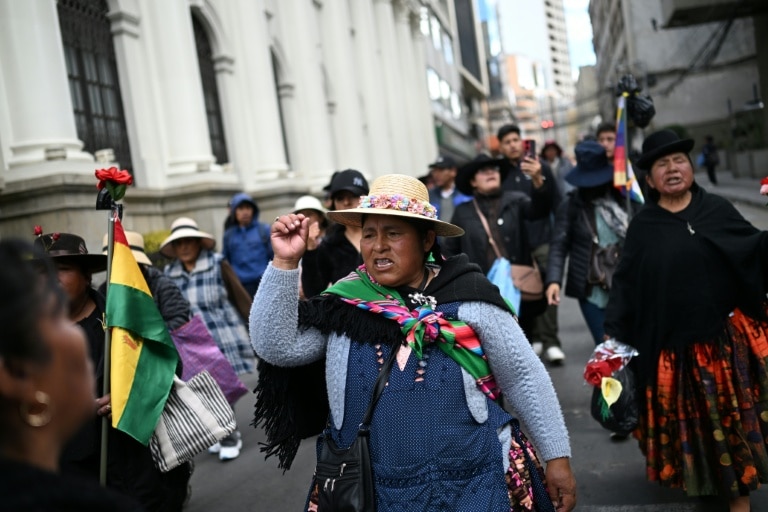
    Paz’s warnings coincided with a high-profile Mother’s Day march in La Paz, where thousands of Indigenous women in traditional layered skirts took to the streets to back striking transport workers and amplify the call for the president’s ouster. “We are not afraid to die. We have already told him to pack his bags and leave,” protest organizer Marta Poma Luque told Agence France-Presse in an on-the-ground interview.

    The unrest first erupted in early May, when demonstrators initially called for higher wages to offset the impact of the deep economic crisis, more reliable fuel distribution, and the full repeal of a deeply unpopular agrarian reform law. Though Paz has already backed down on several key demands, including rolling back parts of the land reform, demonstrations have expanded into a full-scale movement against his administration.

    Over the past two weeks, La Paz has descended into repeated conflict, with riot police clashing regularly with thousands of blockading protesters. The blockades have cut off all major supply routes into the city, leaving residents facing acute shortages of critical goods. Local resident Zulm Hinojosa, whose 13-year-old son lives with chronic asthma and heart conditions, told reporters that essential medication has become exponentially more expensive and in many cases has run out entirely.

    At Clinicas de La Paz, one of the country’s oldest and largest public medical facilities, medical staff confirmed Tuesday the hospital only has enough oxygen to sustain patients for a few more days. For his part, Paz has calculated total economic losses from the weeks of unrest at roughly $600 million.

    In a bid to defuse tensions, the president has already announced a series of concessions: he pledged to halve his own presidential salary as a gesture of solidarity with low-income Bolivians, a largely symbolic move given his monthly salary of just 24,000 bolivianos (approximately $3,500). He has also promised greater policy input for Indigenous groups and labor unions, and dismissed his widely unpopular labor minister. None of these steps have managed to end the protests.

    Paz’s administration has accused former president Evo Morales of secretly orchestrating the nationwide unrest. Morales is currently in hiding, facing criminal charges related to the alleged trafficking of a teenage girl with whom prosecutors claim he fathered a child.

    In response to the crippling blockades, small groups of La Paz residents have held counter-demonstrations in recent days calling for an end to the supply disruptions that have turned daily life in the capital into a crisis.