标签: Oceania

大洋洲

  • Western Australia moves to ban no grounds evictions, but industry warns there would be ‘no winners’

    Western Australia moves to ban no grounds evictions, but industry warns there would be ‘no winners’

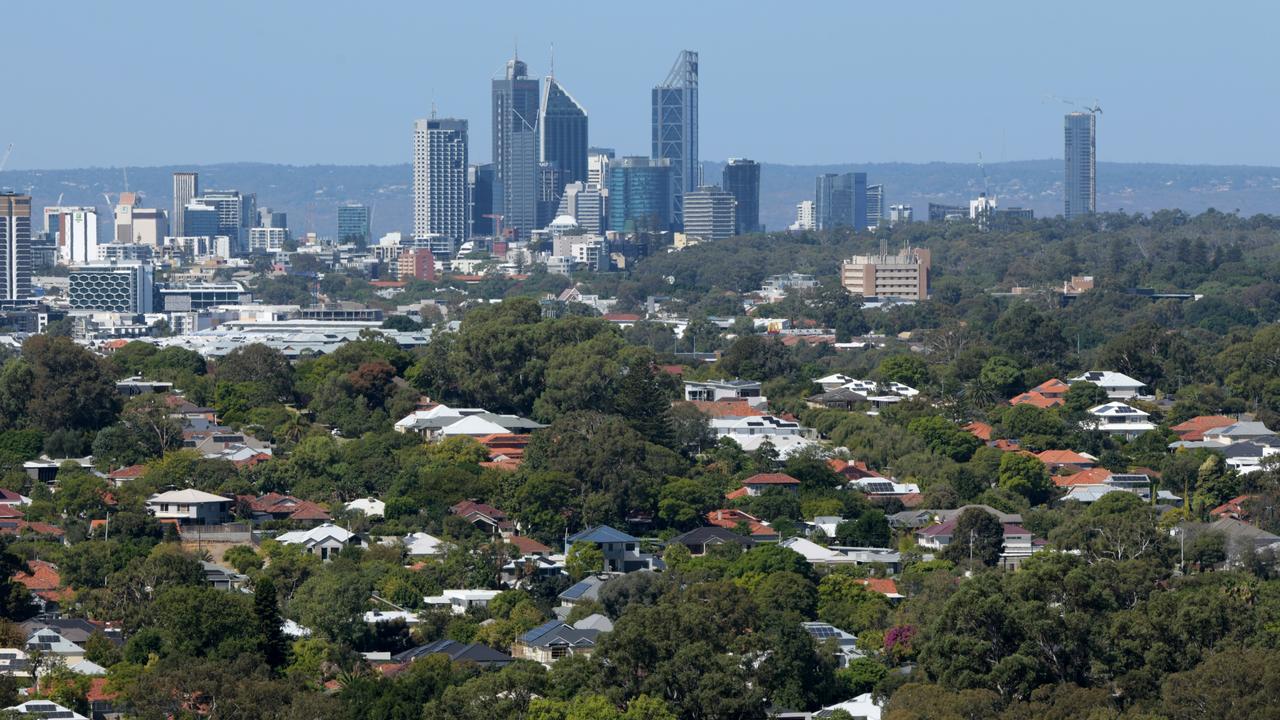
    Western Australia has become the latest Australian state to advance sweeping rental market reforms centered on a full ban on no-grounds evictions, a policy shift that has ignited sharp disagreement between state government leaders, housing industry representatives and tenant advocacy groups amid an ongoing national housing affordability crisis. The proposal comes as Western Australia grapples with one of the country’s tightest rental markets, with plummeting available supply and soaring rental costs that have put unprecedented strain on low- and middle-income renters across the state.

    Under the planned changes to Western Australia’s Residential Tenancies Act, private landlords will only be permitted to end a tenancy if they can demonstrate a legally valid reason for eviction. Acceptable reasons outlined in the reform package include the property owner or an immediate family member planning to move into the home, the need for major structural renovations or full demolition of the property, repeated breaches of tenancy terms by the renter, sale of the property, consistent non-payment of rent, and documented illegal activity occurring on the premises. Beyond the ban on no-fault evictions, the reforms also introduce new limits on what personal background information landlords and real estate agents can request from prospective tenants, along with a mandate that requires property owners to offer at least one rent payment option that does not charge extra processing fees to renters.

    State officials confirmed that the Department of Local Government, Industry Regulation and Safety will launch a public consultation period to gather feedback on the fine details of the legislation as the drafting process moves forward. In a formal announcement of the reforms, Western Australian Premier Roger Cook emphasized that the changes are designed to reinforce rental security and build a more equitable housing market for all residents. “Ending no-grounds terminations and replacing them with commonsense, clearly defined reasons for eviction makes Western Australia’s rental market far fairer,” Cook said. “This next wave of residential tenancies reforms builds on our previous changes, which included a ban on competitive rent bidding and limiting rent increases to no more than once every 12 months.”

    Commerce Minister Tony Buti added that the reform package responds directly to growing cost-of-living pressures that have left many private renters at constant risk of unexpected displacement. “The government is committed to reform that ensures fairness across the board, and that includes making sure no Western Australian loses their private tenancy amid rising cost-of-living pressures,” Buti said. “This has flow-on benefits for the entire community. At the same time, the next phase of tenancy reforms demonstrates our commitment to providing stronger protections for renters and a fairer, more secure housing system for all.”

    Not all stakeholders have backed the plan, however. The Real Estate Institute of Western Australia (REIWA) has emerged as the policy’s most prominent critic, with president Suzanne Brown warning that the change will backfire for both landlords and renters, leaving “no winners” in the already strained rental market. Brown stressed that the organization’s opposition is not rooted in anti-tenant bias, but in concern for the long-term stability of Western Australia’s rental supply. “Across the state, the rental market has not fully recovered from the mass exodus of investors that followed the COVID-19 pandemic,” Brown said. “Western Australia cannot afford to lose any more rental properties. Another drop in supply will see the vacancy rate fall even further, competition for available properties increase, and put even more upward pressure on rent prices that are already out of reach for many families.”

    Tenant advocacy groups have pushed back strongly against these warnings, arguing that data from other Australian states that have already implemented no-grounds eviction bans shows no measurable negative impact on overall rental supply. Jesse Noakes, a campaigner with the End Unfair Evictions coalition, noted that even if some property investors choose to exit the market following the reform, existing properties do not disappear from the housing system entirely. “Even if a property investor sells a house, it is not as if it disappears into a puff of smoke. Either it houses someone who was previously renting, or it returns to the rental market shortly after,” Noakes said. Citing data from Anglicare, he added that available rental supply in Western Australia has already collapsed from more than 14,000 available properties in 2018 to just 3,000 in 2024, meaning the market cannot get any tighter than it already is. “The rental market can’t get any worse – this can only make things better for renters across the state,” he said.

    While some progressive political leaders have welcomed the announcement as a long-overdue win for tenant rights, the Western Australian Greens have argued that the proposed reforms do not go far enough to address the state’s housing crisis. Tim Clifford, the Greens’ WA housing spokesperson, called the ban a historic step forward, but warned that similar legislation in other Australian states contains significant loopholes that still allow landlords to carry out de facto no-fault evictions, such as through extreme rent hikes that force renters to leave voluntarily. “We’re still going to introduce our rent cap bill this week, because we do know the government will walk back from any reforms if we do not maintain pressure on them to deliver stronger protections,” Clifford said.


  • Antisemitism ‘allowed to come into the open’ says Bondi victim’s daughter

    Antisemitism ‘allowed to come into the open’ says Bondi victim’s daughter

    Sydney, Australia – As public hearings kick off for Australia’s national royal commission investigating rising antisemitism, witnesses are delivering harrowing firsthand accounts of grief, fear, and a dramatic shift in social acceptance of anti-Jewish hatred tied to the December 2024 Bondi Beach Hanukkah shooting that left 15 people dead. The commission was convened in direct response to the deadly attack, the first major public inquiry of its kind focused on addressing a documented surge in antisemitic violence and harassment across the nation.

    Sheina Gutnick, the daughter of victim Reuven Morrison, was the first witness to take the stand at the Sydney public hearing on Monday. Morrison, a Jewish Australian who fled the Soviet Union at age 14 and built his life in Australia, meeting his wife on iconic Bondi Beach, was killed while rushing to stop the attackers by hurling objects at the gunmen to disrupt their shooting rampage. In raw, emotional testimony, Gutnick detailed the abuse she has endured in the attack’s aftermath, including direct messages calling for her own death. She also described a stark, alarming shift in the visibility of antisemitism dating back to October 2023, saying anti-Jewish rhetoric has rapidly moved from the margins to mainstream public discourse.

    “I felt as though antisemitism was allowed to come into the open,” Gutnick told the commission. “All of a sudden it was socially, morally acceptable for antisemitic comments to be made in public discourse.” Even the place her parents fell in love now carries heavy, conflicting emotions for Gutnick: “Bondi held ‘complicated’ feelings for me, despite having beautiful childhood memories at the famous beach,” she added.

    The attack, carried out by 50-year-old gunman Sajid Akram who was shot dead by responding police at the scene, also involved his son Naveed Akram, the alleged second attacker. Naveed Akram was critically wounded during the police response, has since been moved from hospital to custody, and faces 59 criminal charges including 15 counts of murder and one count of committing a terrorist act.

    A second witness, identified only as AAL for safety reasons, also broke down during his testimony, describing decades of love for his adopted country after moving from South Africa in the 1980s, but now questioning whether it is a safe home for his grandchildren. “I treated Australia as home from the day I stepped off the plane,” AAL said. “I have to admit things have changed – I have to think very seriously whether this is the country for my grandchildren.”

    Commission officials confirmed that as of Monday morning, nearly 7,500 public submissions have been received from community members and stakeholders across the country. This first phase of public hearings, scheduled to run through May 15, centers on collecting firsthand lived experiences of antisemitism from victims and community members.

    Last week, Virginia Bell, a former High Court justice leading the inquiry, released an interim report containing 14 urgent policy recommendations. Key proposals include strengthening national gun reform regulations and expanding dedicated police protection currently reserved for major Jewish high holy days to all Jewish community events. Bell has already noted that the sharp spike in antisemitism recorded in Australia mirrors surges seen across other Western nations, and is directly linked to ongoing conflict in the Middle East.

    “It’s important that people understand how quickly those events can prompt ugly displays of hostility towards Jewish Australians simply because they’re Jews,” Bell said ahead of this week’s hearings. The commission is on track to deliver its final full report to the government on the one-year anniversary of the December shooting.

  • ‘Limb-saving surgery’: Broncos reveal terrifying extent of Deine Mariner’s injury ordeal

    ‘Limb-saving surgery’: Broncos reveal terrifying extent of Deine Mariner’s injury ordeal

    What began as a seemingly minor, high-impact bruise during a top-flight rugby league match has turned into a life-altering medical emergency, requiring emergency surgery to save the leg of Brisbane Broncos rising star winger Deine Mariner. The NRL club has publicly detailed the extraordinary and extraordinarily rare sequence of events that led to the early Sunday morning procedure in Sydney, clearing up unfounded online speculation about mistreatment of the athlete.

    Broncos chief medical officer Matt Hislop shared a full timeline of Mariner’s injury progression on Monday afternoon, after the 20-year-old winger granted permission for his case to be shared to educate other athletes and medical staff on the rare condition. Mariner suffered a hard cork, or muscular contusion, to his right quadriceps late in the first half of the Broncos’ Saturday night clash against the Sydney Roosters. After on-field assessment, strapping and padding, Mariner was able to run comfortably and returned to the pitch with 15 minutes remaining in the second half.

    By the time the team returned to their Sydney hotel just before midnight, Mariner reported increased swelling in his thigh, but remained clinically stable: his neuro-vascular function was intact, he finished his dinner and was able to go to bed without alarm. That changed dramatically by 1:30 a.m., when Hislop was called to evaluate the winger after he woke in extreme pain.

    “When I saw him, it was immediately clear his condition had deteriorated rapidly,” Hislop explained. “His thigh was extremely firm to the touch, and he was in unmanageable discomfort. We performed an on-site ultrasound to check for a collectable hematoma that could be drained, but found the swelling was diffuse throughout the muscle tissue, with no pooled blood to remove.”

    Though Mariner still retained full nerve and artery function in his lower leg, Hislop recognized the early signs of acute compartment syndrome – a dangerous condition where increased pressure within muscle tissue cuts off blood flow, and can lead to amputation or permanent disability if left untreated. An ambulance was dispatched immediately, and Mariner was rushed to the emergency department at Sydney’s Royal Prince Alfred Hospital, where clinicians confirmed elevated intra-muscular pressure.

    A surgical team quickly moved to perform the life-saving limb procedure in the early hours of Sunday morning. As of Monday, Hislop noted that the length of Mariner’s recovery will not be clear until the swelling in his quad muscle subsides and clinicians can assess the extent of muscle damage.

    Experts note that Mariner’s case is exceptionally rare. A leading NRL physiotherapy commentator pointed out on social media that the rate of a simple thigh cork progressing to compartment syndrome is so uncommon it is not even well documented in peer-reviewed medical literature, with an estimated incidence of less than 0.1%. The commentator also confirmed there is no truth to online rumors that the Broncos medical staff mistreated Mariner or delayed care.

    Hislop and Mariner both extended public gratitude to the emergency care team at RPA Hospital for their rapid, life-saving intervention. “I can’t praise enough the work of the paramedics, emergency nurses, ED physicians and trauma surgeons who cared for Deine so quickly and skillfully,” Hislop said.

    The injury comes at a brutal time for the injury-plagued Broncos, who are already missing multiple key starting players including representative halfback Ben Hunt and prop Payne Haas to prior injuries. Kotoni Staggs, the club’s starting strike centre, also accepted a two-match suspension for a grade 2 dangerous contact charge arising from Saturday’s game against the Roosters, leaving the club short of several top talents ahead of their next fixture.

  • North Korean club to play rare football match in South

    North Korean club to play rare football match in South

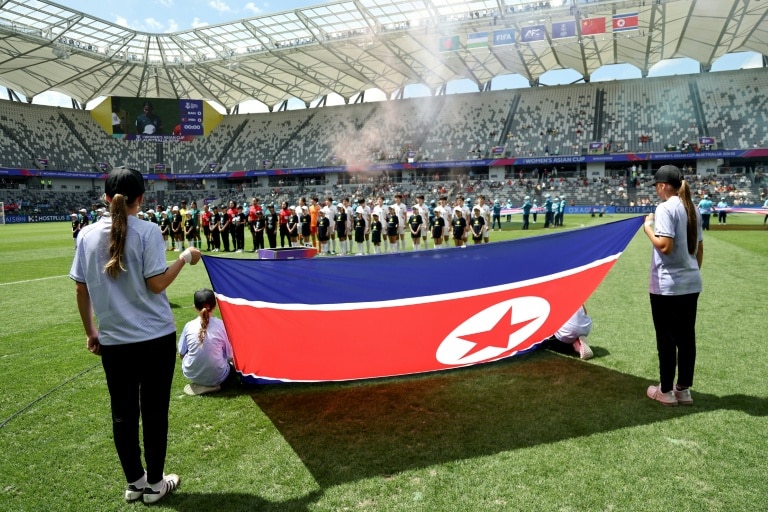
    In a groundbreaking moment for inter-Korean sporting exchange, South Korea’s unification ministry confirmed Monday that a North Korean women’s football club will travel to the South this month to compete, marking the first visit by a North Korean sports delegation to the country in seven years. Decades after the Korean War concluded with an armistice rather than a formal peace treaty, the two neighboring states remain technically at war, making cross-border cultural and athletic exchanges extremely uncommon.

    Naegohyang Women’s Football Club, a Pyongyang-based side founded in 2012, is set to face South Korea’s Suwon FC Women in an Asian Women’s Champions League semi-final clash at the Suwon Sports Complex on May 20. The North Korean traveling party will comprise 27 players and 12 club officials, who are scheduled to arrive at Incheon International Airport on May 17 via an Air China flight routed through Beijing, according to a senior unification ministry official. The semi-final loser will return to North Korea just one day after the match on May 21, as no third-place playoff is planned for the competition. The winner will advance to the continental club final on May 23, where they will face either Australia’s Melbourne City or Japan’s Tokyo Verdy Beleza for the continental title.

    This upcoming fixture is the first appearance by a North Korean sports team on South Korean soil since mixed delegations for shooting, youth football and table tennis visited in 2018. The last time a North Korean women’s football side competed in the South was a decade ago, when the North Korean national team took part in the 2014 Asian Games hosted in Incheon. Observers note that most of Naegohyang’s roster is made up of current and former North Korean national team players, a squad drawn from one of Asia’s most dominant women’s football programs. North Korea’s national women’s sides have claimed multiple major international titles in recent years, most recently winning the 2024 U-17 Women’s World Cup with a dominant 3-0 victory over the Netherlands in the final.

    Beyond the pitch, the match carries major geopolitical weight, coming as South Korea’s new dovish administration under President Lee Jae Myung pursues rapprochement with Pyongyang after years of escalating cross-border tensions. Lee has repeatedly called for unconditional talks with North Korea, framing the two Koreas as being destined to “make the flowers of peace bloom” through dialogue. To date, Pyongyang has not responded to Lee’s outreach, and has continued to label Seoul its “most hostile” adversary. Even so, regional analysts see the club’s visit as a small but meaningful opening for inter-Korean engagement.

    For the South Korean government, the fixture represents an opportunity to establish at minimum a basic line of communication between the two governments, according to Lim Eul-chul, a leading North Korea researcher at Kyungnam University. “It could become a chance to test peaceful coexistence,” Lim told Agence France-Presse. The historic match comes amid heightened international concerns over Pyongyang’s military activities: North Korean leader Kim Jong Un has publicly committed to expanding the country’s nuclear arsenal, and Pyongyang conducted four intercontinental missile tests in April, the highest number of tests recorded in a single month in more than two years. Pyongyang has also deepened its military and economic alignment with Moscow in recent months, with widespread international reports indicating it has sent artillery shells and troop deployments to support Russia’s full-scale invasion of Ukraine. Western defense observers broadly expect Pyongyang to receive advanced military technology from Russia in exchange for its military support.

  • Australia housing approvals plunge as nation misses key target

    Australia housing approvals plunge as nation misses key target

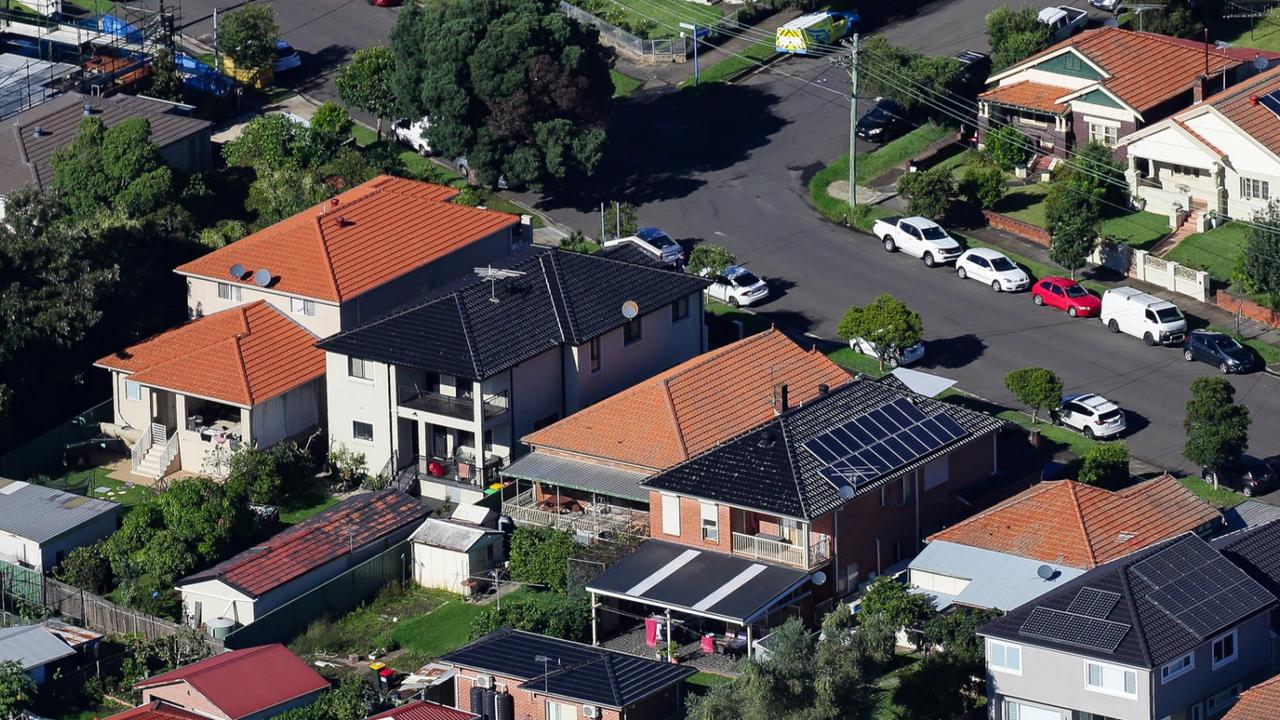
    Australia is steadily falling further off track from its ambitious national housing construction goals, after new official data revealed a sharp double-digit drop in building approvals during March that has deepened concerns over ongoing supply shortages and affordability crises across the country.

    Data published by the Australian Bureau of Statistics (ABS) shows that just 17,300 new dwellings — including standalone homes, apartments, semi-detached properties and townhouses — received planning approval across the nation in March. This marks a 10.5% decline from February’s revised figure, which hit a more-than-four-year high of 19,339 approved projects. Over the 12-month period ending in March, national total dwelling approvals reached 198,396, a figure that remains well short of the annual benchmarks laid out in the federal government’s key housing policy.

    Under the National Housing Accord, all Australian state and territorial governments have committed to delivering 1.2 million new homes over five years, which translates to an annual target of 240,000 new constructions by June 2029. Economists warn that the latest approvals data confirms the nation is not on course to hit this goal, with a cascade of economic and geopolitical headwinds piling relentless pressure on the domestic construction sector.

    AMP senior economist My Bui identified multiple overlapping factors dragging on the sector: the ongoing conflict in the Middle East, which has disrupted global energy markets, combined with persistent domestic labour shortages, rising construction material costs, and elevated interest rates have all created significant barriers to ramping up new home construction. “With these ongoing headwinds hitting the construction sector, from rising material and labour costs to tighter financing conditions, it’s increasingly likely that we will keep slipping further and further away from the National Housing Accord’s annual housing targets,” Bui explained.

    Lucinda Jerogin, associate economist at Commonwealth Bank, echoed these concerns, noting that the drop in approvals itself creates an additional layer of pressure for construction firms operating in the already strained market. “Headwinds are continuing to build, as higher interest rates and rising input costs weigh heavily on sector profitability and project pipeline,” Jerogin said. “We expect new dwelling cost inflation to accelerate in the coming months, following a series of recently announced price hikes for core construction materials.”

    The latest housing data comes amid a broader resurgence of inflationary pressure across Australia. Last Wednesday, ABS data confirmed that the national Consumer Price Index rose 4.6% in the 12 months to March 2026, hitting the highest annual inflation rate since September 2023, when the Australian economy was still in its post-COVID-19 rebound phase. Fuel prices have been the single largest driver of this recent inflation surge: petrol prices jumped 32.8% in March alone, pushing up overall transport costs by 9.2% over the 30-day period.

    This spike in global energy prices can be traced directly to escalating geopolitical tensions in the Middle East. Since the outbreak of open conflict between Israel and Iran that began at the end of February, oil markets have seen extreme volatility. Tensions have also disrupted shipping through the Strait of Hormuz, the critical global chokepoint through which roughly 20% of the world’s daily oil supplies pass, pushing up global crude prices significantly and raising transport and production costs for industries across Australia, including construction.

    Breaking down the approvals data at the state level, Victoria outperformed all other Australian jurisdictions in March, recording 5,102 total dwelling approvals, including 2,853 approvals for standalone houses. New South Wales followed closely behind with 4,445 total approvals, 2,351 of which were for houses — marking the strongest monthly growth in house approvals for the state since 2024. Queensland came in third with 3,910 total approvals and 2,258 house approvals.

    Western Australia recorded 2,158 total dwelling approvals (1,632 houses), while South Australia logged 1,632 total approvals and 816 house approvals for the month. The Australian Capital Territory recorded 337 approvals, Tasmania recorded 209, and the Northern Territory recorded just 46 new dwelling approvals in March.

    The ongoing shortfall in new housing supply continues to worsen Australia’s long-running housing affordability crisis, pushing up rental and property purchase prices and putting home ownership out of reach for many aspiring Australian buyers, particularly young couples and first-time entrants to the property market.

  • RBA set to hike interest rates as 100,000 homeowners face default

    RBA set to hike interest rates as 100,000 homeowners face default

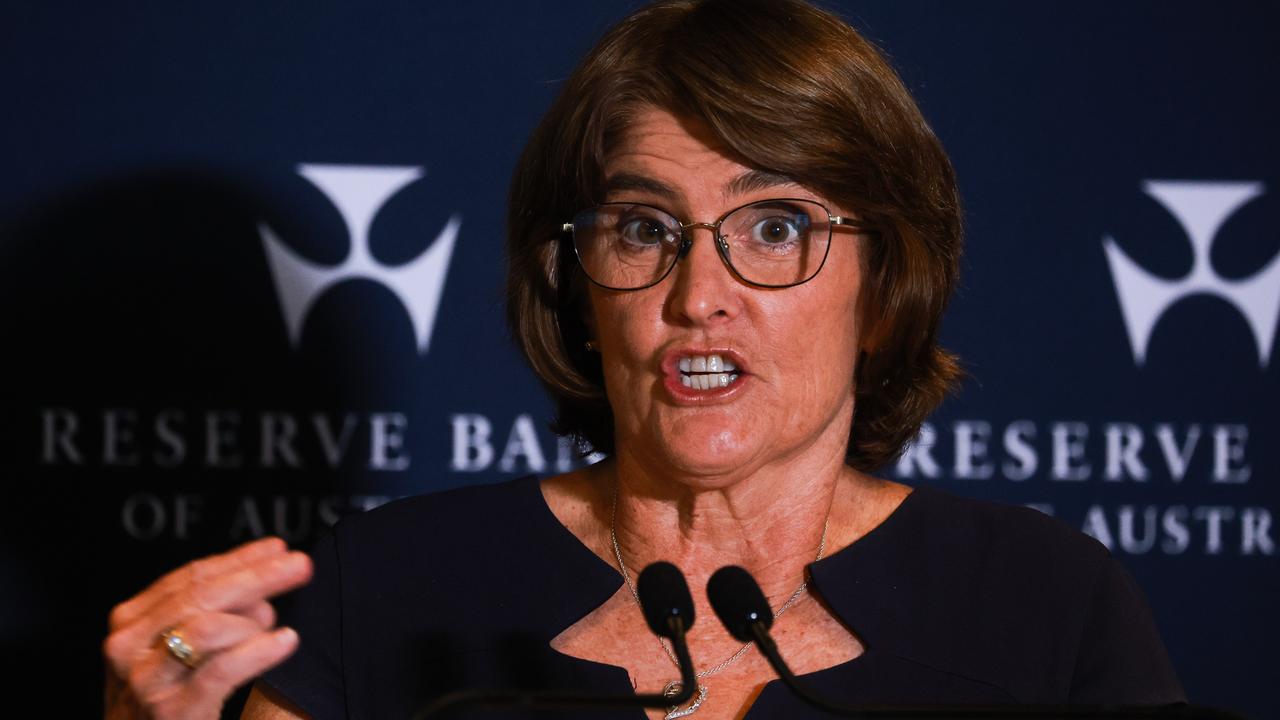
    Australia’s central bank is gearing up to deliver another aggressive interest rate increase this Tuesday, with a fresh surge in persistent inflation leaving policymakers with little choice but to squeeze the national economy. Financial and economic analysts widely expect the Reserve Bank of Australia (RBA) to raise the official cash rate by 25 basis points at its 2:30 pm board meeting, marking the third consecutive rate hike in 2026. If the forecast holds true, the benchmark cash rate will climb back to 4.35 percent, completely erasing the three rate cuts implemented to support the economy in 2025 and piling fresh financial stress on roughly 3.6 million Australian mortgage holders.

  • ‘That’s where you’ll see sides struggle’: Blues legend reveals doubts over Nathan Cleary and Mitch Moses as halves for Origin

    ‘That’s where you’ll see sides struggle’: Blues legend reveals doubts over Nathan Cleary and Mitch Moses as halves for Origin

    As the New South Wales Blues ramp up preparations for the 2025 State of Origin series opener on May 27, one of the program’s most celebrated former winners is casting doubt on a potential star halves combination that has dominated recent selection discussion. Trent Hodkinson, the playmaker who steered NSW to a historic 2014 series victory that ended Queensland’s eight-year winning streak, says Penrith Panthers star Nathan Cleary is a guaranteed selection at the number seven halfback jersey – but he is not convinced pairing Cleary with another specialist halfback, Parramatta Eels’ Mitchell Moses, will deliver success at the highest level of rugby league’s toughest representative arena.

    The NSW selection panel is set to name its starting side for the opening match in exactly two weeks, and Cleary’s spot at halfback has been viewed as a near-certainty despite inconsistent past performances in the Origin environment. Cleary has built a reputation as one of the best elite playmakers in the world, leading his Penrith side to multiple NRL premierships, and his combination with Panthers club teammate Jarome Luai is already proven at both domestic and representative level.

    Moses, a regular Blues representative who has turned in strong Origin performances in previous campaigns, has not been at his dominant best for Parramatta this NRL season. However, the Eels have been ravaged by a devastating injury crisis across their roster, a context that has softened criticism of Moses’ 2025 form. The pair have only shared the Origin field once: in last year’s series opener, where Moses lined up at five-eighth alongside Cleary, before injuries cut short any chance for the duo to build sustained chemistry together.

    Beyond Moses, Hodkinson points to two other credible candidates for the five-eighth role: Luai, who has recently returned to action after a mid-season injury layoff, and Canberra Raiders young gun Ethan Strange. Even with Canberra underperforming as a team in 2025, Hodkinson noted that Strange has stood out as a bright spark for the club, putting himself firmly in Origin contention.

    “Nathan will be locked in at that seven, there’s no question about that,” Hodkinson said in his analysis. “There are a lot of good halves putting their hands up for sure. Moses has been playing solid footy, there’s Luai who’s just come back into the frame after being injured. Ethan Strange as well is really doing good things in a Canberra side who’s sort of underperforming at the moment, but he’s standing out which is good. I think there are multiple options at that six. Cleary will be locked in at seven, but we’ll have to see how Loz goes.”

    Hodkinson pointed to his own 2014 success to explain his hesitation about pairing two elite, playmaking-focused halfbacks together. That year, Hodkinson served as the chief playmaker in the halves, while his partner Josh Reynolds operated as an instinctive, off-the-cuff energy player – a clear division of roles that made the combination click.

    Hodkinson concedes that a Cleary-Moses pairing could still work, as long as the pair define clear roles ahead of the game: with Cleary leading the structure and play direction, and Moses leaning into his natural running game and long-range kicking ability, a skill that is particularly valuable in the high-pressure Origin environment. The pair even proved the combination can work once before, delivering a victory in last year’s series opener.

    Still, Hodkinson warned that pairing two dominant playmakers can create communication and role confusion, issues that are amplified in the Origin cauldron, where crowd noise makes on-field communication extremely difficult, especially in away fixtures.

    “But I think two dominant halves, that’s where you’ll see sides struggle. Especially at Origin level where it’s hard to hear, you’ve got the crowd, away games and things like that,” he explained. “If Nathan can direct the play around and Mitch can play off the back of it – which they’ve done before – (then it can work) but Luai has got that long-standing combination with him. And Ethan Strange, he can take a backward step down there at Canberra and then just explodes when he needs to. As Loz said, they’re going to pick on form, he’s made it quite clear, so certainly they’ll need to play their way into a jersey.”

  • ‘No pilgrims’: regional war hushes Iraq’s holy cities

    ‘No pilgrims’: regional war hushes Iraq’s holy cities

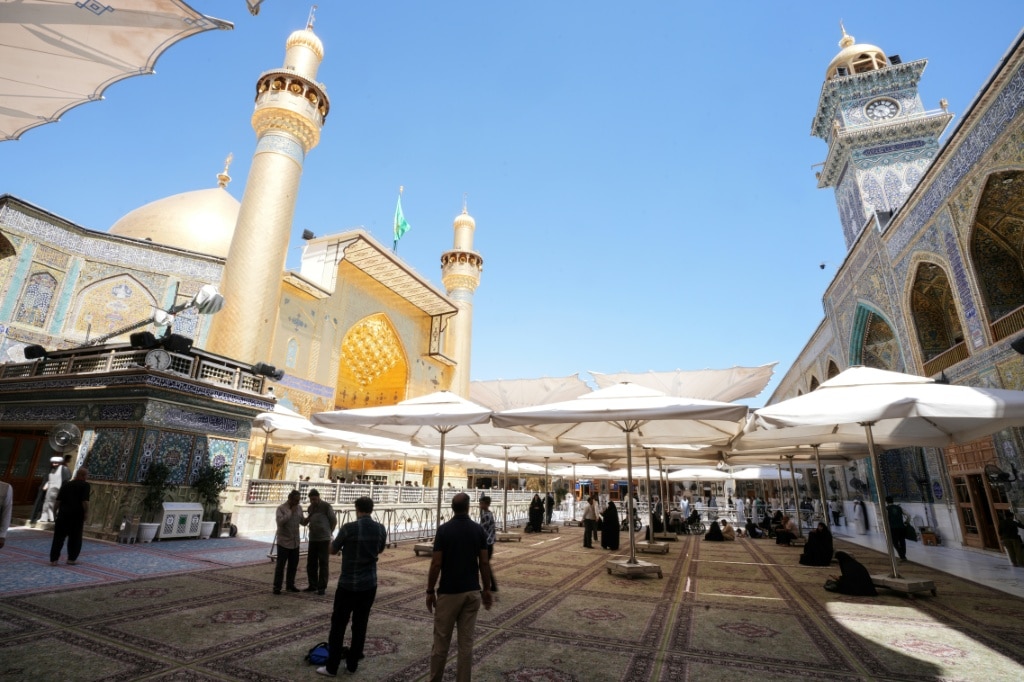
    The echoes of multilingual pilgrim chatter that once filled the vast courtyards of Imam Ali’s iconic golden-domed shrine in Iraq’s Najaf have fallen silent. Months of escalating regional conflict sparked by U.S.-Israeli strikes on Iran in late February have effectively halted the annual flood of Shia worshippers that sustains the local economy, leaving business owners, workers and hoteliers reeling from an unprecedented collapse in tourism revenue.

    For decades, millions of Shia Muslims from across the globe – Iran, Lebanon, Gulf Cooperation Council states, India, Afghanistan and beyond – make the spiritual journey to Iraq’s two holiest sites: Najaf, home to the burial place of Imam Ali, the Prophet Mohammed’s son-in-law and first Shia Imam, and Karbala, 80 kilometers north, where the Prophet’s grandsons Imam Hussein and Abbas are interred. For local communities, religious tourism is not just an industry – it is the backbone of daily livelihood.

    Seventy-one-year-old Abdel Rahim Harmoush, a jeweler who has operated a stall in Najaf’s old market near the shrine for 38 years, recalled the days when the market was so packed with foreign visitors that navigating the aisles was nearly impossible. “Iranians used to keep everyone busy: the jeweller, the fabric merchant, the taxi driver. Now there are none,” he said. Without a swift return of pilgrim crowds, Harmoush warned, the sector faces total economic ruin: small business owners will be unable to cover rent and taxes, day laborers will go without work, and transportation workers will be left stranded without passengers.

    The crisis has hit the hospitality sector particularly hard. Of Najaf’s 250 hotels, 80 percent have already shut their doors, according to Saeb Abu Ghneim, head of the city’s hotel association. More than 2,000 hotel employees have been laid off or placed on unpaid leave. Fifty-two-year-old hotel owner Abu Ali told reporters he was forced to let go five of his six staff members, leaving just one employee to manage nearly 70 empty rooms. “How can I pay salaries if there is no work?” he asked.

    Even currency exchangers, who once navigated nonstop lines of foreign visitors converting dinars, now sit idle. Twenty-eight-year-old Moustafa al-Haboubi said he now gets just one or two customers a day, spending most of his work hours scrolling through his phone or chatting with nearby neighbors. “There are no pilgrims now, Iranian or otherwise,” he said.

    The collapse of the sector comes even after a fragile ceasefire took effect on April 8 and Iraq reopened its airspace to commercial traffic. Only a tiny trickle of domestic pilgrims visit on weekends, with almost no international worshippers returning to the sacred sites. The situation is identical in Karbala, where Israa al-Nasrawi, head of the city’s tourism committee, described the ongoing crisis as a “catastrophe.”

    Tourist numbers in Karbala have dropped by roughly 95 percent, forcing hundreds of hotels to close and leaving dozens of tour operators completely out of work. Akram Radi, a tour manager with 16 years of experience in the sector, said his company once served up to 1,000 visitors a month, and now operates at just 10 percent capacity. “I might have to close and look for another job,” he said.

    For Iraq, the collapse of religious tourism deals a major blow to the non-oil sector, which has long sought to diversify the country’s oil-dependent economy. The industry had only just recovered from widespread shutdowns during the COVID-19 pandemic, when mosques and shrines were closed to visitors for months. After decades of persistent conflict that have gutted other parts of Iraq’s tourism industry, religious tourism remained one of the few reliable sources of income and employment for millions of people in the country’s southern holy cities – and today, that future hangs in the balance.

  • Europe, Canada leaders hold Yerevan talks in Trump’s shadow

    Europe, Canada leaders hold Yerevan talks in Trump’s shadow

    Against a backdrop of shifting global alliances and rising geopolitical uncertainty driven by U.S. policy shifts under Donald Trump, dozens of European leaders and Canadian Prime Minister Mark Carney convened in Armenia’s capital Yerevan on Monday for the latest summit of the European Political Community (EPC), a biannual forum designed to strengthen cross-continental security cooperation.

    The geopolitical shadow of U.S. President Donald Trump hangs heavily over the two-day gathering, held at a strategic crossroads between Russia and the Middle East — the two core topics dominating the summit agenda. Ahead of the official opening of talks, European Council President Antonio Costa posted to social media Sunday after arriving in Yerevan, noting that leaders from across Europe, joined by Canada as an invited guest, would collaborate on strategies to boost collective security and regional resilience.

    Two ongoing conflicts have sent shockwaves through transatlantic relations in recent months: the escalating Iran war, which has sent global energy prices soaring and disrupted international markets, and Russia’s full-scale invasion of Ukraine, now grinding into its fifth year. Recent tensions between Trump and German Chancellor Friedrich Merz — who publicly criticized Washington’s handling of the Iran conflict — prompted the U.S. to announce plans to withdraw 5,000 American troops from Germany, deepening existing doubts about Washington’s long-term commitment to defending its NATO allies in Europe.

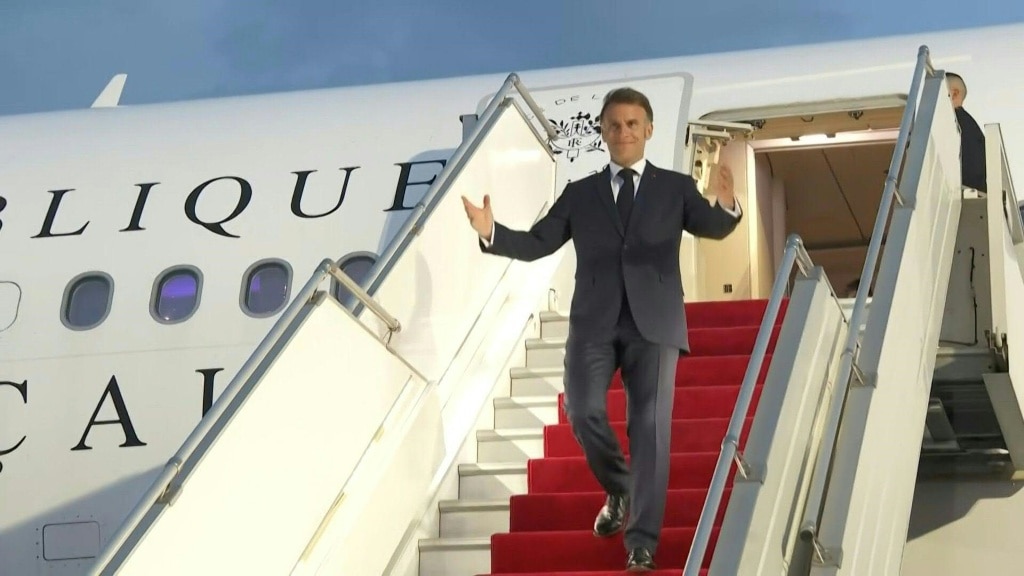
    Key attendees at the summit include Ukrainian President Volodymyr Zelensky and NATO Secretary General Mark Rutte; Merz will be represented by French President Emmanuel Macron for the proceedings. Notably, Carney’s participation marks the first time a non-European leader has joined EPC talks, a shift widely interpreted as a response to closer alignment between Ottawa and Europe amid shared pushback against Trump’s policies. Like many European economies, Canada has taken major damage from Trump’s sweeping tariffs, and Carney has emerged as a leading voice for middle powers pushing back against the U.S. president’s unilateral agenda. Earlier this year, he delivered a widely cited address calling on mid-sized nations to unite in the face of a new global order defined by great power competition and the erosion of long-standing international rules-based systems.

    Sebastien Maillard, a special adviser at the Paris-based Jacques Delors Institute think tank, noted that the EPC was originally framed as a cooperative body focused on countering Russian aggression after the 2022 invasion of Ukraine. “With the invitation to Canada, this initiative — which was initially driven by geography — is now taking on an anti-Trump slant,” Maillard explained. In a tangible step to deepen its ties with Europe, Canada has already become the first non-European country to join the EU’s defense financing scheme, as Ottawa actively seeks to diversify its economic and security partnerships away from its traditional southern neighbor the U.S., while expanding bilateral trade cooperation with the bloc. A senior anonymous EU official noted that “Canada has a way of looking at the world and looking at ways to solve the challenges we have currently that Europe shares to a great extent.”

    Launched in 2022 on the initiative of Emmanuel Macron, the EPC was created in direct response to Russia’s invasion of Ukraine, bringing together all EU member states alongside 21 additional non-EU countries for informal dialogue. Unlike formal EU summits, the EPC does not typically produce binding policy decisions, instead prioritizing open multilateral and one-on-one discussions between leaders. Most delegates arrived in Yerevan on Sunday for an informal opening dinner, with Spanish Prime Minister Pedro Sanchez expected to join Monday after a technical issue with his aircraft forced an emergency landing in Turkey, requiring him to stay overnight in Ankara.

    Monday’s gathering marks the first time the EPC has held a summit in the Caucasus region, a milestone that comes as Armenia actively pursues closer ties with the European Union while carefully reducing its long-standing reliance on traditional ally Russia. The EPC summit will be followed Tuesday by a formal EU-Armenia summit featuring European Commission President Ursula von der Leyen and Antonio Costa, who has described the meeting as a “major milestone” in Armenia’s rapprochement with the bloc.

    Relations between Yerevan and Moscow have deteriorated sharply in recent years, fueled by widespread anger in Armenia over the failure of Russian peacekeepers to intervene during recurring military conflicts between Armenia and neighboring Azerbaijan. Under Prime Minister Nikol Pashinyan, Armenia has adopted an official strategy of “diversification”, maintaining limited ties with Russia while expanding political and economic links with Western institutions. The country of 3.5 million signed a comprehensive partnership agreement with the EU in 2017, and formally announced its intention to apply for EU membership last year. In April, the EU deployed a special mission to Armenia to help the country counter foreign interference, amid widespread intelligence suggesting Russia is running a large-scale disinformation campaign to disrupt Armenia’s June general elections.

    While Russian President Vladimir Putin has stated he is “completely calm” about Armenia’s outreach to the EU, he has issued a clear warning that simultaneous membership in both the EU and the Russian-led Eurasian Economic Union is “simply impossible.”

  • Viva Energy announces major update to progress of Geelong oil refinery repairs

    Viva Energy announces major update to progress of Geelong oil refinery repairs

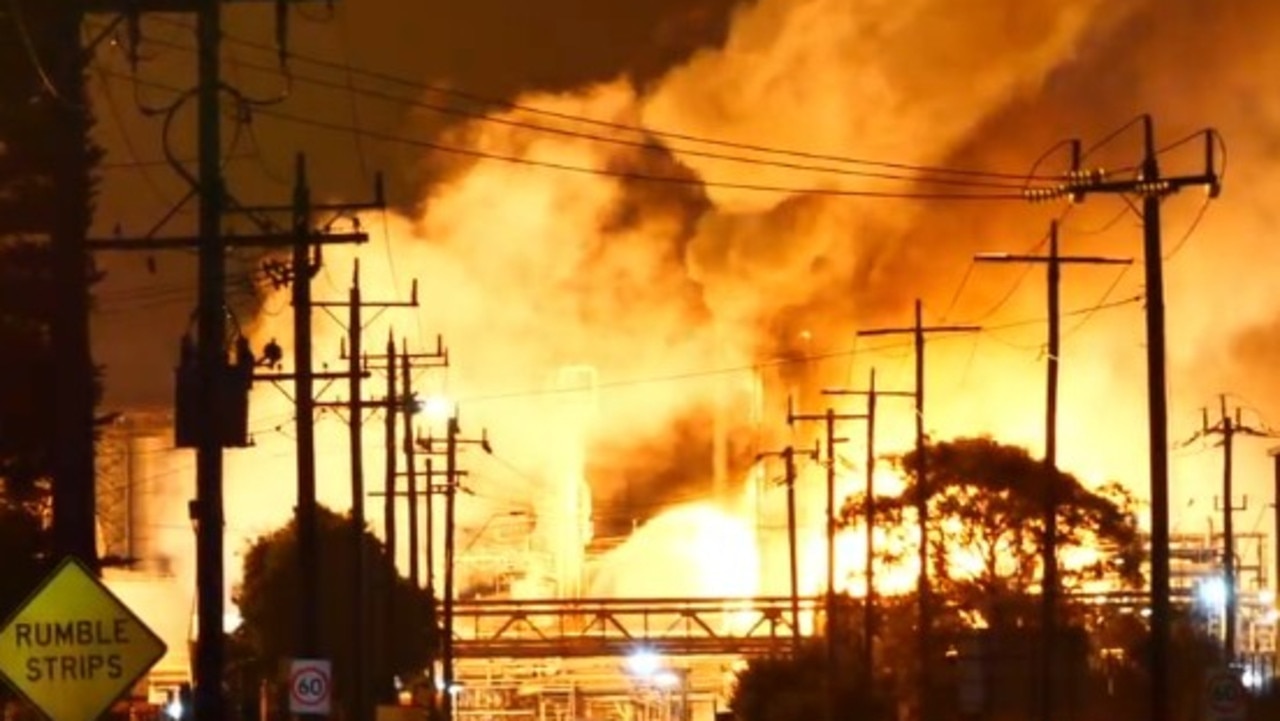
    Weeks after a devastating blaze tore through one of Australia’s only two functional oil refineries, operator Viva Energy has issued a key progress update on recovery efforts, confirming full operations are on track to resume by the end of June.

    The Geelong refinery, positioned on the shores of Corio Bay, suffered extensive damage when an equipment fault triggered a large fire on April 15. The incident immediately forced drastic production cuts and sparked widespread concern over national fuel security, coming at a moment when Australia’s supply chains were already strained by geopolitical conflict in the Middle East and ongoing disruptions to shipping through the Strait of Hormuz.

    In a filing to the Australian Securities Exchange (ASX) on Monday, Viva Energy outlined that repair work has progressed smoothly with no unforeseen delays identified to date. Crews are currently targeting a six-week repair timeline. Once the damaged critical equipment is brought back online, the facility will immediately restore production to 90% of its total maximum capacity, with full output expected by the end of June.

    Viva Energy confirmed it maintains sufficient stockpiles to meet customer demand across the country throughout the repair period, despite reduced output since the fire. Immediately after the blaze, the refinery adjusted production to 80% capacity for diesel and jet fuel, and 60% for petrol. The company noted it has already begun coordination with insurance providers to cover claims for property damage and business interruption losses, while a formal investigation into the exact root cause of the fire remains ongoing.

    As a critical piece of Australia’s domestic energy infrastructure, the Geelong refinery accounts for 10% of the nation’s total fuel output, and supplies more than half of Victoria’s fuel demand. It has a maximum processing capacity of 120,000 barrels of crude oil per day and employs more than 1,000 local workers.

    In the days following the fire, Prime Minister Anthony Albanese moved to reassure the public that the incident would not meaningfully alter Australia’s fuel supply outlook. Official government data from the Department of the Prime Minister and Cabinet, released on April 28, showed the country held enough reserves for 43 days of petrol, 33 days of diesel, and 28 days of jet fuel at that time, easing near-term market concerns.