标签: Oceania

大洋洲

  • The eye-watering cost of eating out on Australia Day revealed

    The eye-watering cost of eating out on Australia Day revealed

    Australian consumers are projected to incur an additional $26.7 million in surcharge fees during the Australia Day public holiday, according to exclusive research from financial comparison platform money.com.au. The analysis, based on Australian Bureau of Statistics retail data, reveals that holiday surcharges averaging 15% will significantly impact dining expenditures across cafes, restaurants, and takeaway food services.

    The financial burden comes as hospitality businesses face mandatory penalty rates under the Fair Work Act and modern awards, requiring wage increases of 225-250% for staff working on public holidays. With the industry operating on thin profit margins typically below 3%, according to IBIS World data, many establishments implement surcharges merely to break even rather than generate additional profit.

    Finance expert Sean Callery emphasizes that consumers should anticipate these additional costs when planning their holiday dining. “What might normally be a $7 coffee could rise to $8, while a family brunch costing $100 could increase to $115,” Callery noted. He advises patrons to inquire about surcharges beforehand to make informed spending decisions.

    Wes Lambert, CEO of the Australian Restaurant and Cafe Association, characterizes public holiday trading as a “labour of love” for many small businesses. “Hospitality is a high-labour, low-margin industry where wage costs typically constitute 30-40% of revenue,” Lambert explained. “When wages increase by 250%, that percentage can effectively reach 100%, leaving no room for absorption of additional costs.”

    The decision to implement surcharges presents a complex calculation for business owners, who must weigh potential increased customer volume against substantially higher operating expenses. Many establishments face uncertainty about whether holiday foot traffic will sufficiently offset the mandatory wage increases, making surcharges an essential survival mechanism rather than a choice.

  • Keys revels in Melbourne heat as Djokovic steps up history bid

    Keys revels in Melbourne heat as Djokovic steps up history bid

    Melbourne’s intense heatwave, with temperatures soaring towards 40°C (104°F), became a central character on Day Seven of the Australian Open, prompting tournament organizers to adjust schedules while elite athletes adapted their strategies for survival and victory.

    American powerhouse Madison Keys demonstrated remarkable heat resilience, delivering a commanding 6-3, 6-3 victory over former world number one Karolina Pliskova in just 75 minutes on Rod Laver Arena. The 2018 finalist from Florida, well-acclimated to extreme conditions, expressed enthusiasm for the challenging environment. “I was excited for the heat today, and ready for it,” Keys stated following her impressive performance that sets up an all-American clash with compatriot Jessica Pegula.

    Pegula, the tournament’s sixth seed, efficiently dispatched Russian qualifier Oksana Selekhmeteva 6-3, 6-2 in just 66 minutes, appreciating her early scheduling that spared her the worst of the afternoon heat.

    The spotlight intensifies as Novak Djokovic continues his historic campaign for an unprecedented 25th Grand Slam title. The Serbian legend, scheduled for the evening session on Rod Laver Arena when temperatures are expected to moderate, faces 75th-ranked Dutchman Botic Van de Zandschulp. Djokovic has displayed dominant form through the early rounds, not dropping a single set while managing his match schedule carefully to maximize performance from his 38-year-old body.

    Meanwhile, defending men’s champion Jannik Sinner seeks his third consecutive Melbourne title, facing American Eliot Spizzirri during what forecasters predict will be the day’s peak temperatures. The day’s schedule also features multiple major champions including Iga Swiatek, who aims to complete her career Grand Slam with an Australian Open victory, and two-time champion Naomi Osaka, who faces Australian qualifier Maddison Inglis.

    The extreme conditions prompted tournament officials to implement heat policies, including the potential suspension of play and earlier match start times, ensuring player safety remains paramount during the challenging weather conditions.

  • Fury grows over five-year-old’s detention in US immigration crackdown

    Fury grows over five-year-old’s detention in US immigration crackdown

    Minneapolis has become the epicenter of a heated national debate following the controversial detention of a five-year-old asylum seeker during extensive Immigration and Customs Enforcement (ICE) operations. Liam Conejo Ramos and his Ecuadorian father, Adrian Conejo Arias, were apprehended outside their home in Columbia Heights, triggering widespread condemnation and protests across the city.

    According to school superintendent Zena Stenvik, the child was allegedly used as ‘bait’ by federal agents to lure other family members from their residence—an accusation that ICE officials vehemently deny. Instead, Commander Marcos Charles asserted that officers acted to protect the child after his father allegedly fled from authorities, leaving the boy unattended. ‘My officers did everything they could to reunite him with his family,’ Charles stated during a Friday press briefing.

    The incident has ignited fierce political responses. Vice President JD Vance defended the operation, questioning whether agents should have ‘let a five-year-old child freeze to death’ rather than intervene. Conversely, Democratic Congressman Joaquin Castro has demanded the child’s immediate release and condemned the administration’s approach to immigration enforcement.

    Community reaction has been substantial, with hundreds of local businesses closing their doors in protest and organized demonstrations occurring throughout Minneapolis. The anti-Trump organization Indivisible Twin Cities called for a statewide day of action under the motto ‘No work. No school. No shopping,’ culminating in a major march through the city center.

    This case occurs within the broader context of intensified ICE operations in Democratic-led cities and follows the recent fatal shooting of US citizen Renee Good by federal agents on January 7. Minnesota authorities are seeking a temporary restraining order to halt the immigration sweeps, with a federal court hearing scheduled for Monday.

    Former Vice President Kamala Harris joined the chorus of criticism, describing herself as ‘outraged’ by the detention of what she called ‘just a baby.’ The United Nations human rights chief, Volker Turk, additionally urged American officials to cease the ‘dehumanizing portrayal and harmful treatment of migrants and refugees.’

    Legal representatives for the Ramos family maintain that they followed proper asylum procedures in Minneapolis, which holds sanctuary city status limiting police cooperation with federal immigration authorities.

  • Four attacks in 48 hours: How east Australia’s beaches became a ‘perfect storm’ for sharks

    Four attacks in 48 hours: How east Australia’s beaches became a ‘perfect storm’ for sharks

    Marine researchers are providing crucial context following an unprecedented cluster of shark encounters along Australia’s eastern coastline, advocating for scientific understanding over knee-jerk conservation measures. Between January 18-20, four separate incidents occurred within a 48-hour window, three concentrated within a mere 15-kilometer radius near Sydney.

    The sequence began when a 12-year-old boy sustained critical injuries while swimming in Sydney Harbour. Within hours, an 11-year-old’s surfboard was bitten at Dee Why beach, followed by a serious attack on a man at Manly beach that required emergency hospitalization. A fourth incident occurred 300 kilometers north when a surfer received chest injuries after a shark bit his board.

    University of Sydney public policy expert Dr. Chris Pepin-Neff, with two decades of shark research experience, described the clustering as “extraordinary” in both temporal and geographical proximity. The incidents prompted widespread beach closures and renewed calls for shark culling programs from concerned communities.

    However, scientific evidence points to environmental factors rather than increased shark aggression. Researchers identify the exceptional rainfall preceding the incidents – 127 millimeters within 24 hours, representing Sydney’s wettest January day in 38 years – as creating ideal conditions for bull sharks, believed responsible for the Sydney incidents.

    Dr. Rebecca Olive, senior research fellow at RMIT University, explains: “Bull sharks thrive in warm, brackish water that most other sharks avoid. The freshwater runoff created perfect conditions for them, likely flushing nutrients and sewage into coastal waters that attracted bait fish and subsequently sharks.”

    Dr. Pepin-Neff characterizes this as a “perfect storm” scenario where low salinity water triggered a “biodiversity explosion” bringing bait fish and sharks closer to shore simultaneously.

    Statistical analysis reveals that while recorded shark encounters have gradually increased from 8-10 annually in the 1990s to mid-20s in recent decades, this reflects improved reporting systems and human behavioral factors rather than heightened shark aggression. Coastal population growth, increased water sports participation, and advanced wetsuit technology enabling longer ocean stays all contribute to higher encounter probabilities.

    Critically, researchers emphasize that the rate of shark bites hasn’t increased proportionally to human ocean activity. Dr. Olive notes that “given how many people use the ocean daily, incidents are relatively uncommon, and fatalities are even rarer.”

    The researchers identify problematic language around shark encounters, where sightings, encounters, and bites become conflated under the emotionally charged “attack” terminology, distorting public risk perception.

    Scientific consensus firmly rejects culling as an effective safety strategy. Dr. Pepin-Neff states unequivocally: “It just doesn’t work. It makes politicians feel better, but it makes nobody in the water any safer.” The variable isn’t shark populations but attractants drawing them near shore.

    Researchers recommend practical risk mitigation including avoiding water activities after heavy rainfall, creating designated shark enclosures for swimming, and adopting a more realistic understanding of marine environments.

    Dr. Pepin-Neff concludes with a crucial perspective shift: “We must treat beaches like bushland – Australians understand wilderness navigation. We need to reinforce that the ocean remains wild space. The ocean is never completely safe, and sharks aren’t always dangerous. We’re in their way, not on their menu.”

  • Ex-Canadian Olympian turned drug lord arrested: FBI chief

    Ex-Canadian Olympian turned drug lord arrested: FBI chief

    In a dramatic transcontinental law enforcement operation, Ryan Wedding—a former Canadian Olympic snowboarder who allegedly evolved into one of the world’s most prolific narcotics traffickers—has been apprehended and extradited to the United States. FBI Director Kash Patel confirmed the arrest during a press conference held Friday on the tarmac of Ontario, California International Airport.

    Wedding, 44, had occupied a spot on the FBI’s prestigious ‘Ten Most Wanted Fugitives’ list, with the U.S. State Department offering a substantial $15 million reward for information leading to his capture. Director Patel characterized Wedding as a criminal mastermind on par with infamous drug lords such as El Chapo and Pablo Escobar, alleging his central role within the Sinaloa Cartel.

    According to federal prosecutors, Wedding stands accused of orchestrating the smuggling of approximately 60 metric tons of cocaine from Colombia through Mexican corridors into U.S. and Canadian markets. His alleged criminal empire also involved coordinating multiple murders, including the assassination of government witnesses. One such victim was fatally shot five times in the head at a Medellin restaurant in January 2025.

    The arrest, executed in Mexico City on Thursday night, culminated a decade-long international manhunt. Akil Davis, Assistant Director of the FBI’s Los Angeles field office, disclosed that 36 co-conspirators linked to Wedding’s network have been arrested, with tens of millions in assets—including luxury vehicles and fine art—seized.

    Wedding, who competed for Canada in the parallel giant slalom at the 2002 Winter Olympics, is scheduled for an initial court appearance Monday morning. The case represents one of the most significant narco-trafficking prosecutions in recent history, highlighting the intersection of international sports and organized crime.

  • Snow and ice storm set to sweep US

    Snow and ice storm set to sweep US

    A formidable winter storm system originating off the California coast is poised to unleash catastrophic winter conditions across approximately 160 million Americans beginning Friday. The massive weather event threatens to deliver a dangerous combination of freezing rain and heavy snowfall spanning from the Rockies through the Plains regions, ultimately progressing toward the densely populated mid-Atlantic and northeastern United States.

    The National Weather Service has issued grave warnings regarding potentially catastrophic ice accumulation that could trigger prolonged power outages, significant tree damage, and dangerously impassable travel conditions. Meteorological projections indicate the storm could persist for several days, disrupting daily life while introducing an Arctic air mass across extensive portions of the nation.

    Transportation networks are already experiencing disruptions, with Flightaware reporting over 1,500 cancelled weekend flights, particularly affecting Texas airports. Despite these challenges, Texas officials have assured residents that their power infrastructure—which failed catastrophically during a 2021 winter storm—remains fully prepared for this event. Republican Governor Greg Abbott asserted the state’s grid “has never been stronger, never been more prepared and is fully capable of handling this winter storm.”

    Meanwhile, New York Governor Kathy Hochul emphasized the life-threatening risks associated with extreme cold exposure, noting that merely “five or six minutes outside could literally be dangerous for your health.” The Democratic leader urged residents to stock essential supplies, avoid unnecessary travel, and implement safety measures including pipe protection and safe heater usage.

    Meteorological analysis indicates this severe weather pattern results from an elongated polar vortex—a typically compact Arctic low-pressure system that has stretched into an oval formation, releasing frigid air across North America. While scientific discussion continues regarding potential connections between polar vortex disruptions and climate change, former President Donald Trump utilized the event to question climate science via his Truth Social platform.

    Fourteen states from southern to northeastern regions plus Washington DC have preemptively declared states of emergency. Officials nationwide are advising citizens to prepare emergency kits, maintain vehicle fuel tanks, and implement comprehensive safety precautions as the system advances.

  • Danish PM visits Greenland for talks after Trump climbdown

    Danish PM visits Greenland for talks after Trump climbdown

    In a significant diplomatic development, Danish Prime Minister Mette Frederiksen concluded crucial talks in Nuuk with Greenlandic leadership following the de-escalation of U.S. territorial ambitions toward the autonomous Arctic territory. The high-level meetings occurred against the backdrop of withdrawn acquisition threats from President Donald Trump, who instead agreed to a nebulous ‘framework’ for future negotiations through NATO mediation.

    The diplomatic confrontation reached its peak when Trump abruptly abandoned his aggressive stance toward Greenland after intensive discussions with NATO Secretary General Mark Rutte. While specific details remain undisclosed, the arrangement purportedly satisfies American strategic interests while respecting Denmark’s territorial sovereignty. According to sources familiar with the negotiations, the framework centers on modernizing the existing 1951 defense pact that already permits U.S. military presence on the island with prior notification.

    Danish Foreign Minister Lars Lokke Rasmussen clarified that no formal agreement had been finalized, characterizing the arrangement merely as ‘a framework for future agreement’ that replaces ‘drastic ideas about needing to own Greenland’ with negotiated solutions. Both Danish and Greenlandic officials have emphatically declared sovereignty protection as their non-negotiable ‘red line’ in forthcoming discussions.

    The geopolitical tension has paradoxically strengthened the relationship between Denmark and Greenland despite historical colonial grievances. Greenlandic Prime Minister Jens-Frederik Nielsen emphasized that no international agreements could be valid without direct involvement from Nuuk authorities, echoing Frederiksen’s consistent position on self-determination matters.

    Analysts observe that Trump’s aggressive posture has temporarily unified Greenland’s political spectrum, causing independence advocates to prioritize solidarity with Denmark amid external pressure. This unexpected diplomatic episode has accelerated security discussions while highlighting the Arctic region’s growing strategic importance in global power dynamics.

  • Outrage after Trump claims NATO troops avoided Afghan front line

    Outrage after Trump claims NATO troops avoided Afghan front line

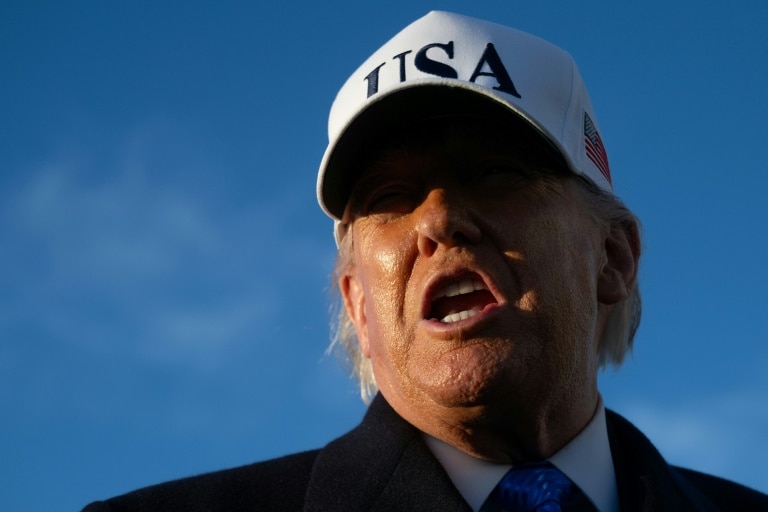
    The British government has formally rebuked former U.S. President Donald Trump for what it called “wrong” comments that diminished NATO allies’ contributions during the Afghanistan conflict. The diplomatic row erupted following Trump’s interview with Fox News where he suggested NATO troops “stayed a little back, a little off the front lines” in Afghanistan.

    British officials expressed particular outrage at Trump’s apparent unawareness that 457 British soldiers died during the conflict. Prime Minister Keir Starmer’s official spokesman emphasized that “their sacrifice and that of other NATO forces was made in the service of collective security and in response to an attack on our ally.”

    The controversy deepened as Defense Minister John Healey noted that NATO’s Article 5 collective security clause had only been triggered once in history—precisely to support the United States following the 9/11 attacks. “The UK and NATO allies answered the US call. And more than 450 British personnel lost their lives in Afghanistan,” Healey stated, describing the fallen troops as “heroes who gave their lives in service of our nation.”

    Families of deceased soldiers joined political leaders in expressing outrage. Lucy Aldridge, whose son William died in Afghanistan at age 18, told The Mirror newspaper that Trump’s remarks were “extremely upsetting.” Labour Party politician Emily Thornberry, chair of parliament’s Foreign Affairs Committee, denounced the comments as “so much more than a mistake” and “an absolute insult to 457 families who lost someone in Afghanistan.”

    Official UK figures confirm that 405 of the 457 British casualties in Afghanistan were killed in hostile military action, directly contradicting Trump’s assertion about NATO forces avoiding front-line combat. The United States reportedly lost more than 2,400 soldiers during the conflict.

  • Volatile security blocks UN from Syria IS-linked camp

    Volatile security blocks UN from Syria IS-linked camp

    A deteriorating security situation at the Al-Hol displacement camp in northeastern Syria has prevented United Nations personnel from delivering critical humanitarian assistance. This development follows the withdrawal of Kurdish-led security forces and the subsequent deployment of the Syrian national army, creating a volatile power transition.

    According to two former humanitarian workers who spoke with AFP on condition of anonymity, a significant security vacuum occurred between the Kurdish withdrawal and the army’s deployment, enabling an unspecified number of camp residents to escape. During this period, residents reportedly set fire to facilities operated by aid organizations.

    The camp, which previously housed approximately 23,000 individuals including suspected Islamic State family members from multiple nationalities, represents one of the most complex humanitarian challenges stemming from the conflict against ISIS. The population includes Syrian and Iraqi nationals alongside approximately 6,200 foreign women and children from various countries.

    In a parallel development, Kurdish forces completed a withdrawal from the Al-Aqtan prison near Raqa under a negotiated agreement with the Syrian government. This transfer, witnessed by AFP correspondents, involved hundreds of fighters relocating to Kurdish-held areas while ISIS detainees remained under Syrian jurisdiction.

    These security rearrangements follow a broader ceasefire agreement announced January 18th between Syrian President Ahmed al-Sharaa and SDF commander Mazloum Abdi, which includes provisions for integrating Kurdish administration into the state apparatus. The United States has concurrently begun transferring ISIS detainees from Syrian to Iraqi facilities, with 150 individuals relocated thus far according to official statements.

  • ‘He kept fighting’: Brave friend of shark attack survivor Nico Antic reveals moment he leapt into water to save his mate

    ‘He kept fighting’: Brave friend of shark attack survivor Nico Antic reveals moment he leapt into water to save his mate

    A harrowing tale of adolescent bravery has emerged from Sydney’s coastline, where a young companion risked his own safety to rescue a friend during a traumatic shark encounter. The incident, involving 12-year-old Nico Antic, occurred last Sunday afternoon while he was rock jumping with peers at Hermitage Foreshore Walk near Shark Beach in Vaucluse.

    According to eyewitness accounts, one of Nico’s friends demonstrated extraordinary courage by entering the water despite the visible presence of the predator to drag the injured boy to safety. “He kept fighting and breathing in my arms and he never gave up for a second,” the rescuer told 7News, describing Nico as “the most stubborn person I know.”

    The attack formed part of a concerning pattern along New South Wales coastline, with three additional shark incidents reported within the same week. These included an 11-year-old surfer whose board was damaged at Dee Why Point, 27-year-old surfer Andre de Ruyter encountering a shark at Manly Beach, and 39-year-old Paul Zvirzdinas being knocked from his board near Port Macquarie.

    Emergency response teams provided critical first aid before transporting Nico via boat to Rose Bay and subsequently to the Children’s Hospital in Randwick. NSW Police Superintendent Joseph McNulty publicly commended the “brave” actions of the young rescuers, noting the “very confronting injuries” they faced during the rescue.

    Community support has surged through a GoFundMe campaign organized by family friend Victor Piñeiro, which has raised over $224,000 of its $250,000 target to assist with medical expenses and related costs. The fundraiser description noted Nico had sustained “devastating injuries” from the encounter.

    In response to the incidents, Northern Beaches Council implemented temporary beach closures but has since reopened facilities ahead of the Australia Day long weekend with enhanced safety measures. These include increased aerial surveillance, jet ski patrols, additional drum lines, and reactivated lifeguard services. Mayor Sue Heins emphasized the importance of swimming between flags and heeding lifeguard instructions during this period of heightened shark activity.