标签: Oceania

大洋洲

  • Europe scrambles to respond to Trump tariff threat

    Europe scrambles to respond to Trump tariff threat

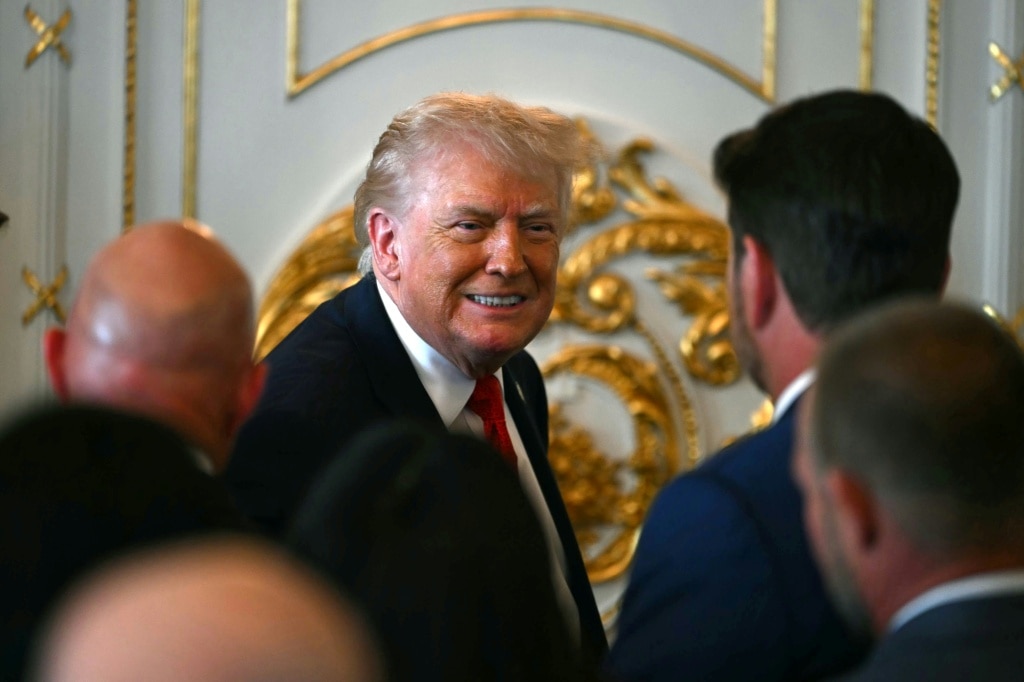
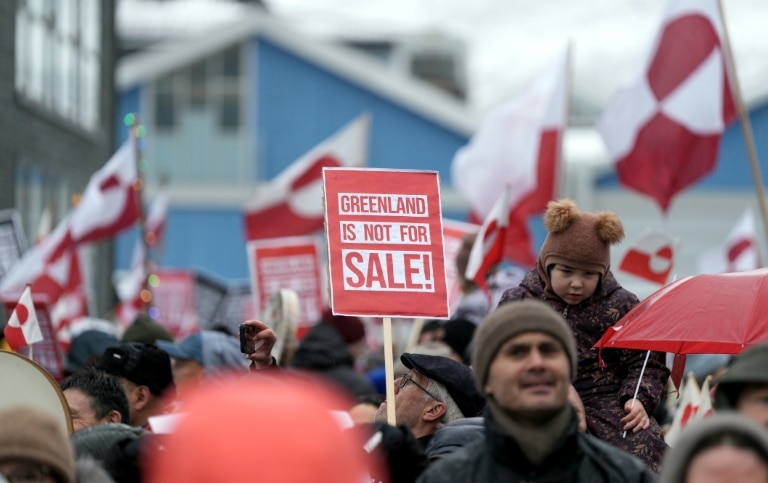
    European leaders are mounting a coordinated response to President Donald Trump’s unprecedented tariff threats, which come as direct retaliation for their opposition to his administration’s renewed interest in acquiring Greenland. The autonomous Danish territory has become the unlikely epicenter of a major diplomatic crisis straining NATO alliances.

    Italian Prime Minister Giorgia Meloni, despite maintaining generally positive relations with Trump, openly criticized the proposed economic measures during her visit to Seoul. ‘I believe that imposing new sanctions today would be a mistake,’ Meloni stated, revealing she had communicated this position directly to the American president hours earlier. While characterizing the situation as partly stemming from ‘understanding and communication’ failures, she emphasized NATO’s crucial role in resolving the escalating dispute.

    Across Europe, condemnation of Trump’s tariff announcement has been swift and unequivocal. British Culture Minister Lisa Nandy confirmed Prime Minister Keir Starmer’s intention to address the matter urgently with the White House, labeling the threatened tariffs as ‘wrong,’ ‘deeply unhelpful,’ and ‘counterproductive.’

    French President Emmanuel Macron advocated for a robust European response, urging deployment of the EU’s previously unused ‘anti-coercion instrument’—a powerful trade mechanism designed to counteract such economic pressure. This tool, often referred to as the EU’s trade ‘bazooka,’ enables restrictions on imports of goods and services.

    The Trump administration has outlined a graduated tariff schedule: implementing 10% tariffs on all imports from eight European nations—Denmark, Norway, Sweden, France, Germany, the United Kingdom, Netherlands, and Finland—beginning February 1, with escalation to 25% by June 1 if Greenland negotiations remain stalled.

    Civil society has joined governmental opposition, with thousands protesting in Nuuk, Copenhagen, and other Danish cities against potential U.S. annexation. Diplomatic channels are actively engaged, as evidenced by Danish Foreign Minister Lars Lokke Rasmussen’s planned visits to Norway, the UK, and Sweden for Arctic security consultations.

    European officials emphasize the mutual damage of tariff escalation. French Agricultural Minister Annie Genevard noted that American farmers and industrialists would also suffer significant losses, while Dutch Foreign Minister David van Weel condemned Trump’s approach as ‘inexplicable blackmail.’

    The European Union has convened an emergency meeting of ambassadors in Brussels to formulate a unified strategy, with Commission President Ursula von der Leyen and European Council President Antonio Costa warning that these tariffs would ‘undermine transatlantic relations and risk a dangerous downward spiral.’
  • Player helps ball girl after collapse at Australian Open

    Player helps ball girl after collapse at Australian Open

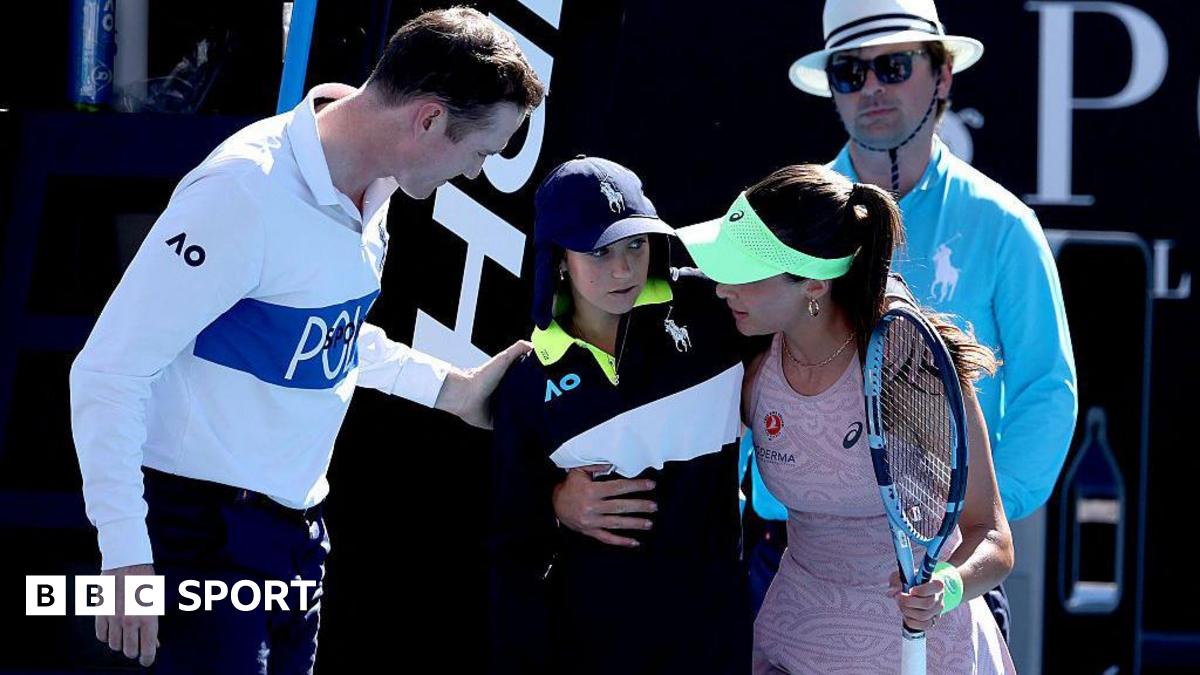
    In a moment that transcended athletic competition, Turkish qualifier Zeynep Sonmez demonstrated profound humanity during her first-round Australian Open match against Russia’s Ekaterina Alexandrova. As temperatures soared to 28°C at Melbourne Park, a ball girl positioned beside the umpire’s chair collapsed suddenly during the second set, prompting immediate intervention from the world number 112-ranked player.

    Sonmez abandoned her competitive focus to sprint across the court, providing physical support as the visibly distressed youngster struggled to maintain consciousness. ‘She was really shaking,’ Sonmez later recounted to BBC Sport. ‘She said she was fine but it was obvious she was not fine. As we were walking she fainted so luckily I grabbed her.’

    The incident triggered a six-minute suspension of play while medical staff attended to the ball girl, who subsequently received on-site treatment before being escorted from the arena. Tournament organizers confirmed the individual had been cleared to return home following medical assessment.

    Reflecting on her instinctive response, Sonmez articulated a philosophy that resonated beyond the match: ‘I always say it is more important to be a good human being than a good tennis player. It was just my instinct to help her and I think everyone would do the same.’

    The athletic drama continued as Sonmez, having trailed 3-0 in the deciding set, mounted an impressive comeback to secure a 7-5, 4-6, 6-4 victory on her fourth match point against the favored Alexandrova. The Turkish athlete expressed hope to reconnect with the ball girl later in the tournament.

    This incident occurred amid increasing attention to heat management at the Australian Open, where the Heat Stress Scale registered 2.8 at the time of the incident—a level that triggers enhanced hydration protocols. The tournament’s Extreme Heat Policy, updated in 2019, implements specific measures to protect players, staff, and officials when conditions become potentially hazardous.

    In other day-one action, French qualifier Elsa Jacquemot delivered a spectacular upset against Ukraine’s 20th-seeded Marta Kostyuk in a historic triple tie-break marathon lasting three hours and 31 minutes—the longest match of the young season and the first Open-era contest in Melbourne to feature three tie-break sets. Jacquemot’s victory, achieved after saving a match point while trailing 5-3 in the second set, marked an extraordinary comeback against an opponent who had recently defeated three top-10 players en route to the Brisbane International final.

  • Man swims in flooded Sydney golf course after heavy rain

    Man swims in flooded Sydney golf course after heavy rain

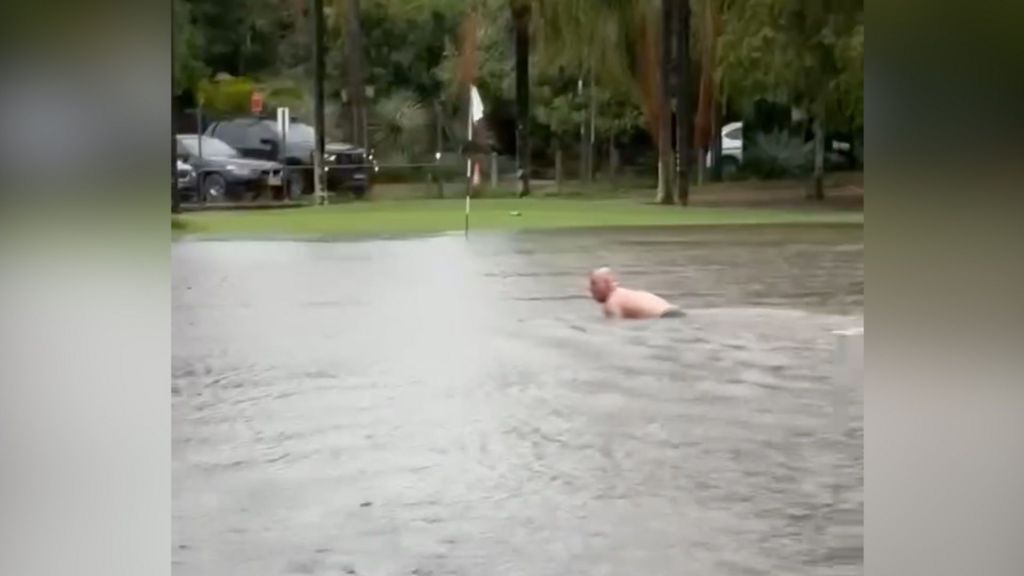
    Amidst torrential downpours that submerged parts of Sydney, an unidentified individual turned urban flooding into an impromptu aquatic adventure at a waterlogged golf course. The spontaneous swim occurred as severe weather systems swept across Australia’s eastern coast, transforming manicured fairways into temporary reservoirs.

    Eyewitness accounts describe the man casually swimming breaststroke through murky floodwaters that completely covered the golf course’s features, including sand traps and putting greens. The incident, captured on video and circulated across social media platforms, showcases an unusual response to the severe weather conditions that prompted official flood warnings across the region.

    Meteorological reports indicate the rainfall exceeded monthly averages within a 48-hour period, with emergency services responding to multiple flood-related incidents throughout the metropolitan area. While authorities cautioned against entering floodwaters due to hidden dangers and contamination risks, this particular individual appeared determined to embrace the unusual circumstances.

    The viral moment has sparked mixed reactions from online commentators, ranging from amusement at the display of Australian resilience to concerns about normalizing dangerous behavior during extreme weather events. The incident highlights how communities respond differently to environmental challenges, blending practicality with moments of levity during difficult circumstances.

  • Top-ranked Alcaraz, Sabalenka headline Australian Open day one

    Top-ranked Alcaraz, Sabalenka headline Australian Open day one

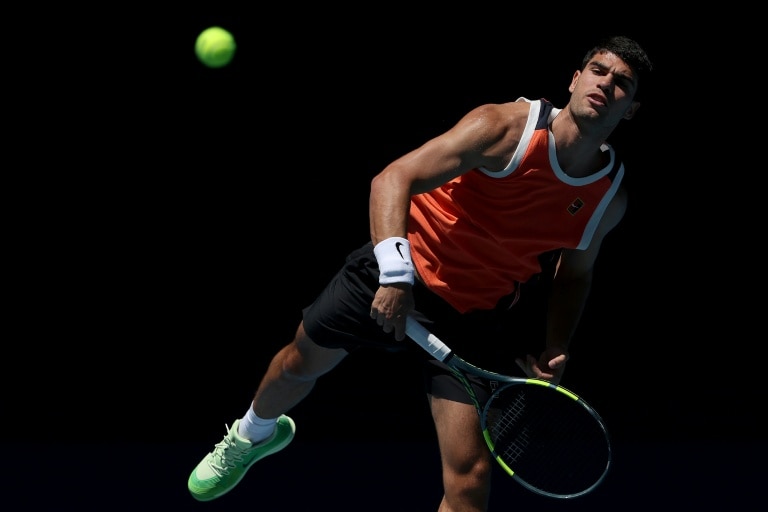
    The 2026 Australian Open commenced with spectacular intensity on Sunday, featuring top-ranked contenders Carlos Alcaraz and Aryna Sabalenka leading the charge on the opening day. Alcaraz, currently world number one, enters Melbourne Park with a historic opportunity—to complete a career Grand Slam by claiming the only major title absent from his impressive collection. The Spanish phenom, already a champion at Wimbledon, the US Open, and Roland Garros, could surpass compatriot Rafael Nadal as the youngest male player to achieve this milestone if victorious.

    Alcaraz faces Australian hopeful Adam Walton, ranked 79th, in his opening match on Rod Laver Arena. Meanwhile, reigning women’s champion Aryna Sabalenka seeks her third Australian Open title in four years. Fresh off a dominant victory at the Brisbane International, Sabalenka appears in formidable form as she prepares to confront French wildcard Tiantsoa Rakotomanga Rajaonah.

    The day’s lineup also includes last year’s finalist Alexander Zverev, who begins his campaign against Canada’s Gabriel Diallo. In a remarkable display of longevity, 45-year-old Venus Williams returns to Melbourne for the first time since 2021, becoming the oldest woman ever to compete in the tournament. Despite recent struggles and a current ranking of 576, the seven-time Grand Slam champion remains undaunted as she faces Serbia’s Olga Danilovic.

    Other notable competitors include men’s tenth seed Alexander Bublik and women’s twelfth seed Elina Svitolina, both arriving with momentum from recent warm-up tournament victories. The opening day sets the stage for what promises to be a thrilling fortnight of elite tennis competition.

  • Iran’s leader demands crackdown on ‘seditionists’ after protests

    Iran’s leader demands crackdown on ‘seditionists’ after protests

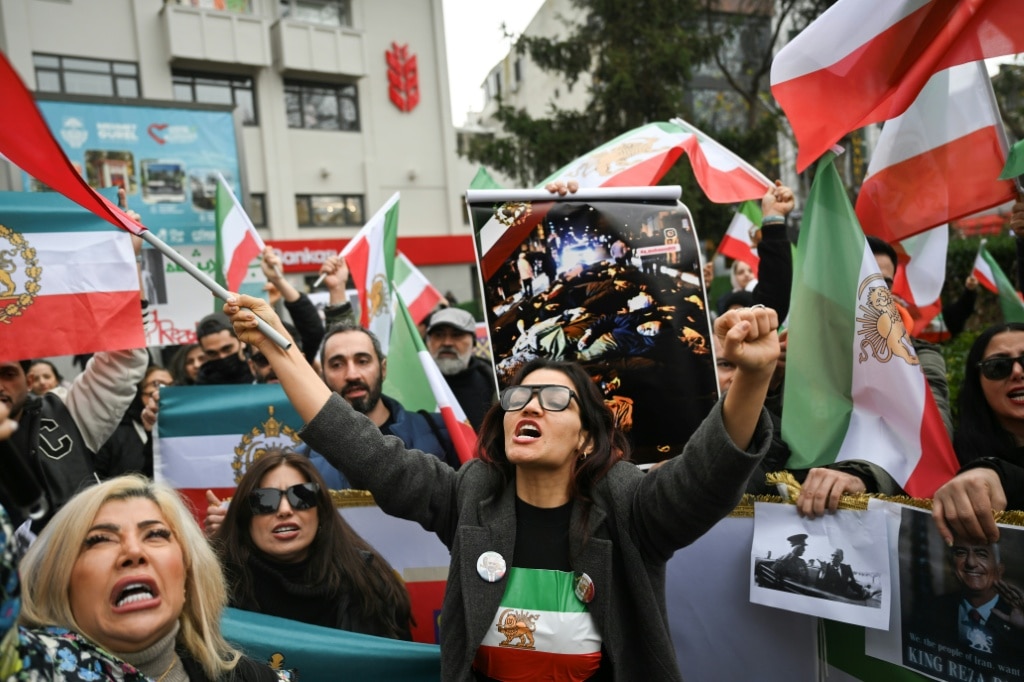
    In a significant escalation of rhetoric, Iran’s Supreme Leader Ayatollah Ali Khamenei has called for authorities to decisively confront what he termed ‘seditionists,’ directly blaming U.S. President Donald Trump for casualties during recent nationwide demonstrations. The address, broadcast on state television Saturday, came after weeks of the most substantial anti-government protests to challenge the Islamic Republic in over three years.

    The unrest, initially sparked by economic grievances, transformed into broad opposition against Iran’s clerical leadership before being suppressed through a severe crackdown that included a nationwide internet blackout lasting more than a week. While Iranian authorities claim to have restored calm and labeled the demonstrations as ‘riots,’ independent rights organizations report thousands of fatalities and arrests during the suppression campaign.

    Khamenei’s speech framed the protests as an ‘American conspiracy’ designed to reestablish Western ‘military, political and economic domination’ over Iran. He asserted that while Iran doesn’t seek conflict, it ‘will not spare domestic criminals’ and accused Trump of responsibility for the violence and accusations against Iran.

    The verification of casualties remains profoundly challenging due to ongoing internet restrictions, though multiple sources indicate a substantial death toll. Norway-based Iran Human Rights (IHR) has documented 3,428 verified fatalities while cautioning that the actual number could be significantly higher. Some estimates, including from opposition media outside Iran, suggest figures ranging from 5,000 to as many as 20,000 killed.

    Meanwhile, partial internet restoration has begun after approximately 200 hours of complete shutdown, though connectivity remains severely limited. The government prosecutor dismissed Trump’s recent claims about halted executions as ‘nonsense,’ maintaining that the state’s response had been ‘firm, dissuasive and swift.’

    Internationally, protests continue in diaspora communities across Europe, while Reza Pahlavi—son of the deposed Shah—has called for renewed demonstrations within Iran, though rights monitors report no verifiable protests in recent days amid heavy security deployments.

  • Trump invites more leaders to join Gaza ‘Board of Peace’

    Trump invites more leaders to join Gaza ‘Board of Peace’

    The geopolitical landscape surrounding postwar Gaza witnessed significant developments as former U.S. President Donald Trump’s proposed ‘Board of Peace’ attracted international participation. Multiple world leaders have received invitations to join the controversial initiative, which aims to address the territory’s reconstruction and governance following prolonged conflict.

    Egyptian President Abdel Fattah al-Sisi, Turkish President Recep Tayyip Erdogan, Argentine President Javier Milei, and Canadian Prime Minister Mark Carney have all been approached to participate in the board. Their responses vary from immediate acceptance to careful consideration, with Milei publicly expressing honor at the invitation via social media platform X.

    The board’s composition includes prominent political figures such as former British Prime Minister Tony Blair, who acknowledged Trump’s leadership in establishing the initiative. Blair’s involvement remains contentious due to his role in the 2003 Iraq invasion, though Trump previously verified his acceptability to all parties.

    Administrative structure reveals two distinct entities: a primary Board of Peace focusing on governance capacity-building, regional relations, reconstruction, and investment mobilization, and a secondary Gaza executive board with advisory functions. The primary board incorporates Secretary of State Marco Rubio, senior negotiators Jared Kushner and Steve Witkoff, World Bank President Ajay Banga, billionaire financier Marc Rowan, and National Security Council member Robert Gabriel.

    Concurrent with these developments, a technocratic Palestinian committee held its inaugural meeting in Cairo, attended by Kushner. The White House confirmed additional appointments would follow for both boards, though specific allocations for world leaders remain unclear.

    Security dimensions advanced with the appointment of U.S. Major General Jasper Jeffers to lead an International Stabilization Force. This unit will assume security responsibilities in Gaza and establish a new police force to replace Hamas structures. Jeffers previously managed the Lebanon-Israel ceasefire monitoring in late 2024.

    The initiative progresses amid ongoing military operations, with Washington characterizing the effort as transitioning from ceasefire implementation to Hamas disarmament. The approach continues to generate debate regarding its vision for economic transformation and potential demographic policies in the conflict-ravaged territory.

  • Man Utd dominate Man City in dream start for Carrick

    Man Utd dominate Man City in dream start for Carrick

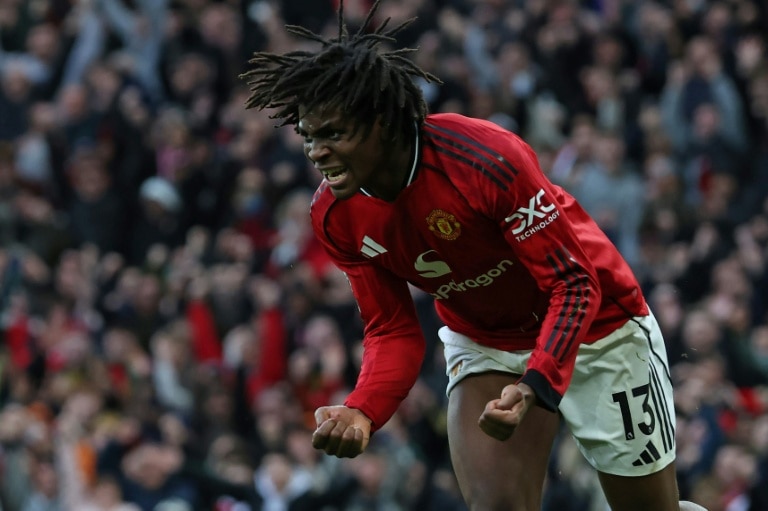
    In a stunning reversal of fortunes, Manchester United delivered a masterclass performance to defeat local rivals Manchester City 2-0 at Old Trafford on Saturday, marking a triumphant beginning to Michael Carrick’s interim managerial reign. The victory significantly damages City’s Premier League championship ambitions while propelling United into the coveted top four positions.

    The Red Devils established dominance from the opening whistle, creating numerous scoring opportunities against City’s injury-plagued defense. Their persistence finally paid off in the 65th minute when Bryan Mbeumo, freshly returned from African Cup of Nations duty, broke the deadlock with a precise low finish. Patrick Dorgu secured the victory late in the match, capitalizing on defensive inattention to seal only United’s second win in their previous eight outings.

    City’s defensive vulnerabilities were exposed throughout the contest, with inexperienced center-back pairing Max Alleyne and Abdukodir Khusanov struggling against United’s relentless attack. Only the exceptional goalkeeping of Gianluigi Donnarumma prevented a more lopsided scoreline, with the Italian international making several spectacular saves including a remarkable double stop against Amad Diallo and Casemiro.

    The match saw three United goals disallowed for offside, including a late effort from substitute Mason Mount, but these decisions couldn’t overshadow United’s comprehensive superiority. Pep Guardiola’s tactical changes at halftime, introducing Nico O’Riley and Raya Cherki, failed to spark a comeback as City extended their winless league run to four matches since the new year.

    The result carries significant implications beyond local bragging rights, with Arsenal positioned to extend their league lead to nine points later in the weekend. Guardiola’s decision to substitute Erling Haaland with ten minutes remaining suggested prioritization of other competitions, acknowledging the difficult reality of City’s diminished title prospects following this decisive defeat.

  • Martyn was given ’50/50′ chance of survival

    Martyn was given ’50/50′ chance of survival

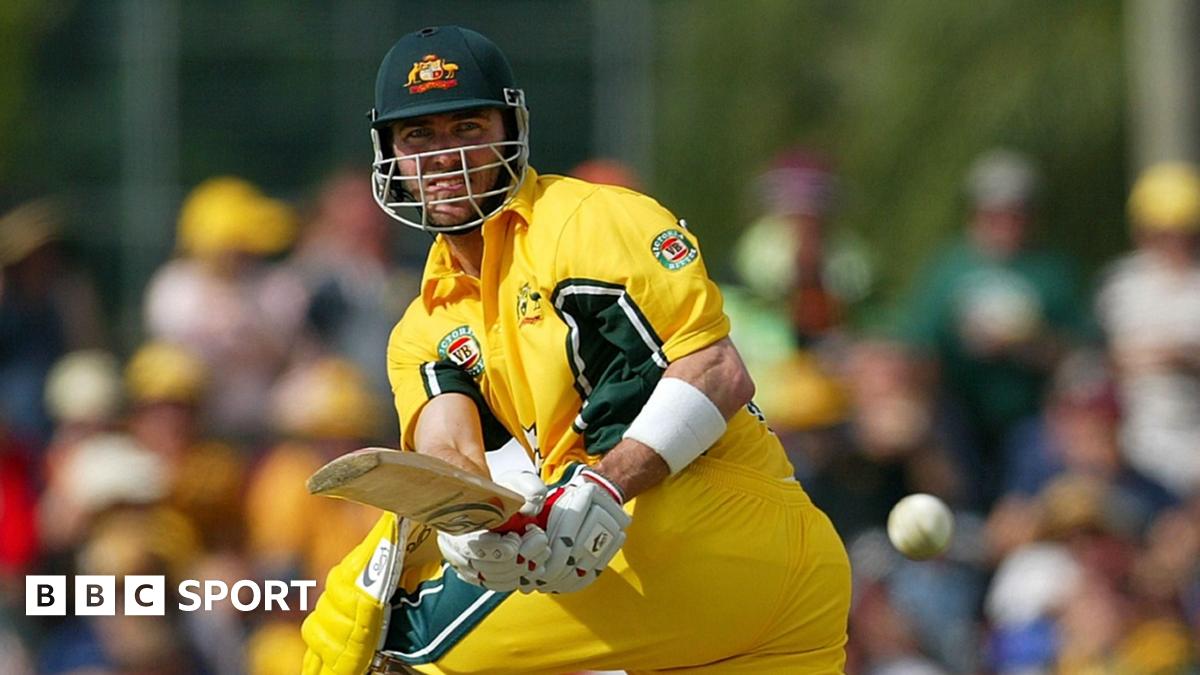
    Former Australian cricket star Damien Martyn has revealed he was given only a 50% chance of survival after contracting a severe case of meningitis that required an eight-day induced coma in late December 2025. The 54-year-old Test veteran shared his harrowing health ordeal through a public statement accompanied by a beachside recovery photo.

    Martyn described how his life was suddenly ‘taken out of my hands’ on December 27th when meningitis aggressively attacked his brain. Medical professionals at Gold Coast University Hospital made the critical decision to place him in a paralyzed coma to combat what he termed ‘this awful disease.’ Against statistical predictions, Martyn emerged from the coma after eight days, initially unable to walk or speak.

    In what he characterizes as a remarkable recovery, the cricketer-turned-survivor regained both mobility and speech within just four days of waking, astonishing his medical team. His discharge from hospital marked the beginning of an ongoing rehabilitation journey that now includes symbolic moments of gratitude, such as walking on the beach near his home.

    Meningitis, the infection responsible for Martyn’s critical condition, attacks the protective membranes surrounding the brain and spinal cord. The disease can prove fatal within hours if not treated promptly, making Martyn’s recovery particularly notable.

    The cricket legend expressed profound appreciation for the emergency responders from Mermaid Waters Ambulance, hospital staff, and countless supporters who reached out during his ordeal. ‘This experience has reminded me of how fragile life is,’ Martyn reflected, emphasizing the preciousness of time and the generosity of strangers.

    Martyn’s distinguished cricket career included 67 Test matches between 1992-2006, during which he accumulated 4,406 runs including 13 centuries. His international achievements encompassed two ODI World Cup victories, notably his courageous 88 not out in the 2003 final played with a broken finger against India.

  • Ukraine team arrives in US for Miami talks with Witkoff, Kushner

    Ukraine team arrives in US for Miami talks with Witkoff, Kushner

    A high-level Ukrainian delegation has arrived in Miami for pivotal discussions with key American figures, including Jared Kushner and special envoy Steve Witkoff, alongside U.S. Army Secretary Daniel Driscoll. The negotiations, occurring just before the four-year anniversary of Russia’s full-scale invasion, are set to address two fundamental pillars: concrete security guarantees for Ukraine’s future and the monumental task of post-conflict reconstruction.

    The delegation, led by President Zelensky’s new Chief of Staff Kyrylo Budanov and including Security Chief Rustem Umerov and negotiator David Arakhamia, aims to secure binding commitments from its allies. A primary objective for Kyiv is obtaining ironclad security assurances designed to deter any future Russian aggression, which it views as non-negotiable for its long-term sovereignty. President Zelensky has expressed hope to formalize these agreements at the upcoming World Economic Forum in Davos.

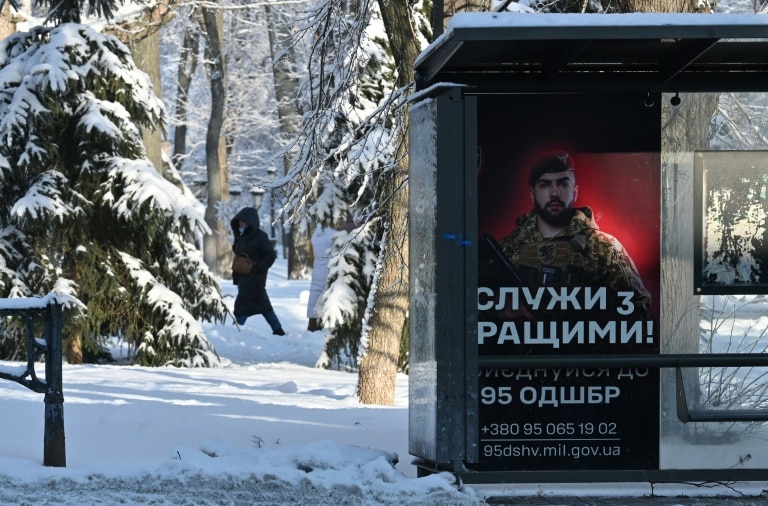
    These diplomatic efforts unfold against a grim backdrop of intensified warfare. Russian forces have accelerated their advance in eastern regions, recently claiming control of additional villages in Donetsk and Zaporizhzhia. Simultaneously, a relentless campaign of missile and drone strikes has crippled Ukraine’s energy infrastructure during a severe winter, leaving 56,000 families in the Bucha area alone without power and prompting widespread heating restrictions and school closures across the nation.

    The path to a peace agreement remains fraught with challenges. The Kremlin maintains its objective to seize all territories it claims as Russian, while previous U.S. pressure on Ukraine to accept terms viewed in Kyiv as capitulation has created sticking points. Furthermore, declarations of intent from European allies like the UK and France to potentially deploy troops to uphold a ceasefire have been met with stark warnings from Moscow, which labeled any foreign forces as ‘legitimate targets.’

  • Uganda opposition leader cut off from communications after polls

    Uganda opposition leader cut off from communications after polls

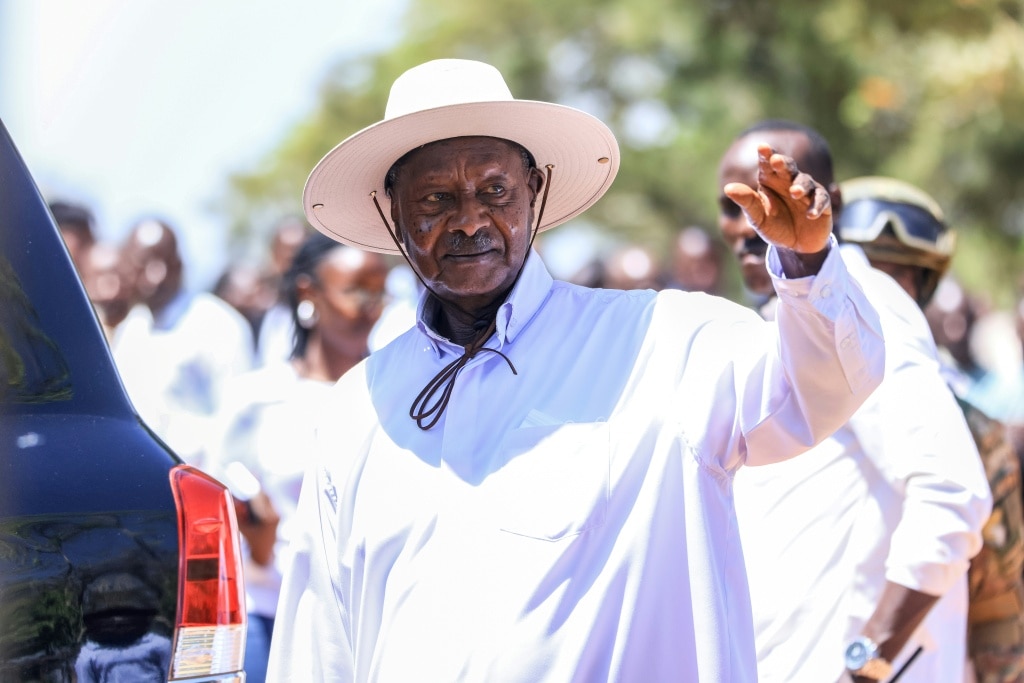
    Uganda’s political landscape remains in a state of heightened tension as opposition leader Bobi Wine faces a complete communications blackout following a police raid on his residence. The security operation, which occurred on Saturday, effectively isolated the prominent challenger to President Yoweri Museveni’s longstanding administration just as election results were being finalized.

    With more than 90% of votes counted, Uganda’s Electoral Commission reported President Museveni maintaining a commanding lead of 71.9% against Wine’s 24.5%. The 81-year-old incumbent, who seized power in 1986 as a former guerrilla fighter, appears poised to extend his four-decade rule amid widespread reports of electoral irregularities and suppression tactics.

    The election period has been characterized by significant unrest, including an ongoing nationwide internet blackout implemented ahead of Thursday’s polls. According to opposition accounts, security personnel clad in black attire scaled the walls of Wine’s compound, confiscating communication devices and effectively cutting off all contact with the outside world.

    Conflicting reports emerged regarding Wine’s whereabouts, with his party initially claiming he had been forcibly removed by military helicopter—an assertion later deleted and denied by army officials as ‘absurd’ and designed to ‘incite his supporters.’ Local residents reported hearing drones and helicopters near the opposition leader’s residence throughout Friday night, with many fleeing the area due to security concerns.

    Police spokesman Kituuma Rusoke defended the security measures, stating authorities had ‘controlled access in areas we feel are security hotspots’ to prevent gatherings that might ‘incite violence.’

    The electoral process itself faced substantial challenges, with malfunctioning biometric verification machines and delayed ballot deliveries in multiple regions. Beyond the capital, reports emerged of violent confrontations, including claims from opposition parliament member Muwanga Kivumbi that security forces had killed ten campaign agents in Butambala after storming his home.

    Police provided an alternative account, stating an ‘unspecified number’ of people had been ‘put out of action’ when opposition members allegedly planned to attack a local tally center and police station.

    The United Nations human rights office had previously warned that the elections were occurring in an environment of ‘widespread repression and intimidation’ against opposition voices, though many of the allegations remain difficult to verify independently due to communication restrictions and limited media access.