标签: North America

北美洲

  • Watch: US seizes oil tanker in Caribbean sea

    Watch: US seizes oil tanker in Caribbean sea

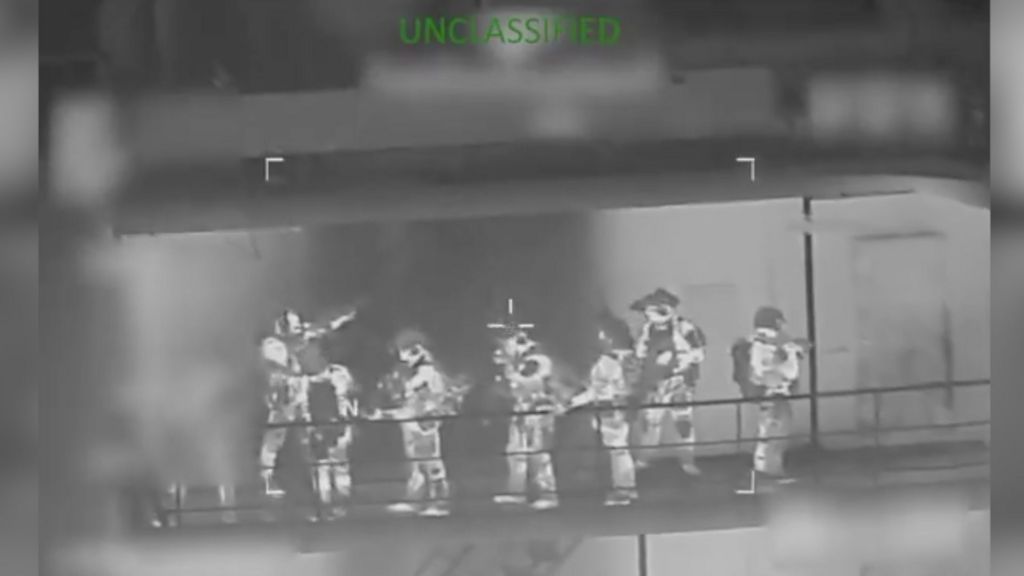
    In a meticulously coordinated maritime operation, the United States has successfully interdicted and seized two illicit oil tankers operating as part of a so-called ‘ghost fleet’ in Caribbean waters. The strategic mission was carried out by the U.S. Coast Guard under the authorization of Homeland Security Secretary Kristi Noem, who characterized the operation as a significant enforcement action against clandestine maritime activities.

    The targeted vessels, which had been operating without proper registration and transponders to evade detection, were apprehended following extensive surveillance and intelligence gathering. Secretary Noem emphasized the technical precision and interagency coordination required to execute the complex seizure in international waters, highlighting the continued commitment to combating unauthorized maritime transport operations that threaten both economic security and regional stability.

    This enforcement action represents the latest in ongoing efforts to disrupt shadow shipping networks that attempt to circumvent international sanctions and energy trading regulations. The operation demonstrates enhanced capabilities in maritime domain awareness and reflects strengthened intergovernmental cooperation in monitoring Caribbean sea routes that have seen increased illicit trafficking activity in recent years.

  • Ziina launches Violet, a lifestyle membership built for everyday spending in the UAE

    Ziina launches Violet, a lifestyle membership built for everyday spending in the UAE

    DUBAI, UAE – Ziina, the Emirates’ pioneering financial technology enterprise, has unveiled its groundbreaking Violet membership program, fundamentally transforming how residents engage with daily commerce and international transactions. This innovative fintech solution directly addresses the fragmented loyalty landscape that has long plagued consumers in the region.

    Priced at an accessible AED 100 monthly, Violet delivers over AED 850 in recurring practical value through strategic partnerships with premier lifestyle brands. The membership’s crown jewel eliminates foreign exchange fees entirely on global expenditures using the Ziina Card, whether for international e-commerce or overseas travel. This feature alone represents a significant financial breakthrough for a population that frequently transacts across currencies.

    The platform consolidates benefits from an impressive consortium of established brands including SALT, Ounass, ClassPass, Deliveroo, CAFU, Yango, Bateel El’an, Washmen, Letswork, Bake My Day, and NordVPN. Rather than employing complex reward structures, Violet focuses on delivering tangible value across high-frequency categories: dining, fitness, transportation, wellness, and premium retail.

    Faisal Toukan, Ziina’s Co-Founder and CEO, articulated the vision behind the launch: “Violet synthesizes the UAE’s most cherished brands into an elegantly seamless experience. We’re eliminating transactional friction while delivering genuine magic in return – making everyday living truly effortless.”

    The introduction arrives amid growing consumer disillusionment with conventional loyalty programs, particularly in a market characterized by a median age of 32.8 and overwhelming preference for mobile payment solutions. Violet’s transparent pricing structure and absence of hidden terms directly counter the industry’s trend toward complexity and fine print.

    For UAE residents seeking optimized spending power, simplified benefit redemption, and financial liberation from currency barriers, Ziina Violet presents a compelling unified solution. The membership is now available through the Ziina mobile application, marking a new chapter in the region’s fintech evolution.

  • Venezuelan acting president appoints new commander of presidential honor guard

    Venezuelan acting president appoints new commander of presidential honor guard

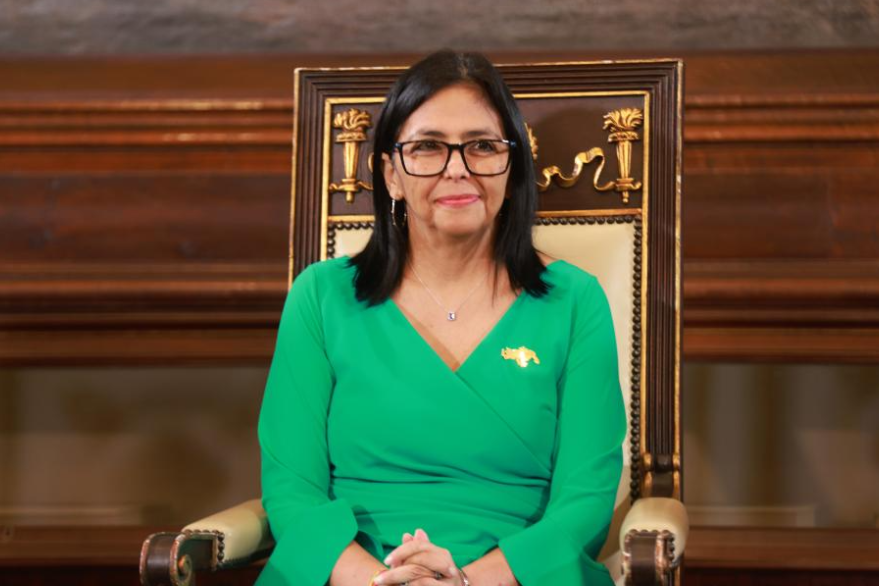
    In a significant military command restructuring, Venezuela’s Acting President Delcy Rodríguez has appointed General Gustavo González López to dual critical security roles. The leadership change, announced on Tuesday, positions González López as both Commander of the Presidential Honor Guard and Director of the General Directorate of Military Counterintelligence.

    The appointment marks a strategic shift in Venezuela’s security apparatus, with González López replacing Javier Marcano Tabata in both capacities. The Presidential Honor Guard maintains primary responsibility for the physical security of Venezuela’s head of state and executive leadership, while military counterintelligence focuses on identifying potential threats within armed forces institutions.

    This reorganization occurs amidst ongoing political transitions within the South American nation. Rodríguez, who previously served as Venezuela’s vice president, assumed acting presidential responsibilities following recent governmental changes. The swearing-in ceremony, documented in official photographs from the National Assembly in Caracas on January 5, 2026, signals continuity in administrative operations during this period.

    Military analysts note that such appointments typically reflect both operational requirements and considerations of political allegiance within Venezuela’s complex security landscape. The consolidation of these two sensitive positions under a single commander suggests potential operational streamlining within Bolivarian Armed Forces security structures.

    The leadership transition follows established constitutional protocols and demonstrates the ongoing functionality of Venezuela’s governmental institutions amid international scrutiny and domestic challenges.

  • Warner Bros urges shareholders to reject ‘inferior’ Paramount offer

    Warner Bros urges shareholders to reject ‘inferior’ Paramount offer

    Warner Bros Discovery has formally recommended its shareholders reject a revised acquisition proposal from Paramount Skydance, dismissing the offer as financially inferior and laden with excessive risk. This marks the second rejection within a month, following the board’s December 5th announcement of a $72 billion agreement with Netflix for the company’s film and streaming divisions.

    The board’s unanimous decision, communicated through an official shareholder letter, emphasized that Paramount’s amended proposal fails to qualify as a ‘superior offer’ under merger agreement criteria. Chairman Samuel Di Piazza Jr. characterized the bid as containing ‘an extraordinary amount of debt financing that create risks to close and lack of protections for our shareholders.’

    Paramount’s latest proposition, valued at over $108 billion, seeks to acquire Warner Bros Discovery in its entirety—including cable networks CNN and TNT, European free-to-air channels, and Discovery properties. This contrasts sharply with Netflix’s targeted acquisition of only the film and streaming segments, following Warner’s planned operational separation later this year.

    The board highlighted several critical concerns regarding Paramount’s offer, including a required $2.8 billion termination fee payable to Netflix if the existing merger agreement is abandoned. Additionally, analysts note the peculiar financial dynamics of Paramount—with a market valuation of approximately $14 billion—attempting to orchestrate a acquisition requiring over $94 billion in combined debt and equity financing.

    Warner’s leadership maintains that the Netflix agreement provides ‘superior value at greater levels of certainty’ while avoiding the significant risks associated with Paramount’s highly leveraged proposal. The board’s assessment concludes that Paramount has ‘repeatedly failed to submit the best proposal’ despite being provided clear guidance on addressing deficiencies.

    Netflix co-CEO Ted Sarandos previously affirmed that their transaction serves the ‘best interest of stockholders,’ creating a streamlined content powerhouse while avoiding the financial complexities of Paramount’s approach. Paramount Skydance has not yet issued public commentary regarding the latest rejection.

  • US adds more nations, including Venezuela, to costly visa bond policy

    US adds more nations, including Venezuela, to costly visa bond policy

    The Trump administration has significantly expanded its controversial visa bond policy, adding 25 new countries to a list of nations whose citizens may be required to post bonds of up to $15,000 for entry into the United States. According to State Department documents published Tuesday, the updated policy now encompasses 38 countries primarily from Africa, Latin America, and South Asia, with Venezuela notably included among the newly added nations.

    The implementation timeline varies by country, with most new additions taking effect on January 21, 2026. The comprehensive list includes Algeria, Angola, Bangladesh, Benin, Cuba, Nigeria, Nepal, and Zimbabwe, among others. Venezuela’s inclusion comes amid heightened tensions following the extradition of former leader Nicolás Maduro to New York over the weekend.

    Under the program’s specifications, travelers from designated countries who are otherwise eligible for B1/B2 business or tourism visas must secure bonds ranging from $5,000 to $15,000, with the exact amount determined during visa interviews. Applicants must process these financial guarantees through the U.S. Treasury Department’s Pay.gov platform before receiving visa approval.

    This policy expansion represents the latest development in a pilot program initially launched in August with a smaller cohort of nations. Administration officials maintain that the financial bonds serve as a deterrent against visa overstays, protecting the integrity of temporary visitor programs. The State Department emphasizes that the bond amounts are refundable provided visitors comply with all visa conditions and departure requirements.

    President Trump’s immigration agenda has consistently prioritized stringent enforcement measures since taking office in January 2025. His administration has implemented an aggressive deportation strategy, revoked numerous visas and green cards, and intensified screening of immigrants’ social media presence and public statements. While human rights organizations have condemned these policies as infringements on due process and free speech, administration officials defend them as necessary security enhancements for domestic protection.

  • How Indian schools in UAE are adjusting exam routines for students, staff ahead of Ramadan

    How Indian schools in UAE are adjusting exam routines for students, staff ahead of Ramadan

    Indian educational institutions across the United Arab Emirates are implementing sophisticated operational modifications in anticipation of Ramadan’s mid-February commencement, demonstrating how academic excellence and cultural sensitivity can coexist harmoniously. With the Islamic holy month presenting unique challenges including shortened school days and altered student energy levels due to fasting, school administrators have developed comprehensive strategies that balance academic rigor with religious observance.

    Springdales School Dubai has adopted a distinctive approach by maintaining its original examination schedule while adjusting daily operations. Principal David Jones clarified that the institution will adhere to Ramadan school timings, concluding daily activities at 12 noon throughout the examination period. The school has strategically scheduled assessments between February 16 and March 11, 2026, ensuring no conflict with the anticipated Eid break around March 19-20. Academic revision sessions will be conducted during school hours to allow fasting students adequate rest time at home.

    Gems Our Own Indian School exemplifies advanced planning methodologies, with CEO Lalitha Suresh emphasizing that examination schedules receive finalization a full year in advance. These dates receive approval from the Knowledge and Human Development Authority (KHDA) and appear in printed school diaries for family reference. The institution incorporates preparatory intervals between examination days to facilitate comprehensive student revision, creating a predictable framework that supports both academic achievement and religious observance.

    Behind the scenes, administrative teams face compressed working hours that necessitate innovative task management. Woodlem Park School in Ajman illustrates this operational adaptation, where Principal Bhanu Sharma notes that while examination dates remain unchanged, paper correction, data entry, and result analysis require redistribution across multiple abbreviated sessions. This approach maintains assessment quality while accommodating the reduced working hours characteristic of Ramadan.

    The broader context involves the Islamic lunar calendar’s annual shift of approximately 10-12 days relative to the Gregorian calendar, requiring educational institutions to maintain dynamic long-term planning. This sophisticated coordination between academic requirements and cultural traditions demonstrates how international education systems can successfully adapt to local religious practices while maintaining educational standards.

  • Trump discussing how to acquire Greenland, US military always an option, White House says

    Trump discussing how to acquire Greenland, US military always an option, White House says

    The White House has officially confirmed that President Donald Trump is actively exploring avenues to acquire Greenland, with administration officials acknowledging that military force remains among the potential options under consideration. This revival of Trump’s territorial ambitions has sparked immediate international concern and diplomatic tensions.

    According to White House statements released Tuesday, the administration views control of Greenland as a critical national security priority essential for countering adversarial interests in the increasingly strategic Arctic region. While emphasizing that diplomatic solutions remain the preferred approach, officials explicitly noted that “utilizing the US military is always an option at the commander-in-chief’s disposal.”

    The administration’s considerations include two primary approaches: an outright purchase of the territory from Denmark or establishing a Compact of Free Association that would stop short of full incorporation into the United States. Senior officials, speaking anonymously about internal deliberations, characterized Trump as fundamentally a dealmaker who would prefer negotiated acquisition.

    This initiative has encountered immediate resistance from multiple fronts. Greenland itself has consistently expressed no desire to become part of the United States, while European powers and Canada have rallied behind the Arctic territory’s right to self-determination. The suggestion of military action against Denmark, a longstanding NATO ally, has raised concerns about potential shock waves through the alliance and further deterioration of US-European relations.

    Congressional leaders from both parties have expressed opposition, with the Senate NATO Observer Group co-chairs emphasizing that the United States must respect Danish sovereignty when Greenland clearly indicates it is not for sale. The administration maintains that Greenland’s mineral resources, crucial for high-tech and military applications, justify the pursuit despite political and diplomatic challenges.

    The renewed interest in Greenland follows Trump’s recent foreign policy actions in the Western Hemisphere, including the capture of Venezuelan President Nicolas Maduro, which has apparently emboldened the administration’s approach to territorial matters. Officials indicate that acquiring Greenland remains a persistent goal for Trump’s remaining term in office.

  • Maduro pleads not guilty in US court

    Maduro pleads not guilty in US court

    In an extraordinary legal proceeding that has drawn international condemnation, Venezuelan President Nicolás Maduro and First Lady Cilia Flores appeared before a federal court in New York on Monday, marking their first judicial hearing since being forcibly extracted from their Caracas residence by US military operatives in a nighttime operation on January 3rd.

    The Venezuelan leader, speaking through a court-appointed interpreter, asserted his innocence before being interrupted by the presiding judge. “I was captured,” Maduro declared in Spanish, later adding during formal arraignment: “I am innocent. I am not guilty. I am a decent man, the constitutional president of my country.”

    The operation, characterized by US President Donald Trump as a “large-scale strike,” involved the abduction and subsequent aerial transportation of the presidential couple to US territory. Both individuals are currently detained at the Metropolitan Detention Center in Brooklyn pending further judicial proceedings.

    Flores similarly entered a plea of not guilty to all charges. The court has ordered both defendants remanded in custody, scheduling their next hearing for March 17th.

    Barry Pollack, Maduro’s legal representative, indicated plans to challenge the legality of what he termed a “military abduction”—a move that legal experts suggest could establish unprecedented jurisprudence regarding the extraterritorial apprehension of foreign heads of state.

    Outside the courthouse, substantial demonstrations erupted as protestors condemned Washington’s interventionist actions. Placards bearing messages such as “USA hands off Venezuela,” “No US war on Venezuela,” and “US hands off Venezuela oil” reflected growing public outrage.

    Rae Lee, an early arrival at the protest site, characterized the operation as an “international crime” during remarks to journalists. Having recently visited Venezuela, she challenged mainstream media narratives about the nation’s conditions, noting: “They’ve been building their resilience through the years, and economically they have grown really powerfully.”

    Many demonstrators expressed conviction that economic motivations rather than judicial concerns drove US actions. Imani Henry, another protest participant with firsthand experience in Venezuela, stated unequivocally: “It’s about oil. As with Iran, Afghanistan—it’s about oil. Steal a sovereign president and declare to run their country, and declare that we are gonna steal oil reserves.”

    The case has ignited intense debate regarding sovereignty, international law, and the resurgence of power politics in global affairs, with critics warning of dangerous precedents being established through unilateral military actions against elected foreign leaders.

  • ‘Right-wing network’ marked by inherent fragmentation, experts say

    ‘Right-wing network’ marked by inherent fragmentation, experts say

    A concerted effort by the United States to forge a cohesive global right-wing political network is encountering fundamental structural challenges, according to international relations experts. Since President Donald Trump’s return to power in January 2025, the administration has pursued an aggressive strategy of supporting pro-US conservative movements worldwide through economic measures, diplomatic engagements, and military posturing.

    The initiative has been particularly visible across Latin America, where longstanding US support for conservative forces has evolved into a coordinated campaign. Recent actions include imposing steep tariffs on Brazil during former president Jair Bolsonaro’s trial and sanctioning Colombian President Gustavo Petro over alleged drug ties. The most dramatic escalation occurred with US strikes against Venezuela and the abduction of President Nicolas Maduro, drawing condemnation from multiple Latin American leaders.

    According to Jin Xiaowen, associate professor at Renmin University of China’s School of International Studies, these moves demonstrate that political motivations frequently outweigh economic logic in US foreign policy. The strategy extends beyond the Western Hemisphere, with the US National Security Strategy explicitly endorsing European far-right parties’ opposition to immigration and climate policies. This document, framed by officials as the ‘Trump corollary’ to the Monroe Doctrine, has been embraced by right-wing figures in Germany, Poland, and Hungary as a form of recognition.

    However, experts highlight inherent fragmentation within this emerging network. Yan Shaohua, deputy director of Fudan University’s Center for China-Europe Relations, notes that the coalition functions primarily as an opposition force united against common targets but lacks a constructive shared agenda. Fundamental divisions emerge on critical issues like the Russia-Ukraine conflict, where Hungary’s pro-Russia stance conflicts with Poland’s support for Ukraine.

    The network’s structural fragility becomes apparent when ‘America First’ policies collide with national priorities of other members. Trade protectionism, including US tariffs on allies, creates economic strain and friction. As Yan observes, when concrete policy action is required, right-wing actors inevitably prioritize domestic political agendas over coalition solidarity, revealing the network’s fundamental limitations as a sustainable international alliance.

  • Countries slam US interference in Venezuela at UN

    Countries slam US interference in Venezuela at UN

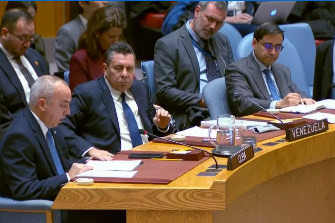
    A wave of international criticism targeted United States policies toward Venezuela during an emergency session of the UN Security Council convened Monday at UN Headquarters in New York. The meeting, focused on the ongoing political situation in Venezuela, became a platform for numerous nations to voice strong opposition to American intervention in the South American country’s internal affairs.

    Diplomatic representatives from multiple countries delivered statements condemning what they characterized as destabilizing interference by the US government in Venezuela’s sovereign matters. The emergency session highlighted growing global concern over external involvement in Venezuela’s political crisis, with several nations emphasizing the fundamental principles of national sovereignty and non-intervention established in the UN Charter.

    The meeting occurred amid heightened tensions surrounding Venezuela’s political leadership and economic challenges. While the US has maintained its position regarding the Venezuelan government, the Security Council discussion revealed significant international resistance to American approaches, suggesting a diplomatic divide within the global community regarding appropriate engagement with Venezuela.

    The coordinated criticism at the UN’s most powerful body represents a notable challenge to US foreign policy in Latin America and demonstrates the complex geopolitical dynamics surrounding the Venezuelan situation. The emergency session underscored how Venezuela’s internal affairs have become a flashpoint for broader debates about sovereignty, intervention, and international law within global governance institutions.