标签: North America

北美洲

  • Fatal ICE shooting of Minneapolis woman sets stage for national protests

    Fatal ICE shooting of Minneapolis woman sets stage for national protests

    The fatal shooting of a Minneapolis woman by a U.S. Immigration and Customs Enforcement (ICE) agent has ignited nationwide protests and intensified federal-state tensions. Renee Good, a 37-year-old mother of three and activist, was killed during what authorities described as the “largest DHS operation ever” involving approximately 2,000 federal officers deployed to Minneapolis.

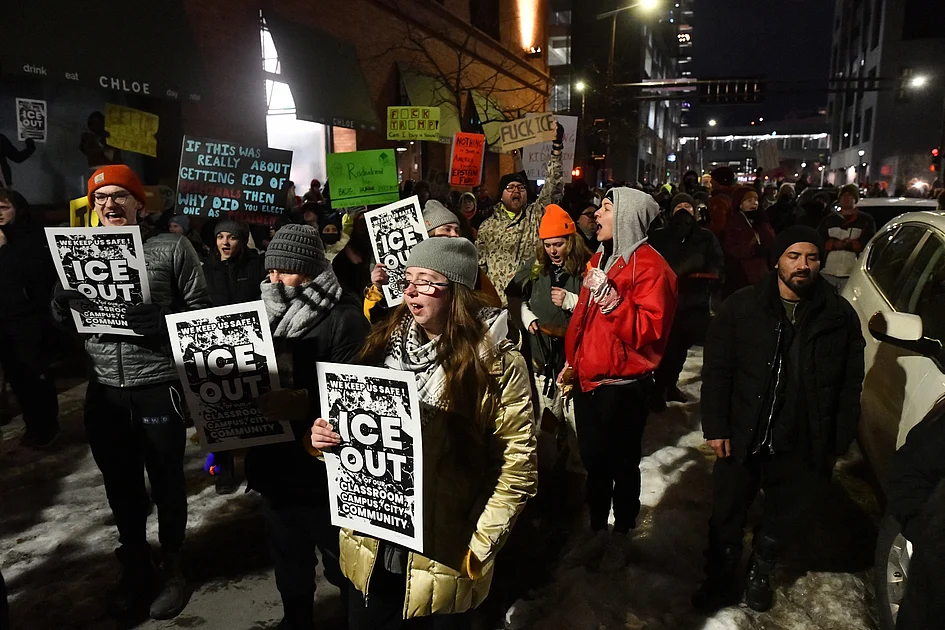
    Protest organizers have coordinated over 1,000 events across the country under the banner “ICE Out For Good,” demanding an end to large-scale ICE deployments ordered by President Donald Trump. The shooting occurred during neighborhood patrols where activists track and document ICE activities, a practice that has become common in cities led by Democratic politicians.

    The incident has produced sharply conflicting narratives. Homeland Security Secretary Kristi Noem characterized Good’s actions as “impeding” and “stalking” ICE agents, claiming the officer fired in self-defense against what she termed an “act of domestic terrorism.” Conversely, Minneapolis Mayor Jacob Frey dismissed the federal account as a “garbage narrative,” citing bystander video that appears to contradict official claims.

    Minnesota Governor Tim Walz, who previously condemned the ICE deployment as “reckless” governance, has placed the state’s National Guard on alert and initiated an independent state investigation alongside the federal FBI probe. The legal jurisdiction question has emerged as a point of contention, with some Trump administration officials asserting federal officers enjoy immunity from state prosecution.

    The shooting occurred just blocks from where George Floyd was killed in 2020, drawing inevitable comparisons to the previous administration’s handling of civil unrest. Video evidence shows conflicting details about the moment of shooting, with footage suggesting the vehicle may not have made contact with the officer despite claims that Good attempted to ram federal agents.

    This incident represents the latest escalation in ongoing tensions between the Trump administration and Democratic-led cities over immigration enforcement strategies, with additional violent encounters reported in Portland, Oregon, further complicating the national landscape.
  • Rare first Superman comic once stolen from Nicolas Cage sells for $15m

    Rare first Superman comic once stolen from Nicolas Cage sells for $15m

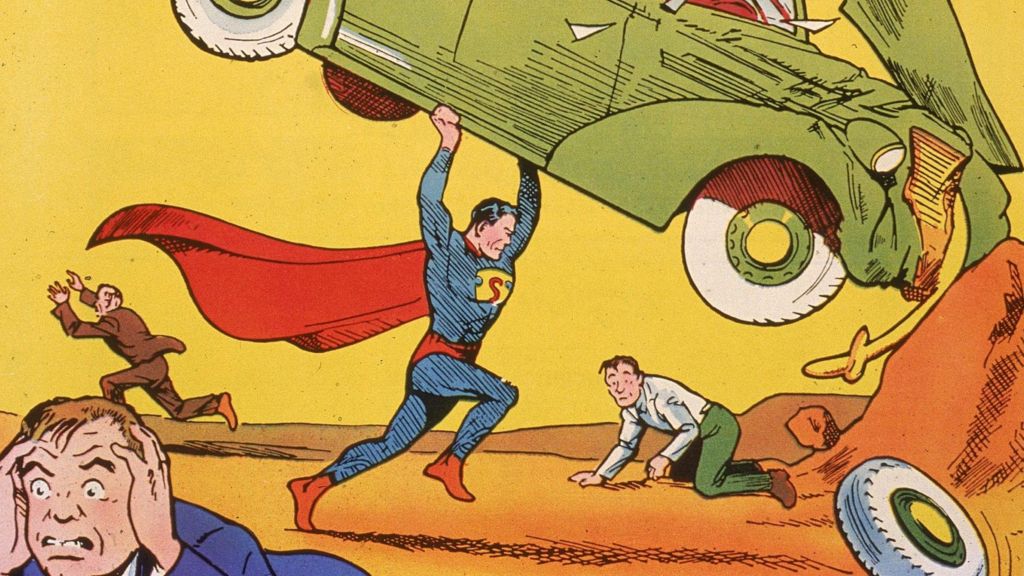
    A pristine copy of Action Comics No. 1, the groundbreaking 1938 publication that introduced Superman to the world, has been acquired by an anonymous collector for a staggering $15 million in a private transaction. This sale, facilitated by New York-based Metropolis Collectibles/Comic Connect, shattered the previous comic book record of $9.12 million set just months earlier for Superman No. 1.

    The recently sold copy carries extraordinary provenance, having been stolen from actor Nicolas Cage’s residence during a 2000 party and mysteriously recovered eleven years later in a California storage facility. Cage had originally acquired the comic in 1996 for $150,000, then a record price. Following its recovery, the actor sold it at auction for $2.2 million in 2011.

    Stephen Fishler, CEO of Metropolis/ComicConnect, noted the theft paradoxically increased the comic’s value significantly. ‘During that 11-year period, it skyrocketed in value. The thief made Nicolas Cage a lot of money by stealing it,’ Fishler remarked, drawing parallels to the 1911 theft of the Mona Lisa that transformed the painting from a notable work into a global icon.

    The Certified Guaranty Company awarded this copy a near-perfect grade of 9.0 out of 10, making it one of the highest-graded copies known to exist. Fewer than 100 original copies of Action Comics No. 1 are believed to survive today, with this issue widely recognized as establishing the modern superhero genre that now dominates global entertainment.

  • ‘They’ll have to kill us first’: Venezuela’s street forces ready to ‘fight’ after US raid

    ‘They’ll have to kill us first’: Venezuela’s street forces ready to ‘fight’ after US raid

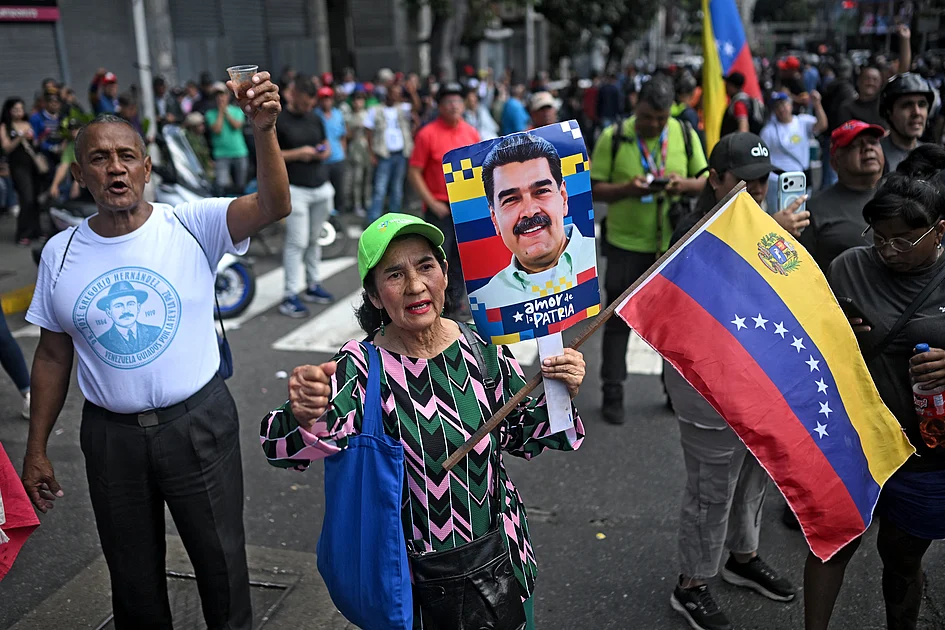
    CARACAS – Explosions echoing through the night sky and the roar of US warplanes over Caracas triggered immediate mobilization among Venezuela’s armed colectivos, who rushed to arm themselves fearing an imminent confrontation. This US-led operation, which resulted in the dramatic ouster of President Nicolas Maduro, has ignited fury and confusion among these fiercely loyal socialist factions.

    Jorge Suarez, a colectivo member adorned in black sunglasses and a cap bearing the slogan ‘Doubt is treason,’ described the unprecedented events as surreal. ‘We’re not used to it—it was like a bestseller, like something out of a movie,’ he stated. The groups, established under former leader Hugo Chavez to maintain social order but accused by opponents of intimidation, now find themselves navigating a precarious political vacuum.

    The colectivos have unanimously closed ranks behind interim President Delcy Rodriguez, Maduro’s former deputy. While she has pledged cooperation with US President Donald Trump regarding access to Venezuela’s vast oil reserves, she simultaneously insists the nation is not ‘subordinate’ to Washington. This duality has created a complex narrative that colectivo members are struggling to decipher.

    Willians, a 43-year-old member of the Red Beret collective, expressed the prevailing sentiment of ‘frustration, anger and a will to fight.’ Many members believe Maduro was betrayed from within, pointing to inexplicable failures in the nation’s air defense systems during the raid. ‘It was so perfect we didn’t notice, and we still don’t know who betrayed us,’ said Alfredo Canchica, leader of the Fundacion 3 Raíces collective.

    Despite their negative international image as a motorcycle-riding shock force, colectivos maintain significant local support in neighborhoods where they are credited with crime prevention and distributing subsidized food. They now stand as a potentially volatile element in Venezuela’s transition, fiercely committed to their ideological cause. Canchica issued a stark warning to any foreign forces considering further intervention: ‘They’ll have to kill us first.’

  • Trump says US needs to own Greenland to deter Russia, China

    Trump says US needs to own Greenland to deter Russia, China

    President Donald Trump has declared the United States must assert ownership over Greenland to prevent future occupation by Russia or China, signaling a radical shift in Arctic territorial policy. Speaking to reporters at the White House during a meeting with oil executives on Friday, Trump asserted unilateral action would be necessary regardless of local preferences.

    “We are going to do something on Greenland whether they like it or not. Because if we don’t do it, Russia or China will take over Greenland, and we’re not going to have Russia or China as a neighbor,” the president stated emphatically.

    Despite existing U.S. military presence established through a 1951 agreement, Trump argued that current arrangements insufficiently guarantee the island’s defense. “You defend ownership. You don’t defend leases. And we’ll have to defend Greenland. If we don’t do it, China or Russia will,” he elaborated.

    Administration officials have reportedly developed multiple strategies to facilitate Greenland’s transition to U.S. control, including potential military deployment and substantial financial incentives for Greenlanders to secede from Denmark. The autonomous territory, with its population of 57,000, remains under the Kingdom of Denmark’s sovereignty.

    European leaders have responded with unified opposition to these propositions. A joint statement issued Tuesday by France, Germany, Italy, Poland, Spain, Britain, and Denmark emphasized that only Greenland and Denmark possess authority to determine their bilateral relations. The diplomatic tension presents particular complications for NATO, where both the U.S. and Denmark are bound by mutual defense agreements.

  • Video emerges of Minneapolis shooting filmed by ICE agent who opened fire

    Video emerges of Minneapolis shooting filmed by ICE agent who opened fire

    A newly surfaced video capturing the moments before a U.S. Immigration and Customs Enforcement (ICE) agent fatally shot 37-year-old Minneapolis resident Renee Nicole Good has ignited nationwide protests and a bitter political confrontation. The 47-second footage, originally filmed by the involved agent and obtained by conservative outlet Alpha News, presents a starkly different narrative from official federal accounts.

    The video documentation begins with Agent Jonathan Ross exiting his vehicle to approach Good’s maroon Honda SUV, recording its license plate while circling the car. Good remains seated behind the wheel, calmly stating, “That’s fine dude. I’m not mad at you.” Her wife, Becca Good, simultaneously films the interaction from the street, making sarcastic remarks to the agent about their license plate consistency.

    The situation escalates rapidly when another agent approaches the driver’s side window, shouting expletives while demanding Good exit the vehicle. As the filming agent positions himself in front of the SUV, Good reverses briefly before turning her wheel right and moving forward. The camera suddenly jerks upward amid shouts and audible gunshots, concluding with the vehicle veering down the road and the agent swearing.

    Federal authorities maintain that Good attempted to run over the ICE officer, characterizing the incident as an act of “domestic terrorism” that left the agent injured and requiring hospitalization. Conversely, Minneapolis Mayor Jacob Frey has dismissed this official narrative as “garbage” based on the visual evidence.

    The emerging footage has prompted Vice-President JD Vance and White House spokeswoman Karoline Leavitt to publicly defend the agent’s actions as self-defense against being run over. Meanwhile, Good’s wife has revealed they were attempting to support neighbors during immigration enforcement activities, noting ironically, “We had whistles. They had guns.”

    Minnesota officials have announced an independent inquiry into the shooting after claiming exclusion from the federal investigation, with Governor Tim Walz activating the National Guard to manage ongoing protests. The political divide has deepened with President Trump’s administration refusing to cooperate with what he called “crooked officials,” while the Justice Department’s Civil Rights Division has surprisingly declined to investigate potential excessive force allegations.

  • New video shows Minneapolis shooting from ‘perspective of ICE agent’

    New video shows Minneapolis shooting from ‘perspective of ICE agent’

    The White House has escalated tensions in a politically charged investigation by publicly sharing cellphone footage from a federal immigration officer involved in the fatal shooting of Minnesota resident Renee Good. The 47-second video, captured from the perspective of ICE agent Jonathan Ross, shows the moments leading to the Wednesday incident that has triggered nationwide protests and a jurisdictional battle between state and federal authorities.

    The footage begins with Ross approaching Good’s partially traffic-blocking Honda SUV in a Minneapolis residential neighborhood. The recording captures Good’s calm demeanor as she tells the officer, ‘That’s fine, dude, I’m not mad at you’ moments before the shooting occurs. As the vehicle moves forward, Ross shouts ‘Whoa!’ before firing three shots while jumping backward from the front of the car.

    This video release has deepened the divide between Democratic local leaders and Trump administration officials. Vice President JD Vance defended the shooting as self-defense, claiming Good weaponized her vehicle, while Minneapolis Mayor Jacob Frey dismissed this narrative as ‘garbage’ based on available evidence. The incident has sparked parallel investigations, with Minnesota authorities accusing the FBI of obstructing their probe after initially agreeing to cooperate.

    The case reflects broader tensions surrounding federal immigration enforcement actions in Democratic-led cities. A similar incident occurred in Portland, Oregon, where a Border Patrol agent shot two Venezuelan nationals during a vehicle stop, described by the Department of Homeland Security as another case of a car being used as a weapon against federal agents.

    Renee Good, remembered by her wife Becca as a Christian mother of three who believed in ‘finding kindness in the world,’ has become a symbol in the growing protest movement. A GoFundMe campaign for her family has surpassed $1.5 million in donations, reflecting the widespread public response to the shooting.

    With thousands demonstrating in multiple cities and more protests planned, the conflict highlights deteriorating trust between local and federal law enforcement agencies and raises complex legal questions about jurisdiction when federal officers are involved in deadly incidents.

  • Trump calls for one-year cap on credit card interest rates at 10%

    Trump calls for one-year cap on credit card interest rates at 10%

    In a significant policy announcement, former U.S. President Donald Trump has publicly called for implementing a one-year cap on credit card interest rates at 10%, effective January 20, 2026. The declaration, made through his Truth Social platform, represents a revival of his 2024 campaign pledge that previously faced widespread skepticism from financial analysts.

    Trump’s proposal emerges amid growing bipartisan concern in Congress regarding exorbitant credit card rates, though the announcement notably lacked specific implementation details or enforcement mechanisms. Financial experts immediately questioned the proposal’s feasibility, noting that such sweeping financial regulation would require congressional approval rather than executive action alone.

    Legislative efforts to address high interest rates have already gained traction across party lines. Senators Bernie Sanders (I-VT) and Josh Hawley (R-MO) previously introduced bipartisan legislation seeking a five-year 10% rate cap, while Representatives Alexandria Ocasio-Cortez (D-NY) and Anna Paulina Luna (R-FL) proposed similar measures in the House. These initiatives reflect rare cross-aisle consensus on consumer financial protection.

    Banking industry representatives responded with strong opposition, with major advocacy groups issuing a joint statement warning that artificial rate caps would reduce credit availability and push consumers toward unregulated lending alternatives. Major financial institutions including JPMorgan, Bank of America, and Citigroup declined to comment on the proposal.

    Democratic lawmakers criticized Trump’s announcement as insufficient without concrete legislative action. Senator Elizabeth Warren (D-MA) dismissed the move as ‘begging credit card companies to play nice’ while noting Trump’s simultaneous efforts to dismantle existing consumer protections through the Consumer Financial Protection Bureau.

    The proposal comes against the backdrop of the Trump administration’s successful legal challenge to the Biden-era $8 credit card late fee cap, which was overturned by a federal judge after business groups challenged its legality. This history of deregulation adds complexity to Trump’s current consumer protection stance.

  • US says claims ‘delusional’ after Iran tells UN Washington to blame for ‘violent’ protests

    US says claims ‘delusional’ after Iran tells UN Washington to blame for ‘violent’ protests

    In a significant escalation of diplomatic tensions, the United States has categorically rejected Iran’s allegations of American involvement in fueling violent protests within the Islamic Republic. The confrontation unfolded at the United Nations Security Council where Iran’s Ambassador Amir Saeid Iravani presented formal accusations against Washington.

    The Iranian delegation circulated a letter asserting that the United States, acting in coordination with Israel, bears responsibility for transforming peaceful demonstrations into ‘violent, subversive acts and widespread vandalism.’ The document condemned what it described as unlawful interference in Iran’s internal affairs through threats, incitement, and deliberate encouragement of instability.

    US State Department officials responded with forceful dismissal, characterizing the Iranian claims as ‘delusional’ and describing them as a transparent attempt to divert attention from the regime’s domestic challenges. The American rebuttal came directly in response to similar accusations made by Iranian Foreign Minister Abbas Araghchi during his diplomatic visit to Lebanon.

    Independent reports from Norway-based Iran Human Rights indicate that security forces have killed at least 45 protesters, including eight minors, during the crackdown on demonstrations that began in late December. The protests represent the largest wave of civil unrest since the 2022-2023 nationwide rallies triggered by the custody death of Mahsa Amini.

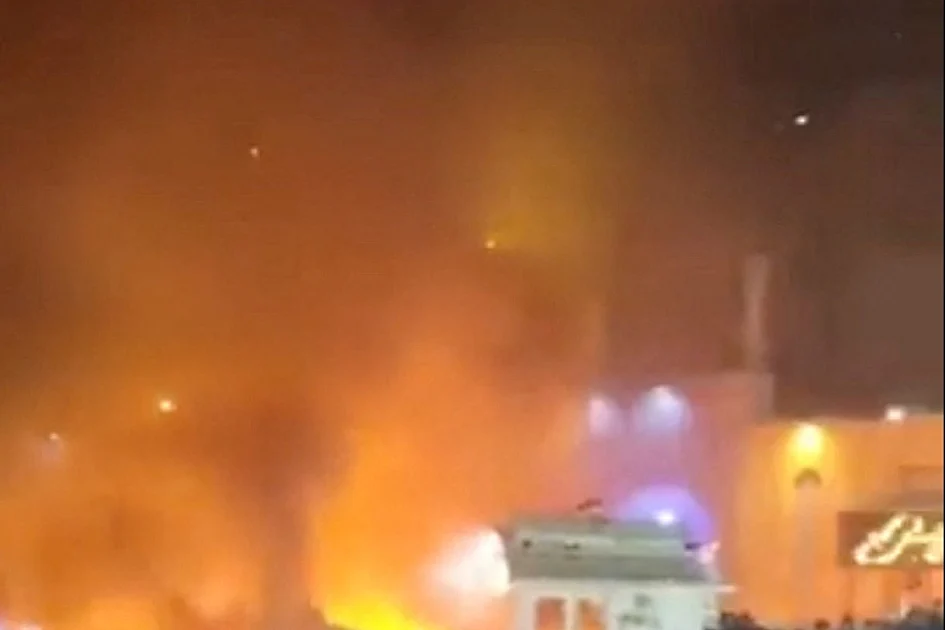
    The current demonstrations initially emerged from economic grievances, particularly anger over rising living costs, but have evolved into broader expressions of dissent. Recent videos from Iran show protesters chanting anti-government slogans and setting fire to official buildings, indicating escalating tensions between civil society and state authorities.

  • Long-awaited connectivity: How Etihad Rail will impact lives of many

    Long-awaited connectivity: How Etihad Rail will impact lives of many

    The United Arab Emirates’ national rail project has reached a transformative milestone with Etihad Rail announcing seven new passenger stations that will complete the country’s comprehensive rail network. This strategic expansion will significantly enhance connectivity across Abu Dhabi’s Al Dhafra region and Sharjah, effectively bridging remote and semi-urban communities with major population centers.

    For residents in border communities like Al Sila, located near the UAE-Saudi border, this development represents a long-awaited solution to transportation challenges. Local resident Salma Almansoori expressed relief, noting that ‘living in Al Sila means long drives whenever we need to travel to other cities. The passenger train will make travel easier, especially for families and elderly residents who prefer not to drive long distances.’

    The newly announced stations—Al Dhannah, Al Mirfa, Mezairaa, Al Faya, and Al Dhaid—complement previously revealed stations at Mohammed Bin Zayed City in Abu Dhabi, Jumeirah Golf Estates in Dubai, University City in Sharjah, and the Al Hilal area in Fujairah. This comprehensive network will offer passengers breathtaking scenic journeys through the nation’s diverse landscapes, from Abu Dhabi’s golden sand dunes to the majestic Hajar Mountains.

    Beyond convenience, the rail project promises substantial regional development benefits. In Madinat Zayed, the administrative center of the Al Dhafra region, residents anticipate the station will significantly support daily commuting and economic growth. Local resident Mayam Almazrouei emphasized that ‘Madinat Zayed is a central point for many surrounding communities. A passenger rail station here will connect people to Abu Dhabi and beyond, and it will be especially useful for students and employees who travel frequently.’

    The project is also expected to alleviate road congestion, enhance travel safety, and reduce the exhaustion associated with long-distance driving. While operational details including fares and schedules remain undisclosed, the confirmed launch timeline has generated considerable anticipation among communities that will benefit from this infrastructure revolution. The Etihad Rail passenger services are scheduled to commence operations later this year, marking a new era of integrated transportation in the UAE.

  • Senate votes to curb president’s military action

    Senate votes to curb president’s military action

    In a significant bipartisan move, the US Senate has initiated proceedings to restrict presidential war powers following a controversial military operation in Venezuela. The procedural vote passed 52-47 on Thursday, with five Republican senators crossing party lines to support the measure championed by Democratic Senator Tim Kaine of Virginia.

    The resolution sets the stage for substantive debate next week that could compel President Donald Trump to seek congressional authorization for any sustained military engagement in Venezuela. The legislative action comes in direct response to last weekend’s unauthorized strike targeting Venezuelan President Nicolás Maduro, which Trump ordered without consulting Congress.

    Senator Kaine condemned the operation as “profoundly disrespectful to US troops, deeply unpopular, suspiciously secretive and likely corrupt” during floor debates. He emphasized constitutional requirements that mandate congressional approval for military actions, declaring the Venezuela intervention “clearly illegal.”

    Trump responded fiercely on his Truth Social platform, denouncing the Republican defectors and asserting that the vote “greatly hampers American self-defense and national security.” In a revealing interview with The New York Times, the president claimed his authority as commander-in-chief is limited only by his “own morality,” dismissing the relevance of international law.

    The Venezuela operation has sparked widespread domestic criticism beyond congressional chambers. Tom Watkins, a Michigan-based policy consultant, described the strike as fundamentally concerning “regime change, power, money, oil” rather than the officially stated objective of combating drug trafficking. Protesters across American cities have condemned the violation of Venezuelan sovereignty using taxpayer funds.

    Meanwhile, the White House has attempted to leverage the situation positively, claiming credit for Venezuela’s subsequent release of political prisoners. Deputy Press Secretary Anna Kelly framed this development as evidence of Trump “using maximum leverage to do right by the American and Venezuelan people.” Venezuelan officials meanwhile maintained their country remains unsubjugated to US pressure.

    The Senate’s war powers debate represents a constitutional confrontation that could redefine executive authority in military matters regardless of eventual passage.