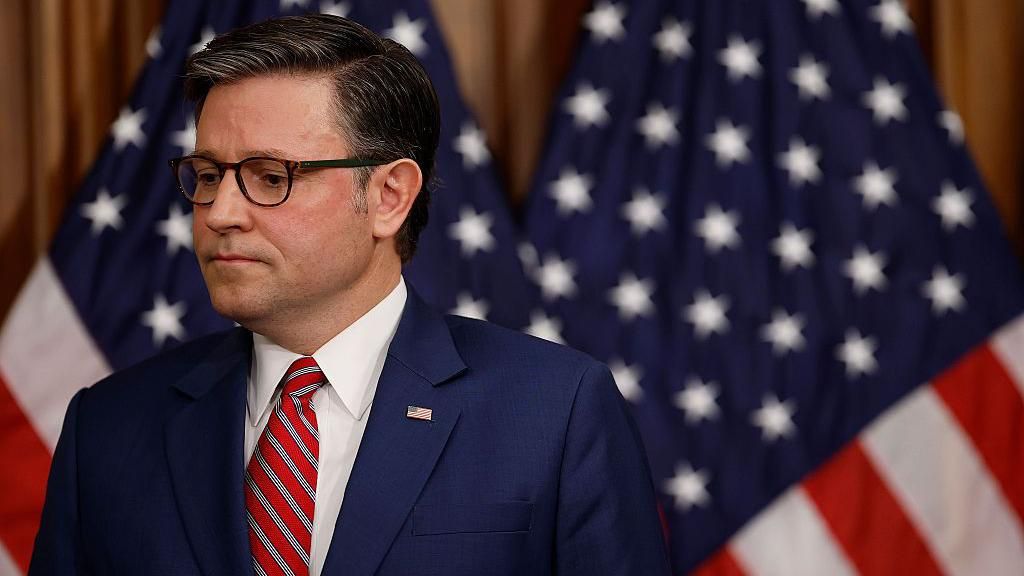
The United States House of Representatives is set to vote on a critical budget bill on Wednesday, aiming to conclude the longest government shutdown in the nation’s history. Now in its 42nd day, the shutdown has left over a million federal workers unpaid, disrupted food stamp programs for low-income Americans, and caused significant delays in air travel, particularly ahead of the Thanksgiving holiday. The Senate-approved package, which would fund federal agencies for two months, is expected to face fierce opposition from top Democrats despite Republican confidence in its passage. President Donald Trump has signaled his willingness to sign the bill into law, emphasizing the need to reopen the country. The shutdown, which began on October 1, has also led to nearly 1,200 flight cancellations as unpaid air traffic controllers call in sick. Lawmakers are resorting to unconventional means to reach Washington for the vote, with some carpooling or even riding motorcycles. The House Rules Committee advanced the bill in a procedural vote early Wednesday, setting the stage for a full chamber debate and vote later in the day. Democrats, led by House Minority Leader Hakeem Jeffries, have vowed to oppose the bill, citing concerns over its impact on the cost of living and the lack of provisions to extend health insurance subsidies. Republicans, however, remain united in their refusal to include such measures, offering only a future vote on healthcare subsidies in December. The outcome of the vote remains uncertain, with the Republican majority in the House now reduced to just five votes. The budget bill, if passed, would temporarily avert the next funding crisis, with government funding set to expire again on January 30. Both parties have faced political fallout from the shutdown, with opinion polls suggesting Republicans bear slightly more blame, while Democrats remain divided over their strategy.
标签: North America
北美洲
-

Table tennis gains pace as new league links cultures
Table tennis is experiencing a resurgence in the United States, fueled by the growing success of Major League Table Tennis (MLTT), the nation’s first professional table tennis league. The league, now in its third season, has become a vibrant platform for international talent and cultural exchange, attracting players and fans from across the globe.
-
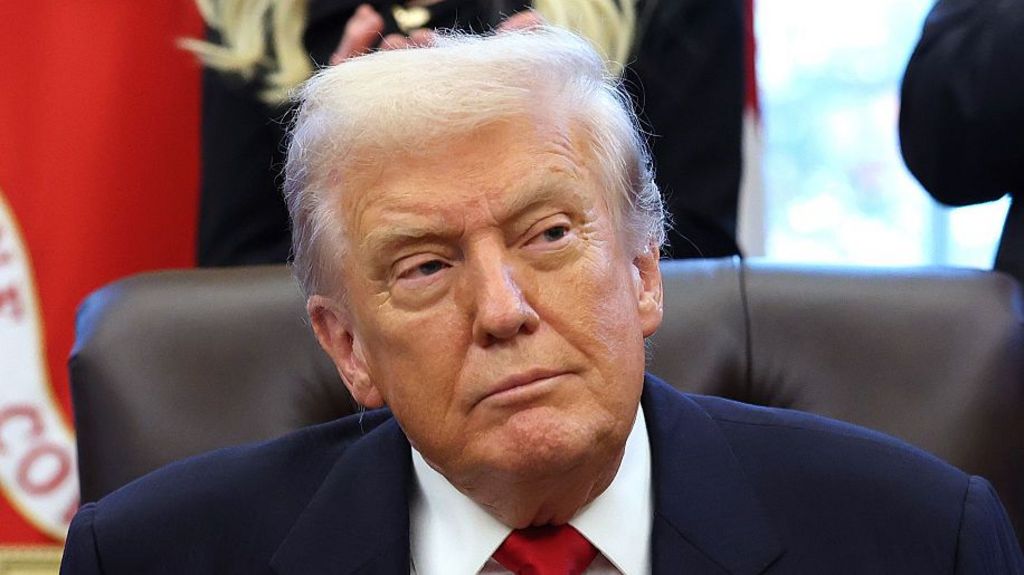
Trump says he has ‘obligation’ to sue BBC over speech edit
Former U.S. President Donald Trump has declared his intent to sue the BBC, alleging that the broadcaster misrepresented a segment of his January 6, 2021, speech in a Panorama documentary. In an interview with Fox News, Trump claimed his speech was ‘butchered’ and accused the BBC of ‘defrauding’ the public by editing it to appear more radical. This marks the first public statement from Trump since his legal team sent a letter to the BBC demanding a $1 billion (£759 million) settlement, a retraction, and an apology. The BBC has acknowledged receipt of the letter and stated it will respond in due course. The controversy stems from a leaked internal BBC memo, published by the Daily Telegraph, which revealed concerns over the editing process. The memo suggested the edit implied Trump explicitly encouraged the Capitol riot, a claim he denies. The fallout has led to the resignations of BBC Director General Tim Davie and Head of News Deborah Turness. The BBC’s editorial integrity has come under scrutiny, with critics questioning its impartiality. The legal threat coincides with a sensitive period for the BBC, as its royal charter, governing its funding and operations, is set to expire in 2027. Culture Secretary Lisa Nandy emphasized the importance of renewing the BBC’s mission for the modern age while ensuring accountability. The culture select committee is expected to hear evidence from senior BBC figures in the coming weeks, including Chair Samir Shah and former editorial standards adviser Michael Prescott. Meanwhile, Reform UK has withdrawn its cooperation with a BBC documentary, citing the Trump controversy as a reason to halt the project.
-
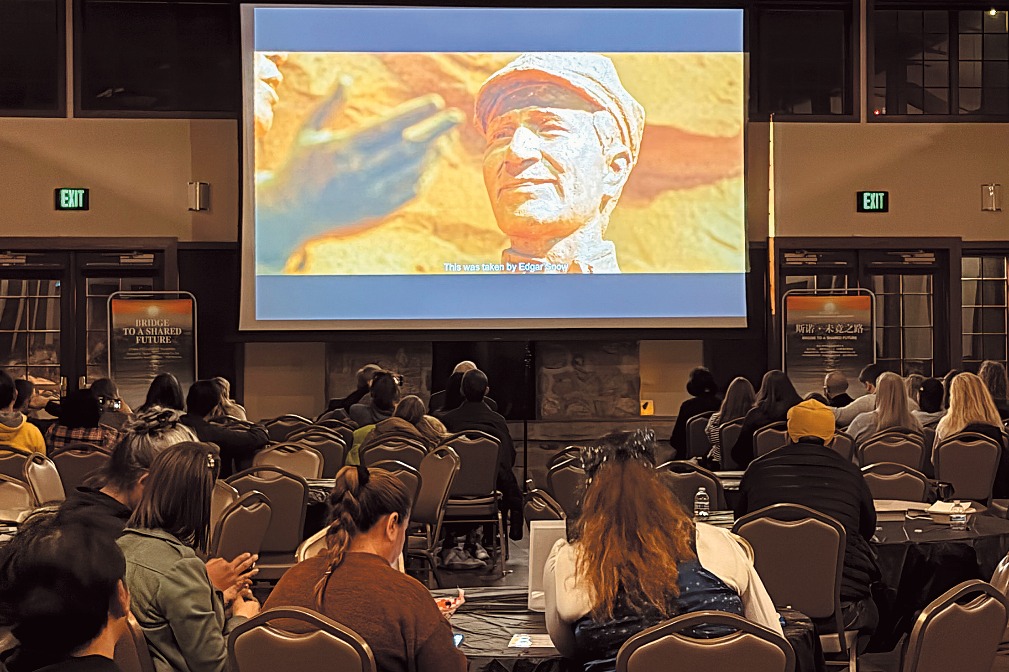
Film traces US writers’ steps in wartime China
A new documentary, ‘Bridge to a Shared Future,’ delves into the remarkable journeys of American journalists Edgar Snow and Helen Foster Snow, who reported from China during the tumultuous 1930s. The film, co-produced by the Shaanxi Tourism Group and the Helen Foster Snow Foundation, captures the enduring legacy of their firsthand accounts during China’s revolutionary era. Adam Foster, chairman of the foundation and great-nephew of Helen Foster Snow, recently completed the hourlong documentary, which was filmed in both China and the US. The documentary retraces the Snows’ footsteps, exploring their significant contributions to cross-cultural understanding and their role as pioneers in reporting on China’s communist movement. Edgar Snow, the first Western journalist to interview Mao Zedong, authored ‘Red Star Over China,’ a seminal work that provided early Western insights into China’s communist revolution. Helen Foster Snow, known for her extensive writings including ‘Inside Red China’ and ‘My China Years,’ also interviewed Mao and other Chinese leaders during the Chinese People’s War of Resistance Against Japanese Aggression (1931-45). The documentary incorporates archival materials and personal accounts from the Snows’ descendants, shedding light on their untold stories. Foster, who grew up hearing tales of his great-aunt’s adventures, only fully grasped her impact during a 2016 visit to Xi’an, China. Inspired by her legacy, he founded the Helen Foster Snow Foundation to continue her work as a cultural bridge builder. The film also highlights the Gung Ho movement, initiated by Helen Foster Snow, which aimed to unite people from diverse backgrounds to address common challenges. Despite her significant contributions, many in the US remain unaware of her story. The documentary’s premiere in Salt Lake City, Utah, was met with praise, with attendees emphasizing the importance of Helen Foster Snow’s legacy in fostering US-China relations. Foster hopes the film will raise awareness of this historical chapter, demonstrating the deep-rooted collaboration between the two nations.
-
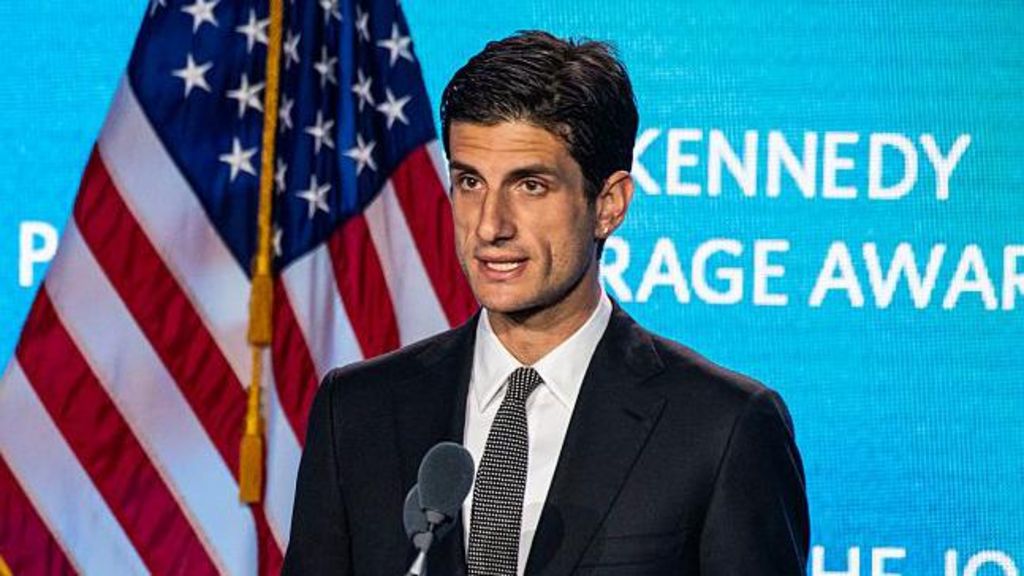
JFK’s grandson Jack Schlossberg to run for Congress
Jack Schlossberg, the 32-year-old grandson of former President John F. Kennedy, has officially declared his candidacy for the U.S. Congress. The announcement, made on Tuesday, positions him as a contender for the New York congressional seat being vacated by Representative Jerrold Nadler, who is retiring after over 30 years in office. Schlossberg, known for his bold political commentary on social media, aims to bring a fresh perspective to the Democratic Party, emphasizing the need to counter what he describes as ‘abuses of power’ by former President Donald Trump and his allies. With a combined following of nearly 2 million on Instagram and TikTok, Schlossberg has been vocal about engaging younger voters in politics. His campaign, launched with a series of social media posts and a dedicated website, outlines ’12 promises to the people of New York’s 12th district’ and calls for a ‘new generation of leadership.’ Schlossberg, who served as Vogue’s political correspondent during the 2024 election, credits his family’s legacy of public service as a driving force behind his decision to run. He has been particularly critical of Trump’s administration, including his estranged cousin Robert F. Kennedy Jr., whom he has labeled a ‘loser.’ Schlossberg’s bid comes as Democrats strategize to regain control of the House in the 2026 midterm elections. ‘Without control of Congress, there’s almost nothing we can do,’ he stated in an interview with The New York Times. The primary race for NY-12 is heating up, with other Democratic candidates, including state assemblymen Micah Lasher and Alex Bores, as well as veteran journalist Jami Floyd, also vying for the seat. New York City Mayor Zohran Mamdani has yet to endorse a candidate in the primary.
-

Google to invest $6.4 billion in cloud infrastructure in Germany
Alphabet’s Google has unveiled plans to invest 5.5 billion euros ($6.41 billion) in Germany over the 2026-2029 period, focusing on expanding its cloud infrastructure and data center capabilities. The investment will primarily target the development of a new data center in Dietzenbach, near Frankfurt, and the expansion of its existing facility in Hanau, both located in the central German state of Hesse. Marianne Janik, Vice President for Google Cloud Northern Europe, confirmed that the initiative will create 100 direct jobs across these locations. Additionally, Philipp Justus, Google’s head in Germany, highlighted that the project is expected to secure approximately 9,000 indirect jobs in the region, emphasizing the significant economic multiplier effect. German Finance Minister Lars Klingbeil praised the investment as a crucial signal for Germany’s business environment, following recent efforts to attract investors and revitalize the country’s economy. Notably, the government has established an off-budget infrastructure fund to support such initiatives, though no state subsidies will be allocated for Google’s investment. This move aligns with Germany’s broader strategy to modernize its economy and reduce bureaucratic hurdles.
-
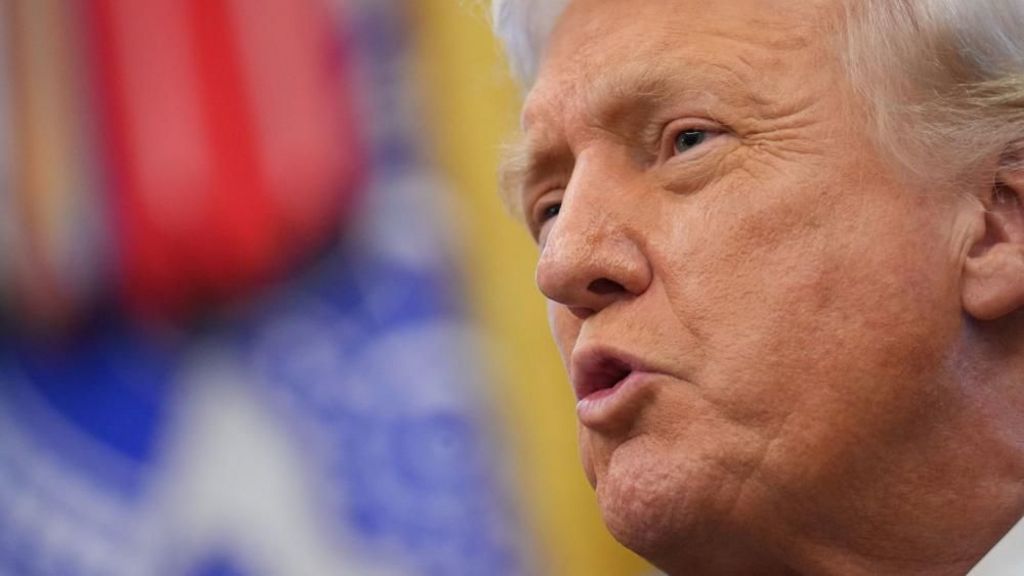
Trump v the BBC: What are the hurdles for president’s legal argument?
Former U.S. President Donald Trump has issued a legal threat to the BBC, demanding $1 billion in damages over a documentary he claims contains ‘false, defamatory, disparaging, and inflammatory statements’ about him. Trump’s legal team has called for a full retraction, a public apology, and compensation for reputational and financial harm allegedly caused by the Panorama programme, which aired in the UK ahead of the 2024 presidential election. The documentary reportedly edited Trump’s speech to suggest he explicitly encouraged the January 2021 Capitol Hill riot. A leaked memo from a former BBC adviser criticized the editing as misleading. BBC Chairman Samir Shah acknowledged an ‘error of judgement,’ while outgoing Director General Tim Davie admitted to an ‘editorial breach.’ However, legal experts argue that Trump faces significant hurdles in winning such a lawsuit, particularly under U.S. defamation laws, which require proof of ‘actual malice.’ Trump has indicated plans to file the lawsuit in Florida, where the statute of limitations is more favorable, but he must also demonstrate that the documentary caused substantial harm and was accessible in the state. The BBC could argue that Florida lacks jurisdiction due to insufficient exposure of the content there. Trump has a history of suing media organizations, often securing settlements, but critics view these actions as attempts to intimidate the press. The BBC has yet to respond to Trump’s demands, with a deadline set for November 14.
-

Dubai: Indian teen dies after falling from building while taking photos
A heartbreaking incident unfolded in Dubai earlier this week as a 19-year-old Indian teenager lost his life after falling from a building while attempting to capture photographs. Mishaal Mohammed, a resident of Kerala, India, was visiting his cousin in the Hor Al Anz area when the tragedy occurred. According to M.K., a social worker involved in the case, Mishaal was an avid photography enthusiast who was trying to take pictures of planes from the third-floor terrace of the building. Unfortunately, he tripped on a pole and fell, sustaining severe internal injuries. Despite being rushed to Rashid Hospital immediately after the accident, he succumbed to his injuries shortly after arrival. Mishaal, the only son of his parents, is survived by his parents and two sisters. He had arrived in the UAE on a visit visa just last month to spend time with his cousin. The formalities for repatriating his body to India are nearly complete, and his final rites are expected to take place early Wednesday morning. This marks the second such incident in Dubai this year, following the death of a 17-year-old student in April after a similar fall. The community mourns the loss of these young lives, cut short by unforeseen accidents.
-
Adnic posts 15% profit surge as strategic partnerships drive growth
Abu Dhabi National Insurance Company (Adnic), a leading multi-line insurer in the UAE, has announced a robust financial performance for the first nine months of 2025, with a 15.3% surge in net profit before tax, reaching Dh395 million. This growth is attributed to the company’s strategic partnerships, operational efficiency, and sustained expansion across its core business segments. Gross written premiums also saw a significant increase of 17.4% year-on-year, totaling Dh7.21 billion, reflecting strong performance across all business lines. Adnic maintained a combined ratio of 93.2%, showcasing its disciplined underwriting practices and operational excellence. A key development during the third quarter was Adnic’s long-term collaboration with Allianz Trade in the Middle East, aimed at enhancing access to Trade Credit Insurance for UAE businesses. This partnership leverages Adnic’s local expertise and Allianz Trade’s global capabilities in credit risk management, enabling businesses to safeguard cash flows, mitigate payment default risks, and pursue growth opportunities with confidence. Aligning with the UAE’s vision for an innovation-driven economy, Adnic has invested in integrating artificial intelligence into its operations to improve efficiency, streamline processes, and elevate customer experience. Additionally, Adnic reinforced its social impact initiatives through a partnership with the Sheikh Zayed Housing Program (SZHP), offering specialized life insurance solutions to eligible UAE nationals, thereby supporting financial security and national housing priorities. Sheikh Mohamed bin Saif Al Nahyan, Chairman of Adnic, emphasized the company’s resilience and commitment to sustainable value creation, stating, ‘Adnic’s strong results reflect our prudent risk management and role as a key enabler of the UAE’s economic growth.’ Charalampos Mylonas, CEO of Adnic, highlighted the company’s focus on innovation and customer-centric growth, noting that the partnership with Allianz Trade and digital transformation efforts have significantly enhanced operational efficiency and customer satisfaction. For the first nine months of 2025, Adnic’s total insurance revenue reached Dh6.1 billion, a 16.1% increase year-on-year, while net insurance service results rose by 23.9% to Dh382.3 million. Investment income also grew by 10.4% to Dh223.3 million, and profit after tax stood at Dh354.7 million. As of 30 September 2025, Adnic’s total assets amounted to Dh10.6 billion, with shareholders’ equity at Dh3.6 billion.
-
NRI Biz Matters: Google’s multifaceted investments in India to boost digital infrastructure
Google is set to make a transformative investment in India, focusing on enhancing digital infrastructure and accelerating AI-driven innovation. The tech giant’s multifaceted plan includes the development of gigawatt-scale data centers and the establishment of a new international subsea gateway in Visakhapatnam. These initiatives, supported by advanced energy infrastructure, aim to bring cutting-edge technology to enterprises, fostering AI innovation and digital growth across the country. The project is a collaboration with the Adani Group and will feature Tensor Processing Units (TPUs) and Graphics Processing Units (GPUs), significantly boosting compute capacity for deep learning, neural network training, and large-scale AI model inference. This investment is expected to create an ecosystem that accelerates AI solutions in healthcare, logistics, finance, and agriculture, among other sectors. Upon completion, the new data center campus will join Google’s global network of AI data centers spanning 12 countries. The Visakhapatnam subsea gateway will connect to Google’s extensive terrestrial and subsea cable network, positioning the city as a global AI hub. Analysts predict this initiative will generate substantial economic and societal opportunities for both India and the United States, marking a generational leap in AI capabilities. Additionally, the hub will deliver high-performance, low-latency services, enabling organizations to scale their AI-powered solutions and accelerate research and development. In parallel, India is addressing the rise in cybercrime and bank frauds through initiatives like the Indian Cyber Crime Coordination Centre and the use of MuleHunter.AI to detect and monitor mule accounts. The Reserve Bank of India is also developing a digital payments intelligence platform to strengthen risk management in the banking system.