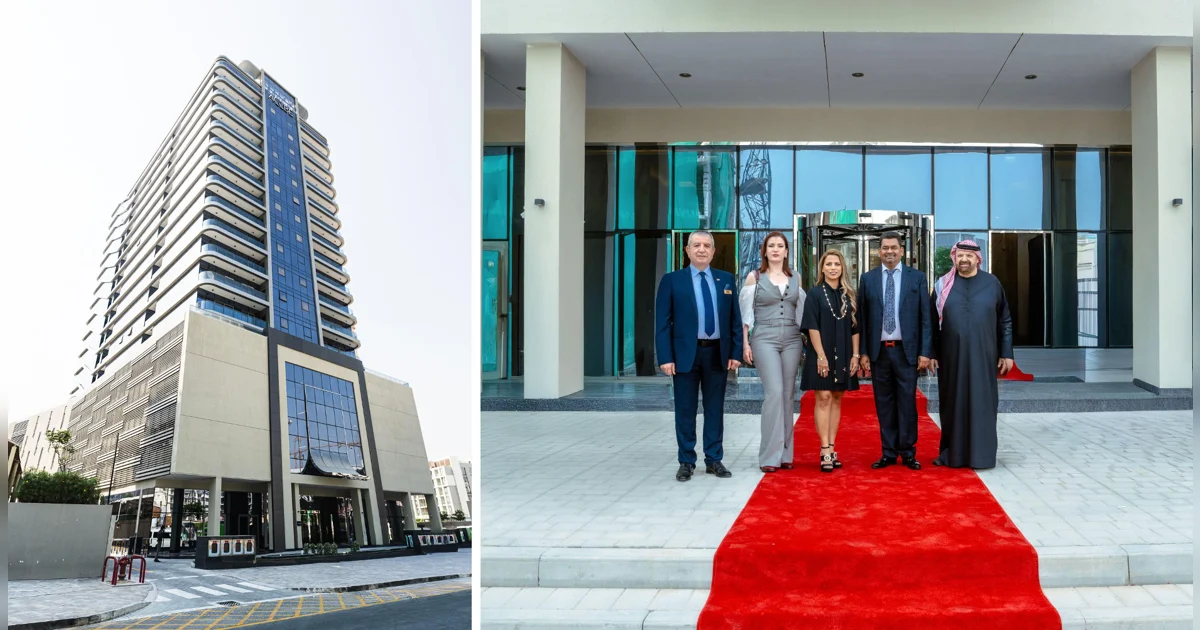
Acube Developments has reached a significant milestone with the official handover of Adhara Star, its inaugural project in Arjan, Dubai. This achievement underscores the company’s rapid ascent in Dubai’s competitive real estate market, showcasing its ability to deliver high-quality, innovative, and lifestyle-focused developments. Completed in under two years since the company’s inception, Adhara Star has already sold out within three months of its launch, reflecting strong investor confidence and setting the stage for Acube’s ambitious future projects. The freehold mixed-use development features 113 residential units spread across 13 floors, complemented by ground-level retail spaces and podium parking. Designed for modern urban living, the project offers a range of apartment configurations, including one, 1.5, 2.5, and 3.5-bedroom units, all equipped with premium European appliances and luxury finishes. Adhara Star combines affordable luxury with a community-centric lifestyle, catering to Dubai’s growing population of families and young professionals. Residents will enjoy access to a variety of premium amenities, including a rooftop pool, Japanese Zen Garden, health clubs, an indoor gym, sports courts, and an open-air fitness zone. Notably, the development is certified as a Green Building, highlighting Acube’s commitment to sustainable construction and resource-efficient design. Ramjee Iyer, Chairman and CEO of Acube Group, emphasized the significance of this achievement, stating that Adhara Star reflects Dubai’s dynamic property market and the company’s ability to maintain world-class standards. With its brand promise, ‘Live on a Star,’ Acube aims to continue delivering projects that blend aspirational living with lasting value, shaping communities and setting new benchmarks in the real estate sector.
标签: North America
北美洲
-

£220 ‘for a cut-up sock’ – Apple’s new iPhone Pocket ridiculed online
Apple has ignited a storm of online criticism following the unveiling of its latest accessory, the iPhone Pocket. Priced at £219.95, the product, described as a novel carrying case for iPhones, has been widely mocked for its resemblance to a piece of knitted footwear and its seemingly exorbitant cost. Social media users were quick to deride the accessory, with one X user quipping, ‘$230 for a cut-up sock.’ Renowned tech YouTuber Marques Brownlee labeled it a ‘litmus test’ for Apple enthusiasts who ‘buy or defend anything Apple releases.’ Apple defended the product, stating it was part of a limited-edition collaboration with Japanese fashion label Issey Miyake, inspired by ‘a piece of cloth’ and the concept of ‘creating an additional pocket.’ The accessory, available in multiple colors, features a short or long strap design. However, critics on social media questioned its practicality, highlighting the lack of security features like a zipper, especially given the prevalence of iPhone thefts. Some users humorously compared the product to the bright green mankini worn by Sasha Baron Cohen’s character Borat. Despite the backlash, supporters argued the price reflects the collaboration’s exclusivity and Apple’s historical ties to fashion. Social media analyst Matt Navara noted the pricing aligns with luxury fashion norms but suggested Apple might be ‘testing the limits of brand loyalty.’
-
Trump claims ‘obligation’ to sue BBC over speech edit
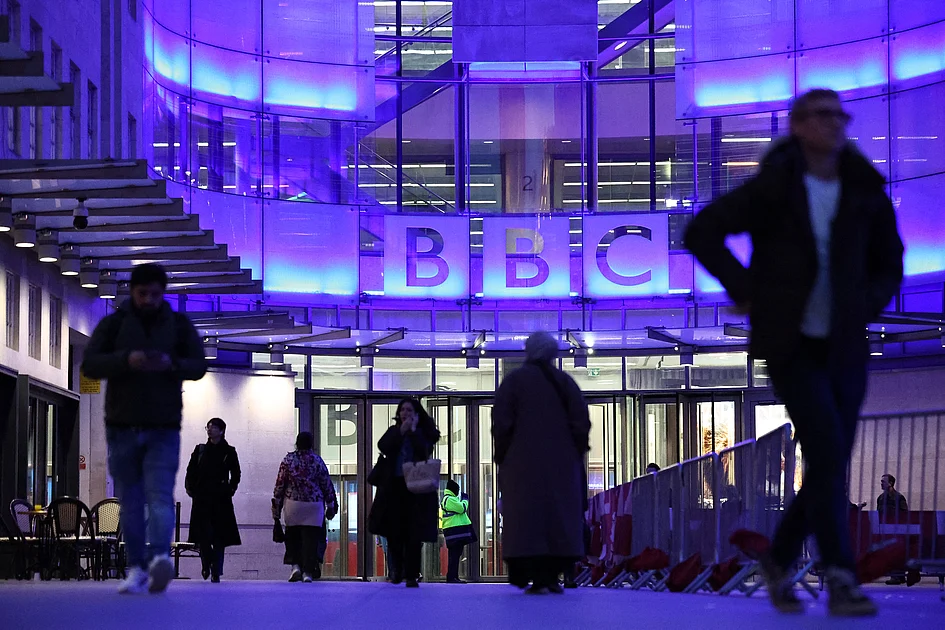
US President Donald Trump has declared an ‘obligation’ to pursue legal action against the BBC, accusing the British broadcaster of misleading the public through a controversial edit of his speech. In a Fox News interview aired on Tuesday, Trump hinted at a potential defamation lawsuit, though he stopped short of confirming formal proceedings. This follows a letter from Trump’s legal team, seen by AFP, which threatened the BBC with a billion-dollar lawsuit. The BBC has since apologized for the edit, which allegedly gave the impression that Trump incited ‘violent action’ ahead of the 2021 Capitol assault. The broadcaster also announced a review of the letter and the resignation of its director general and top news executive over the controversy. Trump criticized the BBC, stating that it ‘defrauded the public’ and emphasized that Britain, ‘supposedly one of our great allies,’ has a stake in the broadcaster. The incident occurs during a politically sensitive period for the BBC, as it prepares to renegotiate its Royal Charter, set to expire in 2027. Trump has faced accusations of using lawsuits to suppress criticism in US media since his return to power in January. The BBC documentary featuring the edited speech aired last year, sparking widespread debate.
-

US ends penny-making run after more than 230 years
The United States is bidding farewell to the penny, a one-cent coin that has been in circulation for over 230 years. The Philadelphia Mint will produce its final batch of pennies on Thursday, marking the end of an era. While the coins will remain in circulation, businesses are already adjusting prices as pennies become increasingly scarce. The decision to halt production is driven by economic considerations, with the government estimating annual savings of $56 million. President Donald Trump, who first announced the plans in February, framed the move as a step toward eliminating waste in the national budget. Pennies, which honor Civil War president Abraham Lincoln and are made of copper-plated zinc, now cost nearly four cents each to produce—more than twice the cost a decade ago. The rise of electronic transactions has further diminished the penny’s relevance, with the Treasury Department noting that approximately 300 billion pennies remain in circulation, far exceeding commercial needs. A 2022 government analysis revealed that about 60% of all coins in circulation, equivalent to $60-$90 per household, are stashed away at home, deemed not worth trading in. However, the phase-out may have unintended consequences for consumers. A study by the Richmond Federal Reserve estimates that businesses rounding up prices could cost shoppers $6 million annually. The US is not alone in this trend; countries like Canada, Australia, and New Zealand have also phased out their lowest-value coins. Attention in the US has now shifted to the nickel, which costs nearly 14 cents to produce despite its five-cent face value. Retiring the nickel could have a more significant financial impact, potentially costing consumers $55 million annually.
-
Fifty-year mortgages and $2,000 cheques: What’s behind Trump’s affordability drive?
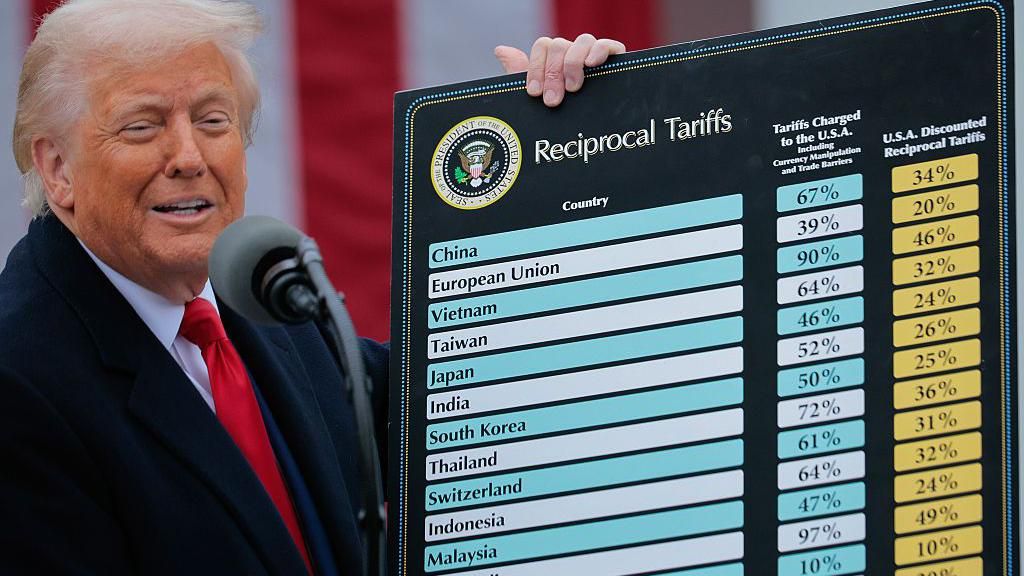
In response to growing public dissatisfaction with his economic policies, US President Donald Trump has proposed a $2,000 payment to most Americans, funded by tariff revenues. This idea, which Trump describes as a ‘subsidy,’ aims to address consumer concerns following the Republican Party’s poor performance in recent state elections. However, economists argue that the tariff revenue is insufficient to cover the cost of such payments, potentially requiring deficit financing. Treasury Secretary Scott Bessent has downplayed the likelihood of these payments, suggesting that tariff gains would instead lower tax rates under Trump’s 2025 spending package. Trump has also floated other ideas, including 50-year mortgages and redirecting expiring health insurance subsidies into direct cash payments. These proposals face significant challenges in Congress, where Republicans hold narrow majorities. Meanwhile, Trump’s administration continues to face criticism for its handling of rising costs in key sectors like beef and electricity. Despite these challenges, Trump’s political instincts remain sharp, as he seeks to recalibrate his policies to reflect public sentiment. His ability to connect with voters, however, is constrained by his position in the Oval Office, prompting discussions about potential nationwide speeches on the economy.
-

Watch: Timelapse video shows rare northern lights display in Iowa
A breathtaking celestial phenomenon graced the skies of Iowa this week as a powerful geomagnetic storm brought the northern lights to regions far beyond their typical Arctic confines. Captured in a stunning timelapse video, the aurora borealis painted the night sky with vibrant hues of green, purple, and pink, captivating residents and stargazers alike. This rare occurrence was triggered by heightened solar activity, which propelled charged particles toward Earth, interacting with the planet’s magnetic field to create the dazzling light show. While the northern lights are typically confined to higher latitudes, this event allowed even midwestern states like Iowa to witness the spectacle. Experts suggest that such displays may become more frequent as the sun approaches the peak of its 11-year solar cycle. The event has sparked widespread excitement and renewed interest in space weather phenomena.
-

UAE’s first female ship master, Captain Sahar Rasti, honoured with Maritime Industry Excellence Award
In a landmark moment for the maritime industry, Captain Sahar Rasti, the UAE’s first female ship master, was awarded the Benchmark for Maritime Industry Excellence Award at The Maritime Standard (TMS) Awards 2025. This prestigious accolade, presented on October 29, 2025, at Atlantis The Palm in Dubai, recognizes her exceptional leadership, unwavering commitment to excellence, and tireless advocacy for women’s empowerment in the maritime sector. The event, held under the patronage of Sheikh Ahmed bin Saeed Al Maktoum, President of the Dubai Civil Aviation Authority and Chairman of Emirates Airline and Group, drew over 1,000 senior executives and industry leaders from across the Middle East, India, and beyond. Captain Rasti’s achievement is a testament to the UAE’s dedication to fostering diversity, inclusion, and innovation within its maritime industry. In her acceptance speech, she emphasized that the award symbolizes the potential of Emirati women to excel in leadership roles and encouraged young women to pursue their passions in maritime careers. The TMS Awards 2025 celebrated excellence across 25 categories, including shipping, logistics, and marine technology, while highlighting the UAE’s leadership in sustainable and technologically advanced maritime practices. Trevor Pereira, Managing Director of The Maritime Standard, underscored the event’s role in promoting innovation and excellence, reinforcing the region’s position as a global maritime leader. Captain Rasti’s groundbreaking accomplishment not only marks a milestone for women in the industry but also reflects the UAE’s vision of nurturing local talent and driving global maritime innovation.
-

How 3 Sharjah residents battled building fire before firefighters arrived
In a remarkable display of bravery and quick thinking, three Sharjah residents averted a potential catastrophe by extinguishing a fierce apartment fire before firefighters could arrive. The incident occurred in Al Mamzar, Sharjah, where Abdullah Mohammed Ali Al-Maleji, a 30-year-old employee at Americana Food Company, first noticed the danger while conversing with his wife on their fourth-floor balcony. Hearing cries of ‘Fire! Fire!’, Al-Maleji spotted thick smoke emanating from a balcony three floors above. Without delay, he alerted the police and, alongside his flatmate Khaled Mohammed Al-Baili, rushed to the scene, wisely avoiding the elevator for safety reasons. Upon reaching the seventh floor, they encountered their neighbor, Abdulrahman Al-Husaini, who was desperately attempting to quell the flames with a bucket of water. The fire, which had ignited on the balcony, had rapidly spread to nearby mattresses, exacerbating the situation due to the flammable nature of the materials. Realizing the inadequacy of the bucket, Al-Maleji swiftly located the building’s fire hose. With Abdulrahman’s assistance, they maneuvered the hose into the apartment and began dousing the flames. Meanwhile, Khaled and Abdulrahman worked to remove flammable items such as curtains, furniture, and electrical cables, preventing the fire from spreading further. Their coordinated efforts were instrumental in bringing the blaze under control within minutes. When the police arrived, they encouraged the trio to continue their efforts until the Civil Defence team could take over. By the time the firefighters arrived, the fire had been completely extinguished, and the area was secured. Abdulrahman sustained a minor hand injury but was promptly treated by paramedics. The following day, the Sharjah Civil Defence Authority honored the three men with certificates of appreciation, presented by Brigadier General Yousef Harmoul Al Shamsi, in recognition of their courage and sense of responsibility. Reflecting on the honor, Al-Maleji expressed profound pride and gratitude, stating, ‘It’s a feeling I can’t describe. I felt pride, honour, and appreciation, something beyond words.’ Abdulrahman also conveyed his gratitude to the emergency services and expressed his joy at being honored by such esteemed figures.
-
Why is Donald Trump threatening to sue the BBC?
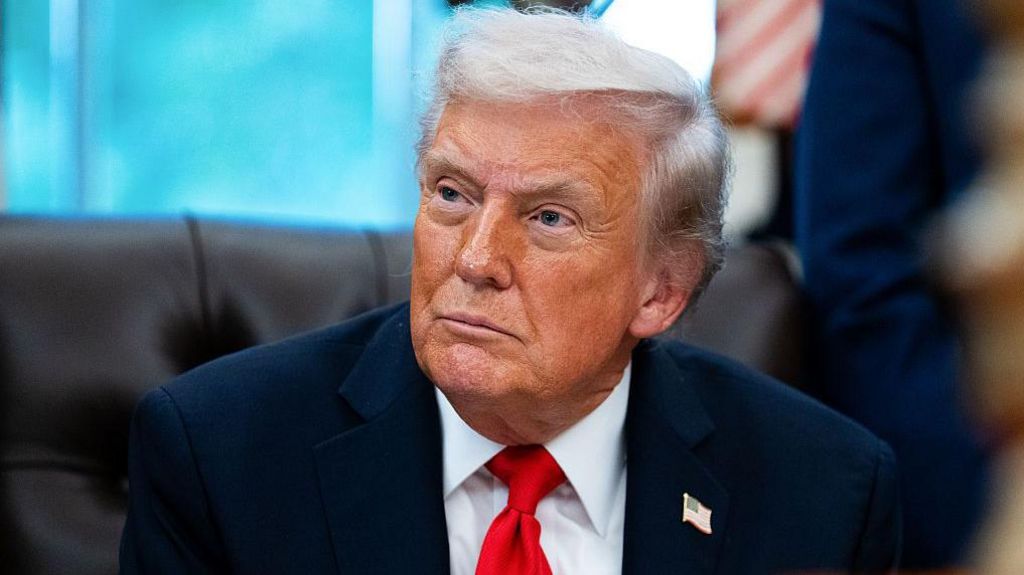
The BBC is embroiled in a significant crisis following the resignation of its director general, Tim Davie, and head of news, Deborah Turness. The turmoil stems from allegations that a Panorama documentary misrepresented a speech by former US President Donald Trump, leading to widespread criticism and a $1 billion lawsuit threat from Trump. The documentary, titled ‘Trump: A Second Chance?’, aired on October 28, 2024, and allegedly edited Trump’s speech to suggest he explicitly encouraged the January 6, 2021, Capitol riot. BBC chairman Samir Shah has since apologized for the ‘error of judgement’. Trump’s legal team has demanded a retraction, an apology, and compensation, setting a deadline for the BBC to respond by November 14, 2025. The controversy has sparked internal and external scrutiny of the BBC’s editorial standards, with concerns also raised about its coverage of trans issues and the Israel-Gaza conflict. The resignations of Davie and Turness have further intensified the crisis, as the BBC navigates this challenging period ahead of a government review of its Royal Charter in 2027.
-

Fewer holiday trips, tighter budget: Families cut back on travel, report says
The holiday travel season in the United States is facing a significant slowdown as families, including high-income households, cut back on trips and tighten their budgets. According to a recent report by Deloitte, the average number of planned holiday trips has decreased to 1.83 from 2.14 last year, while travel budgets have shrunk by 18% to an average of $2,334. This shift reflects broader financial concerns, with nearly 20% of households earning over $100,000 annually reporting a decline in their financial well-being compared to the previous year. About 80% of these high-income travelers are opting for more affordable travel options. The prolonged US government shutdown has further exacerbated the situation, forcing airlines to reduce flights and delaying approximately 3.2 million passengers. Travel companies, including Delta Air Lines, United Airlines, and Marriott International, have noted strong demand for premium services in recent months. However, this trend may be reversing as high-income travelers, who typically spend more and travel farther, adjust their plans. Millennials, who represent 34% of luxury travelers, are leading the way in cutting back on trips this year. Interestingly, they are also at the forefront of adopting generative AI for travel planning, with usage increasing 1.5 times since 2024. While travelers primarily use AI to discover activities and attractions, they are most likely to act on restaurant recommendations.