标签: North America

北美洲

  • Board of Peace, Zelensky and Musk – What happened before Trump left Davos?

    Board of Peace, Zelensky and Musk – What happened before Trump left Davos?

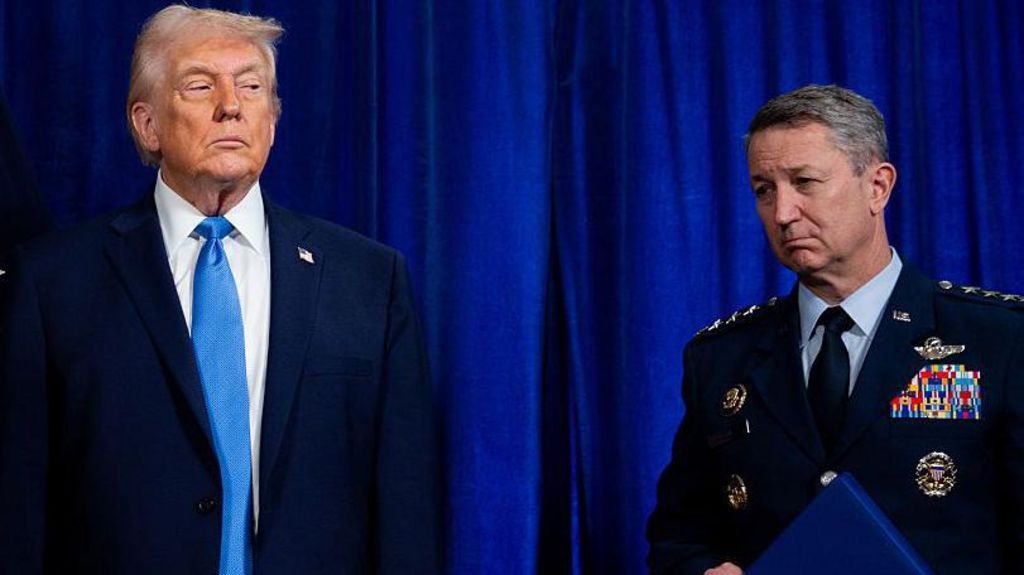
    In a strategically timed move preceding his departure from the World Economic Forum, President Donald Trump presided over the establishment of his controversial “Board of Peace” initiative. The charter-signing ceremony, characterized by its solemn diplomatic pageantry, nonetheless revealed significant geopolitical fractures as multiple key U.S. allies conspicuously abstained from participation.

    The event’s narrative was further complicated by the unexpected involvement of two influential figures: Ukrainian President Volodymyr Zelensky and technology magnate Elon Musk. While specific details of their roles remain undisclosed, their presence suggested an unconventional approach to international diplomacy that blends traditional statecraft with private sector influence.

    Analysts note that the initiative’s launch during the Davos gathering represents a strategic attempt to leverage the global platform while simultaneously challenging established multilateral frameworks. The absence of several traditional allies underscores the administration’s willingness to pursue foreign policy objectives outside conventional diplomatic channels, potentially signaling a fundamental shift in how international cooperation might be structured in the future.

    The “Board of Peace” concept appears to align with Trump’s longstanding skepticism toward traditional international organizations, proposing instead a leaner, more flexible framework for conflict resolution. However, the lack of broad allied participation at the inaugural ceremony raises serious questions about the initiative’s viability and potential effectiveness in addressing complex global conflicts.

  • Canada’s Carney stresses unity in the face of challenges at home

    Canada’s Carney stresses unity in the face of challenges at home

    In a powerful address delivered at the historic La Citadelle fortress in Quebec City, Canadian Prime Minister Mark Carney issued a resounding call for national unity while articulating a bold vision for Canada’s role in an increasingly fragmented global landscape. The speech, marking his first major domestic appearance following controversial remarks at the World Economic Forum in Davos, served as both a unifying message to Canadians and a defiant assertion of national sovereignty.

    Speaking before his federal cabinet at the 19th-century military stronghold originally built to defend against foreign invasion, Carney outlined ambitious plans to strengthen Canada’s economy amid worldwide instability. He emphasized the urgent need for decisive action, stating his government would ‘execute, fairly and fast’ to address pressing economic challenges and cost-of-living concerns through breaking down domestic trade barriers, accelerating major projects, and pursuing trade agreements with non-US allies.

    The Prime Minister delivered a pointed rebuttal to recent comments by U.S. President Donald Trump, who had asserted that ‘Canada lives because of the United States.’ While acknowledging the remarkable partnership between the two nations, Carney firmly declared: ‘Canada doesn’t live because of the United States. Canada thrives because we are Canadians.’ This statement underscored his commitment to defending Canadian values in what he described as a ‘divided’ world.

    Carney expanded on themes previously introduced in Davos, where he had warned that the rules-based international order ‘is not coming back’ and urged middle powers to resist economic coercion by greater powers. Though not mentioning Trump by name, he indicated that the previous ‘bargain’ involving American hegemony had become obsolete.

    The speech has drawn mixed reactions internationally. While Mexican President Claudia Sheinbaum praised Carney’s stance as ‘in tune with current times,’ U.S. Commerce Secretary Howard Lutnick accused Canada of arrogance and characterized the Prime Minister’s position as ‘political marketing’ designed for domestic consumption. Lutnick warned that Canada was jeopardizing its privileged trade relationship with the United States, particularly as both nations prepare to renegotiate the USMCA agreement.

    Domestically, opposition figures have challenged Carney to translate his rhetoric into concrete action. Conservative MP Michelle Rempel Garner emphasized that simply re-announcing projects or creating new bureaucracies would be insufficient following such strong international statements.

    The address concluded an eight-day international trip that included stops in Qatar and China, where Carney secured agreements to reduce tariffs and increase foreign investment in Canada. Recent polling indicates approximately half of Canadians view the Prime Minister favorably, with 47% expressing approval of his government’s performance.

  • Bangladesh will not go to India for T20 World Cup, says cricket board

    Bangladesh will not go to India for T20 World Cup, says cricket board

    In an unprecedented move that has sent shockwaves through the international cricket community, Bangladesh has officially withdrawn from next month’s T20 World Cup following a bitter dispute with tournament host India. The Bangladesh Cricket Board (BCB) announced its definitive decision on Thursday, effectively eliminating the nation from the prestigious global competition.

    BCB President Aminul Islam Bulbul stated unequivocally to journalists: “Our singular condition remains unchanged—we are prepared to participate in the World Cup, but absolutely not in India.” This declaration came just 24 hours after the International Cricket Council (ICC) formally rejected Bangladesh’s alternative proposal to have their group stage matches relocated to Sri Lanka.

    The escalating diplomatic confrontation between the neighboring countries originated on January 3rd when the Board of Control for Cricket in India (BCCI) instructed IPL franchise Kolkata Knight Riders to dismiss Bangladeshi fast bowler Mustafizur Rahman. This controversial decision followed intense online pressure from right-wing Hindu groups in India who referenced alleged attacks against Hindu communities in predominantly Muslim Bangladesh.

    Asif Nazrul, an advisor for youth and sports matters within Bangladesh’s interim administration, emphasized the irreversibility of their position: “There exists zero flexibility regarding our resolution. Our security apprehensions are not founded upon hypothetical scenarios but rather upon tangible events—specifically, the forced expulsion of our premier athlete who was compelled to capitulate to extremist elements.”

    The ICC responded by highlighting its extensive efforts to facilitate Bangladesh’s participation, noting that independent security evaluations and detailed safety plans from host authorities confirmed “no credible or verifiable threats” to the Bangladeshi squad. Despite these assurances, Bangladeshi officials remained unconvinced.

    This controversy carries significant implications for India’s broader sporting ambitions. The nation is currently preparing to host the 2030 Commonwealth Games, viewed as a critical precursor to its bid for the 2036 Olympics. BCB President Bulbul issued a stark warning regarding the consequences of excluding a major cricket nation: “Cricket is scheduled to debut at the 2028 Olympics, followed by Brisbane in 2032. Omitting a passionately cricket-devoted country of nearly 200 million people would represent a catastrophic failure for the sport’s global governance.”

  • Trump sues JPMorgan for $5bn over account closure after Capitol riot

    Trump sues JPMorgan for $5bn over account closure after Capitol riot

    Former President Donald Trump has initiated a $5 billion legal action against JPMorgan Chase, the United States’ largest financial institution, alleging the bank unlawfully terminated his accounts for politically motivated reasons. The lawsuit, filed in Florida, names both the corporation and its longstanding Chief Executive Jamie Dimon as defendants.

    The legal complaint asserts that JPMorgan Chase inflicted “considerable financial and reputational harm” upon Trump and his business enterprises when it abruptly discontinued their banking relationships in 2021. This action occurred shortly after the January 6th Capitol riot, during which Trump supporters violently disrupted the congressional certification of presidential election results.

    Trump’s legal team contends the account closures represented a “key indicator of a systemic, subversive industry practice that aims to coerce the public to shift and re-align their political views.” The filing specifically alleges the bank acted upon “unsubstantiated, ‘woke’ beliefs that it needed to distance itself from President Trump and his conservative political views.”

    Additionally, the lawsuit accuses JPMorgan of trade libel for allegedly placing Trump’s name and those of his associated businesses and family members on a shared “blacklist” identifying individuals with histories of “malfeasant” activity—a measure reportedly authorized personally by Dimon.

    JPMorgan Chase has vigorously denied these allegations, with a spokesperson stating “the suit has no merit” and emphasizing that “JPMC does not close accounts for political or religious reasons.” The bank clarified that account termination decisions stem from assessments of “legal or regulatory risk for the company,” citing existing “rules and regulatory expectations” that compel such actions.

    The financial institution expressed support for administrative efforts “to prevent the weaponisation of the banking sector” while noting it has petitioned multiple administrations to modify regulations that create these contentious situations.

    This legal confrontation represents the latest escalation in tensions between Trump and Dimon, who has recently criticized several administration policies including proposed credit card regulations, immigration approaches, and posturing toward the Federal Reserve.

    The lawsuit emerges amid broader regulatory scrutiny concerning ‘debanking’ practices. Last month, federal regulators identified nine major banks that had made “inappropriate distinctions” among customers based on business activities, particularly affecting sectors including oil and gas, private prisons, and adult entertainment.

  • Trump’s son called UK police after seeing woman ‘beat up’, court hears

    Trump’s son called UK police after seeing woman ‘beat up’, court hears

    In a dramatic development at Snaresbrook Crown Court, Barron Trump, the 19-year-old son of former U.S. President Donald Trump, has emerged as a key witness in a serious criminal case involving allegations of assault and sexual violence. The court proceedings revealed that Trump’s youngest son contacted London police from the United States after reportedly witnessing a friend being violently attacked during a video call in January 2025.

    The case centers on Matvei Rumiantsev, a 22-year-old Russian national facing multiple charges including assault, two counts of rape, intentional strangulation, and perverting the course of justice. The alleged victim, who remains anonymous under UK law, reportedly connected with Barron Trump through social media prior to the incident.

    According to evidence presented to jurors, Trump placed a call to the woman on January 18, 2025, which was unexpectedly answered by a shirtless man with dark hair. Trump described to investigators how the camera view momentarily showed the victim being struck while crying, with the entire disturbing interaction lasting approximately five to seven seconds. Recognizing the urgency, Trump immediately directed his American friends to contact London’s Metropolitan Police via emergency services.

    A transcript of the 999 call released by the Crown Prosecution Service captures Trump’s urgent plea for help: ‘I’m calling from the US, I just got a call from a girl, you know, she’s getting beat up. This was happening about eight minutes ago. I just figured out how to call someone. It’s really an emergency.’

    In subsequent written testimony provided on May 2, Trump characterized what he witnessed as ‘very brief indeed but indeed prevalent,’ noting he hadn’t expected the call to be answered due to the time difference between the countries.

    The court also heard contrasting accounts of the relationship dynamics involved. Rumiantsev acknowledged in testimony that he had become aware of the woman’s friendship with Trump in October 2024 and admitted to feeling upset about their communication. Body camera footage presented as evidence captured the alleged victim describing Rumiantsev’s behavior as ‘jealousy, controlling of who I can be friends with.’

    Rumiantsev denied all charges while acknowledging an argument in November 2024 during which he damaged the woman’s air fryer and kettle. He claimed he contacted police himself over concerns for her welfare after receiving concerning messages.

    The trial continues as prosecutors present evidence dating between November 2024 and January 2025, with Barron Trump’s testimony playing a central role in the proceedings.

  • Eight surprise takeaways from the Oscar nominations

    Eight surprise takeaways from the Oscar nominations

    The 2026 Oscar nominations ceremony commenced with an immediate shock as hosts Danielle Brooks and Lewis Pullman announced Elle Fanning’s unexpected Best Supporting Actress nomination for ‘Sentimental Value.’ This early surprise established the tone for an announcement filled with both startling omissions and remarkable recognitions across major categories.

    Several critically acclaimed performances failed to secure nominations, generating significant buzz. Paul Mescal was surprisingly absent from the Supporting Actor lineup for ‘Hamnet,’ while breakout star Chase Infiniti was overlooked for Best Actress despite her lauded performance in ‘One Battle After Another.’ Other notable snubs included Jesse Plemons for ‘Bugonia’ and Joel Edgerton for ‘Train Dreams,’ though both films earned Best Picture nominations.

    The biggest surprise in the Best Picture category emerged with the inclusion of Brad Pitt’s racing drama ‘F1.’ While expected to receive technical nominations, its ascent to the top category without corresponding directing or acting nods demonstrated strong support from Academy traditionalists who appreciate well-crafted, mainstream cinema.

    Ryan Coogler’s vampire horror film ‘Sinners’ achieved historic recognition with a record-breaking 16 nominations, surpassing previous record holders ‘La La Land,’ ‘Titanic,’ and ‘All About Eve.’ The film’s artistic fusion of genre horror with 1930s blues music set in the Mississippi Delta resonated powerfully with voters, maintaining remarkable momentum since its spring release. The production also made industry headlines for Coogler’s groundbreaking deal with Warner Brothers that will return the film’s ownership rights to him after 25 years.

    In a dramatic reversal of fortune, the ‘Wicked’ sequel failed to secure any nominations after its predecessor garnered 10 nods and two wins. Particularly surprising was the omission of Ariana Grande’s newly added song ‘The Girl in the Bubble’ from the Original Song category. Mainstream recognition instead appeared in the Animated Feature category with blockbusters ‘Zootopia 2’ and viral sensation ‘KPop Demon Hunters.’

    ‘Sinners’ delivered the only British acting nominations through Wunmi Mosaku (Supporting Actress) and Delroy Lindo (Supporting Actor), with Lindo’s inclusion at age 73 marking a long-overdue recognition after his previous near-miss for ‘Da 5 Bloods.’

    Several actresses carried their films as sole nominees, including Rose Byrne for ‘If I Had Legs I’d Kick You,’ Kate Hudson for ‘Song Sung Blue,’ and Amy Madigan for horror film ‘Weapons’—a particularly notable achievement given the genre’s typical Oscar aversion.

    The newly introduced Casting category generated its own controversy when ‘Sentimental Value’ failed to receive recognition despite all four lead actors—Stellan Skarsgård, Elle Fanning, Renate Reinsve, and Inga Ibsdotter Lilleaas—earning individual nominations, raising questions about the selection criteria for the award.

    Timothée Chalamet emerged as the clear Best Actor frontrunner for ‘Marty Supreme,’ positioning him for his first Oscar win. At 30, he becomes the youngest actor since Marlon Brando to receive three Leading Actor nominations, having previously been nominated for his portrayal of Bob Dylan in ‘A Complete Unknown.’

  • Indian expat hopes to bring family to UAE after winning Dh50,000 with Big Ticket

    Indian expat hopes to bring family to UAE after winning Dh50,000 with Big Ticket

    In a life-changing turn of events, four expatriates residing in the United Arab Emirates have emerged as winners in Big Ticket’s second e-weekly January draw, each securing Dh50,000 in prize money. The diverse group of winners includes two Indian nationals, one Bangladeshi citizen, and one Pakistani resident, highlighting the multicultural fabric of the UAE’s expat community.

    Among the fortunate winners is Shafik Paika Mohammed, a 36-year-old sales professional from Mangalore who has spent 15 years living separately from his family in Dubai. After a decade of persistent participation, Mohammed finally achieved victory with a ticket purchased jointly with a friend. The long-awaited win has inspired him to facilitate more frequent family visits to the UAE, strengthening familial bonds that distance had strained.

    “This victory arrived as a tremendous surprise at precisely the right moment,” Mohammed expressed. “I intend to divide the prize equally with my friend and look forward to hosting my family more regularly in the Emirates, creating cherished memories together.”

    Similarly jubilant is Pakistani national Irshad Gull, a desert safari tourism employee with 23 years of UAE residency. Gull celebrated his win alongside seven group members with whom he collectively purchased tickets for nearly ten years before achieving success. “Receiving that winning notification generated incredible happiness,” Gull remarked. “After consistent participation for almost a decade, this achievement feels particularly meaningful.”

    The remaining winners, Bangladeshi national Rafiqul Islam and Indian expatriate Mohammed Ali Riyas, both secured their prizes through online ticket purchases, demonstrating the accessibility of the digital drawing system.

    January’s Big Ticket offerings continue with an unprecedented Dh20 million grand prize, potentially creating an instant multi-millionaire, complemented by five secondary prizes of Dh1 million each. The promotion additionally features incentive opportunities for multi-ticket purchases between January 1-24, including eligibility for live draw events on February 3 with guaranteed cash prizes ranging from Dh50,000 to Dh150,000. Luxury vehicle giveaways, including a BMW X5 and Range Rover Velar, further enhance the month’s premium offerings.

    Prospective participants may acquire tickets digitally through official platforms or physically at designated counters in Zayed International Airport and Al Ain Airport, with live draws streamed weekly on official YouTube channels and websites.

  • Oscars 2026: ‘One Battle After Another,’ ‘Sinners’ tipped to top nominations

    Oscars 2026: ‘One Battle After Another,’ ‘Sinners’ tipped to top nominations

    Hollywood’s awards season reaches its pivotal moment as the Academy prepares to announce nominations for the 98th Oscars, with Warner Bros’ cinematic powerhouses “One Battle After Another” and “Sinners” positioned to dominate the recognition list. Industry analysts project both films could achieve an extraordinary dozen or more nominations across major categories, potentially challenging the historical record of 14 nominations jointly held by “All About Eve,” “Titanic,” and “La La Land.”

    The studio’s dual frontrunner status presents a remarkable achievement for Warner Bros, particularly noteworthy as the distributor faces potential acquisition amid intense bidding wars between Paramount Skydance and Netflix. This awards dominance could mark the studio’s final independent year with unprecedented recognition.

    “Sinners,” Ryan Coogler’s blues-infused horror period piece set in the segregated American South, continues the “Black Panther” director’s acclaimed trajectory. The film features Michael B. Jordan in a dual role as twins combating supernatural threats and racial injustice in 1930s Mississippi, with expectations spanning Best Actor, screenplay, and score nominations. Variety’s awards specialist Clayton Davis suggests Coogler is “rewriting the math entirely” regarding nomination records.

    Meanwhile, Paul Thomas Anderson’s “One Battle After Another” has dominated the preliminary awards circuit, securing nearly every major precursor honor. The genre-blending thriller follows a retired revolutionary searching for his daughter amidst radical violence and immigration conflicts, already breaking the Screen Actors Guild’s nomination record. Leonardo DiCaprio appears certain to secure his seventh Academy acting nomination for his leading role.

    The expanded international voting bloc within the Academy creates opportunities for non-English language contenders including Norwegian arthouse favorite “Sentimental Value,” Persian-language Palme d’Or winner “It Was Just An Accident,” and Brazil’s political drama “The Secret Agent,” though category space remains highly competitive.

    This ceremony introduces the groundbreaking Best Casting category, honoring the previously unrecognized artistry of matching performers to projects. The criteria remain undefined, leaving voters to determine whether to prioritize star power, ensemble cohesion, or discovery of new talent.

    The nomination announcements will occur Thursday at 5:30 AM PST in Los Angeles, with the culminating ceremony scheduled for March 15.

  • ICE detains 5-year-old during Minnesota operation

    ICE detains 5-year-old during Minnesota operation

    A controversial immigration enforcement operation in Minnesota has drawn sharp criticism after U.S. Immigration and Customs Enforcement (ICE) officers detained a 5-year-old boy during the apprehension of his father. The incident occurred Tuesday when agents approached Adrian Alexander Conejo Arias, identified by the Department of Homeland Security (DHS) as an undocumented immigrant, on his driveway as he returned home with his preschool-aged son Liam Ramos.

    Columbia Heights Public Schools Superintendent Zena Stenvik publicly challenged the operation’s tactics, questioning why federal agents would detain a young child. ‘You can’t tell me that this child is going to be classified as a violent criminal,’ Stenvik stated during a Wednesday press conference. Photographs provided by the school district show the young boy wearing a bunny-shaped winter hat while an officer holds his backpack.

    The DHS defended its actions in a social media statement, asserting that ‘ICE did NOT target a child’ and characterized the operation as targeting Conejo Arias, who they claim ‘abandoned’ his son when approached. The department stated that standard procedure involves offering parents the choice to be removed with their children or having ICE place children with a designated safe person.

    However, school officials present during the incident reported that another adult residing in the home was refused permission to take custody of the child. Instead, agents allegedly instructed the child to knock on the door to check for additional occupants. Legal representative Marc Prokosch indicated both father and son were likely being held at a Texas detention facility, despite the father having an active asylum case with no outstanding deportation order.

    The incident forms part of broader enforcement efforts under ‘Operation Metro Surge,’ which DHS describes as targeting ‘the worst of the worst criminal illegal aliens’ to restore public safety in Minnesota. The operation has generated significant community backlash in Minneapolis and St. Paul, particularly following the January 7th fatal shooting of Renee Good by a federal officer in Minneapolis, which previously sparked widespread condemnation.

  • Vampire film Sinners breaks Oscar nominations record

    Vampire film Sinners breaks Oscar nominations record

    In an unprecedented cinematic achievement, Warner Bros’ vampire horror film ‘Sinners’ has demolished the Oscar nominations record with 16 Academy Award considerations, surpassing the previous benchmark of 14 nominations jointly held by ‘All About Eve’ (1951), ‘Titanic’ (1998), and ‘La La Land’ (2018). This groundbreaking recognition defies industry conventions that have historically marginalized horror genre productions during awards season.

    The film’s remarkable nominations encompass multiple categories including Best Picture, Best Director for Ryan Coogler, and acting accolades for stars Michael B. Jordan, Wunmi Mosaku, and Delroy Lindo. Jordan received particular acclaim for his dual portrayal of twin brothers establishing a juke joint in 1930s Mississippi amidst vampire threats, while British-Nigerian actress Mosaku and London-born Lindo represent Britain’s strongest hopes for acting honors.

    Despite ‘Sinners’ historic achievement, Paul Thomas Anderson’s political thriller ‘One Battle After Another’ remains a formidable competitor with 13 nominations, including Best Actor for Leonardo DiCaprio’s performance as a revolutionary confronting an authoritarian regime. The film has maintained its position as awards season favorite for the top prize, though historical patterns indicate the nomination leader ultimately claims Best Picture only approximately 29% of the time.

    Other notable contenders include ‘Marty Supreme,’ ‘Frankenstein,’ and ‘Sentimental Value’ with 9 nominations each, while Maggie O’Farrell’s ‘Hamnet’ adaptation earned 8 nominations including Best Actress frontrunner Jessie Buckley. The nominations arrive during a significant transitional period for Warner Bros, currently undergoing potential acquisition negotiations that may include streaming giant Netflix.

    Industry commentators have highlighted the cultural significance of ‘Sinners’ achievement, with BBC Radio 1 film critic Ali Plumb noting: ‘The last horror film to win Best Picture was ‘The Silence of the Lambs’ over three decades ago.’ BBC culture editor Katie Razzall praised the film as ‘a perfect blend of revenge thriller and decadent musical journey exploring America’s race issues through vampire mythology and blues history.’

    The 98th Academy Awards ceremony will culminate the intense competition on March 15th in Hollywood, determining whether ‘Sinners’ record-breaking nominations will translate into corresponding victories.