标签: North America

北美洲

  • ‘I was in bed’: How British actor Delroy Lindo heard about Oscar nomination

    ‘I was in bed’: How British actor Delroy Lindo heard about Oscar nomination

    In a year marked by exceptional cinematic achievements, British thespians Delroy Lindo and Wunmi Mosaku have emerged as the United Kingdom’s sole acting representatives for the 93rd Academy Awards. The acclaimed performer, celebrated for his powerful portrayal in Da 5 Bloods, received his career-first Oscar nomination under remarkably humble circumstances—awakening to the news while still resting in bed. This intimate revelation contrasts sharply with the glamour typically associated with Hollywood’s highest honors, highlighting the pandemic-era awards season’s distinctive character.

    Lindo’s nomination for Best Actor recognizes his masterful depiction of a Vietnam veteran grappling with trauma and moral complexity in Spike Lee’s critically acclaimed drama. Meanwhile, Mosaku’s supporting nomination honors her performance in the supernatural horror film His House, marking a significant milestone for genre cinema representation. Their dual recognition underscores Britain’s continuing influence in global cinema despite this year’s reduced international presence across acting categories.

    The nominations arrive amid ongoing industry conversations about diversity and representation, with both performers representing meaningful strides in inclusive storytelling. Industry analysts note the significance of these nominations occurring during a historically unconventional awards season, where traditional campaigning and red-carpet festivities have been largely replaced by virtual celebrations and intimate moments of professional acknowledgment.

  • Trump withdraws Canada’s invite to join Board of Peace

    Trump withdraws Canada’s invite to join Board of Peace

    In a significant diplomatic escalation, former U.S. President Donald Trump has formally withdrawn Canada’s invitation to join his newly established Board of Peace. The decision was announced via Trump’s Truth Social platform in a direct address to Canadian Prime Minister Mark Carney, marking the latest deterioration in relations between the North American neighbors.

    The conflict stems from Prime Minister Carney’s recent address at the World Economic Forum in Davos, where he warned of a potential ‘rupture’ in the U.S.-led global order without explicitly naming Trump. The Canadian leader’s comments, which received a rare standing ovation, apparently provoked Trump’s ire, leading to the invitation’s revocation.

    Financial considerations further complicated the situation. Ottawa had previously indicated it would refuse to pay the substantial $1 billion membership fee that Trump has mandated for permanent members of the board. This financial commitment was intended to fund the operations of the new international organization, which Trump envisions as an alternative conflict-resolution body to the United Nations.

    The Board of Peace, conceived by Trump, grants him extensive decision-making authority as lifetime chairman. While initially perceived as focused on resolving the Israel-Hamas conflict in Gaza, the proposed charter notably omits specific mention of Palestinian territories and appears designed to assume functions traditionally handled by the UN.

    Despite Canada’s exclusion, approximately 35 nations have already committed to joining from the 60 invited countries. Participants include Argentina, Hungary, Egypt, Turkey, Qatar, Saudi Arabia, Pakistan, and several Central Asian nations. Notably absent are all other permanent UN Security Council members—China, France, Russia, and the United Kingdom—who have thus far declined participation.

    The diplomatic friction intensified through exchanged remarks between the two leaders. Following Carney’s Davos address, Trump retorted that Canada ‘lives because of the United States’ and should demonstrate gratitude for numerous ‘freebies.’ Carney responded defiantly during a speech in Quebec, asserting that ‘Canada thrives because we are Canadians,’ underscoring the deepening diplomatic rift.

  • Acube Abodes Realty breaks ground on Altair 52 at Dubai South

    Acube Abodes Realty breaks ground on Altair 52 at Dubai South

    DUBAI, UAE – Acube Abodes Realty has officially broken ground on its latest premium residential venture, Altair 52, situated within the rapidly expanding master community of Dubai South. This ceremonial event signifies the formal initiation of construction activities, underscoring the developer’s dedication to creating high-caliber, meticulously designed residential spaces.

    The project launch arrives during a period of exceptional growth for Dubai’s property sector, which recorded an unprecedented 215,700 sales transactions valued at Dh686.8 billion in the previous year, according to official data from the Dubai Land Department. Market analytics reveal developers delivered 42,784 residential units in 2025, marking a substantial 45% increase from 2024 figures, while new unit launches reached 177,624, representing a 6.1% year-on-year growth.

    Altair 52 emerges as a contemporary residential development characterized by its modern architectural design, space-efficient layouts, and comprehensive lifestyle amenities. Strategically positioned within Dubai South, the project offers exceptional connectivity to major transportation arteries and proximity to Al Maktoum International Airport. Its location provides convenient access to crucial commercial and logistics centers, including the Jebel Ali Free Port and Free Zone, which are poised for increased economic activity.

    The groundbreaking ceremony gathered senior executives from Acube Abodes Realty, project consultants, contracting partners, and key stakeholders, symbolizing a collaborative foundation built on strategic planning and execution excellence.

    Akshay Agarwal, Founder and CEO of Acube Abodes Realty, stated: ‘The commencement of Altair 52 represents a pivotal advancement in our developmental trajectory. Dubai South continues to establish itself as one of Dubai’s most promising destinations, and this project embodies our vision to create value-driven residences that harmonize design excellence, functional practicality, and long-term investment potential.’

    Market indicators suggest Dubai’s property landscape is anticipating approximately 120,000 new home deliveries in 2026, signaling a transition toward a more mature market characterized by enhanced buyer selection and potential price stabilization, though luxury segments maintain their strength.

    Demonstrating remarkable market confidence, master broker Golden Bricks has already secured sales for 70% of Altair 52’s residential inventory. This robust presales performance reflects both consumer trust in Acube Abodes Realty’s development capabilities and Golden Bricks’ formidable market presence and sales efficacy within the premium residential brokerage sector.

    Concurrently, Acube Abodes Realty has announced forthcoming launches of two additional projects – Altair 72 and Altair 92 – within Dubai South. Construction operations are currently progressing, with the developer reaffirming its commitment to timely project delivery, quality assurance, and customer satisfaction. Upon completion in 2027, Altair 52 will introduce 52 meticulously appointed studios, alongside one-, two-, and three-bedroom apartments complemented by extensive lifestyle facilities and amenities.

  • 3 new Dubai locations to get container-style gyms; municipality calls for applications

    3 new Dubai locations to get container-style gyms; municipality calls for applications

    Dubai Municipality has unveiled an innovative urban wellness initiative by opening investment opportunities for mobile container-style gym facilities at three prominent outdoor locations across the city. The project targets Al Khawaneej Pond Park, Al Barsha South Park, and Al Mamzar Corniche as designated sites for these modular fitness centers.

    The municipality is actively seeking applications from investors, private companies, and individual entrepreneurs—both citizens and residents—to lease and operate these unique recreational facilities. The application portal remains accessible through the official municipal investment website at investmentopportunities.dm.gov.ae/external/OpenOpportunity, with a submission deadline set for January 25, 2026.

    This initiative represents Dubai’s ongoing commitment to enhancing public health infrastructure and promoting active lifestyles through accessible outdoor fitness solutions. The container gym concept aligns with the city’s innovative approach to urban planning, utilizing modular designs that can be strategically placed in high-traffic recreational areas without permanent structural modifications.

    The selected locations reflect careful consideration of demographic needs and geographic distribution. Al Mamzar Corniche offers coastal access, Al Barsha South Park serves a densely populated residential area, and Al Khawaneej Pond Park provides recreational space in a rapidly developing district. This strategic placement ensures diverse communities across Dubai will benefit from enhanced fitness accessibility.

    This project continues Dubai’s pattern of implementing creative urban solutions that blend functionality with modern design, potentially setting a precedent for future recreational infrastructure developments in smart cities worldwide.

  • Elon Musk, Ryanair feud rages; airline’s boss dismisses takeover threat

    Elon Musk, Ryanair feud rages; airline’s boss dismisses takeover threat

    A highly publicized corporate dispute between tech billionaire Elon Musk and Ryanair CEO Michael O’Leary has escalated into a full-scale war of words, with the airline executive firmly rejecting Musk’s suggested takeover while acknowledging the controversy has generated unexpected business benefits.

    The clash originated when O’Leary publicly declined to implement Musk’s Starlink satellite internet service across Ryanair’s fleet of over 600 aircraft, prompting the SpaceX founder to label the executive an ‘utter idiot’ in response. Musk subsequently suggested on his social media platform X that he might acquire Europe’s largest airline by passenger numbers and install new leadership.

    At a specially convened press conference in Dublin—promoted by Ryanair as addressing ‘Musk’s latest Twitshit’—O’Leary delivered a pointed rebuttal. While welcoming potential investment from the world’s wealthiest individual, he emphasized that European Union ownership regulations strictly prohibit foreign control of airlines, making any acquisition attempt legally impossible.

    ‘O’Leary challenged Musk’s technical assertions regarding Starlink’s aircraft compatibility, particularly disputing claims that the satellite antennas wouldn’t create aerodynamic drag. Ryanair estimates implementing Starlink would incur approximately $250 million annually in operational costs, including significant additional fuel expenditures.

    Despite the heated exchange, O’Leary revealed the publicity has provided a substantial boost to ticket sales, with bookings increasing 2-3% over the past five days—a statistically significant uplift given Ryanair’s massive passenger volumes. The airline reported particularly strong demand for January-March travel, the final quarter of its fiscal year.

    Market response remained measured, with Ryanair shares gaining 2% on Wednesday but showing minimal overall movement throughout the controversy, indicating investor skepticism regarding Musk’s takeover seriousness. The billionaire has previously used social media polls to gauge public opinion before major business decisions, including his acquisition of Twitter.

    O’Leary disclosed that Ryanair had engaged in twelve months of negotiations with Starlink while evaluating onboard connectivity options. The discussions ultimately stalled due to fundamental disagreements about cost structure and projected customer adoption rates, with the companies holding vastly different expectations about passenger willingness to pay for WiFi services.

  • Trump says US wants ‘total access’ to Greenland

    Trump says US wants ‘total access’ to Greenland

    WASHINGTON – In a significant geopolitical development, former President Donald Trump has revealed ongoing negotiations for the United States to secure “total access” to Greenland without any temporal restrictions. The announcement came during a Thursday interview with Fox Business, where Trump characterized the discussions as actively progressing toward a comprehensive agreement.

    “We’re currently negotiating the specific details, but the fundamental principle is complete and perpetual access – no expiration date, no limitations,” Trump stated, emphasizing the unprecedented nature of the proposed arrangement.

    The disclosure follows Trump’s Wednesday announcement regarding a preliminary framework agreement reached with NATO Secretary General Mark Rutte concerning Greenland and broader Arctic regional strategy. This diplomatic progress prompted Trump to suspend previously threatened tariffs against eight European nations, which were scheduled to implement on February 1.

    However, Danish Prime Minister Mette Frederiksen swiftly countered Trump’s assertions, clarifying that Rutte lacks authorization to negotiate on behalf of Denmark or its autonomous territory. “Greenland’s future must be determined by Greenlanders themselves,” Frederiksen asserted on Thursday. “Our sovereignty is not subject to negotiation under any circumstances.”

    The emerging conflict highlights escalating great-power competition in the strategically vital Arctic region, where melting ice caps are opening new shipping routes and resource extraction opportunities. Greenland possesses substantial deposits of rare earth minerals and geopolitical significance due to its northern positioning.

    This development represents the latest chapter in Trump’s persistent interest in Greenland, which previously included a 2019 proposal to purchase the territory – an offer Denmark promptly dismissed as “absurd.” The current negotiations appear to pursue alternative arrangements that would grant the US extensive rights without formal territorial transfer.

    Diplomatic analysts suggest the proposal faces substantial obstacles given Denmark’s firm stance on Greenlandic self-determination and the complex trilateral relationship between the US, Denmark, and Greenland’s autonomous government.

  • Trump sparks anger over claim Nato troops avoided Afghanistan front line

    Trump sparks anger over claim Nato troops avoided Afghanistan front line

    Former US President Donald Trump has ignited a diplomatic firestorm with controversial comments questioning NATO allies’ military contributions during the Afghanistan conflict. In a Fox News interview, Trump asserted that NATO forces remained “a little off the front lines” while American troops bore the brunt of combat operations.

    The remarks prompted immediate condemnation from across the British political spectrum. Labour MP Emily Thornberry, chair of the foreign affairs committee, denounced the statements as an “absolute insult” to the 457 British service personnel who lost their lives in Afghanistan. “How dare he say we weren’t on the front line?” Thornberry challenged during BBC’s Question Time, emphasizing that British forces had consistently supported American military objectives.

    Conservative MP Ben Obese-Jecty, an Afghanistan veteran, expressed dismay at seeing “our nation’s sacrifice, and that of our NATO partners, held so cheaply.” Liberal Democrat leader Sir Ed Davey similarly condemned Trump’s commentary, noting the former president’s own avoidance of military service while questioning others’ sacrifices.

    The controversy emerges against the backdrop of NATO’s collective security response to the 9/11 attacks, which marked the only invocation of Article 5 in the alliance’s history. The UK contributed the second-largest contingent to the Afghanistan mission, suffering the highest casualties among NATO partners after the United States.

    Defence Secretary John Healey, speaking before Trump’s latest comments, had emphasized the shared sacrifice: “In Afghanistan, our forces trained together, they fought together, and on some occasions, they died together.” Military veterans including former RAF officer Calvin Bailey challenged Trump’s characterization, stating it bore “no resemblance to the reality experienced by those of us who served there.”

    The episode further complicates the already delicate transatlantic relationship as Trump positions himself for a potential return to the White House, with implications for NATO cohesion and future security cooperation.

  • Trump ‘engaged in criminal activity’, Jack Smith says in Capitol Hill testimony

    Trump ‘engaged in criminal activity’, Jack Smith says in Capitol Hill testimony

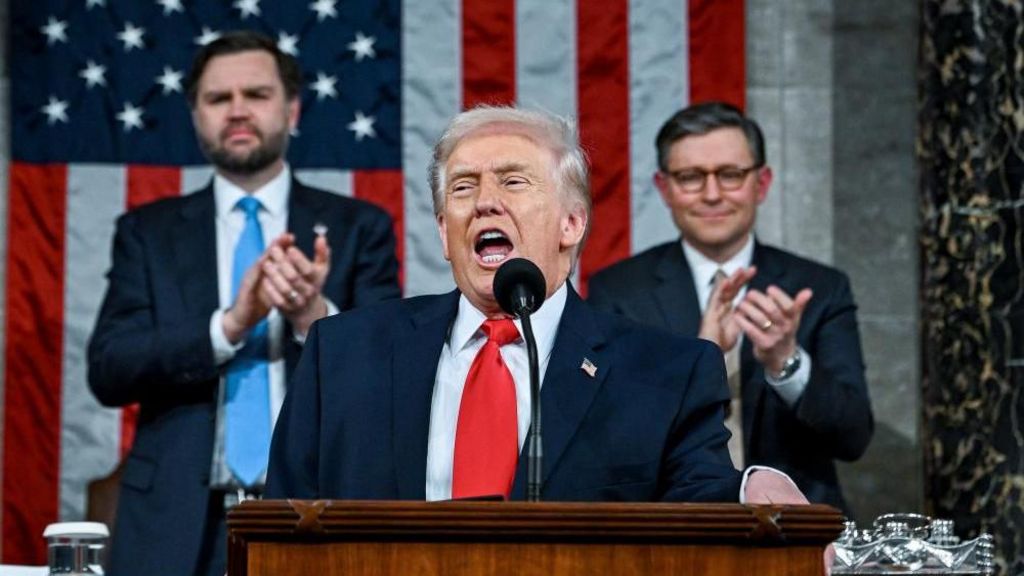
    In a landmark congressional hearing, former Special Counsel Jack Smith delivered his first public testimony regarding his criminal investigations of former President Donald Trump, asserting unequivocal responsibility for the January 6th Capitol riot. Appearing before lawmakers for five hours, Smith detailed the extensive evidence gathered against Trump in two major cases: alleged efforts to overturn the 2020 election results and the unlawful retention of classified documents after leaving office.

    Smith testified that his team had compiled “overwhelming evidence” and possessed “proof beyond a reasonable doubt” that would have secured convictions in both cases before they were dropped following Trump’s return to the White House. The former special counsel characterized Trump as “the most culpable and most responsible person” in the conspiracy to interfere with the election certification process.

    “The attack that happened at the Capitol, part of this case, does not happen without him,” Smith stated. “The other co-conspirators were doing this for his benefit.”

    The hearing revealed sharp partisan divisions, with Republicans accusing Smith of conducting partisan investigations and allegedly spying on GOP lawmakers through subpoenas for phone records. Democrats, meanwhile, focused on Trump’s alleged wrongdoing and praised Smith’s investigative work.

    Smith addressed potential retaliation from the Trump administration, noting that the former president’s repeated statements were “meant to intimidate me” and served as “a warning to others.” He revealed that federal officials had opened an investigation into his conduct, though the specific focus remains unclear.

    Notably, Smith expressed bewilderment at Trump’s mass pardon of over 1,000 individuals convicted or accused of crimes related to the January 6th riot, many of whom had been charged with assaulting law enforcement officers. “I do not understand why you would mass pardon people who assaulted police officers,” he said. “I don’t get it. I never will.”

    The hearing was punctuated by emotional moments, particularly when four former Capitol Police officers seated behind Smith reacted visibly to lawmakers’ comments. Texas Republican Troy Nehls directly addressed the officers, blaming Capitol Police leadership rather than Trump for the riot, which prompted outbursts from the audience.

    While Smith testified, Trump posted extensively on social media from Switzerland, calling Smith a “deranged animal” who should be prosecuted and have his law license revoked. The former president accused Smith of destroying “many lives under the guise of legitimacy” and suggested Democrats should pay “a big price” for their actions.

  • US unveils plans for ‘New Gaza’ with skyscrapers

    US unveils plans for ‘New Gaza’ with skyscrapers

    DAVOS, SWITZERLAND – The Trump administration has presented a comprehensive vision for the complete reconstruction of the Gaza Strip, dubbed the “New Gaza” plan, during a signing ceremony at the World Economic Forum. The ambitious proposal outlines a total transformation of the war-ravaged Palestinian territory into a modern urban and economic hub.

    The detailed master plan, presented by former President Donald Trump and senior advisor Jared Kushner, features extensive coastal skyscrapers, residential estates in Rafah, and designated zones for agriculture, industry, and technology. The blueprint includes 180 tower blocks for coastal tourism, over 100,000 permanent housing units, 200 educational centers, and 75 medical facilities. A new seaport and airport near the Egyptian border are planned, along with a “trilateral crossing” where Egyptian and Israeli borders converge.

    President Trump emphasized the strategic value of Gaza’s Mediterranean location, stating, “I’m a real estate person at heart and it’s all about location. Look at this beautiful piece of property. What it could be for so many people.” He expressed confidence that the project would achieve “great success.”

    The reconstruction would proceed in four phases, beginning in Rafah and expanding north toward Gaza City. A notable feature includes an empty security perimeter along the Egyptian and Israeli borders where Israeli forces will remain until “Gaza is properly secure.”

    Kushner revealed the staggering scale of destruction facing the project: 90,000 tonnes of munitions dropped on Gaza and 60 million tonnes of rubble requiring clearance. He announced that demolition and rubble removal operations have already commenced, with the “New Rafah” phase projected for completion within two to three years.

    The plan is intrinsically linked to the demilitarization of Hamas, with Trump warning, “They have to give up their weapons and if they don’t do that, it’s going to be the end of them.” Kushner added that the administration is pursuing “catastrophic success” without a “plan B,” noting that Hamas has signed an agreement to demilitarize.

    A Washington conference is scheduled in the coming weeks to announce international contributions and outline investment opportunities for the private sector. The newly established National Committee for the Administration of Gaza (NCAG) will work with Hamas on demilitarization efforts.

    Despite the ceasefire that took effect in October, tensions remain. Five Palestinians were reportedly killed by Israeli fire on Thursday, highlighting the fragile nature of the current peace. Humanitarian conditions remain dire, with nearly 1 million people lacking adequate shelter and 1.6 million facing acute food insecurity according to UN estimates.

    International responses varied, with Israeli President Isaac Herzog praising Trump’s leadership while emphasizing that “the real test has to be Hamas leaving Gaza.” Palestinian Authority President Mahmoud Abbas called for full implementation of the peace plan, including Israeli withdrawal, and a central role for the PA in administering Gaza.

    The Rafah border crossing with Egypt is scheduled to open next week in both directions, signaling what NCAG head Ali Shaath described as Gaza being “no longer closed to the future and to the war.”

  • Could Trump’s bid to become peacemaker-in-chief sideline the struggling UN?

    Could Trump’s bid to become peacemaker-in-chief sideline the struggling UN?

    At the prestigious Davos Economic Forum this week, former US President Donald Trump unveiled his controversial ‘Board of Peace’ initiative with sweeping promises to end regional conflicts and establish what he termed “a beautiful, everlasting and glorious peace.” The ambitious proposal, however, has ignited intense international scrutiny and divided global responses.

    The Board’s conceptual foundation emerged from previous US-led efforts to resolve the Gaza conflict, initially endorsed by a UN Security Council resolution. Yet it has since evolved into a vastly expanded global framework with Trump positioned permanently at its helm. Leaked charter details reveal extraordinary powers granted to Trump as lifetime chairman—including authority to determine membership, create or dissolve subsidiary bodies, and appoint his own successor. Membership comes with a staggering $1 billion price tag for permanent participation.

    International reactions reflect deep geopolitical fractures. European leaders expressed sharp skepticism, with Poland’s Prime Minister Donald Tusk warning against manipulation through social media channels. Conversely, Hungarian Prime Minister Viktor Orban offered effusive support, declaring “If Trump, then peace.” Several nations including Sweden and Norway have declined participation pending further clarification, while the UK expressed concerns about Russian involvement in peace discussions.

    The initiative emerges amidst a whirlwind of geopolitical maneuvers, including US military preparations against Iran, demands to acquire Greenland, and the capture of Venezuela’s leader. Critics perceive the Board as an attempt to dismantle postwar international architecture and replace it with Trump-dominated institutions. Slovenian Prime Minister Robert Golob openly criticized the project as “dangerously interfering with the broader international order.”

    Trump addressed these concerns directly, stating the Board would operate “in conjunction with the United Nations” while simultaneously suggesting it might potentially replace the UN, which he criticized for underperformance. This contradictory messaging highlights the initiative’s ambiguous relationship with existing global governance structures.

    Notably, the Board’s operational framework includes three subordinate layers focusing predominantly on Gaza, incorporating American officials, billionaires, former UN envoys, Arab ministers, and Palestinian technocrats. However, the leaked charter conspicuously omits specific mention of Gaza, despite several Muslim-majority nations joining explicitly for Palestinian peace objectives.

    UN experts acknowledge the initiative reflects growing frustrations with the UN’s diminished peacemaking capabilities. Martin Griffiths, a UN veteran, noted this development represents “a reflection of the failure of the UN Security Council and of the UN writ large.” Former UN deputy secretary-general Mark Malloch Brown suggested the initiative might inadvertently push UN reform back onto the international agenda.

    The Board faces immediate challenges in transitioning from Gaza ceasefire arrangements to sustainable peace, particularly with Israeli and Arab leaders maintaining fundamentally opposing positions on Palestinian statehood. Similarly, Ukraine’s participation remains uncertain given President Zelensky’s refusal to negotiate alongside Russian representatives.

    Despite these obstacles, Trump maintains characteristically optimistic projections, claiming settlement in Ukraine is “coming very soon” and describing the Middle East as having only “little fires” remaining. His aspiration to assume the role of global peacemaker-in-chief marks a significant evolution in his political trajectory, though skepticism persists regarding the feasibility and motivations behind this unprecedented geopolitical venture.