标签: North America

北美洲

  • Dubai’s Emirates cancels some flights to US ahead of Storm Fern

    Dubai’s Emirates cancels some flights to US ahead of Storm Fern

    Dubai-based Emirates Airline has proactively canceled multiple flights to and from the United States in anticipation of Winter Storm Fern, a massive weather system forecasted to bring severe conditions across a significant portion of the country. The cancellations, affecting routes through Thursday and Friday, are a direct response to warnings of heavy snowfall, potential infrastructure damage, and widespread travel chaos.

    The storm is predicted to impact an estimated 175 million people across a staggering 2,000-mile corridor, stretching from Texas and the Great Plains to the mid-Atlantic and northeastern states. In preparation, Texas has already declared a state of emergency. Forecasters are warning of apocalyptic conditions, including a 1,500-mile ‘snow zone’ capable of producing record-breaking accumulations, ‘crippling ice,’ and freezing rain that could lead to prolonged power outages by damaging critical infrastructure.

    Specific canceled Emirates flights include EK203/204 and EK201/202 on the Dubai-New York route for January 25th and 26th. Additional axed services involve flights to Dallas (EK221/222), Washington D.C. (EK231/232), and transatlantic routes from Milan and Athens to New York and Newark. The airline has explicitly stated that passengers booked on these flights, including those connecting through Dubai, will not be accepted for travel from their point of origin. All affected travelers are being urged to contact their booking agents or the airline directly to reschedule.

    The mid-Atlantic region, particularly Virginia and Maryland, is expected to bear the brunt of the storm, with projections of more than a foot of snow. Major urban centers are also on high alert. New York City, the nation’s financial capital, is forecast to receive up to 12 inches of snow, exacerbating an existing cold snap that recently delivered the city’s coldest temperature this winter at 16°F (-9°C), feeling like -17°C with wind chill. The airline’s decision underscores the severe and far-reaching impact Storm Fern is anticipated to have on domestic and international travel networks.

  • Rescuers dig for six missing, youngest 15, in New Zealand landslide

    Rescuers dig for six missing, youngest 15, in New Zealand landslide

    Emergency crews in New Zealand are engaged in a critical search operation for six individuals, including a 15-year-old teenager, following a catastrophic landslide that engulfed a popular campsite near Mount Maunganui on Thursday. The disaster, triggered by torrential rains that saturated an extinct volcano’s slopes, sent a massive wall of mud and debris crashing onto holidaymakers, demolishing facilities and vehicles.

    A multi-agency response team comprising search and rescue specialists, contractors operating heavy excavators, and police dog units has been working relentlessly through the night and into a second day. Initial reports from the scene indicated voices calling for help from beneath the rubble immediately after the collapse, but no further signs of life have been detected since, according to witnesses and officials.

    The recovery operation, described by Fire and Emergency assistant national commander David Guard as a ‘complex and high-risk environment,’ is proceeding with painstaking caution. The somber mood at the site was underscored when machinery was halted and a hearse was witnessed departing, though officials have refrained from confirming any fatalities out of respect for the families awaiting news.

    Assistant Police Commissioner Tim Anderson confirmed the six missing persons while acknowledging efforts to verify the whereabouts of three other campers who may have left the area. ‘Not as of today, but we live in hope,’ Anderson stated regarding potential survivors.

    The tragedy has prompted serious questions regarding preventative measures, as reports emerged of a smaller landslip at the same location earlier that day. Local Tauranga mayor Mahe Drysdale acknowledged these concerns, stating ‘Those questions will be answered,’ while noting some individuals had reportedly moved away from the initial minor slip.

    Prime Minister Christopher Luxon expressed the nation’s anguish after speaking with affected families, describing their state as ‘highly anxious, clearly hopeful.’ The incident marks another devastating weather-related tragedy after two fatalities were confirmed from a separate landslide in nearby Tauranga, one of whom was identified as a Chinese national.

  • ‘Trump Always Chickens Out’: What is TACO trade and why is it back?

    ‘Trump Always Chickens Out’: What is TACO trade and why is it back?

    Financial markets experienced significant volatility this week as President Donald Trump’s threats of imposing tariffs on multiple European nations—including Germany, France, Britain, and Denmark—triggered widespread uncertainty. The market turbulence stemmed from these countries’ resistance to Trump’s controversial proposition to acquire Greenland, Denmark’s autonomous territory.

    The situation took an unexpected turn on Wednesday when the President abruptly retracted both his tariff threats and ambitions to forcibly seize the Arctic island from the NATO ally. This reversal catalyzed what analysts have termed the ‘TACO trade’—an acronym for ‘Trump Always Chickens Out’—prompting one of the most substantial market rallies witnessed in recent months.

    According to Fawad Razaqzada, market analyst at Forex.com, this pattern has become characteristic of Trump’s approach to international negotiations. The terminology originated among Wall Street analysts in May 2025, describing the President’s tendency to establish aggressive tariff deadlines in April only to substantially moderate them as deadlines approached.

    The TACO phenomenon resurfaced dramatically during the Davos summit, where Trump initially delivered an uncompromising reaffirmation of his claims over Greenland, which he described as a ‘big piece of ice.’ However, he subsequently surprised attendees by declaring, ‘I won’t use force,’ acknowledging this concession as ‘probably the biggest statement I made.’ Hours later, he announced via Truth Social that he had negotiated a ‘future deal’ regarding the Danish territory and would lift sanction threats against eight European nations.

    California’s Democratic Governor Gavin Newsom promptly characterized this reversal as another TACO moment, drawing parallels to Trump’s relaxation of ‘Liberation Day’ tariffs the previous April. Some analysts suggest this pattern reflects the ‘art of the deal’ strategy Trump outlined in his 1987 book, involving extreme initial demands to secure unexpected concessions.

    The uncertainty surrounding this negotiation technique continues to concern U.S. allies, particularly given Trump’s statement regarding Greenland: ‘You can say yes, and we will be very appreciative. Or you can say no and we will remember’—a comment compared by New York Times commentator Bret Stephens to dialogue from mafia classic ‘The Godfather.’

  • Defiant protests over child’s detention by ICE amid US immigration crackdown

    Defiant protests over child’s detention by ICE amid US immigration crackdown

    Minneapolis became the epicenter of national outrage as thousands defied subzero temperatures to protest U.S. immigration enforcement tactics, particularly the controversial detention of a five-year-old asylum seeker. The coordinated demonstrations saw businesses shuttering doors in solidarity while faith leaders faced arrests at airport protests.

    The catalyst for this upheaval emerged from the traumatic apprehension of Liam Conejo Ramos, a preschooler from Ecuador, and his father Adrian Conejo Arias. Federal agents detained both asylum seekers Tuesday in their driveway, with school officials alleging the child was used as ‘bait’ to lure others from their home. This incident occurred amid broader Immigration and Customs Enforcement (ICE) operations that have deployed thousands of agents to the Democratic-led city.

    Contrasting narratives quickly developed. Vice President JD Vance contended during a Minneapolis visit that agents protected Ramos after his father ‘ran’ from officers, asking rhetorically: ‘Are they supposed to let a five-year-old child freeze to death?’ Meanwhile, ICE commander Marcos Charles asserted officers attempted family reunification before detaining both ‘pending their immigration proceedings.’

    The response has been multifaceted: Columbia Heights Public Schools revealed at least four children from their district faced detention this month. Methodist clergy organized civil disobedience resulting in 100 arrests at Minneapolis-St. Paul airport. UN human rights chief Volker Turk condemned the ‘harmful treatment of migrants and refugees,’ while former Vice President Kamala Harris expressed outrage at detaining ‘just a baby.’

    Legal challenges are underway as Minnesota seeks a temporary restraining order against ICE operations, with a federal hearing scheduled for Monday. The situation remains tense following the January 7 homicide of U.S. citizen Renee Good by federal agents during earlier operations, though the involved officer faces neither suspension nor charges.

  • Iran will treat any attack as ‘all-out war against us,’ says senior Iran official

    Iran will treat any attack as ‘all-out war against us,’ says senior Iran official

    Iran has declared it will interpret any form of military strike as a declaration of total war, according to a high-ranking official speaking anonymously on Friday. The warning comes amid escalating tensions as a US aircraft carrier strike group approaches the Middle East region.

    The senior Iranian official emphasized that the nation’s military remains on maximum alert, prepared for worst-case scenarios despite hopes that the American naval buildup isn’t intended for actual combat operations. “This time we will treat any attack—whether limited, unlimited, surgical, kinetic, or whatever terminology they employ—as comprehensive warfare against our sovereignty,” the official stated. “We will counter with the most severe measures available to resolve this confrontation.”

    The heightened rhetoric follows US President Donald Trump’s Thursday remarks about an American “armada” en route to the region, coupled with renewed warnings against Tehran regarding protest suppression and nuclear program advancement. The Iranian official maintained that any violation of Iran’s territorial integrity would prompt immediate retaliation, though specific response mechanisms remained unspecified.

    Historical context reveals the US military has previously augmented Middle Eastern presence during tense periods, typically for defensive purposes. However, last year’s significant force accumulation preceded June strikes targeting Iran’s nuclear facilities, indicating potential offensive capabilities.

    The anonymous official concluded that nations facing persistent military threats must utilize all available resources to deter aggression and reestablish strategic equilibrium against potential attackers.

  • Russia, US, Ukraine to talk in UAE

    Russia, US, Ukraine to talk in UAE

    In a significant diplomatic development, Russia, the United States, and Ukraine have agreed to convene security discussions in the United Arab Emirates, marking the first tripartite dialogue since the inception of Moscow’s military campaign in Ukraine nearly four years ago. The confirmation came from Yuri Ushakov, foreign policy aide to Russian President Vladimir Putin, who disclosed that the Russian delegation would be led by General Igor Kostyukov, director of the GRU military intelligence agency, acting upon Putin’s direct instructions.

    The negotiating teams will feature prominent representatives from each nation. The US contingent will be headed by President Donald Trump’s special envoy, Steve Witkoff, while Ukraine’s delegation will be orchestrated by Rustem Umerov, Secretary of the National Security and Defense Council. Although specific details remain guarded, Ukrainian President Volodymyr Zelensky indicated that this inaugural trilateral meeting would span two days in Abu Dhabi.

    This breakthrough follows extensive late-night discussions at the Kremlin between Putin, Witkoff, and Trump’s son-in-law Jared Kushner, which concluded in the early hours of Friday. Ushakov, who participated in these marathon talks, emphasized that any enduring settlement must address territorial disputes—a clear reference to Moscow’s insistence on Ukrainian withdrawal from Russian-controlled eastern regions. He characterized the US-Russia dialogue as mutually beneficial, noting Washington’s optimism that continued communication could facilitate conflict resolution.

    Concurrently, at the World Economic Forum in Davos, President Zelensky underscored that genuine progress would necessitate reciprocal concessions from both combatants, not unilateral sacrifices from Kyiv alone. He acknowledged the ‘difficult situation’ confronting both nations and the unresolved status of occupied territories, despite nearly finalized peace proposals. Zelensky’s private meeting with Trump on the forum’s sidelines was described by the US president as productive, with Trump noting ‘everyone’s making concessions’ to achieve peace.

    Envoys report substantial advancements in the prolonged negotiations, with Witkoff revealing that discussions have narrowed to a single pivotal issue, suggesting a potentially solvable deadlock. However, NATO Secretary-General Mark Rutte urged sustained focus on Ukraine, cautioning that while peace talks are promising, successful conclusion remains distant. The US has engaged in separate consultations with Russian, Ukrainian, and European leaders on various draft frameworks, though no formal agreement has been realized despite Trump’s repeated commitments to broker a resolution.

  • Minnesota gears up for more protests against ICE

    Minnesota gears up for more protests against ICE

    Minnesota braces for intensified demonstrations as a powerful coalition of labor unions, progressive advocacy groups, and religious leaders calls for statewide work and school walkouts on Friday. The planned protests target U.S. Immigration and Customs Enforcement operations that have sparked widespread community outrage following recent confrontations.

    The movement gained momentum after the January 7th fatal shooting of Renee Good by an ICE officer during an enforcement operation. Since this incident, the Twin Cities of Minneapolis and St. Paul have experienced continuous daily protests, with federal officers frequently clashing with activists who monitor their movements through digital tracking and street surveillance.

    At the heart of the controversy lies the detention of at least four children from Columbia Heights, including five-year-old Liam Conejo Ramos. According to school district superintendent Zena Stenvik, masked and armed ICE officers have apprehended students ranging from elementary to high school age, creating what she describes as “trauma taking a toll on our children.”

    The case of Liam and his father, Adrian Alexander Conejo Arias, has become particularly contentious. Though both were in the country legally as asylum applicants according to family attorney Marc Prokosch, they were transported to a family detention facility in Dilley, Texas. Witnesses describe how masked agents took the father from their driveway after returning from preschool, then allegedly attempted to use the child as bait to lure the mother from their home.

    Vice-President JD Vance presented a contrasting narrative during his Minneapolis visit, stating immigration officers were pursuing Liam’s father who abandoned his child, leaving officers no choice but to take custody. “What are they supposed to do? Are they supposed to let a five-year-old child freeze to death?” Vance challenged during a news conference.

    However, multiple witnesses including school board chair Mary Granlund assert that school officials and neighbors offered to take custody of the child but were denied by ICE agents, despite having legal authorization to assume guardianship in parental absence.

    The Department of Homeland Security maintains that Liam’s father was in the country illegally but has not provided detailed evidence supporting this claim. As tensions escalate, community organizations continue mobilizing residents to pressure ICE to cease operations in Minnesota neighborhoods and school zones.

  • Pentagon to offer ‘more limited’ support to US allies in defence strategy shift

    Pentagon to offer ‘more limited’ support to US allies in defence strategy shift

    The U.S. Department of Defense has unveiled a transformative National Defense Strategy that fundamentally reorients American security priorities toward domestic protection and Western Hemisphere security. This strategic pivot marks a significant departure from previous frameworks that prioritized countering China as the primary defense concern.

    The 34-page document, published quadrennially, establishes homeland security as the Pentagon’s foremost objective rather than focusing on great power competition. While acknowledging China and Russia as security considerations, the strategy approaches relations with Beijing through a lens of ‘strength, not confrontation’ rather than direct opposition. Notably, the document omits specific mention of Taiwan, though it affirms commitment to preventing any nation from dominating the U.S. or its allies.

    This revised framework emphasizes burden-sharing among international partners, particularly regarding European security and North Korean deterrence. The strategy characterizes Russia as a ‘persistent but manageable threat’ to NATO’s eastern members while asserting that South Korea should assume primary responsibility for addressing North Korean threats.

    The document reflects President Trump’s repeated calls for allied nations to contribute more substantially to collective security arrangements. It explicitly denies representing a move toward isolationism, instead framing the approach as ‘a focused and genuinely strategic approach to the threats our nation faces.’

    The strategy identifies specific geographical priorities including the Panama Canal, Gulf of America, and Greenland as areas where the Pentagon will guarantee military and commercial access. This focus aligns with recent administration actions including strikes against suspected drug vessels in the Caribbean and pressure on allies regarding Greenland’s acquisition.

    The philosophical underpinnings of the new strategy reject ‘utopian idealism’ in favor of ‘hardnosed realism,’ signaling a definitive break from post-Cold War defense paradigms. This repositioning occurs alongside growing international concern about the erosion of established global order, as expressed by leaders including French President Emmanuel Macron and Canadian Prime Minister Mark Carney at the World Economic Forum.

  • ‘A natural partner’: US treasury secretary weighs in on Alberta separatism

    ‘A natural partner’: US treasury secretary weighs in on Alberta separatism

    In a remarkable diplomatic intervention, US Treasury Secretary Scott Bessent has openly sympathized with separatist sentiments in Alberta, describing the western Canadian province as a “natural partner for the United States” during an interview with right-wing commentator Jack Posobiec on Thursday.

    The comments emerge amidst significantly strained relations between the two neighboring nations and coincide with an active signature collection campaign in Alberta seeking an independence referendum. Bessent specifically criticized Canadian energy policies, noting that “Alberta has a wealth of natural resources, but they won’t let them build a pipeline to the Pacific,” while praising Albertans as “very independent people.”

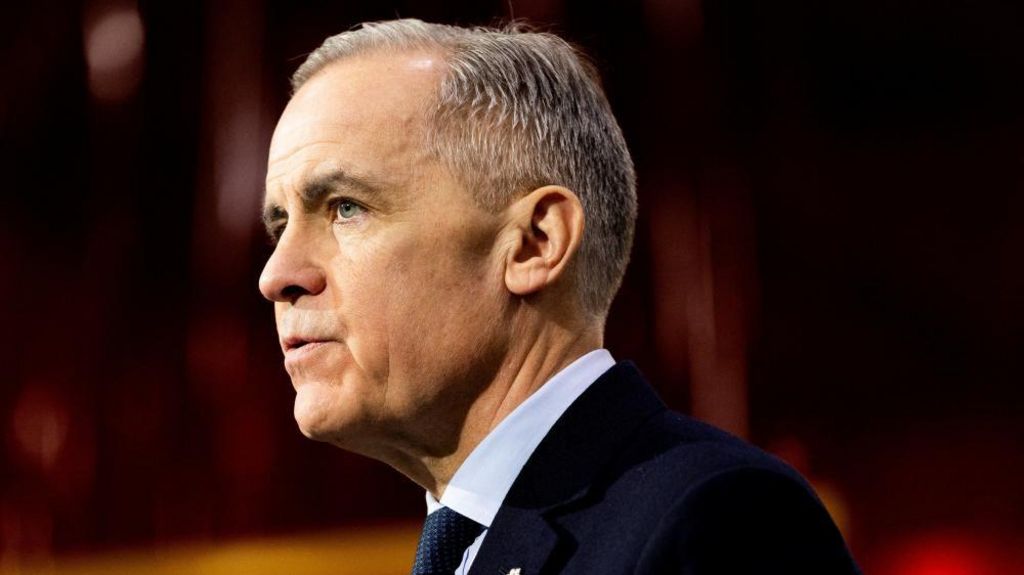
    Canadian Finance Minister Francois-Philippe Champagne delivered a sharp rebuke on Friday, stating he would tell Bessent “thanks but no thanks, we will do our own things.” Champagne highlighted Canada’s capability to develop its natural resources domestically and referenced a recently signed agreement between Prime Minister Mark Carney and Alberta that facilitates an oil pipeline to the Pacific coast—a long-sought project facing substantial implementation challenges.

    Alberta Premier Danielle Smith’s office issued a measured response, expressing support for pipeline expansion “west, east, north, and south” while maintaining collaboration with US partners. However, the statement emphasized that “the overwhelming majority of Albertans are not interested in becoming a US state.” This position is supported by recent polling data and a 430,000-signature petition from late last year advocating for a united Canada.

    Referendum organizer Mitch Sylvestre clarified to CBC that his movement seeks independence from Canada rather than annexation by the United States, though he acknowledged the obvious energy trading relationship between Alberta and the US. Some separatist organizers have reportedly traveled to Washington for meetings with Trump administration officials.

    The diplomatic friction extends beyond Alberta, with US-Canada trade negotiations currently suspended. Tensions escalated following Prime Minister Carney’s speech at the World Economic Forum in Davos, where he criticized “great powers” for weaponizing economic influence. President Trump responded pointedly: “Canada lives because of the United States. Remember that, Mark, the next time you make your statements.” Commerce Secretary Howard Lutnick further accused Canada of “arrogance” and characterized Carney’s stance as domestically-motivated anti-Americanism.

  • Abu Dhabi hosts trilateral talks on Ukraine: 5 previous attempts to end war

    Abu Dhabi hosts trilateral talks on Ukraine: 5 previous attempts to end war

    Abu Dhabi has positioned itself as a pivotal diplomatic arena for high-stakes trilateral discussions aimed at resolving the ongoing Ukraine conflict. On January 23, 2026, senior officials from Ukraine, Russia, and the United States convened in the UAE capital to deliberate on a American-proposed peace framework, despite persistent disagreements over territorial sovereignty.

    This latest diplomatic initiative represents the sixth major attempt to broker a cessation of hostilities since Russia’s full-scale invasion in February 2022. The current negotiations follow five previously unsuccessful diplomatic endeavors:

    The initial negotiations occurred mere days after the invasion commenced, with meetings near the Belarusian border. Russian delegates presented ultimatums including Ukrainian recognition of Russian sovereignty over Crimea and the Donbas regions—terms immediately rejected by Kyiv as unacceptable.

    Subsequent talks in Antalya and Istanbul during March 2022 showed tentative progress, with Russia offering partial troop withdrawals and Ukraine considering neutral status. These discussions collapsed following the discovery of mass civilian casualties in Bucha after Russian forces withdrew from the Kyiv suburb.

    Diplomatic efforts remained dormant throughout 2023-2024 until President Donald Trump’s return to office in January 2025. The new administration reversed previous policies of isolating Moscow while simultaneously suspending military assistance to Ukraine. Despite direct engagement with Vladimir Putin, Trump’s administration secured only a temporary—and frequently violated—commitment to avoid targeting energy infrastructure.

    Further negotiations in Istanbul during May 2025 yielded limited success, resulting solely in prisoner exchanges without achieving a ceasefire agreement. The subsequent Trump-Putin summit in Alaska marked the Russian leader’s first visit to Western territory since the invasion began, yet concluded without tangible concessions or progress toward ending hostilities.

    The current Abu Dhabi negotiations represent a continuation of months of shuttle diplomacy conducted by American envoys between Moscow and Kyiv. While President Trump has expressed optimism about reaching a settlement, fundamental disagreements regarding territorial control continue to present significant obstacles to any comprehensive peace agreement.