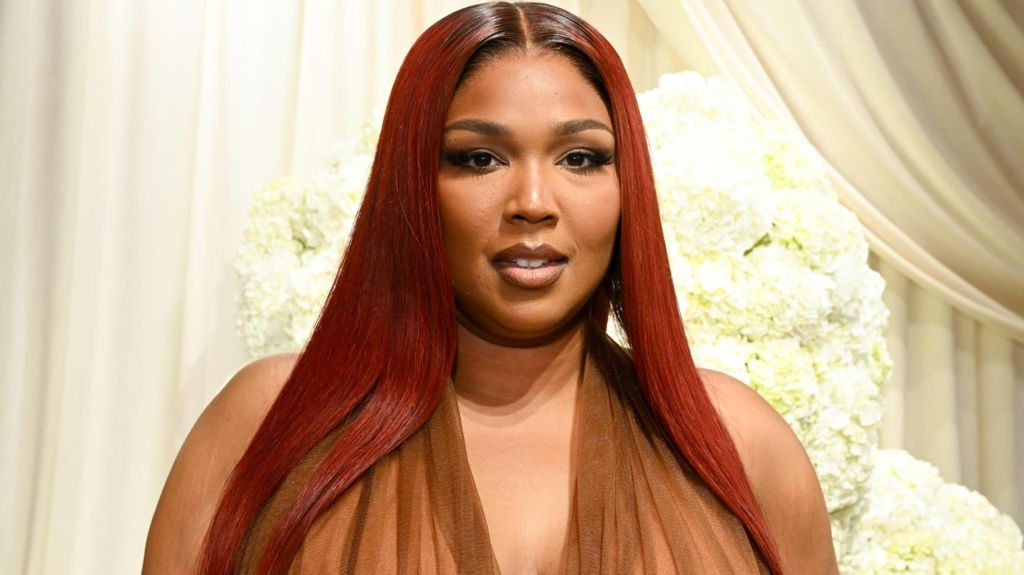
Pop sensation Lizzo is embroiled in a legal battle after being sued by the GRC Trust for allegedly sampling a 1970s song without permission. The controversy centers on an unreleased track that gained attention on social media for its reference to actress Sydney Sweeney’s American Eagle Jeans campaign. The snippet, posted in August, included the line ‘I got good jeans like I’m Sydney,’ sparking debates over its intent. The GRC Trust claims Lizzo unlawfully sampled Sam Dees’ 1970s song ‘Win or Lose (We Tried),’ for which they hold the copyright. They are seeking an injunction to block further distribution of the song and a financial settlement for lost profits. Lizzo’s spokesperson expressed surprise, noting the song has not been commercially released or monetized. This is not Lizzo’s first copyright dispute; in 2019, producers sued over her hit ‘Truth Hurts,’ though the case was later dismissed. The GRC Trust is also pursuing legal action against Kanye West for sampling another Sam Dees song.
标签: North America
北美洲
-
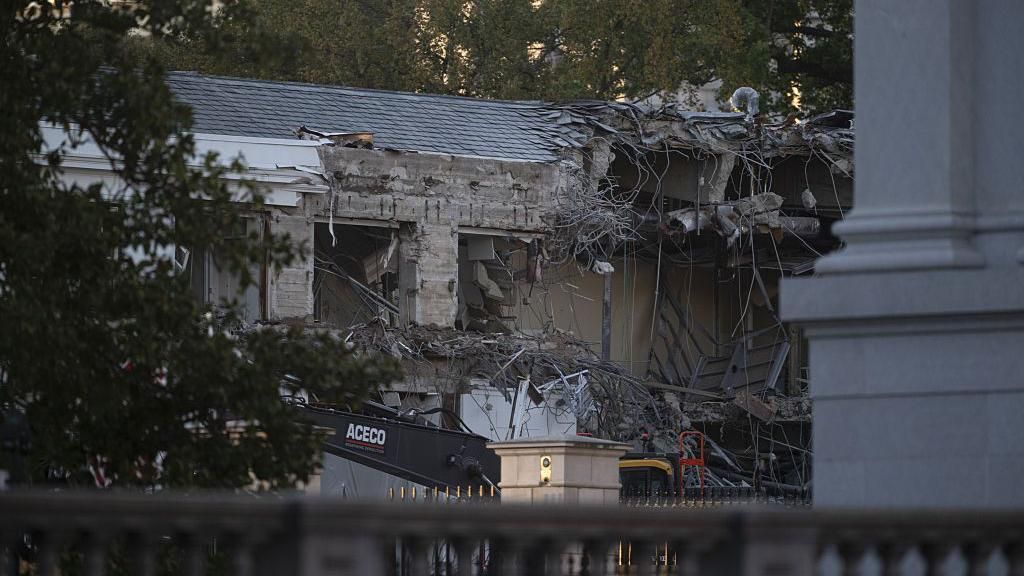
Trump says White House renovation is ‘music to my ears’ as criticism mounts
U.S. President Donald Trump has ignited a heated debate over his decision to demolish part of the White House East Wing to construct a grand ballroom. Defending the $250 million project, Trump described the construction noise as “music to my ears” during a meeting with Republican senators on Tuesday. He emphasized, “When I hear that sound, it reminds me of money.” The 90,000-square-foot ballroom, intended for hosting parties, state visits, and other events, has drawn sharp criticism from various quarters, including former presidential candidate Hillary Clinton and historic preservation groups. The National Trust for Historic Preservation expressed “deep concern” in a letter to White House officials, warning that the new structure could “overwhelm the White House itself” and disrupt its classical design. The Society of Architectural Historians also called for a public review process, citing the project’s scale. The White House countered criticism, labeling detractors as “unhinged leftists” and asserting that the privately funded renovation would not burden taxpayers. Trump officials defended the solicitation of private donations for the project, arguing it was appropriate. Critics, however, argue that the alterations represent the most significant changes to the White House exterior in decades. While White House officials claim the project does not require approval from the National Capital Planning Commission, former commission chair L Preston Bryant Jr noted that previous administrations typically consulted the agency for major renovations. The controversy underscores the tension between modernization and historic preservation in one of America’s most iconic landmarks.
-
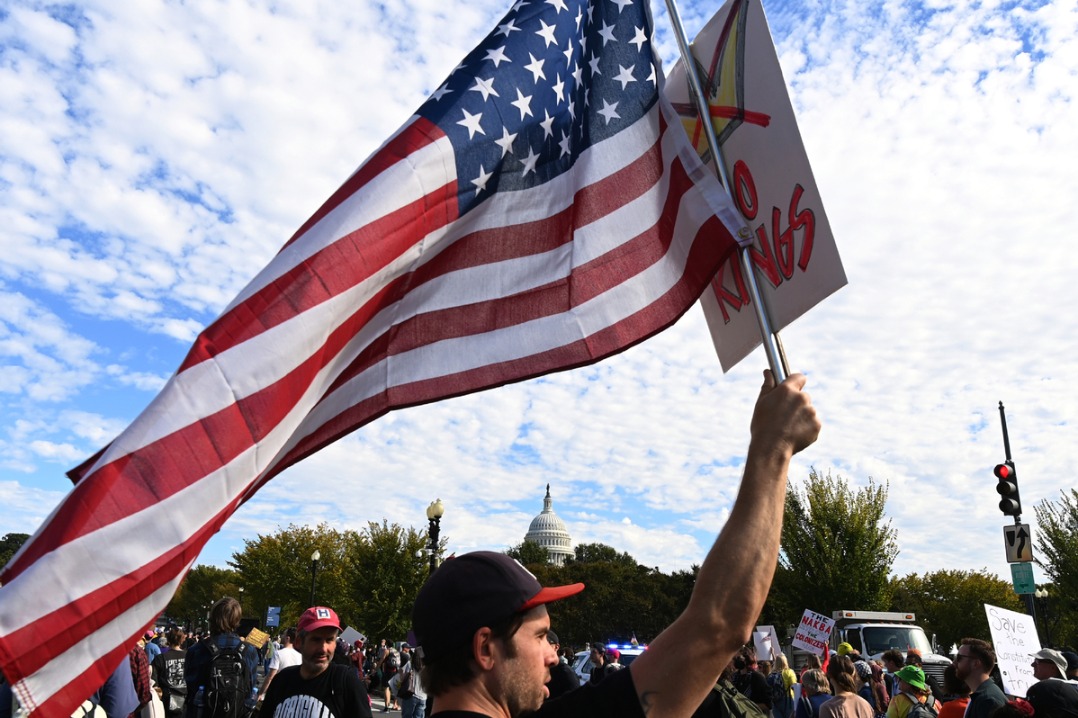
US at political crossroads as nationwide protests test governance
The United States is experiencing a profound political crisis as widespread protests sweep across the nation, testing the resilience of its governance and institutional norms. Beginning on October 18, 2025, millions of demonstrators gathered in major cities, including New York, Chicago, Boston, and Portland, to voice their discontent with the current administration’s policies and leadership style. The protests, which drew participants from diverse backgrounds such as military veterans, academics, healthcare workers, and laborers, highlighted growing public skepticism and social fragmentation over issues like immigration, healthcare, education, and trade. This wave of civil action underscores deepening political divisions and raises critical questions about the future trajectory of American democracy. Since taking office in January 2025, the US government has implemented significant policy changes in energy, immigration, and foreign affairs, often through executive orders. These moves have sparked intense debate and mixed reactions across society, while restructuring within administrative agencies has further fueled concerns about the direction of governance. Additionally, the expansion of presidential authority, perceived as undermining congressional oversight and media access, has strained the system of checks and balances. This tension culminated in a partial federal government shutdown on October 1, which has persisted for over 20 days, disrupting public services and threatening the nation’s credit rating. Amid these challenges, recent polls indicate that a majority of Americans believe the country is headed in the wrong direction, with rifts even emerging within the Republican Party. As the gap widens between the government and the public, and constitutional principles face new tests, the US finds itself at a critical crossroads that will shape its domestic future and its role in the global order.
-
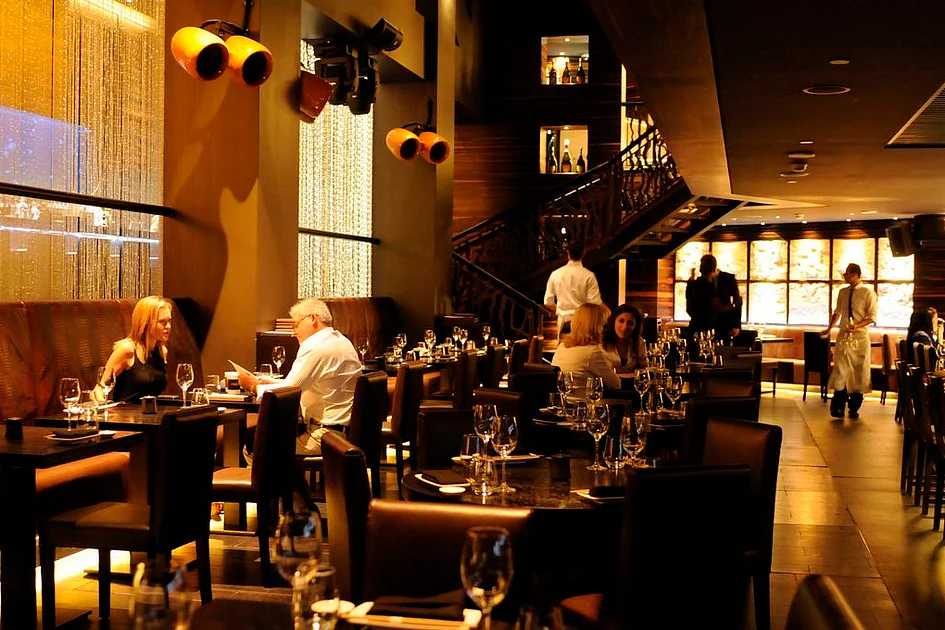
Up to Dh2,000 a week on dining out: How UAE, other Middle East countries eat
The Middle East is witnessing a significant shift in dining habits, driven by evolving consumer priorities around cost, health, and sustainability, according to a recent report by PwC titled *Voice of the Consumer 2025: Middle East Findings*. The study highlights that 53% of consumers in the region, including the UAE, purchase prepared foods or order takeaways at least once a week, significantly higher than the global average of 30%. Additionally, 40% dine out one to three times weekly, compared to 25% globally. However, rising costs and health concerns are prompting many to rethink their habits. Natalia Mirada, an American expat in Dubai, shared how her family reduced weekly food expenses from Dh1,000 to Dh300 by cutting back on deliveries and adopting healthier practices, such as preparing fresh juices and minimizing plastic waste. Similarly, Indian expat Rivu Mukherjee noted that while convenience often dictates frequent dining out, his family remains mindful of responsible food disposal. Despite these shifts, sustainability and ethical considerations remain low on the priority list for most consumers, with only 5% influenced by locally produced or organic food. For others, dining out is less about convenience and more about indulgence and shared experiences. Kazakh national Aigerim Nursultanova revealed her family spends Dh1,500-2,000 weekly on high-end restaurants, viewing dining as a cherished family activity. The report underscores a region in transition, balancing convenience with growing awareness of health and environmental impact.
-

Putin-Trump meeting in Hungary postponed, timing undecided
The highly anticipated meeting between US President Donald Trump and Russian President Vladimir Putin, initially scheduled to take place in Hungary, has been postponed indefinitely. This development follows a recent phone conversation between US Secretary of State Marco Rubio and Russian Foreign Minister Sergei Lavrov, described as ‘constructive but inconclusive.’ Both US and Russian officials confirmed the delay, emphasizing the need for ‘serious preparation’ before any summit can occur. Kremlin spokesman Dmitry Peskov reiterated that the timing of a potential meeting remains undetermined. Despite the setback, Kirill Dmitriev, Russia’s special envoy for investment and economic cooperation, assured on social media that preparations for a future summit are ongoing and that the meeting has not been canceled. The postponement comes after Trump met with Ukrainian President Volodymyr Zelensky at the White House last week, where he ruled out a trilateral summit involving Russia and Ukraine due to the ongoing tensions between the two nations. Trump and Putin last met in Alaska in August, but their discussions failed to yield a breakthrough in the Russia-Ukraine conflict, leaving ceasefire negotiations at a standstill.
-

Women’s empowerment and development take center stage at Chinese consulate event in New York
The Chinese Consulate in New York hosted a groundbreaking forum titled ‘Honoring Her Strength, Supporting Her Dreams’ on Monday, focusing on women’s empowerment, work-life balance, and global gender relations. The event, held in commemoration of the 80th anniversary of the United Nations and the 30th anniversary of China’s Fourth World Conference on Women, brought together a diverse panel of accomplished women from various fields. Chen Li, Consul General of the People’s Republic of China in New York, emphasized the significance of the event, highlighting China’s commitment to gender equality and women’s development. Guest speakers included Jessica Bissett, Senior Director of Government Engagement for the National Committee on United States-China Relations; Belinda Robinson, a journalist for China Daily; and Zhongjing Fang, a ballerina and choreographer for American Ballet Theatre. The panel discussed personal experiences, industry challenges, and the importance of female mentorship. A short video showcased China’s progress in women’s equality, while speakers shared inspiring stories of resilience and success. The event underscored the need for continued global efforts to empower women and foster gender equality, resonating with a diverse audience of primarily women eager to hear about advancements in both the US and China.
-

Canadian lumber sector under pressure as US raises import duties
The Canadian lumber sector is facing heightened challenges as the United States imposes additional tariffs on timber and furniture imports, exacerbating an already strained trade relationship. On October 14, 2025, the US introduced a 10% tariff on imported timber and lumber, alongside a 25% duty on kitchen cabinets, supplementing the existing 35% duty on Canadian lumber. Harry Nelson, an associate professor of forestry at the University of British Columbia, described the new tariffs as creating ‘unprecedented levels’ of trade barriers, with little expectation of reduction in the near future. The tariffs are expected to widen the price gap between domestic and export markets, with Canadian lumber prices likely to fall relative to US prices. Nelson warned that the broader North American economy could also suffer, with potential declines in housing starts and increased economic uncertainty. Industry groups, including the British Columbia Lumber Trade Council, have expressed deep disappointment, arguing that the tariffs will not enhance US national security but will instead drive up lumber costs and undermine the integrated trade relationship. The Canadian government has announced C$1.2 billion in aid for softwood producers, but Nelson emphasized that the impact extends beyond sawmills to contractors, loggers, and other interconnected sectors. With the possibility of further tariff increases in January 2026, the pressure on Canada to reach a trade agreement with the US is mounting. Canadian Prime Minister Mark Carney indicated that a deal could be possible ahead of the Asia-Pacific Economic Cooperation forum in South Korea, though negotiations remain ongoing.
-
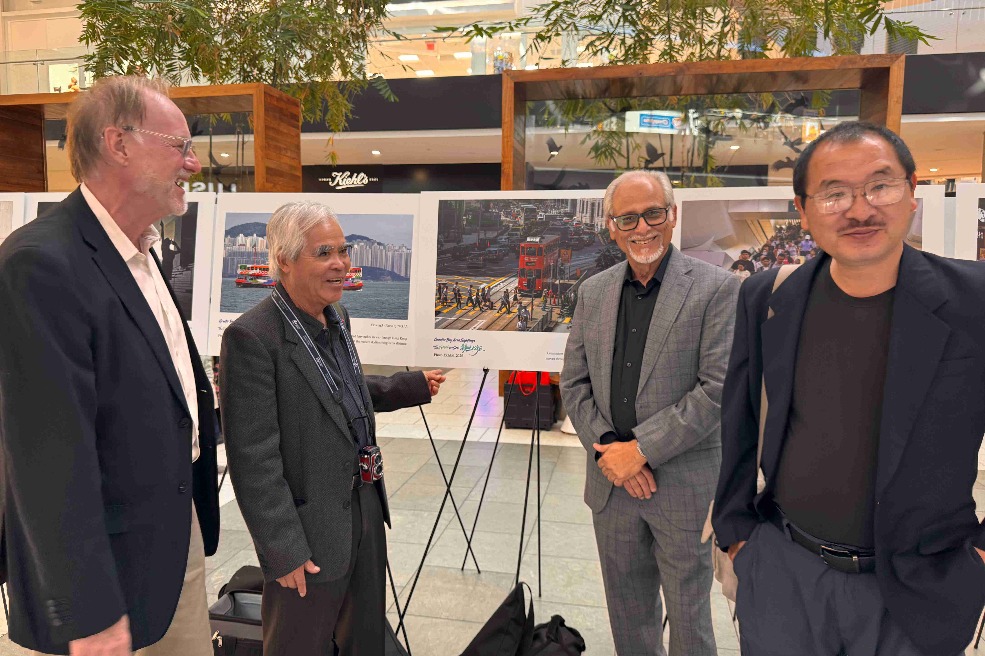
A visual feast showcases modern China through global lenses
A captivating photography exhibition titled ‘The Greater Bay Area Sightings’ recently opened at the Santa Anita Mall in Arcadia, Los Angeles, offering a unique glimpse into modern China through the lenses of five acclaimed photographers. The exhibition, themed ‘Reflections of the Greater Bay Area: The Future City Through Our Eyes,’ showcases the work of Nick Ut, Irfan Khan, Ringo Chiu, Michael Nelson, and Sarah Reingewirtz, who traveled through the Guangdong-Hong Kong-Macao Greater Bay Area in September. Their photographs capture the region’s energy, beauty, and potential, reflecting China’s path toward modernization and openness. Nick Ut, the Vietnamese-American photographer renowned for his Pulitzer Prize-winning image ‘The Terror of War,’ expressed his deep affection for China, highlighting the peace and joy he found in cities like Shanghai, Beijing, Guangzhou, and Hong Kong. Irfan Khan’s works, including ‘Unseen,’ portray the serenity and vibrancy of modern Chinese life, while Ringo Chiu’s images emphasize Hong Kong’s resilience and economic integration. Michael Nelson’s piece ‘Flowing’ captures the dynamic rhythm of Hong Kong’s skyline, symbolizing China’s rapid modernization. The exhibition’s curatorial theme, ‘FUTURE,’ is explored through six key words: Flowing, Unseen, Tech-driven, Unique, Resilient, and Enjoyable. Organized by Guangdong Radio and Television and R & C Media Group, the exhibition aims to present the Greater Bay Area in a global context, using photography as a universal language to tell the story of China’s development and its place in the world.
-
UAE: New assessments for Arabic, English, Math in schools; weightings explained
The United Arab Emirates has introduced a groundbreaking diagnostic assessment system in public and private schools following the Ministry of Education (MoE) curriculum. This initiative, aimed at enhancing personalized learning, focuses on identifying individual student strengths and challenges early in the academic year. The system combines classroom-based evaluations with centralized diagnostic exams in core subjects—Arabic, English, and Mathematics—targeting approximately 26,000 students in Grades 4 to 11 during its initial phase. The assessment framework varies by grade level, with weightings adjusted to reflect developmental needs. For instance, Grades 1–2 rely entirely on school-based evaluations, while Cycle 3 students (Grades 9–11) have 60% of their assessments centralized. School leaders emphasize that the system provides teachers with immediate insights into student performance, enabling tailored instruction and targeted interventions. Principals like Shiny Davison of Woodlem Park School Hamidiya highlight the strategic integration of assessments into the academic schedule, supported by teacher training in data analysis. Similarly, Natalia Svetenok of Woodlem British School, Ajman, notes the alignment of diagnostic practices with national standards, ensuring every student is supported from day one. Parents will receive regular updates on their child’s progress, fostering a collaborative approach to education. This initiative underscores the UAE’s commitment to data-driven, responsive teaching and improved student outcomes.
-
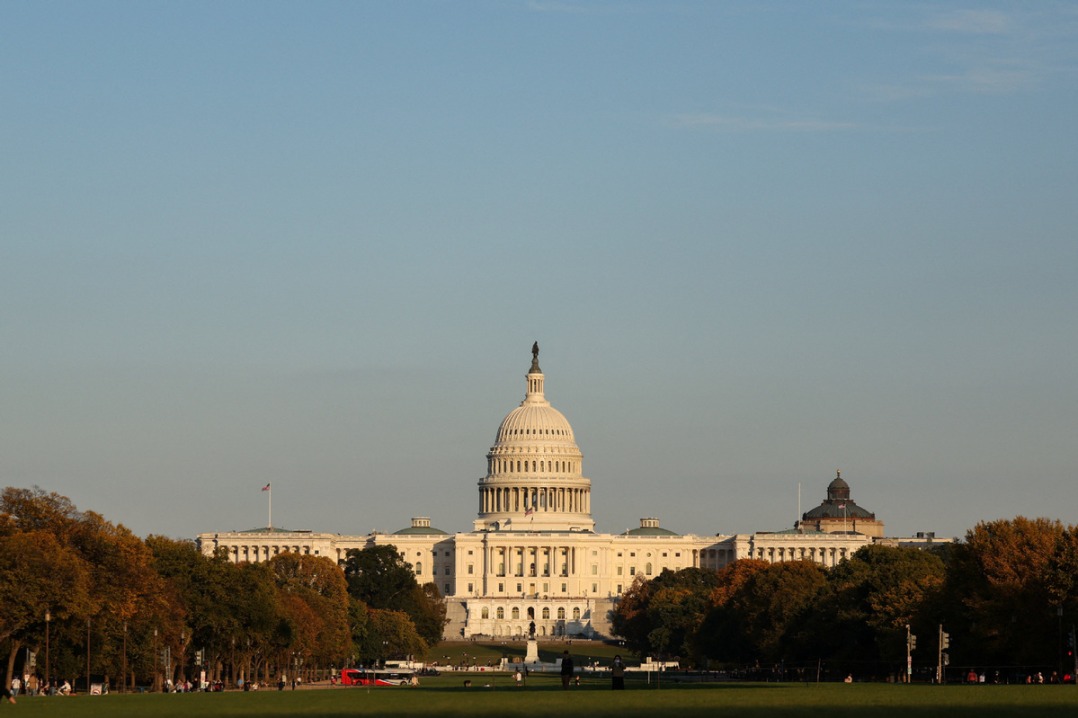
Government shutdown reaching historic record
The United States is grappling with its longest full government shutdown in history, now entering its third week with no resolution in sight. The shutdown, which began on October 1, 2025, has surpassed previous records, becoming the third-longest in US history. If it continues beyond Tuesday, it will surpass the 21-day shutdown of 1995, positioning it as the second-longest shutdown ever. The longest shutdown remains the 35-day partial closure during Donald Trump’s first term from December 2018 to January 2019.
The repercussions of the shutdown are intensifying, affecting critical sectors across the nation. The National Nuclear Security Administration (NNSA), a key agency under the Department of Energy responsible for overseeing the US nuclear stockpile, has begun furloughing employees. Energy Secretary Chris Wright confirmed that up to 1,400 workers could be furloughed, with only 400 federal employees and contractors remaining on duty. The NNSA also plays a crucial role in managing nuclear materials globally, raising concerns about international security.
In the health sector, researchers from the Centers for Disease Control and Prevention (CDC) were forced to skip IDWeek, the largest annual gathering of infectious disease experts. This comes at a critical time, following recent surges in measles and whooping cough across the US. The CDC, which typically sends numerous researchers to such events, had only a handful of scientists listed as speakers, none of whom attended due to the shutdown.
The cultural and tourism sectors are also feeling the strain. Major attractions like the Smithsonian Institution museums and the National Zoo have closed their doors to the public. The US Travel Association estimates that the travel economy is losing $1 billion weekly as visitors cancel trips to national parks, historic sites, and Washington, DC. Additionally, the Small Business Administration has halted its loan programs, affecting 1,600 small businesses that rely on approximately $860 million in weekly funding.
The Federal Aviation Administration (FAA) has reported air traffic controller shortages, leading to flight delays in major cities such as Nashville, Dallas, and Newark. The shutdown has also disrupted flood insurance policy issuances and renewals, delaying mortgage closings and real estate transactions.
Public opinion remains divided on who is to blame for the impasse. According to a poll by The Associated Press-NORC Center for Public Affairs Research, roughly 60% of US adults hold Republicans in Congress responsible, while 54% attribute the shutdown to Democrats.
The economic impact is significant, with Oxford Economics estimating that the shutdown reduces economic growth by 0.1 to 0.2 percentage points weekly. A prolonged shutdown could lead to a 1.2 to 2.4 percentage point reduction in quarterly growth. Major infrastructure projects, including a new rail tunnel beneath the Hudson River and an extension of New York City’s Second Avenue subway, have been put on hold, along with $7.6 billion in grants for clean energy projects across 16 states.
As the shutdown continues, nearly 750,000 of the federal government’s 2.3 million civilian employees are furloughed daily, while others deemed ‘excepted’ continue to work to protect life, property, and essential services. The nation awaits a resolution as the shutdown’s effects ripple through every sector of American life.