标签: North America

北美洲

  • Intercontinental Commodity Exchange 2026 summit to convene global leaders in Dubai

    Intercontinental Commodity Exchange 2026 summit to convene global leaders in Dubai

    Dubai is set to host the Intercontinental Commodity Exchange (ICX) 2026 Summit on January 29 at the Museum of the Future, assembling government officials, agricultural exporters, and logistics experts to address critical threats to global food security. The convening occurs during one of the most strained periods for agricultural systems in decades, with particular focus on disruptions across the Black Sea region—a vital export corridor for grains and oilseeds.

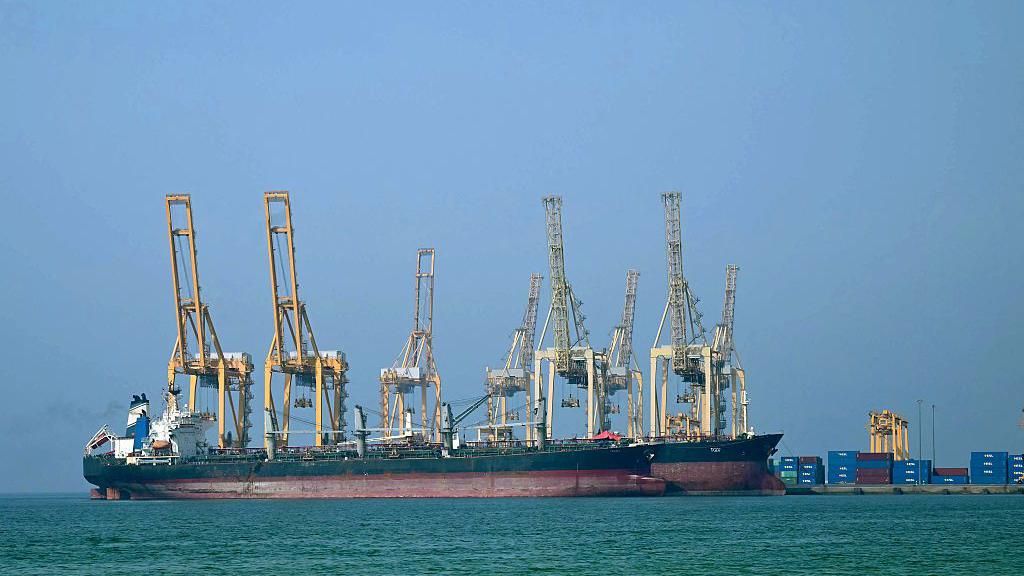
    Supply chains to MENA, Africa, and Asia have been severely destabilized, compelling importers to seek alternative sources under conditions of elevated cost, extended transit durations, and heightened operational risk. These challenges are compounded by attacks on export infrastructure, shifting energy dynamics—including Venezuela’s evolving role—and persistent security threats in the Red Sea, a crucial maritime passage.

    Philip Werle, Executive Director of ICX, emphasized the urgency: “The summit was established under the recognition that stable food supply can no longer be assumed. With freight routes imperiled and energy markets in flux, closer collaboration between governments and market participants is essential to preempt systemic crisis.”

    The event will feature high-level participation from key agricultural nations, including Kazakhstan’s Minister of Agriculture Aidarbek Saparov, alongside delegates from Egypt, Brazil, and Argentina. UAE entities such as the Abu Dhabi Agriculture and Food Safety Authority (ADAFSA) and the Arab Authority for Agricultural Investment (AAAID) will also contribute, underscoring the Emirates’ strategic role in food security governance.

    Major market institutions including Al Dahra, Agthia, and Transoil Group are slated to attend, alongside sponsors like FERGUS Kazakhstan and Turkish trading firm MEKE, which operates across Black Sea territories. The dialogue will center on stabilizing trade routes, safeguarding import-dependent regions, and ensuring long-term commodity availability in an increasingly volatile geopolitical landscape.

  • No OTPs? UAE residents get in-app bank alerts as new rule goes into effect

    No OTPs? UAE residents get in-app bank alerts as new rule goes into effect

    Financial institutions across the United Arab Emirates are implementing a significant security overhaul, replacing traditional SMS-based one-time passwords with in-app authentication systems for transaction verification. This strategic shift responds to escalating concerns about sophisticated phishing and social engineering schemes that exploit OTP vulnerabilities to authorize fraudulent payments.

    The transition comes as banking authorities acknowledge the inherent security weaknesses of SMS-delivered codes, which have proven susceptible to interception and manipulation by cybercriminals. The new framework requires customers to verify transactions directly within their banking applications, providing enhanced visibility of payment details before authorization.

    Consumer reactions reflect a nuanced balance between security priorities and convenience considerations. Cosmina Condrat, a kitchen appliance advisor who fell victim to OTP fraud, expressed strong support for the change after losing over Dh1,000 to scammers. ‘The SMS I received didn’t clearly state the amount being charged,’ she recounted. ‘Now I prefer the new system because I can double-check the transaction amount within the app before approval.’

    While some users initially find the additional steps cumbersome, many acknowledge the security benefits. Reema Khan noted that although the process requires opening the banking application rather than simply reading a notification, the added protection outweighs the minor inconvenience. ‘Unless you open the app and approve it, the transaction will not go through,’ she emphasized.

    The implementation has not been without challenges. Some customers report occasional notification delays and the necessity of maintaining internet connectivity for transaction approval. However, banking institutions maintain that the enhanced security measures provide critical protection against the escalating threat of financial fraud in the digital banking landscape.

  • China’s Q4 GDP growth slows to 3-year low, full-year pace meets official target

    China’s Q4 GDP growth slows to 3-year low, full-year pace meets official target

    China’s economic expansion decelerated to its slowest pace in three years during the fourth quarter of 2025, registering 4.5% year-on-year growth according to National Bureau of Statistics data released Monday. While the full-year growth of 5.0% met Beijing’s official target, the quarterly slowdown reveals underlying vulnerabilities in the world’s second-largest economy.

    The manufacturing sector and export performance provided crucial support throughout 2025, with China achieving a record trade surplus of nearly $1.2 trillion. This remarkable export resilience stemmed from strategic diversification to non-U.S. markets amid ongoing trade tensions and smaller-than-anticipated tariff increases from Washington.

    However, this external strength masks significant domestic weaknesses. The economy faces mounting challenges from persistently soft domestic demand, a protracted property market crisis, and deflationary pressures. Fixed asset investment contracted by 3.8% in 2025—the first annual decline since records began in 1996—while property investment plummeted 17.2%.

    Consumption indicators remain particularly concerning. December retail sales grew a meager 0.9%, falling short of analyst expectations and November’s 1.3% growth. This consumption weakness persists despite stable employment figures, with the urban survey-based jobless rate holding at 5.1% in December.

    Policy makers have begun implementing supportive measures, with the central bank recently cutting sector-specific interest rates and indicating potential further reductions in reserve requirements. The government maintains its commitment to “proactive” fiscal policy and ambitions to significantly increase household consumption’s share of the economy over the next five years.

    Analysts note that structural reforms addressing income growth and social safety net strengthening will be crucial for rebalancing the economy away from its current export and investment dependence toward sustainable consumption-led growth.

  • India’s central bank proposes linking BRICS’ digital currencies, sources say

    India’s central bank proposes linking BRICS’ digital currencies, sources say

    In a strategic move that could reshape global financial architecture, India’s central bank has advanced a proposal to interconnect the digital currencies of BRICS nations, according to sources familiar with the matter. The Reserve Bank of India (RBI) has recommended including this initiative on the agenda for the 2026 BRICS summit, which India will host later this year.

    The proposal aims to establish technological linkages between central bank digital currencies (CBDCs) of BRICS members—Brazil, Russia, India, China, and South Africa—to facilitate seamless cross-border trade and tourism payments. This development marks the first formal effort to create a multilateral digital currency framework within the bloc, potentially reducing dependency on the U.S. dollar amid escalating geopolitical tensions.

    This initiative builds upon the 2025 BRICS declaration in Rio de Janeiro that advocated for payment system interoperability among member states. While none of the BRICS nations have fully launched their digital currencies, all five core members are conducting advanced pilot projects. India’s e-rupee has attracted approximately 7 million retail users since its December 2022 debut, while China has been aggressively promoting international usage of its digital yuan.

    The RBI has publicly expressed interest in currency linking mechanisms to accelerate cross-border transactions and enhance the global footprint of its currency, though officials maintain these efforts are not explicitly aimed at de-dollarization. Technical and regulatory challenges remain significant, including the need for interoperable technology platforms, governance frameworks, and mechanisms to address trade imbalances.

    Sources indicate that bilateral foreign exchange swap arrangements between central banks are being considered to manage potential trade imbalances. The proposal also contemplates weekly or monthly settlement mechanisms through these swaps. However, progress may be hindered by member states’ reluctance to adopt technological platforms from other countries, requiring consensus on both technical standards and regulatory approaches.

    The initiative emerges against a backdrop of renewed trade tensions, with former U.S. President Donald Trump having previously characterized the BRICS alliance as “anti-American” and threatening tariffs against member states. Previous attempts to deepen economic cooperation within BRICS, including a proposed common currency, have encountered substantial obstacles.

    The RBI has positioned its e-rupee as a regulated alternative to stablecoins, with Deputy Governor T Rabi Sankar recently highlighting concerns about stablecoins’ potential to facilitate illicit payments, undermine monetary stability, and fragment national payment ecosystems.

  • US officials probing Minnesota ICE protest that disrupted church service

    US officials probing Minnesota ICE protest that disrupted church service

    Minneapolis remains embroiled in escalating tensions as anti-ICE demonstrations intensify following the January 7th fatal shooting of 37-year-old mother Renee Good by an Immigration and Customs Enforcement agent. The situation reached a new threshold when protesters disrupted a Sunday service at St. Paul’s Cities Church, chanting “ICE out” and demanding “Justice for Renee Good” while alleging one of the church’s pastors serves as a local ICE official.

    The U.S. Justice Department has initiated an investigation into the incident, with Attorney General Pam Bondi vowing to exercise the “full force of federal law” against demonstrators accused of “desecrating a house of worship.” Assistant Attorney General Harmeet Dhillon confirmed via social media that federal charges would be pursued in the case.

    According to Associated Press and Minnesota Star Tribune reports, a person identified as David Easterwood—matching the name of one of the church’s pastors—appears in ACLU court filings as acting director of ICE’s St. Paul field office. Easterwood was not present during the disrupted service, and the Department of Homeland Security maintains its policy of neither confirming nor denying agent identities for security reasons.

    The protests represent broader opposition to President Trump’s immigration crackdown, which has brought thousands of ICE agents to Minnesota following campaign promises of historic deportation operations. Monique Cullars-Doty, Black Lives Matter Minnesota co-founder and protest organizer, stated to CBS News that activists “can’t sit back idly and watch people go and be led astray.

    In a significant escalation, the Pentagon has placed 1,500 active-duty soldiers on standby for potential deployment after President Trump suggested invoking the Insurrection Act—a 19th-century law last used during the 1992 Los Angeles riots—to address the protests. Meanwhile, a federal judge has limited crowd control tactics ICE agents can use against peaceful demonstrators.

    Separately, the Justice Department has opened investigations into Minneapolis Mayor Jacob Frey and Minnesota Governor Tim Walz, both Democrats, for allegedly impeding federal immigration operations. The DHS reports approximately 3,000 arrests in Minneapolis since deployments began.

    The controversy stems from the death of Renee Good, a U.S. citizen and mother of three who was shot while observing ICE activities from her vehicle. While city officials maintain she was legally documenting operations, the Trump administration has labeled her a “domestic terrorist” and claims the agent acted in self-defense.

  • De Jong praises Remiro after Real Sociedad stun Barcelona

    De Jong praises Remiro after Real Sociedad stun Barcelona

    In a dramatic LaLiga showdown at the Reale Arena, Real Sociedad delivered a stunning 2-1 victory over league leaders Barcelona, snapping the Catalans’ impressive 11-match winning streak across all competitions. The match, played under challenging wet conditions, evolved into a tale of exceptional goalkeeping and remarkable misfortune for the visiting side.

    The breakthrough came in the 32nd minute when Mikel Oyarzabal expertly volleyed home from Goncalo Guedes’ precision cross. Barcelona’s relentless pressure finally yielded an equalizer in the 70th minute through substitute Marcus Rashford, who headed home Lamine Yamal’s delivery shortly after entering the pitch.

    However, Sociedad immediately reclaimed their advantage just sixty seconds later when Guedes unleashed a spectacular volley from Carlos Soler’s cross. The match took another dramatic turn when Soler received a straight red card in the 88th minute for a dangerous challenge on Pedri, reducing the hosts to ten men.

    The story of the match was written in Barcelona’s extraordinary misfortune, with the woodwork denying them on five separate occasions during the second half alone. Goalkeeper Alex Remiro emerged as the undeniable hero for Sociedad, producing a series of spectacular saves that kept the league leaders at bay throughout the match.

    Despite the setback, Barcelona maintains their position at the summit of LaLiga with 49 points, holding a narrow one-point advantage over rivals Real Madrid. The result opens up the title race while showcasing Sociedad’s capability to compete with Spain’s elite teams.

  • Did Rockstar grant a terminally ill fan early access to ‘GTA 6’?

    Did Rockstar grant a terminally ill fan early access to ‘GTA 6’?

    In a remarkable display of corporate compassion within the gaming industry, Rockstar Games appears to have responded positively to an extraordinary request concerning a terminally ill fan. The situation emerged following Ubisoft Toronto developer Anthony Armstrong’s emotional LinkedIn appeal in late 2025, shortly after Rockstar’s announcement delaying Grand Theft Auto VI’s release to November 2026.

    Armstrong’s public plea detailed the heartbreaking circumstances of a family member with terminal cancer who had received a devastating prognosis of six to twelve months to live. Recognizing the fan’s unlikely survival until the game’s November launch, Armstrong reached out to his industry connections at Rockstar Games, specifically mentioning the proximity to Rockstar’s Oakville studio. The proposal included arrangements for a strictly controlled playtest under non-disclosure agreement, respecting the company’s legendary confidentiality protocols.

    The gaming community’s response was immediate and overwhelming, with the post rapidly gaining traction across social platforms. Subsequent updates from Armstrong indicated that both Rockstar Games and parent company Take-Two Interactive had made contact with promising developments, strongly suggesting the request would be honored.

    While Armstrong has since removed the original post and requested privacy regarding the matter, this incident reflects Rockstar’s previously demonstrated compassion. In 2018, the studio similarly granted early access to Red Dead Redemption 2 for a terminally ill player, establishing precedent for such humanitarian gestures within their corporate culture. Take-Two subsidiary 2K Games has also arranged comparable experiences for Borderlands franchise fans facing similar health challenges.

    The gaming industry continues to demonstrate its capacity for meaningful human connection beyond commercial interests, with this potential act of kindness resonating throughout the global gaming community.

  • The buzzwords shaping Davos 2026: Key terms defining the global conversation

    The buzzwords shaping Davos 2026: Key terms defining the global conversation

    The World Economic Forum’s 2026 Annual Meeting in Davos has established a new vocabulary for global economic discourse, reflecting the rapidly evolving priorities of world leaders. Under the theme “A Spirit of Dialogue,” the gathering of government officials, business executives, and academic experts from January 19-23 has identified several transformative concepts reshaping international policy and commerce.

    The economic landscape is being redefined by three pivotal developments. Green Growth has transitioned from environmental advocacy to mainstream economic strategy, with the green economy now valued at over $5 trillion annually. Companies with substantial green revenue streams are consistently outperforming competitors across multiple financial metrics, making climate investment an economic imperative rather than merely an ecological concern.

    Geopolitical coordination is undergoing a fundamental restructuring through Minilateralism—targeted alliances between limited groups of nations with aligned interests. This approach offers agility in addressing complex challenges like supply chain security and climate action, complementing rather than replacing traditional multilateral frameworks.

    The concept of Resilience Economics has evolved from defensive crisis management to proactive growth strategy. Nations and corporations now recognize that investments in infrastructure, digital capabilities, and skills development are essential for long-term competitiveness in an era of persistent disruption.

    Technological innovation has introduced both opportunities and challenges. Inclusive AI emphasizes equitable access and participation in artificial intelligence development, recognizing that fairness and transparency are critical for societal benefit. However, the accelerating adoption of AI has revealed The Electron Gap—disparities in electricity generation capacity between nations that could determine technological leadership.

    The proliferation of generative AI has also spawned “AI Slop,” low-quality mass-produced content that threatens information ecosystems. This phenomenon has elevated discussions about media literacy and platform accountability.

    Looking toward the next technological frontier, the Quantum Economy encompassing computing, sensing, and secure communications promises to revolutionize multiple industries. With potential economic value reaching trillions of dollars within the decade, quantum technologies represent both extraordinary opportunity and significant challenges regarding intellectual property and digital inequality.

  • Pentagon readies 1,500 troops for potential Minnesota deployment, US officials say

    Pentagon readies 1,500 troops for potential Minnesota deployment, US officials say

    The Pentagon has initiated preparations to deploy approximately 1,500 active-duty soldiers from Alaska to Minnesota, according to U.S. officials who spoke to Reuters on Sunday. This military mobilization comes in response to escalating tensions in the midwestern state, where widespread protests have erupted against intensified Immigration and Customs Enforcement (ICE) operations.

    The development follows President Donald Trump’s Thursday threat to invoke the Insurrection Act, which would authorize military deployment if state officials fail to contain demonstrations targeting immigration authorities. While the Army has placed units on prepare-to-deploy status, officials emphasized that actual deployment remains uncertain and contingent on potential violence escalation.

    Tensions in Minneapolis intensified dramatically after the January 7th fatal shooting of Renee Good, a 37-year-old mother of three, by ICE officer Jonathan Ross during a vehicle encounter. The administration has already dispatched 3,000 immigration and Border Patrol officers to the region, despite local officials characterizing the protests as largely peaceful.

    Minneapolis Mayor Jacob Frey expressed strong opposition to military intervention, stating on NBC’s ‘Meet the Press’ that ‘We don’t need more federal agents to keep people safe. We are safe.’ He warned that military deployment would further exacerbate tensions in the city.

    The situation has grown increasingly complex with multiple incidents drawing national attention. The Justice Department has launched an investigation into a protest at a St. Paul church where demonstrators disrupted a service to protest a pastor’s alleged ICE affiliations. Meanwhile, ICE agents conducted a Sunday operation in St. Paul, removing a Hmong community member from his home while facing vocal opposition from neighbors.

    President Trump has justified the increased federal presence by referencing a social welfare funds scandal in Minnesota, specifically targeting the state’s Somali immigrant community. However, enforcement actions have expanded to include other immigrant groups, including the recent arrest of three workers from a family-run Mexican restaurant in Willmar.

    The potential deployment involves soldiers from two infantry battalions under the 11th Airborne Division, specializing in cold-weather operations. Pentagon spokesperson Sean Parnell stated that the Department of War ‘is always prepared to execute the orders of the commander-in-chief if called upon,’ using the administration’s preferred terminology for the Defense Department.

    This development represents the latest chapter in the administration’s pattern of federal interventions, primarily targeting cities governed by Democratic officials. While the president maintains these actions are necessary to combat crime and protect federal property, local leaders accuse the administration of federal overreach and exaggerating isolated violence incidents to justify military deployment.

  • Trump links Greenland dispute to not getting Nobel Peace Prize

    Trump links Greenland dispute to not getting Nobel Peace Prize

    In a remarkable diplomatic escalation, former US President Donald Trump has issued threats against NATO allies while explicitly linking his foreign policy decisions to his failure to receive the Nobel Peace Prize. The controversy emerged through a text message exchange with Norwegian Prime Minister Jonas Gahr Støre, where Trump declared he no longer feels “obliged to think purely of Peace” after Norway’s Nobel committee awarded the prize to Venezuelan opposition leader María Corina Machado instead of him.

    The message, obtained and verified by major US media outlets, reveals Trump’s renewed insistence on US control of Greenland, which he claims is essential for global security. “The World is not secure unless we have Complete and Total Control of Greenland,” Trump stated in his communication with the Norwegian leader.

    Prime Minister Støre confirmed receiving the message on Sunday in response to a joint communication he had sent with Finland’s president expressing concern over proposed tariff increases related to the Greenland dispute. Støre emphasized that the Norwegian government plays no role in Nobel Prize selections, which are determined by an independent committee.

    Trump has threatened to impose escalating tariffs—starting at 10% in February and potentially rising to 25% by June—on eight NATO allies unless they support his proposed takeover of the strategically significant Arctic territory. The sparsely populated but resource-rich island has become a focal point in Trump’s national security strategy due to its value for early warning systems and regional monitoring.

    The former president has not ruled out military action against a NATO member to acquire Greenland and has questioned Denmark’s historical claim to the territory, suggesting American explorers had equal historical presence. Trump framed his demands within the context of NATO reciprocity, stating, “I have done more for NATO than any other person since its founding, and now, NATO should do something for the United States.”

    International response has been swift, with UK Prime Minister Sir Keir Starmer asserting that Greenland’s status “belongs to the people of Greenland and the Kingdom of Denmark alone” and condemning the use of tariffs against allies as “wrong.” Danish and Greenlandic officials are scheduled to meet with NATO Secretary General Mark Rutte to address the escalating situation.

    The Nobel Foundation has clarified that Peace Prize medals cannot be “passed on or further distributed,” despite Machado’s recent meeting with Trump at the White House where she reportedly gave her medal to him. This development follows Trump’s non-endorsement of Machado after US forces removed Venezuelan president Nicolás Maduro, instead backing Maduro’s vice-president as interim leader.