标签: North America

北美洲

  • Central Cee live in Dubai: All you need to know about the British rapper’s upcoming concert

    Central Cee live in Dubai: All you need to know about the British rapper’s upcoming concert

    British rap phenomenon Central Cee is poised to make his highly anticipated return to Dubai with an electrifying open-air performance at Bohemia Beach Club, FIVE Palm Jumeirah, on Friday, January 30, 2026. The chart-topping artist will bring his distinctive fusion of Hip-Hop and R&B to one of Dubai’s most prestigious waterfront venues, marking a spectacular start to the year’s entertainment calendar.

    Having ascended from London’s underground music scene to international stardom through viral street anthems and global hits, Central Cee has established himself as a dominant force on festival circuits worldwide. His Dubai appearance offers fans an intimate opportunity to experience his musical artistry beneath the stars along Palm Jumeirah’s iconic shoreline.

    The concert venue, Bohemia Beach Club, has built a reputation for hosting Dubai’s most memorable live music events, providing an ideal backdrop for Central Cee’s beachfront musical takeover. Event organizers have structured ticketing options to accommodate varying fan preferences:

    – General Dance Floor Access: AED 300
    – VIP Experience: Starting from AED 600 (fully redeemable)
    – Backstage Dancing VIP: AED 800, inclusive of 8 premium beverages

    With limited VIP and backstage packages available, early reservation is strongly advised to secure premium viewing positions.

    Audience members can anticipate a high-energy performance featuring Central Cee’s signature sharp lyricism and melodic hooks, including crowd favorites such as ‘Doja,’ ‘Sprinter,’ ‘LET Go,’ ‘Commitment Issues,’ and numerous other hits from his expanding discography. Whether attending as a dedicated longtime follower or experiencing Central Cee’s dynamic stage presence for the first time, this beachfront concert promises to deliver an unforgettable conclusion to January 2026’s entertainment offerings.

    The event forms part of Dubai’s growing calendar of international music performances, reinforcing the city’s emerging status as a premier destination for global touring artists.

  • Australian Open: ‘Extremely lucky’ Djokovic into semifinals as Musetti retires

    Australian Open: ‘Extremely lucky’ Djokovic into semifinals as Musetti retires

    In a dramatic turn of events at the Australian Open, Novak Djokovic secured an unexpected passage to the semifinals following opponent Lorenzo Musetti’s mid-match retirement due to injury. The Serbian tennis legend found himself trailing significantly, having dropped the initial two sets 6-4, 6-3, before the Italian fifth seed was compelled to withdraw during the third set.

    The match witnessed a stark contrast in performance, with Djokovic uncharacteristically accumulating 32 unforced errors throughout the contest. Musetti demonstrated superior court coverage and shot selection, consistently pressuring the defending champion with precise groundstrokes and tactical brilliance. The Italian established dominance early, breaking Djokovic’s serve multiple times while maintaining his own service games with composure.

    However, the momentum shifted abruptly when Musetti required medical attention for an upper right leg injury while trailing 1-2 in the third set. Despite attempting to continue, his mobility became severely compromised, ultimately forcing his retirement at 1-3 down in the set.

    Djokovic, who described himself as ‘extremely lucky’ during post-match comments, acknowledged Musetti’s superior performance: ‘I feel really sorry for him—he was the far better player today. I was on my way home tonight. He should have been the winner, no doubt.’

    The victory carries historical significance, marking Djokovic’s 103rd singles win at Melbourne Park, surpassing Roger Federer’s previous record. It also represents his 54th Grand Slam semifinal appearance, extending his own existing record. The Serbian now awaits the winner between defending champion Jannik Sinner and American eighth seed Ben Shelton as he continues his pursuit of a record-breaking 25th Grand Slam title.

  • Now, UAE residents can pay insurance premiums, file claims in cryptocurrencies

    Now, UAE residents can pay insurance premiums, file claims in cryptocurrencies

    The United Arab Emirates insurance industry has entered a transformative phase with the introduction of cryptocurrency payment solutions, marking a significant milestone in financial innovation. Dubai Insurance has pioneered this movement by launching the nation’s first digital wallet for crypto assets within the insurance sector, enabling residents to conduct insurance transactions using digital currencies.

    Abdellatif Abuqurah, Chief Executive Officer of Dubai Insurance, characterized the development as “a defining moment” for both the company and the broader insurance landscape across the UAE and Middle Eastern region. “By becoming the first insurance company to enable the receipt of premiums and payment of claims in digital assets through a secure digital wallet, we are redefining how insurance services are delivered while remaining aligned with regulatory and governance frameworks,” Abuqurah stated.

    This groundbreaking initiative follows the UAE banking sector’s earlier adoption of cryptocurrency solutions, which already offers digital currency buying and selling services. Notably, RAKBank and Zand have obtained formal approvals from the Central Bank of the UAE for dirham-backed stablecoins, signaling robust regulatory support for digital asset integration.

    The momentum for cryptocurrency adoption in the UAE continues to accelerate at an exceptional pace. According to the World Crypto Rankings 2025 report by Bybit and DL Research, the Emirates leads the Middle East and North Africa region in cryptocurrency adoption and ranks fifth globally. The report further notes that the UAE is establishing itself as “the de facto bridge between Asia, Europe, and Africa in tokenised finance.”

    In February 2025, Liva Group and Relm Insurance collaborated to launch specialized insurance products for companies operating in emerging sectors including digital assets, blockchain, artificial intelligence, biotechnology, and the space economy.

    Dubai Insurance has strategically partnered with Zodia Custody to ensure secure infrastructure for digital asset transactions. Zane Suren, Managing Director for Commercial Operations in the Middle East and Africa at Zodia Custody, emphasized that “as digital asset adoption accelerates, insurers need trusted infrastructure that allows policyholders to transact confidently with digital assets.”

    Abuqurah further elaborated on the significance of this development, noting that “digital assets have become part of everyday financial life in the UAE. We believe insurers have a clear role to play providing security, strong governance, and confidence in a changing landscape.” This move represents the latest in a series of digital financial innovations in the UAE, including recent initiatives allowing employees to receive salaries through digital wallets.

  • Is the US preparing to strike Iran?

    Is the US preparing to strike Iran?

    A substantial and methodical military buildup is underway in the Middle East as U.S. forces position themselves for potential action against Iran. This strategic mobilization follows President Donald Trump’s recent social media ultimatum warning Tehran that unless it agrees to limit its nuclear program, the next American attack would be “far worse” than previous operations.

    The Pentagon has significantly enhanced its regional presence with additional aircraft, defense systems, and naval assets. Open-source intelligence reports confirm the arrival of F-15 fighter jets, refuelling tankers, and specialized surveillance aircraft including RC-135s and E-3G Sentry planes—similar to those deployed in last June’s Operation ‘Midnight Hammer’ that successfully targeted Iranian nuclear facilities with precision bunker-buster bombs.

    Most notably, the USS Abraham Lincoln carrier strike group has been redirected from the Indo-Pacific to the Gulf region. This formidable naval force includes advanced F-35 stealth jets, three destroyers armed with Tomahawk cruise missiles, and typically accompanies a nuclear-powered submarine. The deployment complements the approximately 50,000 U.S. military personnel already stationed across bases in Qatar, Jordan, Saudi Arabia, and other Gulf allies.

    Military analysts suggest this posture indicates serious preparation for potential strikes. Matthew Savill, Director of Military Sciences at RUSI and former UK government Iran policy official, notes that current U.S. capabilities would allow strikes “almost anywhere in Iran” against all but the most deeply buried facilities. Possible targets include Iran’s ballistic missile infrastructure, coastal defense systems, or even leadership figures within the Revolutionary Guard Corps.

    While the Trump administration maintains that diplomatic solutions remain possible, the president’s message emphasizes that time is “running out” for Iran to negotiate. The military movements suggest readiness for what Trump characterized as a mission capable of being fulfilled “with speed and violence, if necessary.”

  • Pay with your face: UAE introduces region’s first biometric payment method

    Pay with your face: UAE introduces region’s first biometric payment method

    The United Arab Emirates has launched the Middle East’s inaugural biometric payment system, marking a significant advancement in financial technology infrastructure. The Central Bank of the UAE (CBUAE) is currently conducting a proof-of-concept pilot at the Dubai Land Department, enabling consumers to complete transactions through facial recognition or palm scanning technology.

    This groundbreaking initiative operates within the CBUAE’s Sandbox Programme and Innovation Hub at the Emirates Institute of Finance, developed in partnership with Network International and powered by PopID’s biometric authentication technology. The system eliminates traditional payment instruments, allowing users to authenticate purchases without physical cards or mobile devices.

    Central Bank officials emphasize that the pilot program remains in a controlled testing environment where security protocols, operational efficiency, and system readiness undergo rigorous evaluation. No definitive timeline has been established for commercial deployment beyond the experimental phase.

    Saif Humaid Al Dhaheri, Assistant Governor for Banking Operations and Support Services at CBUAE, highlighted the dual benefits of enhanced transaction security and improved customer experience. Meanwhile, Network International CEO Murat Cagri Suzer projected that biometric authentication will assume an increasingly prominent role in digital commerce as financial institutions seek alternatives to conventional payment methodologies.

    The development aligns with broader regional trends toward digital payment adoption, with recent reports indicating declining cash usage across UAE markets. This innovation represents the latest advancement in the country’s ongoing digital transformation initiatives within the financial sector.

  • Watch: Giant pandas play in Washington DC snowstorm

    Watch: Giant pandas play in Washington DC snowstorm

    Amidst a major winter storm that blanketed the US capital, the Smithsonian’s National Zoo became the stage for an enchanting display of panda playfulness. The institution’s beloved giant pandas, Bao Li and Qing Bao, were captured on video embracing the wintry conditions with unmistakable joy. The footage showcases the young bears engaging in characteristic panda behavior, demonstrating their remarkable adaptation to seasonal changes despite their tropical mountain origins.

    The captivating scenes depict the black-and-white mammals tumbling down snow-covered slopes with childlike exuberance, climbing frost-laden trees with their specialized wrist bones that function as natural climbing equipment, and racing across the transformed landscape. Their thick, woolly coats—an evolutionary adaptation to cold high-altitude environments—provided perfect insulation against the freezing temperatures, allowing extended outdoor activity that delighted both zookeepers and virtual observers.

    This behavioral exhibition offers more than mere entertainment; it provides valuable insights into bear enrichment practices and cold-weather adaptations of Ailuropoda melanoleuca. Animal care specialists note that such naturalistic play supports physical conditioning and mental stimulation essential for captive wildlife wellbeing. The timing proved particularly fortuitous as Washington DC experiences relatively mild winters with significant snowfall occurring only every few years, making this snow play session a rare opportunity for both pandas and observers alike.

  • Trump warns Iran ‘time is running out’ as US military builds up in Gulf

    Trump warns Iran ‘time is running out’ as US military builds up in Gulf

    President Donald Trump has escalated tensions with Iran through a stark ultimatum on his Truth Social platform, declaring that time is expiring for Tehran to engage in nuclear negotiations. The warning coincides with a substantial U.S. naval deployment to the Persian Gulf, described by Trump as a “massive Armada” advancing with “great power, enthusiasm, and purpose.”

    This military mobilization follows Iran’s severe crackdown on domestic protests that began in late December. According to the U.S.-based Human Rights Activists News Agency (HRANA), approximately 5,633 protesters are among nearly 6,000 confirmed fatalities, with an additional 17,000 alleged deaths under investigation despite communication blackouts. Norway-based Iran Human Rights (IHR) estimates the final death toll could surpass 25,000.

    Iranian Foreign Minister Abbas Araghchi condemned the U.S. approach, stating through AFP translation that “conducting diplomacy through military threat cannot be effective or useful.” He emphasized that successful negotiations would require Washington to “set aside threats, excessive demands and raising illogical issues.”

    The nuclear standoff intensifies as BBC Verify confirms the arrival of the USS Abraham Lincoln carrier strike group in the Middle East. Trump referenced the June 2025 U.S. strikes—codenamed “Midnight Hammer”—that targeted Iran’s Fordo, Natanz, and Isfahan uranium enrichment facilities, warning that “the next attack will be far worse.” While Trump urged Iran to “quickly ‘Come to the Table’ and negotiate a fair and equitable deal – NO NUCLEAR WEAPONS,” Tehran maintains its nuclear program is exclusively peaceful and denies weapons development ambitions.

    The U.S. president characterized the current naval presence as exceeding the force deployed prior to the seizure of Venezuela’s former leader Nicolás Maduro, emphasizing its readiness to “rapidly fulfil its mission, with speed and violence, if necessary.”

  • Life in Wadi Shaam: A journey through Ras Al Khaimah’s mountain villages

    Life in Wadi Shaam: A journey through Ras Al Khaimah’s mountain villages

    Nestled within the formidable peaks of Ras Al Khaimah, the villages of Wadi Shaam stand as living monuments to an era defined by communal resilience and profound connection to the natural world. Through the recollections of native elder Saeed Abdullah Al-Zahouri, 60, we gain unprecedented insight into a vanishing way of life that thrived on collective resourcefulness and intergenerational wisdom.

    These remote settlements, including the modest Ahbabbt area with its ten households and the historic Al-Ghashbah with structures predating the 1940s, exemplified self-sufficient existence. Families cultivated wheat, raised livestock, and constructed dwellings from indigenous materials—mountain gravel, wood, and a specialized clay known as Al-Jass. Their architectural ingenuity manifested in Bayt Al-Qofl (houses of locks), designed with layered roofs of wood and Al-Sakhbar plants to withstand extreme weather.

    Survival hinged on sophisticated water management systems. Communities excavated reservoirs, lining them with kiln-baked clay discs and connecting them via intricate channel networks called Al-Maseelah to harvest rainwater. Filter basins purified runoff, providing safe water for consumption and agriculture despite the arid environment.

    Seasonal migration shaped annual rhythms. During scorching summers, families journeyed for days to cooler regions like Al-Arshan or Fujairah, transporting supplies on donkey and camel caravans. Winters brought communal gatherings in mountain caves, where elders shared stories while baking traditional bread in stone ovens—a testament to enduring social bonds.

    The 1970s marked a transformational period following the UAE’s formation. Under Sheikh Zayed’s visionary leadership, mountain families transitioned to planned communities with modern amenities while preserving cultural traditions. This carefully managed evolution allowed Wadi Shaam’s residents to embrace progress without sacrificing the heritage that defined their identity for generations.

  • Trump aide Miller says Minneapolis agents may have breached ‘protocol’

    Trump aide Miller says Minneapolis agents may have breached ‘protocol’

    The White House has initiated an internal review into potential protocol violations by federal agents during the Minneapolis protest incident that resulted in the fatal shooting of 37-year-old nurse Alex Pretti. Senior Presidential Advisor Stephen Miller confirmed the investigation Tuesday, marking a significant shift from previous administration statements that falsely characterized the victim as a would-be assassin.

    Miller, who serves as Deputy Chief of Staff and architects the administration’s immigration policies, disclosed that Customs and Border Protection personnel might have deviated from established operational guidelines during Saturday’s protest against immigration enforcement measures. The admission follows President Trump’s expressed desire to de-escalate tensions in Minneapolis amid growing national scrutiny.

    According to Miller’s statement, the White House had issued explicit directives for additional personnel to establish physical separation between arrest teams and demonstrators. “We are evaluating why the CBP team may not have been following that protocol,” Miller acknowledged, while simultaneously attributing his earlier inflammatory remarks to preliminary information provided by Homeland Security Secretary Kristi Noem.

    Video evidence subsequently contradicted initial claims that Pretti was brandishing a weapon when approached by federal agents. Footage confirmed that although the nurse legally carried a sidearm, agents had already secured the firearm before firing multiple shots at close range. This visual evidence directly contradicts Noem’s initial assertion that Pretti threatened agents with a weapon.

    Miller’s statement represents the administration’s first public concession regarding potential procedural failures in the incident, which has sparked nationwide protests and intensified scrutiny of federal immigration enforcement tactics.

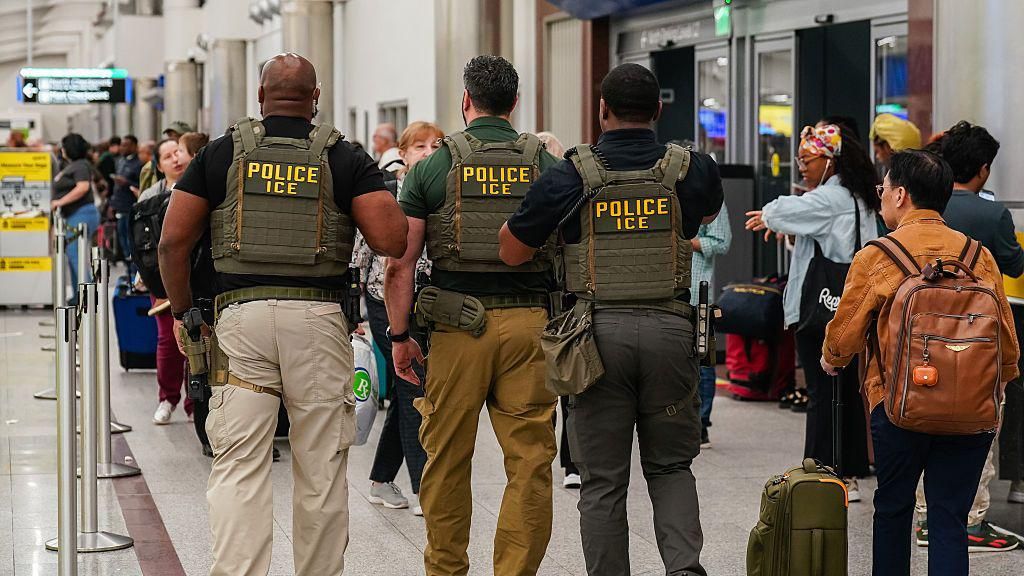
  • Ecuador says ICE agent attempted to enter its Minneapolis consulate

    Ecuador says ICE agent attempted to enter its Minneapolis consulate

    A significant diplomatic incident has unfolded between Ecuador and the United States following an attempted entry by a U.S. Immigration and Customs Enforcement (ICE) agent into Ecuador’s consular facility in Minneapolis. Ecuador’s foreign ministry issued a formal condemnation, stating that consular officials prevented the agent from accessing the premises to ensure the protection of Ecuadorian citizens inside the building.

    The confrontation occurred at approximately 11:00 local time on Tuesday, with Ecuadorian officials citing the 1963 Vienna Convention on Consular Relations which designates consular premises as ‘inviolable.’ The convention explicitly prohibits host country authorities from entering consular working areas without consent from the consular post’s head—consent that Ecuador maintains was neither given nor assumed in this instance.

    Unverified video footage circulating in Ecuadorian media appears to show a tense exchange where a consular official blocks the ICE agent’s access, repeatedly stating ‘this is the consulate, you’re not allowed in here.’ The agent responds with a warning that physical contact would result in detention attempts.

    This incident creates unexpected diplomatic friction between the Trump administration and Ecuadorian President Daniel Noboa, who has generally maintained strong bilateral relations. Just two months prior, both leaders had agreed to strengthen commercial ties, and Noboa had previously expressed gratitude for the U.S. designation of Ecuadorian criminal gangs as Foreign Terrorist Organizations.

    The consular confrontation occurs amid heightened tensions in Minneapolis following the fatal shootings of two individuals, including intensive care nurse Alex Pretti, by border agents during immigration protests. President Trump recently announced he would ‘de-escalate immigration and border operations a little bit’ in Minnesota, where approximately 3,000 immigration agents are currently deployed.

    The Ecuadorian government has delivered an official letter of protest to the U.S. embassy in Quito, marking a rare diplomatic challenge between the two nations as the Trump administration continues its prioritized enforcement of strict immigration policies that have resulted in over 675,000 removals according to recent Homeland Security statements.