标签: North America

北美洲

  • Ahmed bin Saeed launches Al Jalila Foundation’s ‘The Cancer Fund’

    Ahmed bin Saeed launches Al Jalila Foundation’s ‘The Cancer Fund’

    In a significant development for healthcare philanthropy, Sheikh Ahmed bin Saeed Al Maktoum, Chairman of the Dubai Health Board of Directors, has officially launched ‘The Cancer Fund’ under the Al Jalila Foundation. The ceremony, held at Dubai Hospital, was attended by Sheikh Mansoor bin Mohammed bin Rashid Al Maktoum, Vice Chairman of the Dubai Health Board of Directors, alongside senior officials and dignitaries.

    The newly established fund represents a strategic initiative designed to provide crucial financial assistance for cancer treatment throughout patients’ recovery journeys. By mitigating the substantial economic pressures associated with cancer care, the fund ensures continuous treatment access regardless of patients’ financial circumstances.

    Concurrently, Sheikh Ahmed unveiled ‘The Giving Wall’ at Dubai Hospital, a permanent installation recognizing the generosity of donors who have supported the hospital’s treatment programs. This visual tribute highlights the community’s collective commitment to healthcare advancement.

    During the launch event, Sheikh Ahmed emphasized the UAE’s deeply ingrained cultural values of generosity and compassion, noting that current leadership continues to build upon this legacy by prioritizing citizen health and wellbeing. He praised the collaborative efforts of individuals and institutions whose contributions strengthen community philanthropic initiatives.

    Dr. Raja Easa Al Gurg, Member of Dubai Health Board of Directors and Chairperson of Al Jalila Foundation, described the fund as “a strategic step towards building a sustainable support system for patients” that represents “a forward-looking model of collaboration” between community and institutional giving. She emphasized the role of sustainable philanthropy in creating a more cohesive society.

    Dr. Amer Al Zarooni revealed that the foundation’s Ramadan 2026 campaign will be dedicated to The Cancer Fund, building upon previous success that saw AED43 million in contributions through the ‘A’awen’ program, which provided care to 650 cancer patients over the past year. The foundation now encourages individuals and organizations to support this vital initiative through various donation channels.

  • Trump vows new tariffs, attacks Supreme Court justices for ruling

    Trump vows new tariffs, attacks Supreme Court justices for ruling

    WASHINGTON — In a striking defiance of judicial authority, former President Donald Trump announced his intention to preserve existing tariff structures through alternative legal mechanisms after the Supreme Court declared his previous use of presidential powers unconstitutional.

    The landmark 6-3 ruling determined that Trump had overstepped his authority under the International Economic Emergency Powers Act (IEEPA) when implementing tariffs. During an impassioned press conference at the White House briefing room, Trump delivered scathing criticism toward the six justices who formed the majority opinion, expressing profound disappointment in their decision.

    “The Supreme Court’s ruling on tariffs is deeply disappointing, and I’m ashamed of certain members of the Court—absolutely ashamed—for lacking the courage to do what’s right for our nation,” Trump stated. His condemnation extended specifically to Chief Justice John Roberts and Justices Amy Coney Barrett, Neil Gorsuch, Ketanji Brown Jackson, Elena Kagan, and Sonia Sotomayor, whom he described as “a disgrace to our nation” and “unpatriotic and disloyal to our Constitution.”

    Despite the judicial setback, Trump revealed plans to implement identical tariff measures under Section 122 authorities, asserting that alternative statutory frameworks provide even stronger presidential powers than IEEPA. He announced intentions to sign an executive order imposing a 10% global tariff overlay atop existing tariff structures.

    When questioned about restitution for billions collected under the invalidated tariffs, Trump indicated no immediate plans for reimbursement, noting that the Court’s opinion omitted specific guidance on redress. The matter would likely require extended litigation, potentially spanning years.

    The former president dismissed any necessity for congressional authorization, maintaining that existing statutes provide sufficient authority for tariff implementation. This development occurs amidst preparations for Trump’s upcoming address to a joint session of Congress, where several Supreme Court justices traditionally attend. Trump expressed indifference toward their potential attendance, suggesting they were “barely” still invited despite having no constitutional authority to exclude legislative branch guests.

  • How will Trump’s new 10% global tariffs work and what’s next?

    How will Trump’s new 10% global tariffs work and what’s next?

    In a landmark constitutional decision, the U.S. Supreme Court has delivered a significant check on presidential authority, ruling 6-3 that former President Donald Trump exceeded his executive powers when implementing sweeping global tariffs. The February 20th ruling specifically addressed tariffs enacted under the International Emergency Economic Powers Act (IEEPA) of 1977, which Trump had invoked citing national emergencies including fentanyl trafficking and the U.S. trade deficit.

    The court’s majority opinion emphasized that Congress alone holds the power to create new taxes, determining that IEEPA authorization for trade regulation did not extend to revenue-raising measures. This decision potentially opens the door to refund claims totaling approximately $130 billion collected through these tariffs, though the high court provided no specific guidance on reimbursement procedures, likely setting the stage for extended legal battles.

    Within hours of the ruling, President Trump issued a proclamation utilizing Section 122 of the 1974 Trade Act—a previously unused provision—to implement a new 10% temporary tariff on imports from nearly all trading partners. This emergency measure can remain in effect for 150 days before requiring congressional approval, creating a temporary solution while the administration explores permanent alternatives.

    The White House indicated that even countries with existing trade agreements (including the UK, EU, and India) would be subject to the new blanket tariff rather than their negotiated rates. Certain exemptions apply for critical materials including pharmaceuticals, electronics, vehicles, aerospace products, and agricultural commodities deemed essential to the U.S. economy.

    Treasury Secretary Scott Bessent projected that combining Section 122 tariffs with enhanced duties under Section 232 (national security) and Section 301 (unfair trade practices) authorities would essentially offset revenue losses from the overturned IEEPA tariffs. The administration continues to investigate additional legal avenues for maintaining its protectionist trade agenda.

    The ruling represents a substantial judicial constraint on Trump’s economic nationalism agenda, though numerous industry-specific tariffs implemented under other statutes remain unaffected. Business communities expressed cautious optimism while acknowledging potential complications from the new temporary tariffs and uncertain refund processes that may disadvantage smaller enterprises lacking legal resources.

  • Supreme Court says little about redress for Trump tariff damages

    Supreme Court says little about redress for Trump tariff damages

    In a landmark 6-3 ruling on Friday, the US Supreme Court declared that former President Donald Trump overstepped his executive authority by invoking emergency powers to impose sweeping global tariffs. Chief Justice John Roberts, writing for the majority, asserted that the 1977 International Emergency Economic Powers Act (IEEPA) contains no provision granting unilateral tariff-imposing power to the president.

    The decision in Learning Resources, Inc. v. Trump represents a severe judicial blow to Trump’s signature trade policy, which triggered international trade conflicts and imposed substantial financial burdens on American consumers and businesses. The ruling specifically invalidates two major tariff categories: country-specific ‘reciprocal’ tariffs (ranging from 34% on China to 10% baseline rates) and a 25% levy on certain goods from Canada, China, and Mexico related to fentanyl policy disputes.

    According to congressional Democratic analysis released following the verdict, the average American family has absorbed over $1,700 in additional costs since the implementation of these tariffs during Trump’s second term. The policy also failed to achieve its stated economic objectives, with manufacturing jobs declining by approximately 108,000 in the first year of implementation and no measurable improvement in the US trade deficit.

    While businesses may pursue tariff refunds through lengthy administrative processes, consumers face minimal prospects for recovering their increased expenses. Policy experts warn that economic repercussions will persist for years, with Groundwork Collaborative’s Alex Jacquez noting that ‘any consumer looking for relief from tariff-driven price hikes did not find it at the Supreme Court today.’

    The ruling has prompted immediate evaluation of alternative legal mechanisms within the Trump administration, including Section 122 of the Trade Act of 1974, which provides broader tariff authority with fewer procedural constraints. Congressional Democrats have expressed concern that the decision may merely redirect rather than eliminate Trump’s tariff ambitions, with Representative Brendan Boyle warning of continued ‘unhinged economic sabotage’ through alternative statutory pathways.

  • Trump pushes back against Supreme Court ruling, says will impose 10% more global tariffs

    Trump pushes back against Supreme Court ruling, says will impose 10% more global tariffs

    In a defiant response to a recent Supreme Court decision, former US President Donald Trump has announced his intention to impose a new 10% global tariff, leveraging alternative legal mechanisms to circumvent judicial limitations on his trade agenda.

    Speaking at a press conference on Friday, Trump characterized the Court’s 6-3 ruling against his previous sweeping tariffs as “deeply disappointing,” expressing particular dismay with the justices who formed the majority. The Court’s decision specifically invalidated the use of the International Emergency Economic Powers Act (IEEPA) as the legal basis for those tariffs.

    Undeterred, Trump revealed his administration’s alternative strategy: implementing the new across-the-board levy under Section 122 of the Trade Act of 1974. This statute empowers the president to impose duties of up to 15% for 150 days to address “large and serious” balance of payments deficits. “We have alternatives that could bring us more money,” Trump stated, emphasizing that “the Supreme Court did not overrule tariffs, they only overruled a particular use of IEEPA tariffs.”

    Addressing potential financial repercussions from the overturned tariffs, Trump suggested refund litigation could extend over five years. Concurrently, his administration is initiating multiple Section 301 investigations targeting alleged unfair trade practices by foreign nations and corporations, signaling an intensified approach to trade enforcement despite judicial constraints.

  • Anna Murdoch-Mann, mother of News Corp heir, dies aged 81

    Anna Murdoch-Mann, mother of News Corp heir, dies aged 81

    Anna Murdoch-Mann, the esteemed journalist and former spouse of media magnate Rupert Murdoch, has passed away at age 81. Her death on February 17th at her Palm Beach residence marked the conclusion of an extraordinary life journey that spanned continents and encompassed remarkable professional achievements.

    Born Anna Torv in Glasgow and raised within the Catholic faith, she relocated to Australia at nine years old. Following her parents’ separation, she remarkably assumed responsibility for raising her younger siblings—an early demonstration of the resilience that would characterize her life.

    Her journalistic career at Sydney’s Daily Telegraph and Daily Mirror newspapers brought her into contact with Rupert Murdoch, commencing a 31-year marriage described by Murdoch’s New York Post as an ‘active partnership’ in building the News Corp empire. The Australian newspaper noted that Murdoch ‘never made a major business decision without her input.’

    During their marriage, Murdoch-Mann balanced corporate responsibilities with literary pursuits, authoring several novels including the 1988 publication ‘Family Business,’ which explored multi-generational media dynasties—a subject she knew intimately.

    The couple’s life together included dramatic chapters, notably the 1969 abduction and murder of Muriel McKay in Hertfordshire, England—a case of mistaken identity where kidnappers targeted McKay believing she was Murdoch-Mann.

    Their 1999 divorce resulted in one of history’s most substantial settlements at $1.7 billion. Seventeen days later, Rupert Murdoch married his third wife, Wendi Deng.

    In a post-divorce interview with Australian Women’s Weekly, Murdoch-Mann presciently observed that succession planning for Murdoch’s media empire would create ‘heartbreak and hardship,’ adding that her children faced ‘pressure that they needn’t have had at their age.’ These dynamics later inspired the television series ‘Succession’ and culminated in her son Lachlan assuming control of the news conglomerate.

    Beyond her corporate and literary accomplishments, Murdoch-Mann distinguished herself as a dedicated philanthropist, serving on the boards of children’s hospitals in Los Angeles and Haiti. In 1998, Pope John Paul II recognized her humanitarian work by appointing her a Dame of the Order of St Gregory.

    She is survived by her third husband, Ashton dePeyster, along with ten grandchildren and one great-grandchild. Her legacy endures through her children Elisabeth, James, and Lachlan Murdoch, and stepdaughter Prudence.

  • Canada looks to trade talks after US Supreme Court tosses Trump’s tariffs

    Canada looks to trade talks after US Supreme Court tosses Trump’s tariffs

    Canada’s restrained celebration following the US Supreme Court’s invalidation of Donald Trump’s global tariffs underscores the complex trade challenges that persist between the two nations. While the court’s ruling nullified the controversial “fentanyl” tariffs imposed on Canada, China, and Mexico, Canadian Trade Minister Dominic LeBlanc acknowledged that significant hurdles remain in bilateral trade relations.

    The Supreme Court’s decision, striking down tariffs implemented under the International Emergency Economic Powers Act (IEEPA), provided limited practical relief for Canadian exporters. Approximately 85% of trade previously subject to these tariffs already enjoyed exemption status under the USMCA framework. The White House has confirmed that these exemptions will continue under Trump’s new 10% global tariff structure set to take effect imminently.

    Attention now shifts to the forthcoming USMCA review, a critical juncture for North American trade encompassing a market of over 500 million people. All three signatory nations must decide by July 1st whether to extend the agreement originally negotiated during Trump’s first presidential term. The Trump administration has demonstrated lukewarm enthusiasm for trilateral renewal, with officials suggesting preference for separate bilateral agreements with Canada and Mexico.

    Trade tensions continue to simmer as US Trade Representative Jamieson Greer characterized negotiations with Canada as “more challenging” than with Mexico, citing persistent trade barriers including restrictions on American wine and spirits sales. Additional friction points include Canadian dairy import regulations and the Online Streaming Act, which mandates American media companies to financially support Canadian content.

    Amid this uncertainty, Canadian business leaders emphasize the necessity of predictable, rules-based trade. Dennis Darby of Canadian Manufacturers & Exporters stressed the importance of a successful USMCA renewal that would eliminate recurring trade disruptions. Concurrently, Canada continues its strategic diversification efforts, seeking to expand non-US export markets with an ambitious goal of doubling such exports by 2035.

  • US Supreme court rules against Trump tariffs; what does it mean for businesses?

    US Supreme court rules against Trump tariffs; what does it mean for businesses?

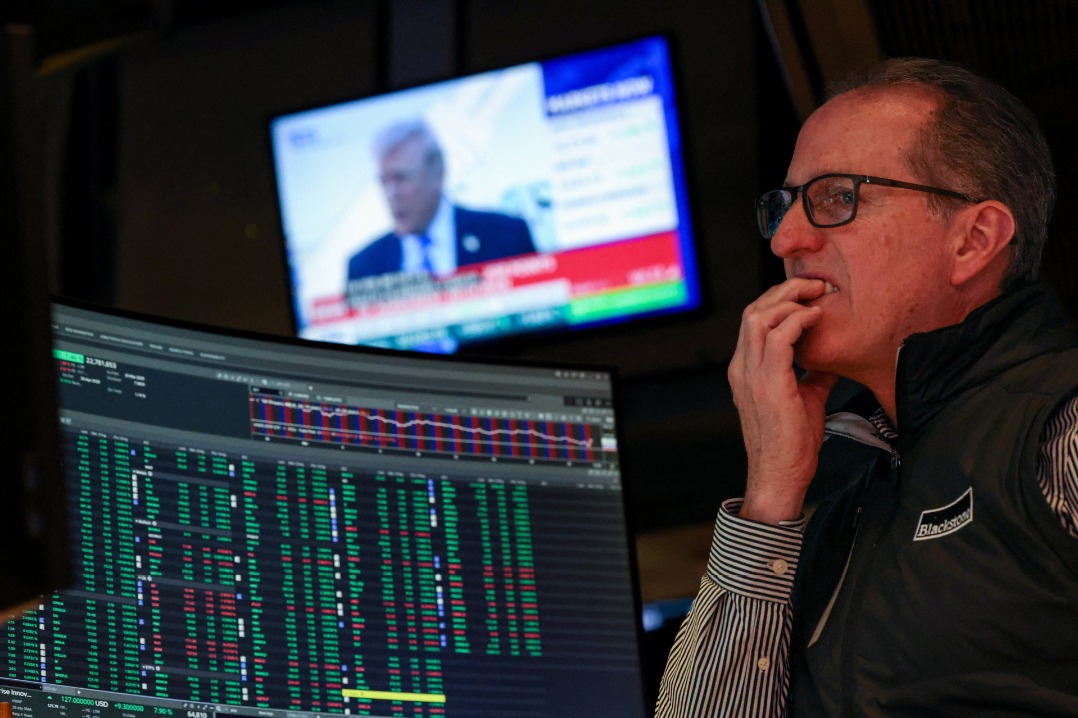
    In a landmark decision with profound implications for global commerce, the U.S. Supreme Court has invalidated the Trump administration’s use of emergency powers to impose sweeping import tariffs. The ruling determined that the 1977 International Emergency Economic Powers Act did not provide legal authority for the broad tariff regime implemented by the former president.

    This judicial reversal triggers a complex refund mechanism that could return more than $175 billion to thousands of American businesses that paid tariffs under the contested program. According to economists from the Penn-Wharton Budget Model, companies across consumer goods, automotive, manufacturing, and apparel sectors—particularly those reliant on global supply chains—now face strategic decisions regarding pursuit of reimbursement claims.

    The immediate market response saw stock markets in both the United States and Europe rally, with luxury brands and import-dependent companies experiencing significant gains. Shares of LVMH, Hermès, and Moncler all climbed following the announcement.

    Legal experts caution that the refund process will be administratively complex and time-consuming. More than 1,800 tariff-related lawsuits have already been filed with the U.S. Court of International Trade since April—a dramatic increase from fewer than two dozen cases throughout 2024. Prominent plaintiffs include subsidiaries of Toyota, Costco, Goodyear Tire & Rubber, Alcoa, Kawasaki Motors, and EssilorLuxottica.

    Despite this victory for free trade advocates, uncertainty persists within the business community. Trump administration officials have indicated they will pursue alternative legal authorities to implement tariffs, including statutes addressing unfair trade practices and national security concerns. Fitch Ratings’ head of U.S. economics, Olu Sonola, noted that “the odds that tariffs reappear in a revised form remain meaningful,” creating ongoing operational and legal challenges.

    The ruling highlights how approximately 90% of tariff costs were ultimately borne by American consumers and companies, according to Federal Reserve Bank of New York research, contradicting administration claims that foreign entities absorbed the financial impact.

    Many businesses, anticipating a protracted refund process, have already begun selling their rights to future refunds to external investors at discounted rates. Meanwhile, companies like German logistics firm DHL are developing technological solutions to streamline potential reimbursement procedures for their clients.

  • Arteta wants Arsenal to ‘live in the present’ before crucial trip to Tottenham

    Arteta wants Arsenal to ‘live in the present’ before crucial trip to Tottenham

    Arsenal manager Mikel Arteta has issued a rallying cry for his squad to maintain absolute focus on the present moment as they prepare for a critical North London Derby against Tottenham Hotspur. This high-stakes encounter comes at a precarious time for the Premier League leaders, whose championship ambitions have been dented by consecutive draws against Brentford and Wolverhampton Wanderers.

    The Gunners’ recent stumble has significantly tightened the title race, with second-placed Manchester City now trailing by just five points while holding an additional game in hand. Arsenal’s away form presents additional concerns, with just one victory secured in their last four league matches on the road.

    Addressing journalists during Friday’s press conference, Arteta emphasized the necessity of confronting current challenges rather than dwelling on past accomplishments. “We operate under a very clear directive—we must live in the present,” stated the Spanish tactician. “While our previous achievements are commendable, our attention must remain fixed on the immediate task. We’ve positioned ourselves exactly where we desired across all competitions, but substantial work remains ahead.”

    The midweek fixture against bottom-side Wolves proved particularly disappointing as Arsenal conceded a late equalizer. Arteta characterized the result as a “system shock” but confirmed his players’ determination to respond positively. Supporters have remained steadfast in their backing, and the squad is eager to channel their frustration into Sunday’s derby clash.

    Potential reinforcements could arrive with the anticipated returns of forward Kai Havertz and playmaker Martin Ødegaard. Meanwhile, Tottenham approach the match under new leadership following the recent appointment of manager Igor Tudor, who brings fresh tactical approaches despite the team’s winless league streak since December.

    Arteta confirmed comprehensive preparation for Tudor’s potential systems: “We’ve analyzed his complete managerial history across various clubs and formations, assessing how Tottenham’s available players might fit into his philosophy. Our adaptability will be crucial, but ultimately our concentration remains fixed on executing our game plan to secure victory.”

  • Trump lashes out at Supreme Court justices over tariffs ruling

    Trump lashes out at Supreme Court justices over tariffs ruling

    In an extraordinary display of presidential ire, Donald Trump launched a deeply personal broadside against six Supreme Court justices who delivered a landmark ruling against his administration’s global tariff policies. The decision, handed down on Friday, represents one of the most significant judicial setbacks of Trump’s second term.

    Addressing reporters at a White House press conference just hours after the ruling, Trump expressed profound disappointment with the court’s majority opinion. ‘I’m ashamed of certain members of the court. Absolutely ashamed for not having the courage to do what’s right for our country,’ the president declared, initiating a sweeping critique of the judicial branch that lasted nearly 45 minutes.

    The court’s ruling established that presidents lack inherent constitutional authority to impose comprehensive tariffs on foreign nations without congressional approval. Trump’s response transcended typical political disagreements, evolving into a remarkable personal indictment of the justices themselves.

    Notably, the president’s criticism crossed ideological and appointment lines equally. The six justices in the majority comprised an unusual coalition: three Democratic-appointed liberals (Elena Kagan, Sonia Sotomayor, and Ketanji Brown Jackson) and three Republican-appointed conservatives, including two of Trump’s own nominees (Neil Gorsuch and Amy Coney Barrett), with Chief Justice John Roberts writing the majority opinion.

    Trump employed particularly harsh rhetoric, labeling the justices ‘fools and lapdogs for the Rhinos and the radical left Democrats’—using the derogatory term ‘RINOs’ (Republicans In Name Only) typically deployed by the far right against moderate Republicans. In an especially unusual move, the president suggested the decision reflected embarrassment to the justices’ families and made unsubstantiated claims about ‘foreign interests’ influencing the court’s deliberation, though he provided no evidence when pressed by reporters.

    Conversely, Trump lavished praise on the three dissenting justices—Clarence Thomas, Samuel Alito, and Brett Kavanaugh (another Trump appointee)—thanking them for ‘their strength and wisdom and love of our country.’ Justice Kavanaugh’s dissent warned of practical complications, predicting the government would face a ‘mess’ in refunding billions in tariff revenue.

    Legal and trade experts characterized the ruling as a victory for constitutional separation of powers and the rule of law. Colin Grabow of the Cato Institute noted the court simply determined Trump had ‘went too far’ in asserting executive authority, while Alan Wm Wolff, former WTO deputy director-general, observed the court was fully aware of the decision’s significance to the administration.

    The president vowed to pursue alternative methods to implement his protectionist trade agenda despite the judicial setback, signaling continued confrontation between the executive and judicial branches.