标签: North America

北美洲

  • Iran warns against ‘instability’ after US naval strike group arrives

    Iran warns against ‘instability’ after US naval strike group arrives

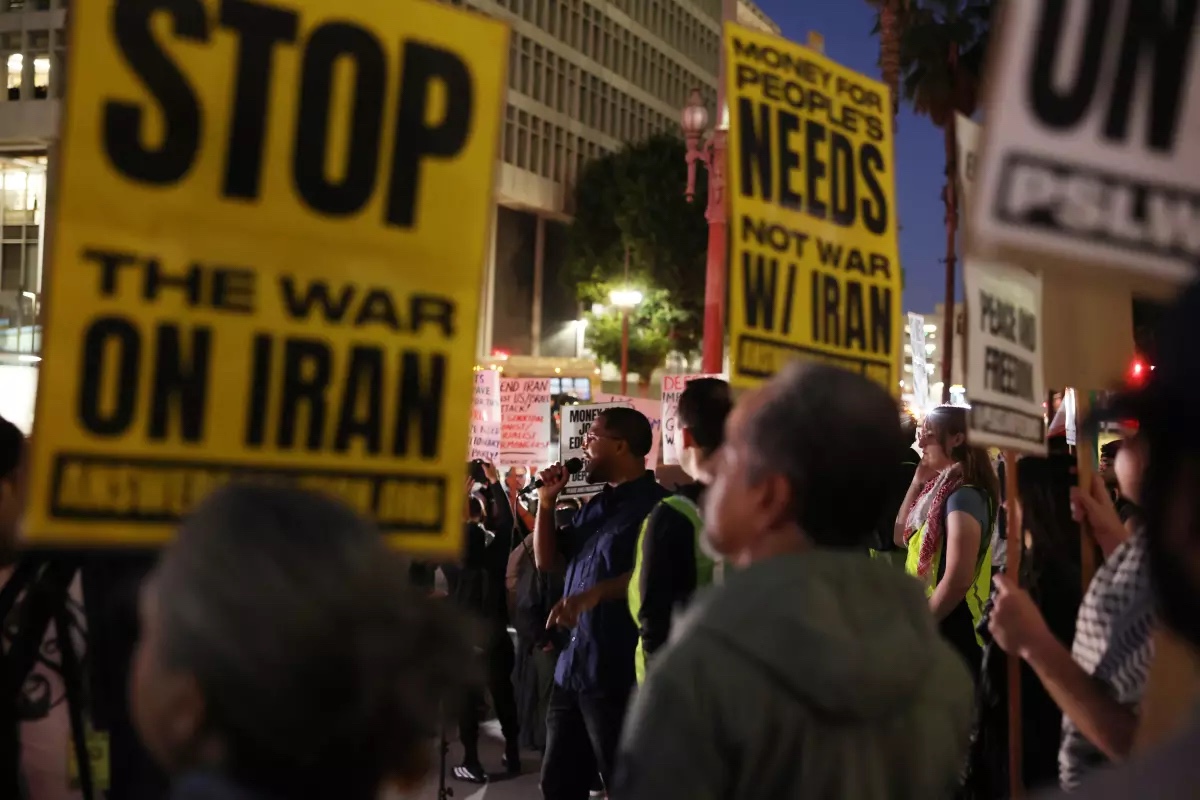
    Tensions between Tehran and Washington have intensified significantly following the strategic positioning of a US naval strike group in Middle Eastern waters. Iranian President Masoud Pezeshkian issued a stern warning on Tuesday, asserting that American military threats would only generate regional instability rather than achieve their intended objectives.

    The escalation comes amid ongoing protests within Iran that have prompted a severe government crackdown. While US President Donald Trump has deployed the USS Abraham Lincoln carrier group to the region, he has simultaneously indicated openness to diplomatic engagement, noting that Iranian officials have ‘called on numerous occasions’ seeking negotiation.

    Iran’s Revolutionary Guards delivered a pointed message to neighboring nations, cautioning that any country permitting its territory, airspace, or waters to be used against Iran would be considered hostile. This warning from Mohammad Akbarzadeh, political deputy of the IRGC naval forces, underscores Tehran’s heightened security concerns.

    Analysts suggest the Trump administration is considering multiple intervention options, ranging from targeted military strikes to leadership-focused operations aimed at undermining Iran’s clerical establishment. US intelligence assessments reportedly indicate the Iranian government’s hold on power may be at its weakest point since the 1979 revolution.

    Human rights organizations report a devastating toll from the government’s response to protests, with confirmed fatalities exceeding 6,000 and arrests surpassing 41,000. The extensive internet blackout imposed by Iranian authorities has complicated accurate documentation of casualties and repression.

    The situation remains volatile with both military posturing and diplomatic channels operating simultaneously, creating a complex landscape of confrontation and potential negotiation in the strategically critical region.

  • Republicans criticise immigration force but steer clear of Trump attacks

    Republicans criticise immigration force but steer clear of Trump attacks

    A significant fracture is emerging within the Republican Party as lawmakers grapple with the political fallout from a controversial immigration enforcement operation in Minneapolis that resulted in the fatal shootings of two U.S. citizens. While maintaining support for President Trump’s broader immigration agenda, prominent Republican senators are increasingly expressing criticism toward the implementation tactics and leadership of Department of Homeland Security agencies.

    The tension highlights the party’s delicate balancing act heading into midterm elections: supporting popular immigration policies while responding to public outrage over specific enforcement actions. Several Republican senators have called for increased oversight and accountability, with North Carolina Senator Thom Tillis demanding the resignation of DHS Secretary Kristi Noem, stating she has proven ‘way out of her depth.’

    Despite these criticisms, most Republicans have avoided direct condemnation of President Trump himself. Instead, lawmakers have focused their concerns on operational execution rather than policy fundamentals. The party remains largely supportive of the administration’s immigration objectives, having approved approximately $45 billion for border security and interior enforcement last year.

    The situation has created unusual alliances, with both moderate Republicans and some Trump allies expressing concerns about the shootings. Senators including Rand Paul (KY) and Lisa Murkowski (AK) have called for congressional hearings, while Representative Andrew Garbarino (NY) supports a full investigation into the incidents.

    In response to growing pressure, the administration has moderated its rhetoric and taken steps to de-escalate tensions. President Trump dispatched border tsar Tom Homan to assume control of Operation Metro Surge in Minneapolis, replacing top Border Patrol official Gregory Bovino. The president has also engaged in discussions with Minnesota Democratic leaders Governor Tim Walz and Mayor Jacob Frey, acknowledging the unsustainable nature of the current situation.

    The political implications continue to evolve as Senate Democrats threaten to block spending packages containing additional DHS funding, potentially triggering a government shutdown. This development may force Republicans to more vigorously defend the administration’s immigration policies, potentially overshadowing calls for investigation into the Minneapolis shootings.

  • UPS to cut 30,000 jobs as it moves away from Amazon

    UPS to cut 30,000 jobs as it moves away from Amazon

    In a major corporate restructuring move, global logistics leader United Parcel Service (UPS) has announced plans to eliminate up to 30,000 positions throughout 2026. This workforce reduction forms part of the company’s continued strategic disengagement from Amazon, which it identifies as significantly detrimental to profit margins.

    The job reductions will be implemented through voluntary buyout packages offered to full-time drivers and through natural attrition by not refilling voluntarily vacated positions. This decision comes despite UPS reporting robust earnings of $24.5 billion for the fourth quarter of 2025 and projecting an unexpected revenue increase to $89.7 billion for the upcoming year.

    This initiative represents the latest phase in a comprehensive turnaround strategy initiated last year, designed to systematically decrease UPS’s reliance on Amazon. Instead, the company is pivoting toward serving more profitable client sectors, particularly healthcare companies. This strategic reorientation previously resulted in 48,000 job cuts and the shuttering of 93 facilities throughout 2025, with an additional 24 facilities scheduled for closure in the first half of 2026.

    Chief Executive Carol Tome characterized this process as the ‘final six months of our Amazon accelerated glide down plan,’ noting the company intends to reduce Amazon parcel volume by an additional one million pieces daily while simultaneously reconfiguring its delivery network.

    In a separate safety-related decision, UPS confirmed the permanent retirement of its entire MD-11 cargo plane fleet following November’s fatal crash in Louisville, Kentucky. These aircraft, representing approximately 9% of the company’s total fleet, had remained grounded since the incident.

    The market responded neutrally to these announcements, with UPS shares closing marginally higher in Tuesday’s New York trading session. This corporate restructuring occurs against the backdrop of Amazon’s dramatic expansion of its proprietary delivery infrastructure, which has substantially eroded the market dominance traditionally held by UPS, FedEx, and the US Postal Service.

    According to industry data, Amazon executed 6.3 billion deliveries within the United States during 2024, surpassing both UPS and FedEx in volume. Projections from Pitney Bowes’ parcel shipping index indicate Amazon is positioned to overtake USPS in total US delivery volumes by 2028.

  • ‘Betrays our most basic values’: Ex US President Joe Biden slams Minneapolis shootings

    ‘Betrays our most basic values’: Ex US President Joe Biden slams Minneapolis shootings

    Former U.S. President Joe Biden has issued a forceful condemnation of recent federal agent-involved shootings in Minneapolis, describing the incidents as fundamental violations of American principles. In an official statement disseminated via social media platform X, Biden expressed profound outrage over the separate fatal shootings of two citizens—Alex Pretti on January 24 and Renee Good on January 7—by federal immigration authorities.

    Biden’s declaration characterized the events as unacceptable government overreach, stating: ‘We are not a nation that guns down our citizens in the street. We are not a nation that allows our citizens to be brutalized for exercising their constitutional rights.’ He specifically highlighted concerns about Fourth Amendment violations and the terrorization of communities by government actions.

    The former president commended Minnesota residents for their resilience and civic engagement amid tragedy, praising their efforts to support community members, speak against perceived injustices, and demand governmental accountability. Biden emphasized that such violence, particularly when perpetrated by government entities against citizens, contradicts core American values.

    Biden called for comprehensive, transparent investigations into both incidents, stressing the necessity of accountability regardless of authority. He extended heartfelt condolences to the families of Pretti and Good, urging pursuit of justice through proper channels. The statement concluded with a rallying cry for national self-reflection and reaffirmation of democratic principles, asserting that collective action can preserve American ideals against institutional overreach.

  • Trump says government will ‘de-escalate’ in Minnesota following Pretti shooting

    Trump says government will ‘de-escalate’ in Minnesota following Pretti shooting

    Following two fatal shootings by federal immigration officers that have ignited national outrage, President Donald Trump announced his administration would scale back operations in Minnesota. The President characterized both incidents as “terrible” during a Fox News interview, marking a significant shift in tone regarding immigration enforcement.

    The controversy centers on the deaths of Alex Pretti, an intensive care nurse at a veterans’ hospital, and Renee Good, 37, who were fatally shot during separate encounters with immigration authorities in early January. Pretti’s death during a traffic stop this past weekend triggered renewed protests and drew bipartisan criticism from lawmakers, creating mounting pressure on federal authorities.

    In response to the escalating crisis, the Department of Homeland Security (DHS) has reassigned Minnesota mission leader Gregory Bovino and deployed border tsar Tom Homan to assume control. Homan is scheduled to meet with local officials this week as the administration seeks to calm tensions.

    Contradictory narratives have emerged regarding Pretti’s shooting. Homeland Security Secretary Kristi Noem asserted that Pretti was “brandishing” a firearm and accused him of “domestic terrorism,” claiming he intended to “perpetuate violence” rather than protest peacefully. However, local authorities confirmed Pretti’s gun was legally registered, and eyewitnesses challenged the official account, stating he was holding a phone, not a weapon, when shot.

    Despite announcing de-escalation, President Trump defended the overall Minnesota operation, citing the removal of “thousands of hardened criminals” and referencing a Harvard Harris poll suggesting 80% public support for deporting illegal immigrants who commit crimes.

    The shootings have prompted calls for investigation from Republican officials including Vermont Governor Phil Scott and Nebraska Senator Pete Ricketts, who described the situation as “horrifying” while maintaining his support for ICE funding. A federal judge has issued an order blocking DHS from destroying or altering evidence related to the incidents.

  • Trump ally Nasry Asfura sworn in as Honduras president

    Trump ally Nasry Asfura sworn in as Honduras president

    In a significant political transition for Central America, conservative business magnate Nasry Asfura formally assumed the presidency of Honduras on Tuesday, culminating an electoral process marked by unprecedented international influence. The 67-year-old construction tycoon, known locally as ‘Tito,’ secured victory in November’s presidential race by an exceptionally narrow margin following controversial interventions from former U.S. President Donald Trump.

    The inauguration ceremony witnessed Asfura taking the oath of office exactly two months after the contentious election that drew global attention. The political landscape had been notably shaped by Trump’s explicit threat to terminate crucial aid packages to Honduras—already recognized as Central America’s most impoverished nation—should his personally endorsed candidate face defeat. This extraordinary diplomatic pressure from the United States created international reverberations throughout the electoral process.

    Asfura’s ascendancy represents a continuation of conservative leadership in the strategically important Central American nation, though his administration inherits profound challenges including economic instability, migration pressures, and systemic corruption. The new president, who previously served as mayor of the capital city Tegucigalpa, now faces the formidable task of governing a nation deeply divided by the razor-thin electoral outcome and international scrutiny.

    The political transition occurs against the backdrop of ongoing regional tensions and shifting international alliances, positioning Honduras at a critical juncture in its democratic development and foreign relations. Observers note that the circumstances surrounding Asfura’s victory may have lasting implications for hemispheric relations and the perception of electoral integrity in the region.

  • Watch: Why Trump is hitting the road to rally Americans

    Watch: Why Trump is hitting the road to rally Americans

    Former President Donald Trump has launched a strategic series of public rallies across the United States, marking a significant shift in his political approach. According to analysis by BBC White House correspondent Bernd Debusmann, this nationwide tour represents a calculated effort to redirect public attention toward economic issues where Trump believes he holds strong political advantages.

    The campaign strategy focuses heavily on highlighting economic policies from Trump’s previous administration while presenting contrasting perspectives on current economic conditions. These rallies serve as platforms for addressing key voter concerns about inflation, job creation, and national economic competitiveness.

    Political observers note this approach targets crucial swing states and demographic groups where economic messaging could prove most effective. The tour’s timing coincides with ongoing policy debates in Washington, allowing Trump to position himself as an alternative voice on economic matters.

    Debusmann’s analysis suggests these public appearances are designed to energize core supporters while simultaneously appealing to independent voters who prioritize economic issues. The events typically feature Trump’s characteristic rhetorical style combined with specific policy references aimed at creating contrast with current administration approaches.

    The economic-focused rallies represent an evolution in Trump’s post-presidency political strategy, potentially signaling his priorities for upcoming electoral cycles. This approach acknowledges the continuing significance of economic issues in American political discourse while attempting to frame Trump’s perspective as the solution to current economic challenges.

  • Dubai Marathon to celebrate 25th anniversary with elite athletes and fast route

    Dubai Marathon to celebrate 25th anniversary with elite athletes and fast route

    The prestigious Dubai Marathon prepares to commemorate its 25th anniversary on February 1st, 2026, with significant enhancements to its racing format and course design. This landmark edition will feature a meticulously planned flat route renowned for facilitating record-breaking performances, culminating in a spectacular grandstand finish within the Dubai Police Academy grounds.

    Organizers have implemented strategic adjustments to optimize runner experience and competitive integrity. Elite marathon athletes will commence their race at 5:45 AM, followed by the general marathon participants at 6:30 AM—a full 30 minutes earlier than the previous year’s schedule. The popular 10km Road Race and 4km Fun Run start times will be announced subsequently through official channels.

    The course architecture represents a collaborative achievement between event management and Dubai’s civic authorities, including the Dubai Sports Council, Dubai Police, RTA, and Dubai Municipality. Key modifications include newly incorporated turns at Dubai Media City, adjustments 280 meters past Mehemal Junction, and a revised two-lap segment near Burj Al Arab instead of the traditional Madinat turn.

    Event Director Peter Connerton emphasized the organizational effort: “Through continuous coordination with our civic partners, we’ve engineered a route that balances urban development considerations with athletic excellence. We particularly appreciate Dubai Police’s invitation to utilize their Academy parade grounds for creating an unforgettable finishing spectacle.”

    This finishing area will simultaneously host spectator grandstands, the Dubai Marathon Family Village, exhibitor booths, and live entertainment facilities. As the Middle East’s first World Athletics Gold Label race, the event continues to attract top international talent, with expectations set for the largest elite participant field in its history.

    The 2026 edition maintains support from leading sponsors including ASICS, MG Motor, Channel 4 Radio Network, ITP Media Group, and infrastructure partners Dubai RTA and Dubai Municipality.

  • Dubai’s self-driving robotaxis: Why milliseconds can make or break safety on road

    Dubai’s self-driving robotaxis: Why milliseconds can make or break safety on road

    Dubai’s ambitious transition to autonomous transportation is entering a critical phase as robotaxis begin operating on city streets, with full-scale deployment anticipated by 2026. While public attention has primarily focused on the vehicles themselves, industry experts reveal that the true determinant of safety lies in the invisible digital infrastructure supporting these autonomous systems.

    The emerging consensus among technology leaders indicates that latency—the minimal delay in data processing—represents the fundamental safety challenge for self-driving vehicles in dense urban environments. Autonomous taxis depend on continuous streams of sensor data to make instantaneous decisions, from pedestrian detection to responding to sudden traffic changes. In dynamic settings like Dubai’s roadways, micro-delays in processing can significantly impact vehicle responsiveness.

    Kamel Al Tawil, Managing Director for MENA at digital infrastructure firm Equinix, emphasizes that “latency directly determines how quickly an autonomous vehicle can interpret its surroundings and respond to hazards. In real-world city traffic, milliseconds matter.”

    This technological imperative aligns with Dubai’s Autonomous Transportation Strategy, which targets converting 25% of all trips to autonomous modes by 2030. The comprehensive plan envisions deploying approximately 4,000 driverless taxis across the emirate, aiming to reduce traffic accidents, alleviate congestion, and save hundreds of millions of travel hours annually.

    Current progress demonstrates tangible advancement: Dubai’s Roads and Transport Authority (RTA) has designated 65 locations across two operational zones for initial robotaxi services. In 2025, Baidu’s Apollo Go received Dubai’s inaugural permit for fully autonomous trials without safety drivers, while RTA’s partnership with WeRide enables residents in Umm Suqeim and Jumeirah to book autonomous rides through Uber’s platform—currently with specialist drivers onboard, transitioning to fully driverless operations imminently.

    Regulatory frameworks established under Law No. 9 of 2023 mandate stringent requirements for autonomous vehicle operators, including local storage and processing of operational data encompassing vehicle movements, maintenance records, and accident information. These regulations necessitate integrated electronic systems with real-time safety controls, enabling immediate intervention during malfunctions.

    The geographical proximity of data processing infrastructure has emerged as a critical safety consideration rather than merely a technical preference. Al-Tawil explains that “when data is processed far from where it’s generated, even minor network delays can degrade real-time perception. Autonomous systems consequently rely on edge and on-vehicle processing, where critical data is analysed as close to the vehicle as possible.”

    Local data processing not only ensures compliance with UAE safety and security standards but also facilitates secure software updates and enables real-time vehicle-to-everything (V2X) communication. Equinix’s UAE data centers are specifically engineered to manage high-density computing workloads, processing vast sensor data volumes in real time to support safety-critical applications.

    As Dubai accelerates its autonomous mobility initiatives, the focus is expanding beyond visible technological marvels to encompass the underlying digital ecosystems that enable their safe operation. The success of this transportation revolution will ultimately depend on how rapidly and reliably these vehicles can process information when confronting the unpredictability of urban environments—decisions that must occur within milliseconds, and crucially, within close geographical proximity.

  • Who is Tom Homan, Trump’s ‘border tsar’ deployed to Minneapolis?

    Who is Tom Homan, Trump’s ‘border tsar’ deployed to Minneapolis?

    In a significant operational shift, the Trump administration has dispatched veteran immigration official Tom Homan to assume command of enforcement operations in Minneapolis following the fatal shooting of two U.S. citizens by federal agents within a month. Homan, who arrived in the city on Tuesday, will serve as the primary federal liaison with local officials according to White House statements.

    This personnel change coincides with the anticipated departure of Gregory Bovino, the controversial Border Patrol chief who has spearheaded the administration’s mass deportation initiatives across multiple American cities. The transition signals a strategic recalibration of enforcement tactics in a region experiencing heightened immigration-related tensions.

    Homan brings four decades of immigration enforcement experience spanning both Democratic and Republican administrations. Beginning his career as a police officer before joining Border Patrol in 1984, he ascended through the ranks of immigration enforcement, eventually leading the Enforcement and Removal Operations division under ICE during the Obama administration.

    Twice drawn from retirement by Trump administration officials—first in 2017 by then-Chief of Staff John Kelly and again in 2024 by current Chief of Staff Susie Wiles—Homan serves as the administration’s informal “border tsar,” coordinating immigration policy across agencies without requiring Senate confirmation.

    The veteran enforcer has consistently defended the administration’s broad deportation objectives, emphasizing targeting “the worst of the worst” while challenging narratives that portray law enforcement personnel negatively. However, operational realities have frequently resulted in the apprehension of non-criminal undocumented immigrants, a phenomenon Homan attributes to uncooperative “sanctuary cities.”

    While some political observers interpret Homan’s deployment as acknowledgment that Bovino’s aggressive tactics required modification, immigration advocates note both officials share similar enforcement philosophies. Homan previously defended the administration’s family separation policy that divided undocumented parents from their children.

    Michael Lukens of the Amica Center noted: “Homan represents a more polished communicator than Bovino, better equipped to frame enforcement actions favorably to media and stakeholders. This transition reflects the administration’s political calculations rather than substantive policy changes.”