标签: North America

北美洲

  • Talks ramp up to avert US government shutdown after Minneapolis shooting

    Talks ramp up to avert US government shutdown after Minneapolis shooting

    Washington D.C. finds itself embroiled in intense budgetary negotiations as lawmakers race against the clock to prevent a potential federal government shutdown. The political standoff centers on Democratic demands for substantial reforms within the Department of Homeland Security (DHS) following the controversial fatal shooting of 37-year-old nurse Alex Pretti by federal immigration agents in Minneapolis.

    Democratic legislators are leveraging their position to withhold support from the comprehensive $1.2 trillion spending package unless significant oversight measures are incorporated. These proposed restrictions would mandate federal agents to obtain warrants before making arrests and establish clearer identification protocols during operations. The White House and Senate Democratic leadership appear to be converging on an agreement that would address these security concerns while avoiding complete governmental paralysis.

    The current strategy under discussion would involve passing five of the six spending bills before Friday’s midnight deadline while granting DHS a temporary funding extension. This approach would provide additional negotiation time for implementing proposed operational changes, including regulations surrounding agents’ use of masks during operations.

    Senate Minority Leader Chuck Schumer has taken a firm stance, declaring, “I will vote no on any legislation that funds ICE until it is reined in and overhauled,” emphasizing that Senate Democrats remain “overwhelmingly united on this issue.” This position has been further reinforced by escalating demands from some Democratic senators calling for DHS Secretary Kristi Noem’s removal and structural changes to both Immigration and Customs Enforcement (ICE) and US Border Patrol.

    Republican Senate Majority Leader John Thune has characterized the ongoing negotiations as “productive,” though Texas Senator John Cornyn has cautioned that “any changes must not come at the expense of shutting down the government.”

    The potential shutdown would not affect the entire federal government, as legislation has already been enacted to fund numerous agencies through September 30, 2026. However, critical departments including Defense, Health and Human Services, Treasury, and the federal court system would face operational disruptions. The Internal Revenue Service would also be impacted, potentially delaying tax processing and refund distributions.

    Essential employees within affected agencies would continue working without pay until funding is restored, mirroring arrangements made during previous shutdowns. The most recent government closure in late 2025 lasted 43 days—the longest in U.S. history—leaving approximately 1.4 million federal employees without compensation and severely disrupting air travel and food assistance programs nationwide.

  • Stirring the wok: a Black chef’s journey into Chinese cuisine

    Stirring the wok: a Black chef’s journey into Chinese cuisine

    In an inspiring culinary journey that transcends cultural boundaries, Chef Kurt Evans is revolutionizing Chinese cuisine from his Philadelphia kitchen. Defying conventional expectations, the African-American chef has assumed leadership of a Chinese restaurant, creating a unique fusion that honors both traditions while building bridges between communities.

    Evans’ approach represents a radical departure from traditional Chinese cooking techniques. He masterfully incorporates ingredients reflective of his own heritage into classic Chinese dishes, creating innovative flavor profiles that speak to both cultures. His culinary philosophy centers on food as a powerful medium for connection—transforming each meal into a conversation starter and celebration of shared human experiences.

    From the vibrant streets of Philadelphia to the intense heat of the wok, Evans has developed a distinctive cooking style that respects Chinese culinary traditions while fearlessly innovating. His restaurant has become more than just a dining establishment; it serves as a cultural meeting point where diverse communities converge through their shared appreciation for transformed familiar dishes.

    This groundbreaking culinary venture challenges industry norms and demonstrates how food can break down cultural barriers. Evans’ journey from traditional cooking to leading a Chinese kitchen showcases how personal heritage and professional expertise can blend to create something entirely new and meaningful in the culinary landscape.

  • Trump terror policy massively expands US list of bad guys

    Trump terror policy massively expands US list of bad guys

    In a dramatic shift from established norms, the Trump administration has executed the most substantial expansion of the US Foreign Terrorist Organization (FTO) list since its inception in 1997. Within the first year of his second term, President Trump has designated 26 new groups as terrorist organizations—a staggering increase compared to the historical average of approximately two additions annually.

    The FTO list now exceeds 90 designated groups, surpassing the previous peak of 60 during the Islamic State’s dominance in the mid-2010s. This designation carries severe consequences: providing material support to listed groups becomes a felony offense, financial institutions must freeze associated assets, and alleged associates face entry bans or deportation from the United States.

    Most controversially, the administration has expanded the terrorist designation beyond traditional ideological groups to include numerous drug cartels and criminal organizations. Groups such as Mexico’s Sinaloa cartel, Haiti’s Gran Grif, and Ecuador’s Los Lobos now appear alongside organizations like Iran’s Revolutionary Guard Corps, which continues to direct international attacks.

    This policy shift has enabled military actions traditionally reserved for counterterrorism operations. The administration has conducted 35 missile strikes against alleged drug trafficking operations, resulting in approximately 120 casualties. These actions culminated in the January overthrow of Venezuelan President Nicolas Maduro, whom the administration accused of leading the Cartel de los Soles—though the Justice Department subsequently dropped claims of the cartel’s existence just two days after his capture.

    The expansion has created significant strain on enforcement resources and drawn criticism from analysts who question the strategic wisdom of applying counterterrorism frameworks to criminal organizations. Research indicates that such approaches often backfire, potentially increasing violence rather than containing it.

    Notably, this transformation represents a decoupling from traditional US allies on counterterrorism policy. While historically following US designations, major allies including the United Kingdom and Australia have declined to similarly expand their terrorist lists to include criminal organizations. Instead, some allies have focused on designating far-right extremist networks—a category conspicuously absent from the US expansion.

    The policy shift reflects broader changes in US foreign policy alignment, with only a few Trump-aligned Latin American countries and Canada (reportedly for trade considerations) following the US lead in designating cartels as terrorist organizations.

  • White House backtracks on Minneapolis claims

    White House backtracks on Minneapolis claims

    MINNEAPOLIS — The Trump administration has acknowledged potential procedural violations by immigration agents during operations in Minneapolis that resulted in the fatal shooting of a nurse, signaling a shift in tone amid growing national outcry. White House deputy chief of staff Stephen Miller stated Tuesday that Customs and Border Protection (CBP) agents may have failed to adhere to established protocols during the incident that claimed the life of 37-year-old Alex Pretti.

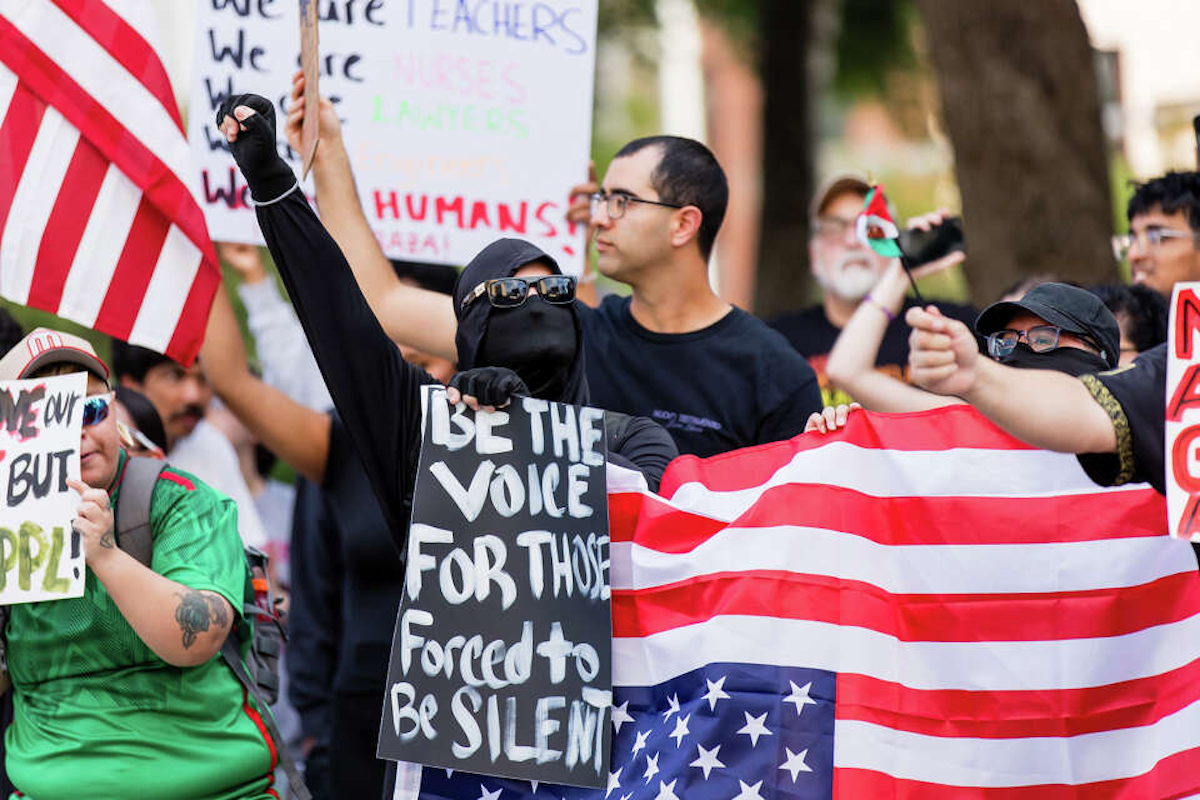
    The administration’s conciliatory stance emerged alongside a disturbing security breach targeting Minnesota Congresswoman Ilhan Omar, who was assaulted with an unknown liquid from a syringe during a town hall meeting where she had been criticizing the administration’s immigration policies. The simultaneous developments underscore the volatile atmosphere in the city following weeks of escalating tensions between federal authorities and local communities.

    President Trump, in comments to Fox News, indicated his administration would “de-escalate a little bit” its operations in Minneapolis while emphasizing the move did not constitute a full withdrawal. The president distanced himself from previous inflammatory rhetoric, specifically rejecting the “assassin” label previously applied to Pretti by Miller, and called for “a very honorable and honest investigation” into the shooting.

    The administration’s reassessment includes the expected departure of Border Patrol commander Gregory Bovino, whom Trump characterized as “a pretty out-there kind of a guy” whose presence may have exacerbated tensions. Top border security official Tom Homan has been dispatched to Minneapolis for meetings with local officials, including Mayor Jacob Frey, who reiterated the city’s position that it “will not enforce federal immigration laws.”

    The Pretti shooting marks the second fatal incident involving federal immigration agents in Minneapolis in recent weeks, following the death of US citizen Renee Good. Both cases have drawn national attention to the tactics employed by masked, heavily armed immigration agents operating in urban centers, with multiple video recordings contradicting initial official accounts that portrayed Pretti as a threatening “domestic terrorist.”

  • Fed set to pause rate cuts despite political pressure

    Fed set to pause rate cuts despite political pressure

    The United States Federal Reserve is poised to maintain its current interest rate levels in Wednesday’s policy decision, marking a strategic pause in its recent easing cycle despite intensifying political pressure from the Trump administration. This anticipated halt follows three consecutive rate reductions that have brought the benchmark rate to a range of 3.50-3.75%, as central bankers seek more conclusive economic indicators before further monetary adjustments.

    The Fed’s cautious stance emerges against a backdrop of conflicting economic signals: robust GDP expansion and relatively stable employment figures contrast with persistent inflationary pressures and cooling labor market conditions. This economic duality has created a complex landscape for policymakers, compelling them to adopt a wait-and-see approach rather than continuing their previous rate-cutting trajectory.

    The central bank’s independence faces unprecedented challenges from the White House, where administration officials have launched investigations into Fed Chair Jerome Powell regarding headquarters renovations and sought to remove Governor Lisa Cook over mortgage fraud allegations. Powell recently issued a rare public rebuke, characterizing these actions as threats to the institution’s operational autonomy.

    Economic analysts note that while political pressure for aggressive rate cuts continues to mount, the fundamental economic data doesn’t justify immediate further easing. EY-Parthenon’s chief economist Gregory Daco observed that ‘the hurdle for additional near-term cuts has risen,’ with officials requiring clearer evidence of disinflation or significant labor market deterioration before considering additional rate reductions.

    The Federal Open Market Committee’s internal deliberations have now shifted from whether to pause rate cuts to determining what specific economic conditions would warrant future monetary easing and at what pace these adjustments should occur. Although some dissent remains likely from recently appointed officials like Governor Stephen Miran, most analysts anticipate relatively unified support for the pause decision amid the current economic uncertainty.

  • ‘Extraordinary’ Williams refuses to rule out return

    ‘Extraordinary’ Williams refuses to rule out return

    Tennis legend Serena Williams has ignited widespread speculation about a potential return to professional competition after offering deliberately ambiguous responses during a national television appearance. The 44-year-old, who formally retired following the 2022 US Open, remains officially registered in the International Tennis Integrity Agency’s (ITIA) drug testing pool—a mandatory requirement for competitive eligibility.

    When directly questioned on NBC’s Today Show about a comeback, Williams artfully deflected. “I don’t know, I’m just going to see what happens,” she stated. After host Savannah Guthrie characterized this as a “maybe,” Williams intriguingly countered with “It’s not a maybe,” without providing further clarification. Regarding her testing pool status—a six-month prerequisite for returning athletes—Williams remarked, “I don’t know if I was out. Listen, I can’t discuss this.”

    The tennis world has responded with enthusiastic anticipation. Current world number one Aryna Sabalenka, speaking after her Australian Open semifinal victory, expressed support: “If she wants to come back, that’s her decision. It’s going to be fun to see her back on tour. She’s got the personality, and she’s a fun one.” Elina Svitolina, another top competitor, emphasized Williams’ inspirational legacy, noting a return would be “amazing for the sport.”

    Industry analysts suggest several motivating factors, including the potential for one final doubles campaign with her sister Venus Williams, who continues to compete at age 45. The Williams sisters last competed together at the 2022 US Open, creating sentimental appeal for another partnership. Former British number one Annabel Croft speculated on BBC Radio 5 Live that Venus’ potential retirement plans might influence Serena’s decision.

    While Williams currently identifies as a “stay-at-home mum and housewife” on official forms, her maintained presence in the testing pool since October 2025 and deliberately non-committal public statements have created compelling uncertainty about her future in the sport she dominated for decades.

  • New York police probe car crash into synagogue as hate crime

    New York police probe car crash into synagogue as hate crime

    Authorities in New York City are investigating a deliberate vehicle collision at the global headquarters of Chabad Lubavitch in Brooklyn as a potential antisemitic hate crime. The incident occurred Wednesday evening when a motorist repeatedly rammed the rear entrance of the prominent Hasidic Jewish institution located in the Crown Heights neighborhood.

    According to NYPD Commissioner Jessica Tisch, officers responding to reports of a disturbance at the synagogue witnessed the driver intentionally striking the building’s rear door multiple times. Law enforcement personnel immediately apprehended the male suspect at the scene without incident. Comprehensive sweeps by bomb squad technicians confirmed no explosive devices were present.

    While no injuries were reported, the incident prompted strong condemnations from city leadership. Mayor Zohran Mamdani characterized the attack as “deeply alarming,” emphasizing that “antisemitism has no place in our city, and violence or intimidation against Jewish New Yorkers is unacceptable.”

    In response to the incident, the NYPD has substantially enhanced security measures around religious institutions across all five boroughs as a precautionary measure. The department’s specialized Hate Crimes Task Force has assumed investigation of the case, though authorities have not yet established a definitive motive.

    New York Governor Kathy Hochul expressed solidarity with the Jewish community, stating on social media that “an attack against the Jewish community is an attack against all New Yorkers.” The Chabad Lubavitch headquarters serves as a central institution for the ultra-Orthodox Hasidic movement, representing one of the most visible symbols of Jewish religious life in Brooklyn.

  • What could happen if the US strikes Iran? Here are seven scenarios

    What could happen if the US strikes Iran? Here are seven scenarios

    The United States is reportedly preparing for potential military action against Iran within days, raising critical questions about possible outcomes and regional consequences. According to analysis of current geopolitical tensions, the Trump administration appears positioned to authorize targeted strikes against Iranian military infrastructure.

    Military strategists anticipate precision attacks focusing on key installations of Iran’s Islamic Revolutionary Guards Corps (IRGC) and associated Basij paramilitary units. Potential targets include ballistic missile facilities and nuclear program sites, though the ultimate political outcomes remain highly uncertain.

    Several scenarios could emerge from such military engagement. The most optimistic projection suggests the possible collapse of Iran’s already weakened regime, potentially leading to democratic transition and international reintegration. However, historical precedents in Iraq and Libya demonstrate that Western military intervention often brings chaos rather than smooth political transitions, despite removing oppressive regimes.

    An alternative ‘Venezuelan model’ scenario envisions the Islamic Republic remaining intact but compelled to moderate its policies. This would involve curtailing support for Middle Eastern militias, scaling back nuclear and missile programs, and reducing domestic suppression. Yet analysts consider this outcome unlikely given Tehran’s 47-year history of defiance and resistance to external pressure.

    The most probable outcome, according to regional experts, would see the current regime surviving through intensified repression. Iran’s extensive security apparatus has repeatedly demonstrated willingness to use unlimited force against dissent, and protest movements have historically failed to secure military defections.

    Iran has vowed severe retaliation against any U.S. attack, with officials stating their ‘finger is on the trigger.’ While outmatched by U.S. naval and air power, Iran could deploy its substantial arsenal of ballistic missiles and drones—many hidden in mountainous terrain and underground facilities—potentially targeting U.S. bases in Bahrain, Qatar, and Jordan.

    The 2019 attack on Saudi Aramco facilities, attributed to Iranian-backed militias, demonstrated Tehran’s capability to strike critical infrastructure. Gulf Arab allies remain particularly concerned about becoming collateral damage in any U.S.-Iran confrontation.

    Regional security experts highlight additional risks including possible disruption of the Strait of Hormuz, through which 20-25% of global oil exports pass. Iran has conducted mining exercises in these vital shipping lanes, and any interference could significantly impact world trade and energy markets.

    Naval warfare specialists note concerns about potential ‘swarm attacks’ using numerous drones and fast attack boats that could overwhelm even advanced U.S. naval defenses. Such scenarios, while considered unlikely, recall previous incidents like the USS Cole bombing that killed 17 sailors in 2000.

    The greatest danger identified by analysts is that military action could commence without clear objectives or exit strategy, potentially triggering widespread regional conflict, humanitarian crises, and unpredictable global repercussions as the Middle East’s most populous nation faces potential instability.

  • US Fed keeps interest rate unchanged at 3.5-3.75 pct

    US Fed keeps interest rate unchanged at 3.5-3.75 pct

    The U.S. Federal Reserve maintained its benchmark interest rate within the 3.5% to 3.75% range during its inaugural policy meeting of 2026, signaling a period of strategic pause as economists assess the nation’s economic trajectory. This decision, announced on Wednesday from the Marriner S. Eccles Federal Reserve Board building in Washington, D.C., represents a continuation of the central bank’s careful approach to monetary policy following several years of economic turbulence and recovery efforts.

    The rate stabilization comes amid mixed economic indicators, with policymakers carefully balancing concerns about inflation against signs of potential economic softening. The federal funds rate, which influences borrowing costs across the economy including mortgages, credit cards, and business loans, remains at its highest level since the pre-2020 period, reflecting the Fed’s ongoing commitment to price stability.

    Financial markets had widely anticipated this decision, with most analysts predicting the Fed would maintain current rates while gathering additional economic data. The central bank’s statement emphasized a data-dependent approach, noting that future decisions would be guided by incoming information about labor market conditions, inflation pressures, and financial developments.

    This meeting marks the first under the Fed’s 2026 calendar and sets the tone for monetary policy in the coming months. Economists will closely monitor subsequent meetings for signals about potential rate adjustments, with many expecting the Fed to maintain its current stance through at least the first quarter unless economic conditions shift substantially.

  • Emirates NBD Capital gets merchant banking licence in India, first in Middle East

    Emirates NBD Capital gets merchant banking licence in India, first in Middle East

    In a landmark development for cross-border financial services, Emirates NBD Capital has achieved a significant regulatory milestone by obtaining India’s Category I Merchant Banking license from the Securities and Exchange Board of India (SEBI). This authorization establishes the investment banking division of the Middle Eastern financial giant as the inaugural institution from its region to receive such comprehensive licensure, marking a transformative expansion into one of the world’s most dynamic emerging economies.

    The newly acquired license empowers Emirates NBD Capital to deliver an extensive array of investment banking services within the Indian market. These capabilities encompass full-spectrum capital market operations, including serving as merchant banker and bookrunner for equity offerings such as Initial Public Offerings (IPOs), follow-on offerings, and Qualified Institutional Placements (QIPs). Additionally, the institution can now function as an arranger for domestic debt capital market placements, providing comprehensive financial solutions tailored to the unique requirements of the Indian market.

    This strategic advancement enables Emirates NBD Capital India Private Limited, headquartered in Mumbai, to leverage the bank’s formidable regional investor network. This ecosystem includes sovereign wealth funds, global financial institutions, family offices, and ultra-high-net-worth investors across the Middle East, North Africa, and Türkiye (MENAT) region. The license creates a formalized conduit for channeling Middle Eastern capital into India’s equity and debt markets, where regional participation has historically remained limited despite substantial underlying interest.

    Hitesh Asarpota, Chief Executive Officer of Emirates NBD Capital, characterized the development as a pivotal milestone for both the investment banking division and the broader Emirates NBD Group. He emphasized that the expanded capabilities would complement the bank’s existing offerings while delivering enhanced value to clients. Asarpota further highlighted the institution’s strategic positioning to facilitate regional liquidity into Indian capital markets, solidifying Emirates NBD’s role as a gateway for cross-border financial flows.

    The regulatory approval arrives during an exceptional period of activity within India’s capital markets. The year 2025 witnessed approximately $56 billion in equity capital market volumes, with Indian companies raising nearly $20 billion through IPOs alone. This represents the second consecutive year of record-breaking IPO fundraising, positioning India among the world’s most active equity issuance markets. Current projections indicate sustained robust market conditions extending throughout 2026, presenting substantial opportunities for Emirates NBD Capital to engage with both issuers and investors across forthcoming offerings.

    This strategic expansion significantly deepens the already substantial economic and investment relationship between India and the United Arab Emirates. The bilateral partnership has evolved into a comprehensive strategic alliance encompassing trade, investment, infrastructure development, and financial services integration, with Emirates NBD Capital’s entry representing a sophisticated new dimension in financial market connectivity between the two nations.