标签: North America

北美洲

  • Appeals court disqualifies ex-Trump lawyer Alina Habba as New Jersey prosecutor

    Appeals court disqualifies ex-Trump lawyer Alina Habba as New Jersey prosecutor

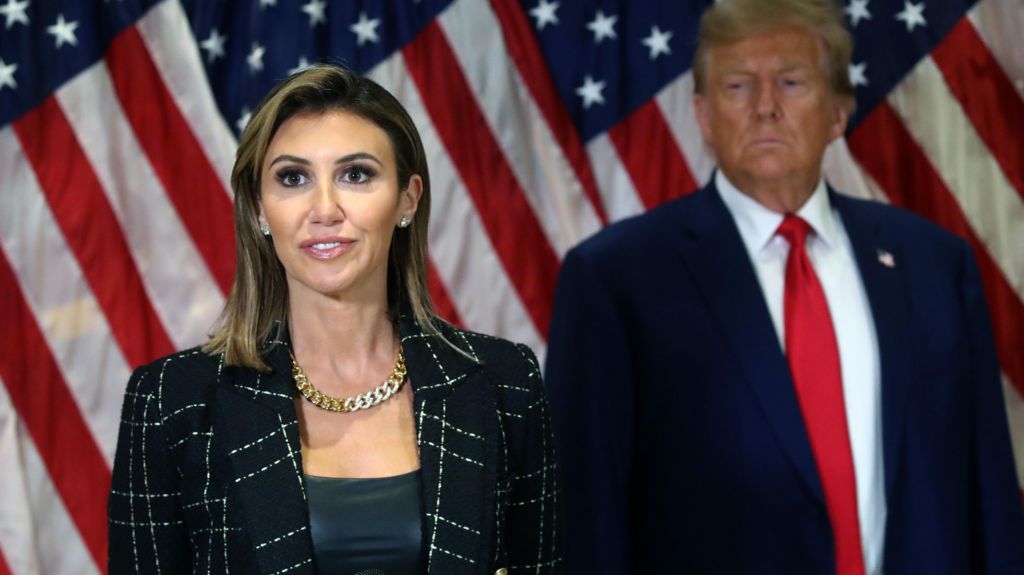
    A significant judicial decision has upended the leadership of New Jersey’s federal prosecutor’s office. The U.S. Court of Appeals for the Third Circuit ruled on Monday that Alina Habba, personally selected by former President Donald Trump for the role, has been serving unlawfully as the U.S. Attorney for New Jersey. This verdict casts doubt on the legitimacy of numerous criminal proceedings she has overseen.

    The controversy stems from the administration’s circumvention of the standard nomination process. After a district court initially rejected Habba’s formal nomination earlier this year, the Trump administration appointed her using a procedural mechanism that allowed her to serve in an ‘acting’ capacity, thereby avoiding the requisite Senate confirmation. The appellate court determined this maneuver to be a direct violation of the Federal Vacancies Reform Act, legislation designed to check executive overreach in appointments.

    This case represents the second instance in recent weeks where a Trump-appointed prosecutor has been disqualified on similar grounds. The ruling emerged from a legal challenge filed by three defendants facing criminal charges in New Jersey, who contested the legality of Habba’s authority to prosecute them. Writing for the court, Judge Michael Fisher noted, ‘It is apparent that the current administration has been frustrated by some of the legal and political barriers to getting its appointees in place.’

    The Department of Justice must now swiftly appoint a lawfully confirmed prosecutor to assume supervision of all federal criminal cases in the district. This development follows a related ruling last week in Virginia, where cases against former FBI Director James Comey and New York Attorney General Letitia James were dismissed because the interim prosecutor, Lindsey Halligan, was also deemed unlawfully appointed.
  • Trump releases fraudster executive days into prison sentence

    Trump releases fraudster executive days into prison sentence

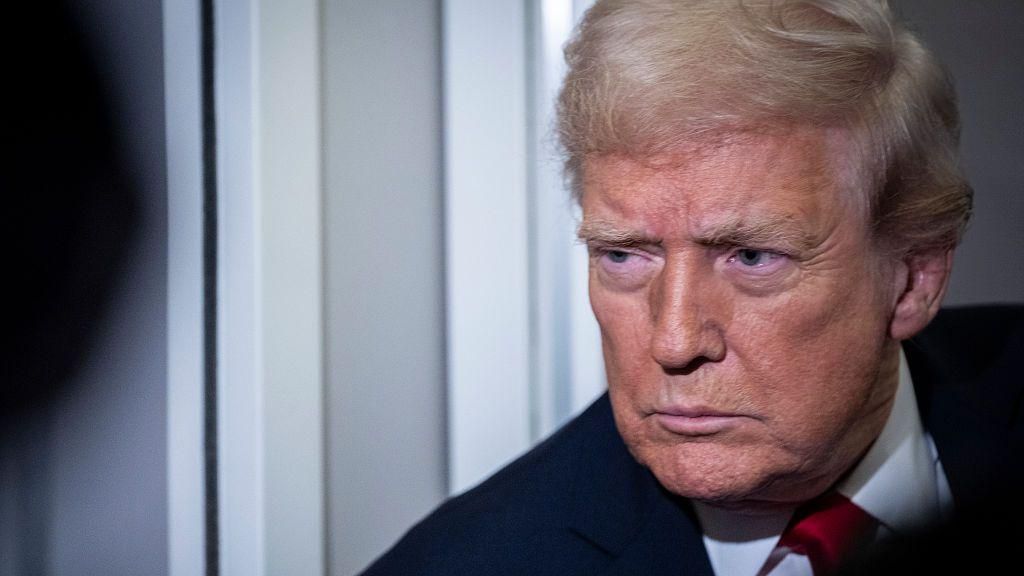
    In a significant executive action, former U.S. President Donald Trump has commuted the prison sentence of David Gentile, the former CEO and founder of GPB Capital Holdings, who had recently begun serving a seven-year term for financial fraud. Federal prison records confirm Gentile’s release on Wednesday, merely days after his incarceration commenced.

    The case stems from a landmark 2023 conviction where federal prosecutors demonstrated that Gentile orchestrated a sophisticated multi-year scheme that defrauded over 10,000 investors. The operation involved systematically misrepresenting the performance of private equity funds, ultimately accumulating approximately $1.6 billion in investor capital. Prosecutors revealed that the firm utilized new investor funds to pay returns to existing investors, a characteristic they labeled as a Ponzi-style operation.

    This clemency decision continues a pattern of Trump intervening in high-profile white-collar criminal cases. Unlike a full presidential pardon, the commutation solely relieves Gentile from serving his prison sentence but does not expunge his criminal record or nullify other potential financial penalties and restitution requirements.

    The White House issued a statement defending the action, alleging prosecutorial misconduct during the Biden administration’s Department of Justice handling of the case. Officials claimed investors were explicitly informed their capital might be allocated to cover other investors’ dividends, fundamentally undermining the prosecution’s characterization of the operation as fraudulent. The statement further cited concerns about allegedly falsified testimony obtained by prosecutors.

    Notably, Gentile’s co-defendant, Jeffry Schneider, who received a six-year sentence on identical charges, remains incarcerated. The contrasting outcomes highlight the extraordinary nature of presidential clemency power in the American justice system.

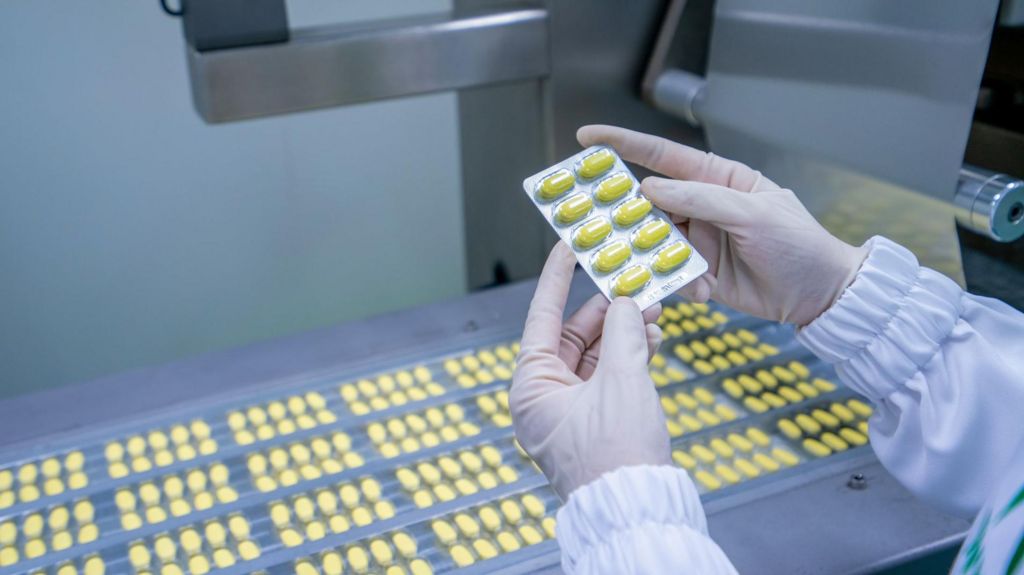
  • US and UK set to agree zero tariffs deal on pharmaceuticals

    US and UK set to agree zero tariffs deal on pharmaceuticals

    The United Kingdom and United States are poised to announce a landmark trade agreement eliminating proposed pharmaceutical tariffs, following months of tense negotiations and investment diversions by major drug manufacturers. Industry sources indicate the deal could be finalized imminently, potentially as early as today.

    This breakthrough comes after several pharmaceutical giants scaled back UK operations or redirected investments stateside in response to threatened tariff increases of up to 100% on branded medications. The UK’s Department for Business and Trade reports £11.1 billion in medicine exports to the US during the twelve months ending September, representing 17.4% of all UK goods exports during that period.

    Under the anticipated agreement, UK medicine exports will receive three-year protection from tariff escalations while Britain commits to raising its price threshold for expensive new treatments by 25%. Additionally, the National Health Service will increase overall pharmaceutical expenditures, addressing industry concerns about stagnant spending.

    The tariff dispute intensified amid longstanding tensions between pharmaceutical companies and the UK government regarding drug pricing and approval rates. Former Trump administration officials highlighted that American consumers pay significantly more for medications than their UK and European counterparts.

    Recent investment patterns underscore the agreement’s urgency: GSK pledged $30 billion toward US research and manufacturing over five years, while Merck abandoned a planned £1 billion expansion in UK operations. AstraZeneca similarly paused a £200 million Cambridge research facility investment while committing $50 billion to US manufacturing and R&D.

    The agreement represents a delicate balancing act between Health Secretary Wes Streeting’s commitment to preventing drug companies from ‘ripping off’ the UK and Science Minister Sir Patrick Vallance’s acknowledgment that NHS medicine spending must increase after a decade of budgetary decline.

  • National Guard shooting suspect radicalised after he came to US, homeland secretary says

    National Guard shooting suspect radicalised after he came to US, homeland secretary says

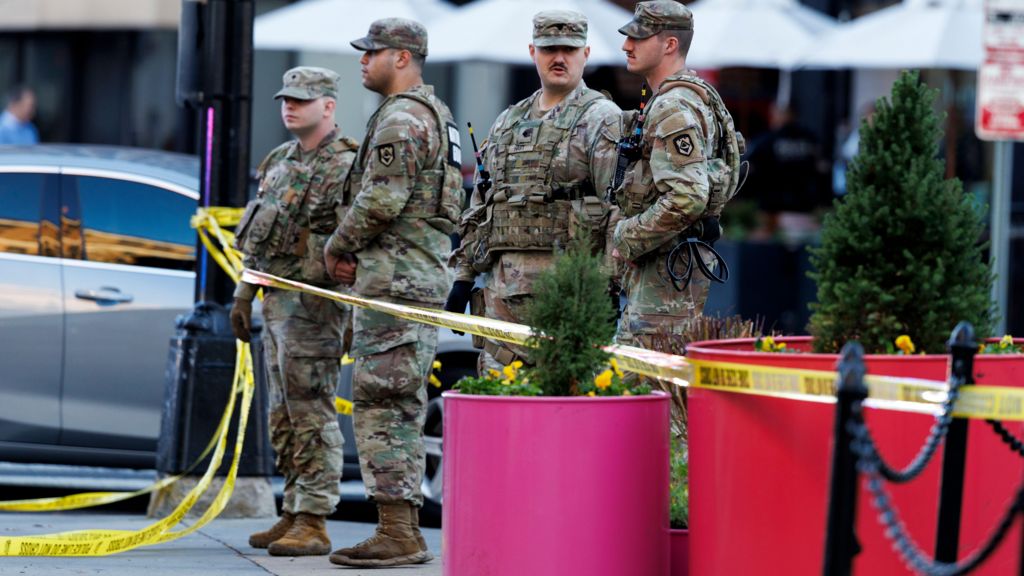
    U.S. Homeland Security Secretary Kristi Noem revealed on Sunday that the Afghan immigrant accused of ambushing National Guard members in Washington, D.C. underwent radicalization after entering the United States, not before his arrival. The suspect, identified as 29-year-old Rahmanullah Lakanwal, allegedly carried out Wednesday’s shooting just blocks from the White House, resulting in one National Guard member killed and another critically wounded.

    Speaking across multiple national news programs including NBC’s ‘Meet the Press’ and ABC’s ‘This Week,’ Secretary Noem indicated investigators believe Lakanwal became radicalized while residing in Washington state. ‘We believe he was radicalized since he’s been here in this country,’ Noem stated, adding that authorities suspect the process occurred ‘through connections in his home community and state.’

    The case has ignited political tensions regarding U.S. immigration policy. While President Trump’s administration has criticized the vetting processes during the Biden administration, records show Lakanwal was actually granted asylum in April under the current Trump administration. The suspect entered the United States in 2021 as part of the mass evacuation of Afghans who assisted U.S. forces during the Afghanistan conflict.

    In response to the attack, the Trump administration has implemented significant immigration policy changes, including a comprehensive freeze on processing all asylum applications. President Trump told reporters aboard Air Force One that his administration could ‘pause asylum admissions into the US for an extended period’ with ‘no time limit.’

    Secretary Noem warned that immigration officials would now review every pending asylum claim and consider deportations where warranted. She also issued a stern warning to anyone connected to the shooting: ‘Anyone who has information on this needs to know that we will be coming after you, and we will bring you to justice.’

    Investigators continue to seek additional information from family members and associates of Lakanwal, who previously served in a CIA-backed unit in Afghanistan before seeking refuge in the United States.

  • National Guard shooting suspect spent weeks isolated in bedroom, case worker’s email says

    National Guard shooting suspect spent weeks isolated in bedroom, case worker’s email says

    Newly revealed documents paint a troubling picture of the mental state of Rahmanullah Lakanwal, the Afghan national accused of ambushing and killing National Guard member Sarah Beckstrom, 20, and seriously wounding Andrew Wolf, 24, in Washington DC last week. Emails from a case worker in early 2024, obtained by CBS News, describe a man suffering from severe psychological episodes, spending weeks at a time isolated in a darkened room and experiencing manic periods where he would disappear with the family car.

    Lakanwal entered the United States in 2021 through Operation Allies Welcome, a Biden-era program evacuating Afghans who had cooperated with American forces. A former member of an Afghan ‘Zero Unit’ that worked directly with the CIA, he was among those fearing Taliban retribution after the U.S. withdrawal. His asylum application was granted earlier this year.

    The case worker emails, sent to the non-profit US Committee for Refugees and Immigrants, expressed grave concerns about the family’s stability. The worker noted Lakanwal had been unemployed for a year, putting his wife and five children at risk of eviction from their home in Bellingham, Washington. ‘I think the father has mental health issues that are not addressed,’ one January 2024 email stated, adding that he refused to speak to anyone.

    The attack has triggered significant political repercussions. Homeland Security Secretary Kristi Noem claimed Lakanwal had been ‘radicalized’ after arriving in the U.S. through connections in his home community. In response, the Trump administration has announced a permanent pause on migration from ‘third world countries’ and halted all asylum decisions indefinitely to implement stricter vetting protocols. Lakanwal, who was shot during the incident and remains hospitalized, now faces murder charges.

  • Trump says US freeze on asylum decisions will last ‘a long time’

    Trump says US freeze on asylum decisions will last ‘a long time’

    President Donald Trump has declared an open-ended suspension of asylum admissions following a fatal shooting incident near the White House that resulted in the death of a National Guard member. The administration’s immigration pause, initially implemented after the November 26th attack, now appears set to continue indefinitely according to the President’s Sunday statements.

    The policy specifically targets nationals from 19 countries already subject to existing U.S. travel restrictions, including Afghanistan, Cuba, Haiti, Iran, and Myanmar. When pressed about the duration of this measure, Trump explicitly stated he had ‘no time limit’ in mind for maintaining the asylum freeze.

    The shooting incident involved Rahmanullah Lakanwal, a 29-year-old Afghan national who entered the United States through a resettlement program following the 2021 military withdrawal from Afghanistan. Despite being granted asylum under the current administration in April 2025, Lakanwal has been charged with first-degree murder in connection with the attack that killed 20-year-old Sarah Beckstrom and critically wounded another guardsman.

    Trump attributed the tragedy to what his administration characterizes as insufficient vetting procedures during the previous Biden administration’s handling of the Afghan evacuation. The Department of Homeland Security has directly linked the asylum pause to the list of countries already facing travel restrictions since June.

    The President reinforced his position with strong rhetoric, stating ‘We don’t want those people’ and asserting that ‘many have been no good, and they shouldn’t be in our country.’ This policy shift represents a significant hardening of the administration’s immigration stance following the security incident.

  • US state secretary says ‘more work to be done’ after talks with Ukraine over revised peace plan

    US state secretary says ‘more work to be done’ after talks with Ukraine over revised peace plan

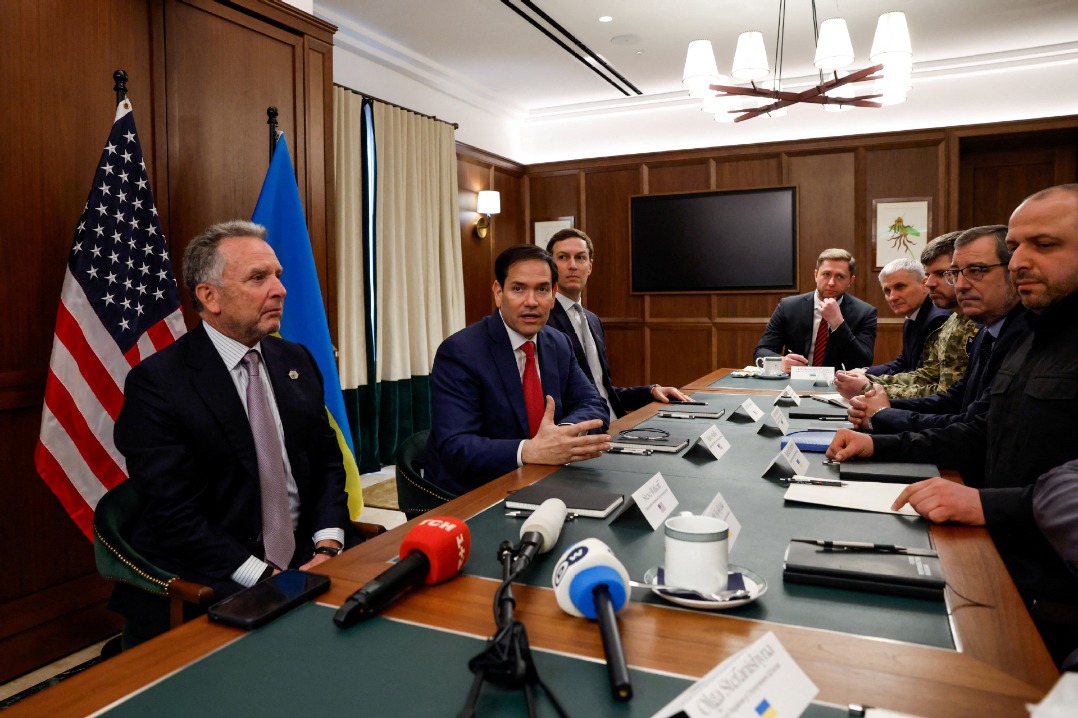
    Following an intensive four-hour diplomatic session in Hallandale Beach, Florida, United States Secretary of State Marco Rubio characterized recent negotiations with Ukrainian officials as making “additional” progress toward a revised blueprint for peace in Eastern Europe. The high-level discussions, held on November 30, 2025, brought together key figures from both nations but concluded without a finalized agreement.

    Secretary Rubio addressed journalists after the meeting, emphasizing the complex nature of the negotiations. “This is delicate, it’s complicated,” he stated. “There are a lot of moving parts, and obviously there’s another party involved here that will have to be a part of the equation” – an apparent reference to Russian interests in any comprehensive settlement.

    The American diplomatic contingent featured not only Secretary Rubio but also Special Envoy Steve Witkoff and Jared Kushner, son-in-law to former President Donald Trump. Their Ukrainian counterparts were led by Rustem Umerov, Secretary of Ukraine’s National Security and Defence Council, who described the dialogue as “difficult but productive” in a social media update.

    Umerov further noted that the parties had achieved “tangible progress toward establishing a just peace” while acknowledging significant work remains before a conclusive agreement can be reached. Both delegations have committed to ongoing consultations and coordination regarding subsequent measures.

    According to reports from The Wall Street Journal, the American diplomatic team is scheduled to travel to Moscow for follow-up discussions, indicating the multilateral dimension of these peace efforts. Neither Rubio nor Umerov fielded questions from the press following the conclusion of Sunday’s negotiations.

  • Trump confirms phone call with Venezuelan president: report

    Trump confirms phone call with Venezuelan president: report

    WASHINGTON — U.S. President Donald Trump has officially acknowledged a direct telephone conversation with Venezuelan President Nicolás Maduro, marking a significant development in bilateral relations between the two nations. The confirmation came during a press briefing aboard Air Force One on Sunday, though the American leader remained notably guarded about substantive details of the exchange.

    When pressed by journalists for commentary on the nature of the discussion, Trump responded, “I don’t want to comment on it; the answer is yes.” He characterized the call in neutral terms, stating, “I wouldn’t say it went well or badly. It was a phone call,” effectively sidestepping deeper elaboration on diplomatic particulars.

    The revelation follows Trump’s social media activity from Saturday, wherein he issued a stark warning regarding Venezuelan airspace. In his post, the President declared that the airspace above and surrounding Venezuela “should be considered to be closed in its entirety.” This statement prompted immediate speculation about potential military escalation.

    However, Trump moved to downplay interpretations of imminent offensive action. “Don’t read anything into it,” he advised, clarifying that the alert was issued “because we consider Venezuela to be not a very friendly country.” This framing suggests the move was more a symbolic gesture of diplomatic pressure rather than a precursor to airstrikes. The exchange and subsequent statements represent a complex interplay of diplomacy and public posturing amid ongoing tensions between the United States and the Venezuelan government.

  • Ukraine, US to hold peace talks

    Ukraine, US to hold peace talks

    Diplomatic efforts to resolve the ongoing conflict in Ukraine are accelerating as high-level negotiations between Ukrainian and US officials commence in Florida. The Ukrainian delegation, led by National Security Chief Rustem Umerov, traveled to the United States on Sunday to engage in substantive discussions aimed at developing a concrete framework for peace.

    The talks come amid significant political developments within Ukraine, including the resignation of President Zelensky’s chief of staff Andriy Yermak, who previously served as the country’s lead negotiator with the US. Yermak’s departure follows anti-corruption searches at his residence conducted by Ukrainian authorities, though specific details regarding the investigation remain undisclosed.

    US diplomatic representation includes Secretary of State Marco Rubio, Special Envoy Steve Witkoff, and Jared Kushner, son-in-law of former President Donald Trump. The discussions focus on refining a revised 19-point peace proposal, substantially condensed from the original 28-point plan introduced by the United States last month.

    Parallel diplomatic movements are underway, with a US delegation expected to travel to Moscow later this week for direct talks with Russian President Vladimir Putin. Kremlin spokesman Dmitry Peskov confirmed that Moscow has received the adjusted parameters of the peace plan and anticipates detailed discussions.

    Meanwhile, European coordination continues as French President Emmanuel Macron prepares to host Zelensky in Paris on Monday. The French presidency stated the leaders will deliberate on conditions for “a just and lasting peace” in alignment with Geneva discussions and the US proposal.

    Despite these diplomatic initiatives, military confrontations persist unabated. Recent Russian drone and missile attacks in the Kyiv region resulted in multiple casualties, including three fatalities on Saturday and additional casualties in overnight strikes. Ukraine has demonstrated continued capability to strike strategic targets within Russia, damaging a critical oil terminal near Novorossiysk through unmanned naval vessels—an operation officially confirmed by Ukrainian authorities.

    Russian Foreign Ministry spokeswoman Maria Zakharova characterized Ukraine’s actions as threatening global security, promising to notify international platforms about the attack. The simultaneous escalation of diplomatic efforts and military operations underscores the complex dynamics shaping the conflict’s potential resolution.

  • Sharjah: Free parking announced during Eid Al Etihad public holiday

    Sharjah: Free parking announced during Eid Al Etihad public holiday

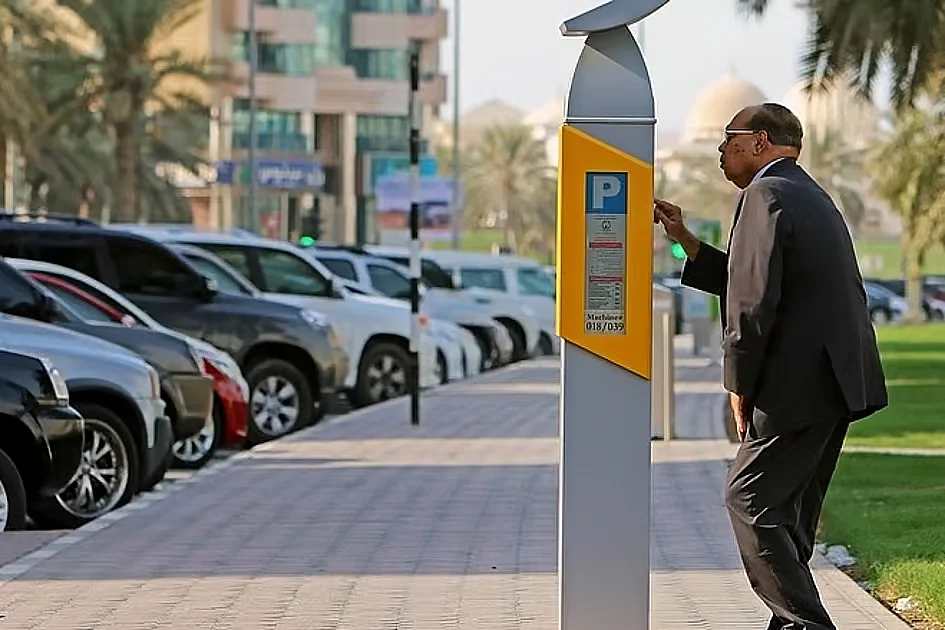
    In celebration of the Eid Al Etihad public holiday, Sharjah’s municipal authorities have declared complimentary parking across most public zones for an extended period. The exemption from parking fees will be effective on Monday, December 1st, and Tuesday, December 2nd, providing financial relief to motorists during the national festivities. This initiative aligns the emirate with similar measures recently announced by Dubai and Abu Dhabi, creating a unified gesture of celebration across the UAE. However, officials have clarified that this exemption does not extend to smart parking yards or the ‘blue’ paid-parking zones, which will maintain their standard operational fees throughout the holiday week regardless of the national occasion. The timing of this announcement coincides with a four-day weekend for most UAE residents, while Sharjah’s unique four-day work week schedule actually creates a five-day holiday period for many of its employees. Municipal authorities confirmed that regular parking enforcement will resume on Wednesday, December 3rd, following the conclusion of the holiday celebrations.