标签: North America

北美洲

  • IMF managing director will visit China next week

    IMF managing director will visit China next week

    International Monetary Fund Managing Director Kristalina Georgieva will undertake a significant diplomatic mission to China next week, marking a pivotal moment in global economic cooperation. The IMF confirmed the scheduled visit through official spokesperson Julie Kozack during a Thursday briefing in Washington.

    Georgieva’s itinerary features multiple high-level engagements across China’s financial and political capitals. The journey commences in Shanghai with the inauguration ceremony of the newly established IMF Shanghai Center on Monday, symbolizing the deepening institutional partnership between the international financial organization and the world’s second-largest economy.

    The diplomatic agenda intensifies as Georgieva proceeds to Beijing for substantive policy discussions. Central to her visit will be participation in the annual China 1+10 Dialogue on Tuesday, a premier forum addressing critical economic policies and global financial stability. The dialogue brings together key stakeholders to examine China’s evolving role within the international economic architecture.

    A highlight of the visit will be the press conference presenting findings from the IMF’s 2025 Article IV Consultation with China. This comprehensive assessment evaluates China’s economic health, fiscal policies, and financial sector stability, providing crucial insights for global markets and policymakers.

    Beyond these scheduled events, Georgieva is expected to conduct private meetings with senior Chinese government officials. These closed-door discussions will likely address pressing global economic challenges, debt sustainability issues, and China’s contribution to international financial stability amid ongoing global economic uncertainties.

    The timing of this visit underscores the IMF’s commitment to maintaining open channels with one of the world’s most influential economies, particularly as global growth faces multiple headwinds including geopolitical tensions and financial market volatility.
  • Sleepy Don? President Trump’s health under fresh scrutiny

    Sleepy Don? President Trump’s health under fresh scrutiny

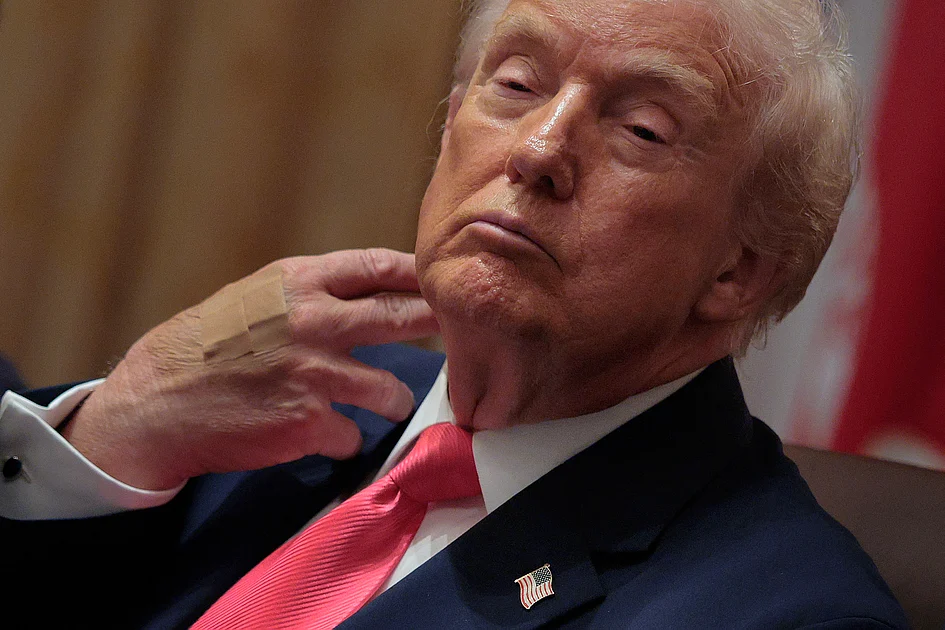
    Former President Donald Trump’s apparent drowsiness during a cabinet meeting has ignited fresh concerns about the 79-year-old leader’s physical condition and stamina. Video footage from Tuesday’s three-hour gathering showed the Republican billionaire repeatedly closing his eyes for extended periods while cabinet members delivered glowing tributes to his leadership.

    The incident has created an ironic twist for Trump, who frequently derided his predecessor Joe Biden as ‘Sleepy Joe’ during the 2024 campaign. The White House immediately pushed back against suggestions of napping, with Press Secretary Karoline Leavitt insisting Trump remained ‘listening attentively’ throughout the marathon session and highlighting his ‘amazing’ response about Somali immigrants at the meeting’s conclusion.

    Trump himself preemptively addressed health concerns at the meeting’s outset, telling reporters: ‘I’ll let you know when there’s something wrong. There’ll be some day that’s going to happen to all of us. But right now I think I’m sharper than I was 25 years ago.’ He referenced acing cognitive tests while dismissing health questions as media fabrication.

    This marks at least the second recent instance where Trump appeared to doze during official functions, following a similar incident during an Oval Office drug pricing event last month. The scrutiny intensified after a New York Times report noted Trump has significantly reduced his public events, domestic travel, and working hours compared to his first term.

    The White House has responded aggressively to health inquiries, with Leavitt presenting what she characterized as previous Times articles downplaying concerns about Biden’s health. This reflects ongoing frustration within Trump’s circle over what they perceive as unequal media treatment regarding presidential fitness.

    Despite official assurances, the episode has generated widespread discussion about presidential health transparency and the demanding nature of the office for septuagenarian leaders. Trump’s physician recently stated that a preventive MRI scan showed ‘excellent’ cardiovascular health, though questions remain about the thoroughness of these disclosures.

  • Watch: President Trump and First Lady Melania light National Christmas Tree

    Watch: President Trump and First Lady Melania light National Christmas Tree

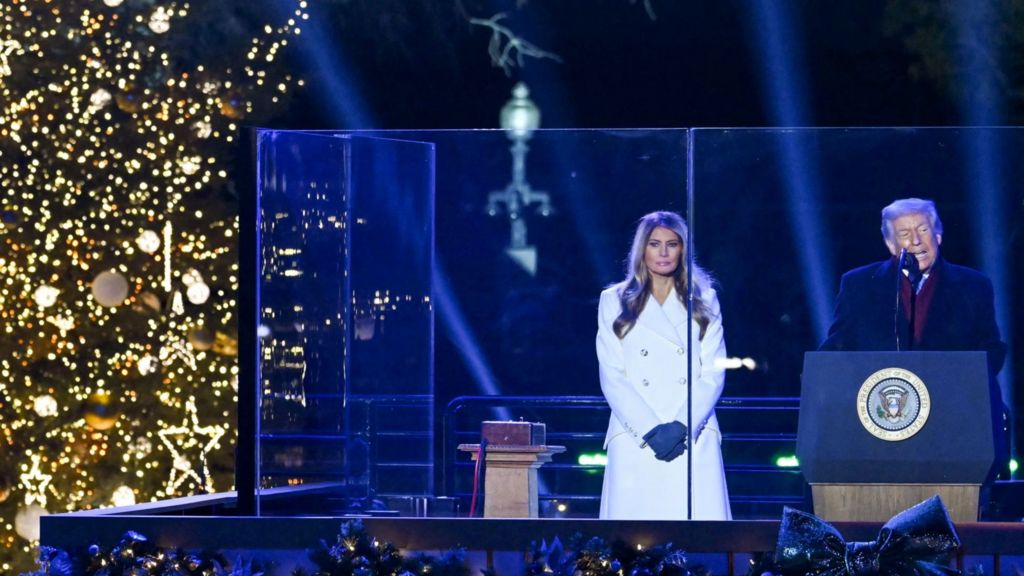
    The White House Ellipse became the focal point of holiday festivities as President Donald Trump and First Lady Melania Trump presided over the ceremonial lighting of the National Christmas Tree. The majestic 35-foot red spruce, carefully selected from Virginia’s George Washington and Jefferson National Forest, now stands adorned as the centerpiece of the nation’s capital’s seasonal celebrations.

    The tradition, deeply embedded in American cultural heritage, marks the unofficial commencement of the holiday season in Washington D.C. This year’s ceremony maintained the customary pomp and circumstance associated with presidential events, while incorporating the unique characteristics of the specially chosen tree. The selection process for the National Christmas Tree involves rigorous standards to ensure both aesthetic appeal and symbolic significance.

    Following the lighting ceremony, the tree and surrounding displays will remain accessible to public viewing throughout the holiday period. The event typically draws visitors from across the country who come to witness the illuminated tree and experience the seasonal decorations that transform the presidential grounds into a winter wonderland. The ceremony represents one of the few White House traditions that consistently transcends political divisions, serving as a unifying national moment during the holiday season.

  • Grand jury declines to charge Letitia James after first case dismissed

    Grand jury declines to charge Letitia James after first case dismissed

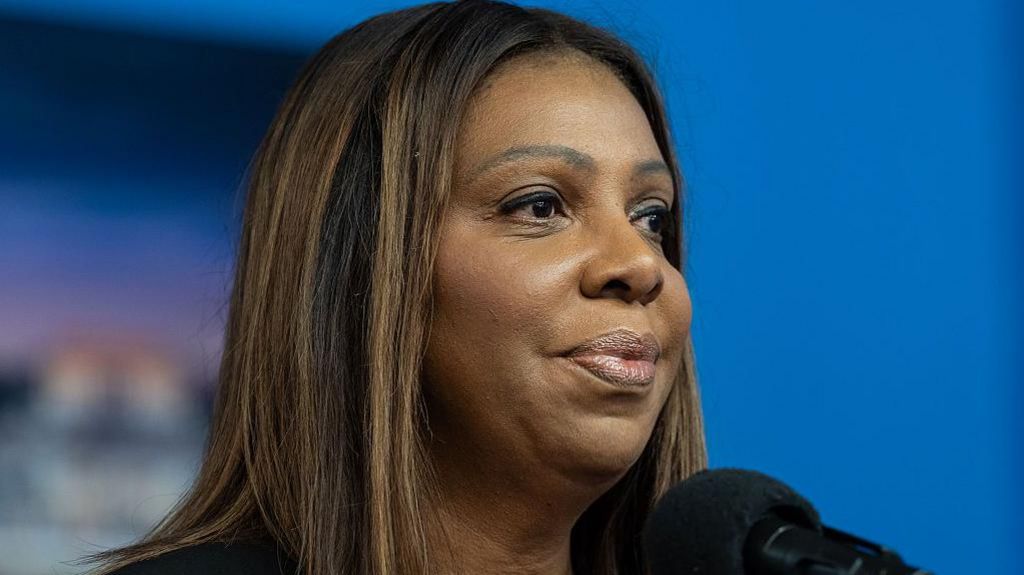
    In a significant legal development, a federal grand jury in Virginia has refused to indict New York Attorney General Letitia James, delivering another setback to former President Donald Trump’s efforts to prosecute his political opponents. This decision comes just days after a federal judge dismissed the initial case against James, finding that the prosecutor appointed by Trump lacked legal authority to bring the charges.

    The case against James alleged she committed bank fraud and made false statements to a financial institution regarding a mortgage loan for a three-bedroom property in Norfolk. Prosecutors claimed she obtained favorable loan terms by misrepresenting the property as her secondary residence rather than an investment property. Unnamed sources told US media that James had purchased the home for her great-niece in 2020, with the relative never paying rent.

    James, who successfully brought civil fraud charges against Trump before his re-election campaign, consistently maintained the case was politically motivated. Following the grand jury’s decision, she released a statement saying, ‘As I have said from the start, the charges against me are baseless. It is time for this unchecked weaponization of our justice system to stop.’

    Her attorney, Abbe David Lowell, characterized the grand jury’s refusal as ‘a decisive rejection of a case that should never have existed in the first place,’ adding that any further prosecution attempts would represent ‘a shocking assault on the rule of law.’

    The cases against both James and former FBI Director James Comey were dismissed with prejudice, meaning the government could theoretically attempt to prosecute them again on the same charges, though legal experts consider this unlikely given the circumstances.

    Grand juries, composed of members of the public, determine only whether sufficient evidence exists to proceed to trial rather than assessing guilt or innocence. According to CBS News, federal grand juries rarely decline prosecutors’ requests, with only six such rejections occurring among more than 150,000 cases investigated in 2016.

    This development represents the latest chapter in the ongoing legal battles between Trump and his political adversaries. James previously brought a civil fraud case against Trump and the Trump Organization in 2022, resulting in a finding of liability for falsifying records to secure better loan deals, though an appeals court later threw out the $500 million penalty as excessive while upholding the fraud finding.

  • Watch: Awkward tensions test US, Mexico and Canada ahead of World Cup

    Watch: Awkward tensions test US, Mexico and Canada ahead of World Cup

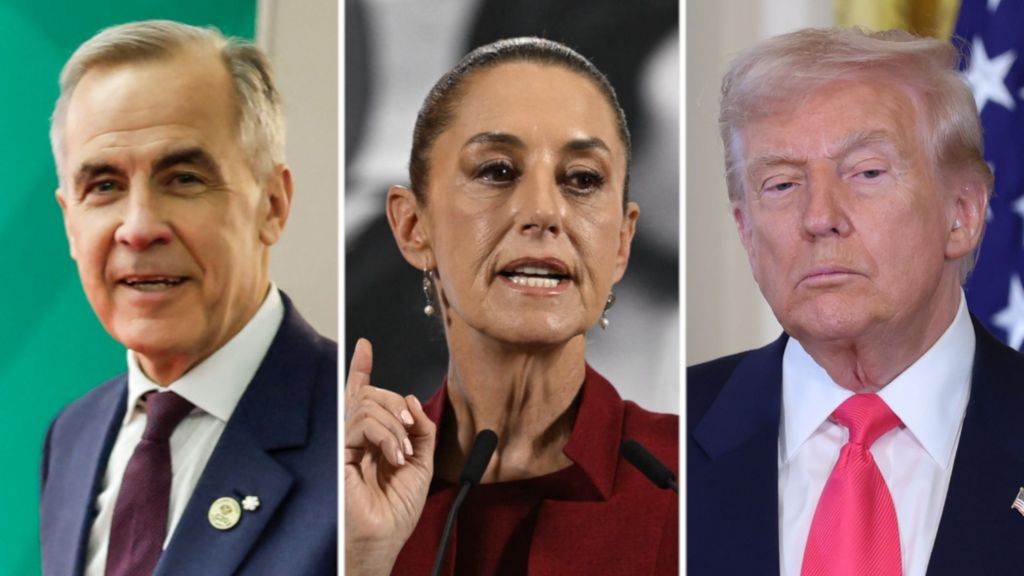
    A palpable diplomatic frost has settled over North American relations just days before a pivotal moment for the continent’s shared sporting future. U.S. President Joe Biden is scheduled to host Mexican President Andrés Manuel López Obrador and Canadian Prime Minister Justin Trudeau in Washington D.C. this Friday. The occasion is the highly anticipated final draw for the 2026 FIFA World Cup, an event meant to symbolize unity and celebration as the three nations jointly prepare to host the globe’s largest sporting event.

    However, the backdrop to this ceremonial gathering is fraught with significant geopolitical strain. Long-standing trilateral collaboration has been tested by a series of recent disagreements, primarily concerning trade, energy policies, and immigration. These tensions threaten to cast a shadow over the proceedings, transforming what should be a showcase of continental partnership into a potentially awkward display of underlying discord.

    The 2026 World Cup, the first to be co-hosted by three countries, represents an unprecedented logistical and diplomatic undertaking. The success of the tournament is heavily reliant on seamless cooperation between the governments on security, infrastructure, and organization. Observers note that the current political climate presents a substantial challenge to this necessary synergy, raising questions about the ability of the leaders to present a unified front.

    This meeting, occurring at the symbolic heart of American power, is now being scrutinized as a critical barometer for the health of the North American partnership. The world will be watching not only the draw itself but also the body language and interactions between the leaders, searching for signs of collaboration or conflict that could define the trajectory of the upcoming tournament and regional relations.

  • Trump hires new architect for White House ballroom

    Trump hires new architect for White House ballroom

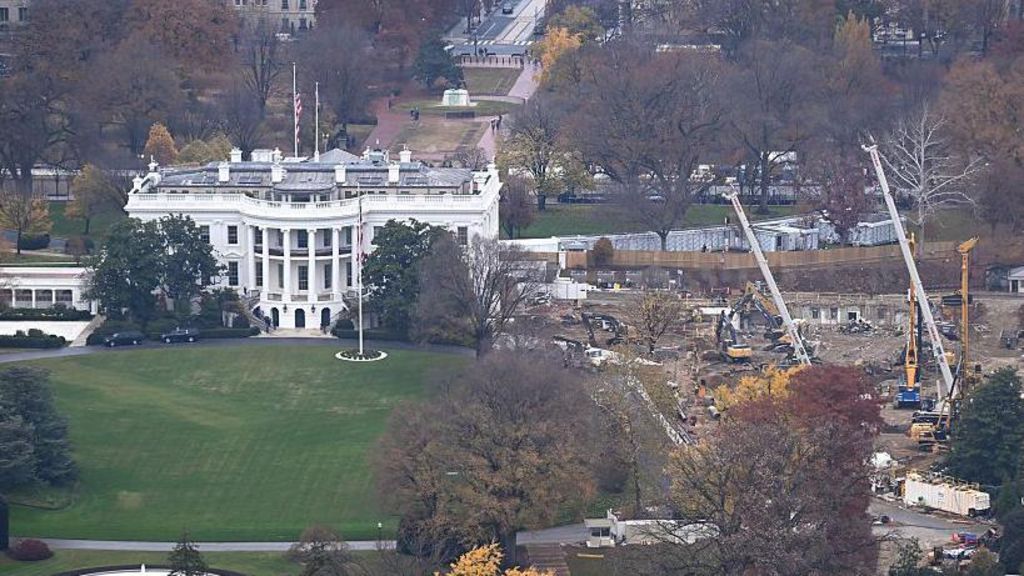
    The White House has confirmed a significant leadership change in its ambitious ballroom construction project, with President Donald Trump appointing Shalom Baranes Associates to replace original architect James McCrery. This architectural transition follows reported disagreements regarding the scale and design vision for the multi-million dollar addition to the presidential residence.

    The project, which necessitated the October demolition of the historic East Wing, has undergone substantial expansion since its initial conception. Originally planned as a 500-person capacity space, the blueprint has now evolved into a sprawling 90,000 square foot (8,360 square meter) entertainment venue capable of accommodating 1,350 guests. This dimensions notably surpass the White House’s residential quarters (55,000 sq ft) and the West Wing offices (40,000 sq ft), raising concerns about architectural proportionality.

    While McCrery will maintain an advisory role as consultant, sources indicate his departure from lead architect position stemmed from concerns about the project’s overwhelming scale potentially diminishing the historical integrity of the presidential mansion. The Washington Post reported McCrery’s apprehension that alternative architectural leadership might produce inferior design quality.

    White House spokesman Davis Ingle praised the appointment, stating: “Shalom is an accomplished architect whose work has shaped the architectural identity of our nation’s capital for decades. His experience will be a great asset to the completion of this project.” Ingle further characterized the ballroom as “the greatest addition to the White House since the Oval Office.”

    The project faces regulatory hurdles requiring approval from the National Capital Planning Commission (NCPC) before construction commences. Concurrently, political opposition has emerged with Senator Richard Blumenthal introducing the “No Palaces Act” legislation. This bill would mandate NCPC approval before any future presidential administration could demolish historic federal structures, directly responding to the East Wing’s removal.

    President Trump has asserted that the project is entirely funded through private donations and personal contributions, though conservation groups and political critics continue questioning both its oversight mechanisms and architectural appropriateness within the historic compound.

  • US Supreme Court allows Texas to use redrawn voting maps in midterms

    US Supreme Court allows Texas to use redrawn voting maps in midterms

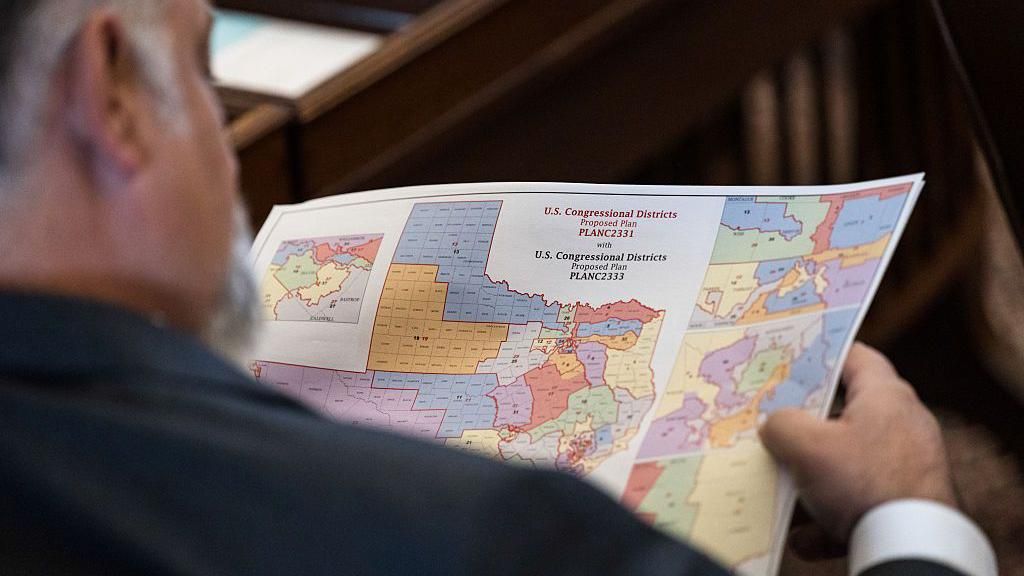
    The U.S. Supreme Court has authorized Texas to implement a controversial congressional redistricting map that could significantly bolster Republican representation in the 2026 midterm elections. The unsigned ruling, issued Thursday, grants the state’s emergency request to suspend a lower court decision that had blocked the map over allegations of racial gerrymandering.

    In what appears to be a 6-3 decision along ideological lines, the Court’s conservative majority concluded that Texas met the requirements for emergency judicial relief. The majority opinion stated that the lower court had “committed at least two serious errors” in its preliminary assessment of the case. The three liberal justices filed dissenting opinions opposing the decision.

    The legal battle stems from redistricting legislation passed by Texas’s Republican-controlled legislature and signed by Governor Greg Abbott in August. In November, a federal district court found substantial evidence that the new voting districts constituted unconstitutional racial gerrymandering and ordered the state to revert to previous congressional boundaries.

    The redistricting conflict escalated dramatically when Democratic state lawmakers staged a walkout during the summer to prevent voting on the proposed map. This political maneuver sparked similar redistricting efforts in other states, including California, where voters approved new congressional maps in a November special election specifically designed to counterbalance Texas’s potential gains.

    The Supreme Court’s intervention represents a significant development in the ongoing national battle over electoral maps, with potentially far-reaching consequences for partisan control of Congress.

  • UAE e-Invoicing should move from back office to boardroom

    UAE e-Invoicing should move from back office to boardroom

    The United Arab Emirates is fundamentally reshaping corporate financial operations through its forthcoming national e-invoicing framework, compelling businesses to elevate this initiative from back-office technical teams to boardroom priority. Unlike conventional system upgrades, this transformative mandate introduces real-time validation that directly impacts revenue recognition and cash flow.

    Under the new model, every invoice and credit note must be generated in structured digital format—replacing traditional PDFs—and processed through Ministry of Finance-accredited service providers. These providers validate content, apply VAT regulations, and report data to the Federal Tax Authority simultaneously. Crucially, invoices failing validation may be deemed non-compliant for VAT purposes, potentially rendering delivered goods or services effectively unrecognized in the tax system.

    The framework introduces significant localization requirements, mandating that invoice data reside on UAE-based infrastructure and transit through nationally approved channels aligned with Peppol standards. This data residency requirement, coupled with stringent cybersecurity protocols, effectively prohibits offshore invoicing hubs that multinational corporations previously relied upon.

    Implementation timelines are already established: a pilot program commences July 2026 for selected taxpayers, with voluntary participation available for technically prepared businesses. Mandatory compliance begins January 2027 for enterprises exceeding AED 50 million in UAE revenue, followed by smaller businesses in July 2027 and government entities by October 2027.

    This regional shift extends beyond UAE borders, with Saudi Arabia’s FATOORAH program already implementing real-time reporting, Egypt expanding e-invoicing across consumer transactions, and Oman developing Peppol-aligned systems. The Gulf region is collectively moving toward continuous transaction monitoring rather than periodic declarations, making UAE compliance strategies potentially applicable across Middle Eastern operations.

    Corporate leadership must immediately address three critical areas: integrating e-invoicing into board governance structures, mapping entire invoice lifecycle vulnerabilities, and rigorously vetting accredited providers for data localization capabilities and rejection resolution efficiency. Businesses should conduct comprehensive drills before the 2026 voluntary period to avoid revenue disruption during actual implementation.

  • Global commerce trends drive VTEX’s strategic expansion into Dubai

    Global commerce trends drive VTEX’s strategic expansion into Dubai

    The digital commerce sector is experiencing radical evolution, characterized by the integration of unified platforms, omnichannel approaches, and artificial intelligence-driven automation. Modern enterprise solutions now extend beyond simple online storefronts to encompass entire ecosystems that merge marketplaces, logistics, and financial operations.

    VTEX, a Nasdaq-listed software-as-a-service provider at the forefront of this transformation, supports 2,400 global brands and 3,400 digital storefronts across 43 nations. The company has received consecutive Gartner Customers’ Choice accolades and was recently positioned as a Challenger in the 2025 Magic Quadrant for Digital Commerce.

    The Middle East and North Africa region demonstrates particularly vigorous growth in adopting sophisticated commerce technologies. Success stories include Motorola, which achieved 300% regional growth following VTEX implementation, and Etihad Arena, which utilizes the platform for real-time mobile ordering during major events. These cases underscore the critical importance of localization features—including Arabic language interfaces, regional currency compatibility, and built-in tax compliance—for market success.

    A significant technological advancement comes through agentic AI integration within VTEX’s operations. The company’s AI agents autonomously resolve 92% of customer service inquiries, facilitate real-time storefront modifications through natural language commands or Figma files, and deliver immediate actionable insights without conventional dashboard interfaces.

    Santiago Naranjo, VTEX’s President for EMEA, articulated the vision: “Agentic commerce envisions an autonomous engine that contextually comprehends data and acts on the client’s behalf. Realizing this would represent an industry breakthrough.”

    In response to regional demand, VTEX has inaugurated a new operational center in Dubai Commerce City, marking a strategic expansion milestone. This development aligns with the UAE’s Digital Economy Strategy, which targets doubling the sector’s GDP contribution by 2030. Naranjo commended the UAE’s policy consistency, noting: “This planning caliber is unmatched elsewhere. The nation’s unified vision provides the confidence to intensify our investments. We aspire to participate in this transformation both commercially and personally.”

    Prakash Gurumoorthy, VTEX’s General Manager for EMEA, outlined the structured market approach: “Our framework progresses through discovery, validation, acceleration, and scaling phases. We’re currently validating with operational clients like Etihad Arena, which justifies establishing Dubai as our regional hub.”

    The new facility will host specialized teams for customer support, solution engineering, marketing, partnerships, and sales, serving both regional clients and European brands expanding into Gulf Cooperation Council markets. Gurumoorthy projected continued growth: “2025 delivered strong Middle Eastern performance with numerous new clients. We anticipate even greater 2026 outcomes as we expand operations and reinforce regional commitment.”

  • Six Asian nations on Trump administration’s immigration hold list

    Six Asian nations on Trump administration’s immigration hold list

    In a significant policy shift, the Trump administration has implemented an immediate suspension of all immigration application processing from 19 designated countries previously subject to travel restrictions. This decisive action, enacted late Tuesday, effectively halts green card and citizenship applications from affected nations including Afghanistan, Iran, Myanmar, Yemen, Laos, and Turkmenistan.

    The policy change follows a security incident in Washington D.C. where two West Virginia National Guard members were shot by Rahmanullah Lakanwal, an Afghan national granted asylum in the United States. The attack resulted in the death of 20-year-old US Army Specialist Sarah Beckstrom and left 24-year-old US Air Force Staff Sergeant Andrew Wolfe critically wounded. Lakanwal has pleaded not guilty to multiple charges.

    According to official memos, US Citizenship and Immigration Services (USCIS) will place all benefits requests from immigrants from these ‘high-risk’ countries on hold indefinitely. The agency will additionally re-review applications approved for immigrants who entered the United States after January 21, 2021, during the Biden administration. The suspension remains in effect until further notice from USCIS Director Joseph Edlow.

    The affected countries beyond Asia include Burundi, Chad, Cuba, Republic of the Congo, Equatorial Guinea, Eritrea, Haiti, Libya, Sierra Leone, Somalia, Sudan, Togo, and Venezuela. This action expands upon travel restrictions previously imposed by the president in June.

    The memorandum explicitly states that USCIS will delay action on all asylum applications and withholding of removal requests regardless of country of origin, pending a comprehensive review process. The administration justifies these measures as necessary to enhance vetting procedures and address national security concerns, acknowledging that processing delays may occur but deeming them ‘necessary and appropriate’ given security obligations.

    This policy reflects the administration’s ongoing criticism of immigrant vetting processes under previous leadership, particularly regarding programs created for Afghan allies following the 202 withdrawal and humanitarian parole initiatives for certain Latin American nationals.