标签: North America

北美洲

  • Trump says he will pardon jailed elections clerk, but state officials say he cannot

    Trump says he will pardon jailed elections clerk, but state officials say he cannot

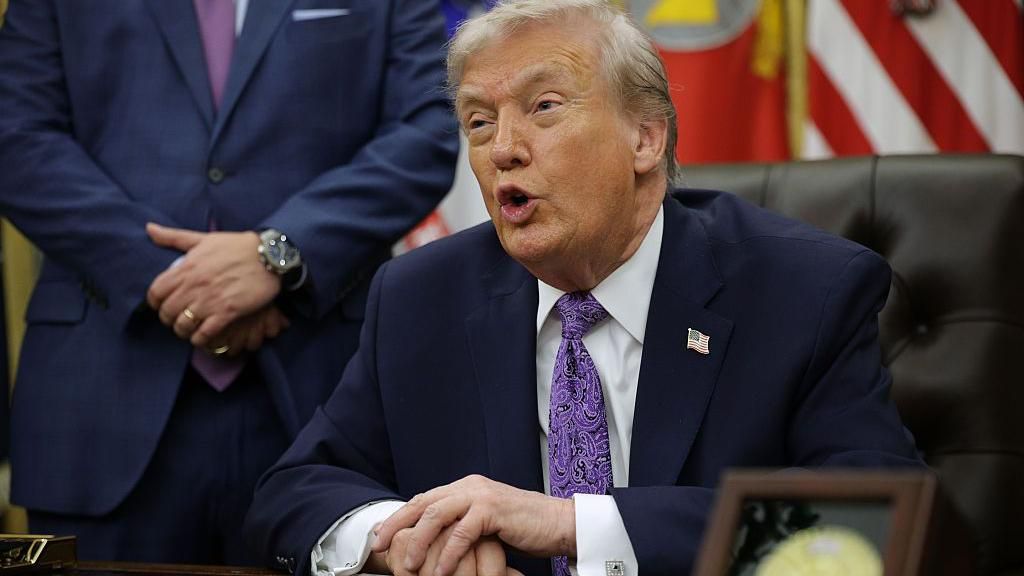
    In a controversial move testing constitutional boundaries, President Donald Trump has extended a presidential pardon to Tina Peters, the former Mesa County, Colorado elections clerk currently serving a nine-year prison sentence. Peters was convicted in 2024 on seven state-level charges, including three counts of attempting to influence a public servant and one count of conspiracy to commit criminal impersonation related to unauthorized access to voting systems during the 2020 presidential election.

    The pardon declaration, announced via Trump’s Truth Social platform, immediately triggered strong constitutional challenges from Colorado officials. State Attorney General Phil Weiser asserted that the presidential pardon power, widely understood to apply exclusively to federal crimes, holds no legal precedent for state-level convictions and ‘will not hold up’ under judicial scrutiny.

    Trump defended his action by characterizing Peters as ‘a Patriot who simply wanted to make sure that our Elections were Fair and Honest’—echoing his longstanding but unsubstantiated claims of widespread voter fraud in the 2020 election. The case has become a rallying point within election conspiracy circles, with numerous campaigns advocating for Peters’ release.

    Colorado Secretary of State Jena Griswold condemned the move as ‘an assault not just on our democracy, but on states’ rights and the American constitution.’ Legal experts note this represents another expansion of Trump’s pardon authority since he returned to office in January 2025, following previous controversial pardons for associates including former chief of staff Mark Meadows and former personal attorney Rudy Giuliani.

    The constitutional confrontation highlights tensions between state sovereignty and federal executive power, with Colorado officials emphasizing that states maintain independent authority over their criminal justice systems without federal interference—a principle they argue is fundamental to America’s constitutional framework.
  • Group of Friends calls for stronger, more inclusive UN

    Group of Friends calls for stronger, more inclusive UN

    In a significant diplomatic development, the newly formed Group of Friends of Global Governance has issued its inaugural collective statement calling for comprehensive reforms to strengthen the United Nations. The declaration came during a UN General Assembly briefing on Thursday regarding the UN80 Initiative, a sweeping reform program launched by Secretary-General António Guterres.

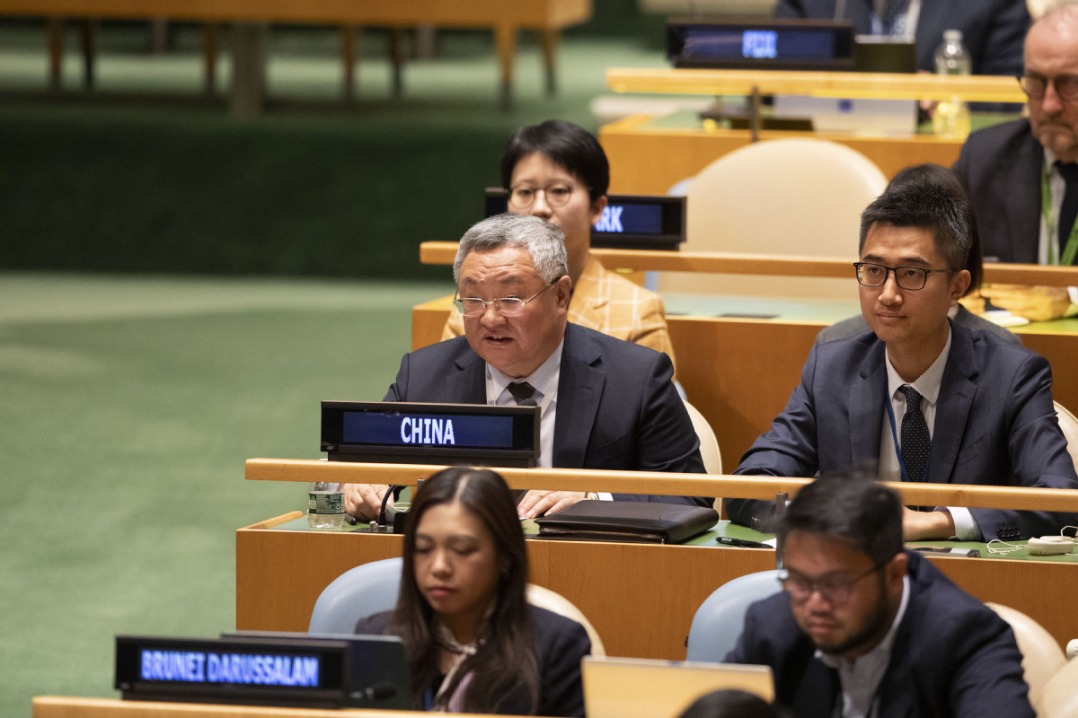
    Ambassador Fu Cong, China’s Permanent Representative to the UN, delivered the joint statement on behalf of 43 member nations, emphasizing the urgent need for a more effective, agile, and inclusive international organization. The statement highlighted that the UN80 reforms must reflect the collective expectations of the majority of member states, particularly focusing on reinforcing multilateralism, safeguarding international rule of law, and enhancing global governance mechanisms.

    The coalition, which formally established itself on Tuesday with founding members including China, Cuba, Iran, Palestine, Kenya, Kazakhstan, Morocco, and Venezuela, argued that after eight decades of service, the UN must prioritize both operational effectiveness and efficiency. The group specifically emphasized the need for the world body to develop greater responsiveness and resilience in addressing contemporary global challenges.

    A central theme of the statement addressed the concerns of developing nations, which constitute two-thirds of the UN membership. The alliance called for substantive reforms within the development pillar, expanded capacity-building support for the 2030 Agenda, and rectification of the under-representation of developing countries in the UN secretariat. The group stressed that equitable geographical representation remains fundamental to both the UN80 Initiative and the broader Pact for the Future.

    The Group of Friends further insisted that negotiation processes must maintain transparency and inclusivity, ensuring equal participation opportunities for all member states across every workstream. The coalition expressed its commitment to collaborate with all stakeholders in steering the UN80 Initiative toward establishing a more just global governance system that serves the common interests of the international community.

  • Lululemon boss to step down early next year

    Lululemon boss to step down early next year

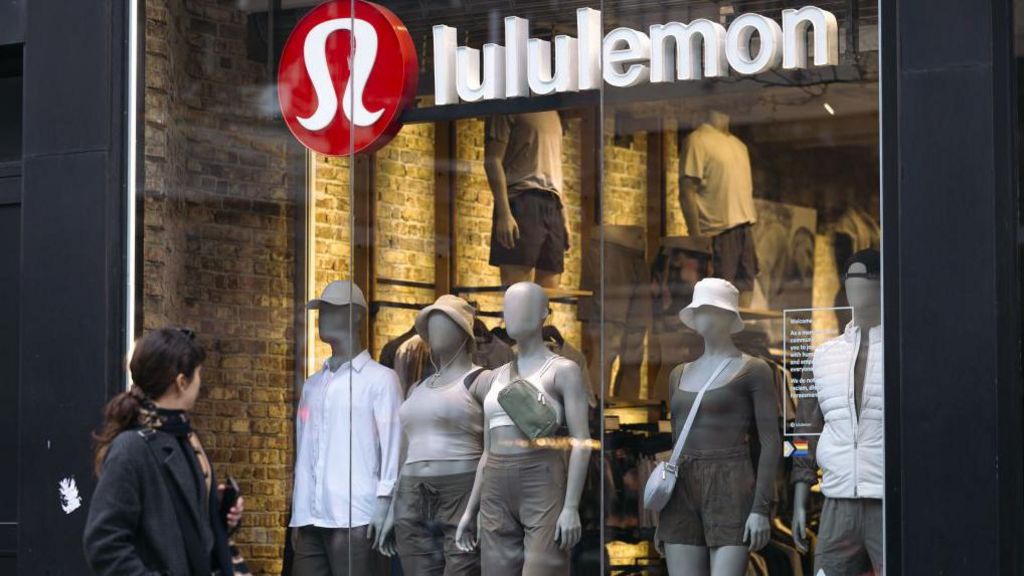
    Lululemon Athletica, the premium athletic apparel retailer renowned for its high-end yoga wear, announced the departure of Chief Executive Officer Calvin McDonald effective January 2025. McDonald’s exit concludes his seven-year leadership tenure during which the brand experienced both remarkable growth and recent market challenges.

    The executive transition follows a period of significant volatility in Lululemon’s primary North American market, where sales performance has deteriorated substantially. The company’s stock valuation has plummeted approximately 50% over the past twelve months, reflecting investor concerns about increased competition and changing consumer preferences.

    Despite these headwinds, Lululemon recently revised its annual revenue projections upward based on stronger-than-anticipated performance in recent months. This improvement has been largely driven by exceptional results in international markets, particularly China, where consumer demand remains robust.

    McDonald characterized his departure as mutually agreed upon with the board of directors, coinciding with the completion of the company’s five-year strategic plan. In a statement published on LinkedIn, he emphasized the strength of Lululemon’s leadership team and the appropriateness of this timing for organizational change.

    The company faces significant operational challenges, including newly imposed import tariffs that are projected to cost approximately $240 million annually. These tariffs particularly impact Lululemon’s supply chain, which relies heavily on manufacturing facilities in China, Vietnam, and other Asian countries.

    Consumer behavior shifts present additional challenges, with shoppers increasingly seeking value alternatives amid economic pressures. This trend has benefited lower-priced competitors including Vuori and Alo Yoga, intensifying market competition.

    Industry analysts note that Lululemon must reestablish its product differentiation and brand prestige. The company faced product quality issues in recent years, including the withdrawal of its Breezethrough leggings line following customer complaints about comfort and design flaws.

    During McDonald’s tenure, Lululemon achieved substantial revenue growth and global brand expansion. Board Chair Marti Morfitt acknowledged his contributions in building “one of the strongest brands in retail” through innovative products and customer experiences.

    The company has appointed Finance Chief Meghan Frank and Commercial Officer André Maestrini as interim co-CEOs while conducting a comprehensive search for permanent leadership.

  • US seizes sanctioned oil tanker off Venezuela coast

    US seizes sanctioned oil tanker off Venezuela coast

    In a dramatic escalation of maritime enforcement operations, United States military forces have intercepted and seized a massive sanctioned oil tanker off the Venezuelan coastline. The operation, confirmed by President Donald Trump on Wednesday, represents the first known seizure of a Venezuelan oil cargo under sanctions that have been in place since 2019.

    President Trump announced the seizure with characteristic bravado, stating: ‘We’ve just seized a tanker on the coast of Venezuela, large tanker, very large, largest one ever, actually.’ When questioned about the disposition of the confiscated crude, the president responded with a blunt: ‘We keep it, I guess.’

    The Venezuelan government immediately condemned the action as ‘blatant theft’ and ‘an act of international piracy’ in an official statement. President Nicolás Maduro addressed supporters in Caracas, demanding: ‘an end to the illegal and brutal interventionism of the United States government in Venezuela and in Latin America.’ Maduro characterized the seizure as part of broader destabilization efforts aimed at regime change and control of Venezuela’s substantial oil reserves, the largest in the world.

    The operational details emerged through social media posts by US Attorney General Pam Bondi, who revealed that the FBI, Homeland Security, and Coast Guard executed a seizure warrant with military support. Accompanying video footage depicted helicopters approaching the vessel and armed personnel in camouflage rappelling onto the deck.

    While US officials withheld specific identification of the vessel, maritime risk analysts from British firm Vanguard identified the ship as the very large crude carrier Skipper, previously known as Adisa. The tanker had been under US sanctions for alleged involvement in Iranian oil trading.

    The geopolitical repercussions were immediate. Iran’s embassy in Caracas denounced the seizure as a ‘grave violation of international laws and norms.’ Uruguay’s Foreign Minister Mario Lubetkin expressed serious concerns about escalating tensions in the Caribbean region amid ongoing US military deployments.

    Financial markets responded to the news with increased volatility. Brent crude futures climbed 0.4% to settle at $62.21 per barrel, while US West Texas Intermediate crude gained similarly to close at $58.46.

    The incident occurs within the context of increased US naval operations in the region, with the administration conducting over 20 strikes against suspected drug vessels since early September, resulting in more than 80 fatalities. A recent Reuters/Ipsos poll indicates significant domestic opposition to these military actions, including among approximately one-fifth of Republican voters.

  • Chinese exports to US decline as tariff pressures take a toll

    Chinese exports to US decline as tariff pressures take a toll

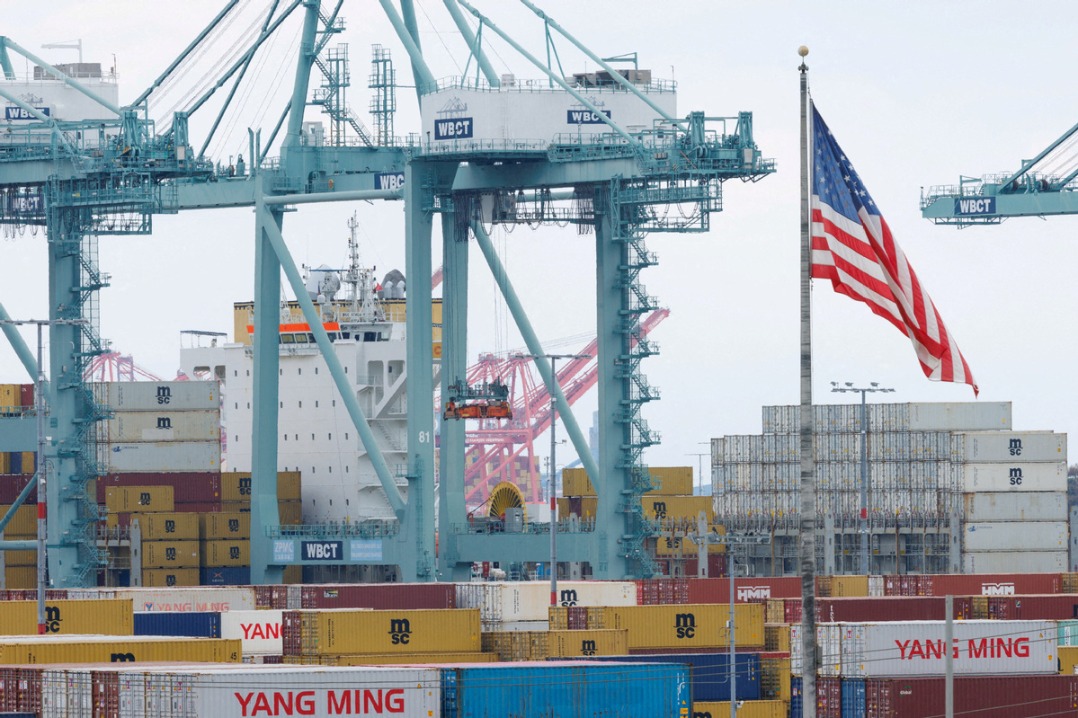
    The ongoing trade friction between the United States and China has manifested in stark export figures for November 2025, with Chinese shipments to American markets declining by approximately 29% year-on-year. This substantial contraction follows a year of volatile trade policy interventions that have reshaped bilateral commerce between the world’s two largest economies.

    Customs data reveals a parallel decline in American exports to China, which fell by 19% during the same period. The current tariff structure maintains substantial barriers, with average levies of 47.5% on Chinese goods entering the United States and 32% on American products reaching Chinese markets, according to analyses from the Peterson Institute for International Economics.

    Despite these bilateral challenges, China’s global export performance demonstrated resilience with a 5.9% increase to $330 billion in November, rebounding from an unexpected contraction the previous month. This growth underscores China’s strategic pivot toward diversifying its export destinations and reducing dependency on any single market.

    Financial analysts observe that China is actively rebalancing its economic model. Peter Boockvar, Chief Investment Officer at OnePoint BFG Wealth Partners, noted: “China continues to rely less on selling goods to the US. With substantial domestic savings, China is incentivizing consumer spending to decrease reliance on manufacturing and exports.”

    The agricultural sector has emerged as a particularly sensitive indicator of trade tensions. American soybean farmers experienced significant market disruption throughout the year, though recent data indicates gradual resumption of Chinese purchasing. In response to these challenges, the U.S. administration announced a $12 billion support package for affected farmers, drawing funds from tariff revenues and agricultural assistance programs.

    Cory Walters, Agricultural Economics professor at the University of Nebraska, emphasized that while temporary aid provides relief, “market access is paramount” for long-term agricultural sustainability. Chinese market share in global exports is projected to expand from 15% to 16.5%, driven by advanced manufacturing sectors including robotics, battery technology, and electric vehicles.

    The October truce agreement between both nations has yet to fully manifest in trade data, with economists anticipating that tariff reductions will gradually reflect in coming months’ export figures.

  • Taylor Swift shown breaking down in tears after she met Southport attack families

    Taylor Swift shown breaking down in tears after she met Southport attack families

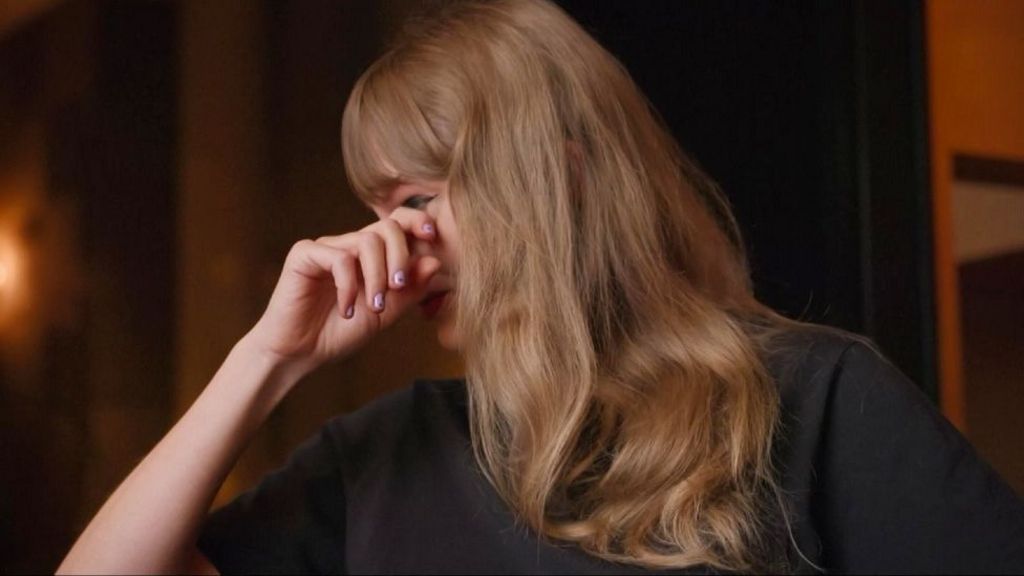
    Newly released documentary footage exposes the profound emotional burden carried by Taylor Swift during her record-breaking Eras Tour, particularly following two devastating security incidents. The six-part Disney+ series “The End of an Era” reveals heartbreaking backstage moments where Swift broke down after privately meeting survivors and families of the Southport stabbing attack that claimed three young girls’ lives at a Swift-themed dance workshop in July 2024.

    The documentary captures raw footage of Swift sobbing in her dressing room as her mother Andrea comforted her, with the pop star having to immediately compose herself for a three-and-a-half hour performance at London’s Wembley Stadium. Adding to the psychological pressure, the Wembley show marked Swift’s return after canceling three Vienna concerts due to a CIA-identified terrorist plot that nearly resulted in a “massacre situation” at her performance.

    Swift reveals in the documentary that after two decades of performing, “being afraid that something is going to happen to your fans is new.” She describes creating “some form of escape” for audiences while privately grappling with overwhelming emotions. The series examines the exhausting process behind the monumental tour—149 shows across five continents that grossed over $2 billion and sold more than 10 million tickets.

    Beyond the trauma, the documentary highlights the tour’s transformative impact on everyone involved. It showcases the intense camaraderie among crew members, the emergence of breakout stars like dancer Kameron Saunders, and the palpable joy that made audiences compare the atmosphere to “Woodstock without the drugs.” Swift explains her philosophy of making immense effort appear “accidental” while acknowledging the unexplained “magic and destiny” behind the tour’s unprecedented success.

    The series presents Swift as both a meticulous professional obsessed with perfecting large-scale entertainment and an emotional conduit for fans who see themselves in her navigation of love, heartbreak, and finding one’s place in the world. It ultimately frames the Eras Tour as a safe space for exploring femininity and emotional expression without shame, creating a lifetime’s worth of experiences within its two-year duration.

  • Trump signs order to block states from enforcing own AI rules

    Trump signs order to block states from enforcing own AI rules

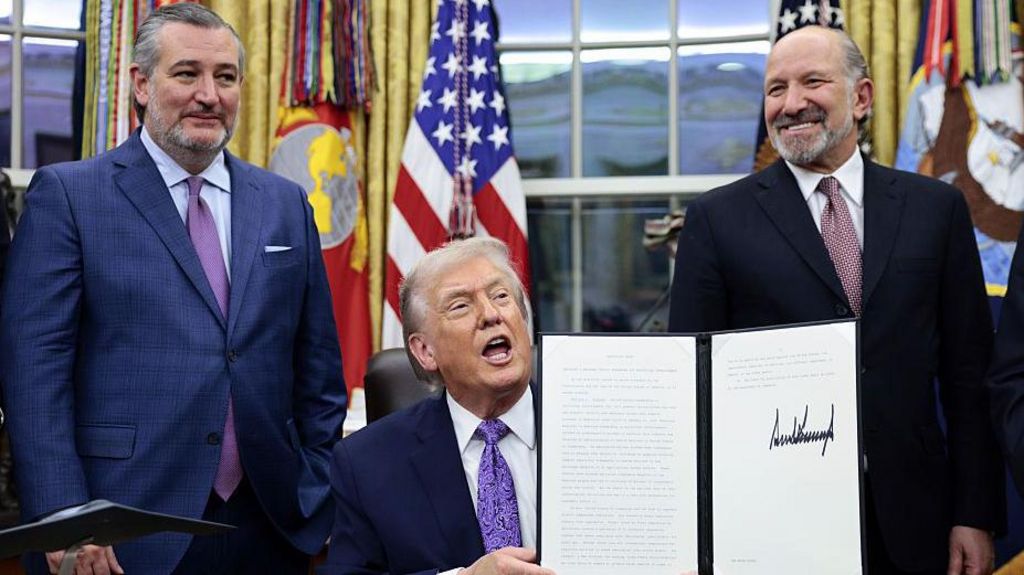
    In a significant move to centralize artificial intelligence governance, President Donald Trump has issued an executive order prohibiting individual states from implementing their own AI regulatory frameworks. The Oval Office signing ceremony on Thursday featured key administration officials who characterized the order as essential for maintaining America’s competitive edge in the global AI race.

    President Trump emphasized the need for unified national standards, stating, “We want to have one central source of approval” to prevent a patchwork of conflicting state regulations. White House AI adviser David Sacks clarified that the administration would target only the most “onerous” state rules while permitting regulations concerning children’s safety.

    The decision represents a major victory for technology behemoths including OpenAI, Google, Meta, and Anthropic, which have consistently advocated for federal preemption of state AI laws. Industry leaders contend that fragmented regulatory approaches could stifle innovation and impede the United States’ ability to compete with China’s substantial investments in artificial intelligence.

    However, the executive order has ignited immediate opposition from several states with established AI regulatory frameworks. California Governor Gavin Newsom, a frequent Trump critic, issued a scathing statement accusing the president of “ongoing grift in the White House” and attempting to “enrich himself and his associates” at the expense of public safety. California recently enacted comprehensive AI legislation requiring major developers to submit risk mitigation plans for their models.

    Beyond California, states including Colorado and New York have developed their own AI regulatory measures. Advocacy groups have joined the opposition, with Julie Scelfo of Mothers Against Media Addiction arguing that the order “undermines states’ basic rights to establish sufficient guardrails to protect their residents.” Critics maintain that state-level regulations are necessary absent meaningful federal standards for AI development and deployment.

  • Make your own AI Mickey Mouse: Disney embraces new tech

    Make your own AI Mickey Mouse: Disney embraces new tech

    In a landmark industry shift, Walt Disney Company and OpenAI have unveiled a groundbreaking three-year licensing agreement that will empower users to generate artificial intelligence content featuring Disney’s iconic characters. The partnership, announced December 11, 2025, represents the most significant embrace of generative AI technology by a major entertainment corporation to date.

    The comprehensive deal licenses over 200 characters from Disney’s extensive portfolio, including Mickey Mouse, Marvel superheroes, Pixar animations, and Star Wars personalities. Through OpenAI’s Sora video generation platform and ChatGPT, fans will gain authorized access to create and share AI-generated short-form content featuring these beloved figures.

    Disney’s strategic move includes a substantial $1 billion equity investment in OpenAI, complemented by warrants for additional shares. The announcement triggered an immediate 2% surge in Disney’s stock value, reflecting market optimism about the partnership’s potential.

    Disney CEO Robert Iger characterized the collaboration as responding to “an important moment for our industry,” emphasizing the commitment to “thoughtfully and responsibly extend the reach of our storytelling.” OpenAI CEO Sam Altman praised Disney as “the global gold standard for storytelling,” highlighting the agreement as a model for responsible cooperation between AI developers and creative enterprises.

    The partnership establishes strict creative boundaries: generated content will be limited to 30-second videos, explicitly excluding actor likenesses and voices amid ongoing industry concerns about AI’s impact on creative professions. Iger reassured that the technology “honors and respects” creators through associated licensing fees rather than threatening their livelihoods.

    Beyond consumer content creation, Disney plans to integrate OpenAI’s technology into its Disney+ streaming platform and internal operations, making ChatGPT available to corporate staff. Both companies have committed to implementing age-appropriate controls and preventive measures against illegal or harmful content generation.

    The agreement emerges against a complex backdrop of industry tension. Disney simultaneously maintains legal action against Google, alleging unauthorized use of intellectual property to train AI models, demonstrating the company’s dual strategy of partnership and protection regarding emerging technologies.

  • US sanctions six more ships after seizing oil tanker off Venezuela

    US sanctions six more ships after seizing oil tanker off Venezuela

    The United States has dramatically escalated its campaign against the Venezuelan government of Nicolás Maduro through a high-seas military operation and sweeping new economic measures. Newly released footage depicts US special forces rappelling from helicopters onto the oil tanker ‘Skipper’ in international waters, seizing the vessel in what Venezuelan officials decry as ‘international piracy.’

    The White House justified the operation as targeting ‘illicit oil shipping’ that allegedly benefits what it characterizes as Maduro’s ‘illegitimate regime.’ Press Secretary Karoline Leavitt stated the intercepted tanker would be escorted to an American port following legal proceedings, with its crude cargo confiscated. Simultaneously, the Treasury Department imposed sanctions on six additional vessels transporting Venezuelan petroleum, expanding the existing embargo network.

    Washington’s offensive extends beyond maritime interdiction to financial pressure targeting Maduro’s inner circle. Treasury Secretary Scott Bessent announced sanctions against three nephews of Maduro’s wife alongside multiple associated businesses, aiming to disrupt the leadership’s ‘dictatorial and brutal control.’ The administration explicitly connected oil revenue to narco-terrorism financing, vowing not to permit ‘rogue regimes’ to profit from black market petroleum sales.

    Venezuela responded with fierce diplomatic condemnation, with Interior Minister Diosdado Cabello labeling US forces ‘murderers, thieves, pirates.’ President Maduro pledged his nation would never become an ‘oil colony’ while accepting support from international allies including Russian President Vladimir Putin, who offered backing against ‘growing external pressure.’

    The operation signals a dangerous escalation in regional tensions, evidenced by the prepositioning of the USS Gerald Ford aircraft carrier strike group and thousands of troops within striking distance of Venezuela’s coast. This confrontation unfolds against the backdrop of longstanding US allegations that Caracas facilitates narcotics trafficking into American territories—charges Venezuela denies while accusing Washington of resource appropriation.

  • Obamacare costs look set to spike for millions of Americans as Senate votes fail

    Obamacare costs look set to spike for millions of Americans as Senate votes fail

    A critical legislative impasse in the U.S. Senate has placed healthcare subsidies for millions of Americans in jeopardy, setting the stage for a major political battle in the upcoming midterm elections. Competing proposals from both Democratic and Republican parties failed to secure the necessary 60 votes to advance, ensuring that enhanced Affordable Care Act (ACA) tax credits will expire as scheduled on January 1.

    The Democratic initiative sought to extend pandemic-era subsidies for three additional years, while the Republican alternative proposed creating health savings accounts for Americans earning below 700% of the federal poverty level. Both measures failed by identical 51-48 margins, despite unexpected bipartisan support from four Republican senators—Susan Collins, Josh Hawley, Dan Sullivan, and Lisa Murkowski—who crossed party lines to endorse the Democratic bill.

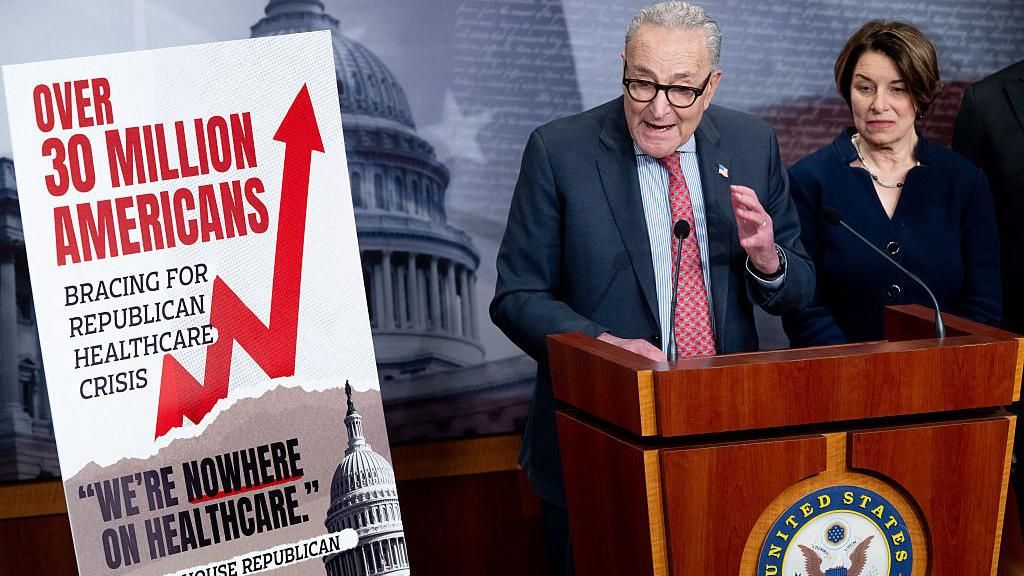
    Senate Minority Leader Chuck Schumer (D-N.Y.) issued a stark warning before the vote, declaring this the final opportunity to prevent what he characterized as an impending ‘disaster’ for American families. ‘The American people are watching,’ Schumer emphasized, highlighting the political stakes.

    The expiration threatens to more than double insurance premiums for over 24 million Americans who rely on ACA coverage, commonly known as Obamacare. This development comes amid growing voter concerns about living costs, with recent polls indicating overwhelming public support for subsidy extension regardless of political affiliation.

    The debate has exposed significant divisions within Republican ranks, with some legislators warning that mishandling the healthcare issue could jeopardize their congressional majorities in next November’s elections. Florida Congressman John Rutherford articulated this concern starkly: ‘If we fumble this healthcare bill, nothing else is going to matter.’

    Republican leadership, including Senate Majority Leader John Thune (R-S.D.), maintains that the subsidies distort insurance markets and merely mask what they characterize as Obamacare’s fundamentally unsustainable costs. The White House echoed this position, with Press Secretary Karoline Leavitt accusing Democrats of market distortion while promising unspecified ‘creative solutions’ to reduce healthcare expenses.

    This legislative failure echoes previous healthcare-related government shutdowns, including the 43-day standoff this autumn that marked the longest in U.S. history. With high-level negotiations conspicuously absent despite the deadline, millions of Americans face uncertain healthcare coverage as the new year approaches.